
The Best Way to Fix the NBA's Tanking Crisis
Tanking is a hot-button issue, enough for NBA Commissioner Adam Silver to say, "We are going to make substantial changes for next year," per Mike Vorkunov of The Athletic.
The dangers the league faces are the always dreaded "unintended consequences," as Silver has cited many times throughout his tenure. Based on what has leaked from his GM conference call—where he reprimanded teams for prioritizing lottery position over winning—proposed changes may actually set back the teams that most need a path to franchise-changing talent.
For the league, the core issue at stake is a simple one: The NBA wants teams to have an incentive to win, not lose, preventing three active paths:
Addressing the latter two could do wonders to improve post-All-Star competition. Without carefully structuring the rules for the first may lead to a longer cycle of hopelessness for those who have naturally bottomed out—even if some try to take advantage of that path.
The core tensions at stake: How can the NBA try to place the top incoming draft prospects in the neediest situations without encouraging teams to bottom out? Can we tell the difference between a naturally bad team and an artificially bad one? And should teams be obligated to build a low-upside roster, simply to avoid the appearance of tanking?
Per Shams Charania of ESPN, some of the proposed fixes include:
The following looks back at the draft, tanking and why some of the listed items could be damaging.
Fighting 'The Process'
1 of 4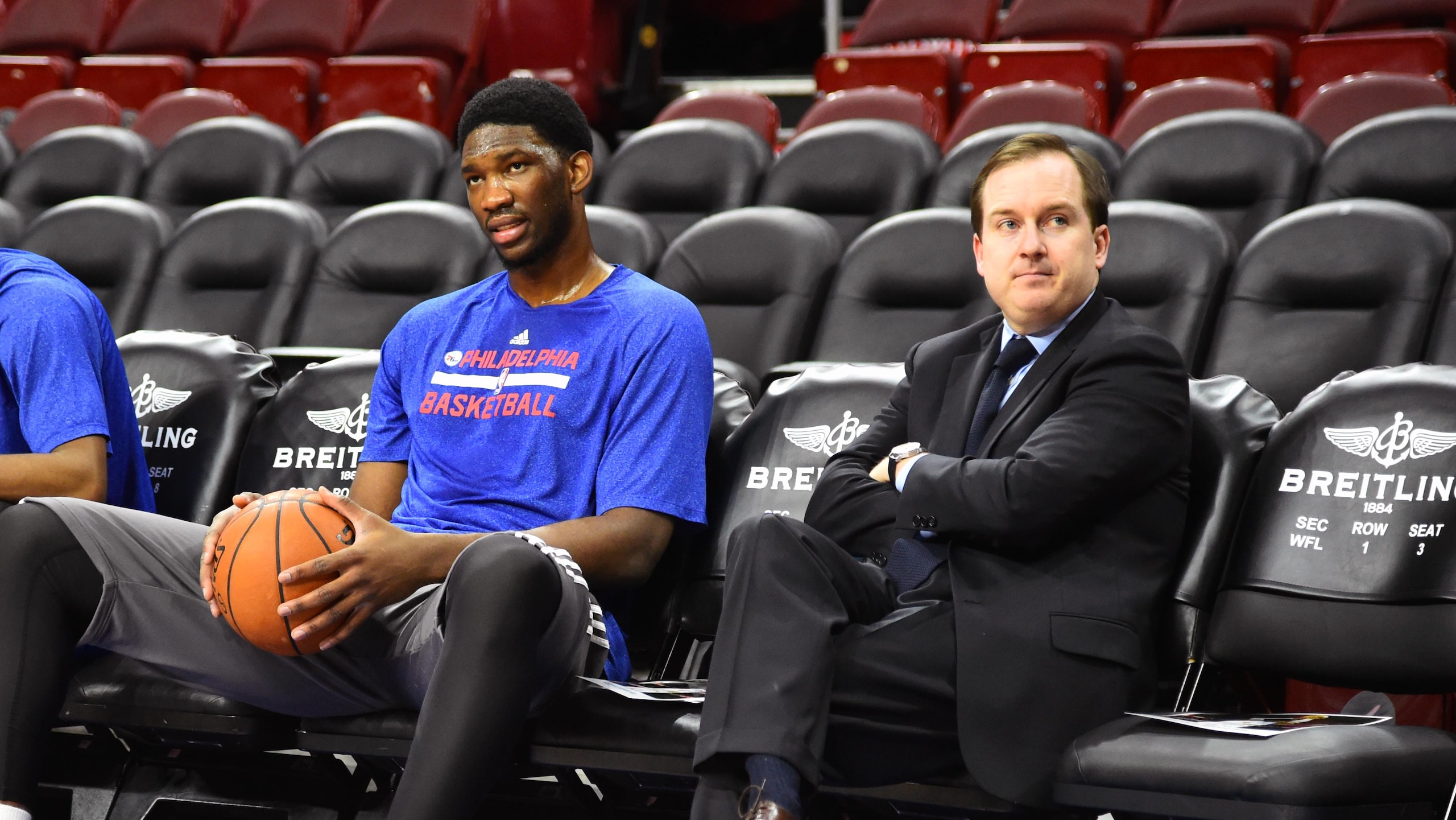
The Philadelphia Process (2014-2016): 2.3 teams average under 20 wins
The Flattened Era (2019-2025*): 1.7 teams average under 20 wins
Recent Uptick (2024-2026) 2.5 teams average under 20 wins
*Adjusted 2019-21 by win percentage
The Philadelphia 76ers, under the leadership of then-general manager Sam Hinkie, dubbed their journey through a multi-year lottery plan "The Process." The Sixers eschewed the middle, embracing the concept that the only way up was to go down.
The NBA was not a fan. Branding intentionally non-competitive basketball hit a nerve, leading to the 2019 rule change that increased the number of selections determined by the lottery from three to four and lowered the lottery odds for the bottom two teams to favor franchises in the Nos. 3-14 range.
"We weren't intentionally bad. Believe me. We just sucked," said one member of a recently struggling team's front office.
The Sixers spent three years bottoming out. The lottery changes were counters to discourage their approach, but the Detroit Pistons endured a brutal five-year stretch before their recent rise to prominence. The Pistons landed the No. 1 selection in 2021, drafting All-Star Cade Cunningham, but he struggled to stay healthy early in his career.
Flattening the odds in 2019 led to Detroit falling from the No. 1 slot to No. 5 in back-to-back lotteries (2023 and 2024). Not that the Pistons would have been guaranteed Victor Wembanyama in 2023. Still, the prior odds were just 25 percent—significantly higher than the current 14 percent—with No. 4 the lowest the franchise could drop.
Others with similar bottoming-out stretches after 2018 include the Houston Rockets, Washington Wizards, Charlotte Hornets and Cleveland Cavaliers. A longer list has spent multiple seasons with fewer than 31 wins, including the San Antonio Spurs, who defied the odds three straight years to build a burgeoning powerhouse around Wembanyama.
The stark reality is that it takes a few cracks at the lottery for most teams to find their way back to respectability. Many of the proposed changes seem to disregard this inevitability. The 2019 changes led to lowercase process teams with few options but patience to improve.
Play-In Not Enough
2 of 4
Official Tournaments (2021-2025)*: 5
Total participants: 40
Total earning playoff berths: 20 (50 percent)
Total advancing beyond the first round: 3 (15 percent)
* The NBA put together a bubble play-in during the 2020 pandemic. It was officially adopted the following year.
Expanding the playoff pool from 16 to 20 teams was, in part, intended to motivate teams to stay competitive in a postseason push. It hasn't worked as well as needed.
The roadblock: The half that make it through the play-in is typically knocked out in the first round. The added revenue from a few home games may not be as important to basketball staffs, who may prefer a higher pick and the tiny chance of hitting the jackpot, like the Dallas Mavericks jumping from No. 11 in the lottery to first to draft Cooper Flagg, despite 1.8 percent odds.
"Most teams think they did a great job in the offseason. By 20 games, they realize, they messed up," one front-office executive said. "By mid-December, that's when they start to decide to improve or get worse."
Historically (2019-2025), the teams near (or in) the play-in, at the 31- to 40-win range, have generally underperformed after the All-Star break with 3.6 percent fewer wins. That outpaces the 21- to 30-win teams, who, on average, finished with 1.8 percent more victories down the stretch. Often, the bottom teams have locked in the top-four lottery positions, freeing the bad-but-not-absolutely-dismal squads to play more freely.
Freezing the odds near the trade deadline or the All-Star break in February would be the primary fix for teams that shut down players to game the system. The concern is intentional dogging earlier in the year. Still, it's a risk worth taking—especially when they may not know until December how their roster stacks up.
With that change, the NBA would not need to expand the lottery to 18 teams, which further dilutes the pool for those with greater needs. Applying that to the best play-in teams historically, the Golden State Warriors, Los Angeles Lakers and Miami Heat could have gained lottery picks the years they advanced to the second, third and final rounds, respectively.
That would be addressed by blocking them from a top-four selection after a conference finals appearance (call it the Haliburton Rule). Averaging a team's record over two years could be another remedy. That would delay the Cleveland Cavaliers' rebuild after LeBron James left in free agency by a year, but that may be an unavoidable edge case.
The thrust of the two would be to prevent a Tyrese Haliburton/Indiana Pacers-type result—a near-championship team benefiting from an injury-based gap year. That favors the truly downtrodden and their quests to get out of the lottery sooner (though other proposals seem to lose sight of the goal).
Cliff Diving
3 of 4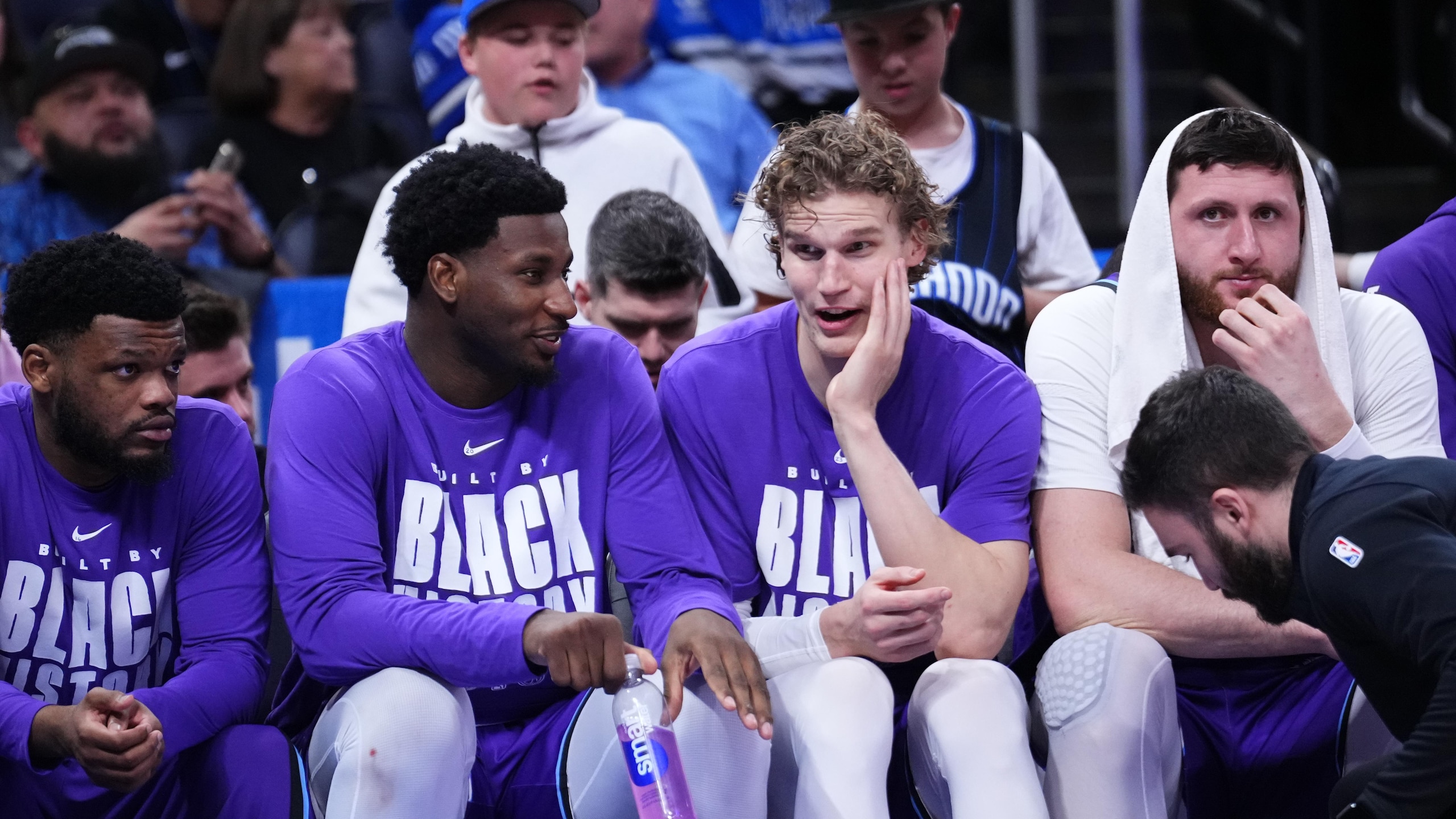
Realistic fix for 2027: Teams can only protect first-round picks to the top four or top 14 in trade.
The lottery system sets the aforementioned targets, but some are artificially created through trade (Silver recently termed it as "cliffs").
The Utah Jazz are an obvious target of Silver's ire, sitting two of the team's best players (Lauri Markkanen and Jaren Jackson Jr.) in the fourth quarter of back-to-back games. The timing leading up to All-Star Weekend was ill-advised. The league, according to multiple competing executives, viewed it as a blatant slap in the face, hitting the Jazz back with a $500,000 fine.
Whether the Jazz are guilty of tanking to protect their first-round pick is debatable. Still, the perception is that the team is doing everything it can to keep it within the top eight, to avoid sending it to the Oklahoma City Thunder from a long-ago Derrick Favors salary dump.
This may be the easiest solution: Limit pick protection in trade to the same natural barriers as the lottery system. The few existing obligations outside the top-four or top-14 ranges would be grandfathered in. A team could still protect a top-one or top-20 selection, just not in the Nos. 5-13 range.
Accepting 'The Process'
4 of 4
NBA free agency has been marginalized in the 2023 collective bargaining agreement, with extension and trade rules (for non-apron teams) loosening. If not for the draft, how can a franchise acquire a cornerstone piece?
"What else are we supposed to build around?" asked one executive. "The punishment is living through a couple of miserable years; the league doesn't need to make it worse."
If the Pistons successfully tanked, the general manager at the time, Troy Weaver, lost his job. Winning about 20 games over the course of an NBA season is a brutal, miserable, costly affair for a team. There's no joy in it.
Silver said he's an incrementalist. More extreme concepts, such as eliminating the draft, are not considered a serious option. Additionally, Boston Celtics executive Mike Zarren's "The Wheel"—which would eliminate the lottery and instead have every team cycle through all 30 draft positions in a fixed, predetermined order over 30 years, so each team knows its exact pick every season—hasn't resurfaced to date (H/T Zach Lowe, then from Grantland in 2013).
The focus should be on the vital but limited changes to improve the quality of play after the All-Star break. Freeze the odds in February and remove the artificial cliffs created by trade protection, like the Utah Jazz's top-eight obligation to the Oklahoma City Thunder.
Once the odds are set, teams will lose the incentive to lose; averaging over two seasons becomes superfluous (but add the Halliburton Rule as a safeguard).
But will more intend to be awful from the start? After the moves in July, did the Sacramento Kings think they'd be at 17 wins in March? The window for tanking would be limited in most cases to December through January and can be further reduced by rebalancing the odds.
It's a risk worth taking in this compromise. If anything, the 2019 rules should be rolled back to increase the odds for the absolute worst teams, so they have a better chance of climbing out of their morass more quickly.
Starting at the bottom is typically a three-year journey, which is how long the Philadelphia Process lasted. The proposed fixes that flatten odds across the lottery or prevent franchises from a top-four selection in consecutive years are damaging.
The franchise lifecycle is inevitable across 30 teams. Some, like the Boston Celtics, may avoid it from a singular, blockbuster trade in 2013 that took the franchise from the Kevin Garnett/Paul Pierce era almost immediately to the Jayson Tatum/Jaylen Brown run—even then, they won just 25 in 2013-14.
When the Cleveland Cavaliers lost LeBron James in free agency to the Los Angeles Lakers in 2018, the team not only needed a new franchise star but also had to unwind its hefty contractual obligations.
The Cavaliers had three years with low winning percentages: 23.2 (2018-19), 29.2 (2019-20) and 30.6 (2020-21), falling twice from No. 2 to No. 5 under the new lottery system. Luck was favorable the final year with a bump from No. 5 to No. 2, with Darius Garland, Isaac Okoro and Evan Mobley selected in subsequent drafts.
A top pick isn't a guarantee. Nikola Jokić was the 41st pick in 2014 (an outlier, where the next recent bests may be Jarred Vanderbilt and Pat Connaughton). Not every draft is created equally. No. 1 selection Zaccharie Risacher (2024) isn't Victor Wembanyama (2023). The Golden State Warriors were sold on James Wiseman at No. 2 in 2020. Even a win like Zion Williamson at No. 1 in 2019 hasn't lifted the New Orleans Pelicans as hoped, given persistent injury issues. Realistically, most are teenagers who need time to develop.
In reversing some of the 2019 changes, increase the odds for the worst of the worst (1-4), so they can dip in and out by three years with less of a Pistons-level five-year delay. Keep the drawing at four picks, but take away combinations from 5-14 to further reduce the incentive for semi-competitive teams to pivot away from the play-in.
The league can revisit if the "P" in process capitalizes with more teams playing the long game. Still, the 2019 changes didn't achieve the intended goals, and some of the proposals will only exacerbate the problem further. The NBA has obvious tools to demotivate mid-tier tanking teams, but ultimately accepting some level of process is inevitable.
Email Eric Pincus at eric.pincus@gmail.com and follow him on X/Twitter @EricPincus.


.jpg?w=2560 "AD Trolls Bears WR on IG 😂")
.jpg?w=2560 "Buzz: MHJ Hired Agents for Trade")
.jpg?w=2560 "Report: Steelers WR to Miss 'Weeks'")
.jpg?w=2560 "Viral Dan Campbell Presser 💙")


.jpg?w=2560 "Cam Ward Says He's Not A Loser")