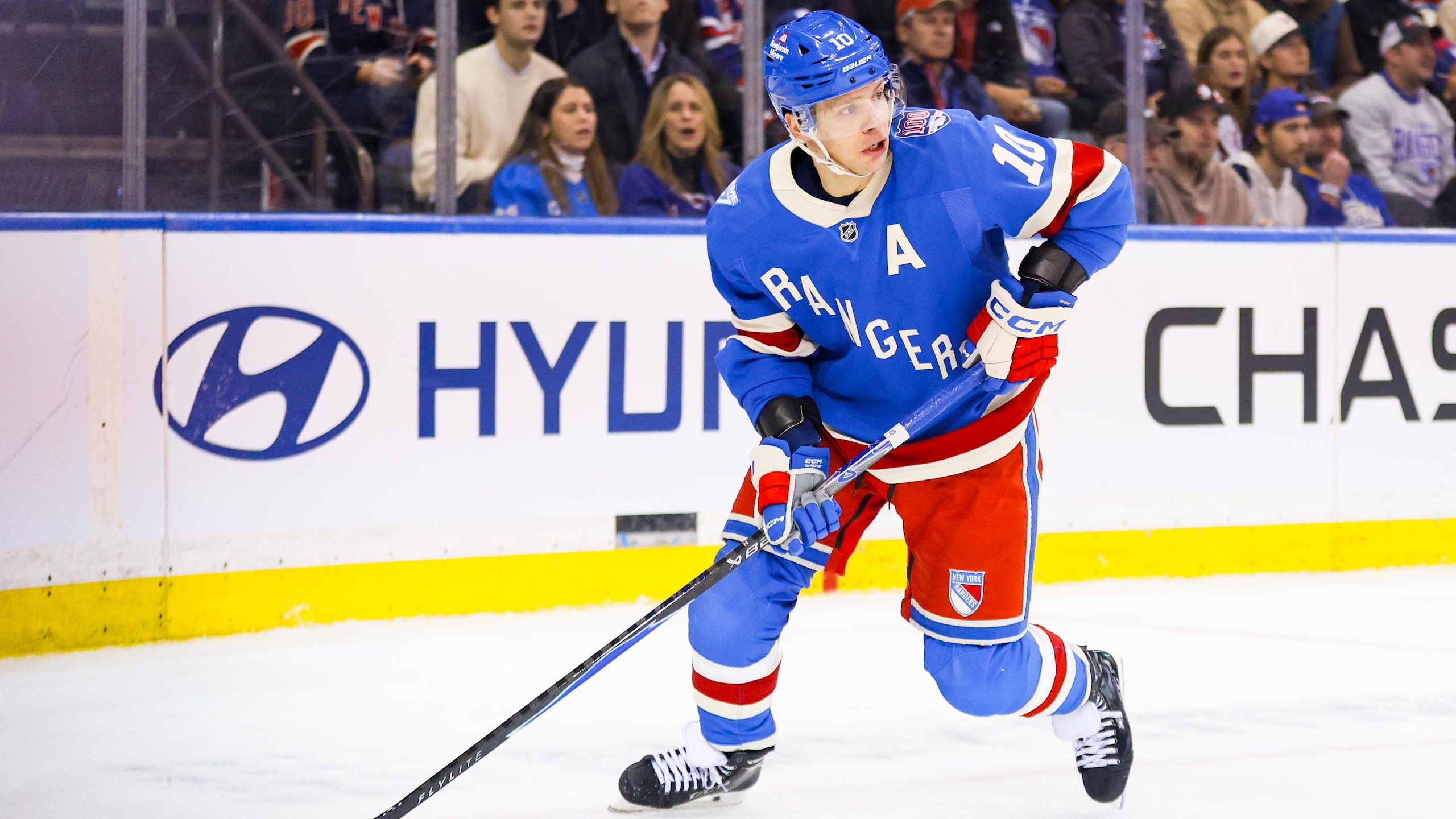

Rangers Lack Clear Vision After Artemi Panarin Trade, But Land Potential in Liam Greentree
Artemi Panarin is officially a Los Angeles King, and while we already graded the trade earlier, that format didn't allow for a more thorough analysis of the implications for the New York Rangers, who have traded arguably the most talented winger in franchise history as the first part of a seismic reimagining of the team's trajectory.
Could general manager Chris Drury truly not do any better than the return he got from L.A.?
What is the scouting report on Liam Greentree, who went from a generic first-round pick to someone with the spotlight directly on him overnight?
TOP NEWS
Re-Ranking Top Free Agents 🛒
Grades For Every Team's Prospect Pool 🔠
Canes Troll 3 Philly Teams 😅
Finally, what does this trade mean for the Rangers' alleged "retool"? Does it provide clarity for where the team is headed, or does it only add to the confusion?
Let's break it all down.
Assessing the Trade
Earlier, we said you don't win a trade involving Panarin. The best you can do is try to save face whenever possible.
The entire process was extremely confusing. How all the negotiations went down and which teams were truly in the mix on the final day are unclear.
Drury has hardly earned any benefit of the doubt with the fanbase, and it's fair to wonder whether negotiations were handled optimally.
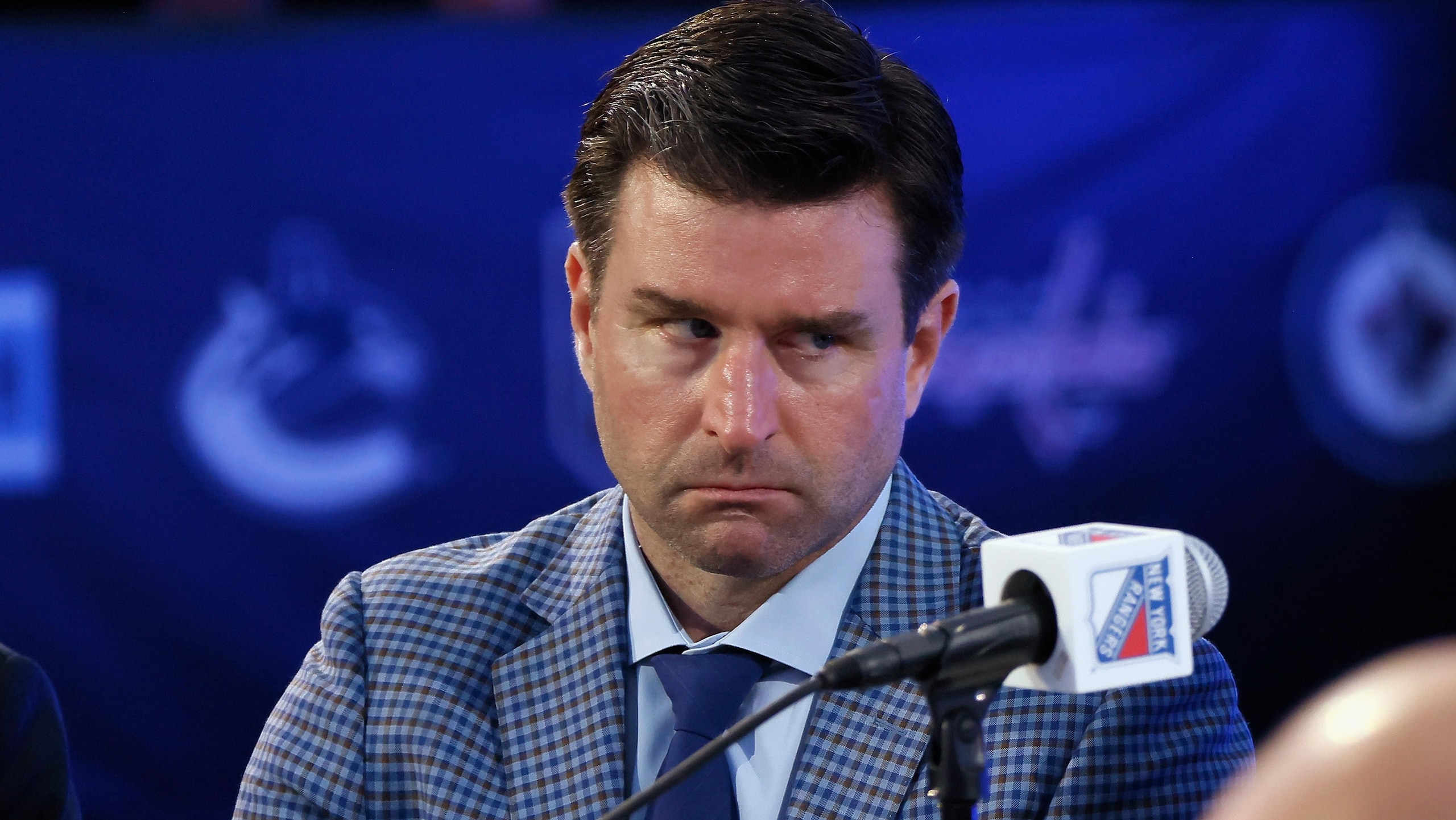
If we suppose Los Angeles was where Panarin wanted to go, then there should at least be solace in knowing the Rangers at least didn't choose the wrong return.
Among the young players in the Kings' organization who were realistically available, Greentree was the best fit for the Rangers' needs. Other prospects, such as Henry Brzustiewicz or Vojtech Cihar, are intriguing but do not offer Greentree's upside.
Is there an argument to be made that the Rangers should have pursued a first-round pick instead? Perhaps. It's unknown whether L.A. would have even entertained the idea, given their middling place in the standings.
Furthermore, while a first-round pick offers more potential, Greentree is 20 years old and has a much quicker path to the NHL.
That's important for any team, but especially one that wants to get pieces in place over the next few years while Adam Fox and Igor Shesterkin can still play elite hockey.
Liam Greentree Scouting Report
Greentree was a divisive prospect in his draft year and remains so today.
His OHL numbers over the past few seasons were at the top of the scale, but scouts have varying degrees of optimism about how his actual playing style will translate to higher levels.
Greentree is a 6'3" winger who has figured out how to make the most of that reach in connection to his creativity on the puck. He is a proficient puck-carrier who, despite playing on the flank, is a tremendous operator in the middle of the ice.
He does an excellent job creating space for himself, using his reach to protect pucks as he drives up the ice. Then, if a defenseman reaches to try to take away the space, he's a good bet to pull the puck across his body into the newly vacated space. For these reasons, he'll beat defenders wide and pull pucks from the walls to attack the interior.
The 20-year-old creates his own lanes of attack. This type of dynamism in the offensive and neutral zones is sorely lacking in the NYR organization.
In the offensive zone, Greentree is a frequent shooter who pulls and drags the puck away from defenders to change the angle and create shooting lanes for himself. His wrist shot is heavy and quick. He scores from distance. He balances that out with the ability to feint a shooting opportunity but then slip a puck east-west to a teammate.
Greentree also shows strong defensive instincts. Because of his reach and his ability to slow games down, he has the potential to be a dependable penalty killer.
The big concern is whether Greentree can play at a faster pace. While there are times that his aforementioned tendency to dictate play at a slow tempo leads to great opportunities, he won't have the time and space to operate like that all the time in the NHL. "Pace" also refers to his skating, as he's slow to generate speed and his agility isn't great.
Will Greentree improve his speed, both in terms of skating and execution? Those are surmountable problems with good coaching and skills development, but Rangers fans in particular should be squeamish. The organization has brought in a number of young wingers who were skilled but struggled with the pace of play; Alexis Lafreniére, Kaapo Kakko, and Vitaly Kravtsov are the most prominent.
The results speak for themselves. They have failed to develop this type of prospect in the past. That's going to have to change in order to maximize Greentree's abilities.
His drop in production is also a worrying trend. He was third in the OHL last season in total points, with 119 in 64 regular-season games. This season, with many anticipating that he would lead the league in production, he has 45 points in 34 games, a trend that would have him fall roughly 40 points short of last season's total.
There are different ways to explain and interpret that drop. Greentree has dominated juniors and, after last season, he didn't have much left to prove. The CHL/NHL bargaining agreement prevented him from being able to play AHL games and it's possible that Greentree is complacent.
While that's not ideal, it does happen. One Ontario-based scout with whom I spoke is interested in seeing how Greentree performs in the aftermath of the trade, citing the hostile online reaction and wondering whether the pressure of unfair expectations might hamper his development.
On the other hand, Greentree may also now have a chip on his shoulder, and this newfound motivation could propel him.
If it all works out for Greentree, he will turn into a creative top-six offensive driver of the 50-55 point variety. If not, he still offers some insurance as a potential third-liner.
The Lack of a Clear Vision
The Rangers insisted in their letter to the public that they are eager to retool and become competitive again fairly quickly. It's hard to square that with this trade.
Injuries to Fox and Shesterkin have completely tanked the season, but the truth is that it was not a very good team even when healthy. They could not generate offense even in their better moments. Now they have sent their best forward packing to Los Angeles for an unremarkable return.
We've already gone over how they may have had no other trade options, but did they need to trade him at all? Even while acknowledging that the Rangers need to get younger and recoup assets, I argued earlier in the season that re-signing Panarin could make a lot of sense. It's going to be a long time before they have a player of Panarin's caliber again, and you need talent in order to recruit talent.
If Panarin was ultimately willing to sign in L.A. for a two-year extension at a rate below both the market rate and his true value, would he not have taken a similar deal to remain in New York?
Unless the Rangers are truly accepting a longer-arched rebuild, none of this makes sense. The path for an already bad team to trade a superstar for a potential middle-six winger and compete in a season or two is not evident.
This trade was, at its absolute best, a necessary evil. Drury has a lot of work to do to turn around public opinion and convince anyone that the team has a coherent vision for the future, let alone that he should be the one tasked to execute it.
.jpg?w=2560 "AD Trolls Bears WR on IG 😂")
.jpg?w=2560 "Viral Dan Campbell Presser 💙")
.jpg?w=2560 "Buzz: MHJ Hired Agents for Trade")
.jpg?w=2560 "Report: Steelers WR to Miss 'Weeks'")
.jpg?w=2560 "Cam Ward Says He's Not A Loser")


.jpg?w=2560 "Chargers Fall to 0-5 🤢")