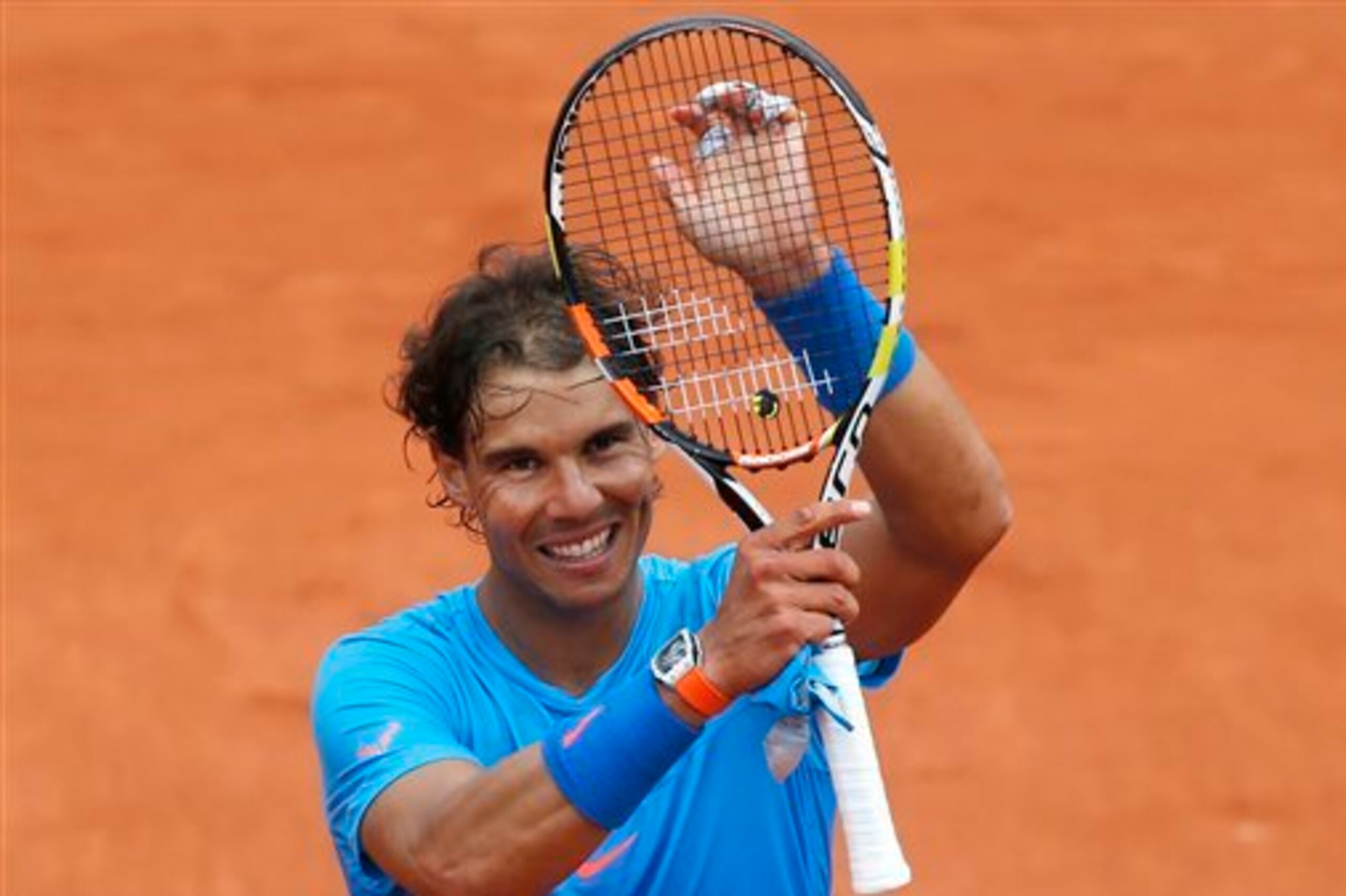

Rafael Nadal Tops Winners and Losers at Hamburg, Atlanta and Gstaad
Rafael Nadal restored some order as he locked up Hamburg's title, the biggest clay-court tournament of the year's second half. How important was this for the Spaniard?
Our "Winners and Losers" column will also feature some of the action from Atlanta and Gstaad. How is Dominic Thiem picking up more impressive credentials, and who did we select as the most boring player in tennis?
All of this and more as we enter the summer U.S. Open series for the year's final major.
Winner: Dominic Thiem
1 of 8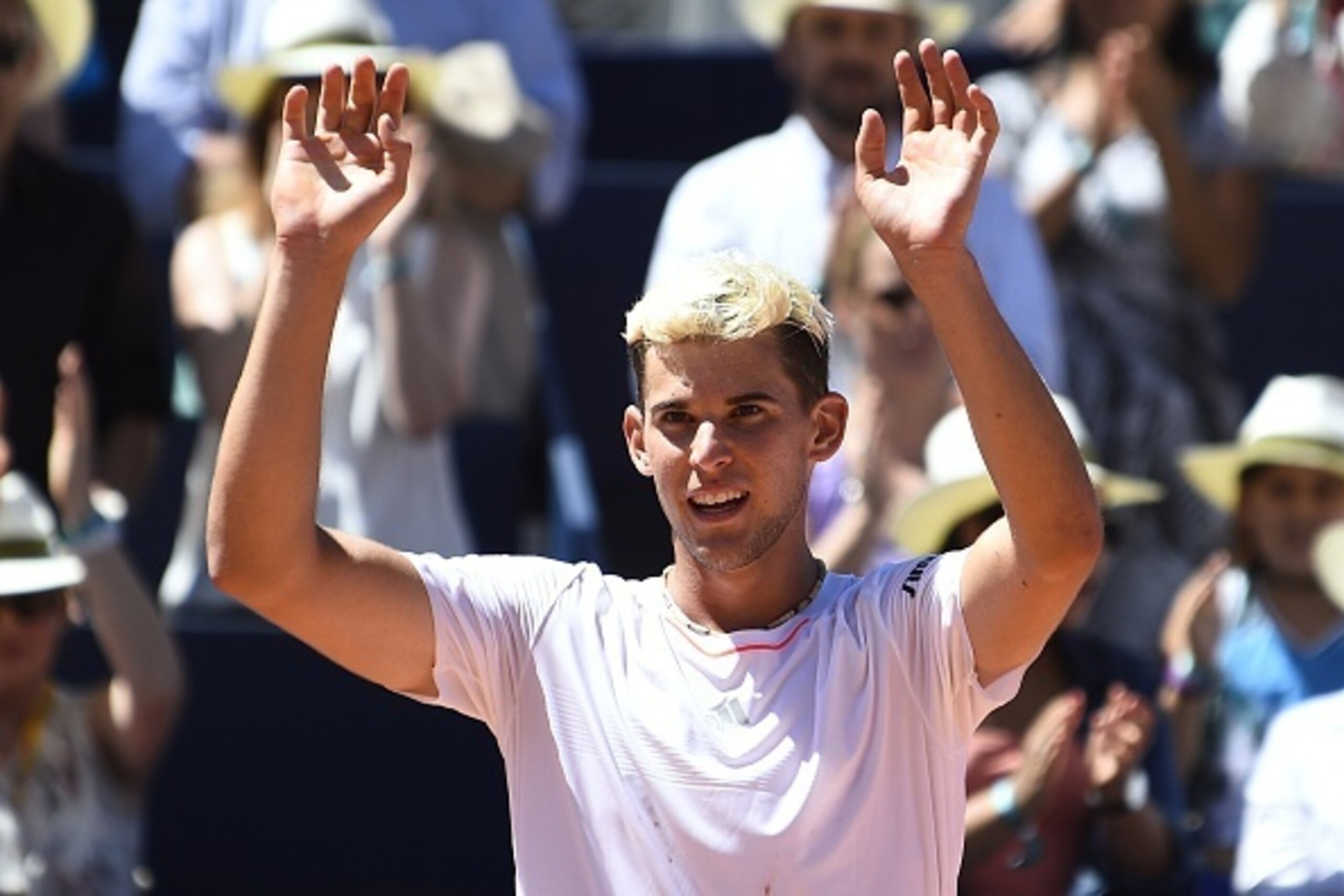
Last week we mused about Dominic Thiem’s title at Umag and wondered if he could start gaining the consistency to separate himself from his young contemporaries. This week he was more impressive in outdueling No. 1-seeded David Goffin 7-5, 6-2 for the championship at Gstaad.
“Dominic's strokes are very heavy and powerful,” Goffin said, per the ATP World Tour. “It was very tough during the whole match.”
The best sign of all for Thiem was his resilience against an opponent who has a good return game and plenty of all-court acumen. Thiem was able to use his power advantage, but the key was that he was able to harness it with the kind of control he will need to keep bagging more mid-level titles or if he wants to be the upgraded version of Stan Wawrinka.
There’s no rest for Thiem as he heads to his home country of Austria in search of three titles in consecutive weeks. This time he will be the No. 1 seed and have a bye to the round of 16. He walks into the tournament knowing he is the favorite, which is a different kind of pressure, but it's one in which we could see him continue to gain confidence.
Maybe bleached blonds do have more fun.
Losers: Andy Roddick and Mardy Fish
2 of 8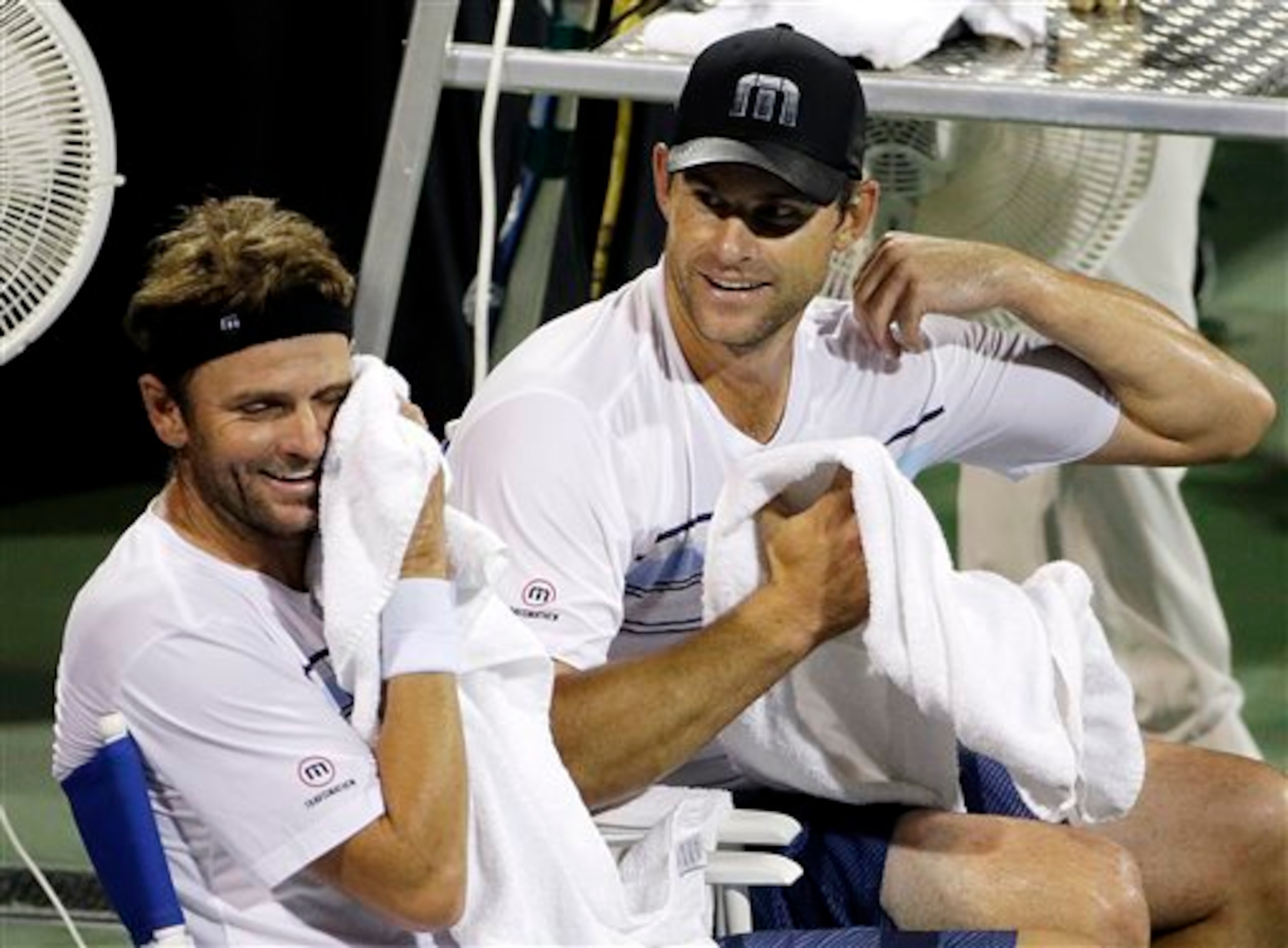
Of course Andy Roddick and Mardy Fish are friends, but that was meaningless if they were hoping for a storybook doubles title at Atlanta.
Fish is retiring soon, and tennis fans do remember his gutsy play in becoming a marginal competitor despite many physical injuries. Unfortunately, he was bounced in his first singles match this week and then basked in a little hype with Roddick before they were rocked in the quarterfinals 7-5, 6-2 to a superior tandem in Eric Butorac and Artem Sitak.
Roddick is the real problem here. He held American men’s tennis’ dying embers until his timely retirement at the 2012 U.S. Open, but he has since had the itch to return. OK, it’s not as if Pete Sampras decided in 2005 that he should team up with Jan-Michael Gambill for doubles. At least Sampras had the sagacity to play World No. 1 Roger Federer in a few entertaining exhibition matches.
Roddick, of course is no Sampras, but he’s still an important link to the post-Sampras-Agassi generation, so watching him flame out in Atlanta is at least mildly disappointing.
Winner: Denis Kudla
3 of 8
No, Denis Kudla did not win the Atlanta title, and he did fall in three tight semifinal sets to fellow American John Isner who went on to claim the title.
But I'm more impressed with Kudla than Isner, and I'd certainly take his future over Isner's entire career.
Midway through Wimbledon, Kudla looked like he had the potential to be the best American player within a year, something we noted. He nearly proved this a month later as he took care of Ryan Harrison, blew away Jack Sock and was up a set on Isner before losing the match in the third on a long forehand in the final game.
There's a lot to like about his scrappy play, and against a weak field like the one in Atlanta, he is a good competitor gaining the experience and points he needs to move up to bigger and better results in more important tournaments. He would love to prove that his fourth-round appearance at Wimbledon was just the beginning and that his battle there with Marin Cilic was only an announcement, not a fluke.
.jpg?w=2560 "Commanders Eagles Football")

Loser: The Most Boring Player in Tennis
4 of 8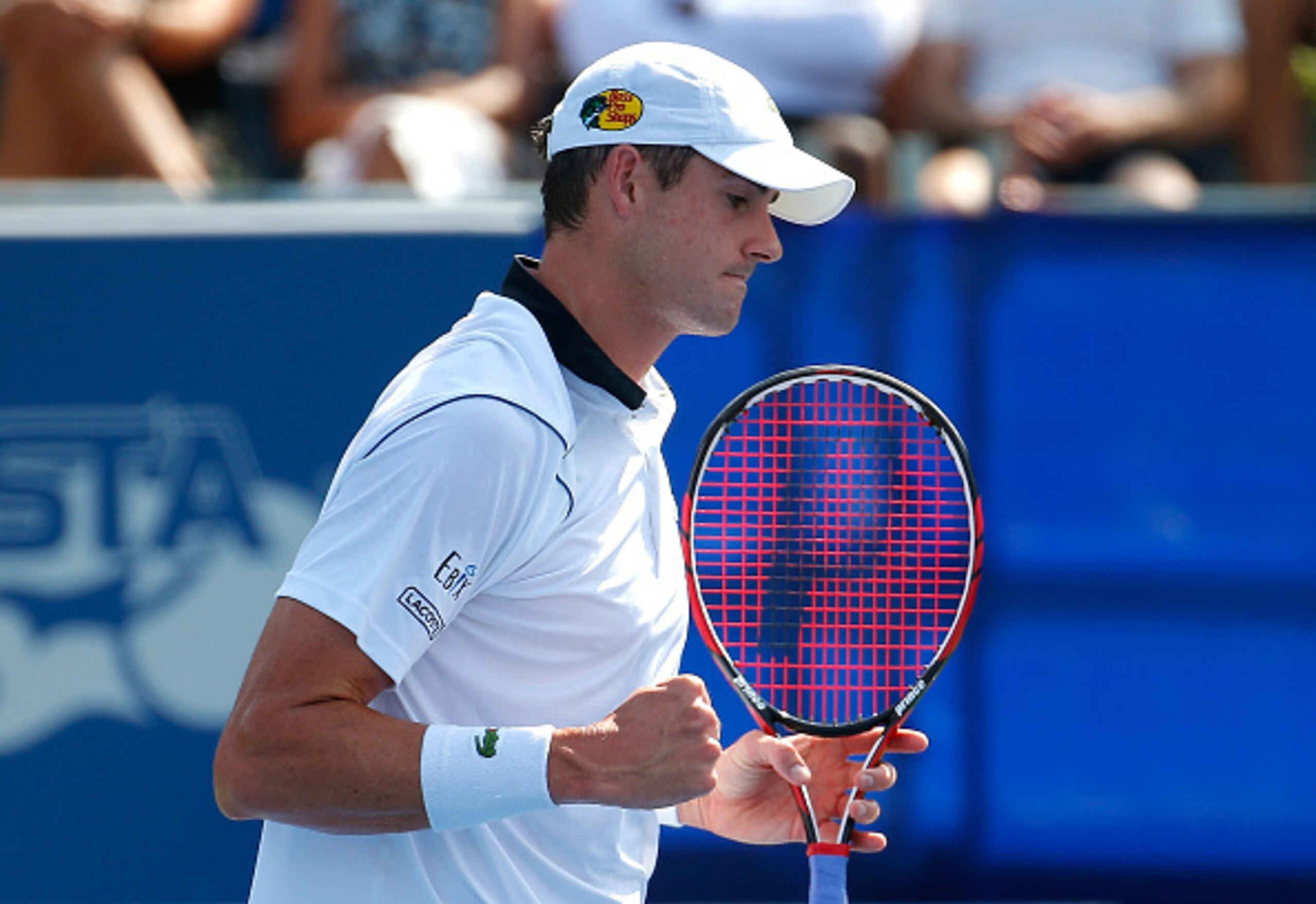
There are often debates about the greatest player in tennis or which players are exciting or mentally tough. So, since the Atlanta Open was on this week, we may as well hand out one very obvious award: John Isner is the most boring player in tennis.
His big weapon is his powerful serve, but that merely draws out other problems in watching him play.
First, his serve is so powerful, it’s rare for opponents to get a rally started. More time is spent walking back and forth between serves than hitting a tennis ball. There’s no momentum at all. Even dead momentum is something, because it means that something good had been happening or progressing. If tennis is life, Isner’s style cannot produce enough oxygen for a single breath.
With Isner, it’s often one tiebreaker after another, because when he is receiving he is almost always the inferior player. He hopes to stay in a rally by maybe ripping something hard that stays in or go back to the drop shot time and again, all on plodding footwork. Forget about creativity, there's not even strategy.
There’s so little variety in his game that U.S. Open crowds rooted more enthusiastically for his more flamboyant and entertaining French Opponent, Gael Monfils, in 2013. Isner, who will occasionally voice his displeasure in getting more muted support, was negatively vocal about that, but of course his career has continued as predictable as ever.
This is the player who headlined much of the 2010 Wimbledon marathon match with Nicolas Mahut, an infamous, outlying match that should be wiped out of the archives or to be used as required viewing as an interrogation tactic.
By the way, he did win Atlanta.
Winner: Rafael Nadal
5 of 8
Rafael Nadal's back to being the King of Clay as he took Hamburg's level-500 title in a 7-5, 7-5 grinder over Fabio Fognini who had defeated Nadal twice on clay last spring. Is this the sigh of relief he was looking for?
Yes and no.
He did get his only championship on European clay this year at a venue long respected for its fine tennis tradition. He fought back against compatriot Fernando Verdasco early in the week, defeated clay-courter Pablo Cuevas and eventually Fognini. He picked up 500 points and moved up to the No. 9 ranking.
But this was no vintage performance. Against Fognini, Nadal struggled with some long service games and gave up 14 break-point opportunities in 12 games. The good news was he connected on 81 percent of his first serves, but his ground-game attack lacked consistent punch. He was able to rely on his return game and create seven breaks in 15 opportunities. That was the match.
Nadal strolled away from Hamburg winning against a depleted field of third-tier players. Earlier in the week, the next-best players, Gilles Simon and David Ferrer, had to withdraw. Nadal was not tested against a really worthy opponent, even though he passed his easy-entrance exam.
On to Canada where the Rogers Cup will bring faster and harder courts, top-flight contenders and a better measure of of Nadal’s long road back to competing as a top player. He’s still not proved that he can win against the likes of Andy Murray and Novak Djokovic in 2015, especially now that he must bid farewell to crushed red bricks.
Loser: Marcos Baghdatis
6 of 8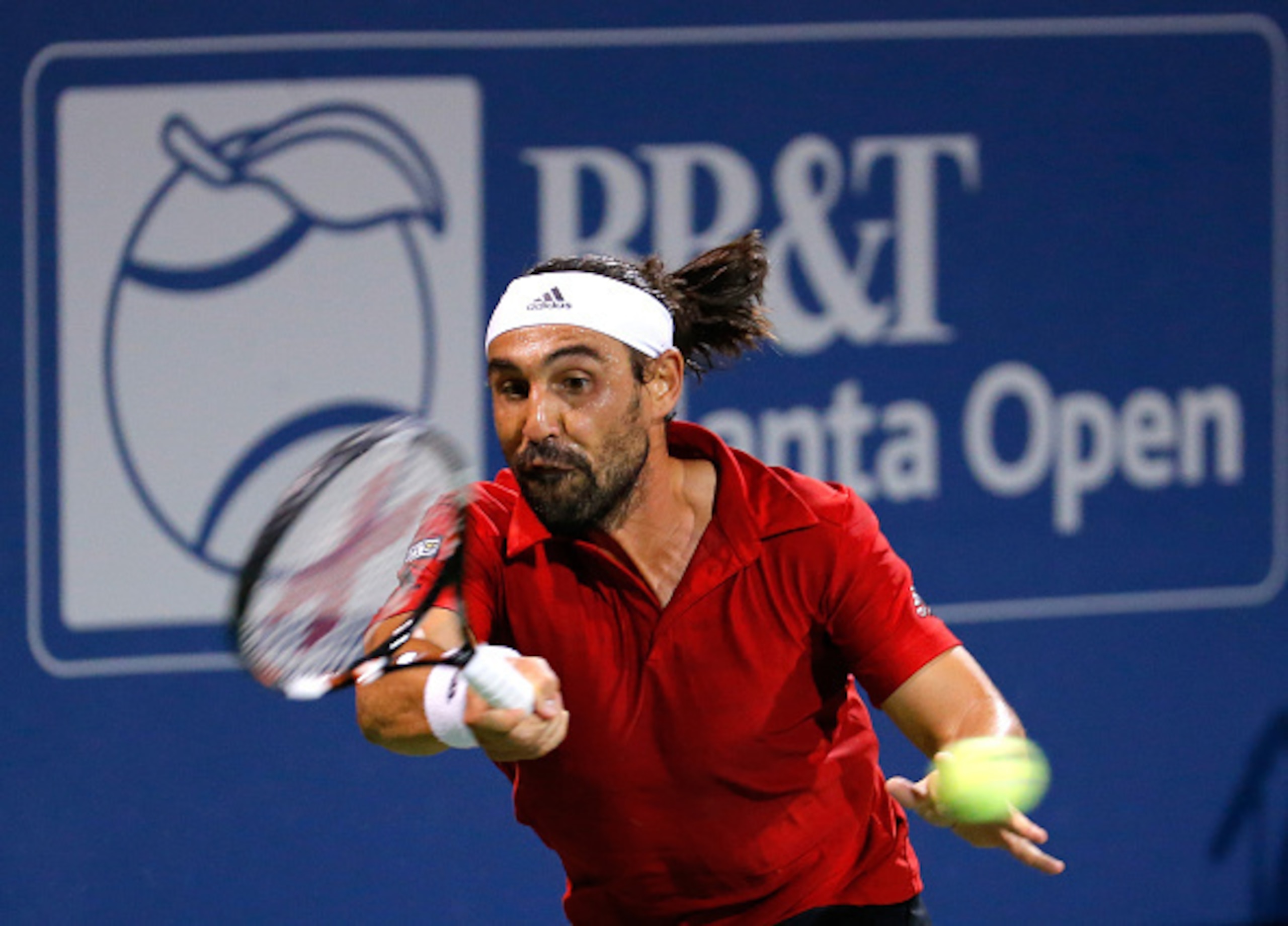
It's been almost 10 years since unseeded Marcos Baghdatis went all the way to the 2006 Australian Open final and took one set off Roger Federer. It seemed like he had a bright future, but by the U.S. Open that year, he was victimized by Andre Agassi's heroics, which was a big part of the opening to Agassi's popular autobiography, Open.
Now it's painful to watch him labor through more injuries and inconsistent results, as he lost to Isner in the Atlanta final. He hobbled around with a bad hip in going down meekly 6-3, 6-3. "That’s not the way I wanted to finish a tournament," Baghdatis said, per Andrew Both of Reuters, "but my body couldn’t handle it today, so I’m really sorry I couldn’t compete 100 percent, but I tried my best."
Tough to watch and painful to see his prime years now long gone.
Winner: Andy Murray and Grigor Dimitrov Focused for Washington D.C.
7 of 8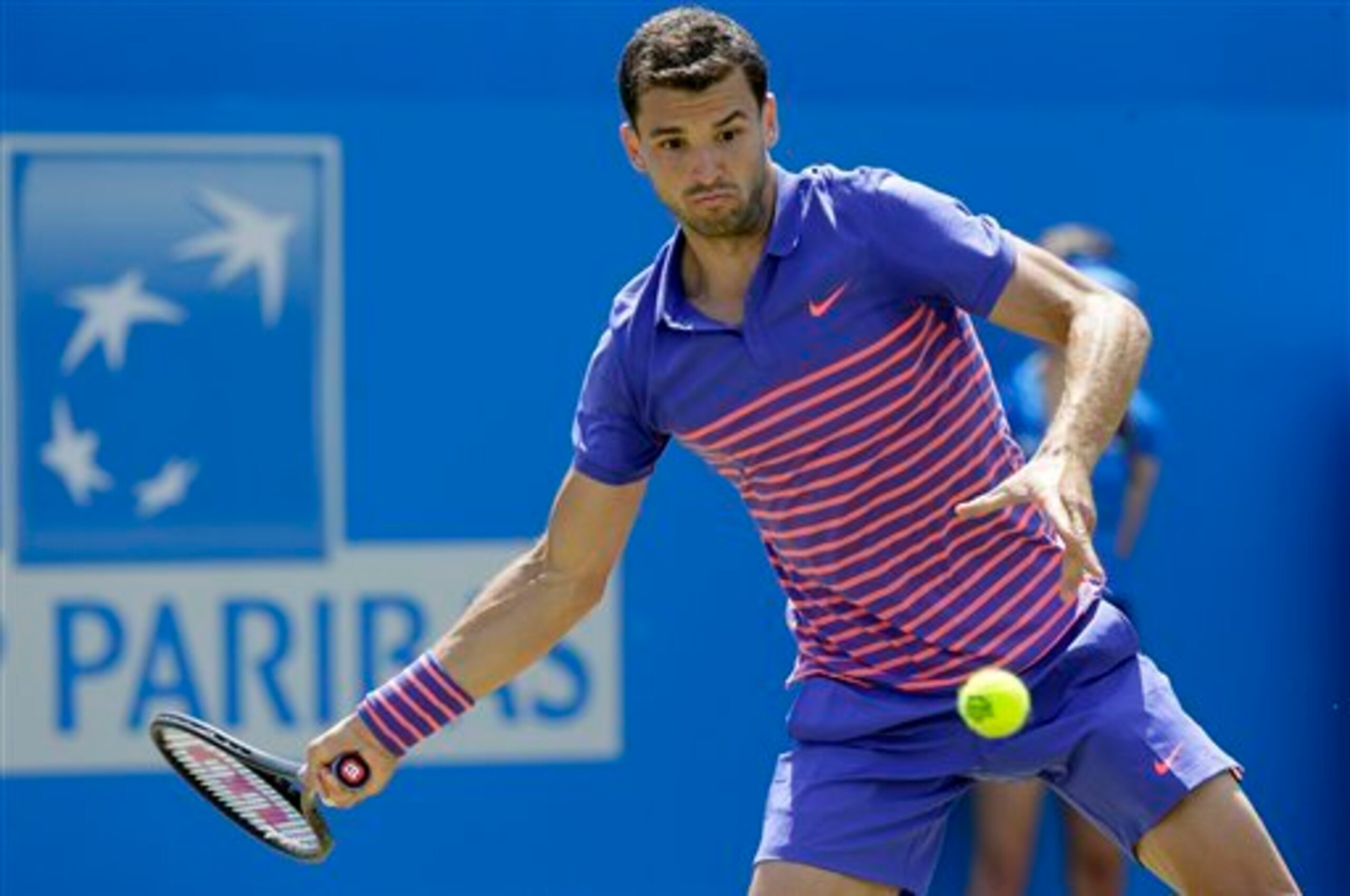
If Atlanta was a bust, Washington D.C. should be a significant upgrade. The level-500, mid-major has Andy Murray and Kei Nishikori bringing in some star power, and 2014 U.S. Open champion Marin Cilic will be tuning up to defend his title in September.
One of the more intriguing early possibilities could feature Grigor Dimitrov vs. Bernard Tomic in the round of 16. (Can we officially call Dimitrov and Tomic veterans, because it feels like they’ve been on the ATP Tour since the 20th century. OK, not quite, but this is about year five since many thought they could be future tennis stars.)
Lately, the two “potential stars” have spent more time with off-court headlines (Tomic’s arrest and Dimitrov’s breakup with Maria Sharapova) than for what they’ve done with their tennis.
Dimitrov won both their past meetings, and Reuters (via USA Today, h/t Venture Capital Post) reported that Dimitrov said he will now be more focused on tennis.
So, now that Sharapova and coach Roger Rasheed have been moved aside from Dimitrov’s progress, and now that Tomic finally appears ready to mature and play tennis, we can dub this “The Battle for a New Beginning.” Yes, many readers are rolling their eyes right now.
Loser: Retro Look at Guillermo Coria's Decline Beginning at Hamburg 2004
8 of 8
From 2003-05, Guillermo Coria was a terror on clay, scampering with his baseball cap on backward while playing as if it were schoolyard tennis. The speedy Argentine was a couple of inches shorter than David Goffin, for a more modern comparison of his frame. He was so consistent with groundstrokes, and for a brief time, he was able to grind and outlast other clay-courters despite not having a powerful weapon. Watching him play was a show.
Coria had a budding streak of clay-court success in those years, highlighted by Masters 1000 titles at Hamburg (2003) and Monte Carlo (2004). But things changed shortly after in his 2004 Hamburg final loss to Federer, and a gradual decline was followed by a sudden drop off the map.
Blame his body first of all, and then he was ultimately unable to maintain the mental fortitude to close big matches or serve effectively.
He should have been able to finish off his two-sets advantage against unheralded compatriot Gaston Gaudio in the 2004 French Open final, but Coria was attacked by leg cramps and thrown off his game.
A couple of months later, he had to have shoulder surgery, and then the double-faults piled up while his former consistency faded away.
One more great match, a tough five-set loss to Rafael Nadal in the 2005 Rome final, was a sort of spiritual handoff from Coria's blighted potential to the greater supernova that was rising in the all-time future kind of clay.
But you’ve got to feel for Coria. His physical troubles and loss of confidence had effectively finished him off by age 23.


.jpg?w=2560 "Mahomes' Wife Trolls Kubiak 💀")

.jpg?w=2560 "Love's Body Already 'Tired'")