
Without Dante Moore, Which QBs Should NFL Teams Target in 2026 NFL Draft?
Supply doesn't always meet demand, particularly when discussing quality quarterback prospects. The 2026 draft class encapsulates this problem.
Dante Moore was considered a strong candidate to become the incoming crop's QB2 and eventual second overall pick by the New York Jets. However, he chose to return to the Oregon Ducks program for another season.
The 20-year-old's decision creates significant ripple effects, because the demand for QBs hasn't lessened.
The NFL never features 32 quality starters. The league doesn't have a quarterback problem, per se. The position is just so difficult to fill adequately, particularly with those who perform at the highest possible level, that the search for top talent never stops.
Typically, starters are selected in the first round, as seen among this year's semifinal participants. But the hit-rate of a high draft pick is 50/50 at best.
Some teams may be fortunate to find a quality starter later in the process, though the percentage drastically drops. Once Indiana's Fernando Mendoza is off the board in April's first round, NFL teams still searching for a promising prospect will be diving into the second and third tiers in hopes of finding a diamond in the rough.
Six quarterbacks currently hold a top-100 grade, according to the Bleacher Report Scouting Department.
Ty Simpson, Alabama
1 of 6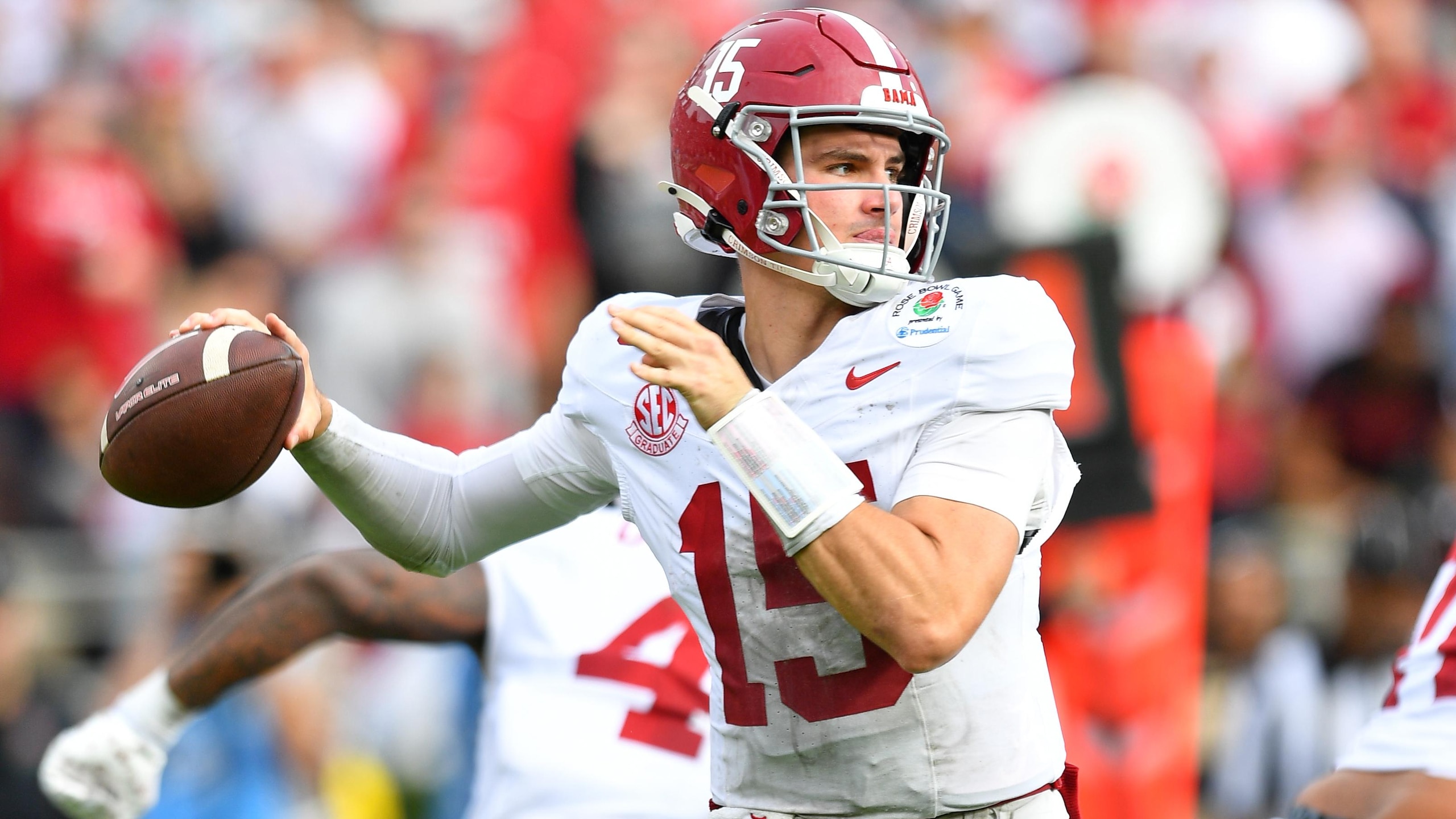
B/R Ranking: 26th overall
Ty Simpson becomes QB2 in the 2026 class after Dante Moore's departure and a strong candidate to be the second signal-caller selected in April's opening frame.
Despite ending his collegiate career on the bench after being rocked by the Indiana Hoosiers' defense, NFL suitors will see traits that translate, with an understanding that the Alabama signal-caller showed significant toughness throughout the 2025 campaign.
"Simpson's nuance is beyond his experience," B/R scout Dame Parson wrote about the one-year starter. "... Simpson's ability to control second and third-level defenders with his eyes is NFL-caliber.
"Simpson is a quick processor of pre- and post-snap information. He identifies coverages and knows where to go with the football. He reads the entire field and works through his progressions. ....
"Simpson is also a highly accurate quarterback who fits passes between defenders ... layers passes with immense touch."
Two knocks often emerge regarding the junior prospect, who already has a master's degree from Alabama. His starting experience is limited, and he's not going to wow evaluators with his natural physical tools.
As Parson noted, the second-team All-SEC performer showed skills that belie his relative inexperience. Furthermore, his comfort level working from the pocket certainly makes up for not having a rocket arm or elite athleticism.
Finally, evaluators will be intrigued with the 23-year-old's ability to overcome adversity. He waited three seasons for his turn, then dealt with multiple injuries, while still throwing for 28 touchdowns in 2025.
"He said he played through a building disc in his back, bursitis in his elbow and had a reaction to some medication that inflamed the lining in his stomach," Chris Low of ON3 reported.
"And then in the playoff loss to Indiana, he said he cracked the 10th rib on his left side (the floating rib) late in the first half while scrambling and taking a helmet to the ribs and fumbling, an injury that can be especially painful when trying to bend or twist."
Trinidad Chambliss, Ole Miss
2 of 6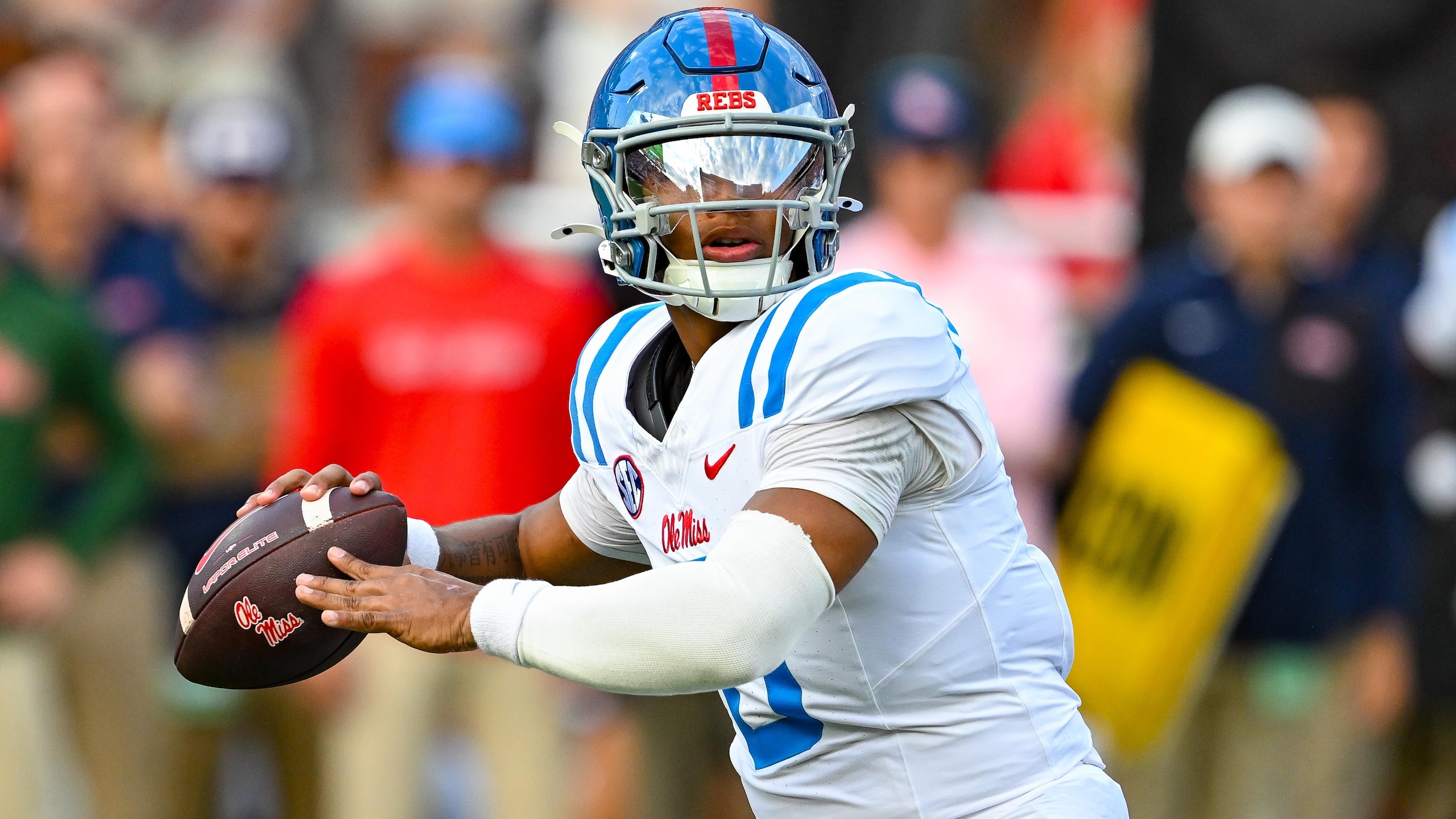
B/R Ranking: 63rd overall
Trinidad Chambliss is the best natural play-maker among this year's quarterback crop. Then again, he may not even be in the draft class.
The NCAA denied the reigning SEC Newcomer of the Year an extra year of eligibility, which the quarterback and his representation are challenging in court.
"In Trinidad's case, the NCAA failed in its mission to foster his well-being and development as a student-athlete," the lawsuit states. "The mechanisms (i.e., waiver rules) for granting Trinidad an additional year of eligibility—so that he has the opportunity to compete in four years of college football—are available and within the NCAA's control.
"Despite the duty of good faith and fair dealing it owes Trinidad, the NCAA insists on considering the evidence in Trinidad's case in an isolated, rather than comprehensive, manner; interpreting its rules to impose requirements not contained therein; taking unreasonable if not irrational positions; and acting in an arbitrary and capricious manner in its decision-making and ruling."
At this point, Chambliss must be treated like an NFL prospect until he isn't officially a part of the 2026 draft class.
Russell Wilson is the comparison most often heard regarding Chambliss because of similar measurements, an ability to extend plays and each taking full advantage of the transfer rules.
Chambliss finished third in the nation with 3,937 passing yards and contributed 30 total touchdowns despite not opening the 2025 season as the Rebels' starting quarterback.
He is listed at 6'0" and 200 pounds. He has a lightning-quick load and release with whiplike throwing action. But it's what he does beyond the offensive structure that makes him truly dangerous.
"Chambliss is a dual-threat quarterback," Parson wrote. "He excels at using his legs to stress defenses as a runner and passer. His creativity raises the offensive playcalling."
The Division II transfer could use more seasoning against SEC competition, particularly as he improves his post-snap recognition and decision-making.
If Chambliss is not granted another year of eligibility, he's well worth taking the risk as a Day 2 developmental prospect, with the potential of striking it big in the right situation.
Carson Beck, Miami
3 of 6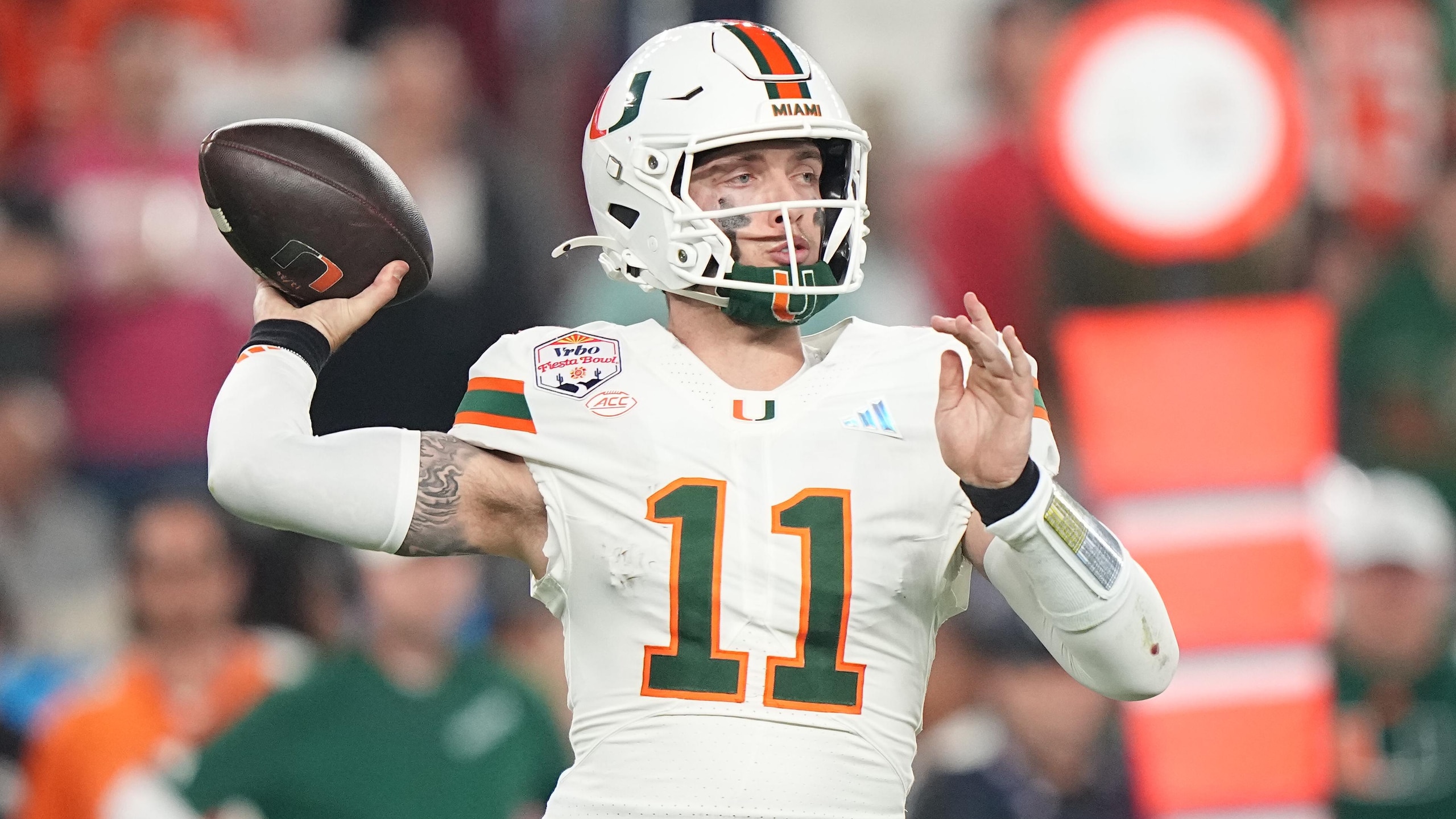
B/R Ranking: 77th overall
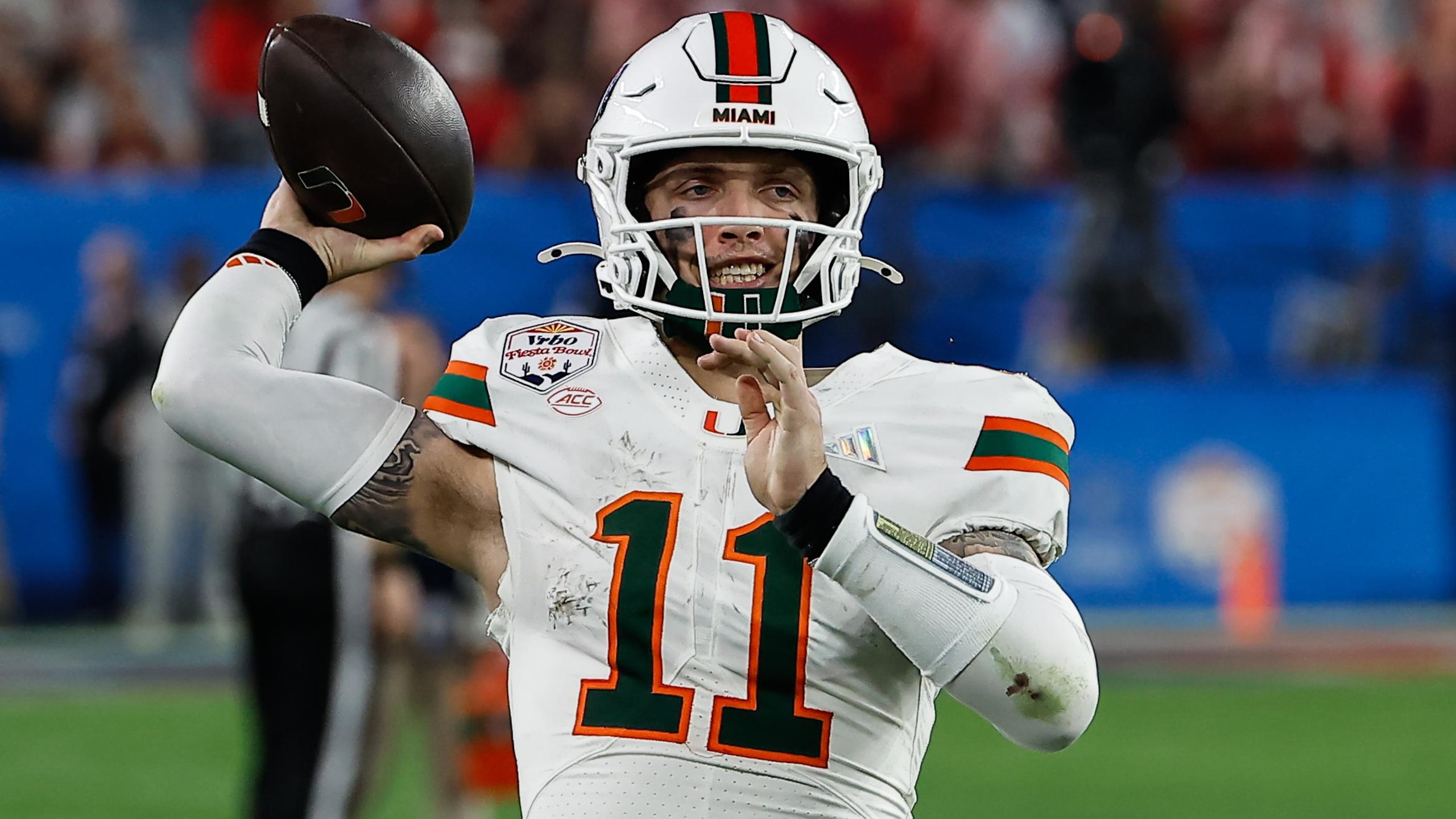
Carson Beck clawed his way back into consideration as a highly regarded quarterback prospect after experiencing a precipitous drop-off during the 2024 campaign.
Prior to the start of the 2024 season, he was in early conversations as QB1 and the potential No. 1 overall pick for the following April's draft class. After all, he completed 72.4 percent of his passes, threw for 3,941 yards and connected for 24 scores after becoming the starter for the heralded Georgia Bulldogs program in his fourth collegiate year.
Unfortunately, his final season in Athens turned into an underwhelming campaign in which the quarterback experienced significant ups and downs, then it ended with a torn UCL in his right elbow.
He chose to transfer to Miami after originally declaring for the 2025 draft.
"You made one of the best decisions of your life," the sixth-year senior said when asked about his decision to leave Georgia, per James Morgan of UGA Wire. "And honestly back then that was impossible to see. I was sitting in a brace. I couldn't bend or straighten my elbow, better yet, throw a football."
As a member of the Hurricanes, Beck helped lead his team to the CFP National Championship. He reasserted himself as a legitimate prospect, particularly with his ability to efficiently manage Miami's offense.
"Beck is an anticipatory thrower," Parson wrote. "He sees things quickly and throws before the wide receiver's break. His anticipation is successful in throwing against both man and zone coverages.
"He is a rhythm-and-timing passer. Beck works best as a hit-and-throw passer, where his back foot hits at the top of his drop and the ball is out quickly. This allows him to play with good tempo and pacing from the pocket."
When Beck is allowed to stand tall in the pocket, he can deliver some beautiful passes. He does take some unnecessary risks, though. Plus, he doesn't add a ton when asked to work outside of the scheme.
Still, a quarterback with prototypical size, good anticipation and the ability to execute within a system can go a long way when operating an NFL offense.

.jpg?w=2560 "Cardinals Giants Football")
.jpg?w=2560 "Hill Injury Update Football")
Cade Klubnik, Clemson
4 of 6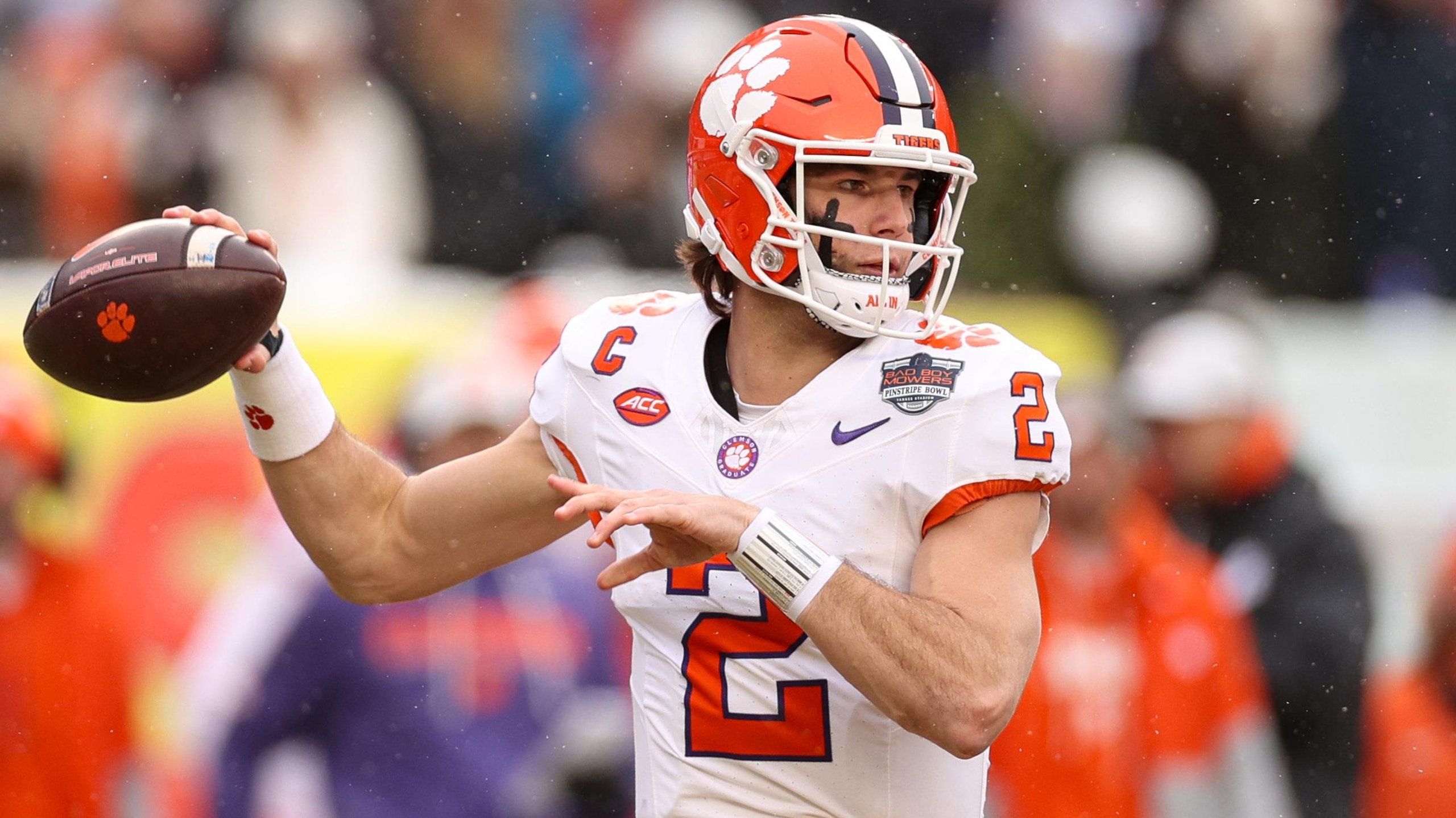
B/R Ranking: 81st overall
Typically, preseason projections are based on the idea an individual will continue his development and become worthy of consideration in a certain draft range.
Case in point, Fernando Mendoza had a solid final season as a member of the Cal Golden Bears, with the traits to be a top quarterback prospect upon entering a situation conducive for further development. He realized that potential as the Indiana Hoosiers' first Heisman Trophy winner, as well as the overwhelming favorite to become this year's No. 1 overall draft pick.
Conversely, Clemson's Cade Klubnik fell well short of the expectations placed on him entering the 2025 campaign. He entered his final season on campus with the idea of becoming an eventual first-round selection. Instead, he now firmly resides in Day 2 range after a disappointing senior performance.
After throwing for 3,649 yards and 36 touchdowns as a junior, Klubnik regressed. He didn't perform nearly as well as a passer or runner. Granted, the surrounding cast wasn't quite as good and the team fell apart as a whole, with the program's second-worst record since Dabo Swinney became the Tigers' full-time head coach.
But some of the issues stemmed from poor quarterback play. Klubnik struggled with consistency, post-snap reads and all-around decision-making. At the same time, he still flashed moments where a quarterback coach can see a pathway toward success. The three-year starter has a good arm and presents all-around athleticism.
"When he's playing on schedule, it looks good," Parson wrote. "Klubnik flashes anticipation on various throws. Throws very catchable passes at all three levels of the field. He delivers passes with good touch and arc, layering the football over the heads of defenders."
An NFL coaching staff must continue the process of making Klubnik more than a talented RPO-reliant quarterback and improve his feel for the drop-back passing game, specifically his progressions and decision-making.
Garrett Nussmeier, LSU
5 of 6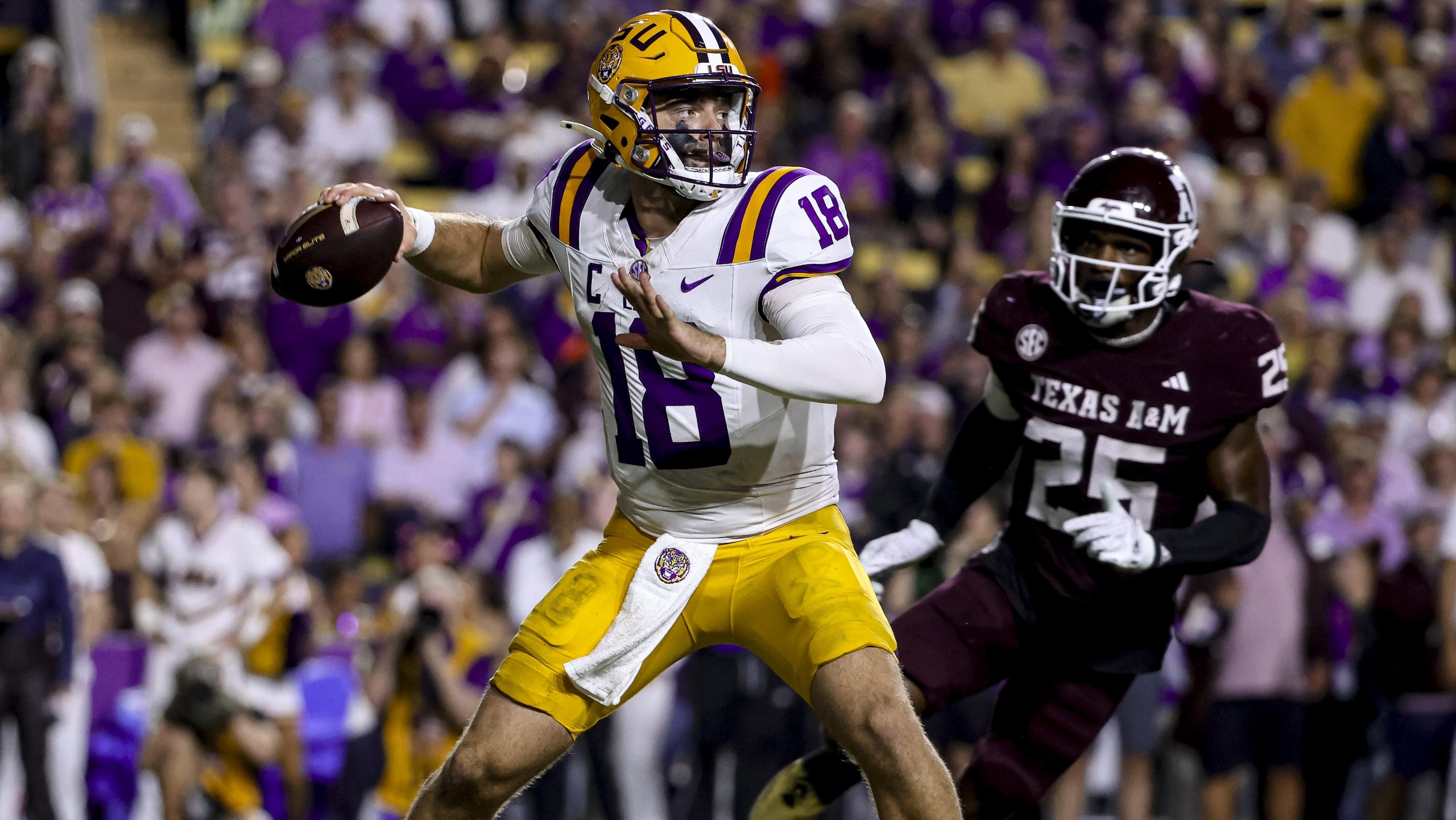
B/R Ranking: 91st overall
A greater divide between the highs and lows of a prospect's film won't be found beyond Garrett Nussmeier's performance during the 2025 campaign.
Much like Cade Klubnik, Nussmeier was viewed as a potential first-round quarterback entering this past season. After all, the LSU signal-caller threw for 4,052 yards and 29 touchdowns a year prior.
Even so, the jarring dichotomy between Nussmeier working in-rhythm or becoming completely unglued by pressure greatly affects his standing as an NFL prospect.
In fact, his final season on campus ended with him being benched, which wasn't the first time when leading the Tigers' offense. Interim head coach Frank Wilson explained the staff felt like an opportunity existed to exploit the Alabama defense with a more mobile option behind center.
Four losses in Nussmeier's final five games didn't help matters. He also dealt with an abdominal injury that limited him to a degree and didn't allow him to play in LSU's final three regular-season contests. Essentially, things couldn't have gone much worse for a highly regarded QB prospect.
When he is cooking, though, his feel for anticipatory throws is outstanding.
"Nussmeier is a 'pro-ready' quarterback prospect and a natural thrower," Parson wrote. "His playing style resembles a pass-first point guard on the NBA hardwood.
"Nussmeier is a timing and rhythm quarterback, who delivers highly catchable passes at all three levels of the field. He is an excellent fit for teams that prioritize the quick passing game. Nussmeier will work particularly well inside a West Coast offensive system."
Two aspects create a ceiling on the soon-to-be 24-year-old. At best, he has mediocre physical tools. Also, his pocket presence often disappears completely, which can create a snowball effect of poor decisions when consistent pressure is applied.
Nussmeier's success at the next level will be entirely dependent on a coaching staff capable of highlighting his strengths and hiding obvious flaws.
Taylen Green, Arkansas
6 of 6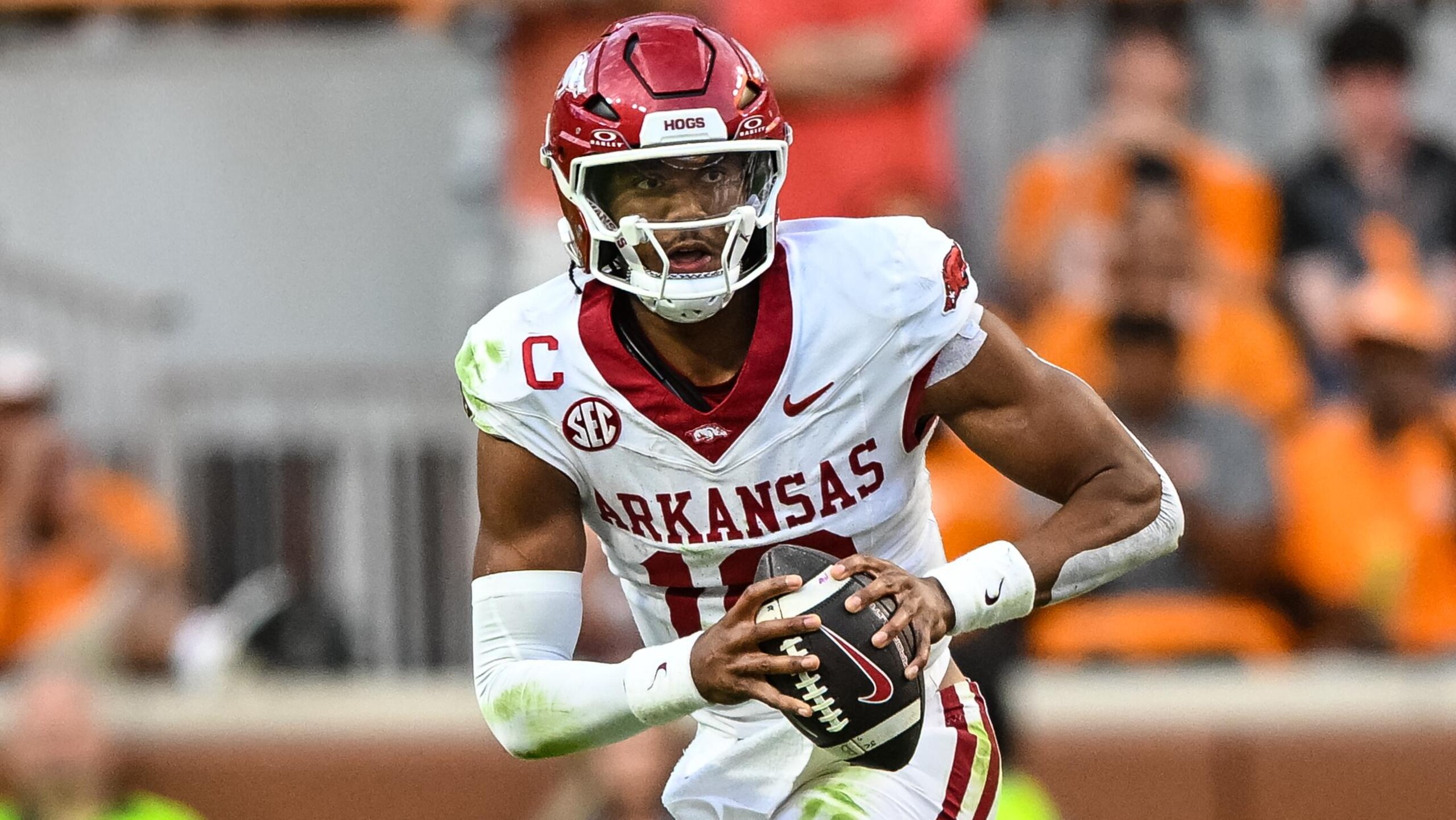
B/R Ranking: 99th overall
Taylen Green is the biggest possible swing for the fences an NFL organization can take in hopes of finding a franchise quarterback outside of this year's first round.
The 23-year-old has everything physically a team wants in a prospect. He's 6'6" and 224 pounds, with the arm talent to drive the ball to all three levels and the athleticism to run for 1,379 combined yards over the last two seasons while playing in the SEC.
In fact, he threw for 305 and ran for 115 in a 41-35 loss to the Ole Miss Rebels during a September showdown against Trinidad Chambliss.
"Green fits the current archetype of game-changing quarterbacks that we're witnessing in the NFL today," Parson said, "with the ability to throw the ball well enough to win and the athleticism to break the hearts of defenses on key third and fourth downs."
Despite being a four-year starter between his stops at Boise State and Arkansas, Green presents significant growth potential as a passer. His big arm can double as a negative, because the redshirt senior loves to push the ball down the field even when it's to his own detriment.
Green can do a much better job quickly working through his progressions, especially with high-to-low concepts, where he can benefit from taking much easier completions instead of almost always trying to make the big play. His accuracy and consistency will also improve through more consistent mechanics.
The ability to play quarterback starts from the ground up. Taller and lankier quarterbacks often have more trouble with their chain-sequencing to become more consistent overall. In Green's case, poor footwork often places him in a bad position, which could be improved drastically with a stronger base.
His upside is obvious. He'll need time to develop further based on reps, time and extra instruction from an NFL staff, personal quarterback coach or both. If properly harnessed, Green can far exceed the initial investment that will likely come with his draft selection.
.jpg?w=2560 "Titans Giants Football")
.jpg?w=2560 "Dolphins Bills Football")