Early Report Card Grades for the Top 10 NBA Draft Picks So Far This Offseason
With summer league complete, it's time to critique 2015's top 10 draft picks following their first NBA action.
These grades aren't just about production and points per game. We took efficiency into account, as well as the eye test. For the most part, we valued the positives over the negatives, unless the negatives raised legitimate red flags.
Summer league is all about getting comfortable and going through trial and error against bigger, older and better opponents.
Overall, most of this year's top rookies looked fairly promising, without any flashing serious bust potential.
However, the top performer in July wasn't one of the prized first three picks.
Karl-Anthony Towns, Minnesota Timberwolves, PF/C
1 of 10
Summer Grade: B+
In terms of execution, Karl-Anthony Towns could have been better in summer league, where he only shot 39.6 percent. He occasionally got bumped off the block and forced up wild shots around the key. And after averaging 5.6 fouls per 40 minutes at Kentucky, Towns picked up 6.2 a game in Las Vegas.
It's a reminder that the Timberwolves' No. 1 pick still lacks polish at both ends of the floor.
However, Towns also flashed the upside that convinced Minnesota to use the No. 1 pick on him.
We saw back-to-the-basket post moves and a handful of face-up or fallaway jumpers while isolated one-on-one in the mid-range. He also made a few high-level passes out of double-teams to cutters and shooters.
Meanwhile, his size, athleticism and mobility translated to a few big finishes at the rim and 1.8 blocks per game.
The summer-league statistical inefficiency isn't all that troubling, especially considering his age and the fact he received limited touches at Kentucky (21.1 minutes, 6.6 field-goal attempts per game).
Overall, I'd still consider his summer-league showing a success.
Minnesota fans should ultimately expect Towns to experience the same slow-but-gradual improvement as Andrew Wiggins did last season.
D'Angelo Russell, Los Angeles Lakers, PG/SG
2 of 10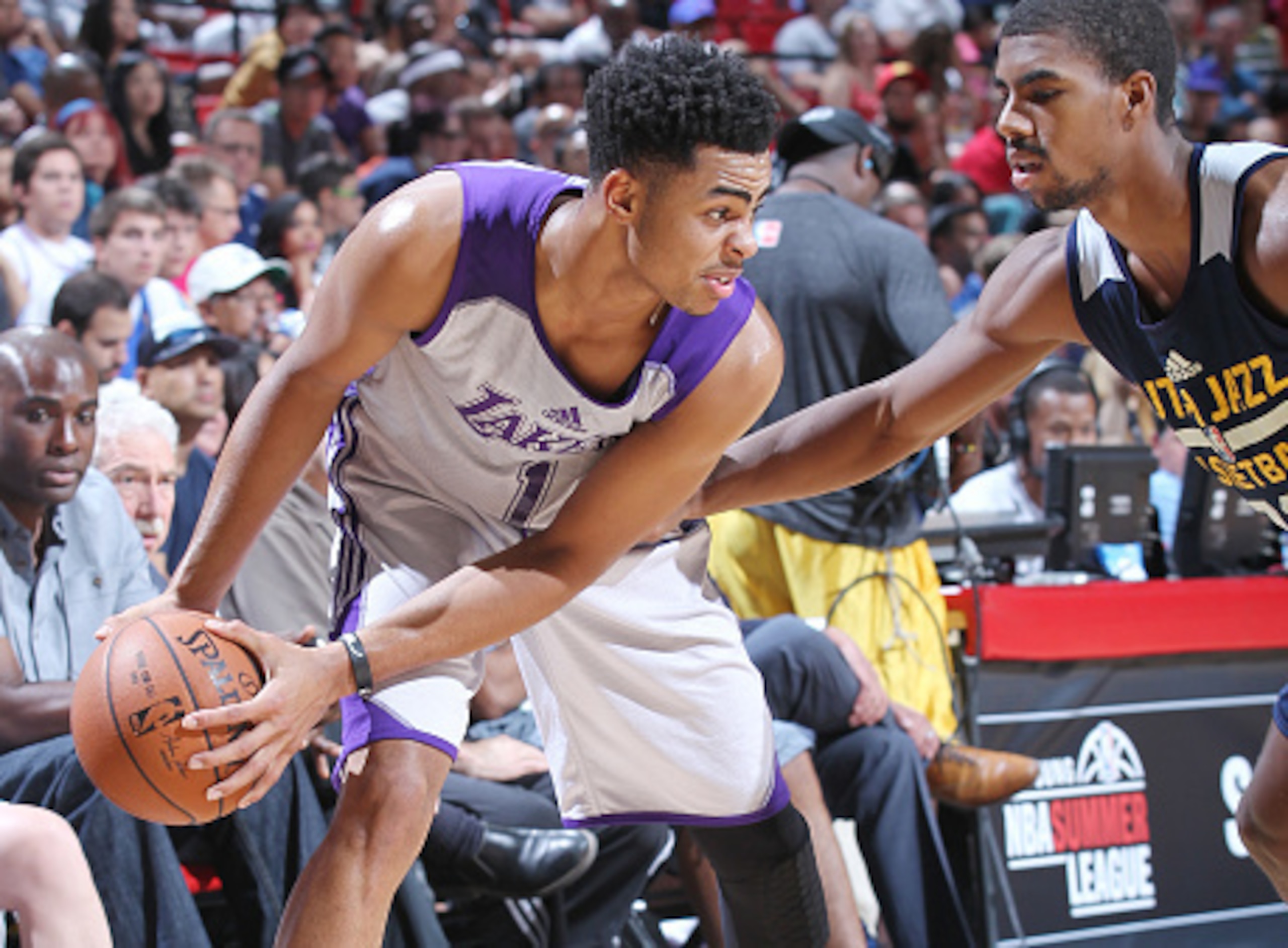
Summer Grade: C+
D'Angelo Russell's C+ grade isn't a reflection on his outlook as a prospect. He just didn't perform very well in Las Vegas, where he struggled mightily with inefficiency due to questionable decision-making and shot selection.
Russell forced the issue too many times as a scorer, ball-handler and passer. In five games, he tallied just 16 assists to a whopping 26 turnovers while shooting 37.7 percent overall and 2-of-17 from downtown.
At times, he just looked too nonchalant. But a strong closeout game against the Utah Jazz (21 points) allowed Russell to leave town on a high note.
We also saw a number of nifty passes that highlighted his spectacular vision. And though it didn't consistently fall, he flashed the dangerous pull-up jumper that's likely to become his signature weapon.
I wouldn't panic about Russell or his future potential, but upside won't save his early report card grade.
Jahlil Okafor, Philadelphia 76ers, C
3 of 10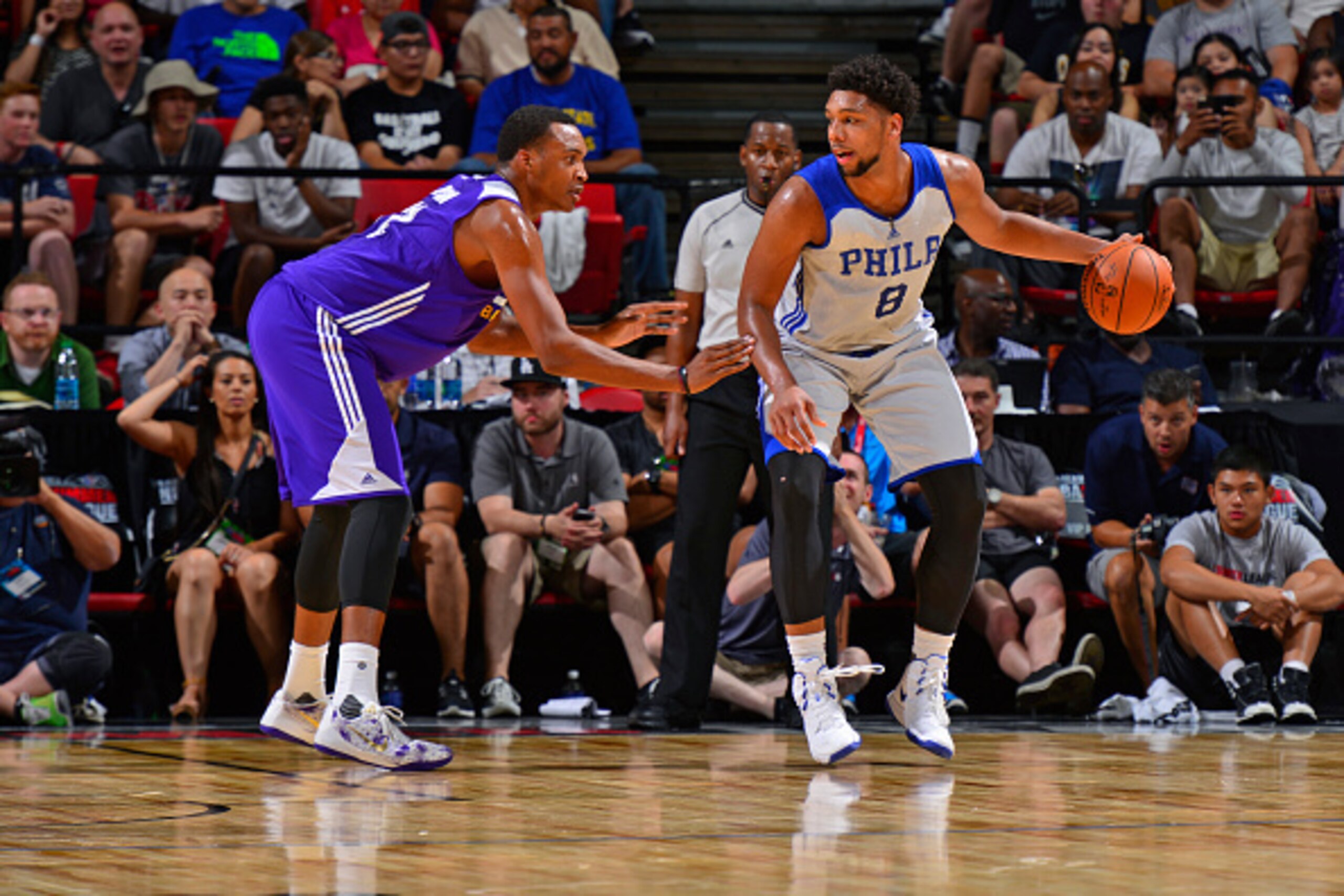
Summer Grade: B+
Jahlil Okafor's advanced post game was on point for most of summer league. He flashed the entire arsenal of moves fueled by terrific footwork and awareness with his back to the basket.
In five games—three in Utah and two in Las Vegas—Okafor averaged 15.8 points, which he generated off spins, fallaways, up-and-unders and various finishes on the block.
He even looked good attacking off the dribble from 15-20 feet out, having shown off his handle, body control and scoring ability on the move. Okafor did his job under the boards as well, pulling in 8.4 rebounds per contest.
Still, it wasn't all positive for the big fella, who turned the ball over at least four times in each game.
He also only shot 44 percent, a big difference from the 66.4 percent he shot against smaller college centers. Okafor's lack of burst and explosiveness was evident on a number of possessions that saw defensive size, length and athleticism help neutralize his sharp skills in the paint.
Free-throw shooting continues to look like a major issue as well, as he shot just 39.1 percent on 32 attempts. He unsurprisingly wasn't much of a factor in rim protection, either. Okafor blocked just four shots in a total of 153 minutes.
Still, it was good to see his scoring attack work without any flags being raised. Okafor will enter his rookie year as a good bet to emerge as the team's No. 1 option on offense.

Kristaps Porzingis, New York Knicks, PF
4 of 10
Summer Grade: B+
With Kristaps Porzingis entering his rookie year labeled a project, the expectations heading into summer league weren't particularly high.
But it was tough not to come away impressed with the versatile Latvian, who flashed glimpses of the upside that's had scouts buzzing since 2013.
In four games, Porzingis averaged 10.5 points on a solid 48 percent shooting.
Despite playing out of position at center, Porzingis looked comfortable operating around the key. He made a few athletic finishes at the hoop and displayed a confident jump hook in the paint.
Still, it's the threat Porzingis posed while facing the basket that opened eyes. We saw him knock down a pick-and-pop triple, a mid-range jumper off a screen and another in isolation from 20 feet away.
Porzingis even averaged 1.8 blocks in 20.5 minutes and created a highlight by jumping a passing lane and taking a steal coast to coast.
He did struggle in his final game, when he had trouble finishing through contact and getting off good looks. Porzingis also wasn't much of a factor on the glass (3.2 rebounds per game) throughout summer league.
But at 19 years old without the bulk to bang, Porzingis' low points in Vegas didn't come as a surprise.
Though he wasn't the most productive rookie in summer league, Porzingis capitalized on his opportunities while confirming his mismatch, two-way potential.
Mario Hezonja, Orlando Magic, SG/SF
5 of 10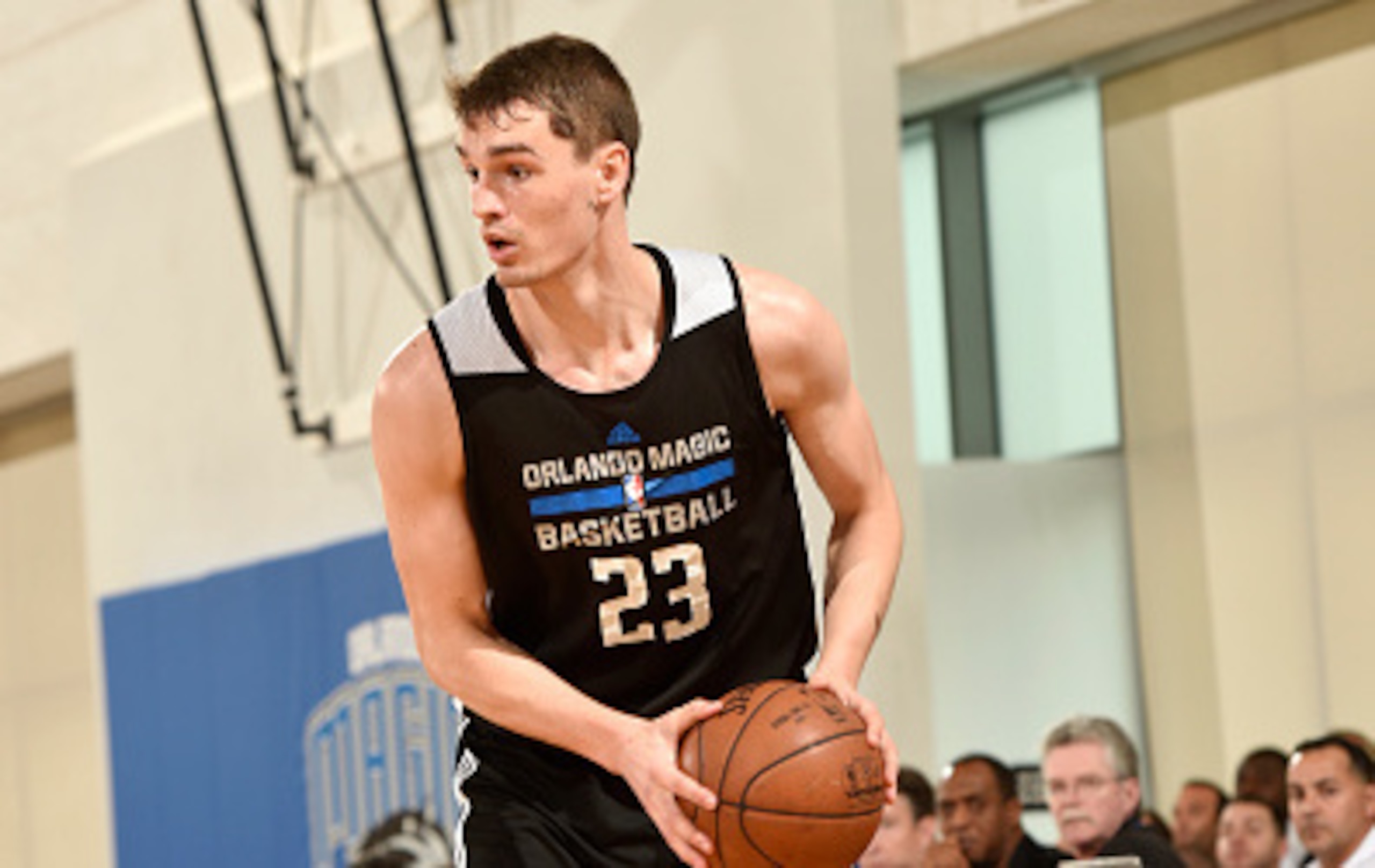
Summer Grade: B
Mario Hezonja only played in two games, though Magic fans have to feel good about what they saw. After going for 12 points and sinking the game-winning three against the Los Angeles Clippers during his debut, Hezonja followed up by scoring 14 points against the Oklahoma City Thunder in his second contest.
During both games, Hezonja flashed his ability to explode through driving lanes and finish above the rim. And though he wasn't particularly accurate, he did hit four threes and some difficult jumpers in the mid-range.
Shot selection will likely be the most talked-about wrinkle in his game. Hezonja forced up a bunch of low-percentage attempts off the dribble while spending a good portion of his time spotting up from deep. Fourteen of his 24 field-goal attempts actually came from behind the arc.
He was also a mixed bag on defense, having demonstrated lateral quickness, but also questionable awareness and concentration off the ball.
Overall, it's tough to take too much away from the limited action he saw in Orlando. For what it's worth, we still say he was the right pick at No. 5 based on who else was available on the board.
Willie Cauley-Stein, Sacramento Kings, C
6 of 10
Summer Grade: B+
Willie Cauley-Stein played the same role for the Sacramento Kings in summer league as he did for Kentucky throughout his college career. And he was effective in Las Vegas, having impacted stretches of games without needing touches or plays run through him in the offense.
Cauley-Stein averaged 11.4 points on 51.2 percent shooting in only 22.4 minutes—numbers that reflect high activity and efficiency.
His quickness, speed and athleticism stood out throughout his time in Vegas. Cauley-Stein picked up a number of easy buckets just by running the floor.
Meanwhile, he showed he can score inside at more difficult angles than just the one high above the rim. We saw him flip in a hook shot, drop-step into another and finish an and-1 reverse.
Cauley-Stein also lived up to his reputation as a defensive playmaker. He blocked 14 shots in five games, including one on the break that saw him chase Drew Crawford, a guard, the length of the floor.
Unfortunately, he didn't flash much of the offensive skills that generated buzz during his predraft workouts. Cauley-Stein struggled at times with contact and failed to showcase much touch or a one-on-one game.
Still, that's not what the Kings will be asking of him. In summer league, Cauley-Stein excelled in the areas in which Sacramento will need him to produce as a rookie.
Emmanuel Mudiay, Denver Nuggets, PG
7 of 10
Summer Grade: B+
Emmanuel Mudiay looked like a young pro out in summer league, which really shouldn't have come as a surprise.
At 6'5", 195 pounds, he's quick, strong and athletic—a physical mismatch for a ball-handler at any level.
In Las Vegas, Mudiay showcased his dynamic transition game and playmaking ability.
He had a number of good takes, finishes and passes in the open floor. With the game slowed down, Mudiay found ways to penetrate by changing speed and direction. He hit defenses with mean dribble hesitations that led to assists off drive-and-kicks and pick-and-pops. And we saw him knock down various tough jumpers around the key and inside the arc.
Unfortunately, reckless decision-making and shot selection showed up throughout his time in Vegas. He averaged five turnovers and shot 38.5 percent, and with that jumper so heavily scrutinized, he made just 2-of-14 threes and 50 percent of his free throws.
Still, nothing changed regarding Mudiay's reputation as an electric shot-creator. The summer-league eye test, along with the fact the Denver Nuggets traded incumbent point guard Ty Lawson to the Houston Rockets, could make Mudiay a good bet for 2015 NBA Rookie of the Year.
Stanley Johnson, Detroit Pistons, SF
8 of 10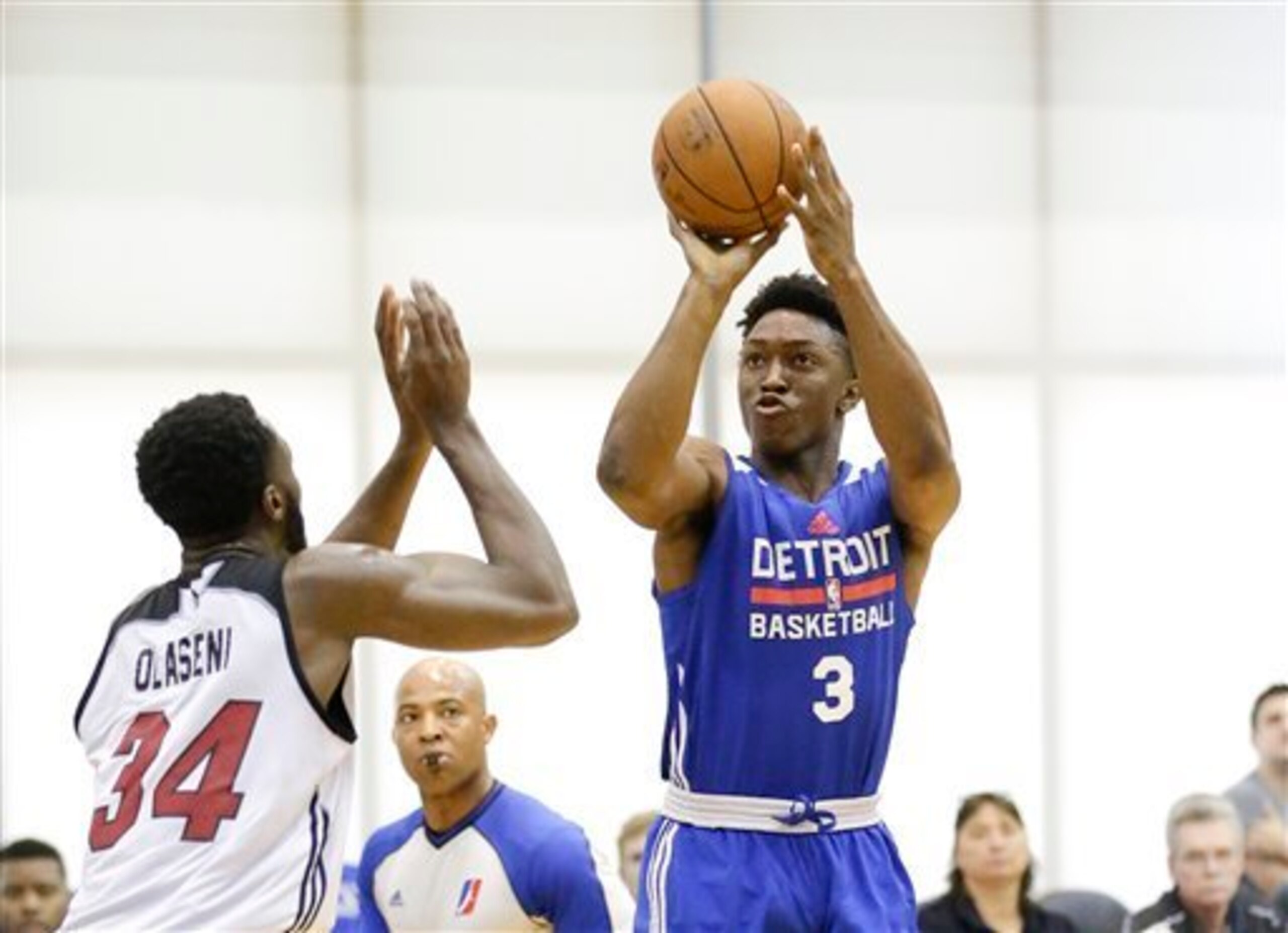
Summer Grade: A
Stanley Johnson made a strong pitch in summer league to become the Detroit Pistons' opening night starter at small forward.
He played under control while staying productive, averaging 16.2 points and just 1.8 turnovers on 57.7 percent shooting. With his 6'7", 245-pound frame, Johnson looked like a grown man despite being one of the youngest participants in Orlando.
The Arizona product made a number of strong finishes through contact and showcased what's a better-than-advertised off-the-dribble game. Johnson got to the rack off ball screens and change of direction, and we saw him knock down pull-ups and floaters in the mid-range. He even knocked down five of his 12 three-point attempts, appearing confident with his range and release.
Johnson's strength, length and activity also translated to 1.8 steals and one block per game.
Through five games, he looked like the whole package. Johnson scored on and off the ball, and he did so within the flow of his team's offense. He also flashed his defensive potential and versatility.
Had Johnson shot better than 59.3 percent from the free-throw line, he'd have been the only top-10 rookie to receive an A+ summer grade.
Frank Kaminsky, Charlotte Hornets, PF/C
9 of 10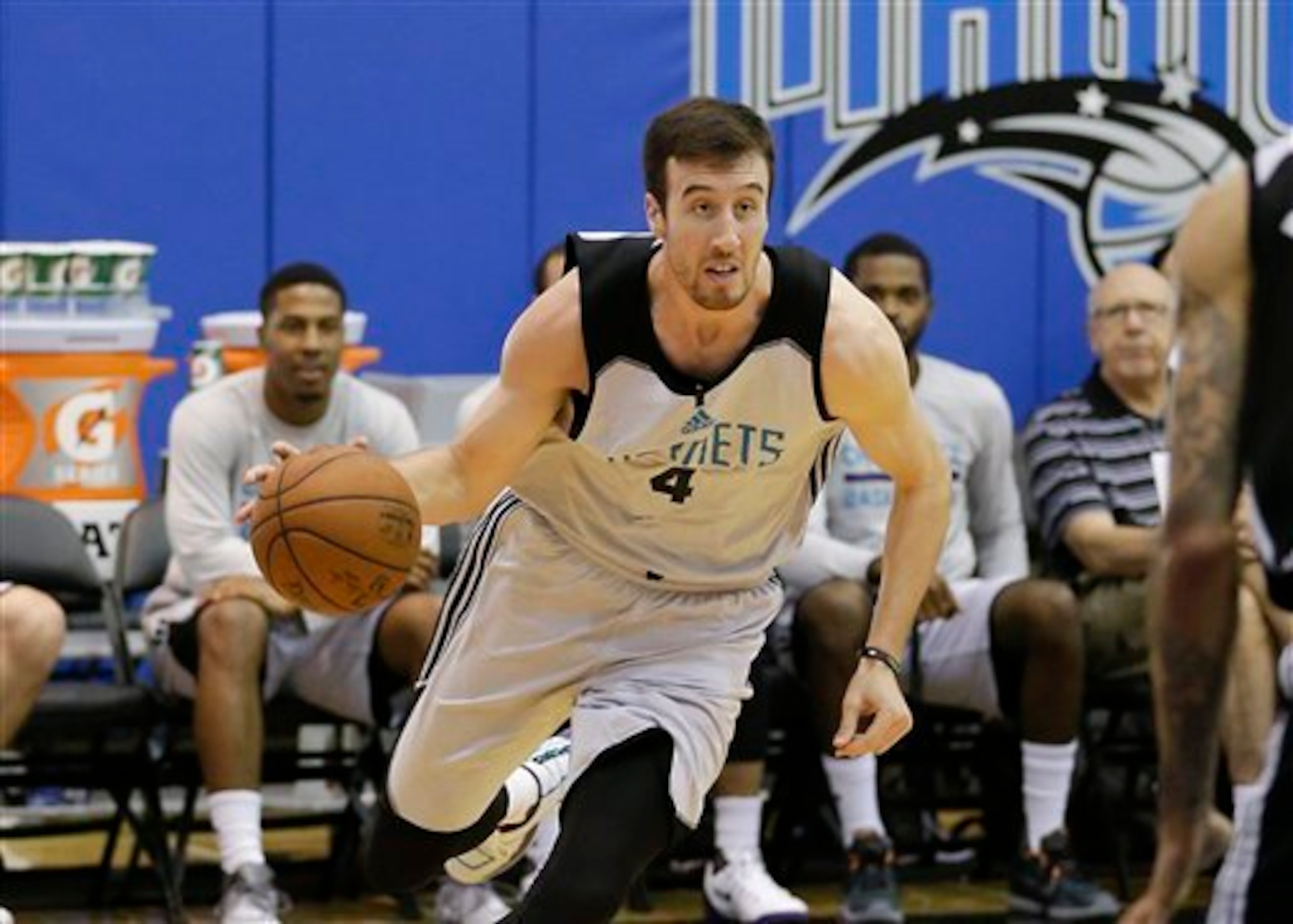
Summer Grade: B+
The lack of athleticism that held Frank Kaminsky back in the draft conversation wasn't overly restrictive in summer league. With textbook fundamentals and phenomenal touch, he was able to average 15.2 points on 38.9 percent shooting from deep through five games.
Pick-and-pop threes, one-dribble pull-ups, jumpers off screens—Kaminsky knocked down shots in a variety of manners from all over the floor. He also had a number of terrific drives attacking closeouts and finishing on the move.
Kaminsky did struggle inside against strength and length, and his grade would have been a notch higher had he shot better than 43.8 percent.
His 7.8 boards and one block per game in 32.6 minutes were also fairly underwhelming (but expected) numbers for a 7'1" big.
Still, it's tough to be too critical of Kaminsky, who often looked like the most skilled and versatile player on the floor.
I wouldn't be shocked to see him start alongside Al Jefferson sooner rather than later.
Justise Winslow, Miami Heat, SF
10 of 10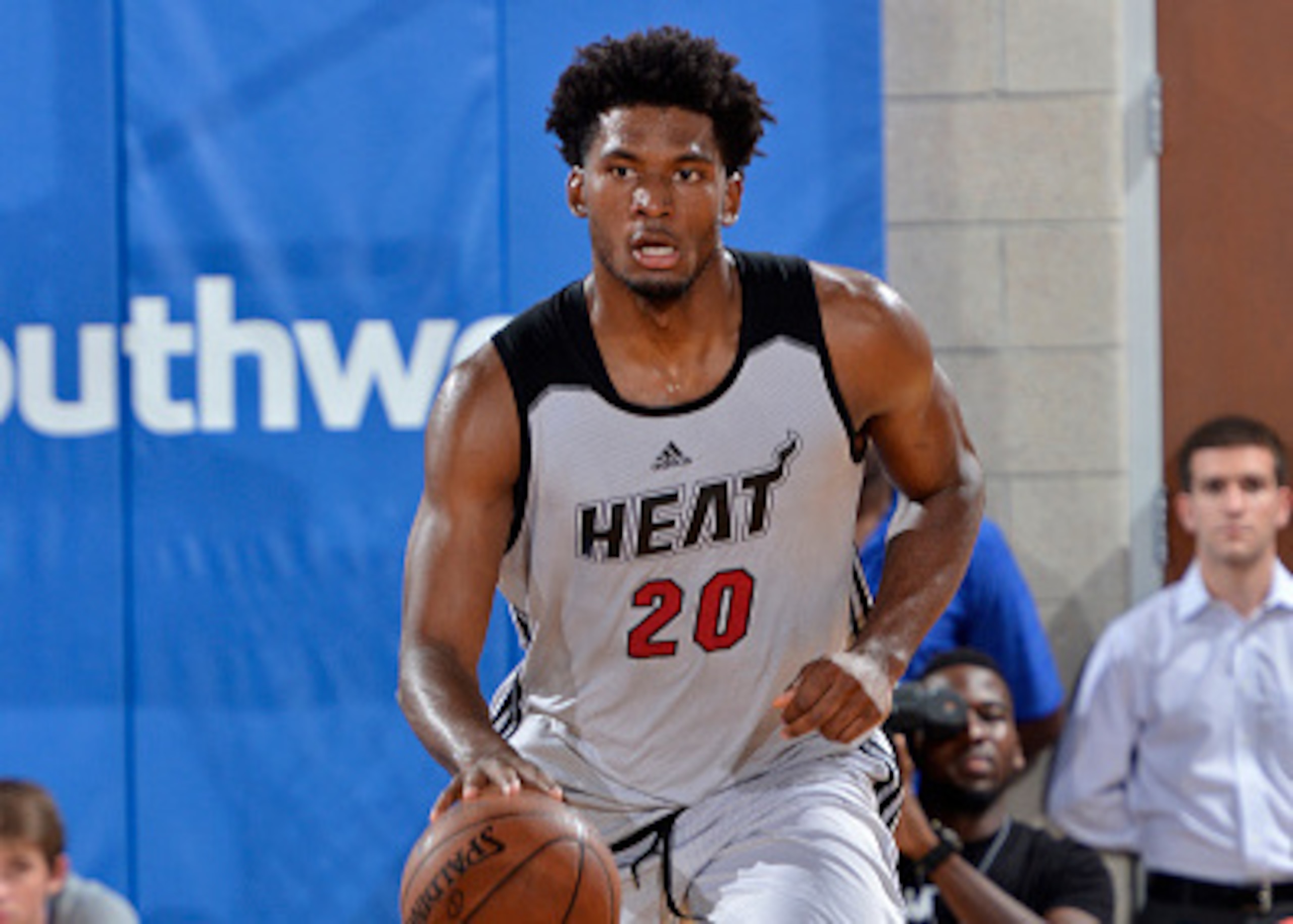
Summer Grade: B-
It wasn't the smoothest summer league for Justise Winslow, whose minutes were limited over his final three games due to general soreness and an eventual ankle injury.
“More games, more physical, more back-to-back,” he told the Miami Herald's Barry Jackson. “You have to figure out ways to fight through it.”
We did see Winslow do some nice things early in Orlando. He handled the ball a lot more than he did at Duke, and though the results were mixed, the positives were encouraging.
Clearly at his best when attacking, Winslow had some strong takes and a few nifty moves off the dribble. He got to the line 30 times (made 21) through his first three games.
He also finished some tough slashes and drives through, over and around rim protection.
But Winslow shot an ugly 33.8 percent from the floor and made just three of his 12 attempts from downtown. Unless he can get right to the basket, he struggles creating high-percentage shots for himself as a scorer.
His combined nine assists and 13 rebounds in 123 total minutes won't help out his summer grade, either.
It's still all about long-term potential for Winslow, who isn't likely to emerge as a highly productive rookie.

.jpg?w=2560 "Cam Ward Says He's Not A Loser")
.jpg?w=2560 "🚨 Texans Trade for MHJ")
.jpg?w=2560 "Grading MHJ Trade 📝")
.jpg?w=2560 "Chargers Fall to 0-5 🤢")

.jpg?w=2560 "MHJ Bought Own Jugs Machine")