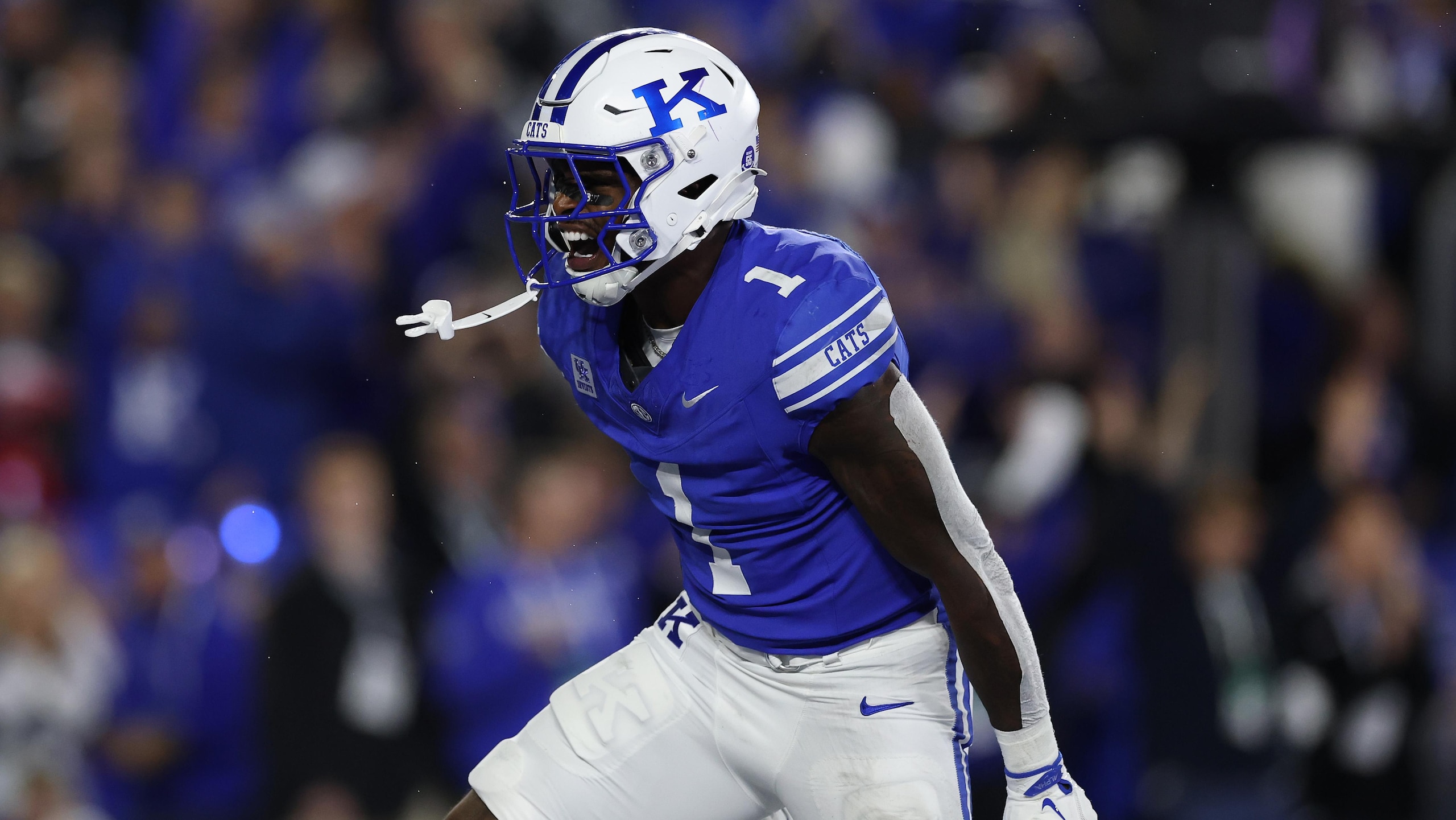
NY Giants 2015 Impact Meter: RB Shane Vereen
Last season the New York Giants ground attack finished 23rd in the NFL, averaging a paltry 100.1 yards per game.
A large reason for that was the blocking up front by the offensive line, which Football Outsiders graded as the 22nd-best run-blocking unit in the league.
However, the running backs weren’t blameless in the equation.
.jpg?w=2560 "Texans Titans Football")
.jpg?w=2560)
.jpg?w=2560 "Cardinals Giants Football")
Yes, injuries had a significant impact—probably more than initially thought (more on that in a minute).
Before discussing the injury angle, the first thing that needs to be noted is that the Giants didn’t have a consistent receiving threat out of the backfield.
While Rashad Jennings has that ability, when he had to miss five games because of knee and then ankle injuries, that left the Giants with Andre Williams to handle the bulk of the snaps at running backs.
Williams, you might recall, wasn’t known for his pass-receiving skills coming out of college. In his Heisman-worthy senior season at Boston College, he ran for 2,177 yards on 355 carries but had zero receptions, which is probably one of the reasons why he lasted until Day 3 of the 2014 NFL draft.
Because of this deficiency in Williams’ game—and yes, this is something he’s been working on during the offseason—whenever opponents saw him in the backfield, they pretty much didn't have to worry about devoting a linebacker to cover Williams as a potential receiver.
What does receiving have to do with the running game?
Simply put, when you put a one-dimensional player on the field, you might as well announce to the stadium which plays are coming.
Teams spend endless hours studying their opponents' tendencies regarding personnel packages, how they line up their offensive linemen (which can indicate run or pass depending on how wide apart the offensive linemen are), the quarterback’s cadence, down and distance, and so much more.
Teams then use these advanced analytics to narrow down what an offense might do in certain situations, which in turn helps a defensive coordinator draw up his game plan.
That is why general manager Jerry Reese made it a priority to add another running back to the mix, one who could be that change-of-pace back with enough speed and quickness to dodge defenders and, most of all, make things happen as a receiver out of the backfield.
That running back is 26-year-old Shane Vereen, a five-year veteran who most recently was with the New England Patriots.
2014 Season in Review
| 96 | 391 | 4.1 | 2 | 15 | 0 | |
| 52 | 77 | 447 | 8.6 | 3 | 24 |
The first thing to note about Vereen’s 2014 season is that when the ball found its way into his hands, good things happened.
Let’s look at his rushing stats for a moment. As a rusher, Vereen averaged one first-down run per every 6.4 carries in 2014.
It’s as a receiver where Vereen really came through. He caught 67.5 percent of the passes targeted at him, recording a first down on every 2.2 pass receptions.
Let’s see how that production stacks up against that of all five of the Giants running backs from last year:
| Giants RBs | 62 | 99 | 62.6% | 469 | 0 |
| Vereen | 52 | 77 | 67.5% | 447 | 3 |
The bottom line? Vereen alone nearly matched what the five Giants running backs did in the passing game last year.
Now let’s look at how Vereen’s talents in the passing game can make a difference by using this first-quarter play from Super Bowl XLIX, a 3rd-and-10 from the Patriots’ 26-yard line.
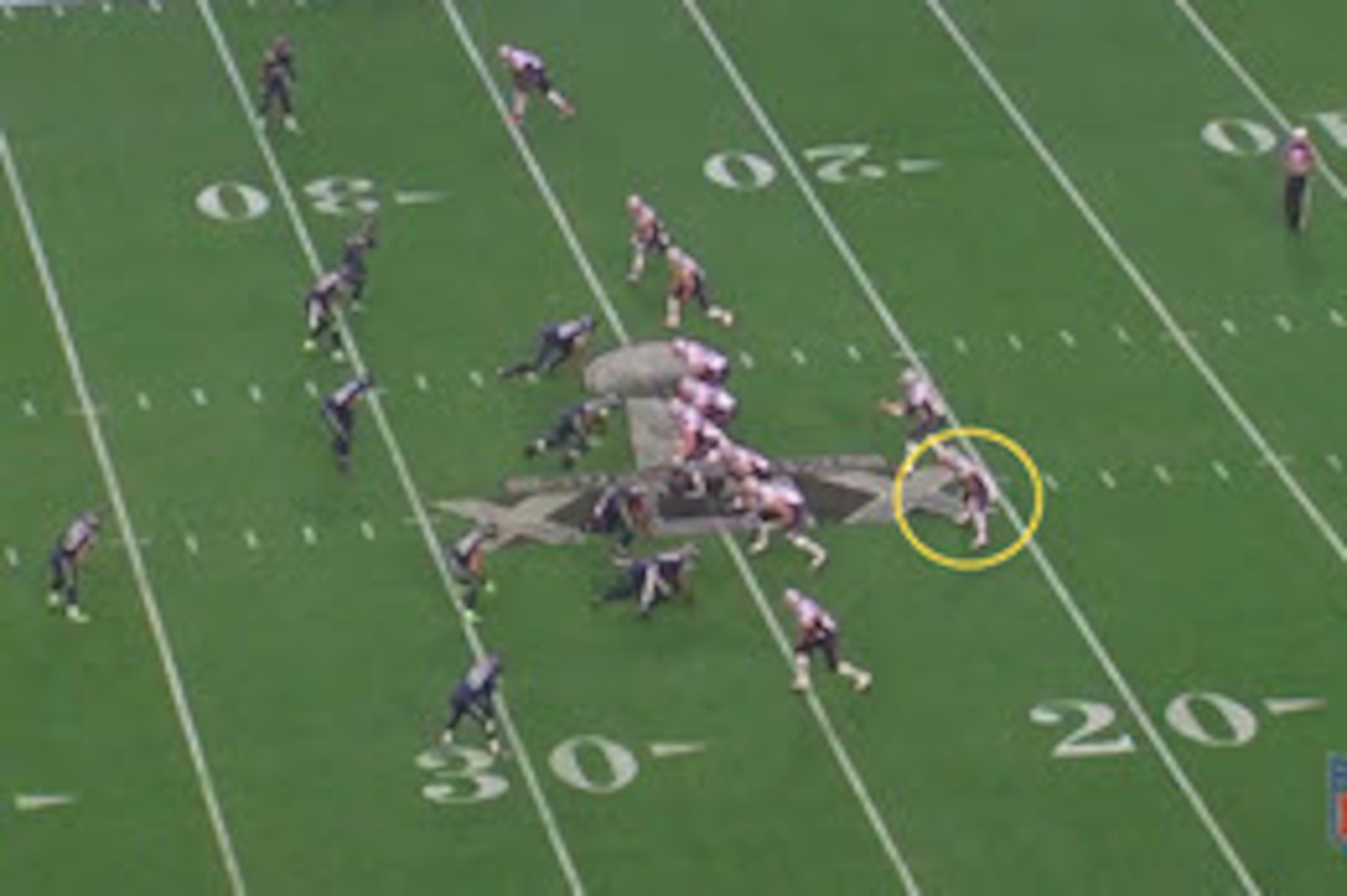
The Patriots are lined up in the shotgun, with Vereen, the single back, there to serve as the pass protector.
The only thing is, he’s not going to pass-protect; instead, he’s going to run an outside route at the 30-yard line for a five-yard gain.
While that wasn’t a first down, here’s what happened when Vereen ran his pattern:
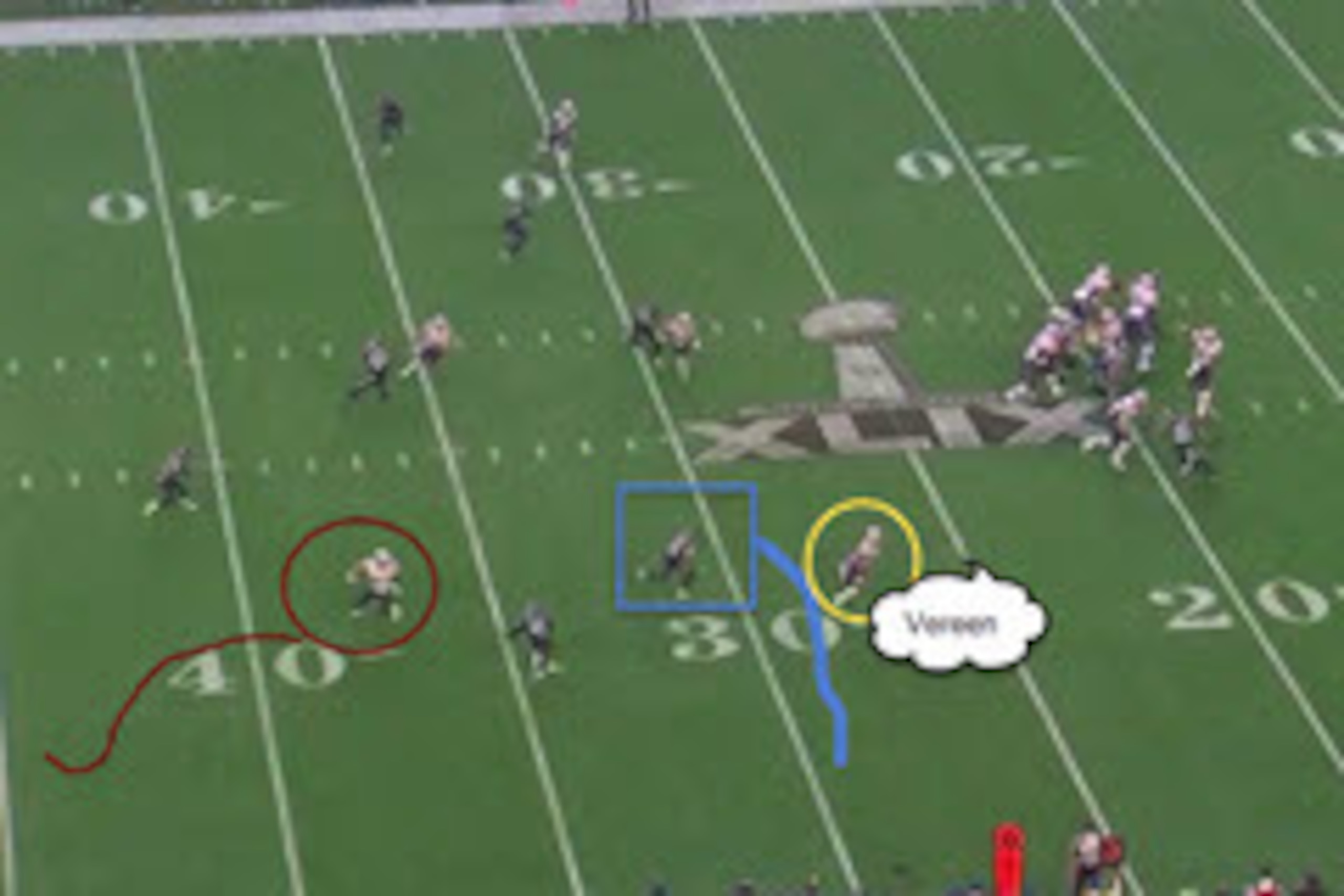
Because he is respected as a receiving option, he draws a linebacker down to cover him in the flat area.
Meanwhile, because the linebacker has to come down to cover Vereen, that enables his teammate to get behind the coverage (red circle). If that receiver had been the actual target, he had significant running room.
2015 Outlook
Offensive coordinator Ben McAdoo likes versatile players—the more they can do, the better, and in Vereen’s case, he’s going to be asked to do a lot.
The beauty of his versatility is that when he lines up in the backfield, the offense isn’t necessarily telegraphing what it intends to do. Add to that Vereen’s ability to pass-block—per Pro Football Focus, he only allowed one quarterback sack last season—and it would not be surprising if he ends up the chief third-down back.
While it’s difficult to predict what percentage of snaps each running back is going to get on a weekly basis, it would not be shocking if the Giants begin the season with Jennings as their starter and Vereen coming in to relieve him after every so many series.
Williams will probably have a specific role as the short-yardage and goal-line back, and Orleans Darkwa, who is projected to be the fourth running back, will play mainly on special teams if he is active.
The other thing to remember is that if Jennings, who has yet to make it through a 16-game season, goes down for any period of time, Vereen can easily step in to fill that role.
In fact, it wouldn’t be surprising at all if, down the line, Vereen and Jennings swap places on the depth chart just as Brandon Jacobs and Ahmad Bradshaw once did in 2010.
That move, remember, helped reduce the wear and tear on Jacobs, who hadn’t completed a 16-game season since his rookie year in 2005. That move also enabled Jacobs to finish the 2010 campaign with his highest rushing average, 5.8 yards per carry.
While it’s too soon to predict if a similar move is coming for Vereen and Jennings, or if such a move would yield the same results, it’s just another possibility for Vereen and his already sky-high impact meter.
Projected 2015 Impact Meter: 10 out of 10
Patricia Traina covers the Giants for Inside Football, the Journal Inquirer and Sports Xchange. All quotes and information were obtained firsthand unless otherwise sourced.
.jpg?w=2560 "Broncos Chargers Football")

.jpg?w=2560 "MHJ Bought Own Jugs Machine")