

Why 4-2-3-1 Should Be the Go-to Formation for Arsene Wenger's Arsenal in 2015/16
As Arsene Wenger looks at his squad for the 2015/16 season, one thing that immediately becomes clear is the huge array of options at his disposal. He has his most complete roster for several seasons, and there are many different potential combinations of players he could use to construct his XI.
However, one thing should remain consistent: If Arsenal are to prove triumphant next season, they must retain their 4-2-3-1 system.
It would be surprising to see Wenger make a change. He’s not a tinkerer by nature. The early part of his Arsenal reign saw him stick steadfastly with a variant on a basic 4-4-2, before the departure of Patrick Vieira saw him compensate with a five-man midfield.
TOP NEWS

Messi Picks Next Gen Talent 💫
Live World Football Goals and Highlights 🔥
5 Potential Replacements for Michael Carrick as Manchester United Manager Amid Rumors
At the start of last season, he made a small and surprising change to implement a 4-1-4-1 formation. That was seemingly designed to accommodate the trio of Jack Wilshere, Aaron Ramsey and Mesut Ozil in the same team, with Ozil asked to play as a floating playmaker from the left flank.
It was not a switch that proved successful. Ozil looked tactically and emotionally lost on the left flank, while the tendency of Ramsey and Wilshere to bomb forward left Arsenal’s one holding midfielder outnumbered.
When the Gunners reverted to 4-2-3-1 on the cusp of winter, their form dramatically improved. It’s a system the players are familiar with—and, crucially, it’s one ideally suited to the personnel.
Apart from a brief spell at the very start of his reign when he employed three centre-backs, Wenger has been a constant devotee to a back four. With forward-thinking full-backs like Mathieu Debuchy, Kieran Gibbs and Hector Bellerin at his disposal, this setup allows Arsenal to improve their attacking threat on the overlap.
As a proactive coach, that appeals to Wenger. The addition of Petr Cech should add more stability and organisation to an already improving back four.

It’s in front of the defence where Arsenal are arguably strongest. Their midfield is packed with talent, though crucially it is at its most robust when there are two players patrolling ahead of the defence. Mikel Arteta often looked isolated and exposed as the sole holding player in a 4-1-4-1—deploying two players there provides a greater level of security.
Last season, Wenger stumbled upon the combination of Francis Coquelin and Santi Cazorla, and given their enormous success he would be crazy to change the formula. At the start of 2014/15, few would have imagined that either of these two players would be regulars in these roles.
However, it works fantastically well. Coquelin is a natural destroyer; Cazorla a natural creator. The pair dovetail beautifully, and playing from deep allows the Spaniard to exploit the full range of his passing. It seems certain that both players will play a pivotal role for Arsenal in 2015/16. They will receive able support from the likes of Aaron Ramsey and Jack Wilshere, who will be accommodated in the wide attacking roles if they struggle for space in the midfield.

At the heart of the three players behind the attacker will be Mesut Ozil. Less than a year ago he found himself shunted out to the wing, his fragile confidence decreasing with every match in which he was fielded out of position.
However, since returning from injury in January, Ozil has largely played in his preferred spot as a No. 10. The results have been spectacular, with the World Cup winner producing the best form of his time in England and justifying his reputation and transfer fee. A huge part of the success of this system is the fact that it gives Ozil an appropriate role to express his talent.
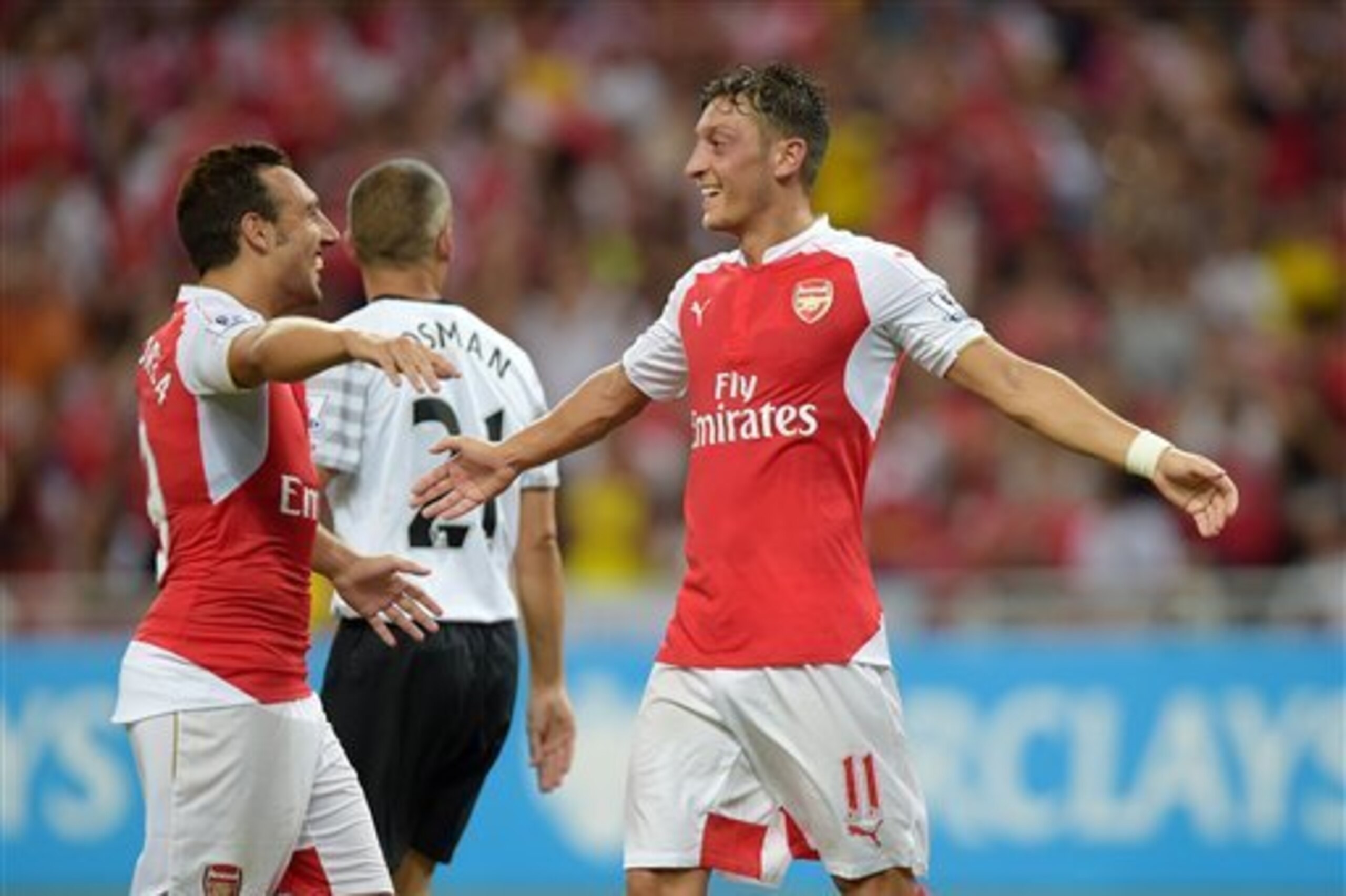
When he looks up and attempts to play an incisive pass, Ozil is guaranteed to have diagonal runners ahead of him, as Arsenal tend to line up with wide men who prefer to drive infield.
Alexis Sanchez is a prime example: Although technically stationed on the left flank, his preference is to cut inside on to his preferred right foot. Similarly, he makes darting runs between full-back and centre-half, disorientating defences and ensuring Ozil always has a mobile target for his radar-like distribution. On the opposite flank, the likes of Danny Welbeck and Alex Oxlade-Chamberlain are capable of following suit.
The functionality of the formation is also contingent on those wide players being prepared to track back and do their defensive duties, and fortunately the aforementioned trio all appear prepared to dig in when required. Those who are not as given to working hard in wide areas, such as Lukas Podolski, have found themselves marginalised.
When it comes to the centre-forward role, Wenger has a degree of flexibility. Welbeck provides an athletic option through the middle, but the choice is more likely to be between Olivier Giroud and Theo Walcott. Giroud acts as a pivot around which less physical players can operate, playing wall-passes and collecting flick-ons, while the Frenchman harnesses his upper-body strength to keep the opposition defenders at bay.

Walcott offers a very different threat: although his link-up play is not up to the same standard as Giroud, he does have the speed to be dangerous when running in-behind. The availability of both Giroud and Walcott means that Wenger is able to tailor his attacking setup according to both the form of the individuals concerned and the nature of the opposition.
The 4-2-3-1 gives Arsenal flexibility, security and plenty of attacking threat. If they are to end their long wait for the Premier League title, it will surely be with this system.
James McNicholas is Bleacher Report's lead Arsenal correspondent and is following the club from a London base throughout 2015/16. Follow him on Twitter here.

.jpg?w=2560 "Cam Ward Says He's Not A Loser")
.jpg?w=2560 "🚨 Texans Trade for MHJ")
.jpg?w=2560 "Chargers Fall to 0-5 🤢")
.jpg?w=2560 "Grading MHJ Trade 📝")


.jpg?w=2560 "MHJ Bought Own Jugs Machine")