

The 1970 FIFA World Cup in Mexico featured numerous football legends, including England's Sir Geoff Hurst, Brazil's Pelé, and West Germany's Gerd Müller.
It was also the first edition of the competition to feature an official match ball created by Adidas.
Since then, the three-striped sportswear manufacturer has provided a ball for every global soccer showpiece, and on Thursday, it unveiled its latest offering.
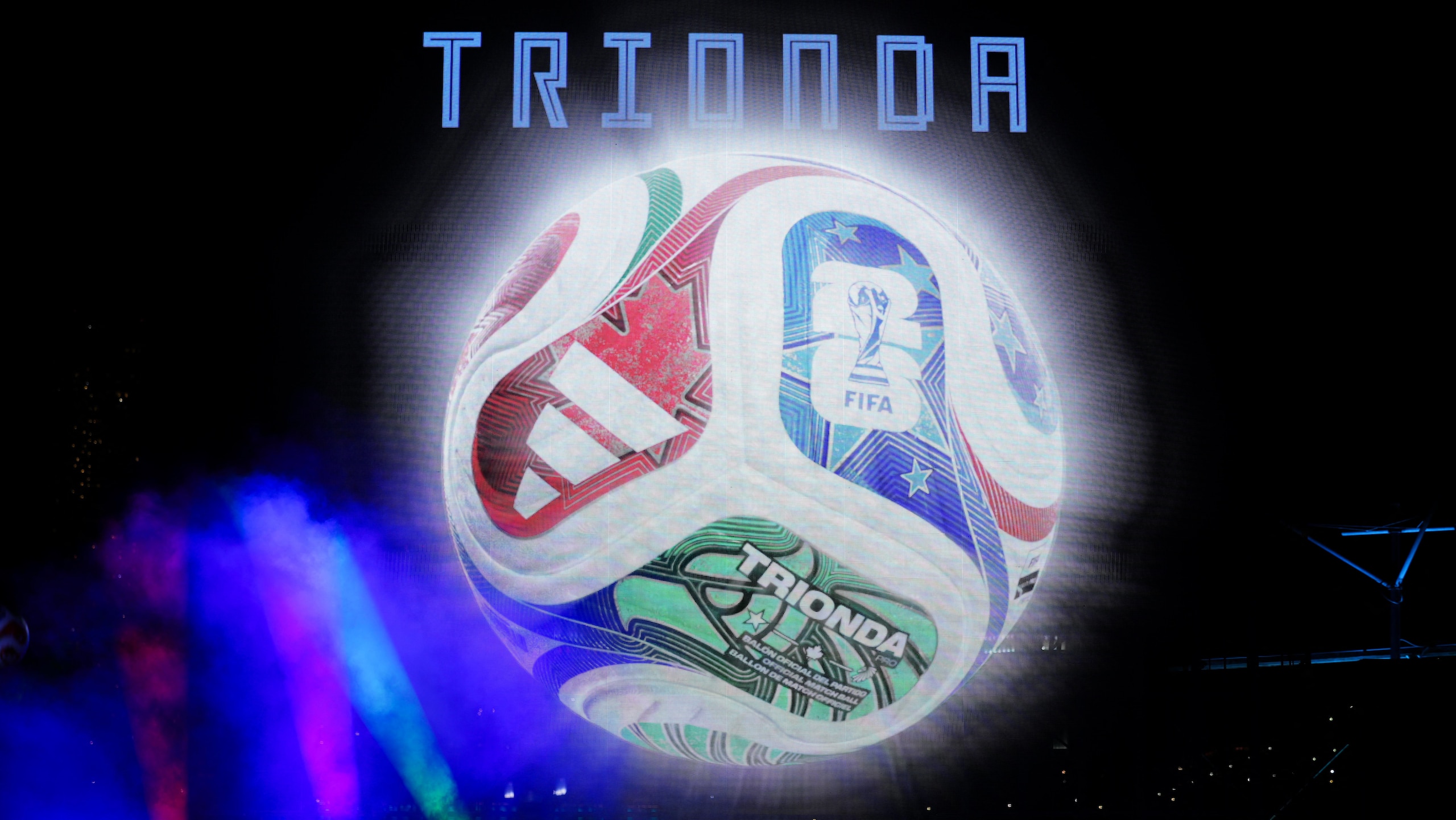
The Trionda will be kicked around Canada, Mexico, and the United States in 2026.
Regarding the design, Solène Störmann, Global Category Director of Football Hardware for Adidas, said, "Each arm is dedicated to each host nation and reunites in the middle of the ball in the form of a triangle, which showcases how they're hosting the World Cup together."
The patterns and color scheme are representative of each country, and embossed symbols—a maple leaf for Canada, an eagle for Mexico, and a star for the United States—are dotted all over the ball's surface.
But the Trionda has another interesting feature: there is a motion sensor inside it.
Hannes Schaefke, Football Innovation Lead for Adidas, said upon unveiling, "We can track every event, every interaction the player has with the ball. Every location at any given moment is being tracked by a local positioning system. So this sensor essentially sends a signal 500 times per second, to anchor points around the stadium, which is generally pretty cool."
Ahead, we've taken a punt at ranking every official World Cup match ball produced by Adidas up until the Trionda, using factors such as each ball's name, aesthetics, relevance to the host nation, and gameplay characteristics to inform their placing.
Where do you think the Trionda will land among this group after all 104 games have been played at the 2026 World Cup?
14. South Africa, 2010: Jabulani
1 of 14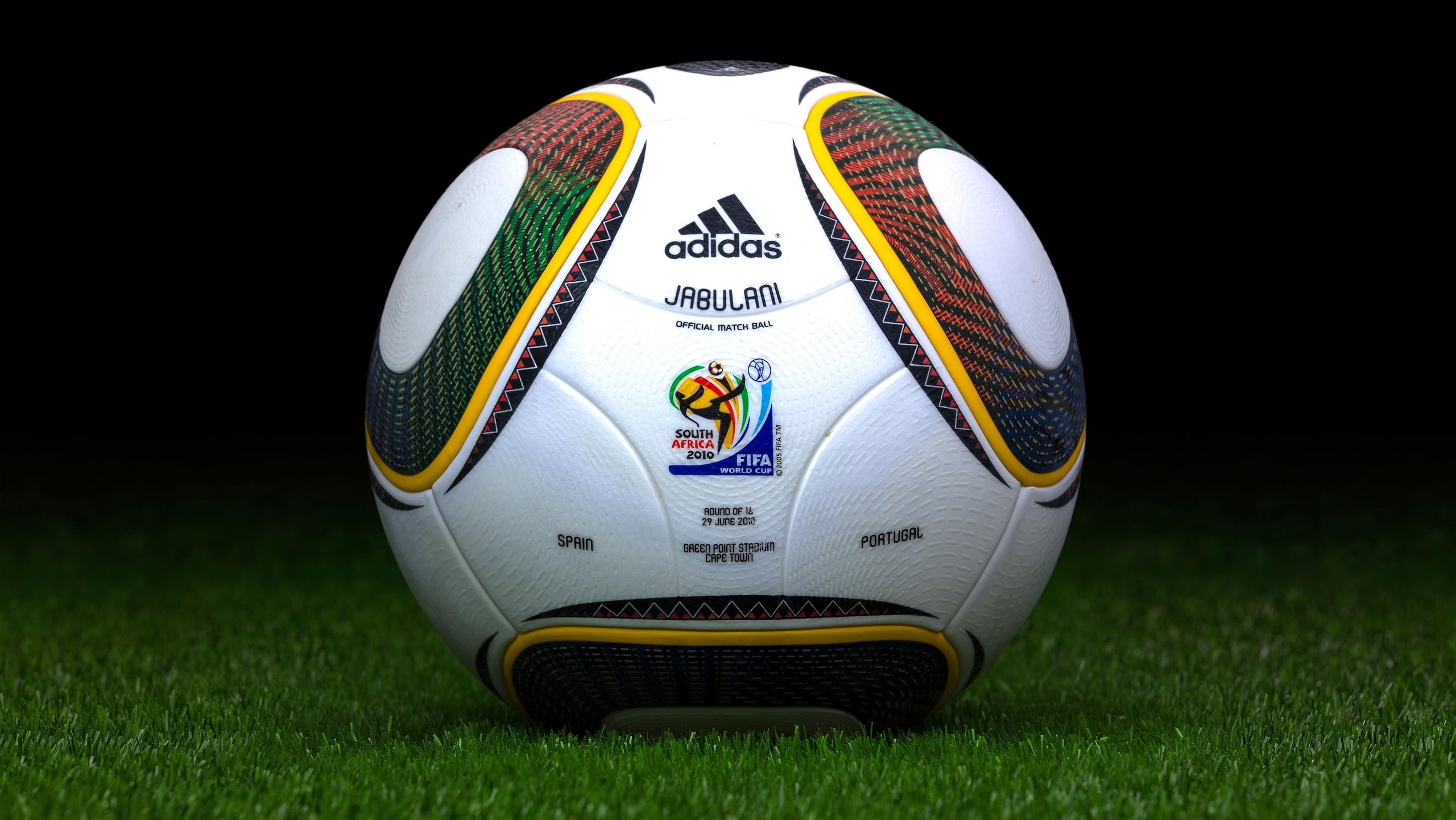
The Jabulani is an iconic football for all the wrong reasons.
In Zulu, Jabulani means "to celebrate," but for the tournament's players, there wasn't a whole lot to toast about.
The eight-panel design was an attempt to make the ball rounder, while its unique texture was intended to enhance grip and control.
However, multiple tournament stars were vocally critical of the Jabulani, which didn't play like typical footballs and had a tendency to change direction in mid-air.
Brazil goalkeeper Julio César described it as being like a cheap "supermarket" football, while Italy's No. 1 goalkeeper, Gianluigi Buffon, said it was "absolutely inadequate."
Even the magician Lionel Messi struggled to get the ball under his spell.
The result was a lot of misplaced passes and shots, as well as goalkeeping howlers.
It's fair to say pretty much everyone hated the Jabulani. Well, apart from Uruguay's Diego Forlan.
13. Spain, 1982: Tango España
2 of 14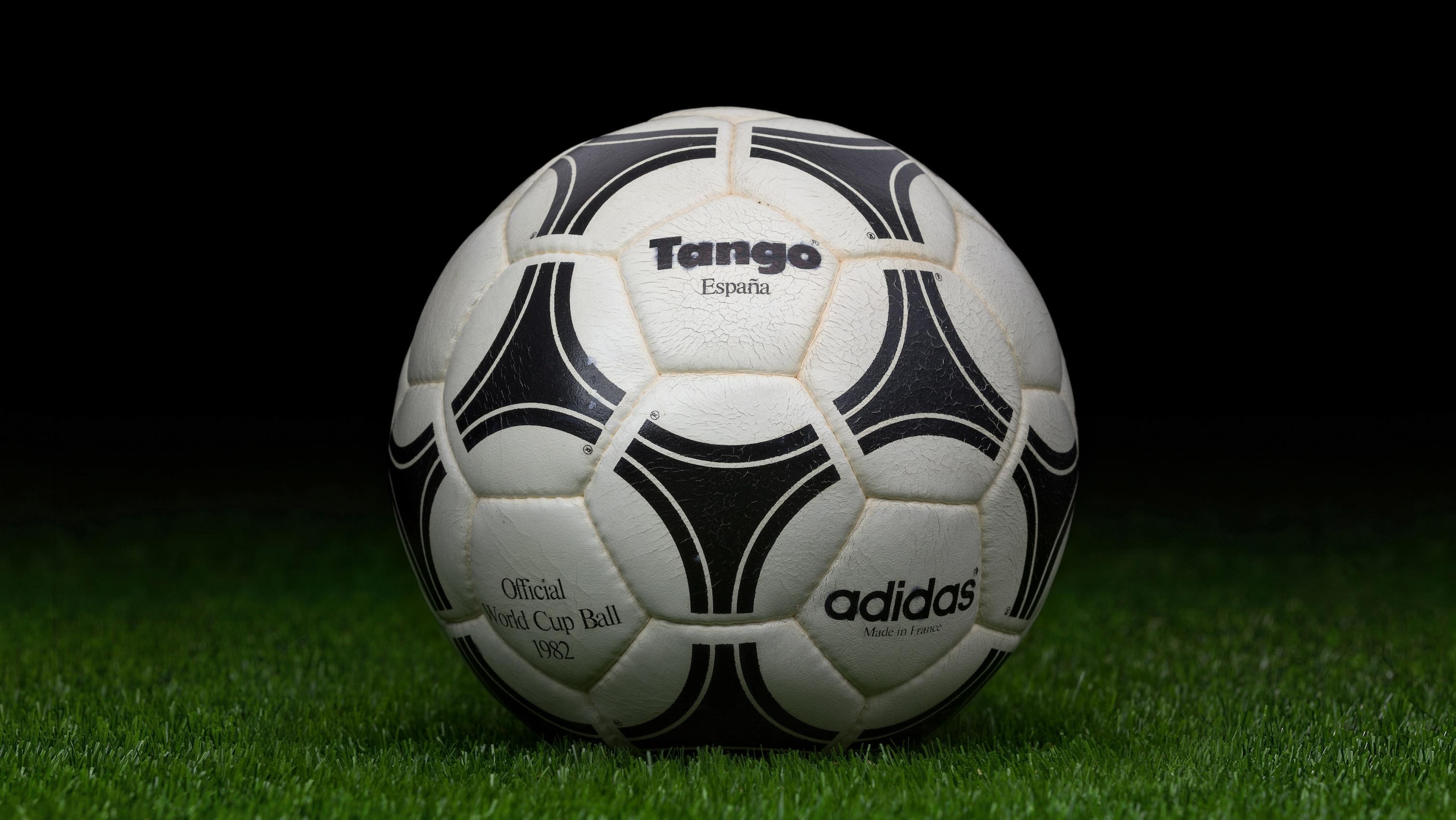
While the Jabulani is perhaps the most disastrous of World Cup balls, the Tango España isn't too far behind.
According to the BBC, rubberized seams were supposed to make the ball more water-resistant.
However, they were awful at doing that job, meaning the match ball had to be changed multiple times during games.
It's not a bad-looking ball, and the name is at least relevant to the 1982 tournament's hosts. But the Tango España can't expect many points after it failed to keep itself together.
12. West Germany, 1974: Telstar Durlast
3 of 14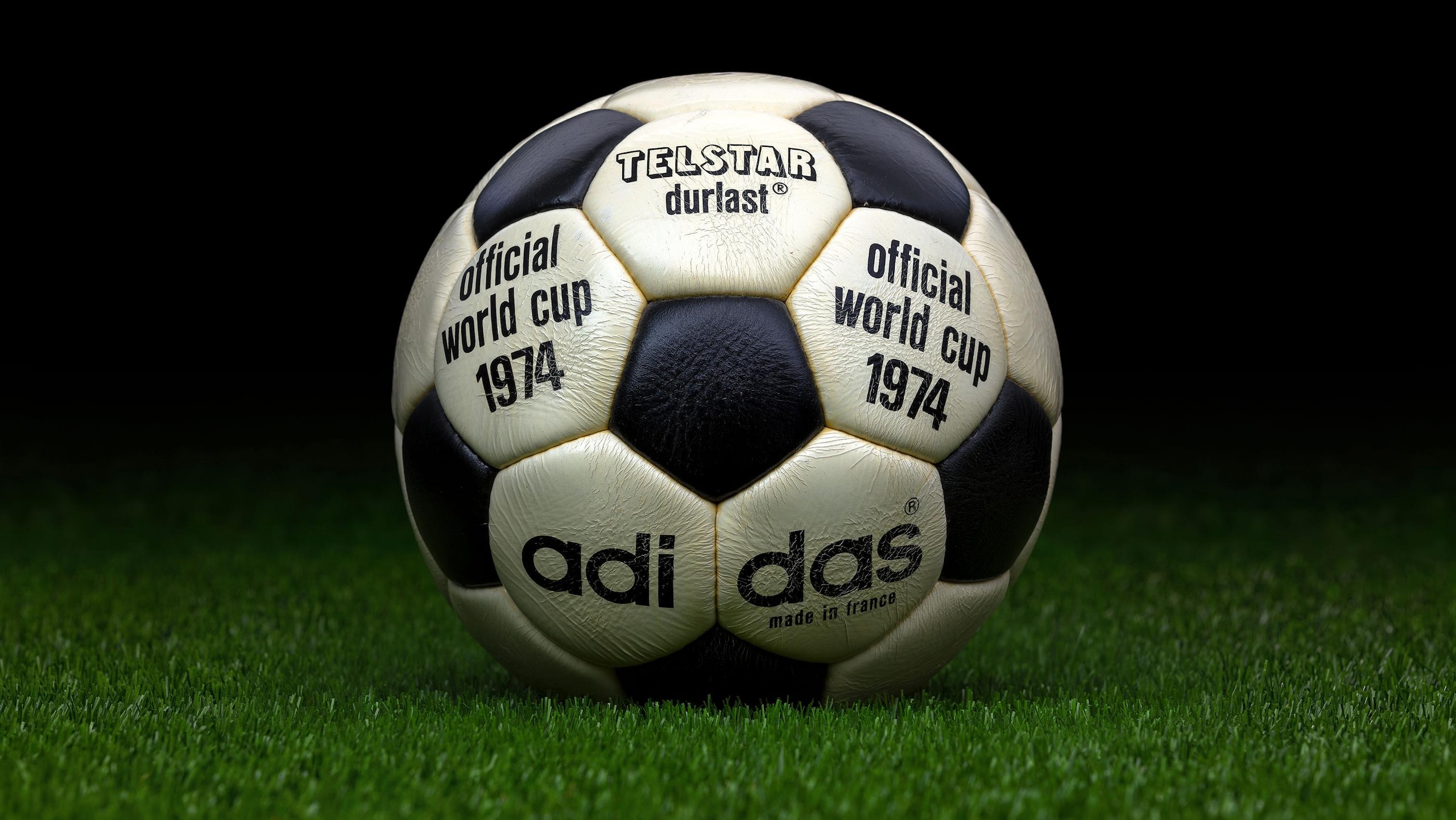
The Telstar Durlast, introduced for the 1974 FIFA World Cup in West Germany, loses points simply because it is far too similar to its predecessor (which we'll get to shortly).
Durlast isn't a reference to a unique and interesting part of German history; it just refers to the plastic coating that made the ball more resistant to the effects of water and mud. Snore.
While no one described the Telstar Durlast as "dreadful," as England goalkeeper David James did of the Jabulani, there are not many reasons for the 1974 edition to climb higher in this ranking.
The white-out version used in floodlit matches, known as the Chile Durlast, was actually much cooler.
11. Argentina, 1978: Tango Durlast
4 of 14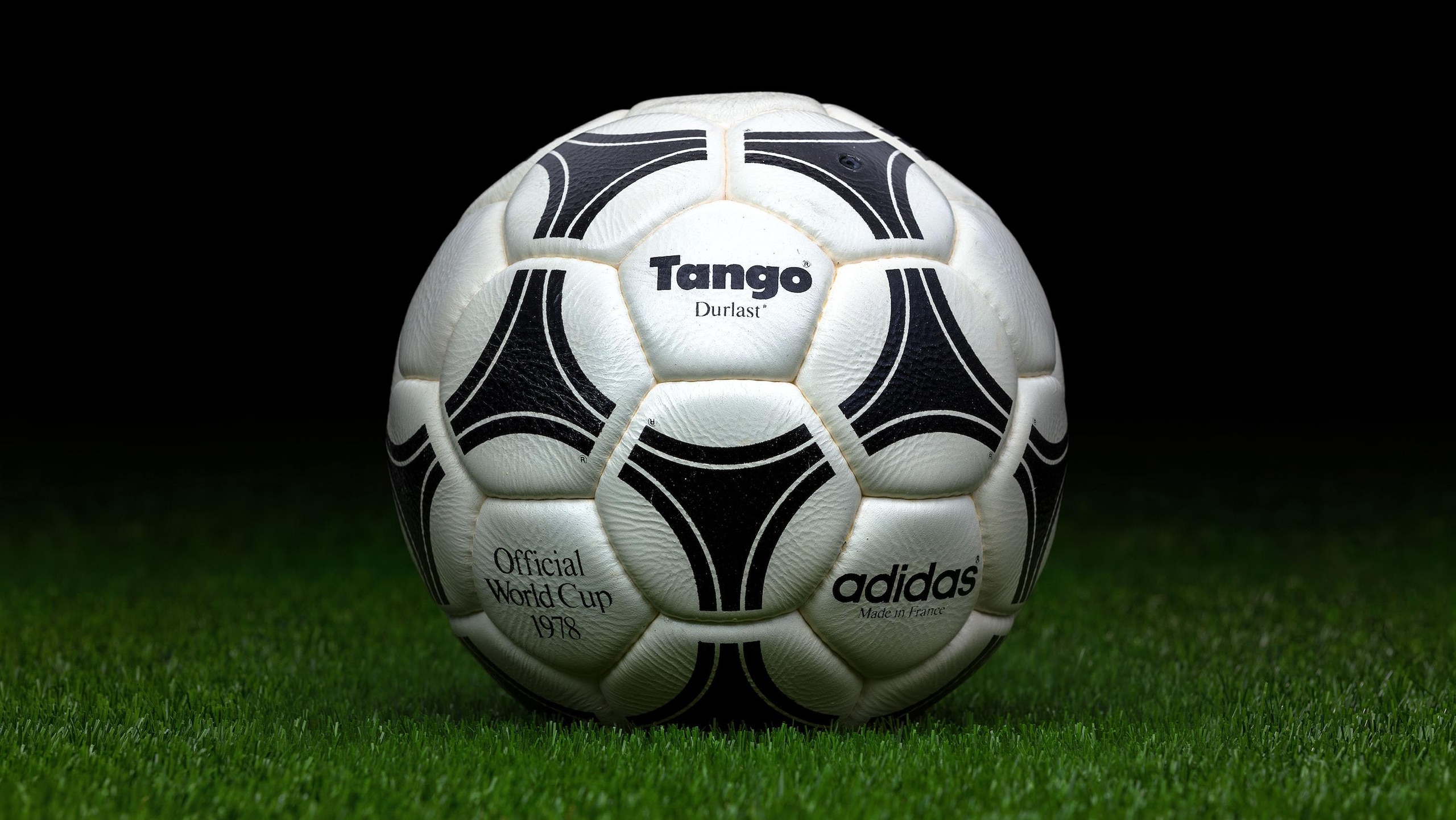
The Tango used in Argentina in 1978 was a much better version than the Spanish one that came four years later.
Impressively, this ball actually held together on the pitch, making it superior to its Iberian cousin.
The departure from the black and white hexagons to a circular patterned style would become Adidas' standard football design for World Cup tournaments over the next two decades.
It's another ball that came with the uninspiring "Durlast" label, but at least the use of "Tango" referred to a popular national dance for the host nation.
10. Russia, 2018: Telstar 18
5 of 14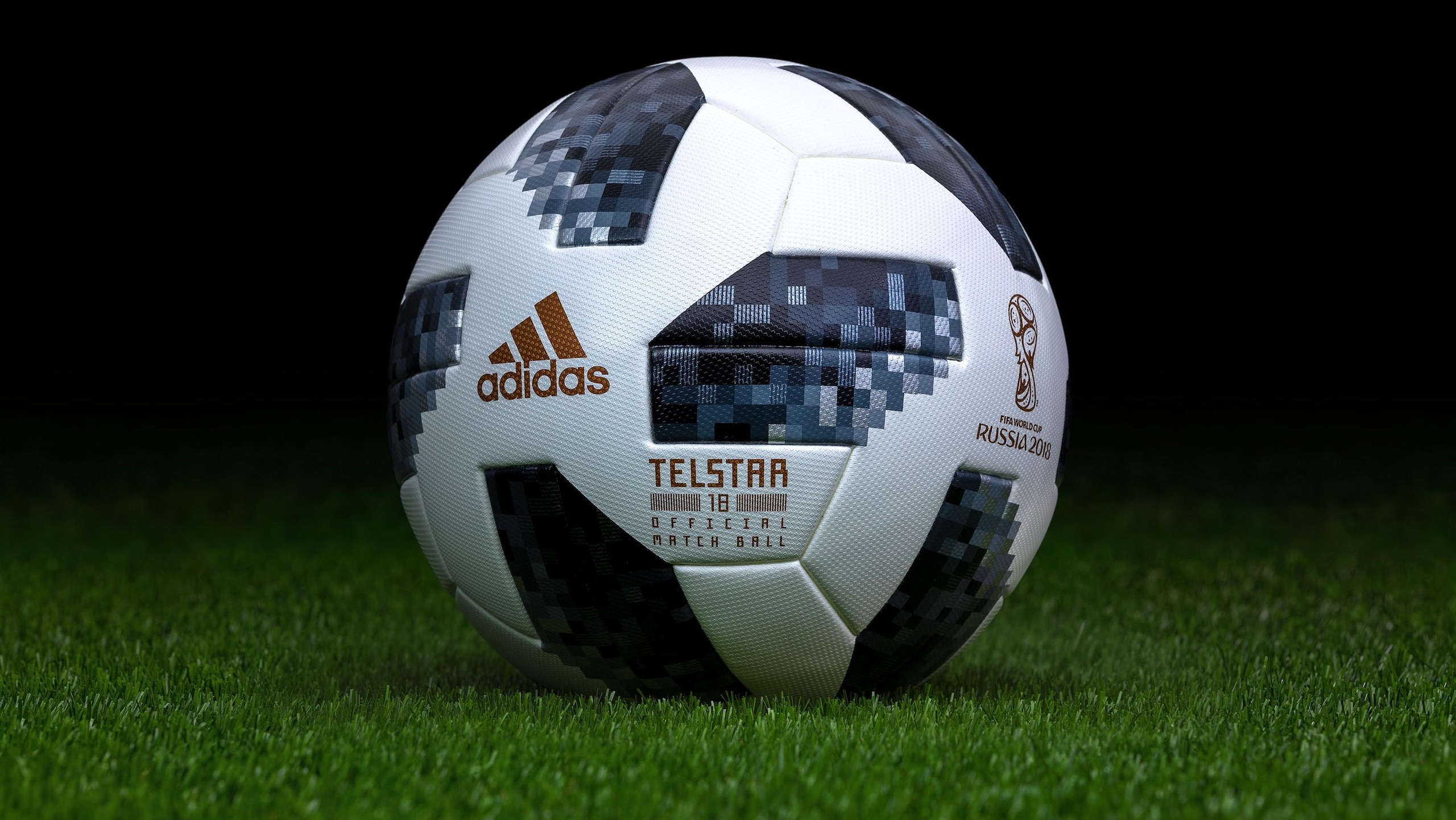
The Telstar branding returned for Adidas' 2018 ball, harking back to the first-ever company-branded ball used in FIFA's global showpiece 48 years earlier.
While it was an admirable effort to put a twist on a classic, there just wasn't a lot to truly love about the Telstar 18.
FIFA observed that the use of pixelated, greyscale, irregular hexagons was intended to "mimic the look of a spinning 1970 original." However, it appears to be more of a printing error. The shapes also have a slightly unsettling resemblance to coffins at the right angle.
The use of just six panels for the ball's construction could have been a recipe for disaster, like in 2010, but the ball actually functioned well.
A more striking version with red-and-black blotches was introduced for the knockout stages.
9. United States, 1994: Questra
6 of 14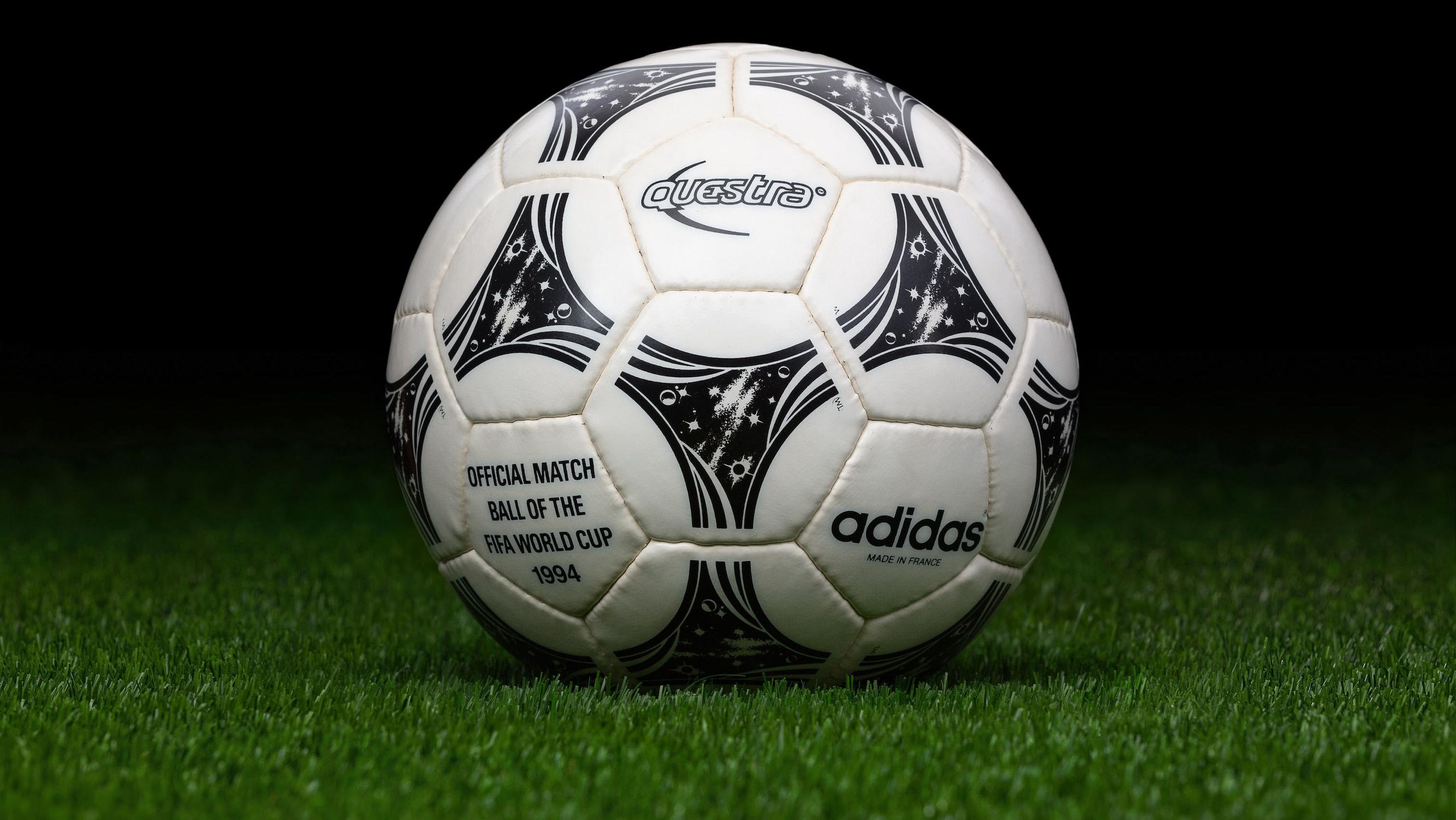
Designs on Adidas' "triads," the curved triangular shapes used to create circular patterns on balls, had begun to incorporate elements of ancient history starting with the 1986 tournament in Mexico.
However, with the United States forming as a nation in 1776, there weren't quite as many centuries to draw upon for the 1994 ball's design.
Instead, the Questra tapped into the country's achievements in space exploration with cosmic shapes and patterns.
It looks pretty stellar, but it just doesn't have the same deep cultural bond that other similar efforts have.
8. Mexico, 1986: Azteca
7 of 14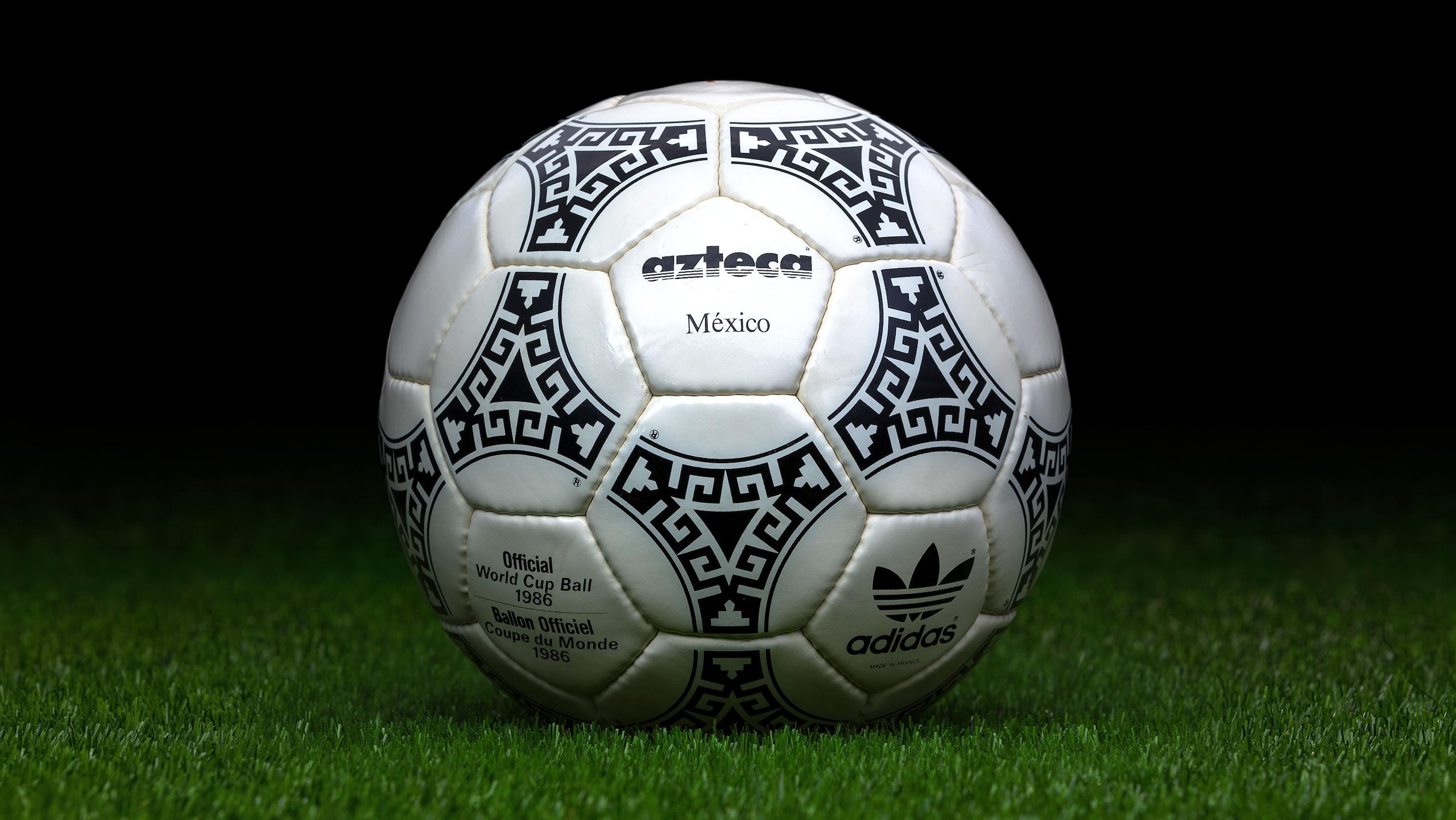
The Azteca was the first to put a unique spin on the designs that were quickly becoming Adidas' signature World Cup ball look, since its Tango efforts from 1974 and 1978.
It incorporated Aztec-style patterns on the "triads" that formed the seven circles. While it was a welcome and country-appropriate change for the tournament in Mexico, and it did look great, there's a lingering feeling that it could have been even bolder to represent the nation's ancient culture.
While it was definitely a fantastic way to bring a little extra Mexican flair to proceedings, a few additional patterns would have truly elevated the ball to elite levels.
7. Germany, 2006: Teamgeist
8 of 14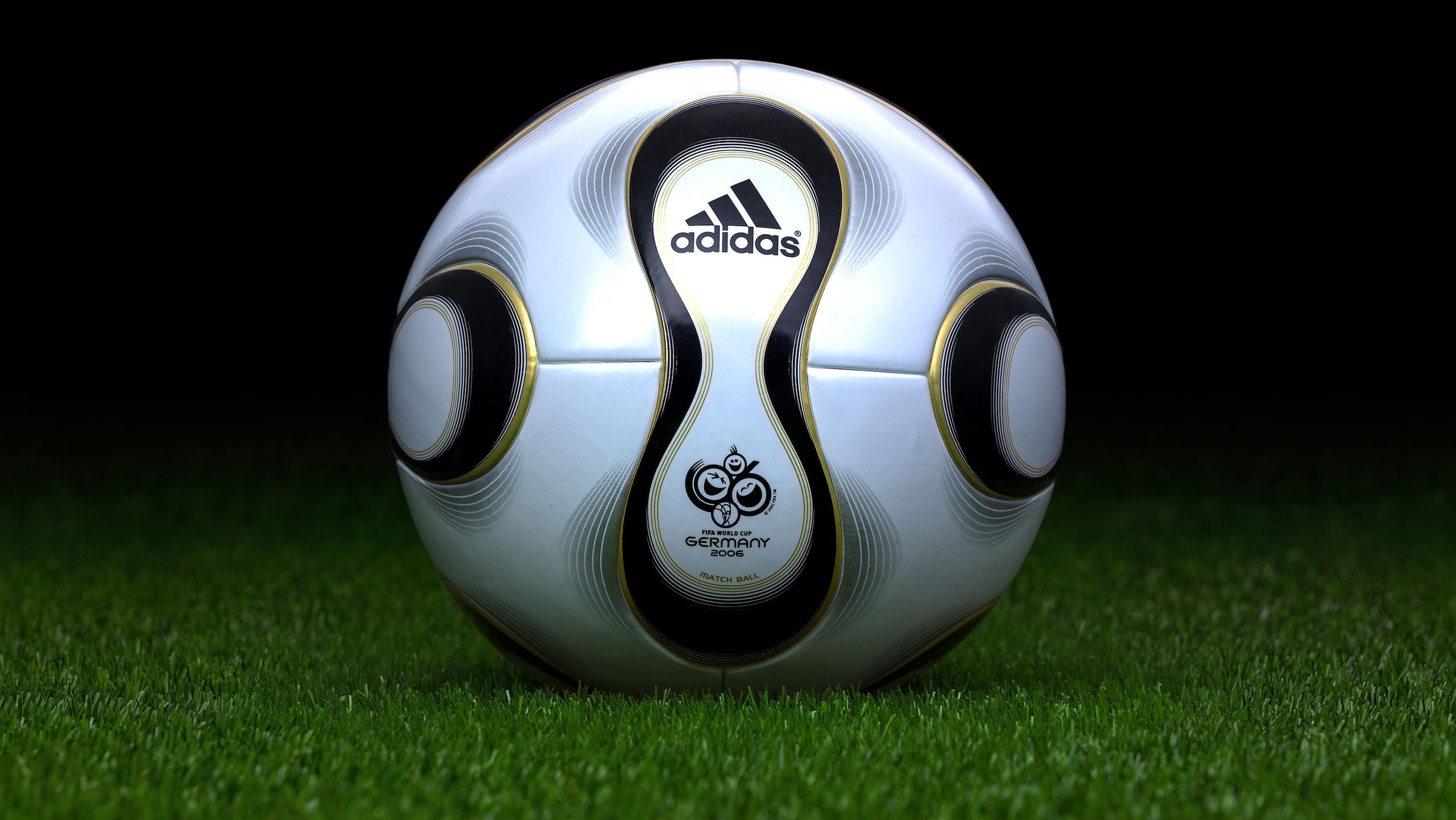
After vibrant colors were introduced to Adidas' World Cup match balls in 1998 and 2002, the 2006 Teamgeist returned to a more classic, black-and-white palette, matching the Germany national team's home jerseys—although it did also boast some gold accents.
While the design was a little more traditional in terms of colors, the Teamgeist heralded a new era of football construction.
Stepping away from typical hexagonal panels, the Teamgeist featured 14 panels rather than the standard 32, which were thermally bonded rather than stitched, according to FIFA.
This was done to achieve a more rounded shape, becoming "one percent short of being a perfect sphere."
The figure-of-eight shapes with gold edging playfully referenced the World Cup trophy. A gold-filled version of those patterns used on the ball for the tournament's final fully embraced that visual cue.
6. France, 1998: Tricolore
9 of 14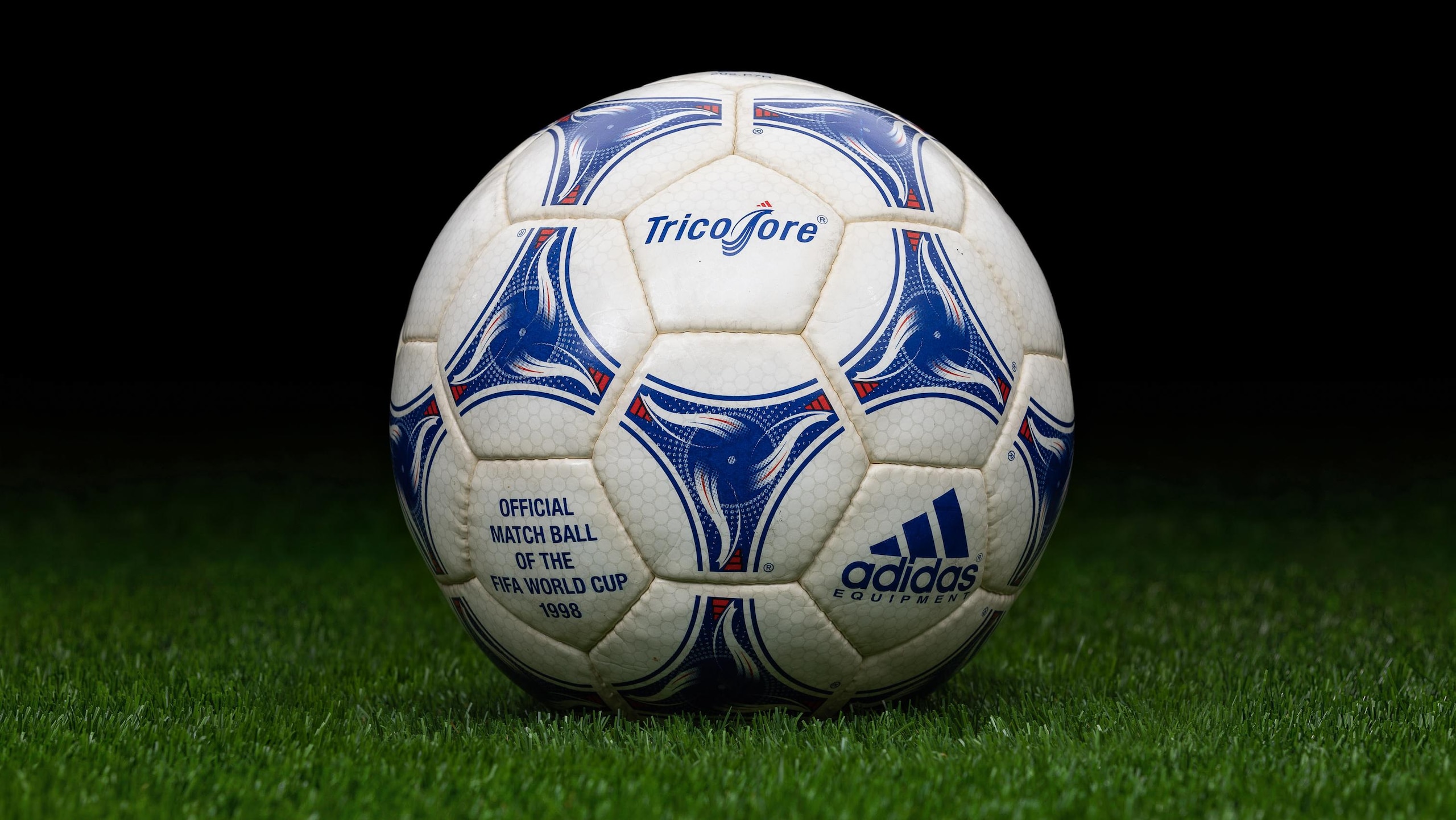
The Tricolore was the first-ever Adidas World Cup match ball to feature colors other than just black and white. It took inspiration from France's flag, with red, white, and blue adorning the triads.
Within the triads were three cockerels, representing the nation's symbolic animal, while the tail feathers of each were intended to evoke Adidas' famous logo, forming three lines.
In addition to the advance in colorization, the balls were also the first to feature a foam layer on the exterior, which remains a feature of Adidas' football offering.
Being culturally relevant, attractive, and a welcome departure from the monochrome, the Tricolore comfortably takes up sixth place. While that's not the highest ranking for a truly great ball, it can still take comfort in being a trailblazer.
5. Italy, 1990: Etrusco Unico
10 of 14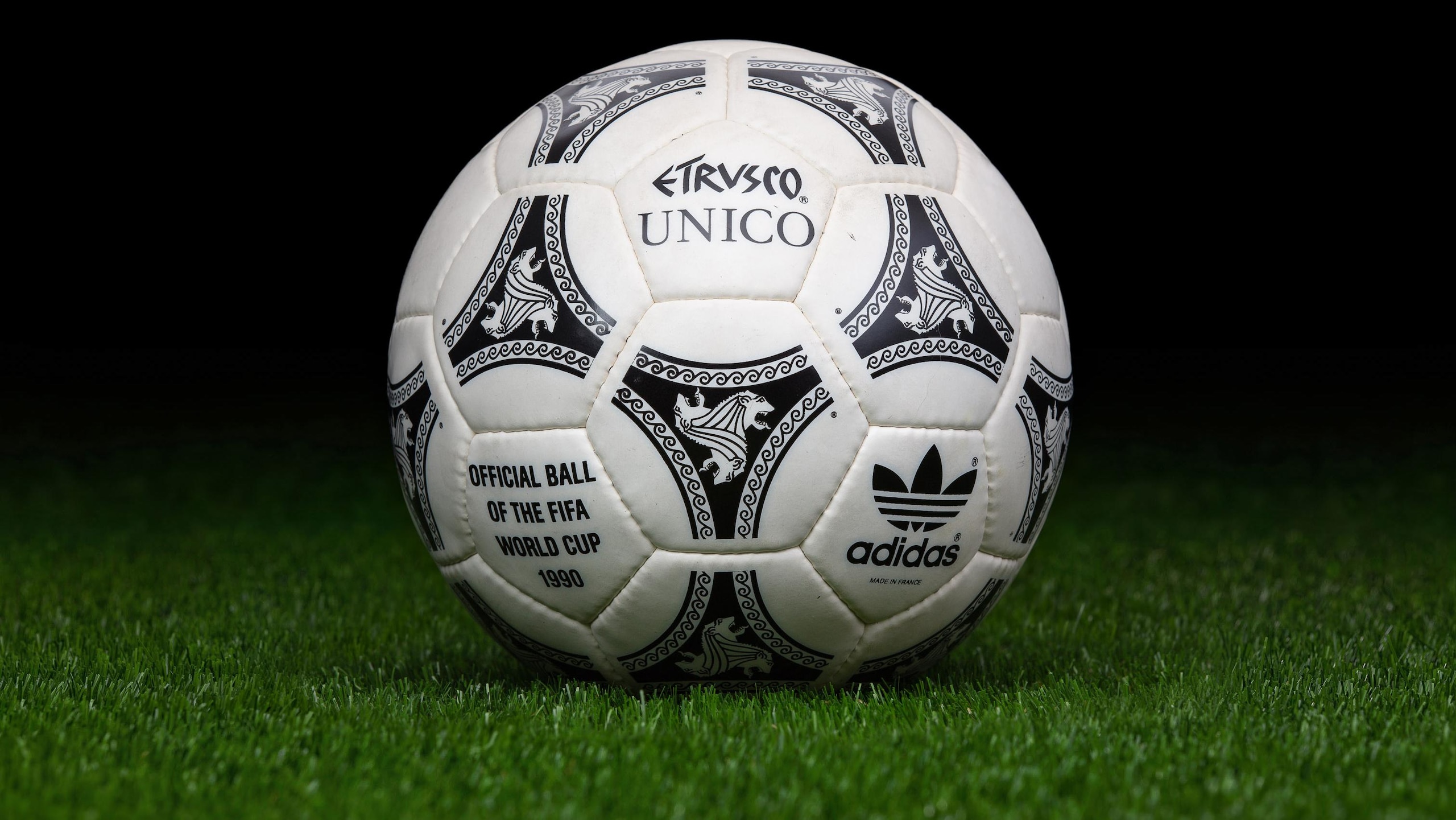
Adidas' second attempt at incorporating ancient history into its designs came with the Etrusco Unico, used for the 1990 tournament in Italy.
The name harks back to the Etruscans, who populated the northern and central regions of the country from 800 to 100 BC. But it's not just the name of the ball that references this civilization.
The heads of three roaring lions are featured on the triads, with the animal's image often used in Etruscan artwork and clothing.
Additionally, the font used for "Etrusco" on the ball mimics the Etruscan alphabet. It just feels like a better effort at representing a nation's rich history than the Azteca.
While the modern approach for the tournament's mascot didn't quite land, Adidas' decision to take things back in time for the match ball was a lot more pleasing.
4. Korea, Japan, 2002: Fevernova
11 of 14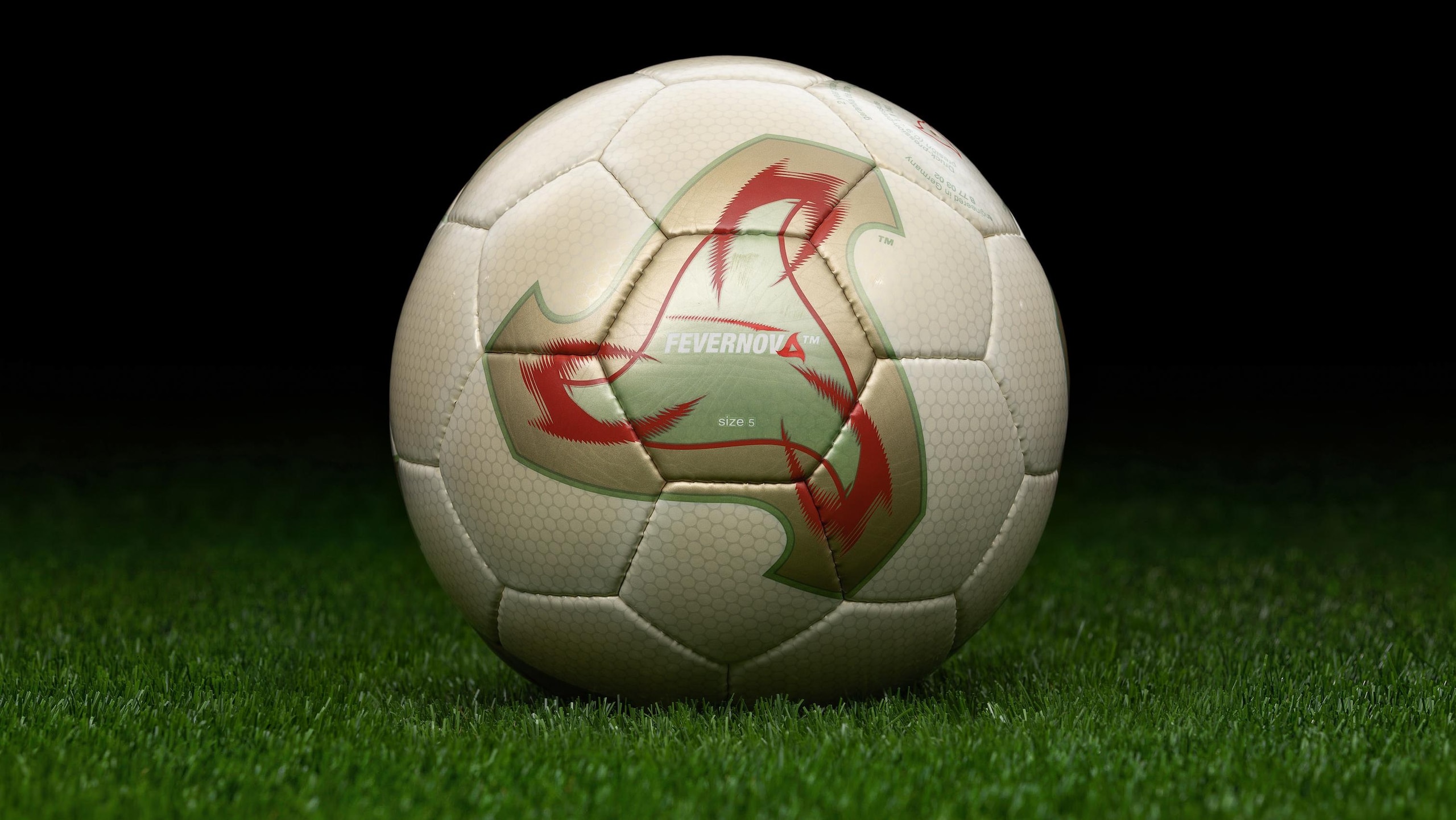
After years and years of predictable designs, 2002's Fevernova really came out of left (mid)field.
Adidas' ball for the 2002 World Cup in Korea and Japan marked the end of over 20 years of tradition and ushered the brand into the new millennium.
Shortly after the silver Nike Scorpion ball took the world by storm thanks to the "Secret Tournament" ad campaign, Adidas upped things in the precious metal stakes by launching a World Cup ball with gold accents.
The patterns and colors were grounded in Asian culture, with the trigon supposedly resembling a Japanese tomoe and the red accents drawn in a style similar to the region's notable calligraphy style.
However, it also suffered some criticism for its performance, with Slovenia striker Zlatko Zahovic saying it was the "worst ball" he had ever experienced, according to the BBC.
Still, David Beckham seemed to like it, and that must count for something.
3. Qatar, 2022: Al Rihla
12 of 14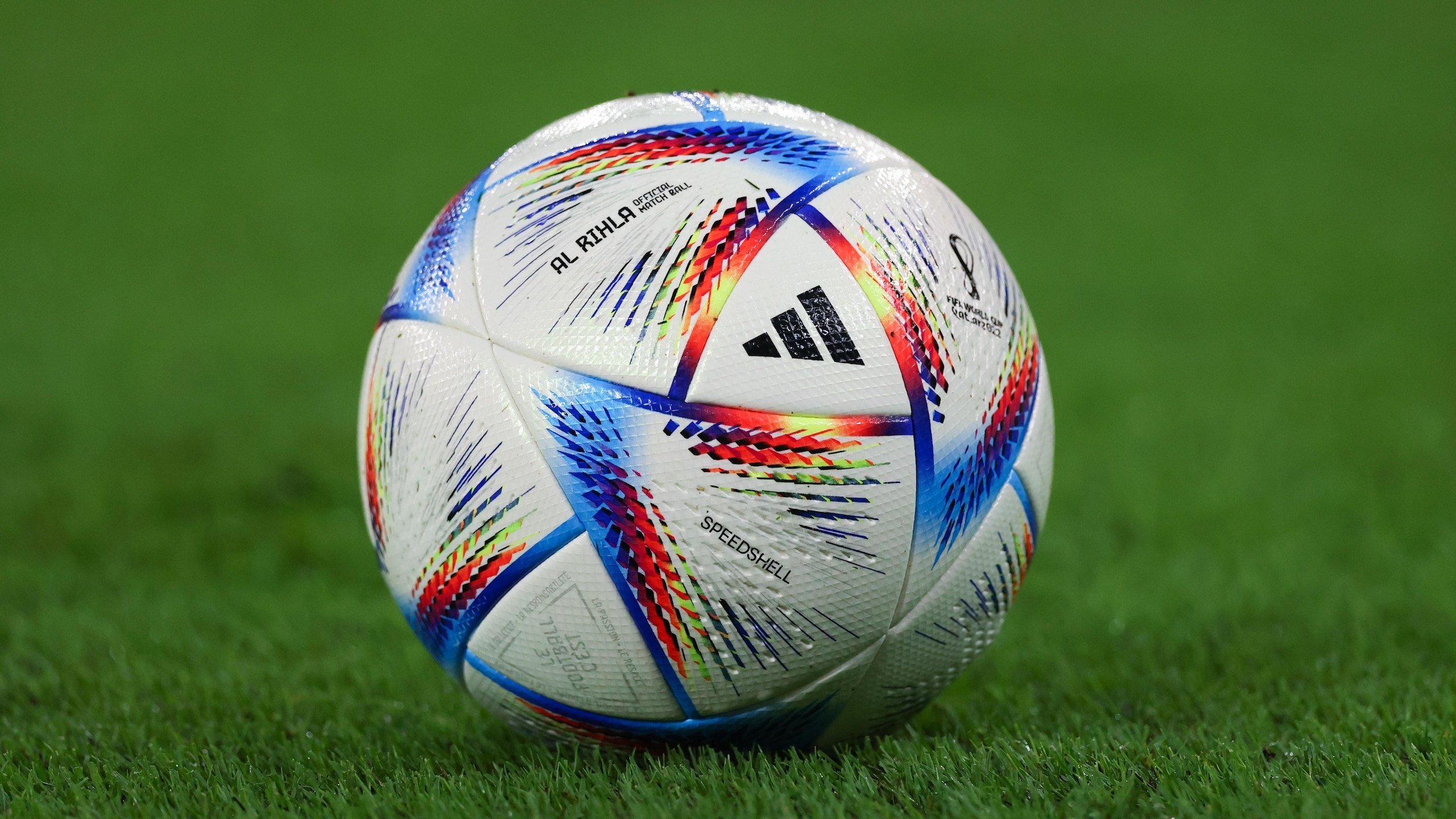
According to FIFA, the Al Rihla used for Qatar 2022 was the fastest flying ball in the tournament's history. The choice to design it using colorful streaks certainly gave the impression of explosive speed.
But it wasn't just rapid pace that the design was hinting at. The vibrant palette was also intended to reference the nation's architectural and nautical history, while pointed triangular shapes also took inspiration from the country's flag.
While being remarkable in aesthetic design, it was also impressive in technical features. Adidas' "Connected Ball" technology helped match officials make tricky offside calls.
This was a quirky, bright addition to the World Cup ball collection.
2. Mexico, 1970: Telstar
13 of 14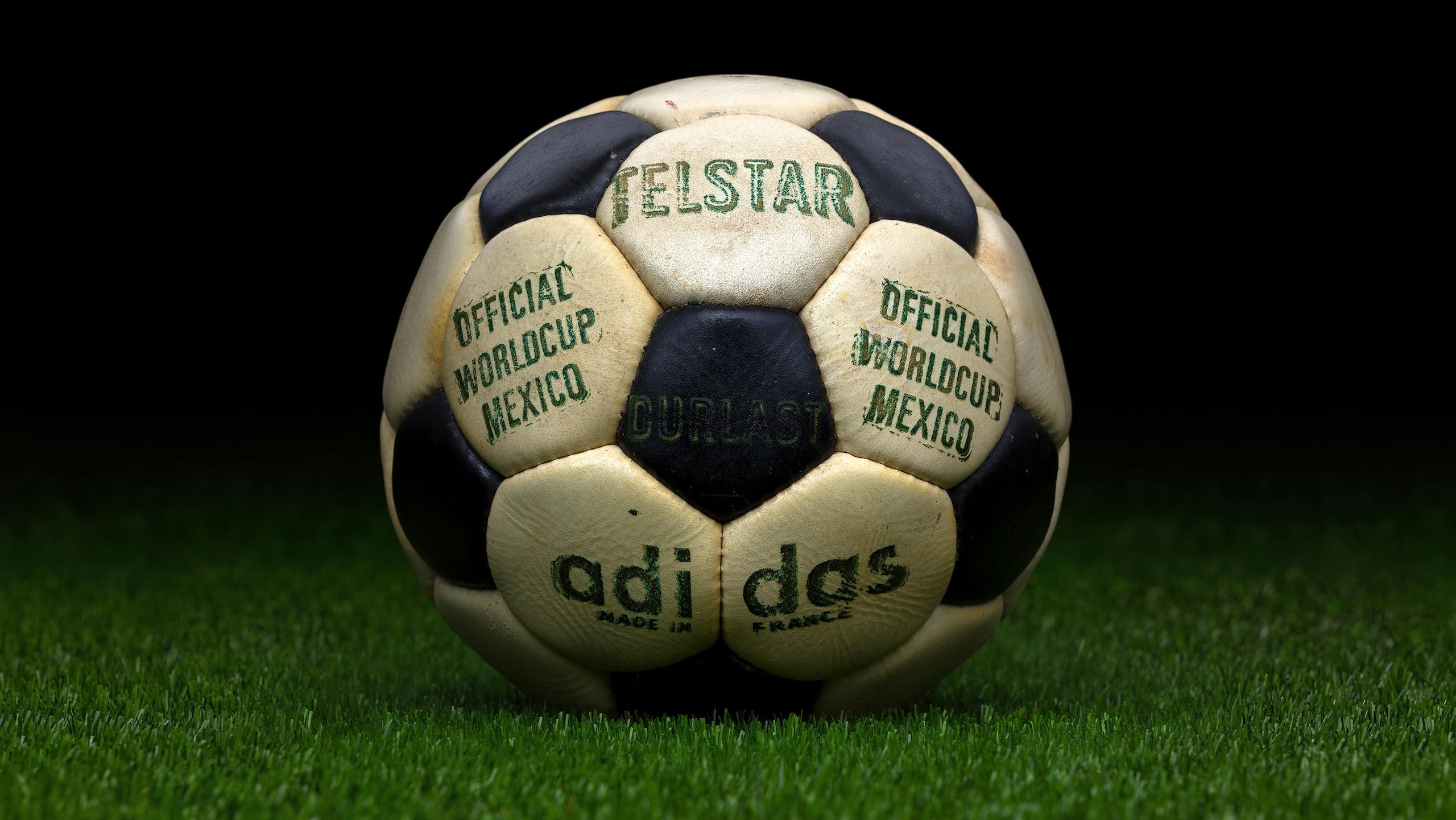
Whenever you ask someone to draw a soccer ball, they will likely produce something resembling the Adidas Telstar.
The iconic ball featured 32 hexagonal panels, with 12 colored entirely in black and the rest in white. It would become the most obvious visual reference to a football in films, television, cartoons, and children's artwork.
The Telstar was the first Adidas ball used by FIFA in a World Cup, marking the beginning of a partnership that has spanned over five decades.
While the design may not seem particularly exciting now, the Telstar holds a significant place in football history and is also extremely prevalent in pop culture.
It is perhaps the true universal symbol of the sport.
1. Brazil, 2014: Brazuca
14 of 14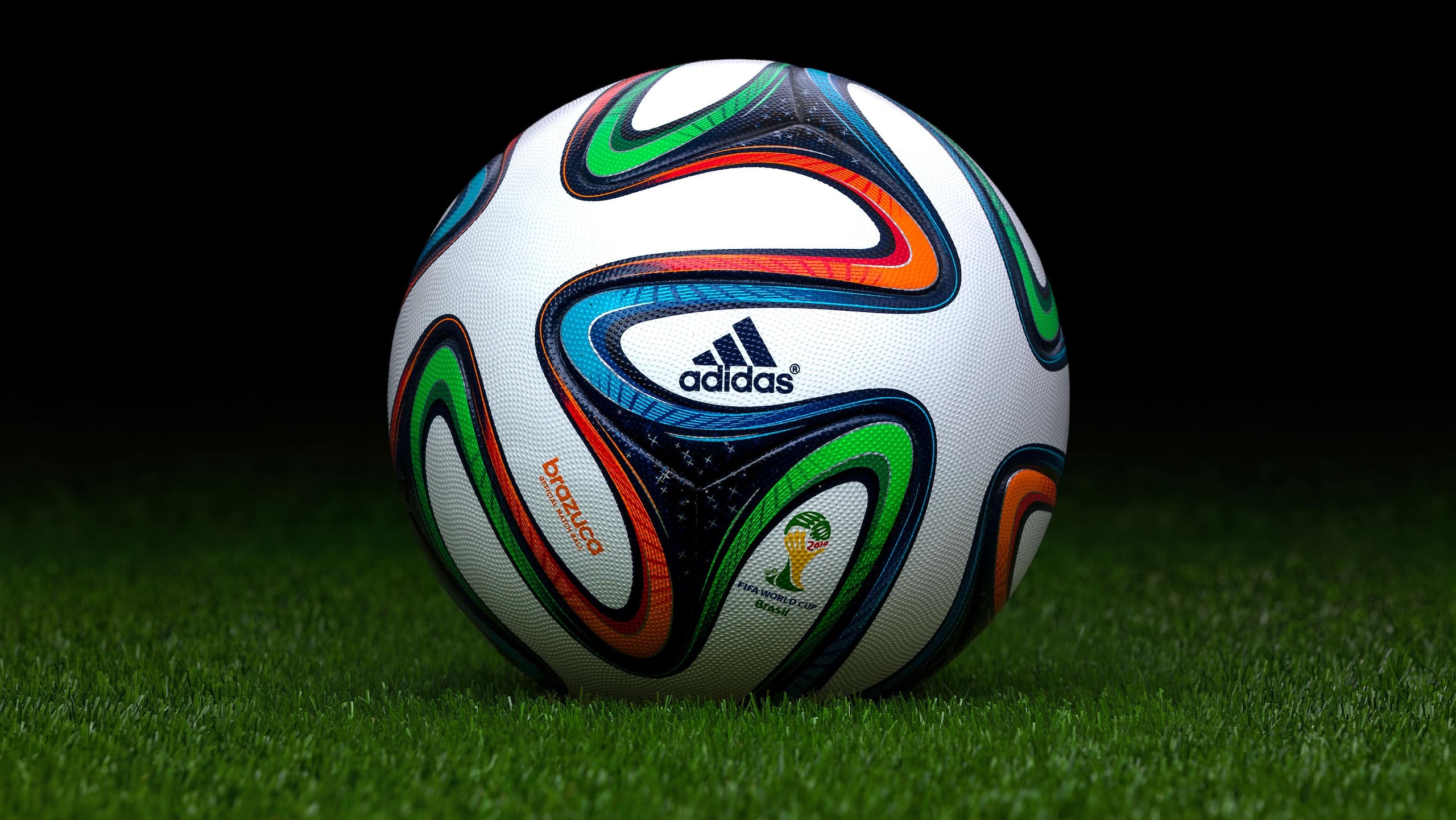
After the Jabulani nightmare, Adidas really had to go back to the drawing board for its 2014 match ball, the Brazuca.
As FIFA detailed, "over 600 professional footballers [and] 30 teams of scientists" were tapped to give their expert opinions on the ball's performance.
Thankfully, it was greeted with positive feedback, and no real disaster stories were attributed to the Brazuca—although the Brazil national team might have been keen to blame its historic 7-1 semifinal defeat to Germany on the Brazuca.
The name refers to the Brazilian way of life or the country's citizens in general, and its color scheme also matches the nation's flag, the Bandeira do Brasil.
Pleasingly, it also sounds a bit like a contraction of "Brazilian bazooka," which perhaps heralded David Luiz's explosive strike in the quarterfinal against Colombia.