
Every NHL Team's Best Prospect Ahead of the 2025-26 Season
Let's talk each NHL team's best prospect as things currently stand.
Some guys on this list are gimmes. The beyond obvious answer. Some guys on this list are going to make you want to fight me. Square up in my mentions — all good faith critiques and arguments are always welcome.
That's the fun thing about prospect evaluation; different people watching the same group of players will always come out with different favorites, because we value a variety of traits or playing styles. You might feel a team's freewheeling defensive prospect who could tighten things up in his own end is better, while I may be more partial to their creative but speedy forward prospect with incredible hands and sometimes mystifying decision-making.
At the end of the day, though, some things just aren't up for debate.
Anaheim Ducks, Beckett Sennecke, RW
1 of 32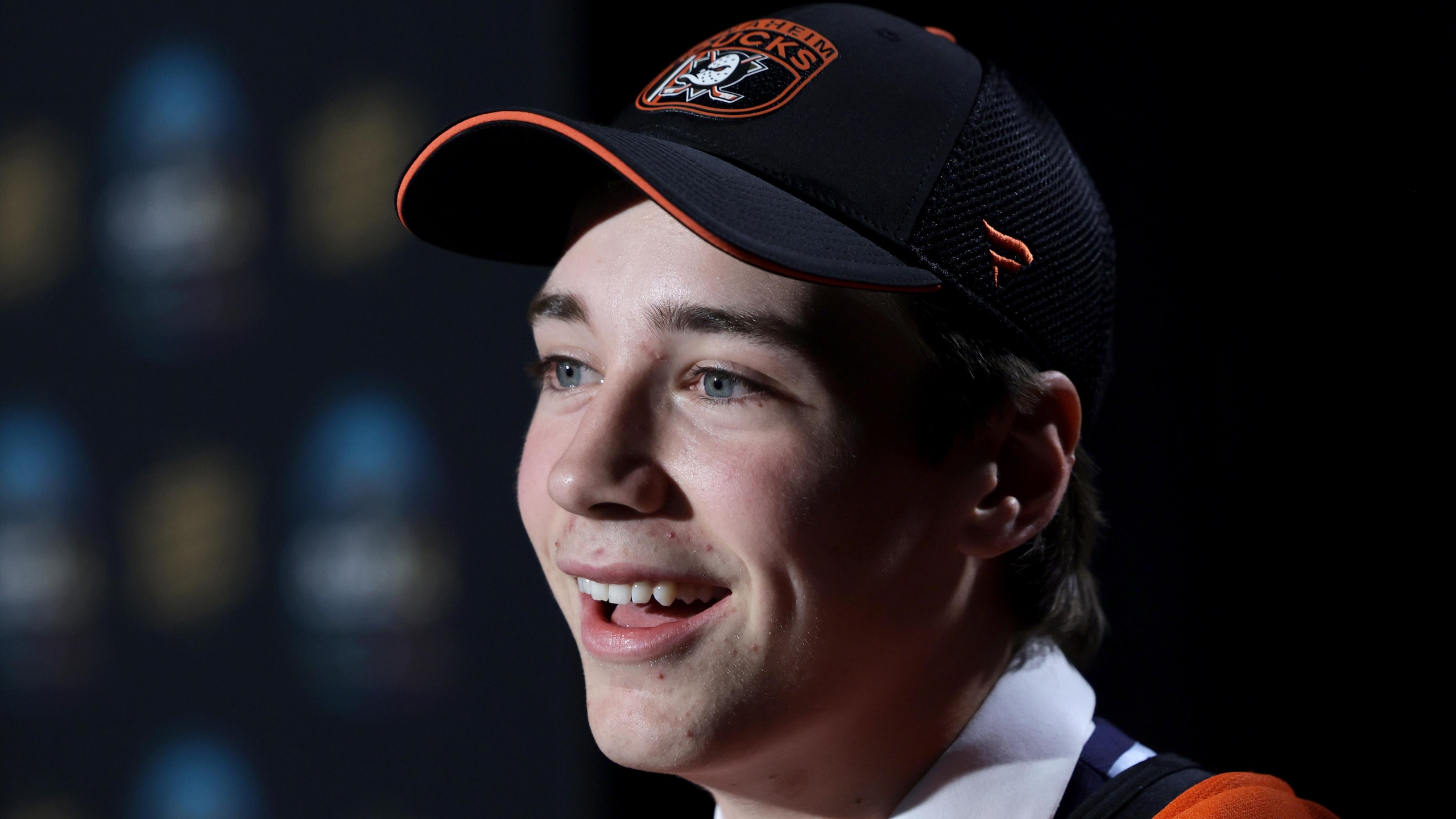
No one will forget Beckett Sennecke's face when the Anaheim Ducks selected him third overall in 2024—momentarily shocked beyond words
Soon enough, Ducks fans also won't be able to forget what Sennecke brings when he steps onto the ice.
Sennecke is an entertaining and prolifically scoring winger who, unsurprisingly, hopes to push for a roster spot with the Ducks this fall. Whether he manages to snag one remains to be seen, but he'll at least get the nine-game tryout that teams can give CHL players without burning a year of their contract. In my opinion, Sennecke doesn't have a ton left to prove at the major-junior level.
He finished last season with 86 points in 56 regular-season games, but perhaps more importantly, he has raised the level of his playmaking and added a physical edge to his game. (Perhaps a little too much of one; he got suspended for a slew foot back in the spring.) His hands are incredible, and his skating has definitely improved.
Boston Bruins, James Hagens, C
2 of 32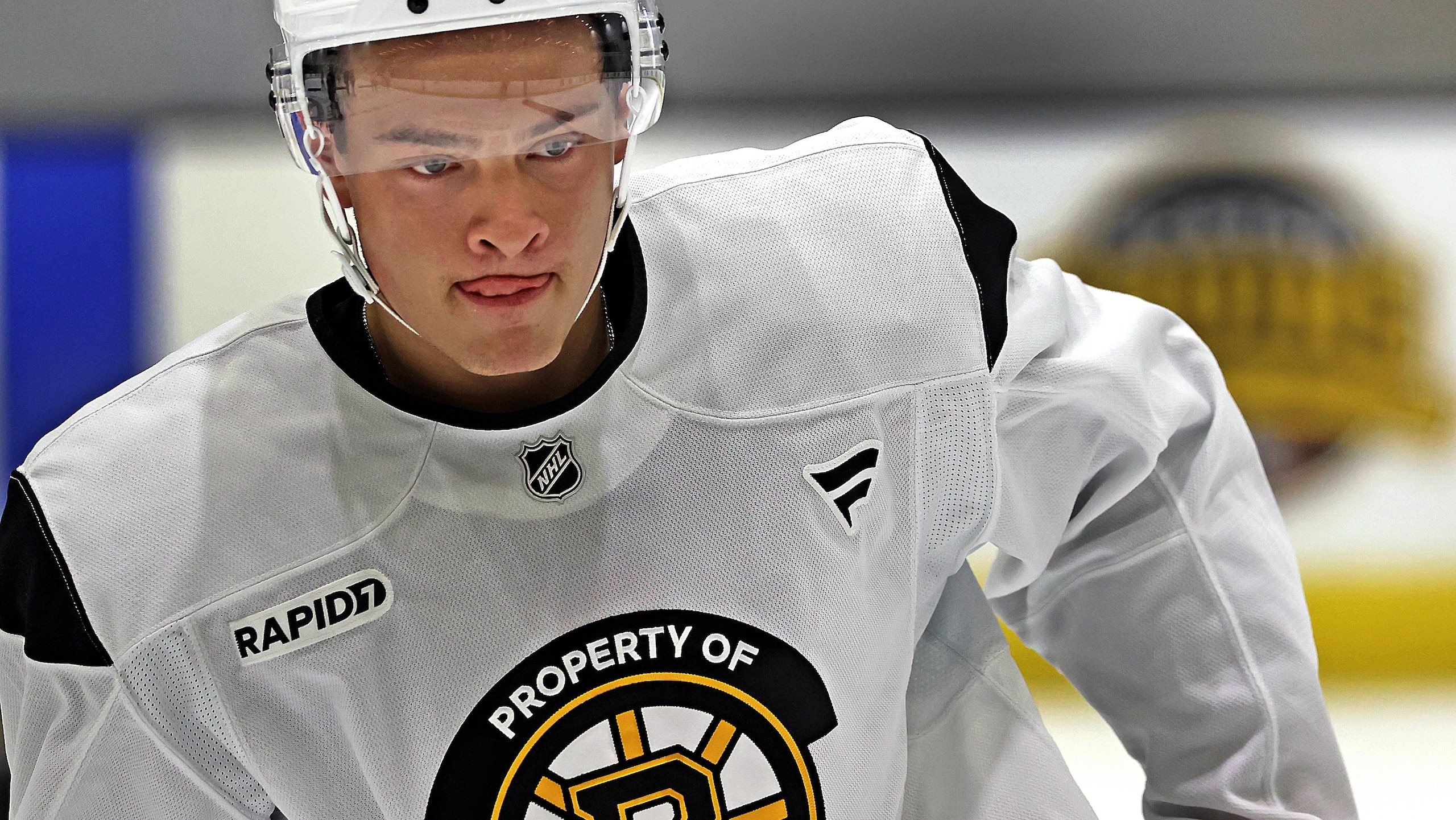
James Hagens is one of those "best prospect" choices that isn't up for debate, almost by default, due to the way the Boston Bruins have been managing their prospect pool lately.
Still, he'd be at or near the top even among the better prospect pools. Hagens dropping down the rankings had less to do with how he played last season—although many people had legitimate concerns about certain aspects of his game, to be clear—and more to do with how players like Matthew Schaefer and Michael Misa, among others, showcased that they could absolutely take over a game and bend it to their will. Hagens didn't show that type of presence, as he spent the season adjusting to college hockey.
It's why I'm glad he's returning to Boston College this season. I don't really have any questions about Hagens's game when it comes to things like his agile skating, his incredible vision and hockey sense, or his quick hands. My questions come about things like whether his playmaking abilities will hold up at the NHL level, and whether he'll put to use that extra gear that we know he has but haven't seen at the NCAA level yet.
He could also stand to improve his shot; we all know he's a playmaker at heart and that's likely going to be his primary function, but having this tool improve would be nothing but a benefit to him.
Buffalo Sabres, Konsta Helenius, C/RW
3 of 32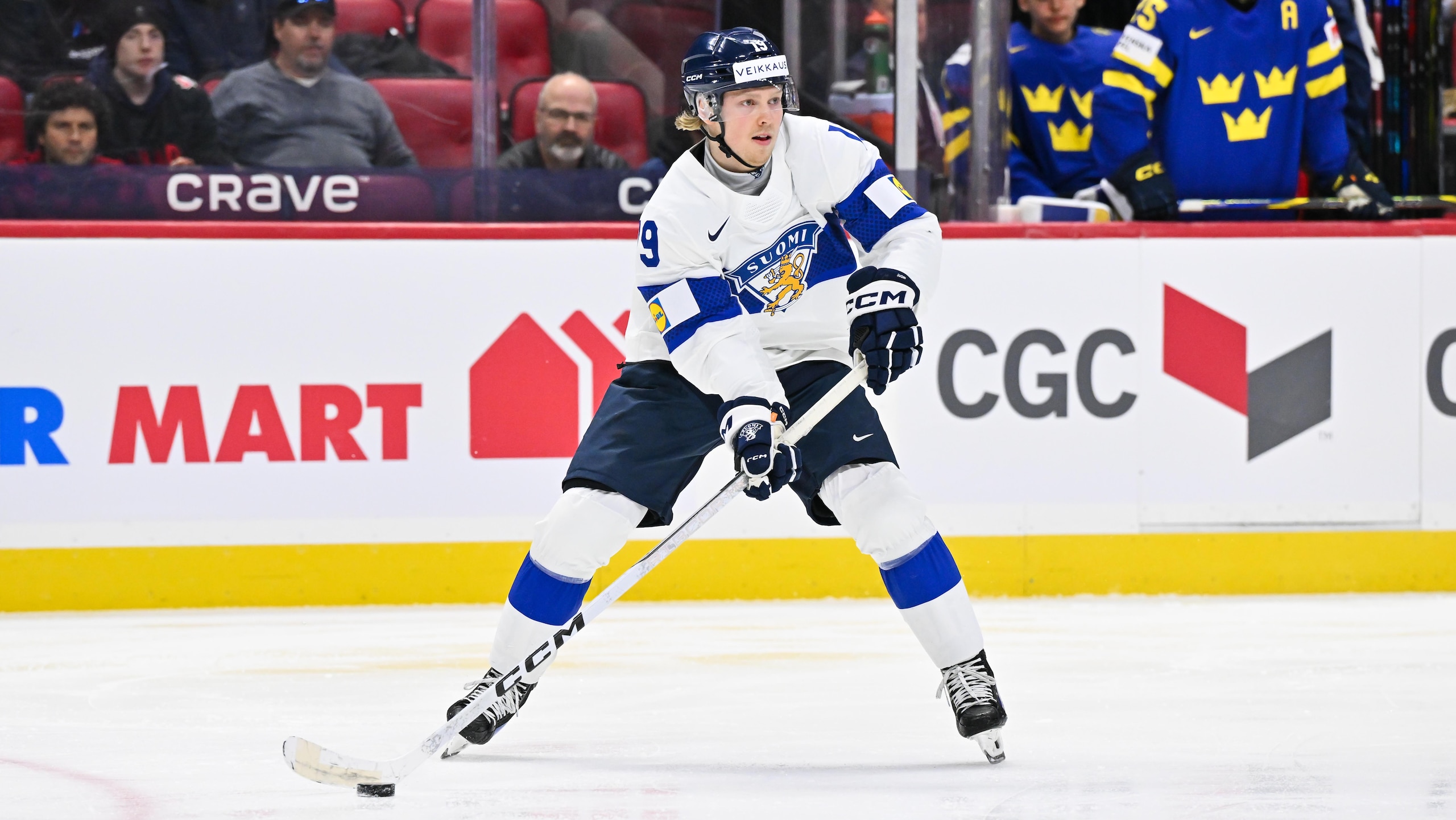
Ah, the Buffalo Sabres.
There are so many things I could say here, but I'll stick with this and keep it moving: I hope their prospect pool and their ability to actually develop prospects improve moving forward.
The Sabres have legitimately good players in their system. Do I trust them to do anything productive with those players? Not right now.
Konsta Helenius is a pretty bright spot for a team with a not-so-great outlook. He spent last season playing for the Rochester Americans of the AHL and adjusting to the North American game. He ended the year with a respectable 35 points in 65 regular-season games and a spot on the AHL's Top Prospects team as an 18-year-old. He also looked solid as a key piece for Finland's silver medal-winning team at last year's World Junior Championships.
With a full season of learning how to use his intelligence and playmaking skills on North American ice under his belt, expect to see him shine brighter this year.
.jpg?w=2560 "NHL Trade Block Big Board")
-(2).jpg?w=2560 "Bleacher Report")
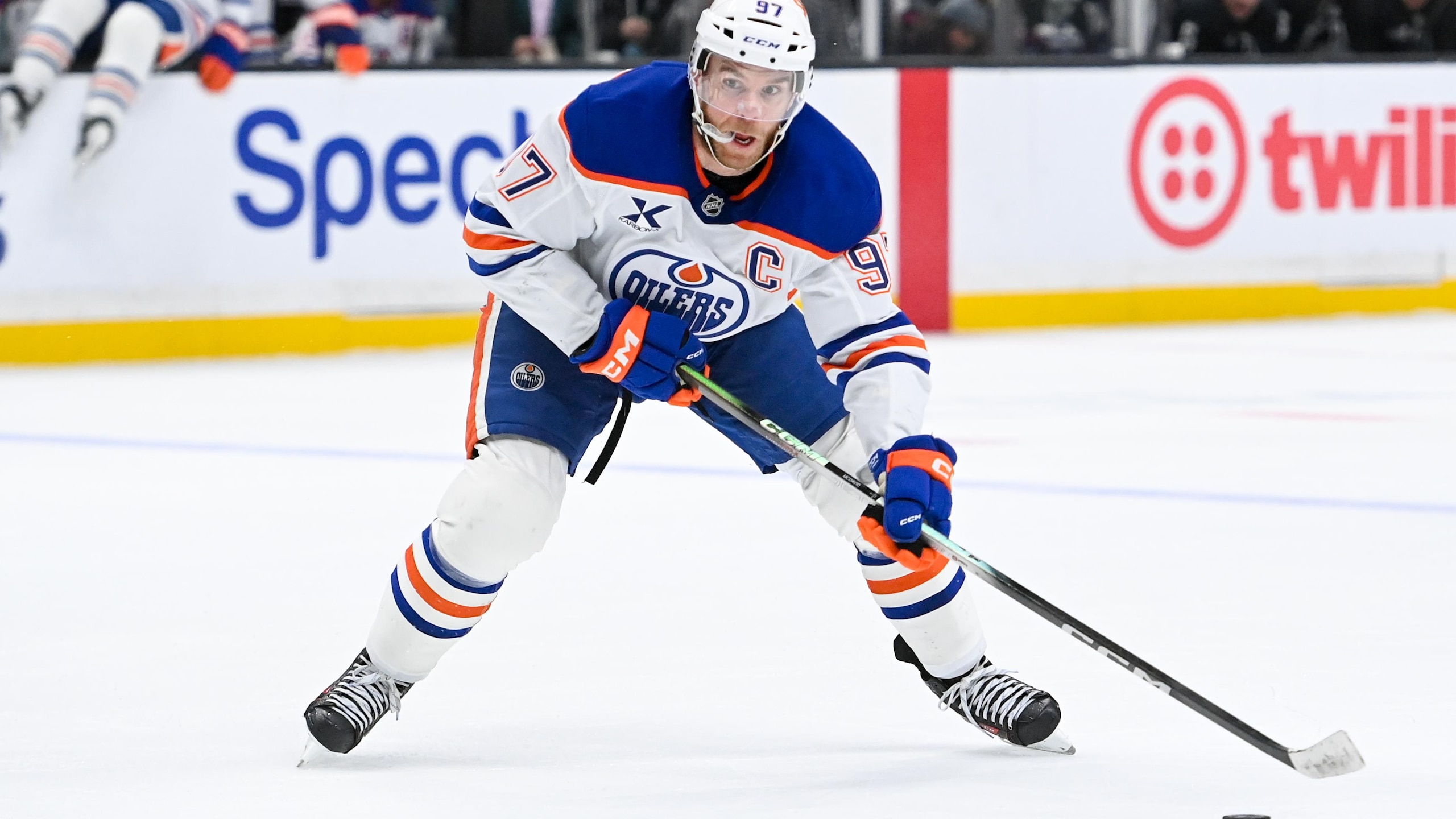
Calgary Flames, Zayne Parekh, D
4 of 32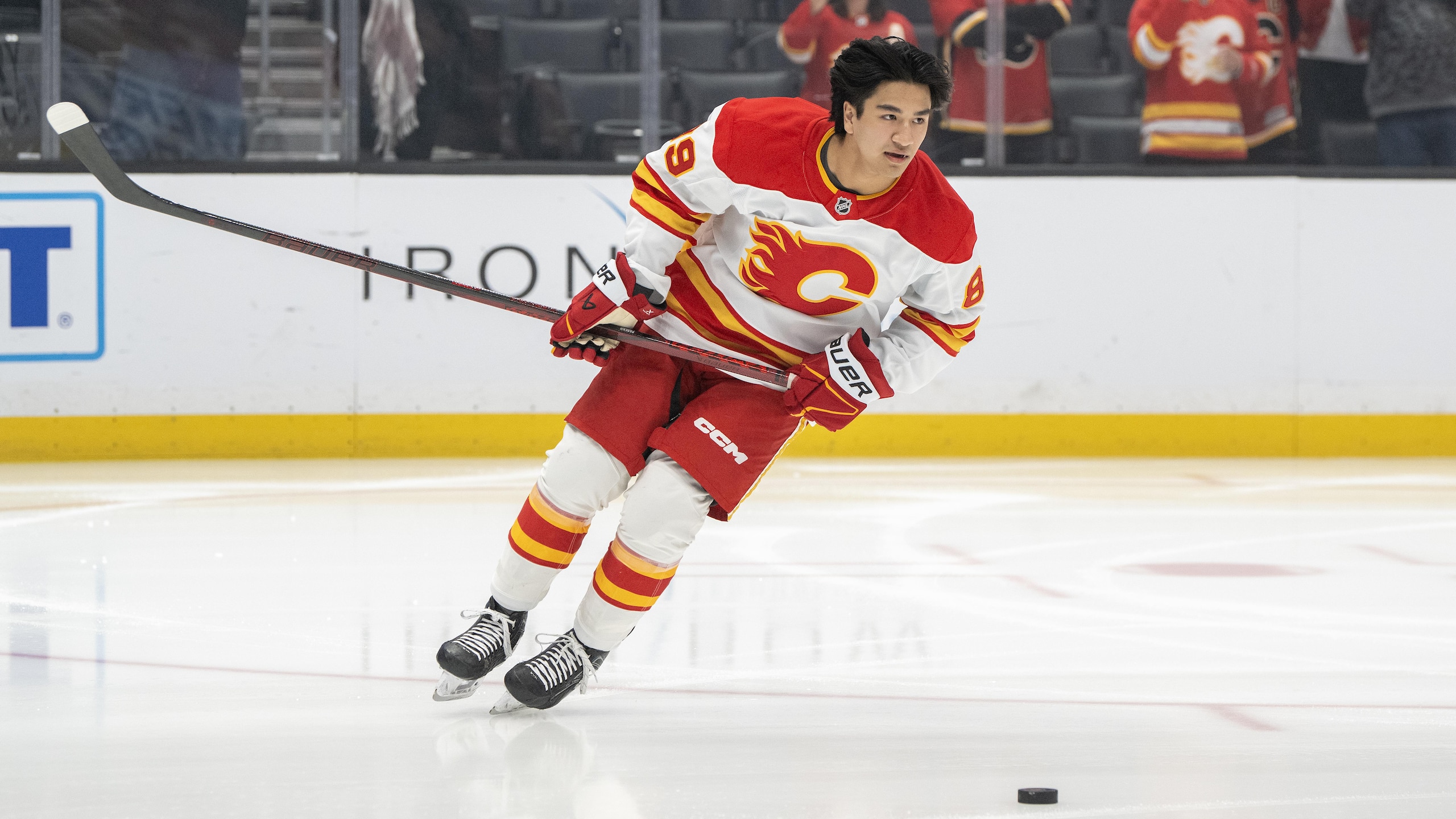
If you read my prospect work here at Bleacher Report regularly, you might be tired of me talking about Zayne Parekh (unless you're a Flames fan, I suppose). Too bad.
I have the floor and Parekh is absolutely the best player in the Flames' system, though I don't think the prospect label is going to stay on him for long. In his one NHL game with the Flames last season, Parekh came in and immediately looked exactly like the defenseman we all watched in the OHL—composed, intelligent, a manipulator who can bend opponents to his whims.
One of my favorite things about Parekh's game is the way that his skating allows him to just take over a game, putting space between himself and his opponents and opening up space for him to create.
It's important to keep in mind that this was only one game, and remember that if Parekh comes into this NHL season and either doesn't look like that player every night or doesn't even make the Flames out of the gate, that doesn't make him a bust. Give him time to adjust; that game last season wasn't a fluke, it was a preview.
Carolina Hurricanes, Alexander Nikishin, D
5 of 32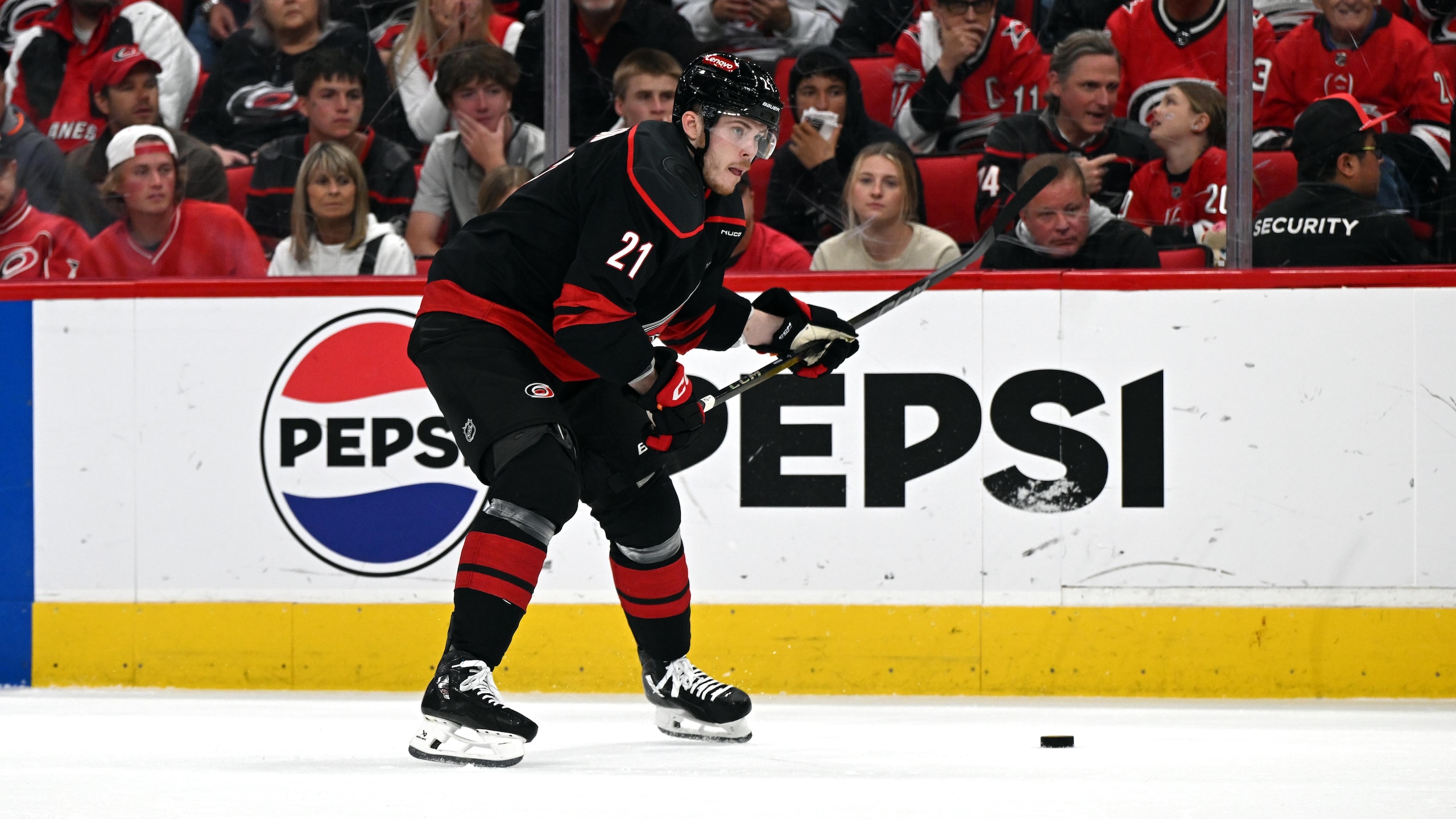
Defenseman Alexander Nikishin has finally made his way over to North America for the Carolina Hurricanes, and he was recently invited to participate in the NHLPA Rookie Showcase, hosted by Upper Deck.
At 23, he has aged out of what a lot of people consider "prospect" status, but since he hasn't played any regular-season NHL games yet (he has played four playoff games), we're still considering him a prospect for our purposes. If the way he played in those playoff games, and in his KHL play before that, is any indication, Nikishin is going to shed that prospect label quickly.
The 6'4" defenseman's arrival has been long-awaited by Hurricanes fans, and watching him with the rest of the team back in the spring, it was clear why. He wasn't shy about throwing hits against members of the eventual Stanley Cup-winning Florida Panthers, and his rush defense and selection of breakout routes and passes were mostly sound.
There are some growing pains, of course, but those growing pains need to happen while he adjusts to being an NHL defenseman, because that's where he belongs.
Chicago Blackhawks, Artyom Levshunov, D
6 of 32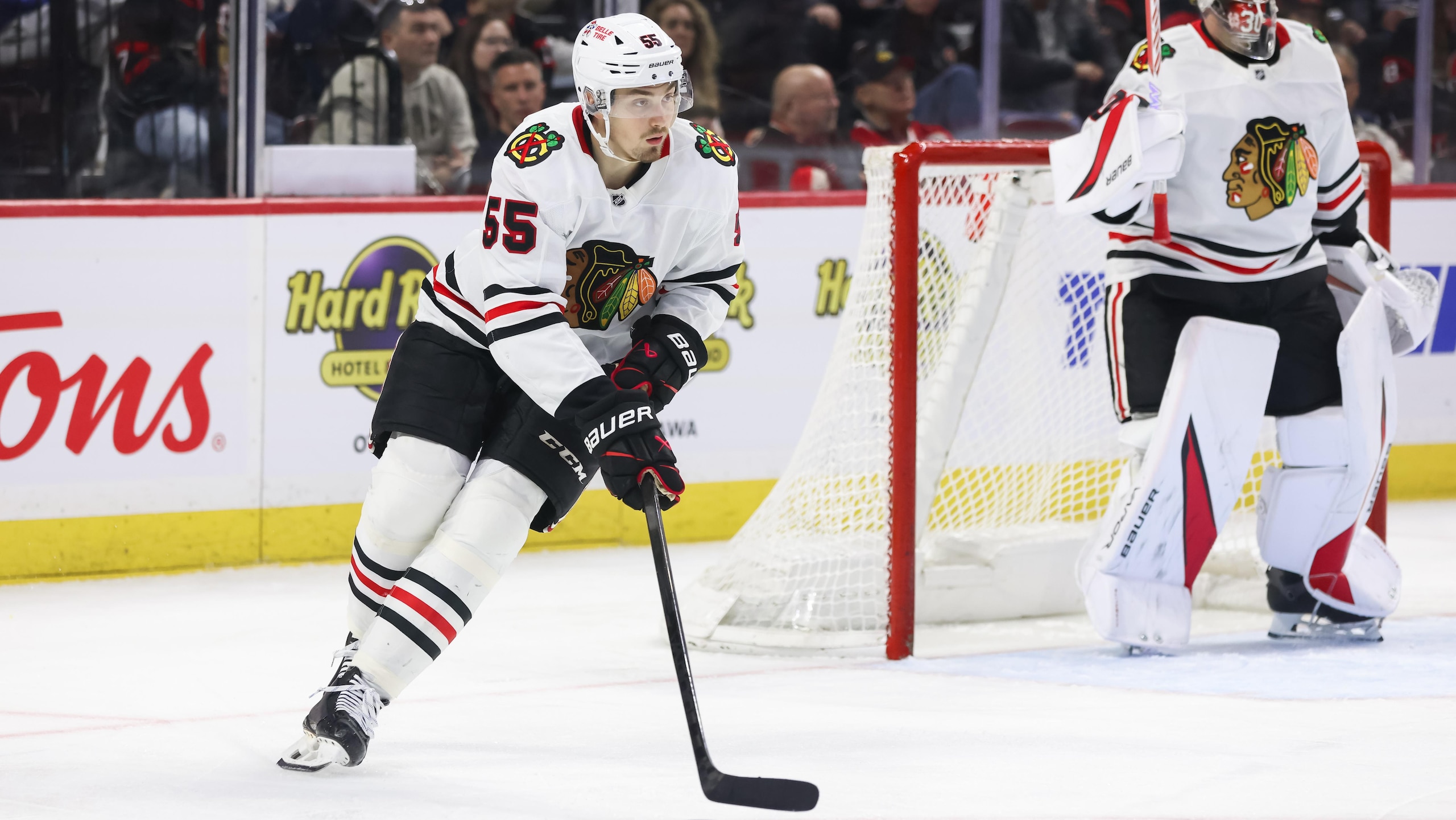
While defenseman Artyom Levshunov tops the list for me in the end, the Chicago Blackhawks pick for this list was one of the more difficult ones because they have several high-end guys you could make a good argument for.
Just off the top of my head, Sam Rinzel, Oliver Moore, and Anton Frondell are all floating around the top there. Levshunov has played 18 NHL games, so while he's still pretty young—he'll be 20 in October—he's on his way out of the technical prospect/rookie designation as far as the NHL is concerned. He had a strong debut for the Blackhawks last season, and while it wasn't the right time to keep him in the NHL then, that time is swiftly approaching.
Levshunov was averaging around 20 minutes per night during his time in the NHL last year, give or take, and in those heavy minutes, he managed to record six assists. He's an explosive skater, strong on the breakout, and is an equally effective shooter and passer. He's constantly activating, always down to try to make something happen, and while I'd love to see growth in his decision-making and risk-taking, you have to admire the chutzpah. I'd rather have a player I need to dial back than one I have to try and motivate.
There were moments last season where I was a little worried Levshuvnov might end up the latter, with a lack of urgency and aggression, but it thankfully seems like they were just that—moments in a journey of adjusting to the pro pace and style.
Colorado Avalanche, Gavin Brindley, RW/LW
7 of 32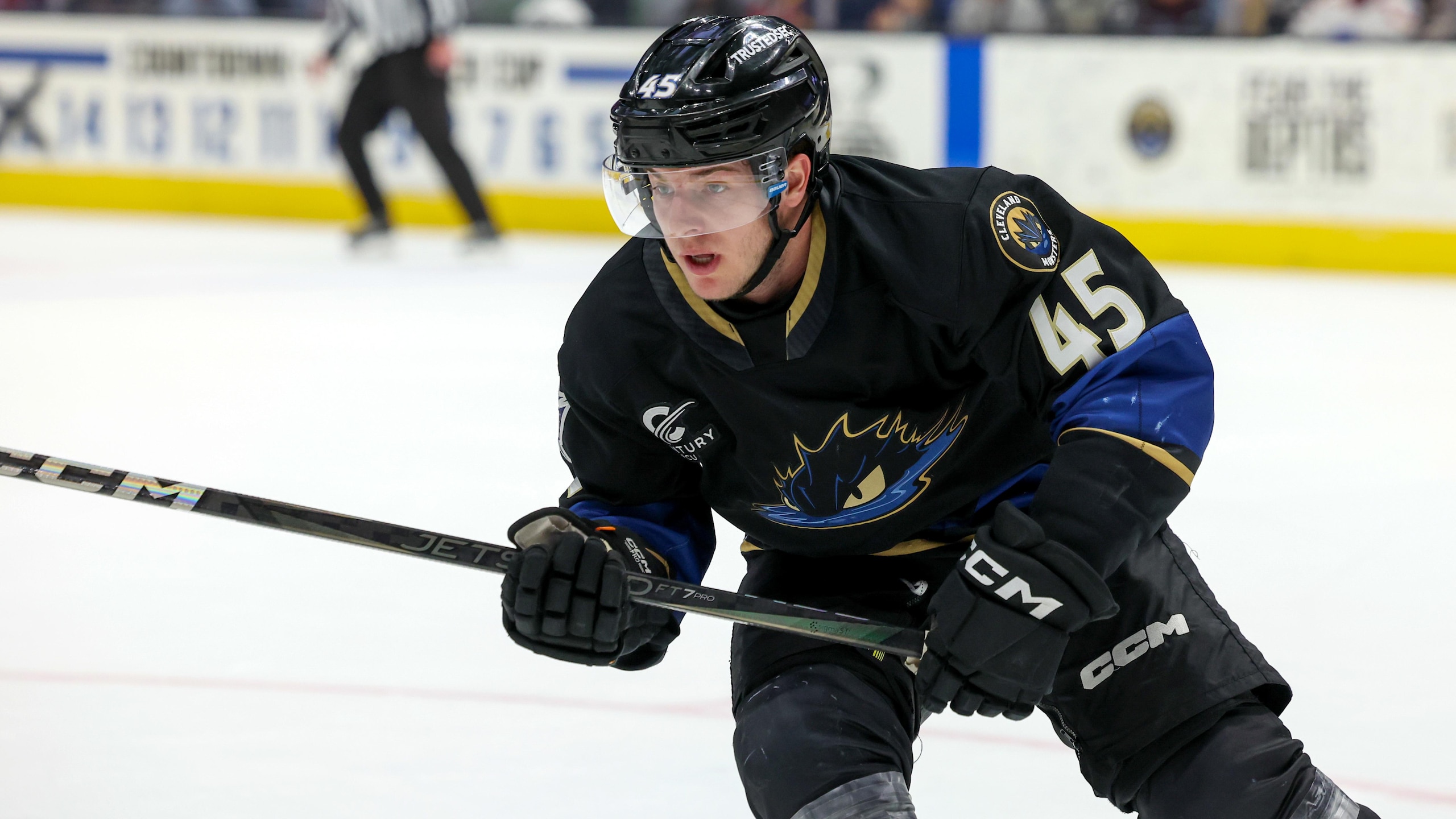
Don't cry because Gavin Brindley got traded away from the Columbus Blue Jackets; smile because the Colorado Avalanche's somewhat dry prospect pool has a pretty solid player at the top these days.
Because he turned pro last year, Brindley will probably spend the season with the Colorado Eagles of the AHL (he had 17 points in 52 games for the Cleveland Monsters last season) and while I think he could bring value at the NHL level, the AHL is precisely where he needs to be right now.
The biggest concern with Brindley has always been size, and honestly, that's a little silly. What Brindley has to offer doesn't rely entirely on size; he's got a nonstop motor and he's ruthless in his own end, bringing so much value on the defensive side of the game. But adding strength so he won't get pushed around is never a bad idea, and adjusting to the pro game against tough opponents in the AHL is never a punishment.
I imagine that since he's got a full pro season under his belt now, we'll start to see that scoring side of his game begin to emerge again, which will only help him at the NHL level.
Columbus Blue Jackets, Cayden Lindstrom, C
8 of 32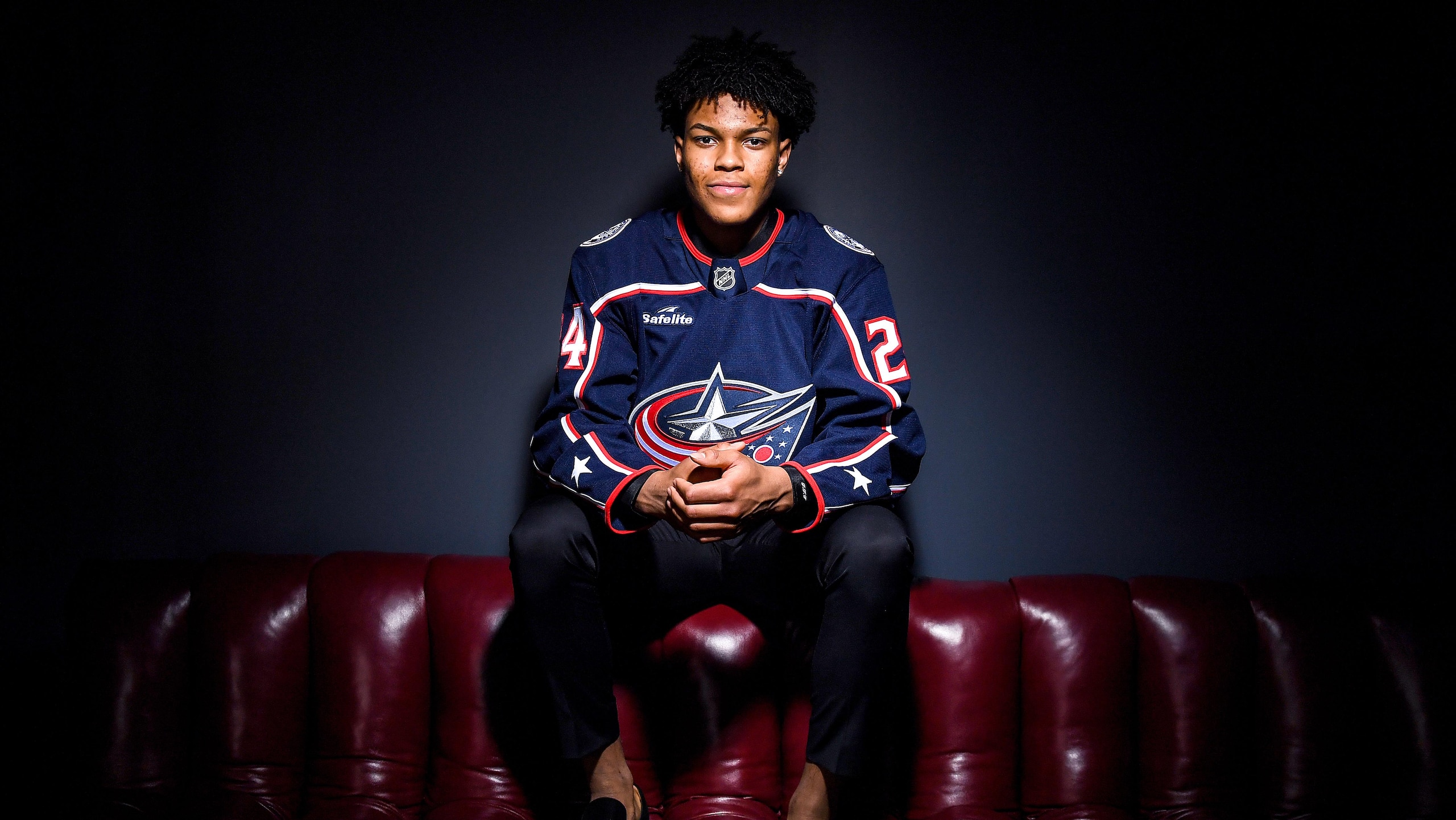
I had a heck of a time trying to decide between forward Cayden Lindstrom and defenseman Jackson Smith for the top of the Columbus Blue Jackets' prospect pool.
On the one hand, Smith was only just drafted and he's got some polishing that he needs to do as he develops. On the other hand, Lindstrom only played a few games last year after having back surgery. In the end, I felt more solid about Lindstrom, but I'm more than willing to be convinced in the opposite direction as the season progresses.
We'll be watching both of them in NCAA hockey this season, as Lindstrom joined Smith in leaving the WHL for college hockey. Lindstrom is joining the Michigan State Spartans this season, and I personally am glad. The somewhat slower-paced schedule and the time spent in the weight room that is constantly touted as a benefit of college hockey should be good for his back's continued recovery and his longevity as a player.
I'm also excited to see how Lindstrom's playing style—fearless and high-paced puck carrier—comes through in a new environment.
Dallas Stars, Lian Bichsel, D
9 of 32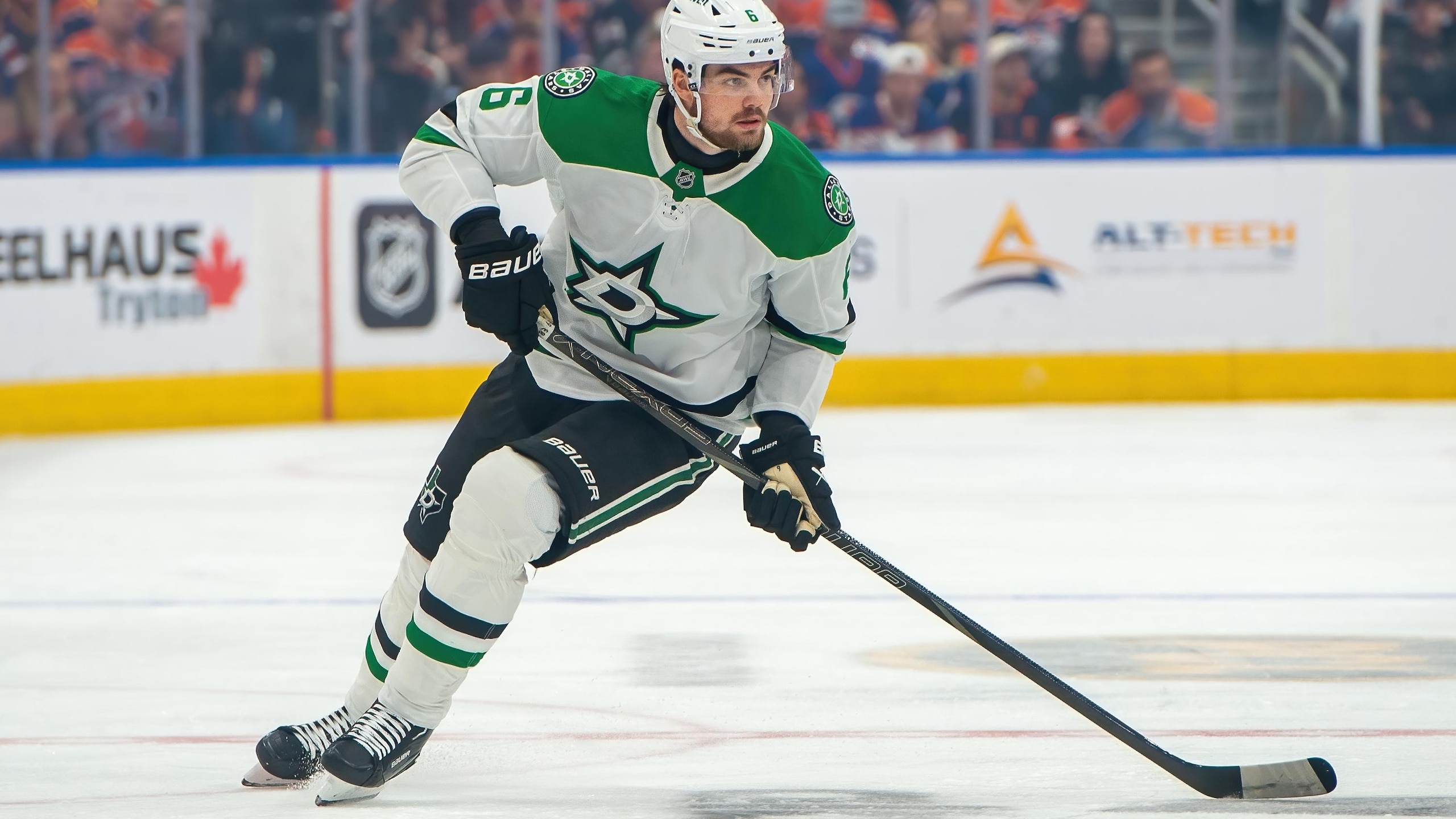
Lian Bichsel is the Dallas Stars' best prospect. He is also their top prospect in another way, coming in at 6'7", unless someone has grown a whole lot when I wasn't looking.
He's another player who is on the verge of leaving the prospect label behind, though, particularly when it comes to how many games he's played at the NHL level — Bichsel saw action in 38 games with the Stars last year and I'm only considering him a prospect for our purposes because he's still just 21 and hasn't technically established himself as a regular.
He made a good enough case for it in the second half of the 2024-25 season that I think he'll do that pretty quickly into this season, though. Bichsel took advantage of the open spot left by Miro Heiskanen's absence (due to a knee injury) and played through the rest of the year, even seeing action in 18 playoff games. It feels likely that he'll be a mainstay on the Stars' roster this year after showcasing his skating, as well as his positioning and decision-making abilities.
Detroit Red Wings, Axel Sandin-Pellikka, D
10 of 32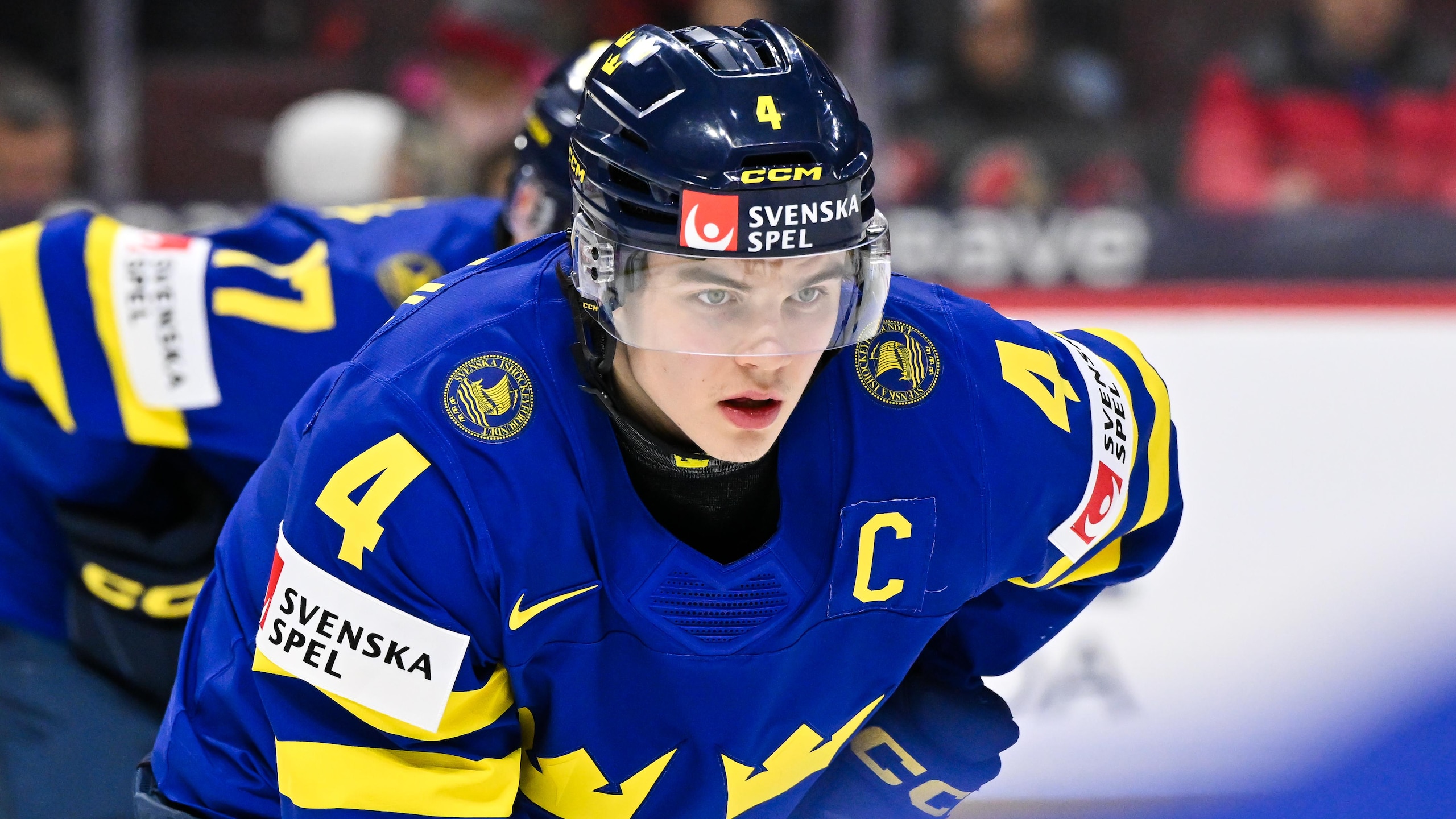
If whatever is going on with the Yzerplan wastes the best years of Axel Sandin-Pellikka's early career, I will be claiming emotional distress.
We're obviously not there yet; I'm just getting it out there. The Swedish defenseman is an incredible player—an offensively minded, dynamic defenseman with the ability to read the ice like he was given the script before the game started. He can quarterback a power play, make plays off the rush at his top speeds, and generally make life difficult for his opponents. He was the Red Wings' selection for this year's NHLPA Rookie Showcase, and I cannot imagine he'll do anything but shine during the Red Wings' training camp.
Sandin-Pellikka played two games with the Grand Rapids Griffins at the end of last season. I'm very often a proponent of giving European players extended time in the AHL to adjust to the North American game, but some guys just don't need it. I personally feel Sandin-Pellikka is one of those guys. Hopefully, Steve Yzerman and Todd McLellan agree.
Edmonton Oilers, Matt Savoie, RW
11 of 32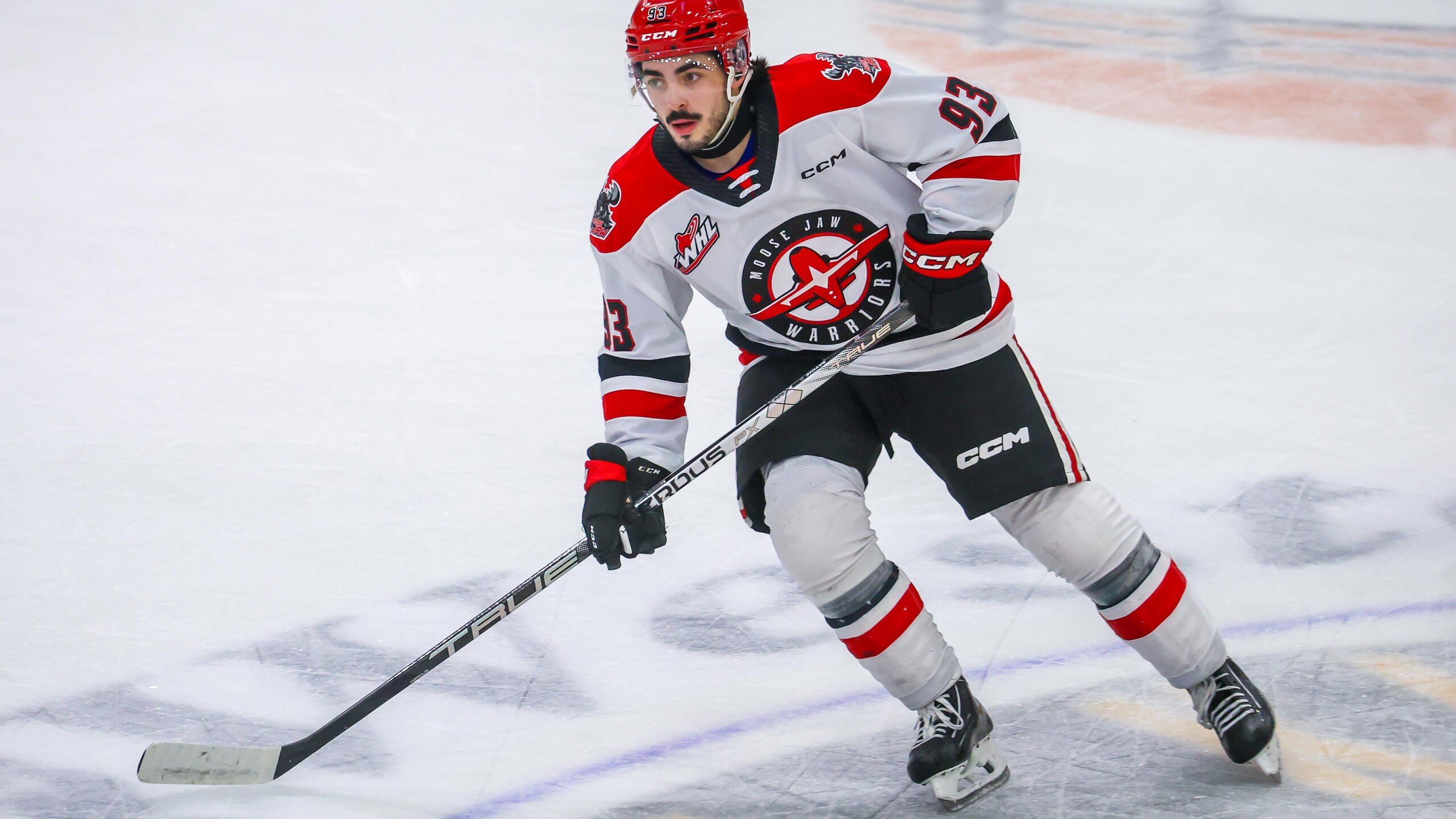
Obviously, the Edmonton Oilers have depleted their prospect pool in pursuit of contending for the Stanley Cup, something every contending team has to come to terms with. Unfortunately, they've also lost in the Final two years in a row. To the same team. And then you come home and the cupboards are bare?
Matt Savoie is a pretty nice consolation, though. A Savoie-ing grace, if you will. No, I won't apologize for that.
Savoie got bounced around during his major-junior career through no fault of his own; his WHL team, the Winnipeg Ice, became the Wenatchee Wild (and were the Kootenay Ice before he joined them) and he sprinkled some time with both the Buffalo Sabres and the Rochester Americans in there.
While he's only played four games with the Oilers so far, he had a pretty solid run with the Bakersfield Condors, with 54 points in 66 games in what was his first full professional season. With all his guest appearances here and there, that feels difficult to believe.
One highlight of Savoie's game in Bakersfield was his work on the penalty kill, and it's something that could win him an NHL roster spot this season, so keep an eye on that.
Florida Panthers, Jack Devine, RW
12 of 32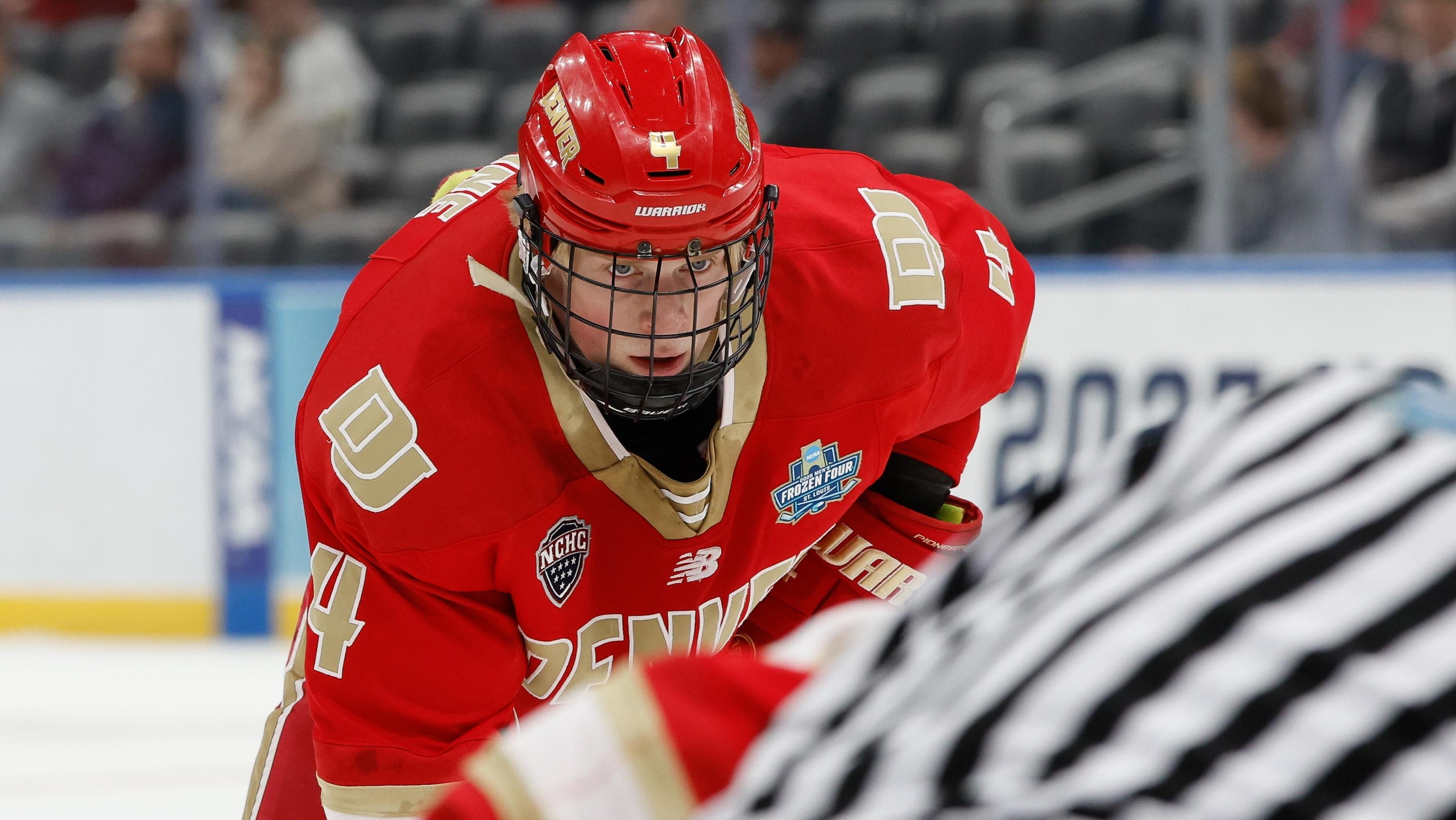
Sometimes, your best prospect being a guy you selected in the seventh round is a bad thing, and means that your stores are depleted and the situation is dire. Sometimes it means that you managed to find a player who was projected by some people to go as high as the second round, and who was named a top ten finalist for the Hobey Baker Award two years in a row. That's what the Florida Panthers got in Jack Devine.
(And okay, maybe the stores are still pretty depleted. But let's enjoy talking about Jack Devine.)
He jumped right into the pro game with the Charlotte Checkers after helping his University of Denver Pioneers win their third Frozen Four in his four years at the school, and though he only got three regular-season games in, Devine made the most of them. He went on to have five points in seven playoff games with the Checkers, playing in a variety of situations, and looks to be one of the better offensive options for the Checkers this fall.
Not bad when you can get all that from a seventh-rounder.
Los Angeles Kings, Liam Greentree, RW
13 of 32
Not only does Liam Greentree have one of the more fun names in the league (he sounds like Legolas's jock younger brother), but he's also a pretty darn good hockey player.
He's a relentless shooter a lot of the time — one game in April saw him scoring five goals, a feat that was as unsurprising as it was impressive — and his defensive game has improved over the last season as well. Saying he's constantly engaged feels like a bit of an understatement.
Nothing is a lock, of course, but I would send him back to the OHL this season. It feels like a guy who scored 119 points in 64 games doesn't have a lot left to prove, but I'd love to see him improve his speed. I would, however, like to see the Kings give him a nine-game trial run. I'm a big fan of these short stints in the NHL for players who aren't ready for the league full-time but can't play in the AHL yet—it gives them a glimpse of where they stand in comparison to their NHL opponents, and what they need to work on to hang at the NHL level night in and night out.
Minnesota Wild, Zeev Buium, D
14 of 32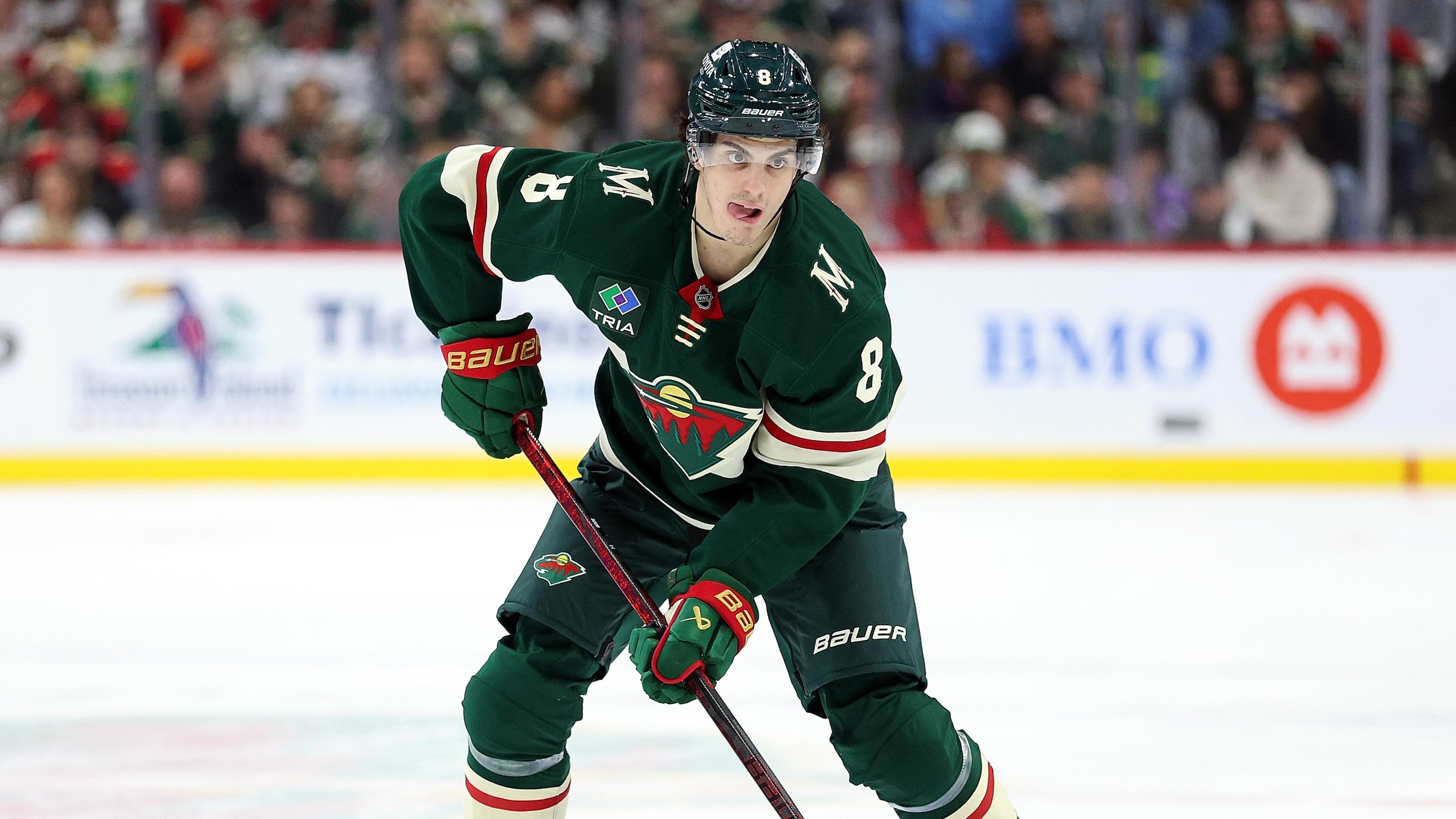
Add defenseman Zeev Buium to the list of players I don't think will be keeping the prospect label much longer.
If I were the betting type, I would put money on Buium being an NHL regular out of the gate this season. Fortunately for me and my bank account, I am not the betting type—but I do think this is one that I would win easily. Buium looked like a seasoned NHL player when he was on college ice; that only became more prominent when we saw him in his four playoff appearances with the Minnesota Wild this season.
Buium is almost certainly going to be in discussions for the Calder Trophy this season, although that path never quite leads to where we think it's going to. Still, his poise and the way that he thinks the game three steps ahead of what is happening on the ice alone would be enough to have him in contention; add to that his intelligence and deceptive abilities and you've got the recipe for a rookie of the year ready to go.
Montreal Canadiens, Ivan Demidov, C/RW
15 of 32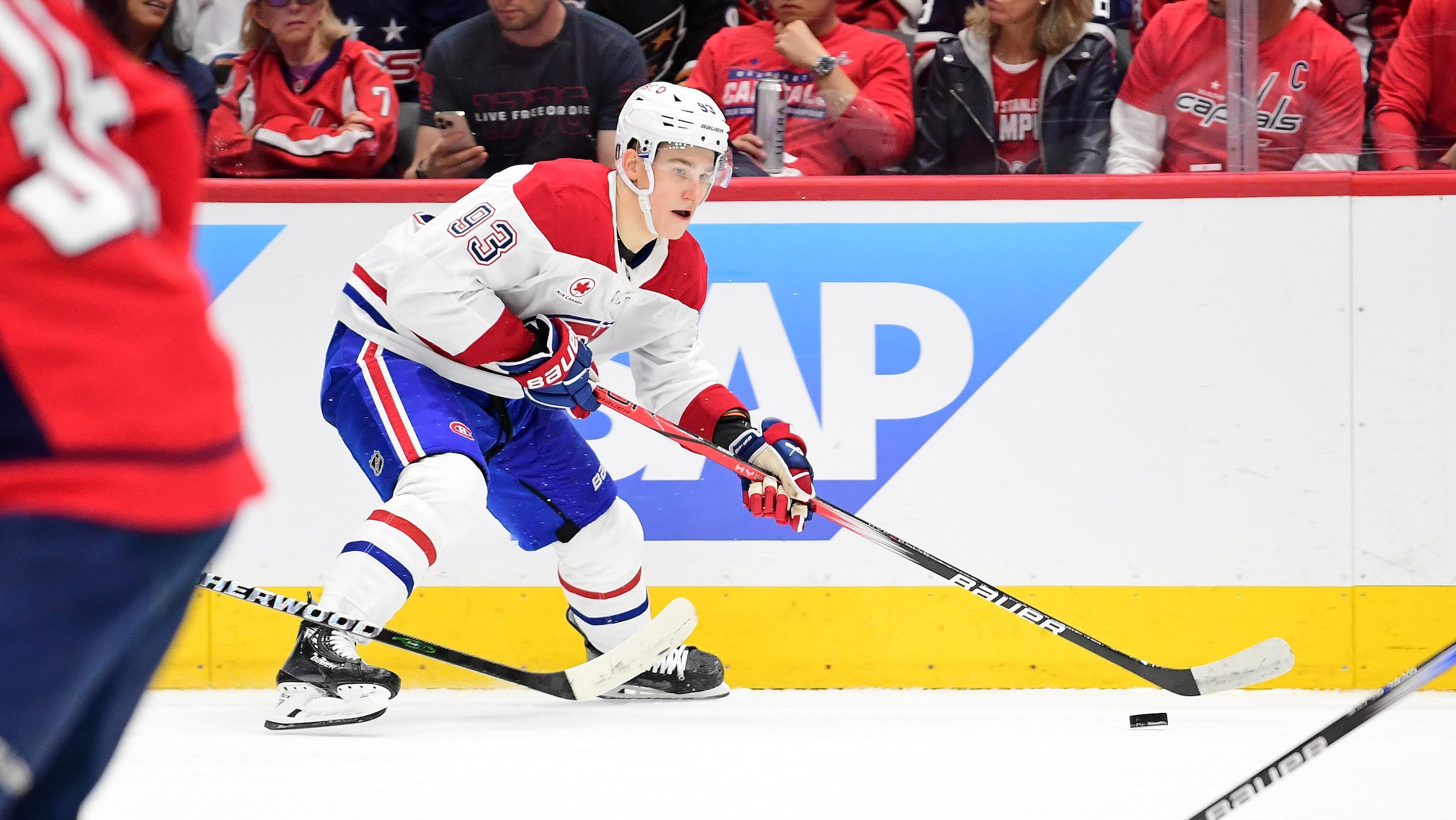
Adding Ivan Demidov to the cohort of forwards that the Montreal Canadiens send out to terrorize opponents nightly just seems unfair.
While there is an argument to be made that loading up all of Cole Caufield, Nick Suzuki, and Demidov all on one line isn't the best use of the Habs' resources, here's my counterpoint: it would be so damn fun to watch them night in and night out.
Demidov has spent the summer in Canada, working out both on and off ice at the Canadiens' Brossard training facility and spending time with teammate Lane Hutson. He's currently the favorite to win the Calder Trophy this season, and although the Calder contest can get a little weird, it wouldn't surprise me in the slightest.
As far as pure skill goes, Demidov is in the top tier of NHL-drafted prospects right now—if not potentially at the top himself. Between his puck handling, his speed, and his anticipation—the way he's able to set up plays a few steps ahead of everyone else—he's going to drive opponents absolutely batty next season.
Nashville Predators, Brady Martin, C
16 of 32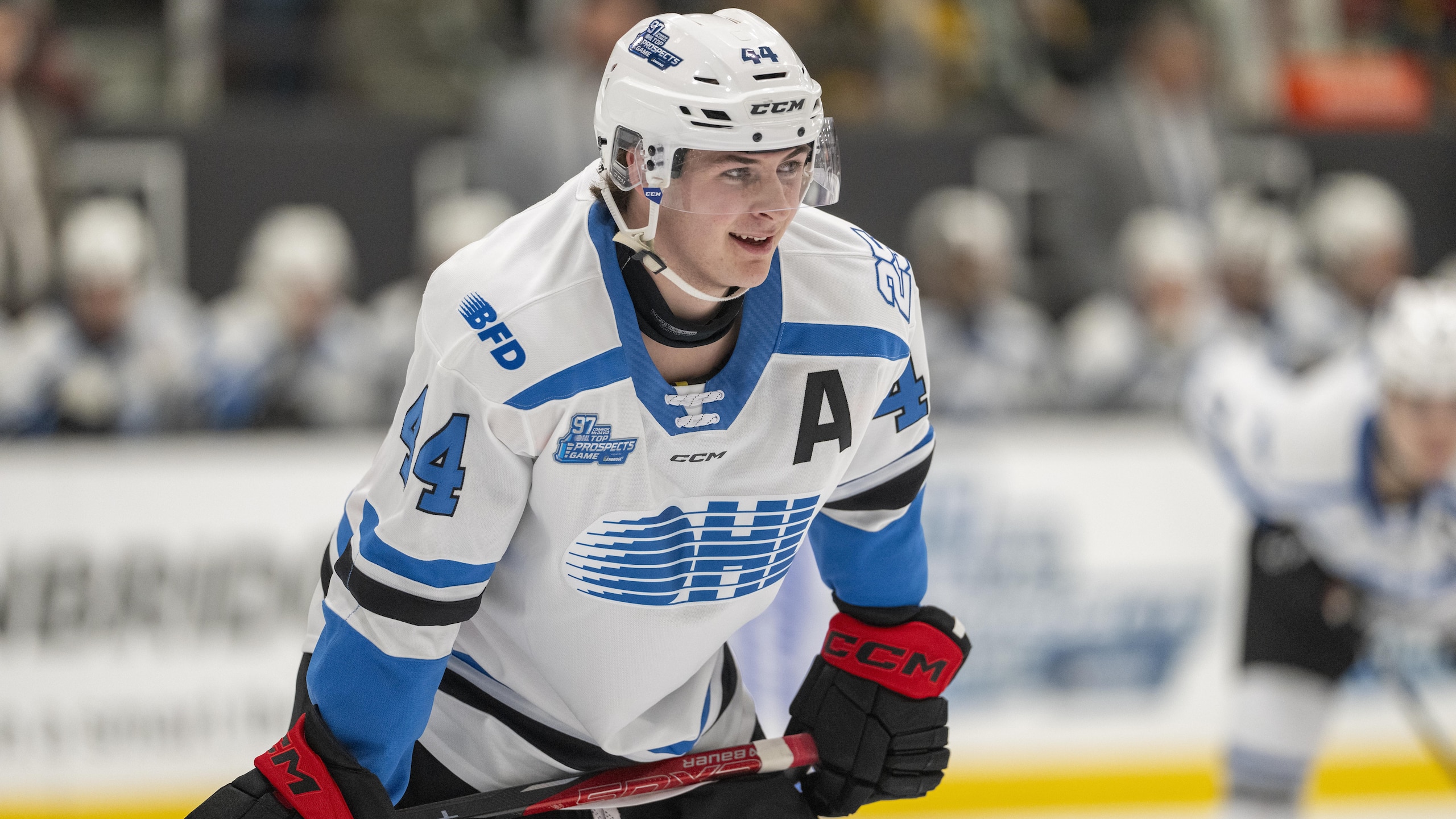
Fitting for a farm boy to be the top prospect in the barn for an NHL team from Tennessee.
Forward Brady Martin has a ways to go before he's ready for the NHL full-time, but that doesn't stop him from being the most purely talented guy on the Nashville Predators' depth chart.
He took that spot the moment he was drafted, and unless Nashville crashes and burns this season—or they manage to find a steal at a later first-round pick—he's probably going to hang on to it for a minute. Martin recently signed his entry-level contract with the Predators, and will head back to the Sault Ste. Marie Greyhounds of the OHL.
Whether he does that at the beginning of the season or he forces the Predators' metaphorical hand and gets a few NHL games first remains to be seen. He more than proved last season that he can handle the heavy workload that would come in the NHL, logging significant minutes for the Greyhounds (and finishing with 72 points in 57 regular-season games).
But there are things he still has to work on at the major-junior level. I personally would like to see Martin improve his skating; he has no real explosiveness and I just don't think it's up to NHL standards quite yet.
New Jersey Devils, Anton Silayev, D
17 of 32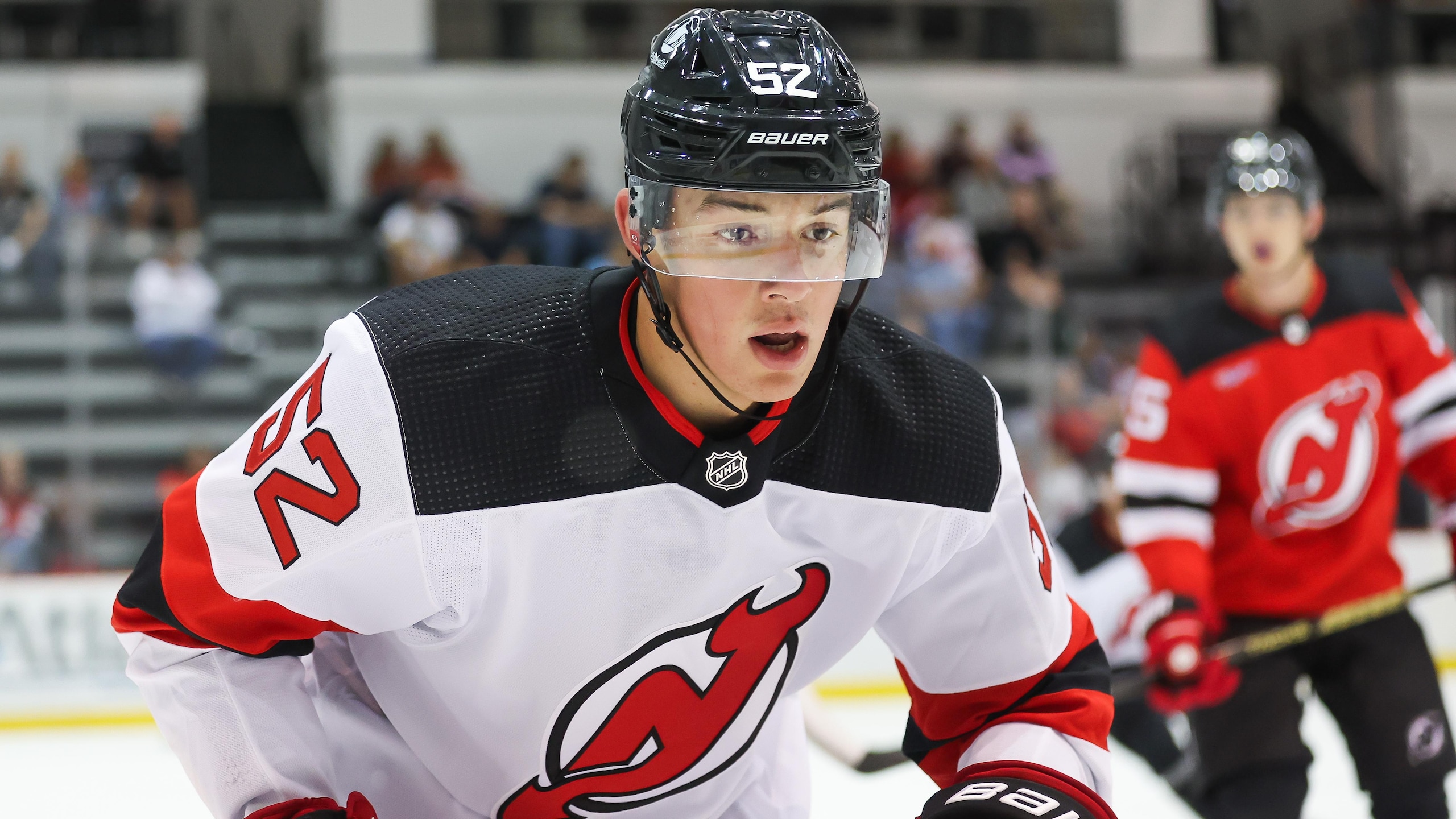
Is Anton Silayev coming to North America this season? No. Is the Torpedo Nizhny Novgorod defenseman the best player in the New Jersey Devils' system?
Absolutely.
Don't get me wrong; I love Seamus Casey. But although Casey will be a valuable addition to the Devils when the time comes, Silayev still comes out on top for me when it comes to a battle of these two defensemen.
Silayev is such a mobile player, with an explosive skating stride that allows him to cover a large amount of ice in a short amount of time. That's such a valuable skill on its own with the way the game is played these days, and then you add to it the fact that he can activate at a moment's notice, reading the ice and making decisions much more effectively this past season than the year before.
There are still wrinkles in his game, errors that need to be ironed out, but watching his ability to shrink the space his opponents have to work with, you have to think that he's going to have a solid career once he gets to New Jersey.
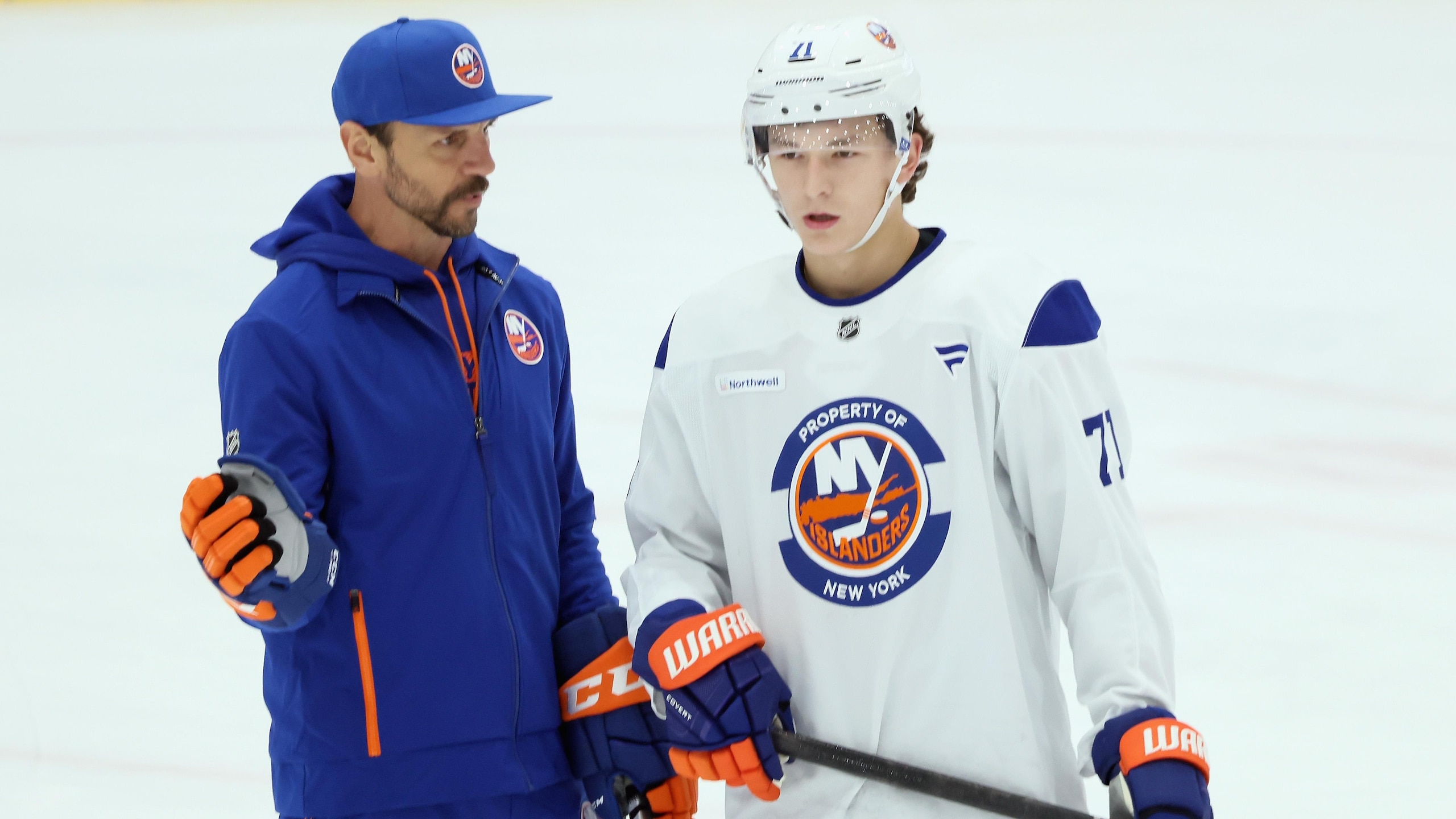
New York Islanders, Matthew Schaefer, D
18 of 32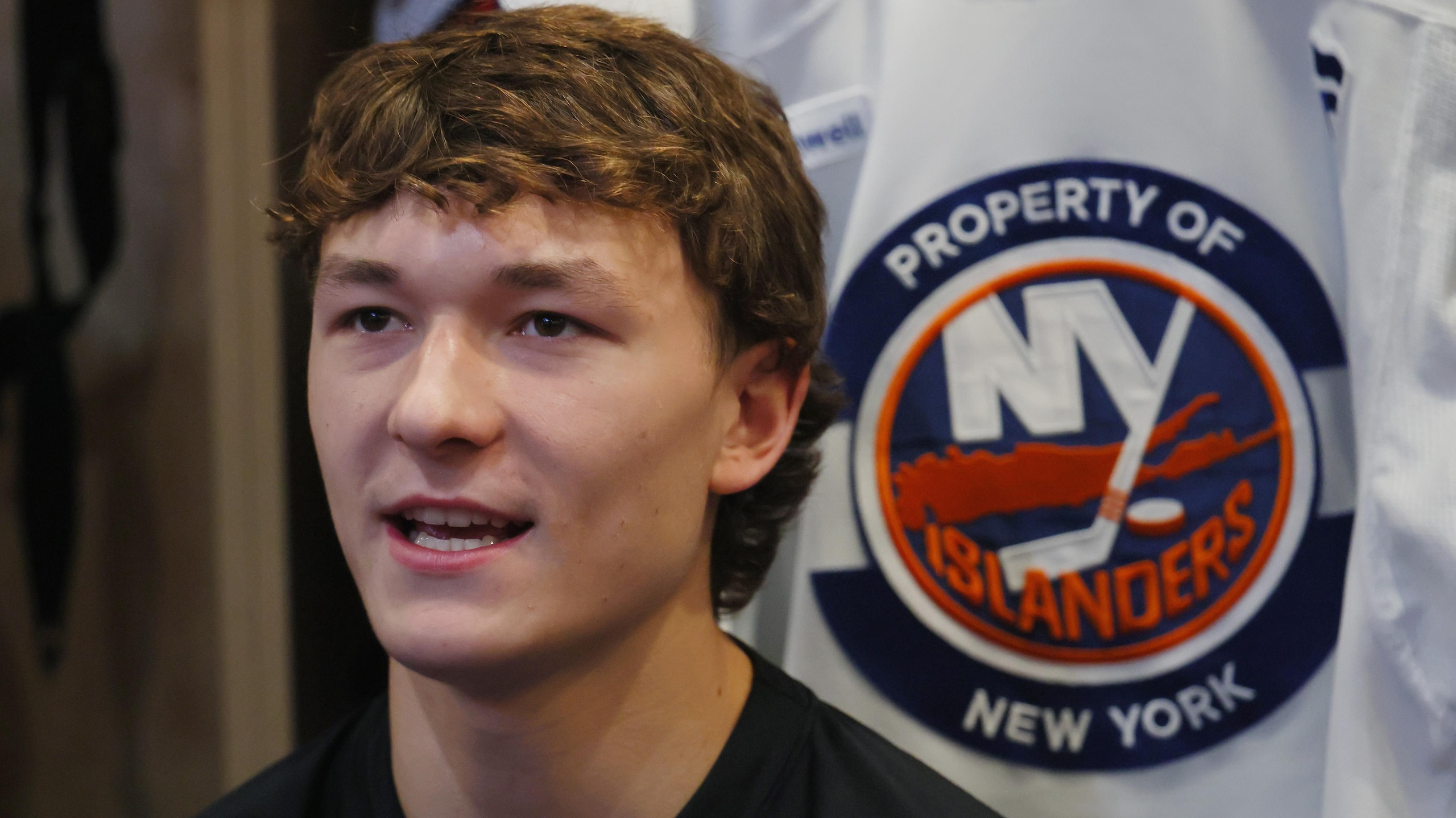
I am almost positive this is the only time that we'll be able to include defenseman Matthew Schaefer on this top prospects list.
It's entirely possible, of course, that Schaefer ends up back in the OHL playing for the Erie Otters. But I genuinely think he's going to stick on the New York Islanders right away. Now, do I think he's going to be a Norris Trophy candidate straight out of the gate? Of course not.
Adjusting to the NHL takes time in general, but especially as a defenseman. But a player like Schaefer, who is already far outstripping his peers, is probably best served by his development happening in the league (something that is not always the case).
What can I say about Schaefer that hasn't been said already? He's a game-breaking defenseman who bends opponents to his will in a way that seems as easy as breathing. His skating is terrific. He can get the puck at one end of the ice and have it down in the other end before his opponents have time to blink (alright, that's a bit of an exaggeration—but if you watch him play, the exaggeration is warranted). It's going to be an exciting season for Islanders fans watching him become part of the team.
New York Rangers, Gabe Perreault, RW
19 of 32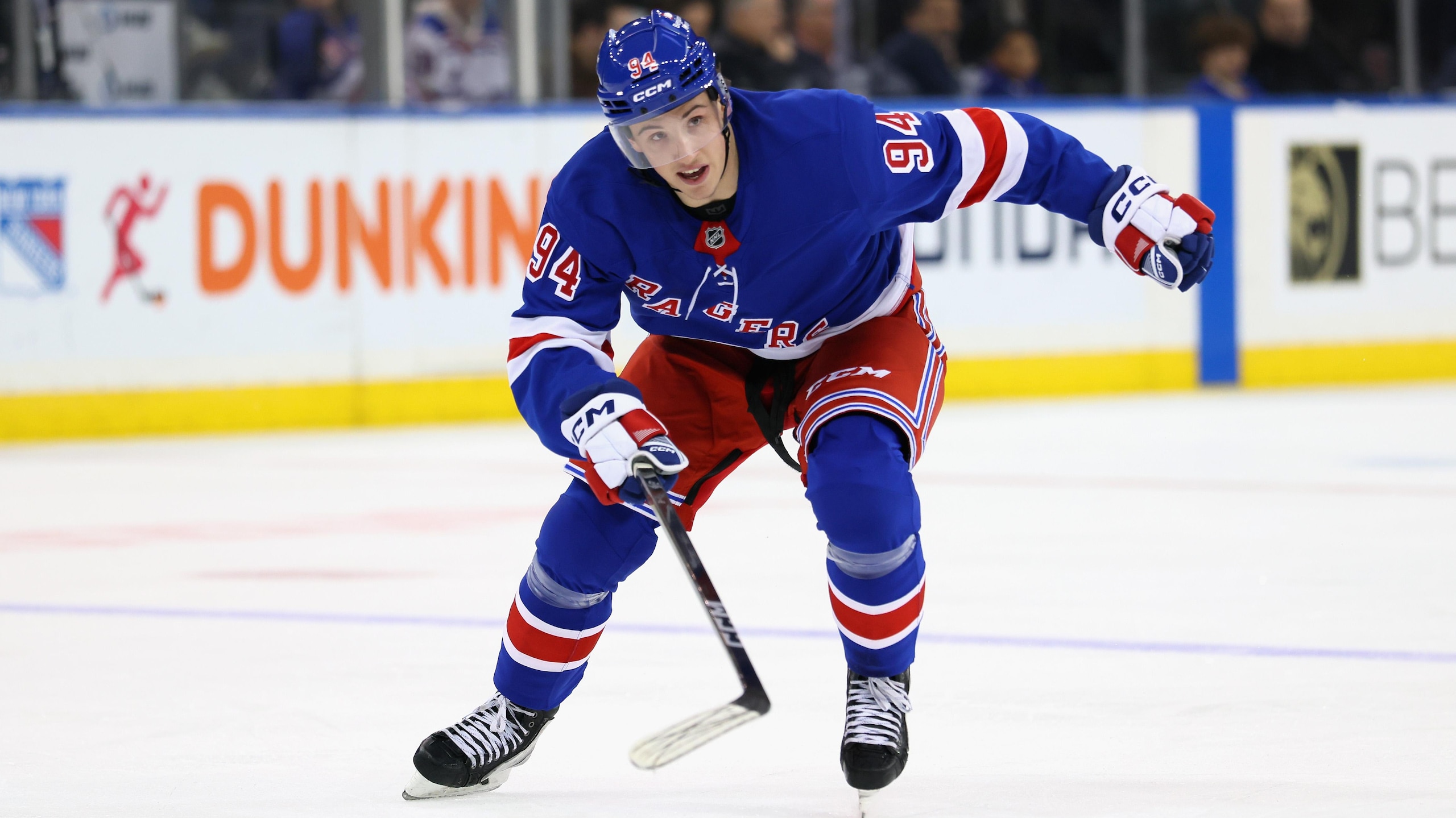
It's a toss-up whether we'll see Gabe Perreault full-time in the NHL next season or if he'll spend the year in Hartford, because frankly, I have no idea what the New York Rangers are going to do next at any hour of the day.
What isn't a toss-up is that the forward from Boston College is undoubtedly their best prospect, and could be a contender for the Calder Trophy if given the opportunity. Some of you might find that a contentious statement; I don't care. I stand by it.
Perreault's vision and intelligence underpin the hallmark of his game: his deceptive, creative playmaking that always seems to find teammates and always stymies opponents. He plays with great pace, and while we've had concerns about his skating, it's improved to the point that it will work at the NHL level, even if it won't ever be one of the highlights of his game. The way he thinks the game just propels everything else forward.
If the choice for next season is between him playing intermittently and being scratched some nights in the NHL or playing every game in the AHL, I'd prefer to see him in the AHL; he's at the point where consistent experience to ensure he adjusts properly is what he needs most.
Ottawa Senators, Carter Yakemchuk, D
20 of 32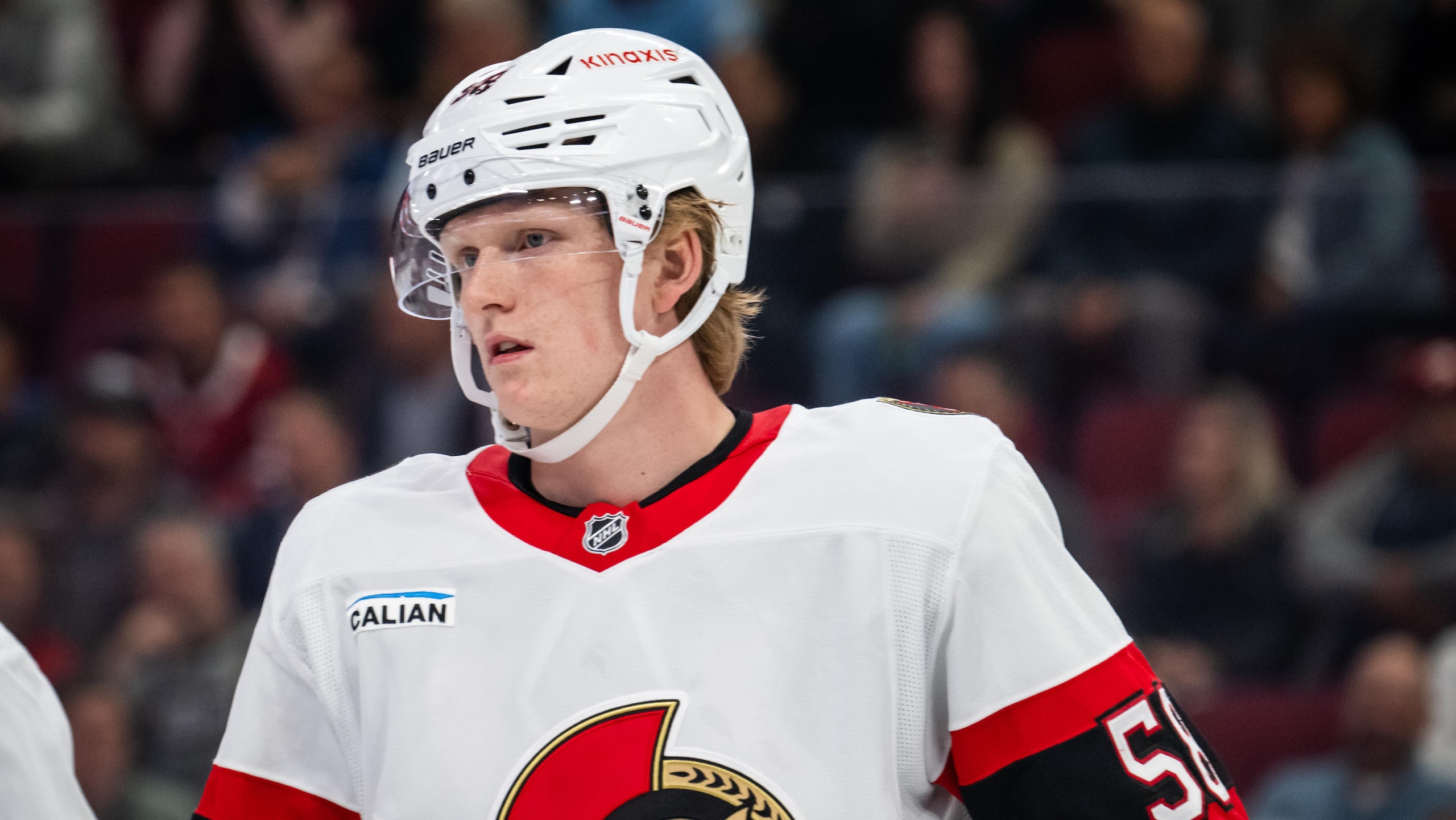
If we see a banger season out of Logan Hensler this year, I may change my mind about who sits atop the Ottawa Senators' prospect pool, but right now, Carter Yakemchuk takes that spot.
After a great preseason with the Senators, the Calgary Hitmen defenseman took a step back offensively last year, but taking his overall play into consideration, this wasn't a red flag, particularly as his goal last year was to round out his game and become a more complete player. His growth defensively, as well as in terms of his consistency and details, has him in a much better place to step into the NHL. When that will be is up for debate.
Yakemchuk has stated that his goal is to make the Senators out of training camp; President of Hockey Operations and General Manager Steve Staios has acknowledged that this is a possibility. I would at the very least like to see Yakemchuk get a short stint to start the year; I want a glimpse at how that growth is going to translate to the professional level.
Because he'll be 20 before the NHL regular season starts (and he has played four WHL seasons), Yakemchuk is eligible to be sent down to the AHL, and I wouldn't hate seeing him get time there either. Which route he takes is in his hands.
Philadelphia Flyers, Porter Martone, RW
21 of 32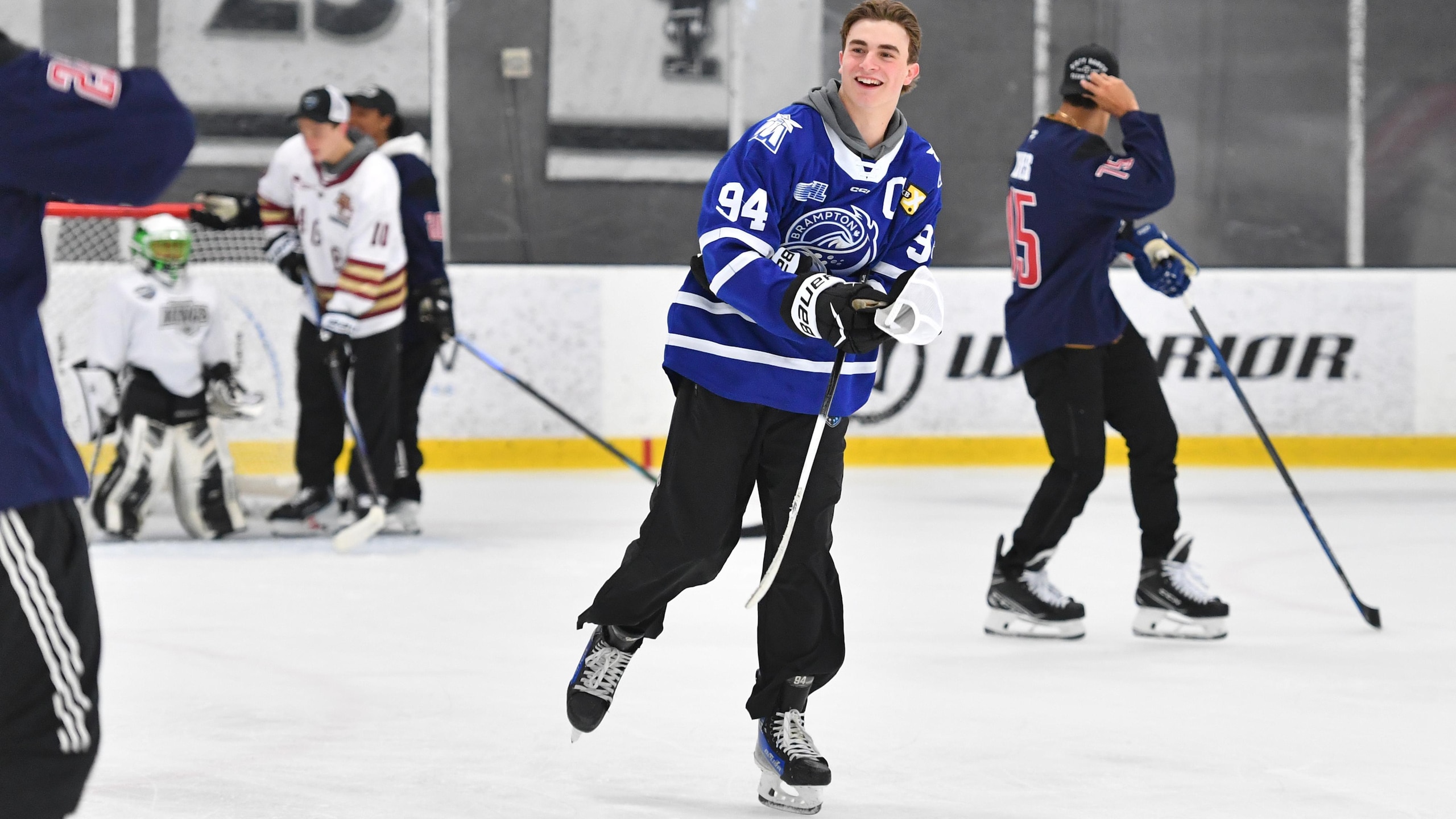
Ah, Porter Martone. My 2025 NHL Draft bestie and my 2025 NHL Draft arch nemesis.
The only player last season who can make me clap and generationally crash out on the same shift. I'm harder on him because I genuinely think he has the potential to be one of the best prospects we've seen in recent years and I want to see him live up to it instead of burning out.
Which is why I was delighted to see that he decided to move to the NCAA, specifically the Michigan State Spartans (though I have to admit, I was pulling for him to go to Penn State and join pal Luke Misa and wunderkind Gavin McKenna). Martone's playmaking abilities will be tested at the NCAA level in ways that they weren't in the OHL—he isn't going to be able to get away with his love of floating around the perimeter and cherry-picking when he's going up against guys five years older and twenty or thirty pounds heavier than he is. And I'm so glad.
Martone was able to skate on by, if you'll pardon the obvious pun, at the major-junior level. The NCAA should burn that out of him and force him to utilize the skill that I know he has. I can't wait.
Pittsburgh Penguins, Rutger McGroarty, C/LW
22 of 32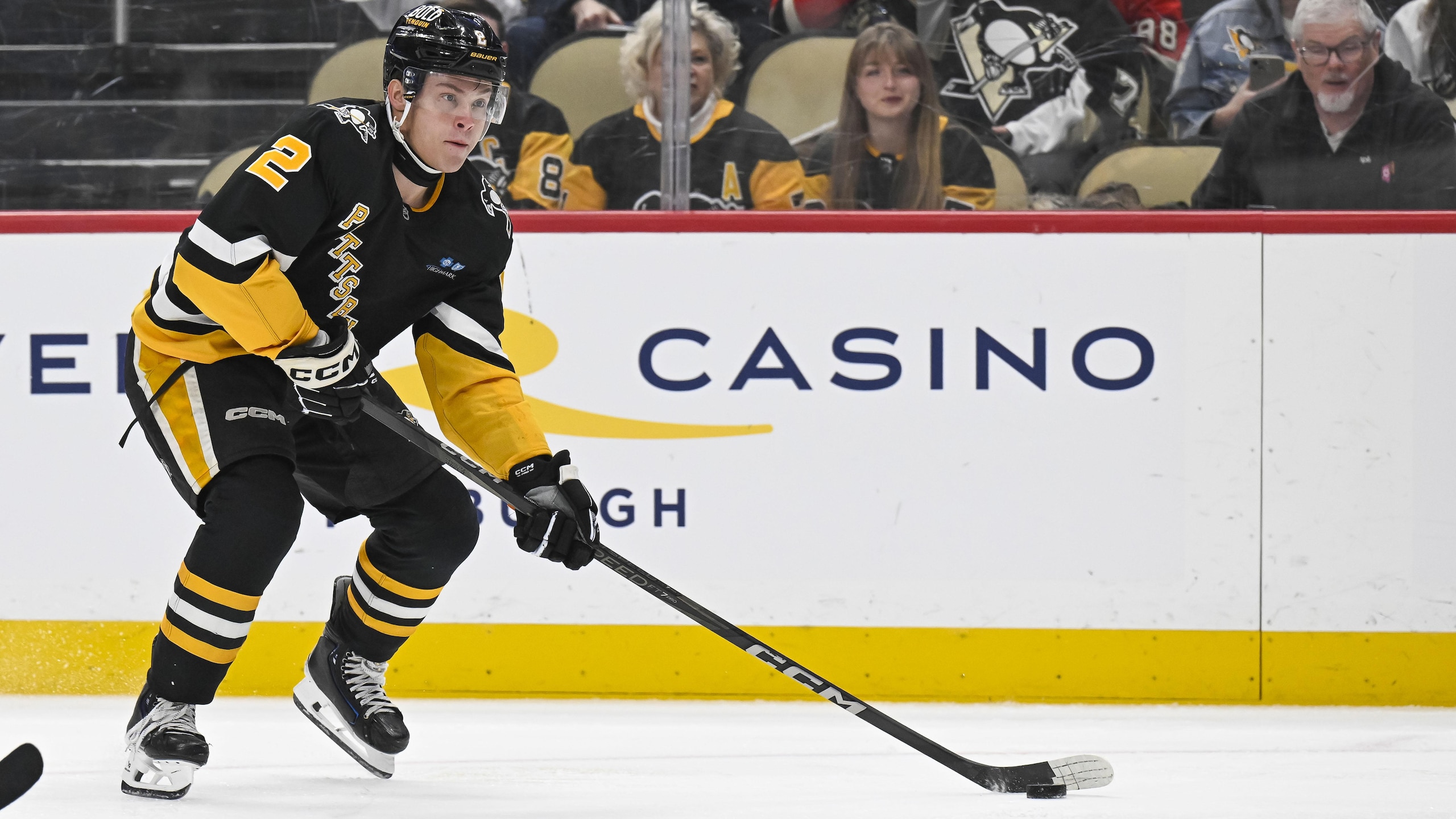
Don't listen to the naysayers who spent last year calling Rutger McGroarty a bust because he didn't play a full NHL season and score a million points. While the Pittsburgh Penguins significantly improved their prospect pool at this year's NHL Draft, with the addition of several skilled players the likes of which the Penguins' system hasn't seen in a minute, he still comes out on top of the stack.
For those of us who know what we're looking for, McGroarty's steady development in the AHL, even when the points weren't coming in, was right where it should be last year—all the details, all the work done to support teammates and to keep play moving in his team's favor.
His competitive nature and never-quit motor are just one side of his game; he's also an incredibly smart player, able to read the ice effectively under pressure. My gut tells me that whatever direction the Penguins go after the Crosby and Malkin era ends, McGroarty is going to be a key piece of the puzzle. He brings both the hockey sense and the leadership abilities necessary to make it happen.
San Jose Sharks, Michael Misa, C/LW
23 of 32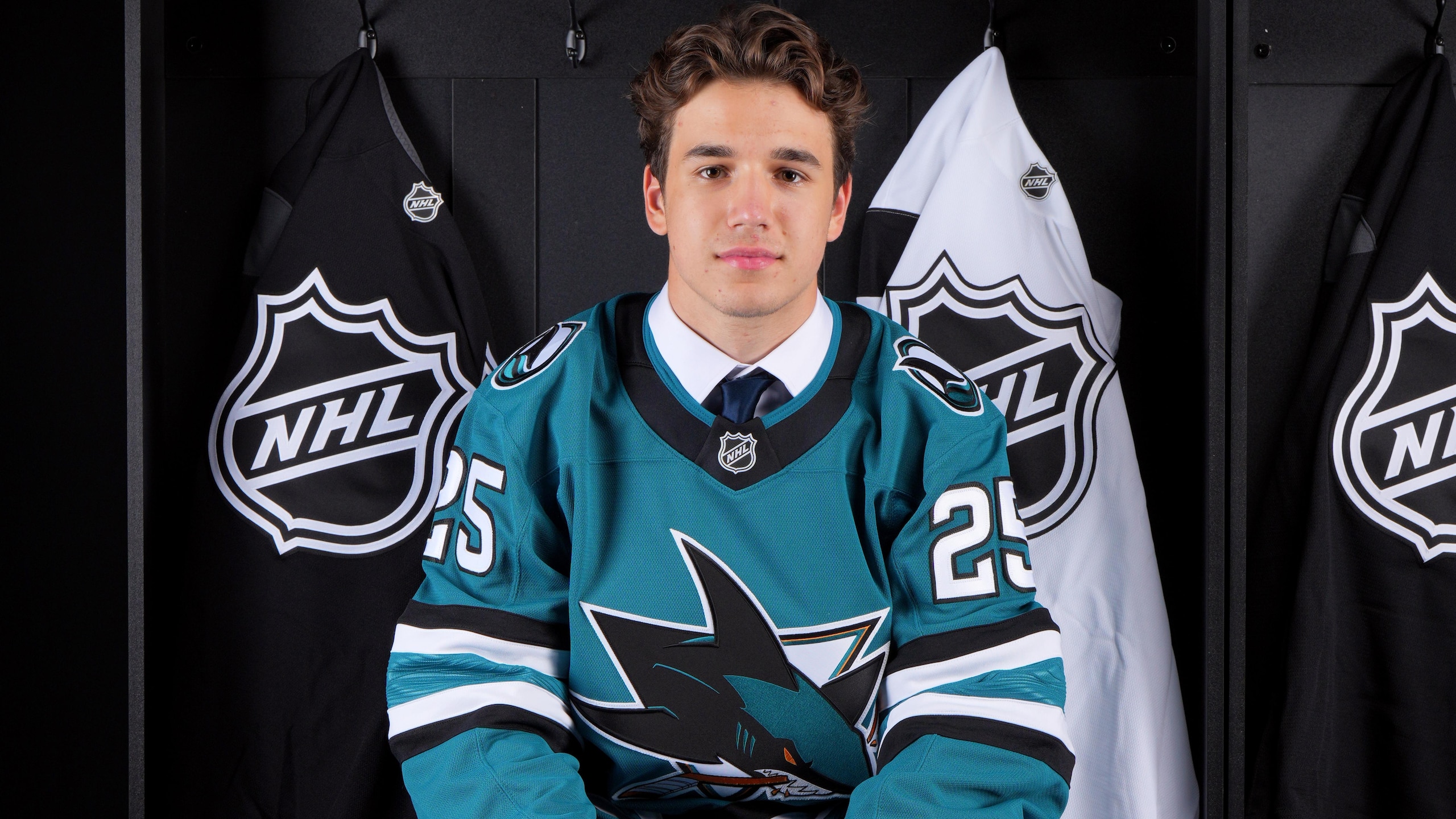
Here's another guy I'm sure you're tired of me talking about. Talk about adding to already overflowing coffers. Michael Misa going to the San Jose Sharks made me simultaneously cheer and stomp my feet. Look at what they're building over there!
Whether Michael Misa makes the Sharks' opening night roster really just depends on one thing: whether he signs his entry-level contract. What's going on with that? It's possibly got to do with their 50-contract limit. While Sam Dickinson's contract is eligible to slide, he's got the potential to end up on their NHL roster and that would put them at 50. And then there's just no room for Misa, which is a damn shame given that he's far too good for the OHL and is frankly better than some NHL regulars out there. (It could also be several other factors; I imagine we'll find out sooner than later.)
I know some of you are going to be upset that I didn't put Dickinson here over Misa. I have a very good reason for that: Misa's better. I also have a second good reason for that, which is that I really want to see how Sam Dickinson plays free of the wildly supportive confines of London Knights hockey. As I'll probably get the chance to witness that this season, we'll check back in when it happens.
Seattle Krake, Berkly Catton, C
24 of 32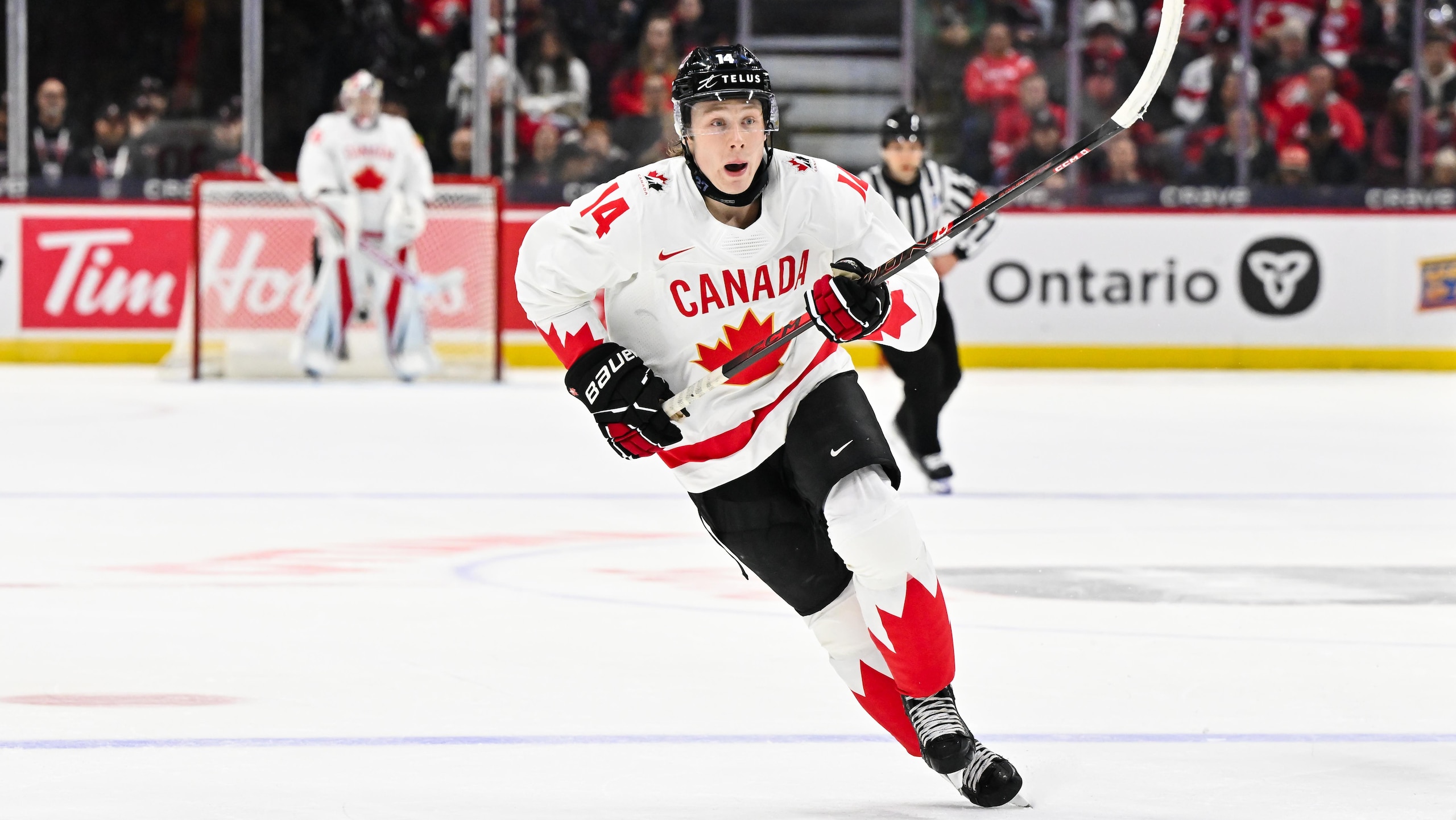
The Seattle Kraken have an embarrassment of centers in their system and my favorite one is Berkly Catton.
Currently captain of the Spokane Chiefs of the WHL, Catton finished last WHL season with 109 points in 57 regular-season games. And then he added 42 more points in 20 playoff games. I don't know if he's going to make the Kraken out of training camp this fall, but I can tell you he's going to try his darndest. At the very least, I would really like to see him get that nine-game tryout, but honestly? With Catton, it feels like if he gets a run of a few games, he'll probably end up sticking around for real.
He's an incredibly dynamic player, and one who has excellent tools for the job, no matter what situation he gets thrown into.
It's always fun when a high-flying rookie injects a frustrated team with a boost of energy. Adding Catton to the Kraken's offensive power this season could do just that. I would slot him into the second line center spot behind Matty Beniers with some veterans on either side, but that's just me.
St. Louis Blues, Jimmy Snuggerud, RW
25 of 32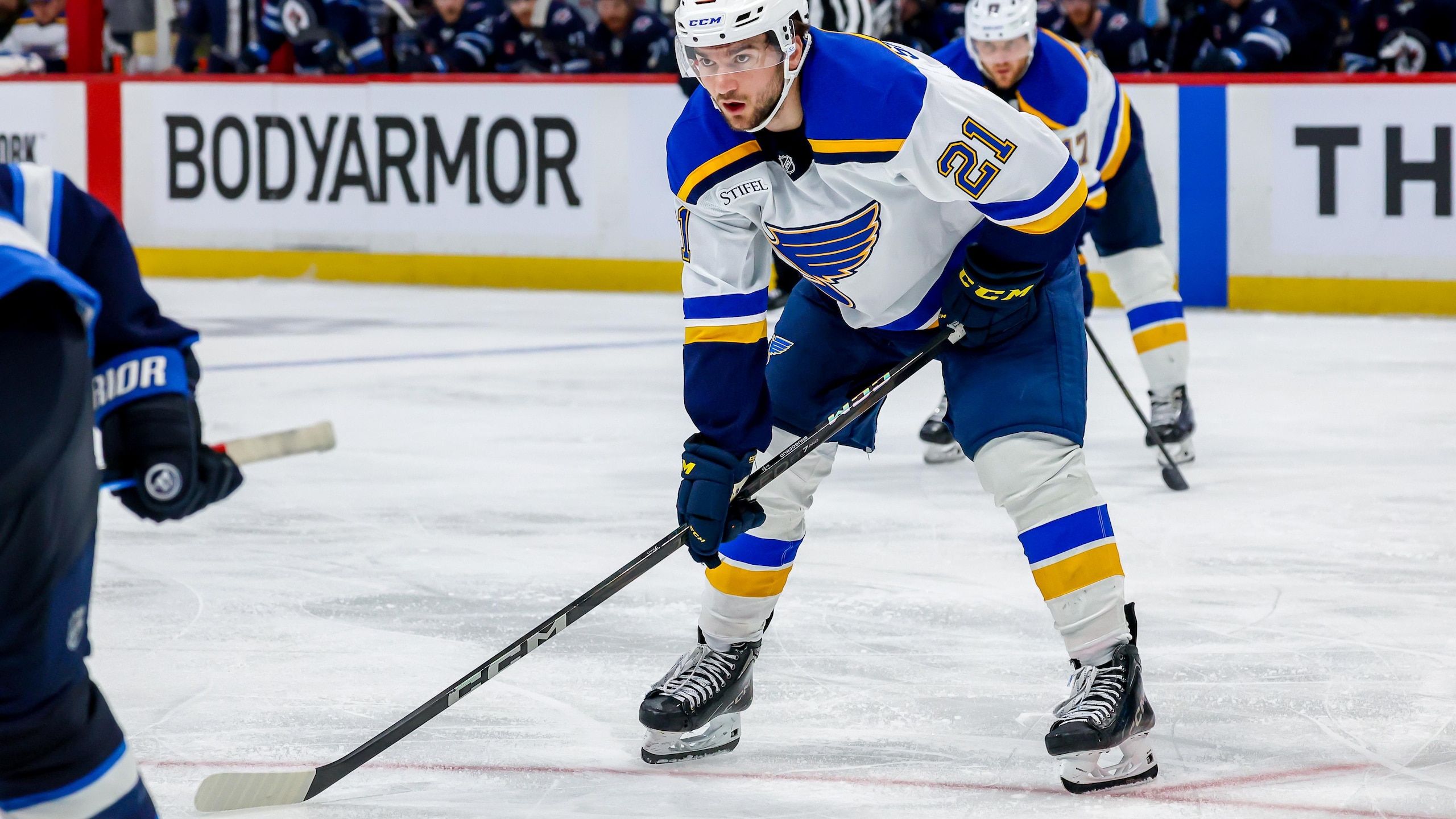
Every so often, you'll see a prospect and go, "Wait, isn't he an established NHL player already?" Jimmy Snuggerud feels like he's constantly that guy for me.
He plays like a pro every shift, and when he joins the St. Louis Blues full-time time I don't think he's going to have a very difficult transition. He's already played seven games with the Blues, joining them after his season ended with the University of Minnesota (where he was captain) last year, as well as seven playoff games (he had four points in each seven-game run).
It isn't often that I say this—I prefer to hedge my bets when it comes to prospects moving up to the next level because, as good as they are, there are so many factors involved besides talent—but I will genuinely be surprised if Snuggerud isn't on the Blues full-time next season. He averaged about fifteen and a half minutes of ice time in his regular-season games, kicking that up to 17 minutes in the playoffs. That's not the ice time of a guy who isn't going to be back next year; that's a player who is being relied upon.
Tampa Bay Lightning, Sam O'Reilly, C
26 of 32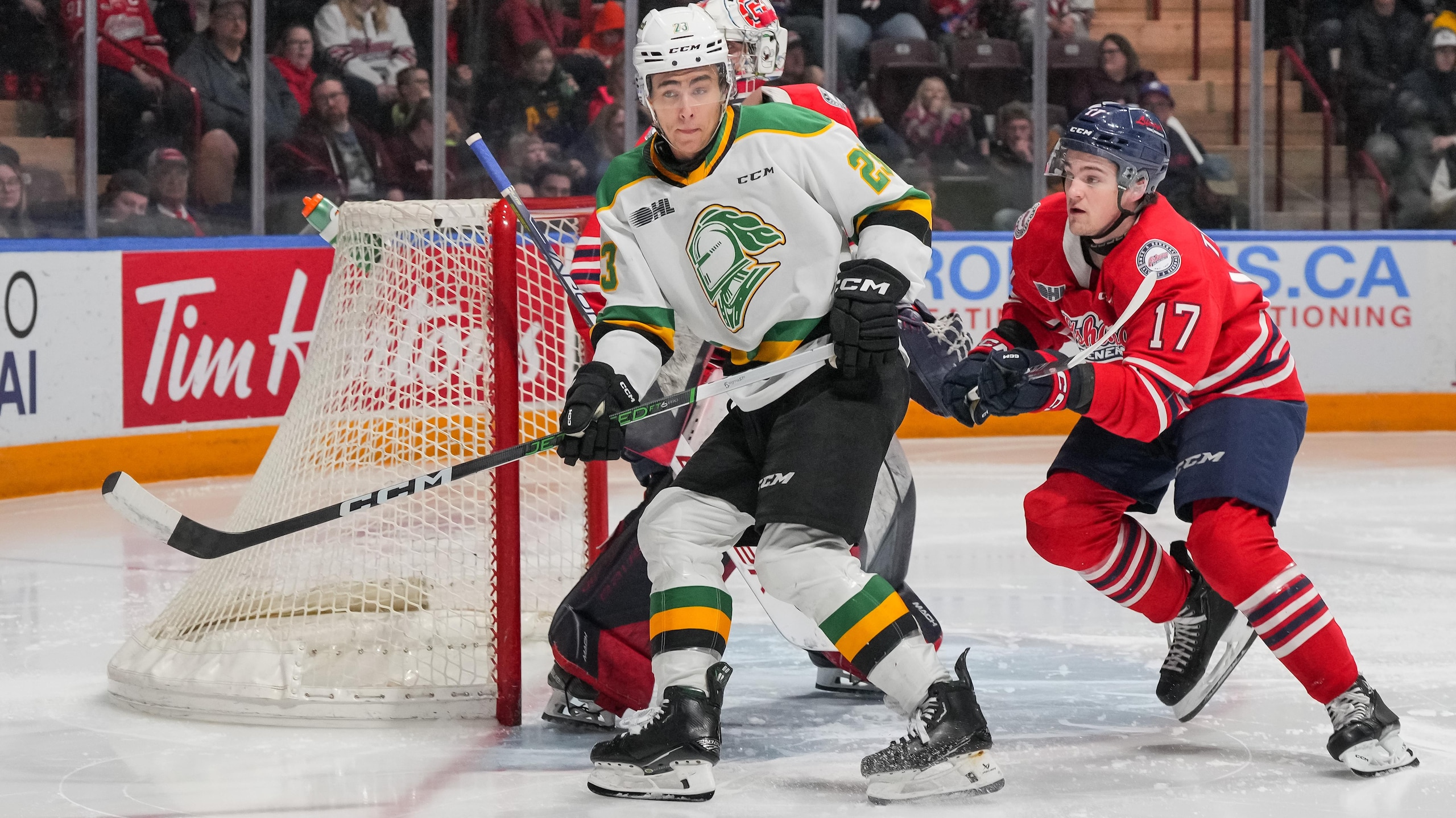
The doors are closed, the lights are turned off, and the grocery store is empty. Just kidding, but things aren't looking great in the Tampa Bay Lightning's system.
Forward Sam O'Reilly is a bright light in that grim reality, though. Acquired by the Lightning from the Edmonton Oilers in the trade for Isaac Howard, O'Reilly is a shutdown center with a relentless work ethic. He brings great physicality to the game, and his hockey sense allows him to be excellent at the finer details.
While his offense looks good—71 points in 62 regular-season games, up from 56 points in 68 last season—it is key to remember that those were scored on a ruthless London Knights team that rarely falters in a significant way.
I don't project O'Reilly to be a game-breaking scorer at the NHL level. What he brings is more defensive abilities—key details and excellent positioning—and strong passing. He's shown flashes that he can drive play, though, and with some of London's bigger names out of his way next season, I'm really looking forward to seeing if I'm wrong and he'll bring more on the scoring side than I thought.
Toronto Maple Leafs, Easton Cowan, C/W
27 of 32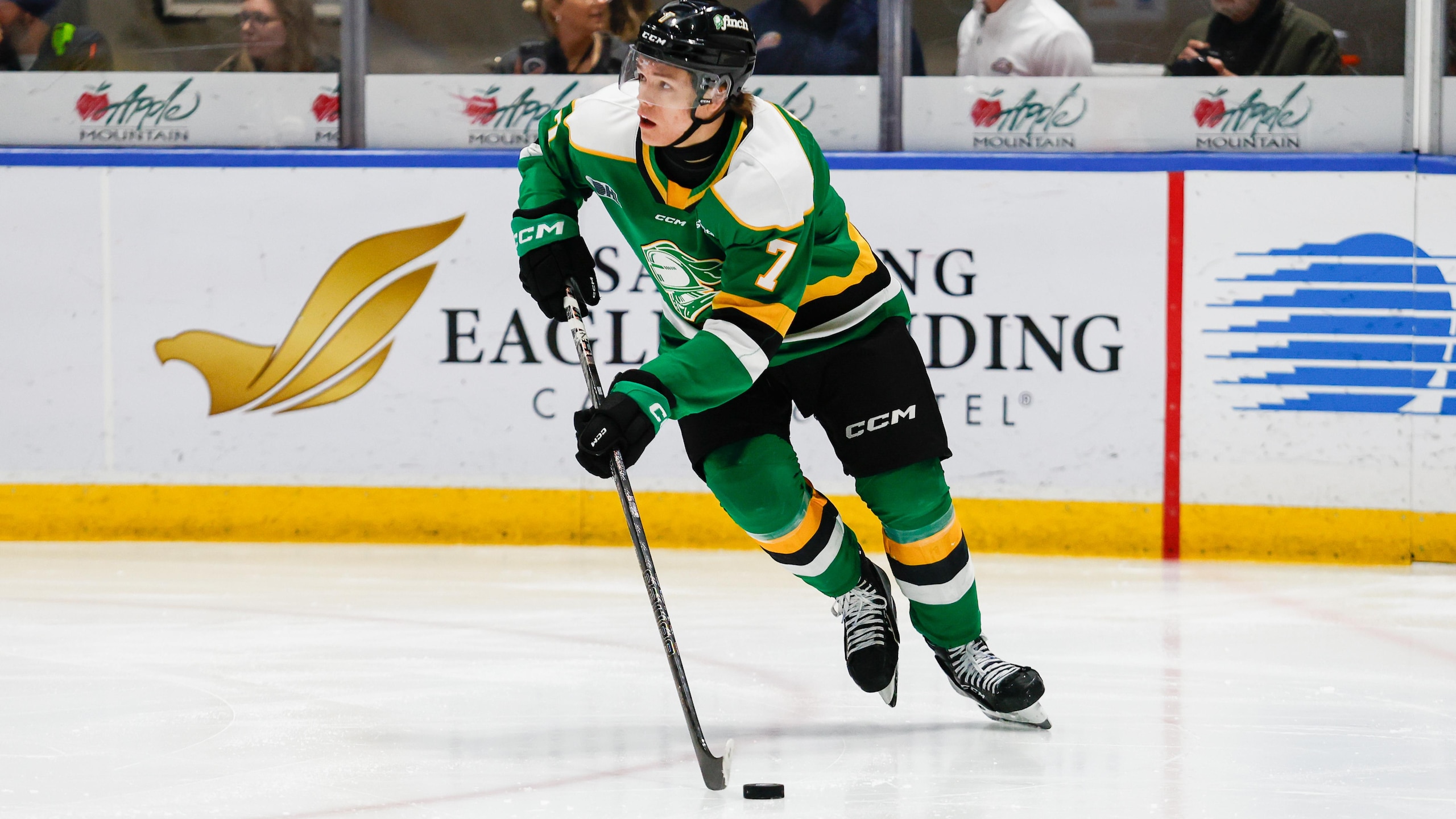
Be good to the cowboy, Toronto. He works hard.
Easton Cowan is a terrific player, but I worry about two things: how he's going to transition from the cushy London Knights always-winning life to, well, the Toronto Maple Leafs; and how he is almost certainly going to be slotted in by Leafs fans to fill the scapegoat void left by Mitch Marner moving to Vegas.
That latter bit is likely going to ruffle some feathers, but it's simply a fact of life when it comes to the Leafs. There's always a player who is going to be thrown under the bus, whether it's his fault or not; before Marner, it was Phil Kessel.
Cowan is a fantastic player. He's incredibly intelligent, he's got speed, and he's got the creativity to make plays that befuddle his opponents. The problem is that the only time we've seen him get to put those skills to the test outside of the London Knights, it was World Juniors and it was against his own age group. I'm really looking forward to seeing how he holds his own this season, whether he ends up on the Leafs or on the Toronto Marlies.
Utah Mammoth, Caleb Desnoyers, C
28 of 32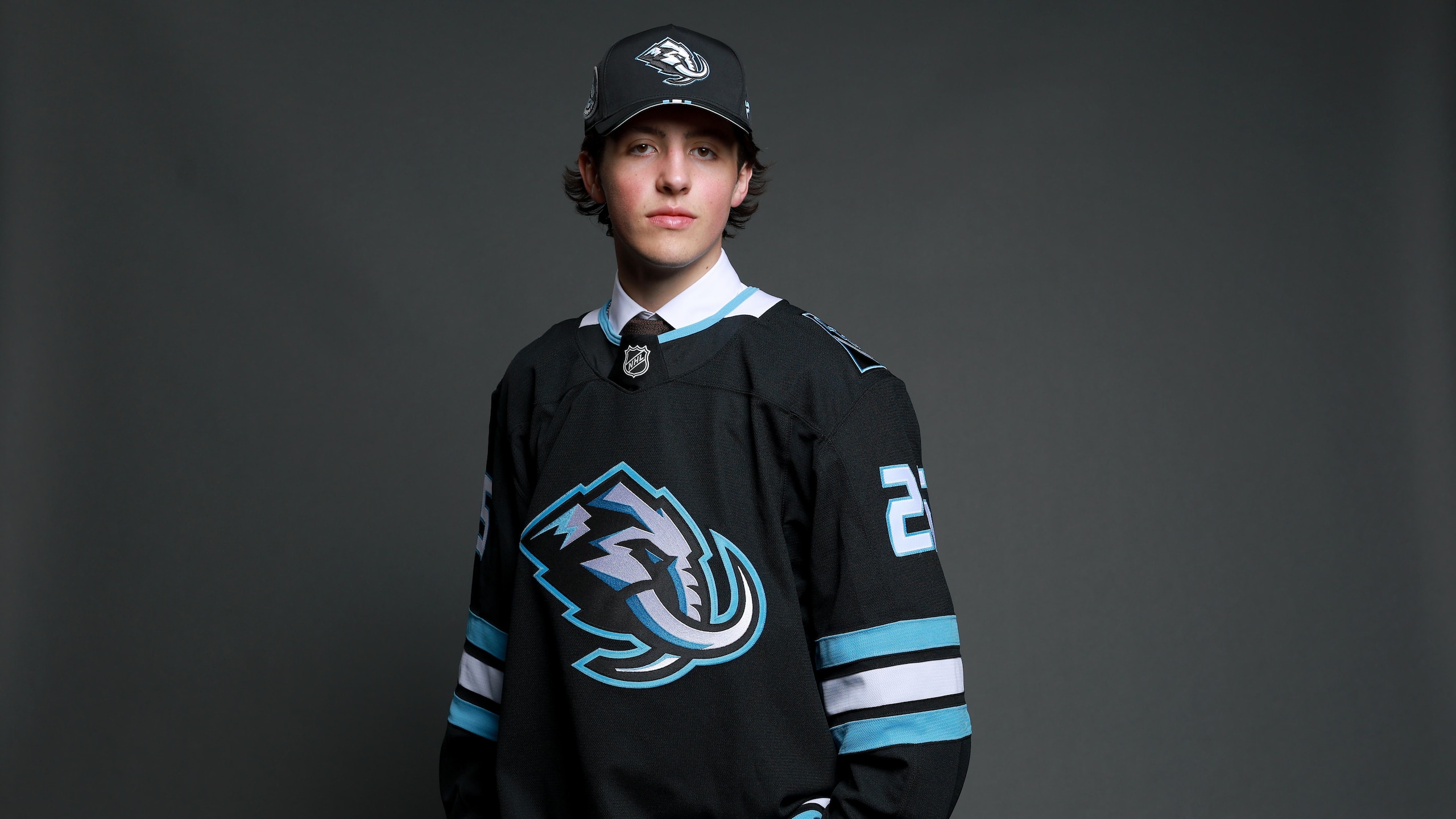
While the Utah Mammoth's prospect pool (many carryovers from the Arizona Coyotes days) wasn't dire, it was questionable enough that newly drafted Caleb Desnoyers slotted in easily as the top guy on the list.
You have to imagine the Mammoth are also thanking their lucky stars that, while Desnoyers has played both wing and center in major-junior, he most likely projects as a center at the NHL level. Can't ever have too many of those, particularly when they come with the skill that Desnoyers does.
Desnoyers' hockey sense and playmaking alone would honestly be enough to have him atop this list; it's so fun to see what his mind comes up with when it comes to choosing which play to create in the moment. He's constantly getting involved himself and involving teammates.
One of my quibbles with his game is that, outside of some nice small-area edgework, I would really like to see him improve his skating. He doesn't really have the explosiveness that he needs to translate his excellent offensive instincts to the NHL level at their best. He could also stand to add pace to his game, something I'm hoping we see from him this season, specifically.
Vancouver Canucks, Tom Willander, D
29 of 32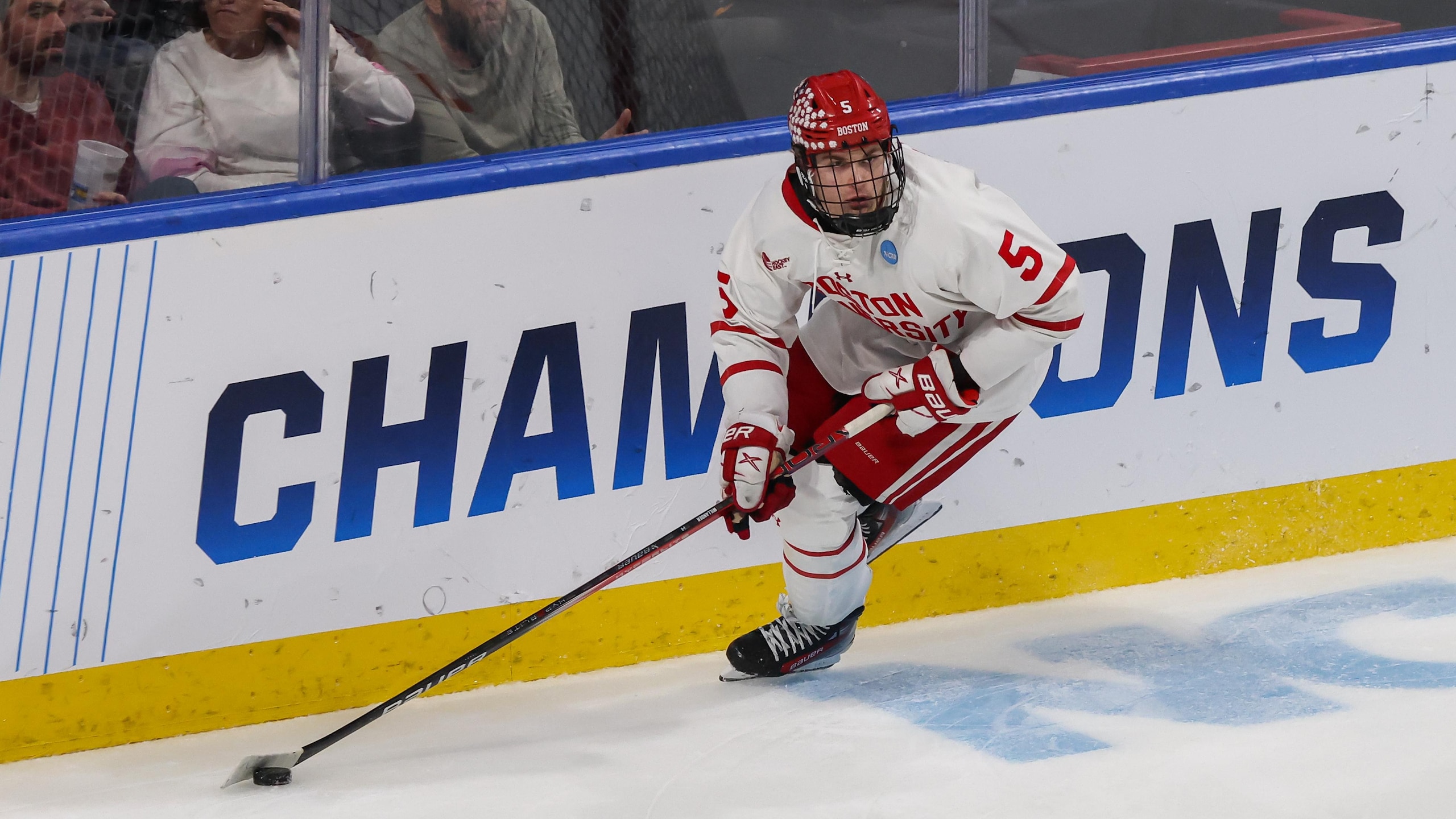
Godspeed to all Vancouver Canucks prospects, but particularly defenseman Tom Willander, who left Boston University in May to sign his entry-level contract. He's the best on their list, and there's a nonzero chance they throw him out of the college hockey frying pan and into the Canucks' potential tire fire this season. (There's also a chance he heads to Abbotsford and frankly, that's what I would prefer for him.)
Willander is a bit of a conundrum for me. On the one hand, he's definitely the Canucks' best prospect (though there are a few who are hot on his heels). He's got excellent skating skills, but his offensive upside feels like it can come and go. His puck-moving game also hasn't translated over to NCAA play the way that I would prefer, which makes me question whether it will translate over to the NHL or AHL.
Hopefully, he gets time to cure in Abbotsford of the AHL rather than having to tread water in the mess that the Canucks have become of late.
Vegas Golden Knights — Trevor Connelly, LW
30 of 32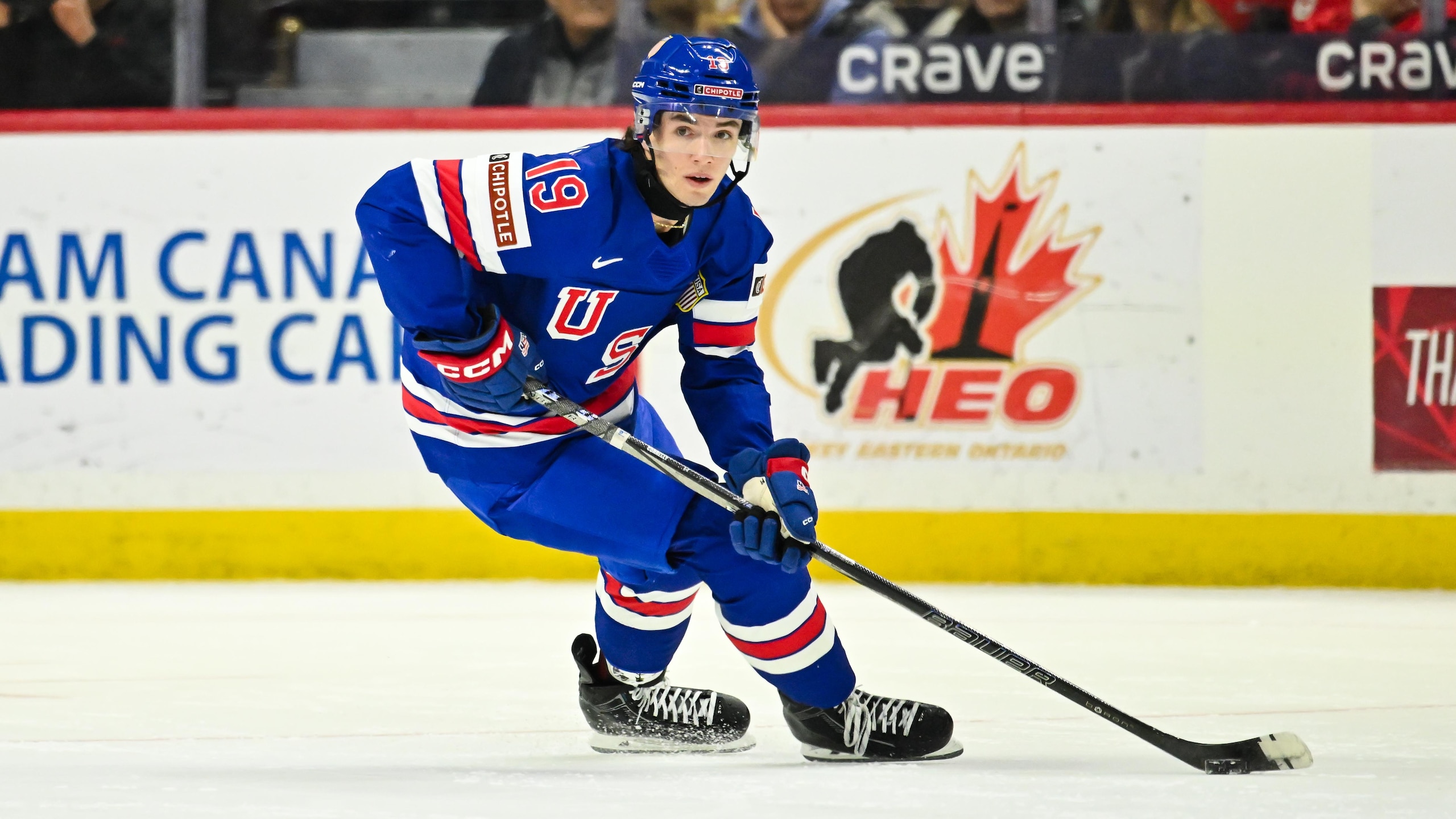
Yes, that Trevor Connelly. We're not discussing anything off-ice; solely on-ice play. And in terms of on-ice play, it isn't up for debate—Connelly is the most talented prospect in the Vegas Golden Knights' pool.
After Providence College's season ended last year, Connelly joined the Henderson Silver Knights for six games, netting four points. Unless he makes the Golden Knights out of camp—and frankly, while the pure skill is there, I don't particularly feel the maturity is—he'll likely spend the 2025-26 season in Henderson as well.
Taking a full AHL season to get your feet under you in terms of the pro game is always a good plan, even with the skill Connelly displays. He's a terrific puck handler, he has great speed, great edges; I just really want to see his decision-making improve. And that's the sort of thing you can only refine while getting minutes night in and night out—consistency in making good choices while playing doesn't come without consistency in playing opportunity. I hope we see an improved Connelly this year.
Washington Capitals, Ryan Leonard, RW
31 of 32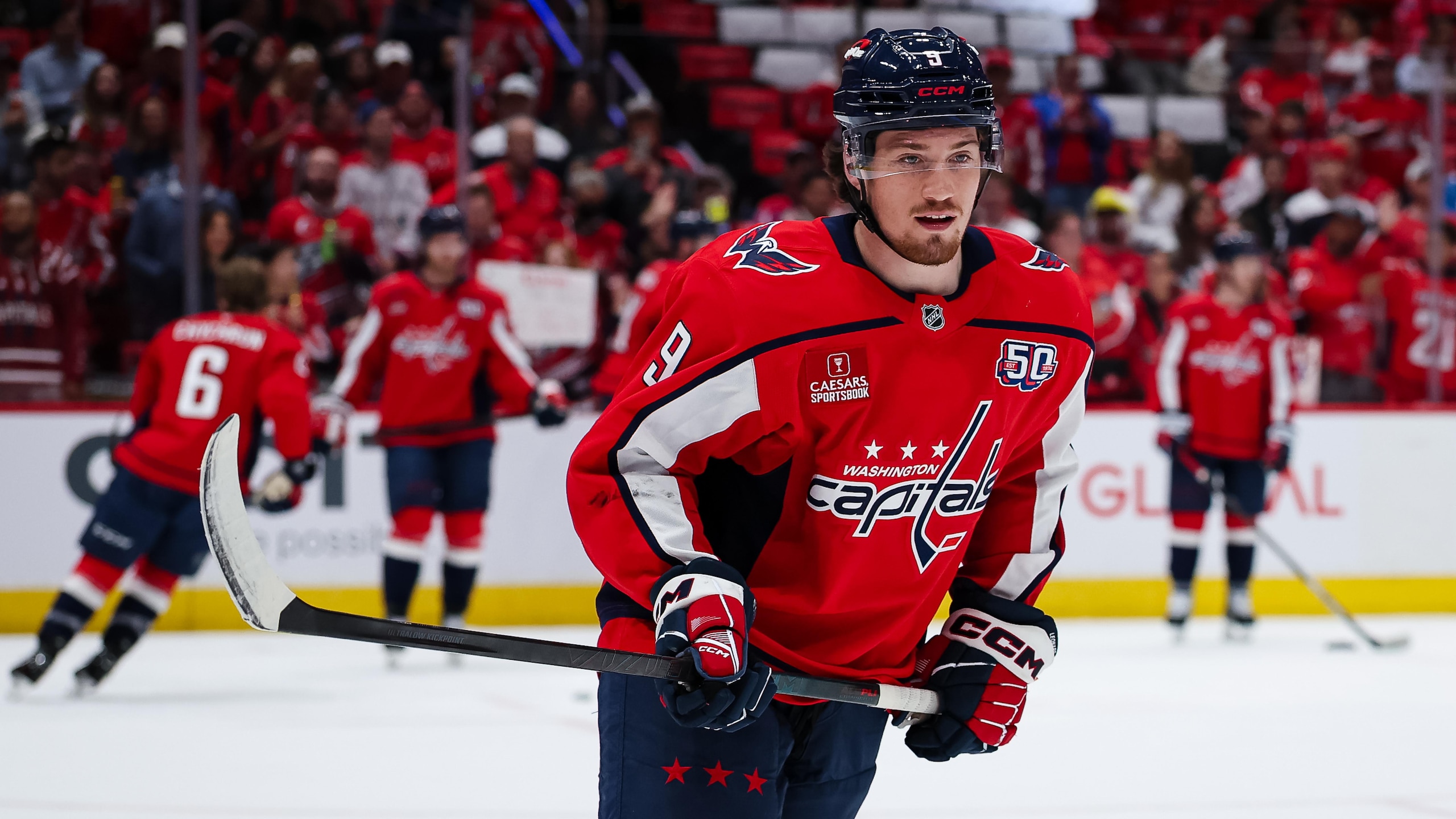
Let's keep it real; if forward Ryan Leonard comes out of the gate the way he came into the NHL at the end of last season and into the playoffs, particularly the way he immediately gelled with the rest of the team, he's going to be dropping that prospect label almost immediately.
This isn't to say that we should label him a bust if he doesn't stick with the Washington Capitals; Washington, more than almost any team, is an organization I trust with the development of players and particularly with synergy and communication between their NHL and AHL staff. Time in the AHL with the Hershey Bears won't be going backward for Leonard in the slightest.
But let's be honest. We all think Leonard is going to stick, right? His goal-scoring prowess aside, the mere way he approaches the game—annoy your opponents as much as possible while being effective offensively—perfectly fits the current iteration of the Capitals. He's such an ideal spiritual successor to Capitals captain Alex Ovechkin and likely future captain-in-waiting Tom Wilson.
Winnipeg Jets, Brayden Yager, C/RW
32 of 32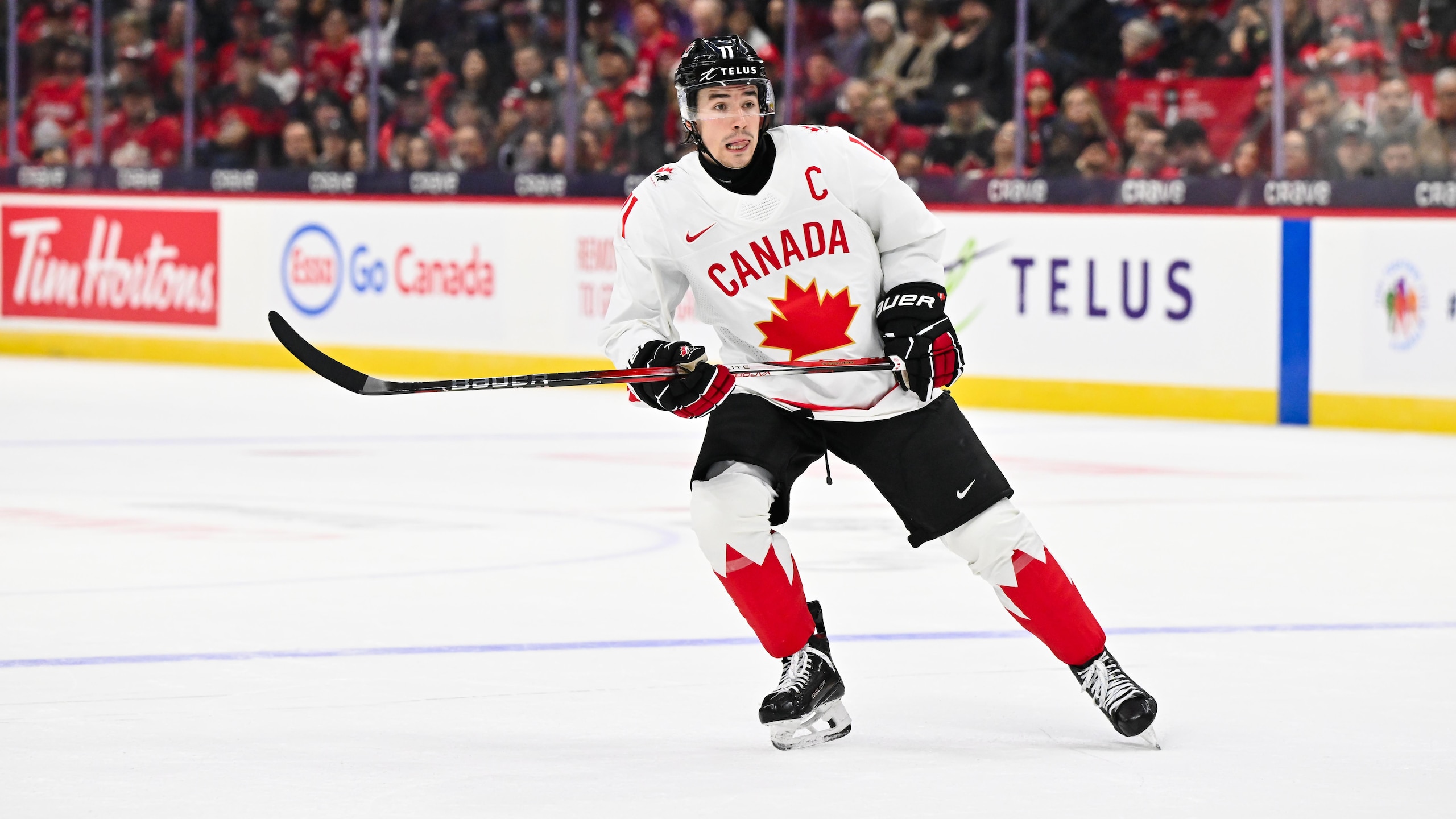
It amuses me greatly that both players in the Rutger McGroarty/Brayden Yager swap are at the top of their current teams' respective prospect pools.
Sometimes a guy just needs a change of environment. Yager, who also captained Team Canada at last year's World Junior Championships, started last season as the Moose Jaw Warriors' captain before being traded to the Lethbridge Hurricanes. He'll likely spend the coming season in the AHL with the Manitoba Moose. Given that both his playmaking and his efforts in his own end got the chance to shine last season, moving to a more challenging environment is nothing but a good idea.
One thing I really like about Winnipeg's system is that its AHL team is in the same city and plays in the same arena as the NHL team. You really can't beat proximity when it comes to callups and communication, and although this isn't either possible or necessarily a good idea for every NHL team, it's got to be good for the Jets' prospects. Yager is only going to benefit from this; playing in Winnipeg every night, regardless of whether he's on the NHL or AHL roster, means more eyes on him—and more often—from the people who know what they want out of his game.
.jpg?w=2560 "Joey Porter Jr. Traded to Cowboys 🤠")




.JPEG?w=2560 "Marshawn Reveals Scary Stat 🚗")
