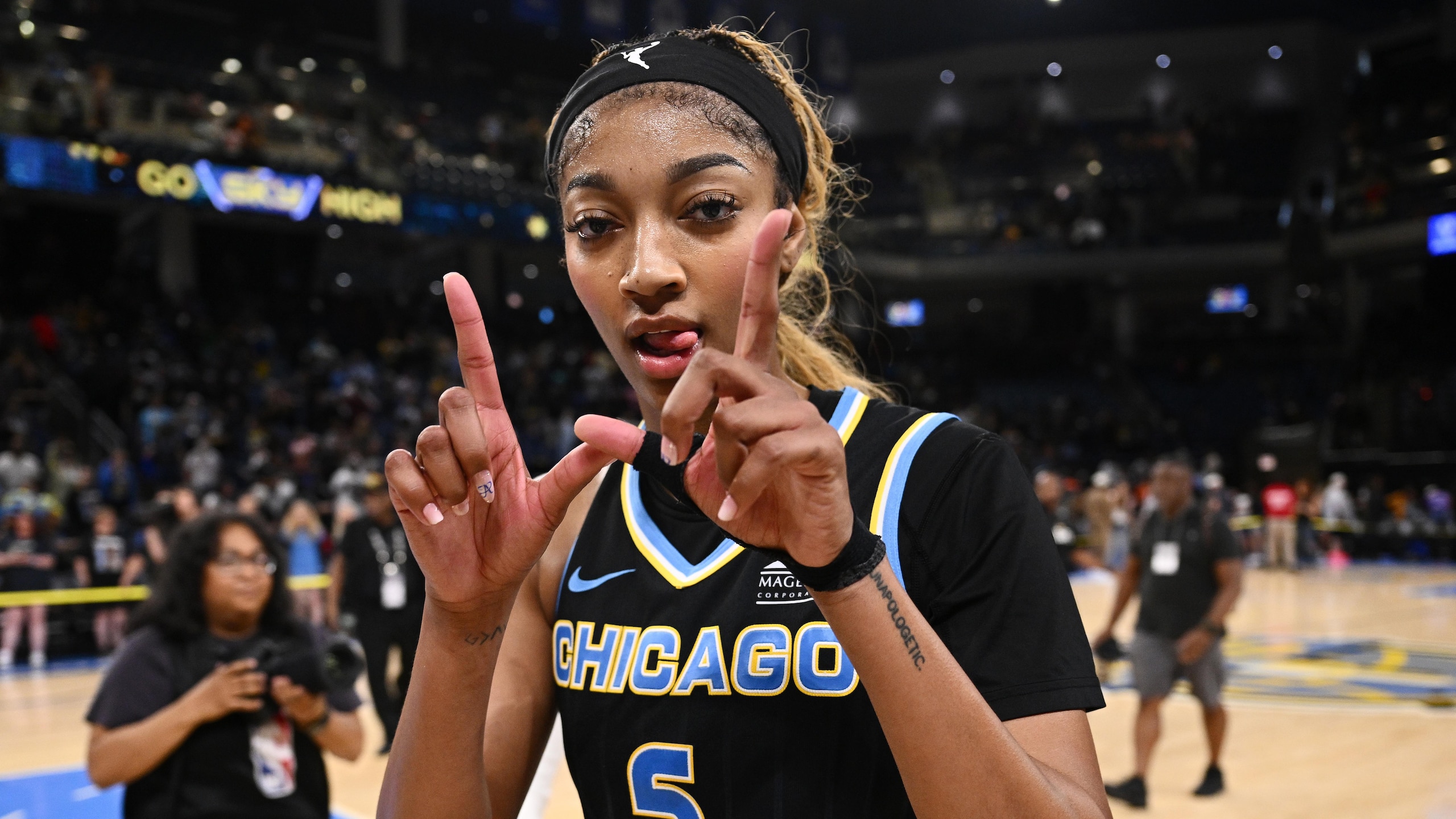

Chicago Sky Star Angel Reese Is a Growing Problem for WNBA Opponents
Angel Reese crash-landed into the WNBA in much the same way she goes after rebounds: unapologetically and with great force. After early critiques tried to box her in as an interior-only presence with limited touch and tunnel vision, the Chicago Sky star has spent the 2025 season working hard to dispel that scouting report.
What began as questions about finishing touch evolved into a conversation about passing angles and decision-making tempo.
This season, the 6'3" forward is becoming a matchup nightmare: a glass-cleaning machine, floor spacer-in-progress and budding point forward, all while maintaining a trajectory as potentially the best rebounder the league has ever seen.
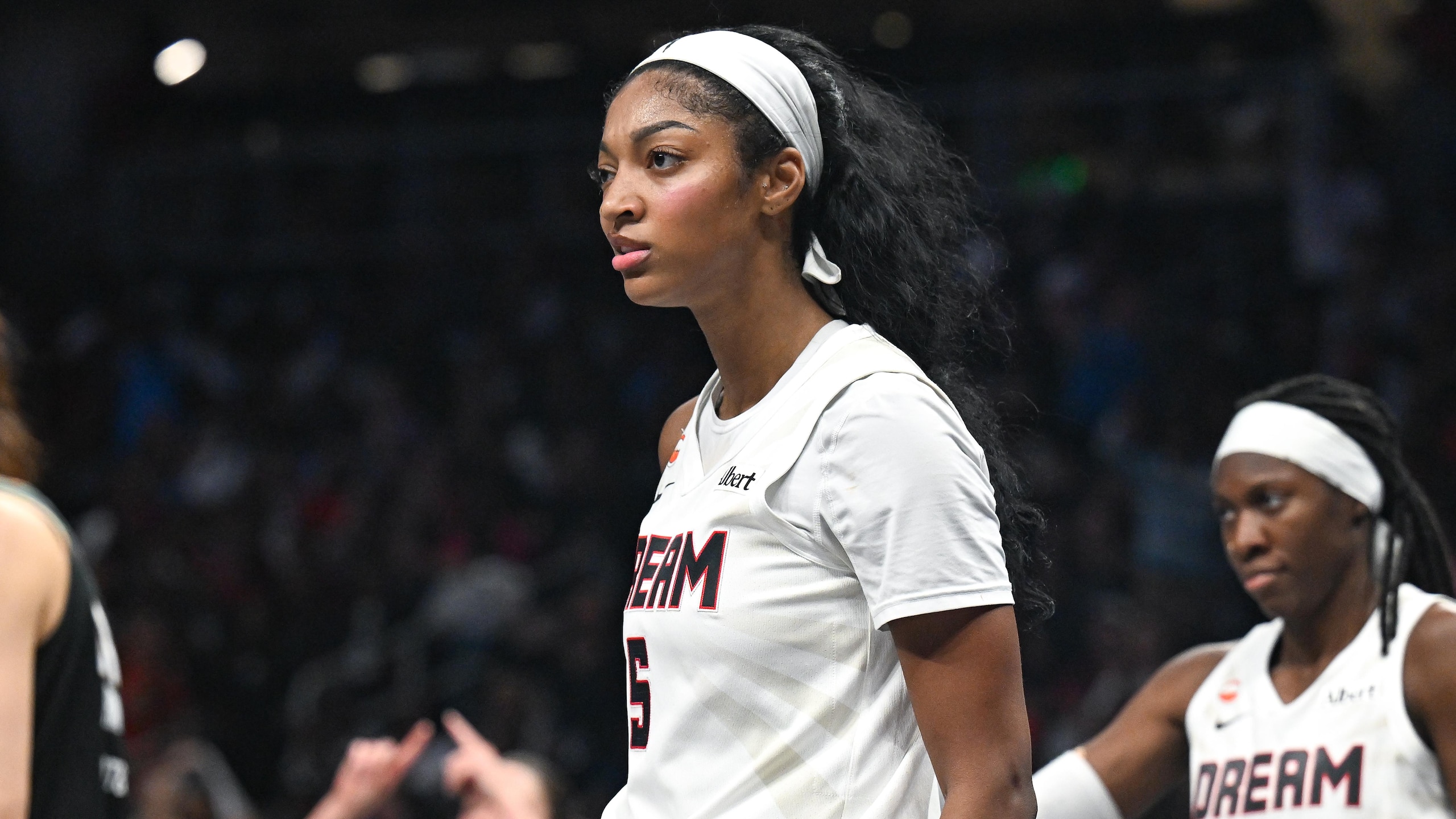
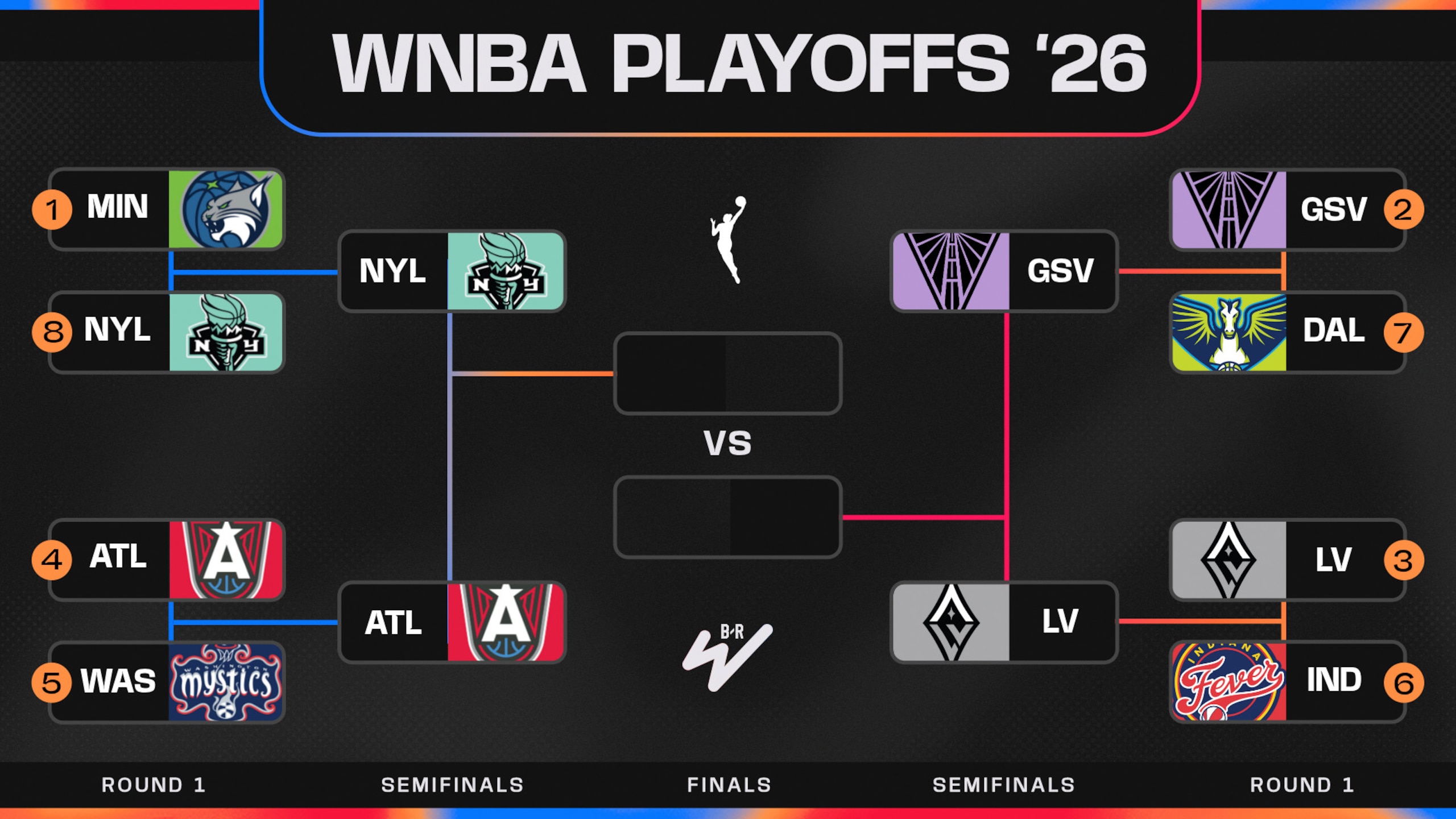
Reese is also amid a stretch of nine straight double-doubles in which she has averaged 18.1 points, 14.9 rebounds and 4.1 assists while shooting 50.4 percent from the field.
The Angel problem is real and only growing for her opponents.
The Playmaking Bump: From Black Hole to Flow Hub
One of the biggest critiques of Reese’s college and early pro game was tunnel vision—her tendency to go up with it no matter what. But this year, she’s evolved. Her assist numbers are up by nearly 2.0 per game and her assist-to-turnover ratio has climbed above 1.4—solid for a big in a motion-heavy system.
What’s changed?
Reese has become lethal out of the short roll and elbow pinch post. Chicago has increasingly run horns sets and chin action through her, trusting her to find cutters on the move or kick out to shooters when help collapses.
Her growth as a playmaker is visible in every read. She’s firing one-handed darts out of the post to cutters like Ariel Atkins, threading bounce passes through help on short rolls and delivering hammer skip-outs to weak side corners when defenders cheat.
In just one season, Reese has more than doubled her assist percentage (21.2 percent vs. 9.2 percent), significantly improved her assist-to-turnover ratio and boosted her shooting efficiency across the board—including a 3.9-point jump in true shooting percentage (51.1 percent in 2025 vs. 46.4 percent in 2024).
Sky head coach Tyler Marsh’s offense thrives on activity: constant movement, quick decisions and leveraging mismatches. In high-horns action, Reese often initiates as the passing hub, reading the defender on the weak side and delivering hammer passes to corner shooters like Rachel Banham or Atkins.
She’s not quite DPOY-level Draymond Green, but there’s a growing layer of Bam Adebayo to her orchestration. High-low reads. Dump-offs. "Dart" passes off paint touches. In Marsh’s system, she’s often the trigger for “Flow” offense—a freeform, read-and-react environment where decisiveness is key. Reese’s ability to read tags, time 45 cuts and play out of delay actions as the passing hub is rapidly evolving.
The Shooting Woes Narrative Is Overblown
Yes, Reese’s rookie season came with growing pains with her shot. She logged an uninspiring 39.1 percent from the field and showed little confidence outside 10 feet.
Sure, the growing pains are still there, but 2025 has painted a more positive picture. The second-year forward has lifted her field-goal percentage by over four points to 43.3, hovered near 80 percent from the free-throw line and, most importantly, let it fly at a higher volume from deep.
Her three-point attempt rate has nearly tripled since her college days, going from just 1.5 percent of her field-goal attempts at LSU to over 8 percent in her second WNBA season. A clear sign of growing confidence and intention.
While she’s not lighting it up from deep and isn't a true stretch 4 yet (shooting 22.0 percent from three on 1.50 attempts per game), her increased perimeter activity and comfort in trailing pick-and-pop actions are forcing opposing bigs into uncomfortable decisions.
They're faced with having to either step out and risk being beaten off the dribble, or sag off and concede open looks that are slowly becoming more reliable. Her growing comfort shooting off the catch from the slot and wing adds a verticality to Marsh’s offense that didn’t exist last year.
That evolution fits perfectly into Marsh’s NBA-modeled 5-out offensive system, where spacing is sacred and all five players must be live threats. His playbook leans heavily on pick-and-pop, dribble handoffs and trail action out of transition, where Reese is now catching in rhythm at the top of the arc or slot and punishing late closeouts with her improving jumper.
Miss your closeout, and she’ll make you pay. Step up, and she’ll drive downhill into a DHO or short roll read.
Taking Aim at the W's GOAT Rebounding Title
Here’s where things get potentially historic.
Reese’s rebounding numbers in 2025 are eye-popping. As of Monday, she led the WNBA with 12.8 rebounds per game, including an absurd 4.0 offensive boards per contest (down from 5.1 last season).
Her defensive rebound percentage (31.0 percent) and offensive rebound rate (14.6 percent) rank among the league’s all-time elite, and her second-chance creation has become one of Chicago’s most reliable scoring initiators.
While Synergy's exact contested rebound data isn’t publicly available, Reese has recorded 15 or more rebounds 19 times in her young career, including a league-record 15 straight double-doubles as a rookie, confirming her dominance in traffic situations. She’s grabbing boards in space and snatching them out of crowds.
From June 22 to July 8, she averaged 17.0 rebounds in a six-game stretch:
Reese is the only player in league history to post a 10-game stretch with both 45 assists and 125 rebounds. Not Candace Parker. Not Alyssa Thomas. Just Angel Reese.
Take a look at some career highs of a few all-time greats stacked against Reese:
- Reese: 13.1 RPG (2024)
- Sylvia Fowles: 11.9 RPG (2018)
- Tina Charles: 11.7 RPG (2010)
- Candace Parker: 10.7 RPG (2010 and 2015)
She broke the rookie record for rebounds with 446 last year and surpassed the all-time mark for any player in a season before A'ja Wilson passed her while Reese was out with a season-ending injury. Whether it’s boxing out a true 5 or crashing weak side from the slot, Reese makes a living on the boards.
Marsh has tailored the system to magnify that impact. His use of Spain pick-and-rolls and ghost screens often shift defenders away from the rim, opening clean rebounding lanes for Reese to exploit.
When those sets don’t result in a clean look, Reese is often the one cleaning up the aftermath with a putback or a reset pass. Either way, the possession ends on her terms.
If she keeps this pace for a decade, we might be talking about her in the same breath as Fowles, Charles and Parker.
Twin Towers, Modernized: The Reese-Cardoso Fit
When Chicago drafted Kamilla Cardoso No. 3 and Reese four picks later, many questioned the spacing. Two bigs? Neither a pure shooter? Isn’t that 1998 basketball?
Instead, they’ve turned it into a modern advantage. Marsh uses them interchangeably in high-lows, second-side actions and inverted screens. When Cardoso flashes to the nail, Reese slips baseline. When teams overload the strong side, Reese becomes the weak-side ghost screener slipping behind the play.
Defensively, Cardoso’s rim protection lets Reese freelance, rotate and switch across actions. They’re tall, mobile, instinctive and increasingly disruptive.
They might be the most promising young frontcourt in the league.
Can Angel Be the Best Player on a Title Team?
That’s the multimillion dollar question. Reese has elite tools, high-level production and sky-high intangibles. But does she have the full package to lead a team to a chip?
To get there, three things need to happen:
Stretch the floor with confidence: Her three-point shot doesn’t need to approach Steph Curry territory. Think more Natasha Howard or Parker-level respectability. Enough to demand a closeout. In Marsh’s spacing-heavy sets, a reluctant shooter gums up the flow. Reese is showing signs of readiness to fire without hesitation.
Anchor a top-five defense: Reese has the switchability and instincts to become a defensive keystone. Marsh has already used her as the "ice" anchor: funneling guards into traps or baiting kick-outs that she can jump. If she can elevate her rim protection without sacrificing perimeter mobility, she could become the league’s most complete defensive forward.
Embrace late-game leadership: Big players get big buckets and make important decisions in winning time. Reese has the motor and presence to be a fourth-quarter force. Now she has to own those moments. Marsh’s offense is built on optionality with multiple reads, multiple triggers. Reese must be the one to pull them confidently.
Reese doesn’t need to be perfect. She’s already elite at things most players dream about mastering—rebounding, hustle, physicality and leadership. But what makes her terrifying for opponents is the growth curve. She’s adding layers, extending her range and sharpening her reads.
The only question left?
How far can she take this and who, if anyone, can stop her if she keeps evolving?
Statistics courtesy of Basketball Reference unless otherwise noted and accurate heading into play Monday.

.jpg?w=2560 "NFL investigating 2 referees for separate viral exchanges")

.jpg?w=2560 "Report: Chiefs Contact Hill's Agent")
.jpg?w=2560 "OBJ Calls Out Giants 😳")
.jpg?w=2560 "Tyreek makes another cryptic post amid Chiefs rumors")