The Most Dominant Player at Every Position in the NFL Today
Dominance is a trait that can't always be measured in numbers, though most people think of the term as an overall depth of impact. A dominant player can leave a smoking crater in a game plan, and he can do it regardless of how you've bothered to account for him.
So for the purposes of this exercise in clear offseason boredom, here are the terms I used to define dominance.
- How has this player performed over the last three seasons? A dominant player isn't a one-year wonder. A dominant player is able to stay on the field. A dominant player needs a little time to build a reputation of dominance. For this reason, most of the players on this list aren't all that young. There are no rising stars. And though, say, Le'Veon Bell is an awesome running back who has had one dominant season, he has two more to go in my eyes to wear the tag.
- How dominant does this player look? There are very good players who rely on savvy and technique to win. Chris Myers was an excellent center in a zone-blocking scheme for a number of years. His dominance was as boring as telecommuting. I affix extra value for the term "dominance" to those players who clearly can bully lesser players at their positions physically.
- Is this player a fullback, kicker, punter or special teamer? Then he's not dominant. But he will still draw franchise tags because cost certainty is that important to some front offices.
There are some positions where there is no true dominant player—I'll let you know when we get to them. There are some positions where a second-place player is head and shoulders above the pack. I'll mention those as well.
Quarterback: Aaron Rodgers
1 of 13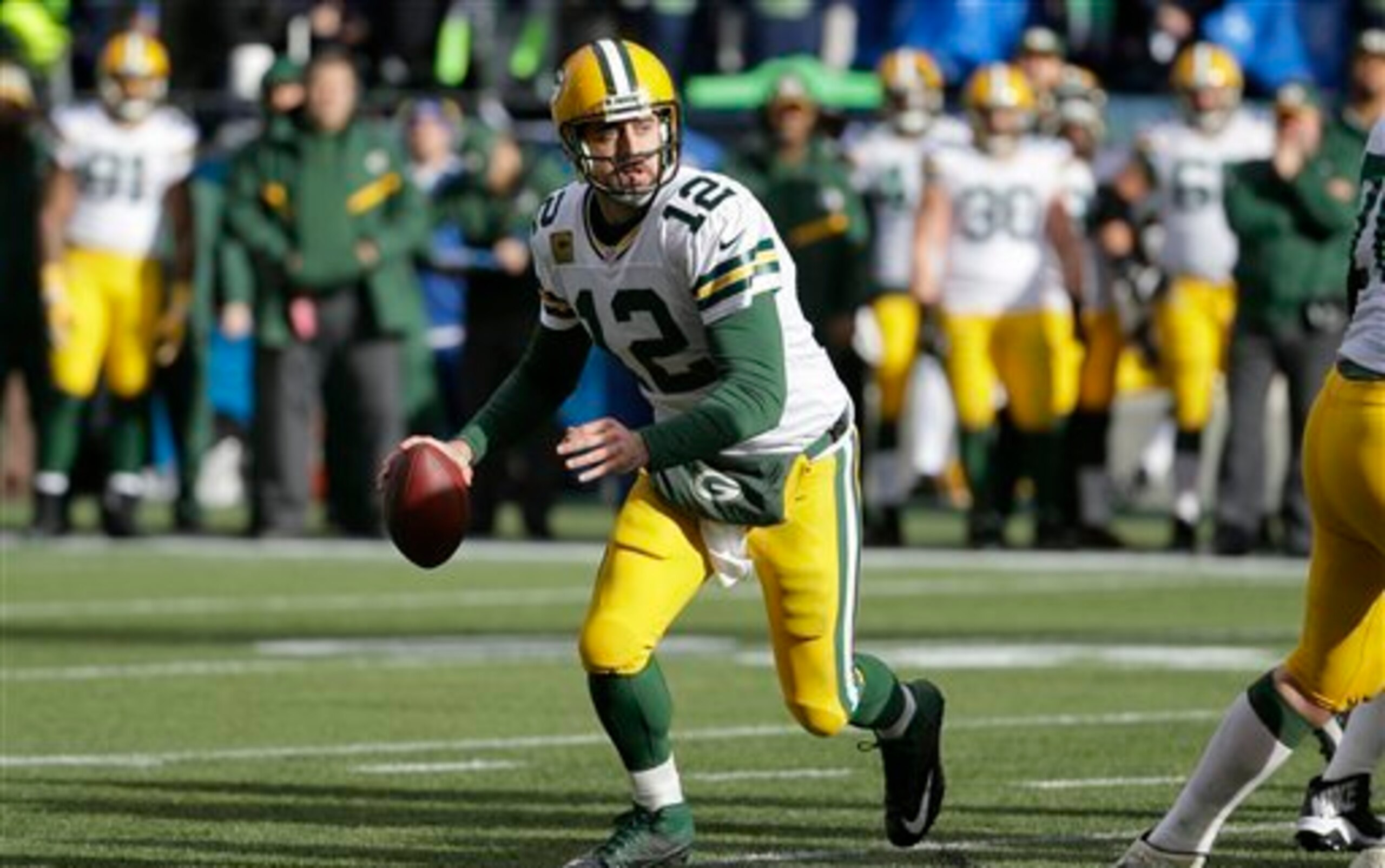
Rodgers had a few dings as an MVP candidate last season. He had an awful game against the Bills, and he had to play hurt as the Packers headed into the playoffs. The case against his dominance is mostly health-related, as he missed a lot of the 2013 season.
On the other hand, he was completely masterful when he did play. Rodgers almost led the Packers to an upset of the Seahawks in the NFC Championship Game against a great defense. His ability to avoid sacks is borderline miraculous, and as much as Andrew Luck has improved, he's not on Rodgers' level yet.
And, honestly, the competition is getting a little weak at quarterback. Peyton Manning and Tom Brady are still amazing quarterbacks, but they're no longer at their peak levels. The bottom of the old guard in the franchise tier (Ben Roethlisberger and Philip Rivers) are lagging slightly behind.
Running Back: Marshawn Lynch
2 of 13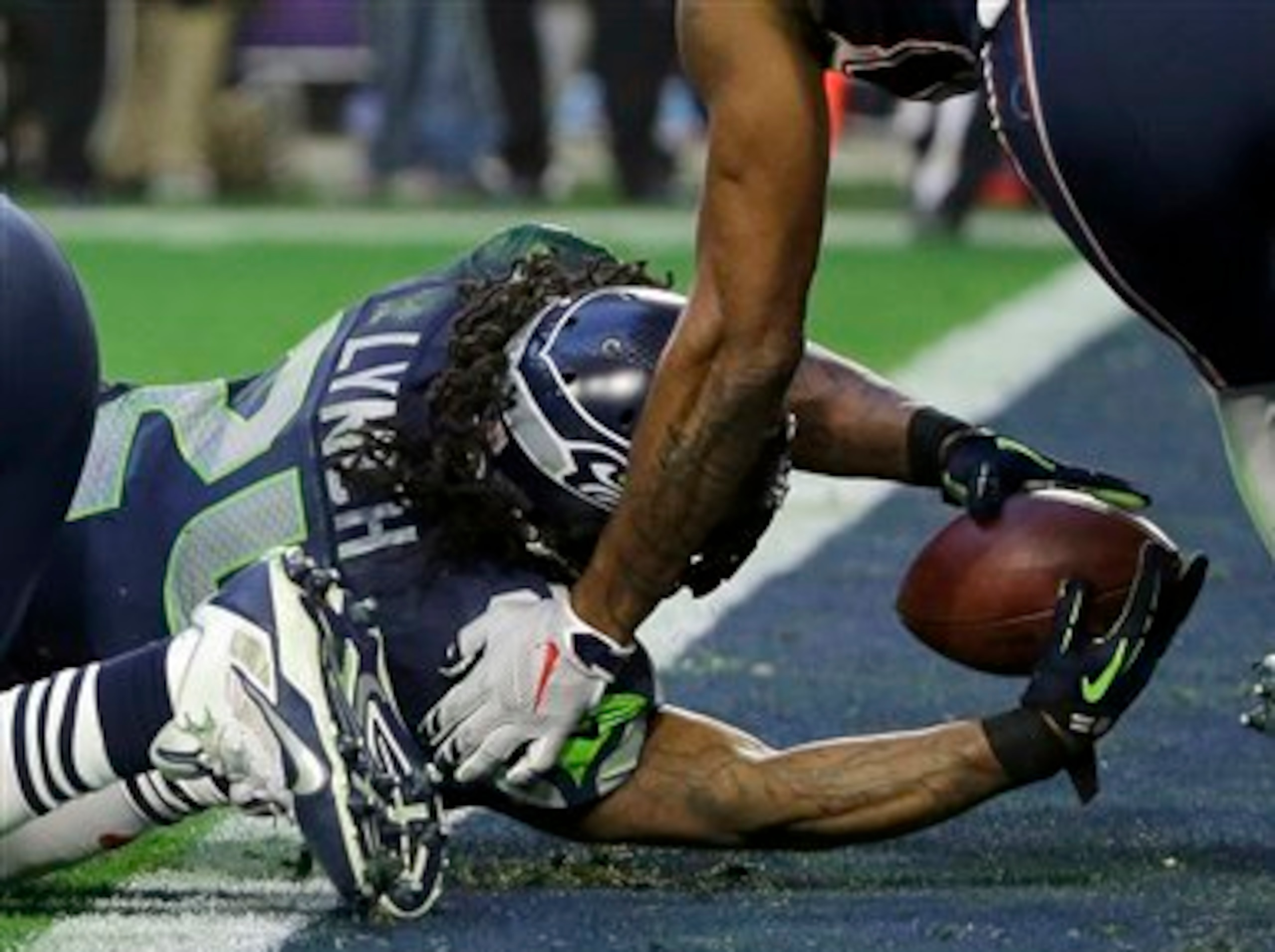
Lynch is an interesting case. He wasn't as great as DeMarco Murray was last season. He wasn't as dominant as a healthy Adrian Peterson was in 2013. But Lynch is clearly the most consistent back over the last three seasons, and he's the key component for Seattle's offense.
But in many ways, the case for Lynch is based on more than just numbers. The whole "Beast Mode" persona wasn't just invented—he's a load to bring down, and his personality is something that plays into the alpha character role really well. Eating Skittles after touchdowns. Refusing to speak to the media. The "Beast Quake."
They all feed into a legacy of someone who won't be denied. To the point where the fact that Seattle didn't run him at the goal line during the Super Bowl—a move that I would call defensible, if non-optimal—is universally decreed an enormous coaching blunder. Nobody is saying that about a goal-line touch for Robert Turbin.
Wide Receiver: Dez Bryant
3 of 13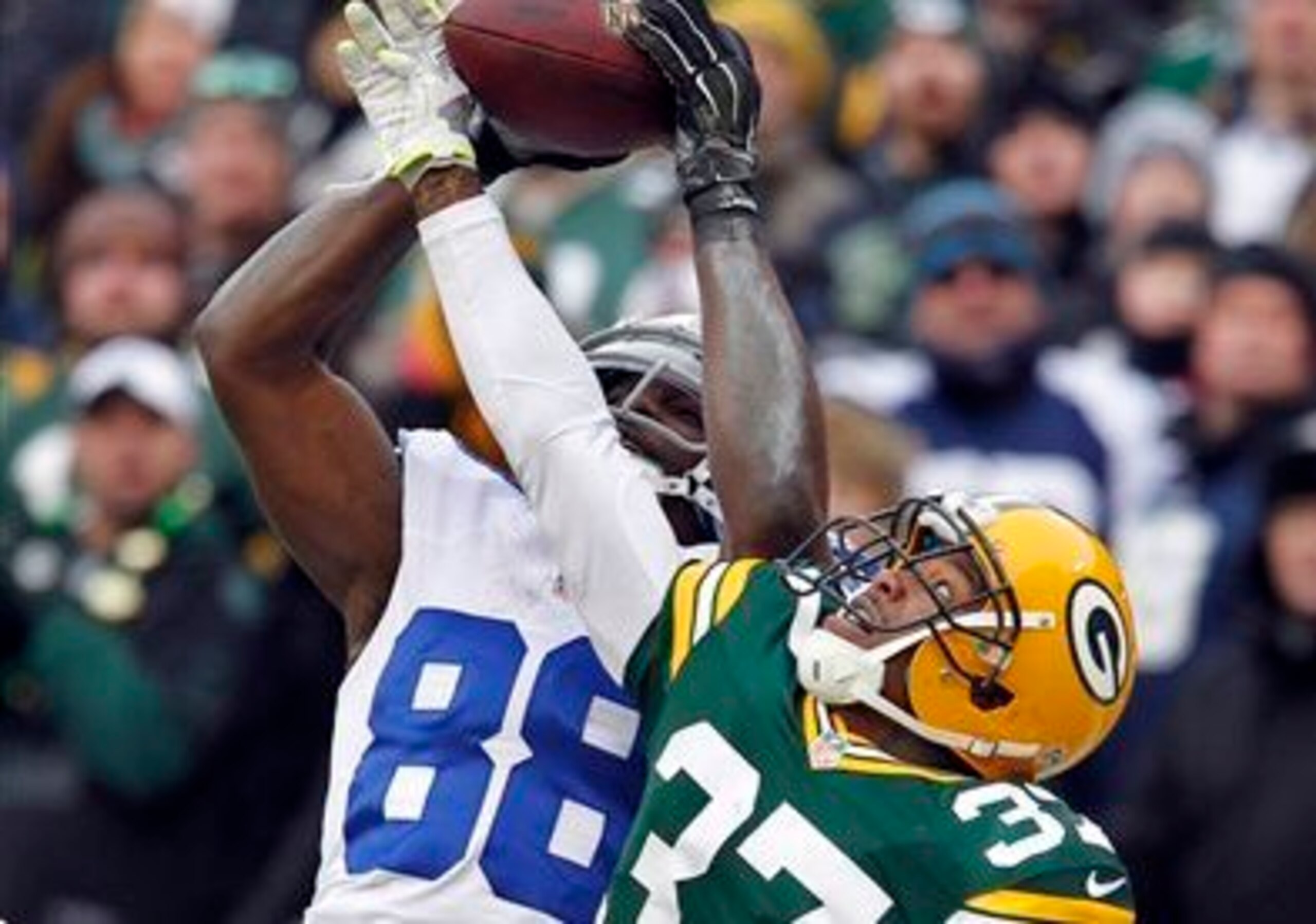
This was a position I really struggled with. Wide receiver is stacked, and the players who have the best combination of skill and stats, Calvin Johnson and Julio Jones, have both missed significant amounts of time over the past two seasons.
Meanwhile, the actual statistical leaders get a lot of help from their teammates. Green Bay and Denver have both stacked absurd amounts of great receiving targets over the past few years. Antonio Brown had a breakout 2014, but Pittsburgh's offense seems to be heading in that direction too, and he's carrying a pedestrian 2012 with him in my criteria.
So I fell back on dominance as a concept. And, I decided if there were one receiver I'd want trying to catch an end-zone fade against Darrelle Revis, it would be Dez Bryant.
Bryant is the most physically imposing of these receivers, and he has the "my ball" mentality that a few of them simply don't demonstrate consistently enough. For most positions that wouldn't be enough, but in a field like this, we had to rely on more than statistics.
.jpg?w=2560 "Texans Titans Football")
.jpg?w=2560)
.jpg?w=2560 "Cardinals Giants Football")
Tight End: Rob Gronkowski
4 of 13
Here's what you need to know about Gronkowski: He played a total of 1,140 snaps between 2012 and 2013, and he's still an easy choice for this plaudit.
Only Jimmy Graham has even come close to Gronk over the past few seasons, and Graham has (1) been hurt about as often over the past two years and (2) is not the kind of complete player (i.e. blocking) that Gronkowski is.
Throw in the sheer physical dominance of Gronkowski, to the point where it seems like he's basically able to mainline tequila and still catch eight balls for 140 yards the next day, and he was as much a stone-cold lock for this list as anyone.
Offensive Tackle: Joe Thomas
5 of 13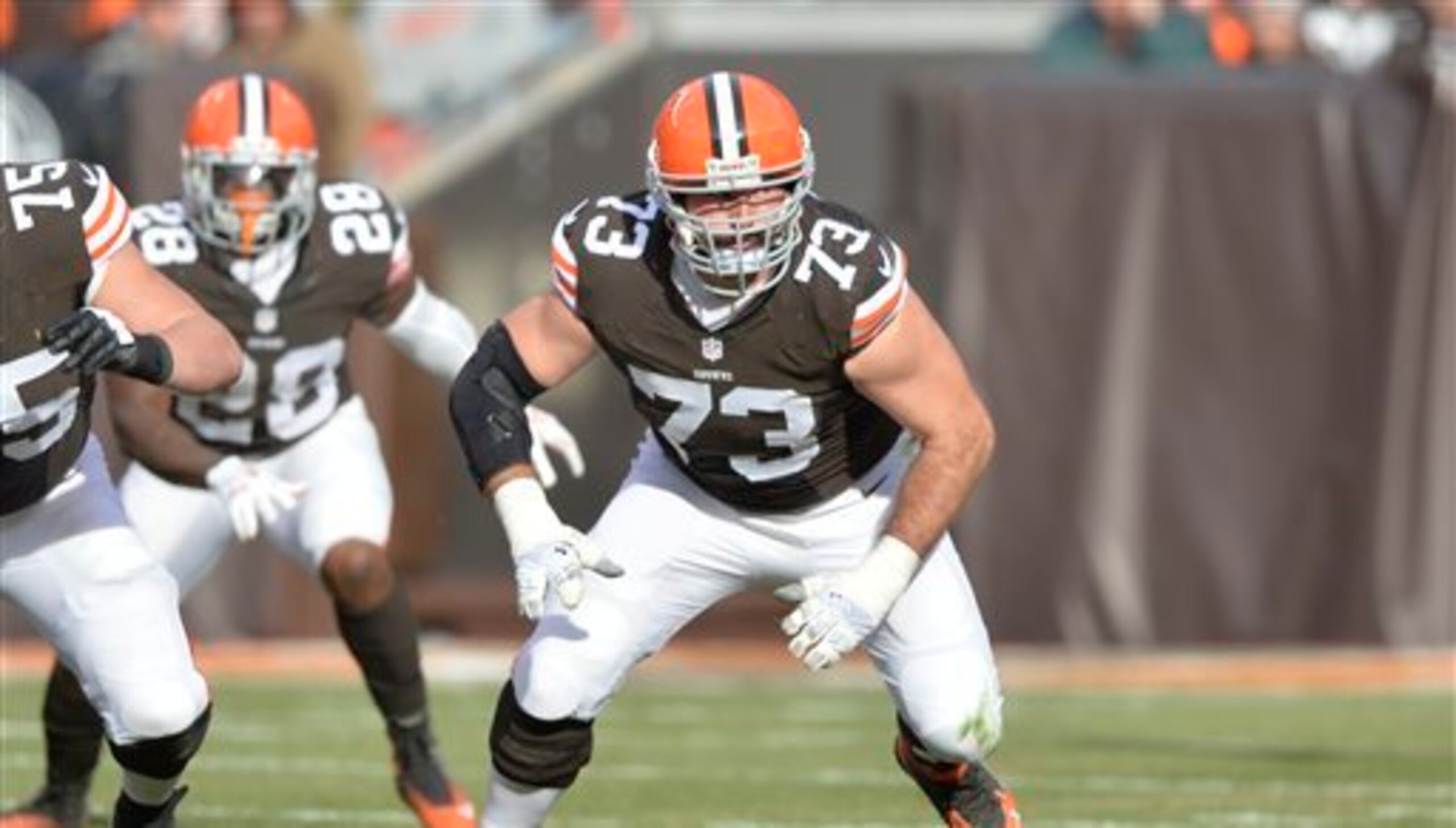
- Three-Year PFF Grade: +82.7
- FO Stat of Interest: Cleveland finished 15th in adjusted sack rate in 2014.
- How dominant is he? Pretty dominant
Cleveland's morass of bad management and quarterback play overshadows Thomas, because no tackle can really make that much of a difference, but he is clearly the best tackle over a three-year period.
Simply put, most of the other elite tackles in the game have missed time to injury or played poorly. Houston's Duane Brown was bad in 2013, Philadelphia's Jason Peters missed 2012, and the San Francisco line played poorly even despite Joe Staley's contributions.
So I just settled on the best player. Thomas is how you'd ask a tackle to be assembled, from the long arms to the range of motion to keep in front of the best players.
That isn't enough to make Cleveland's quarterback situation better, but it might be enough to keep that quarterback well-protected if he existed.
Offensive Guard: Marshal Yanda
6 of 13
- Three-Year PFF Grade: +89.3
- FO Stat of Interest: Baltimore finished third in adjusted line yards in 2014.
- How dominant is he? Extremely dominant
Honestly, the only guard who has played anywhere near the level of Yanda over the past few years has been Evan Mathis. And he both lost time and, as this goes to press, is a free agent. That's not exactly a combination of facts that help him in a discussion of dominance.
Even when the Baltimore offensive line cratered in 2013, Yanda was still playing well. (Yes, even while playing with maligned center Gino Gradkowski.) In 2014, Yanda's PFF rating was nearly double that of any other guard.
And when a mass of a man can move as fast as Yanda can, it's not a surprise at all to find a player with that kind of talent on this list.
Center: Nick Mangold
7 of 13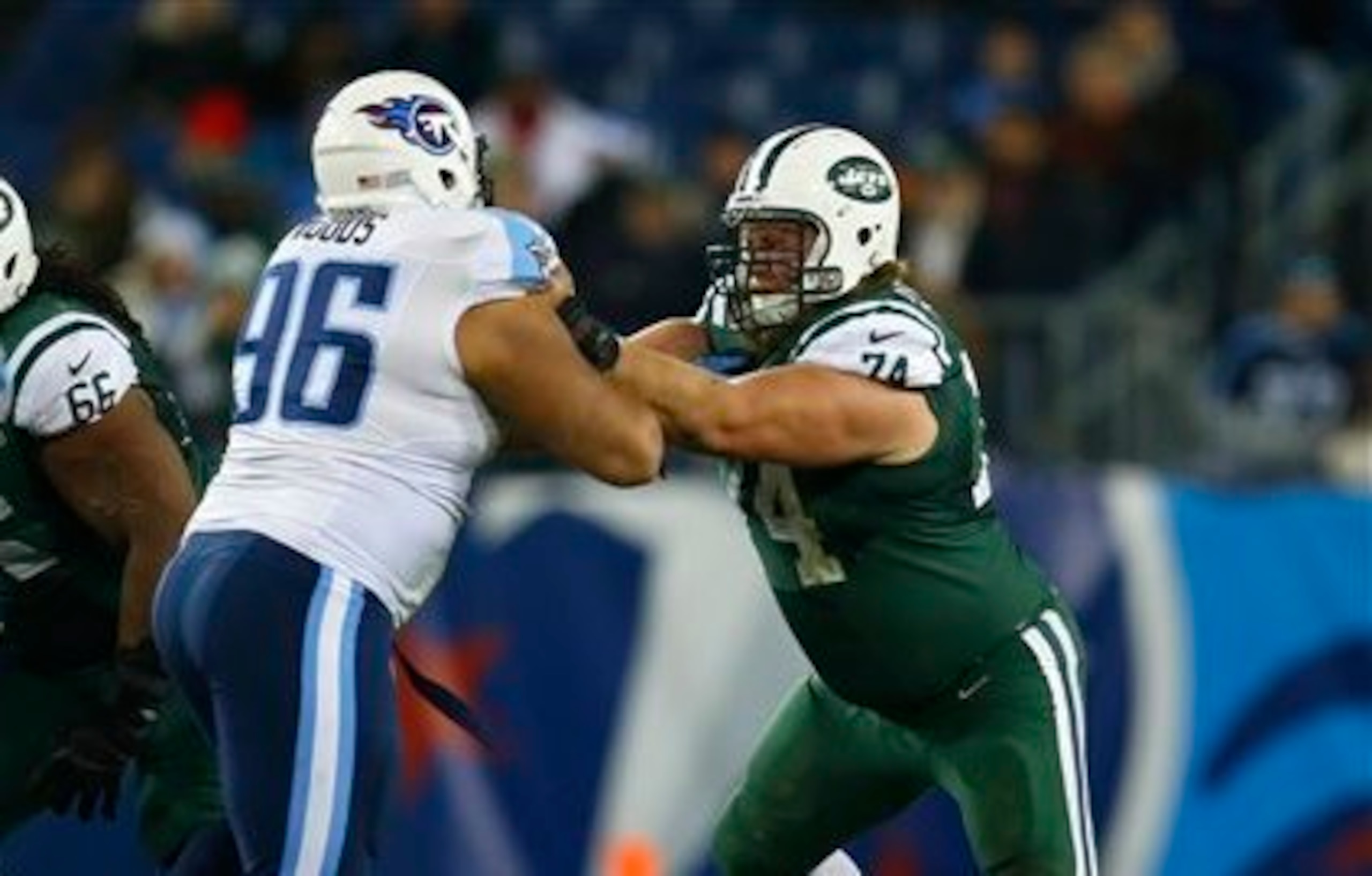
- Three-Year PFF Grade: +49.2
- FO Stat of Interest: New York finished fifth in power success rate in 2014.
- How dominant is he? Dominant enough.
Mangold is getting a little old—he's now 31—to be on this list, but that's the way the center position has crumbled over the past few seasons. Maurkice Pouncey has the talent for this spot but hasn't always played up to it. Travis Frederick may claim the spot some day but not yet. Alex Mack and Jason Kelce have both been hurt recently.
That leaves us with Mangold, who bounced back from a down 2013 season to be Pro Football Focus's top-rated center in 2014.
Mangold has been terrific for a long time and has almost created a playing legacy to match the legacy his gigantic beard will leave behind. But his placement on this list is more about a lack of other options than a nod to his actual dominance.
Defensive End: J.J. Watt
8 of 13
- Three-Year PFF Grade: +304.7
- FO Stat of Interest: Led the NFL in defeats.
- How dominant is he? Extremely dominant
Hall of Famer Bob Lilly was able to parlay his stretch of dominance for the Dallas Cowboys into the term "Mr. Cowboy," so it's probably time to start wondering if his modern-day doppelganger, J.J. Watt, can be termed "Mr. Texan."
There are some spots on this list where I had to debate long and hard over the victor. Here, I didn't even bother researching anyone else for this spot.
We've lauded Watt a lot here over the past few months, but here's one we haven't used yet: He actually makes Texans games fun to watch...even when they're playing the Titans or Jaguars.
Defensive Tackle: Ndamukong Suh
9 of 13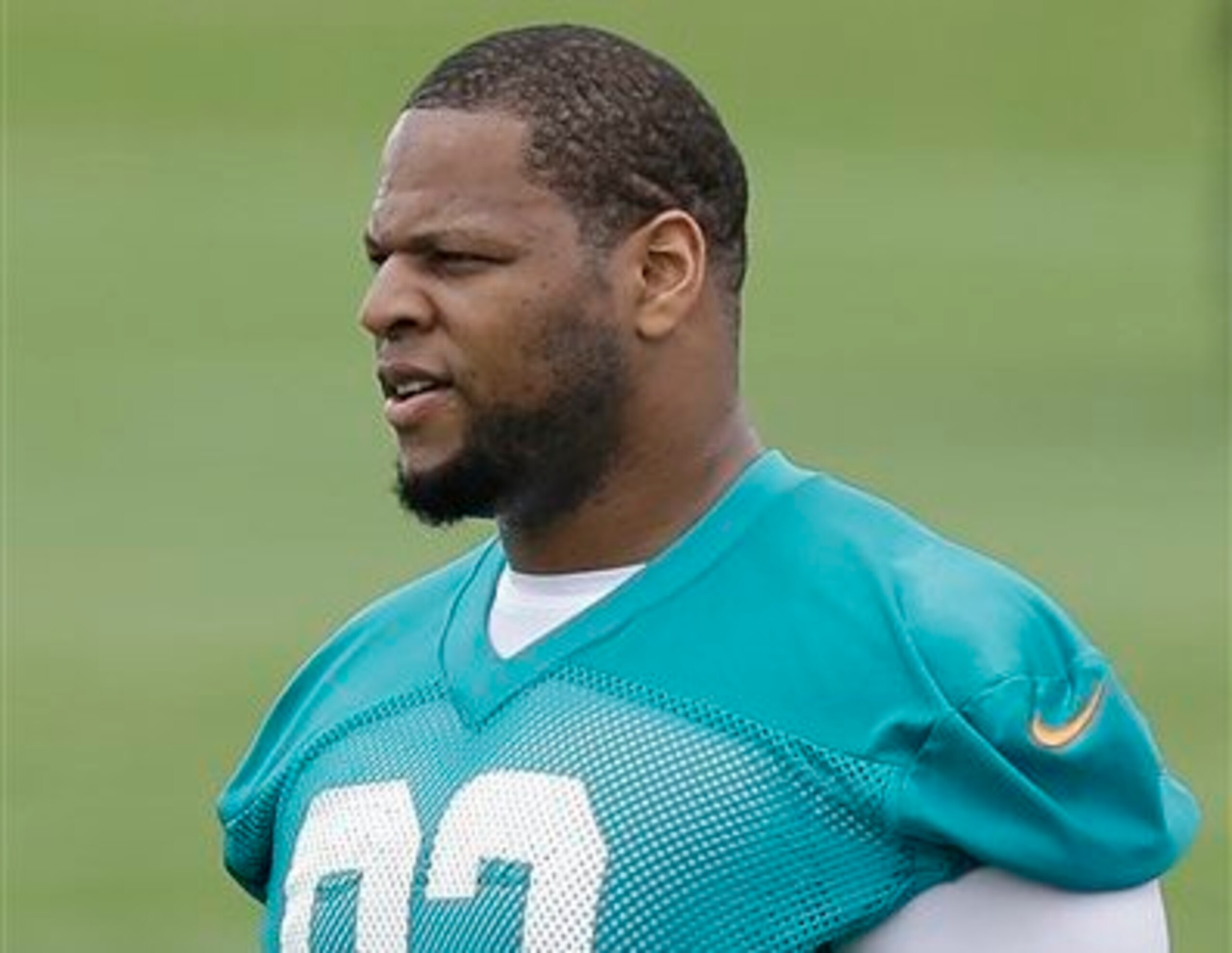
- Three-Year PFF Grade: +75.5
- FO Stat of Interest: Finished tied for 10th the NFL in defeats.
- How dominant is he? Pretty dominant
Suh and Gerald McCoy are perpetually joined at the hip as two of the top three picks of the 2010 NFL draft. Trying to pick one over the other was hard, and McCoy actually has better Pro Football Focus numbers.
But when I head back to the idea of dominance, well, Suh has created an evil-bully reputation that would look hackneyed if it were fictional. Stomping on players while they're down. Late hits. Suspensions. All he hasn't done is trash a locker room after a loss. (And with the leadership that Dolphins head coach Joe Philbin has showed, would it surprise anyone if that happened next season?)
He took that persona all the way to the bank this offseason, signing the richest defensive contract in NFL history.
That, plus those three games that McCoy missed last season, was just enough to tilt the balance for me in a race where both players were equally deserving.
Outside Linebacker: Von Miller
10 of 13
- Three-Year PFF Grade: +190
- FO Stat of Interest: 2012 season one of top 10 since 1996 in defeats.
- How dominant is he? Fairly dominant
Here's another one that came down to two players: Justin Houston and Von Miller. I went with Miller because he has one more year of established track record.
You start out at outside linebacker by eliminating the very good players who don't rush the passer, because the sack is the most dominant play in the NFL. Thus, my apologies to players like DeAndre Levy, who is excellent but doesn't fit the criteria I'm playing with.
Miller is every bit the complete player that Houston can be and has showcased his skill as a run-stuffer too over the past few seasons. People are sleeping on him now because Denver added DeMarcus Ware and has a great secondary, but Miller is a hell of a player.
And for now, that track record is just enough for me to rank him ahead of Houston.
Inside Linebacker: Luke Kuechly
11 of 13
- Three-Year PFF Grade: +53.2
- FO Stat of Interest: Tied for sixth in NFL in 2014 in defeats.
- How dominant is he? Dominant enough.
Kuechly is a rising star in the NFL. He won the Defensive Player of the Year award in 2013 and has been a first-team All-Pro the last two seasons.
But he wouldn't have been my pick for this spot at any point in the last two seasons—this is simply a matter of attrition. Patrick Willis retired. NaVorro Bowman missed a year to injury. Derrick Johnson missed a year to injury. Daryl Washington can't stay out of trouble long enough to play.
The only real competition for this spot was Bobby Wagner, owner of a surprise MVP vote last season. And while I like Wagner a lot, Kuechly has been empirically better for most of the last three seasons. There's not much about Kuechly that makes you think of physical dominance, but he's clearly the best player still standing at the position.
Cornerback: Richard Sherman
12 of 13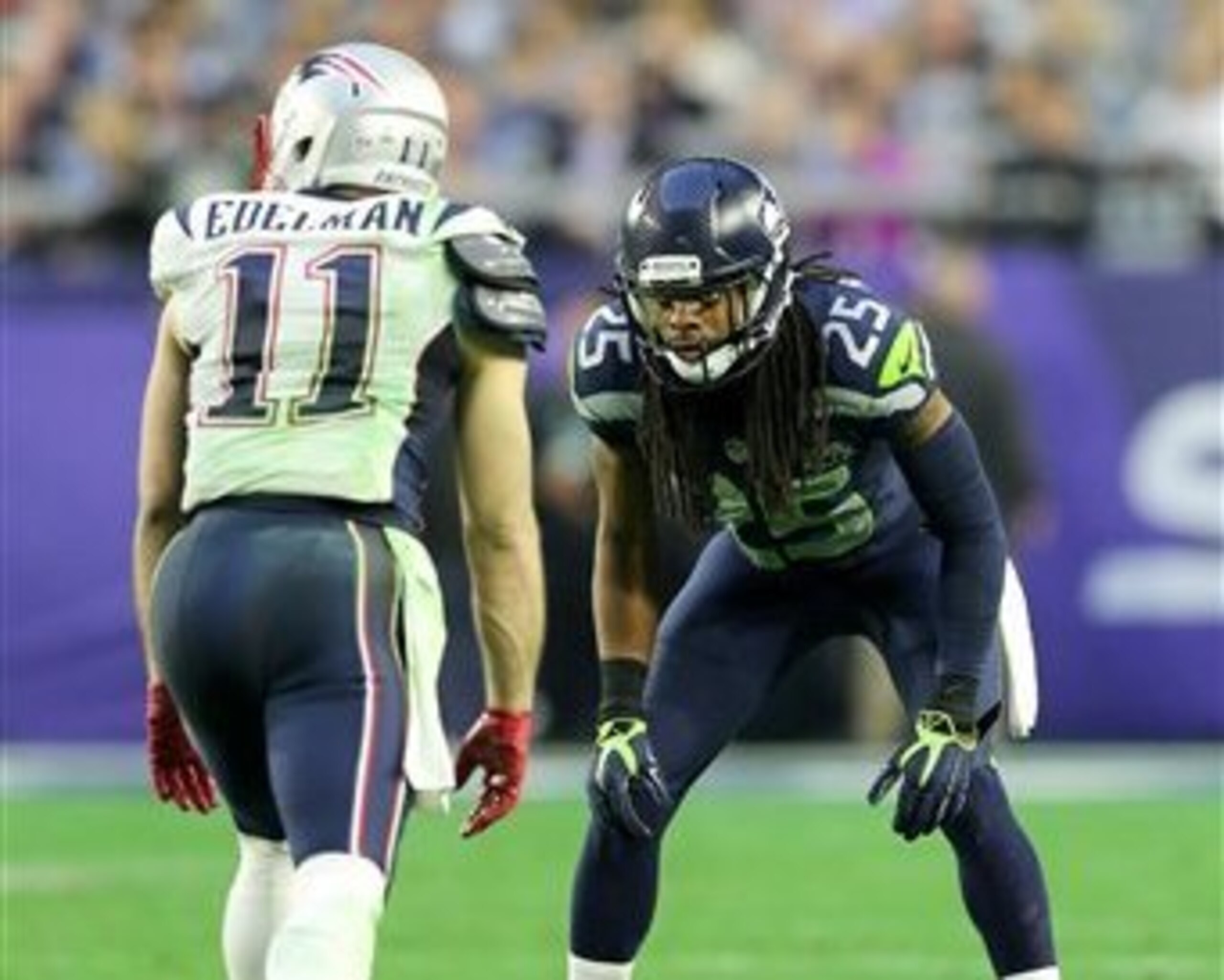
- Three-Year PFF Grade: +70.3
- FO Stat of Interest: Seattle finished fourth in DVOA against No. 1 wide receivers in 2014.
- How dominant is he? Fairly dominant.
This came down to two players: Sherman and Darrelle Revis. The New York Jet has the higher ceiling of the two but hasn't been quite as great as he was in 2009 to 2011 since tearing his ACL.
There's a lot of debate about just how great Sherman is because of the scheme he plays in. NFL experts will try to talk you out of placing him this high because of a perceived lack of versatility. As if that's all that being an NFL cornerback is about.
Sherman talks a lot and takes a lot of heat because of it. But he's one of the few NFL players who back up every word they say on the field. With Revis' 2012 season lost, nobody really comes close to Sherman's on-field acumen.
Safety: Earl Thomas
13 of 13
- Three-Year PFF Grade: +23.1
- FO Stat of Interest: Seattle finished 2014 season with the No. 1 DVOA defense.
- How dominant is he? Fairly dominant
As I said when we talked about the most irreplaceable players, entire defenses are failing under former Seahawks coaches solely because they can't get an Earl Thomas. The amount of range he covers is just ridiculous.
So while players like Harrison Smith and Devin McCourty deserve a lot of credit, it's amazing the amount they've been overshadowed by Thomas. He has made first-team All-Pro three years running and is one of the big reasons Seattle's defense has been great for as long as it has.
You don't think of Thomas when you think of dominant players—heck, he's smaller than most NFL safeties at 5'10", 202 pounds—but his role on the field is so conclusive of his value that it would be inconceivable for him to not be on this list.
.jpg?w=2560 "Broncos Chargers Football")

.jpg?w=2560 "MHJ Bought Own Jugs Machine")