Fabian Delph's Transfer Saga Demonstrates Downsides to Monied Premier League
The ever-increasing sums of money being bandied about in the Premier League—be it in the form of transfer fees, wages or television revenue—have, in many ways, been a blessing.
Gone are the dark days of the past, when hooliganism reigned and grounds were grotty, ramshackle rundowns rather than the glittering glass-and-steel cathedrals of modern football in which many clubs now play.
However, there are downsides.
TOP NEWS

Messi Picks Next Gen Talent 💫
Live World Football Goals and Highlights 🔥

5 Potential Replacements for Michael Carrick as Manchester United Manager Amid Rumors
Rising ticket prices have been an inevitability as football has transitioned from being the sole domain of working-class men to a full-fledged entertainment package, and on the pitch the story is much the same.
The loss of English representation in the country’s top flight has been a gradual process of erosion and has been warned against and bemoaned for some time.
But now, through the cipher of Aston Villa’s Fabian Delph, it may well be reaching its nadir.
The homegrown rule, as it stands currently, means that every club must include eight players who were registered to an English club for at least three years or seasons prior to their 21st birthdays. The same rules are present in both the Champions League and Europa League.
These rules are well-meaning in theory. In practice, however, met by the relatively low standards of English coaching when compared to other leading European leagues, they may well be doing more harm than good. Not only have they inflated the values of homegrown players exponentially, hobbling competitiveness, but in the most insidious cases the signing of English footballers has been reduced to little more than tokenism.
Now aged 25, Delph knows all too well the growing issues surrounding English players in the English game. Both clubs he has represented—Leeds United and Villa—have academies that are the envy of many others, but their like is becoming more and more rare.
With the influx of television money and extravagant ownership, even recently promoted clubs can afford to splash the cash with near-impunity—Leicester City spent £17 million on just two players last season, according to SoccerBase.
Now Delph appears to be on the verge of a move to Manchester City, according to Laurie Whitwell of the Daily Mail.
If he does make the switch, Delph will be swapping Villa Park, where is he currently club captain and the team’s linchpin, for Eastlands. Even the most optimistic of fans would be pushed to predict more than a bit-part role for Delph, a loss of squad status that would no doubt dent his hopes of nailing down a regular place in the England national team.
The midfielder need only look at three recent examples of his fellow countrymen who have gone to City with quite reasonable expectations of playing regularly and taking their careers to the next level, only to find themselves marginalised as part of an exercise to make up the numbers.
Joleon Lescott made just over 90 appearances in the league over the course of five full seasons for City but was rarely given the opportunity to truly justify his huge £22 million fee. Scott Sinclair missed out on a vital chunk of what may have been his peak, with his £6.2 million move yielding just two starts at Eastlands in three seasons.
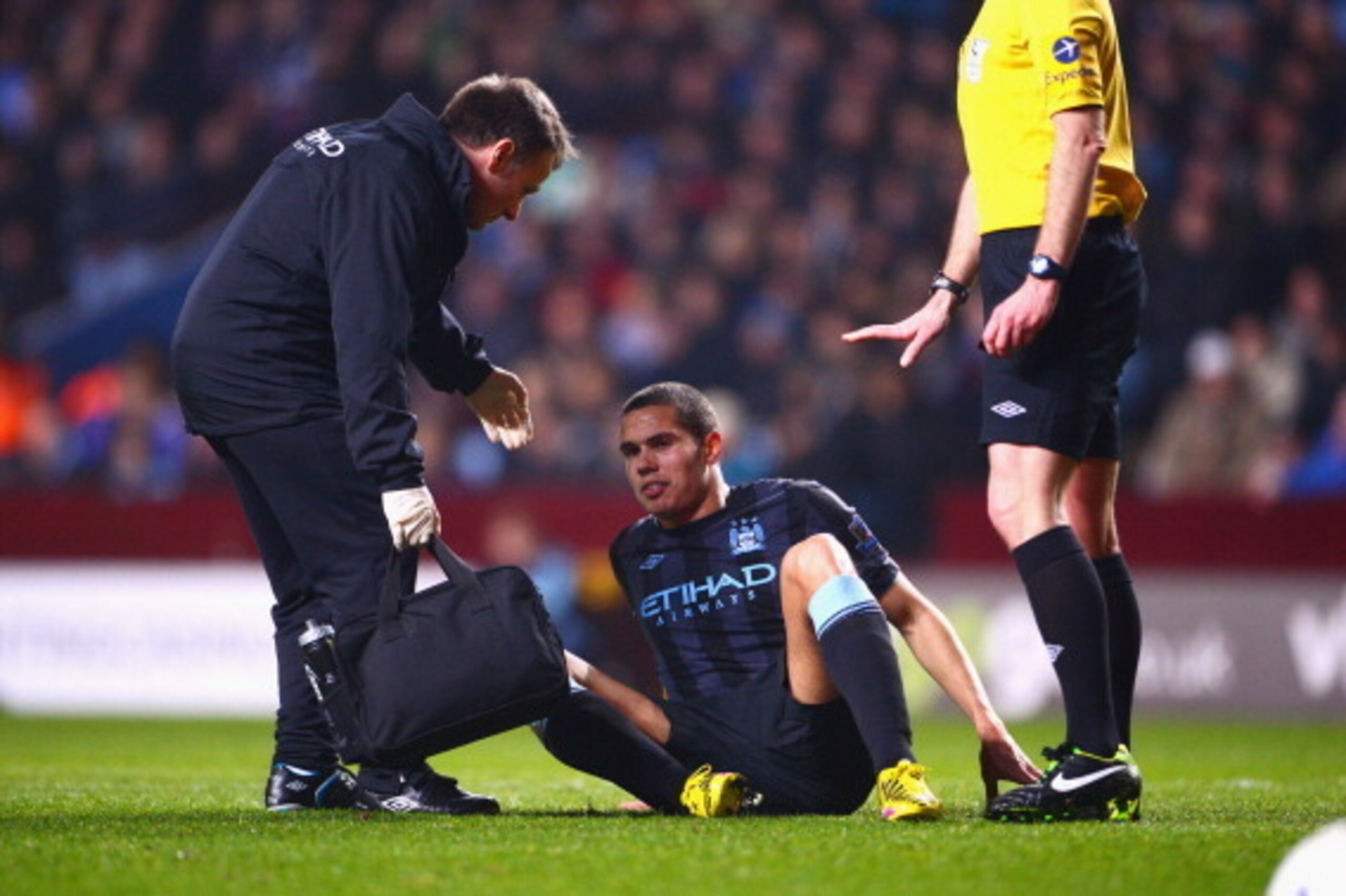
Finally, Jack Rodwell may have cost £12 million, but his two injury-hit seasons at the club saw him make just seven starts.
While Delph is undoubtedly an extremely talented player, it’s difficult to see him bettering these three former Citizens and nailing down a first team slot. City themselves have a long history of producing Premier League talent from their academy—such as Micah Richards and Shaun Wright-Phillips—but their change in financial fortunes has offered a convenient encapsulation of the state of the game.
It’s impossible to blame Delph for making the leap to City, if indeed he does leave Villa. The glory of winning silverware, of playing alongside superstars, of pitting his wits against the best of the best in the Champions League, are all perfectly valid reasons.
The sorry issue is that City’s intentions for Delph may be very different from what he envisages.
FA Chairman Greg Dyke has spoken of plans to up the homegrown quota from eight squad members to 12, as well as introduce a caveat that prevents clubs simply buying eligible players by requiring two players who were registered with the club for three years prior to turning 18.
It could be that these alterations force the sea change that the current legislation was meant to engender. Until then, however, we can expect to witness more homegrown players—English or otherwise—see their development curbed and ability squandered as pawns in the major clubs' game.


.jpg?w=2560 "Cam Ward Says He's Not A Loser")
.jpg?w=2560 "🚨 Texans Trade for MHJ")
.jpg?w=2560 "Grading MHJ Trade 📝")
.jpg?w=2560 "Chargers Fall to 0-5 🤢")

.jpg?w=2560 "MHJ Bought Own Jugs Machine")