
The Achilles' Heel for 2024-25 Men's College Basketball's AP Top 10 Teams
No men's college basketball team is perfect, especially this season.
Even the best of the best have had fatal flaws. And in the NCAA tournament, where everything boils down to matchups and not having a bad day at the wrong time, it's often the respective Achilles' heels more so than the respective strengths that determine a national champion.
So, what's the biggest thing to watch out for with the top title contenders?
Achilles' heels range from inconsistent defense and the inability to shoot to turnover margin and...untimely flagrant fouls?
Teams are listed in ascending order of AP Top 10 ranking.
10. St. John's Red Storm
1 of 10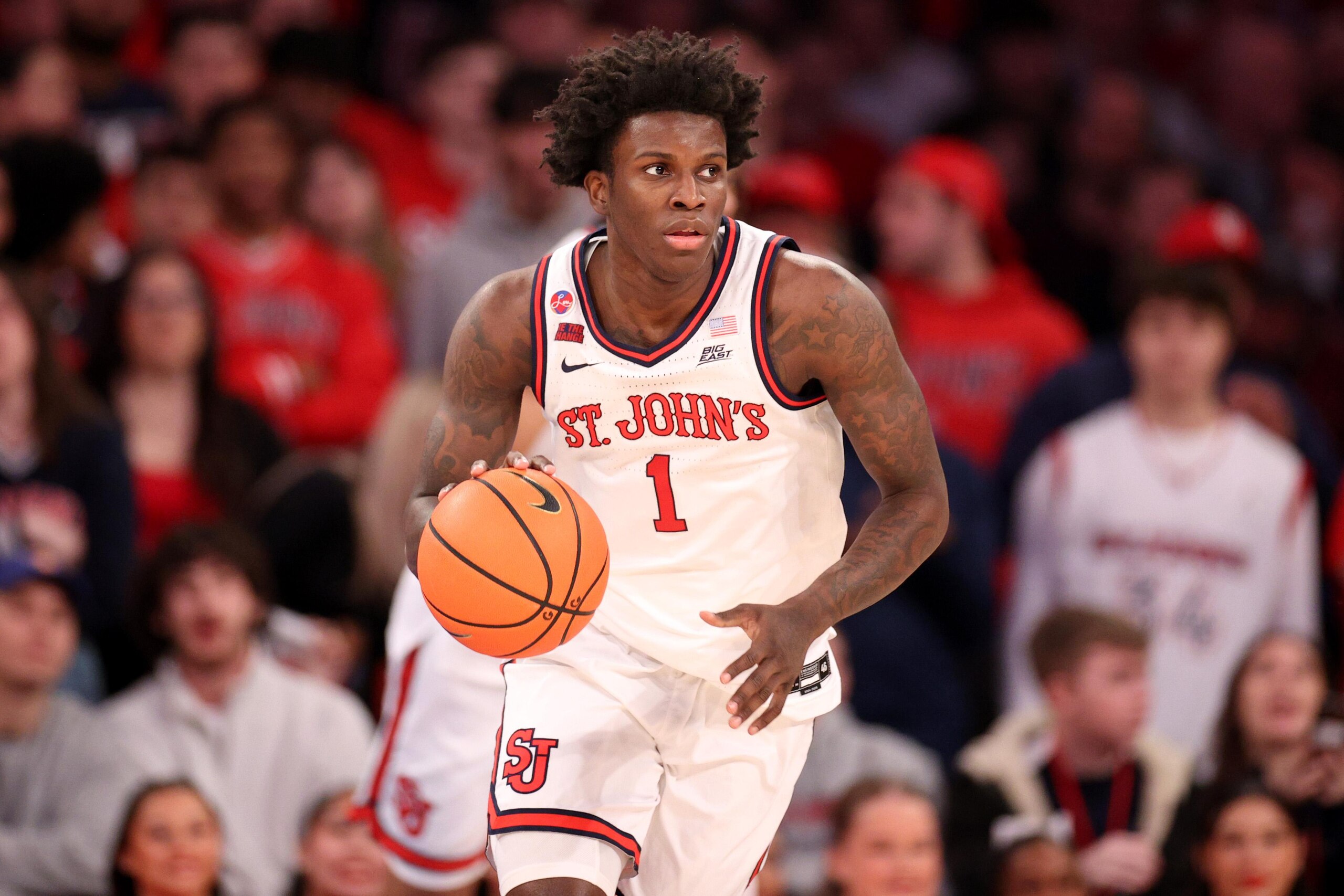
Achilles' Heel: The Art of Throwing the Ball Into the Hoop
Much has been made over the past few weeks about the horrible three-point shooting of St. John's, and justifiably so.
Not only do the Johnnies make a meager 29.3 percent of their three-point attempts, but they also only take 31.2 percent of their field-goal attempts from distance. That results in just six made threes per contest, which is ridiculously low in the modern game.
That shortcoming is amplified by the fact that St. John's is almost just as bad at both getting to and converting from the free-throw line, making just 68.1 percent of its 20 attempts per game.
Now, because they are so good on the offensive glass, because they typically own the turnover battle and because they apply relentless pressure on defense, the Red Storm still have a 12.6 PPG scoring margin and have yet to lose a game by a multiple-possession margin.
And, of all people, head coach Rick Pitino knows a thing or two about winning with terrible shooting. His 2012-13 Louisville team that won it all averaged 5.8 made threes per game for the year, converting at just a 33.3 percent clip. That Cardinals team was also only a bit better from the free-throw line (70.9 percent), but it did get there quite a bit more than this Johnnies team does.
If any top five seed is going to just brick its way right out of the Dance in the first weekend, though, St. John's is near the top of the list of candidates.
9. Texas Tech Red Raiders
2 of 10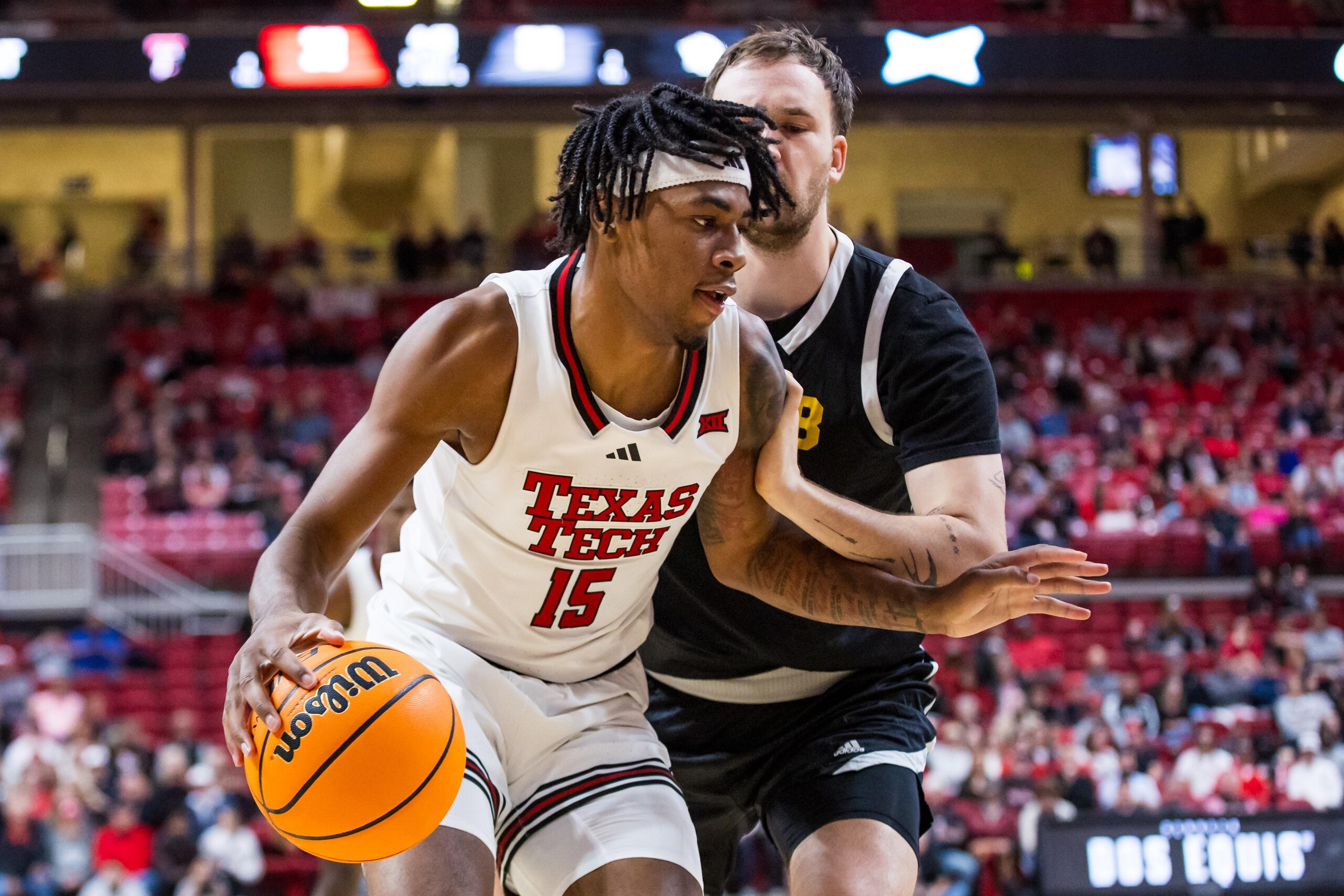
Achilles' Heel: Inconsistent Defense
There are nights when Texas Tech feels like the defensive juggernaut it was back in the 2018-22 timeframe. Nights when the Red Raiders just refuse to let anything come easily for 40 minutes.
They've held nine opponents below 60 points, including six Big 12 games, even suffocating a potent Arizona for a 70-54 victory. And they are a perfect 17-0 when holding the opposition to 71 points or fewer.
But then there are the other games where they can't stop anything, even against non-tournament competition.
Saint Joseph's scored 78 in upsetting Texas Tech. UCF went for 87 in a win in Lubbock on New Year's Eve. Arizona State put up 90 in regulation on the road against Texas Tech, ultimately scoring 106 in that double-overtime affair.
None of those teams would be in the Dance today, but they scored at will against the Red Raiders. So did Arizona, winning 82-73 in that rematch, despite only shooting 4-for-13 from distance.
Texas Tech has a lot of dudes. JT Toppin might be the most underappreciated player in the nation. Christian Anderson is maybe the most underappreciated freshman. And the tandem of Chance McMillian and Darrion Williams combines for about 30 points, 10 rebounds and six dimes per night.
But if the defense has one of those no-shows in the first or second round, they'll just be dudes watching the latter two weekends of the NCAA tournament from home.
8. Iowa State Cyclones
3 of 10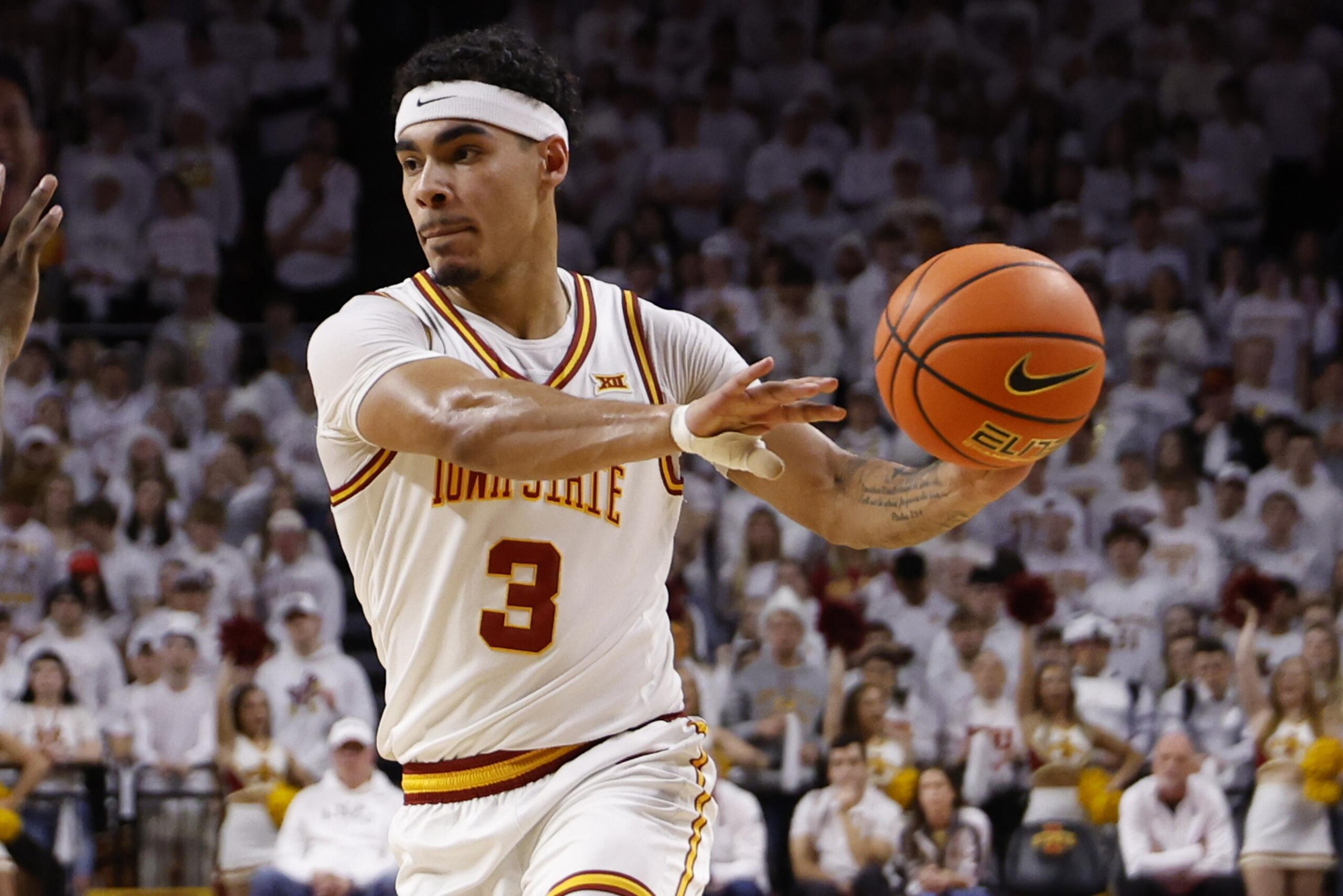
Achilles' Heel: Perimeter Defense
Truth be told, this was the toughest one on the list.
That's not to say Iowa State is my pick to win it all, but the Cyclones are just so darn well-rounded at full strength that it's tough to nitpick any particular weakness.
Before losing Milan Momcilovic for a few weeks and just not looking the same in some of those low-scoring losses suffered without him, Iowa State was undefeated save for a last-second Johni Broome putback on a neutral court.
Both Curtis Jones and Keshon Gilbert have been making legitimate cases for All-American teams, thriving alongside Tamin Lipsey in maybe the best backcourt in the country.
Just a stout eight-man rotation that could do some real damage in the Dance.
Do they have enough size along the perimeter to bother three-point shooting teams, though?
The Cyclones are plenty pesky on defense, generating a lot of turnovers. However, teams haven't had that much trouble getting three-point looks against them, provided they can find a shooter before committing a turnover.
It's nowhere near as dire a problem as it was for some of those Press Virginia teams from a decade ago, when their over-pursuit of steals resulted in wide-open shots on a regular basis. But 6'1" Lipsey, 6'4" Gilbert and 6'4" Jones aren't contesting many shots along the perimeter.
Even with Momcilovic back in the fold, Cincinnati (not a good shooting team at all, by the way) was able to hit 11-for-27 against Iowa State last weekend.
.jpg?w=2560 "Texans Titans Football")
.jpg?w=2560 "Broncos Chargers Football")
7. Texas A&M Aggies
4 of 10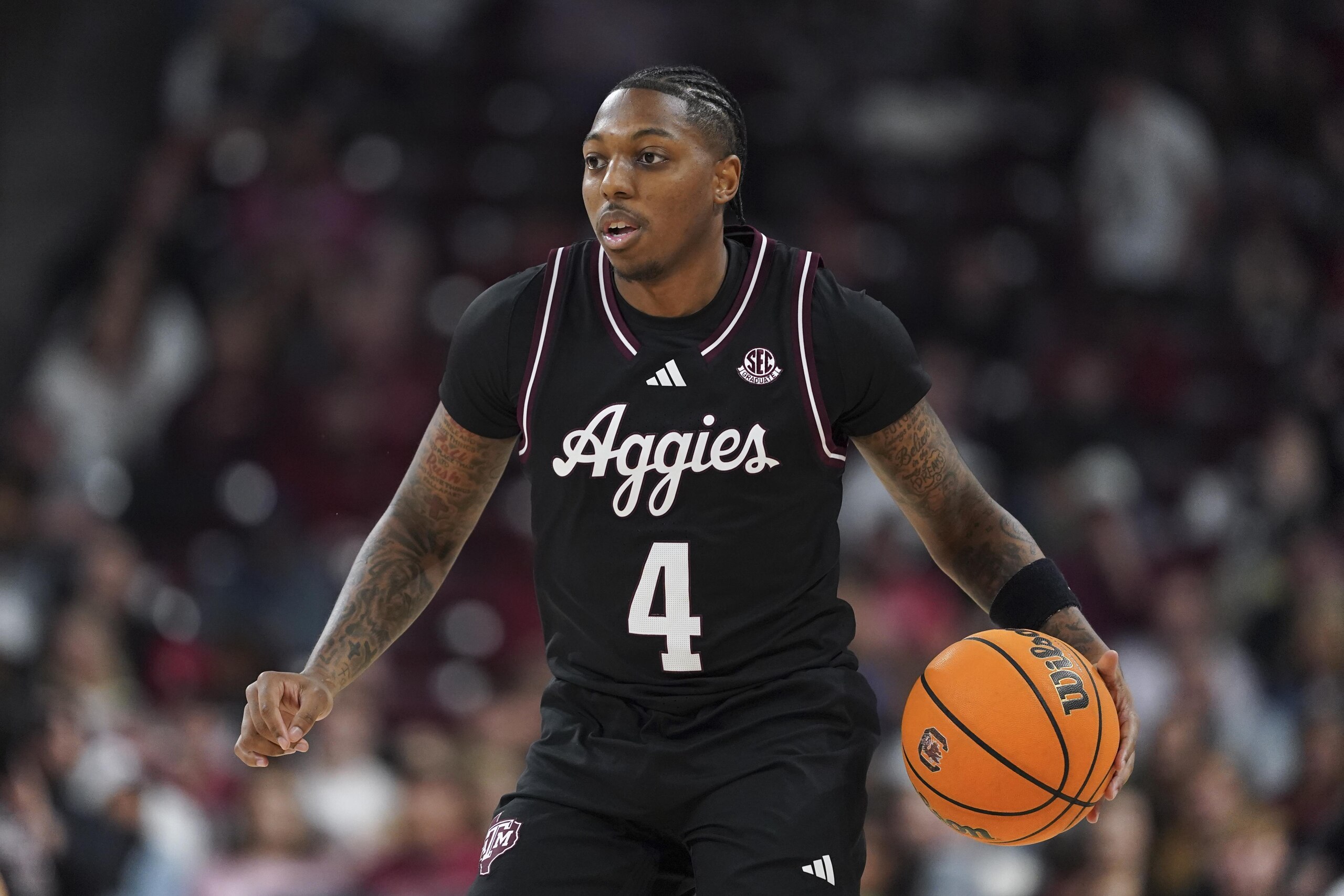
Achilles' Heel: Dreadful Shooting
It's wild to think St. John's isn't even the worst shooting team in the AP Top 10, but here's Texas A&M making the Johnnies not look so bad.
After all, at least St. John's is pretty good at making two-point buckets. The Aggies, on the other hand, don't hit threes, twos or even ones at a "top 250 in the nation" rate, shooting 31.2 percent, 49.2 percent and 68.4 percent, respectively.
They are barely top 300 in effective field-goal percentage, and also commit turnovers at a slightly above-average rate. Thus, despite leading the nation in offensive rebounding and getting to the free-throw line a ton, Texas A&M gets held to 70 points or fewer on a far too regular basis.
Fun fact, though: They're still shooting better than last year.
Even after absolutely catching fire in mid-March and scoring at least 90 points in each of their final four games of the year, Texas A&M shot 29.3 percent from three and 46.8 percent on twos in 2024-25. And that didn't stop it from almost upsetting No. 1 seed Houston in the second round.
This is also one of the better defenses in the country, making life miserable for anyone with designs on scoring in the paint against them.
At a certain point, though, you simply have to be able to hit shots. And though the Aggies do have two bucket-getters in Wade Taylor IV and Zhuric Phelps, what happens if and when they run into an opponent that can limit their offensive rebounds and/or take advantage of their turnover woes?
6. Tennessee Volunteers
5 of 10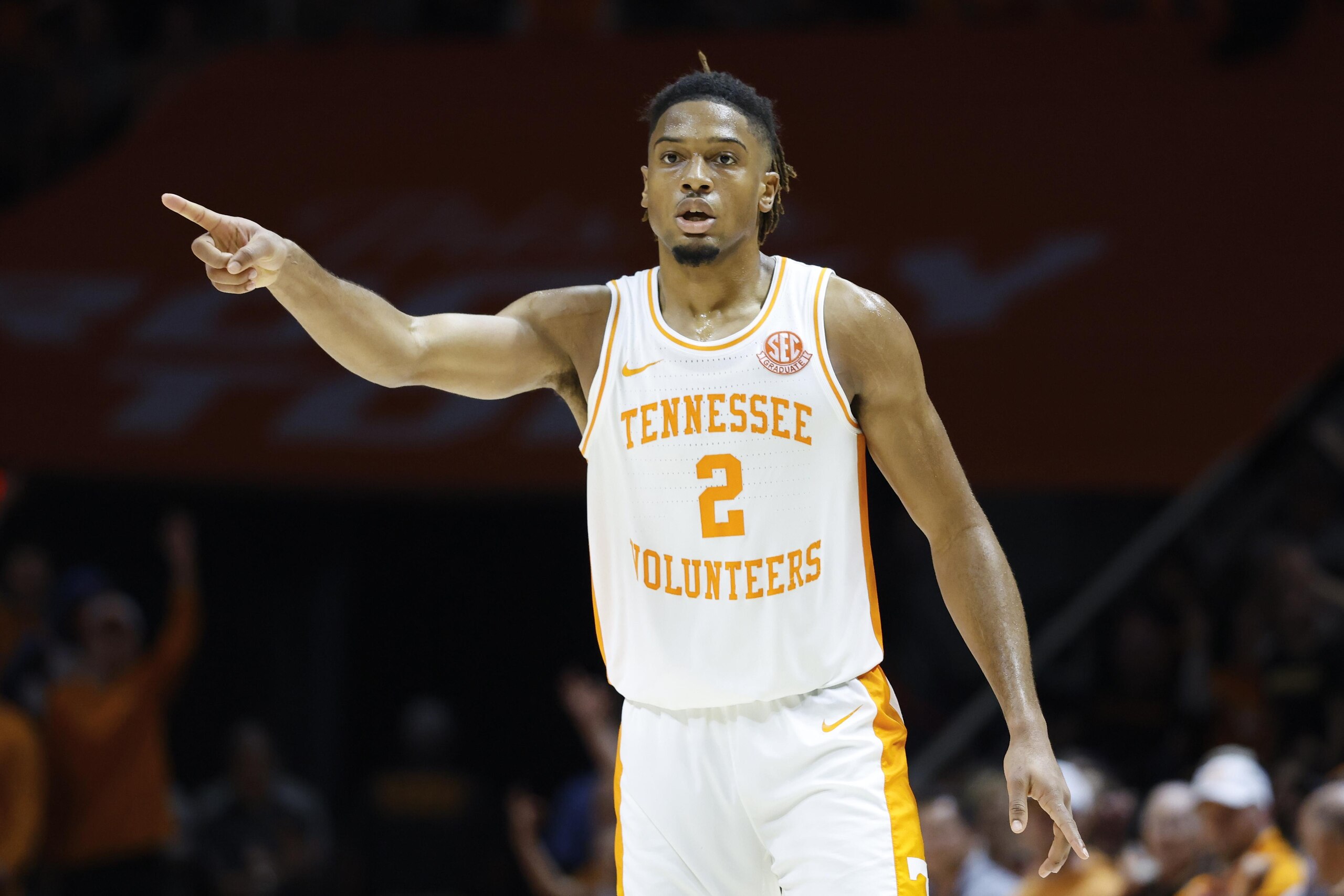
Achilles' Heel: Too Mercurial on Offense, Over-Dependent Upon Chaz Lanier
Tennessee is in pretty much the same boat as last year: Elite defense with shot-making on offense that is mediocre aside from the up-transfer they plucked from the portal before allowing him to take around 34 percent of the team's shots while he's on the floor.
That isn't to say Dalton Knecht and Chaz Lanier are the same player, because they're not. The former was much more of a driver, finishing last season with nearly as many free-throw attempts (206) as three-point attempts (234) and with substantially more two-point attempts (349). Lanier's marks are 61, 214 and 169, respectively, avoiding contact whenever possible and definitely preferring to do his damage from distance.
But what they do have in common is that it feels like the entire offense rests upon Lanier's shoulders.
When the North Florida transfer scores at least 18 points, Tennessee is a perfect 15-0 this season. Anything less than that, though, and it's pretty much a coin flip at 6-5 (3-5 in SEC play).
Even with Lanier, though, this offense is all over the place from one game to the next. The Volunteers scored 43 in the blowout loss to Florida in early January, and they managed just 51 a few weeks later in the loss to Auburn. Great competition, no doubt, but that's how bad it can get for this offense on nights when Lanier only scores 10 points.
This is the fifth straight year Tennessee has had this sort of identity, able to hold anyone to 60 but also prone to nights when it can't hit that mark in its own right. But the Vols did make it to the Elite Eight last year before an incredible showdown with Purdue, so who knows?
5. Houston Cougars
6 of 10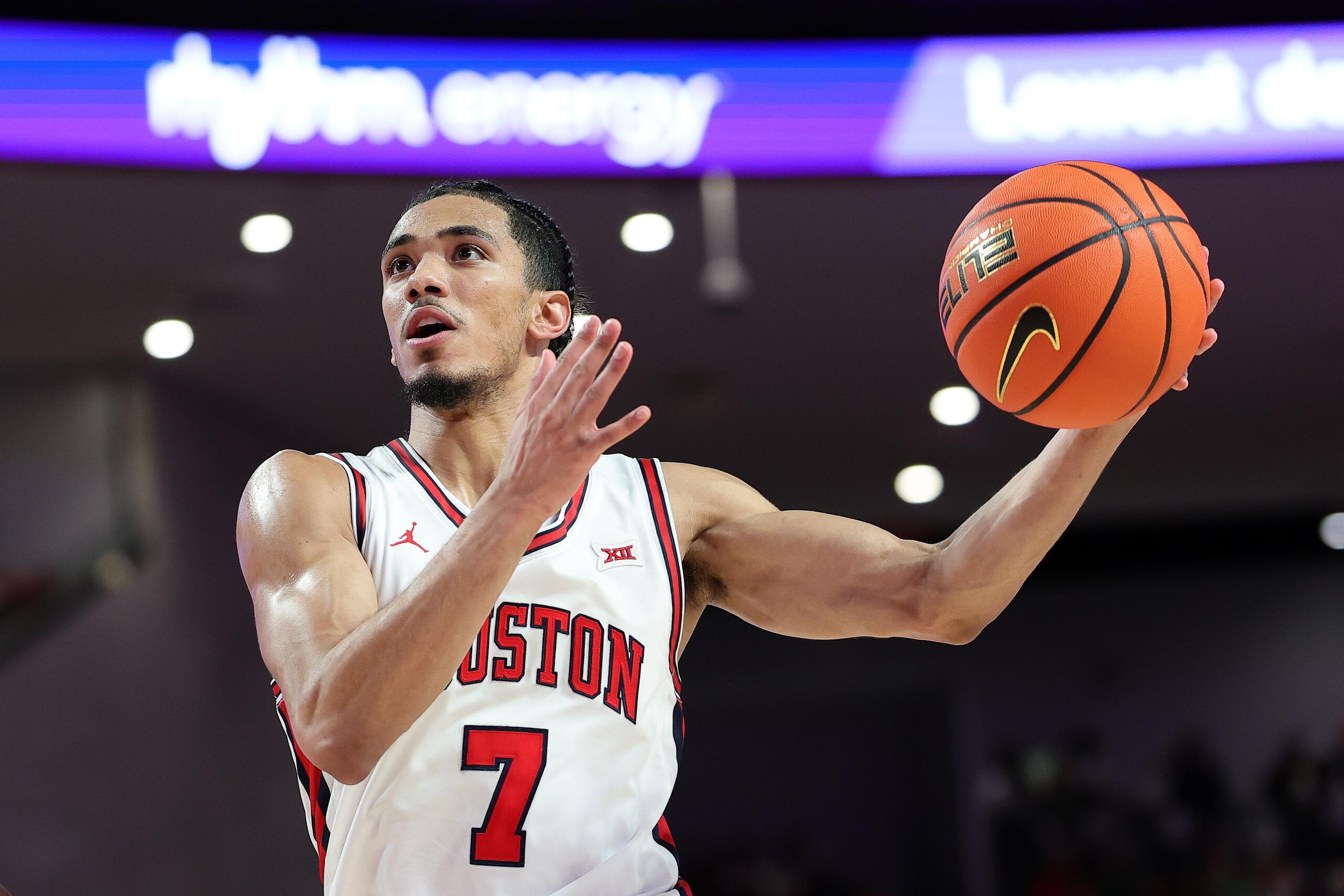
Achilles' Heel: Making Deuces
The good news for Houston is that with a defense that only allows 57.3 points per game, it doesn't take a whole lot of shot-making to win.
In fact, the Cougars are 21-1 this season when making at least 41.5 percent of their field-goal attempts, which isn't asking much. And they do have one of the most accurate three-point attacks in the nation, with LJ Cryer and Emanuel Sharp leading a team that makes 39.1 percent of its perimeter shots.
However, they are well below average on two-point percentage (49.5). They don't actually take all that many threes, ranking around 300th in the nation in 3PA/FGA. And they only average 16 free-throw attempts per game, both lacking in drivers who seek out contact and playing at a slow tempo that results in less time in the bonus in each half.
As such, there are prolonged stretches of games where it just feels like this team cannot buy a point—though, it's nowhere near as bad as last year, when they were just as mediocre inside the arc and much worse beyond it.
It's also not as bad as it was a month ago, as point guard Milos Uzan has really stepped up his game as of late, blossoming into that go-to guy in mid-January much like Jamal Shead did last year.
Uzan averaged 8.8 PPG through his first 17 games, but he is up to 13.9 PPG (and just 1.0 turnover per game) over his last eight. If he keeps playing that well, Houston's Achilles' heel becomes the sheer fact that opponents shoot a ton of threes against it and you never know when a team will just catch fire in the tournament (see: Houston's loss to Miami two years ago.)
4. Alabama Crimson Tide
7 of 10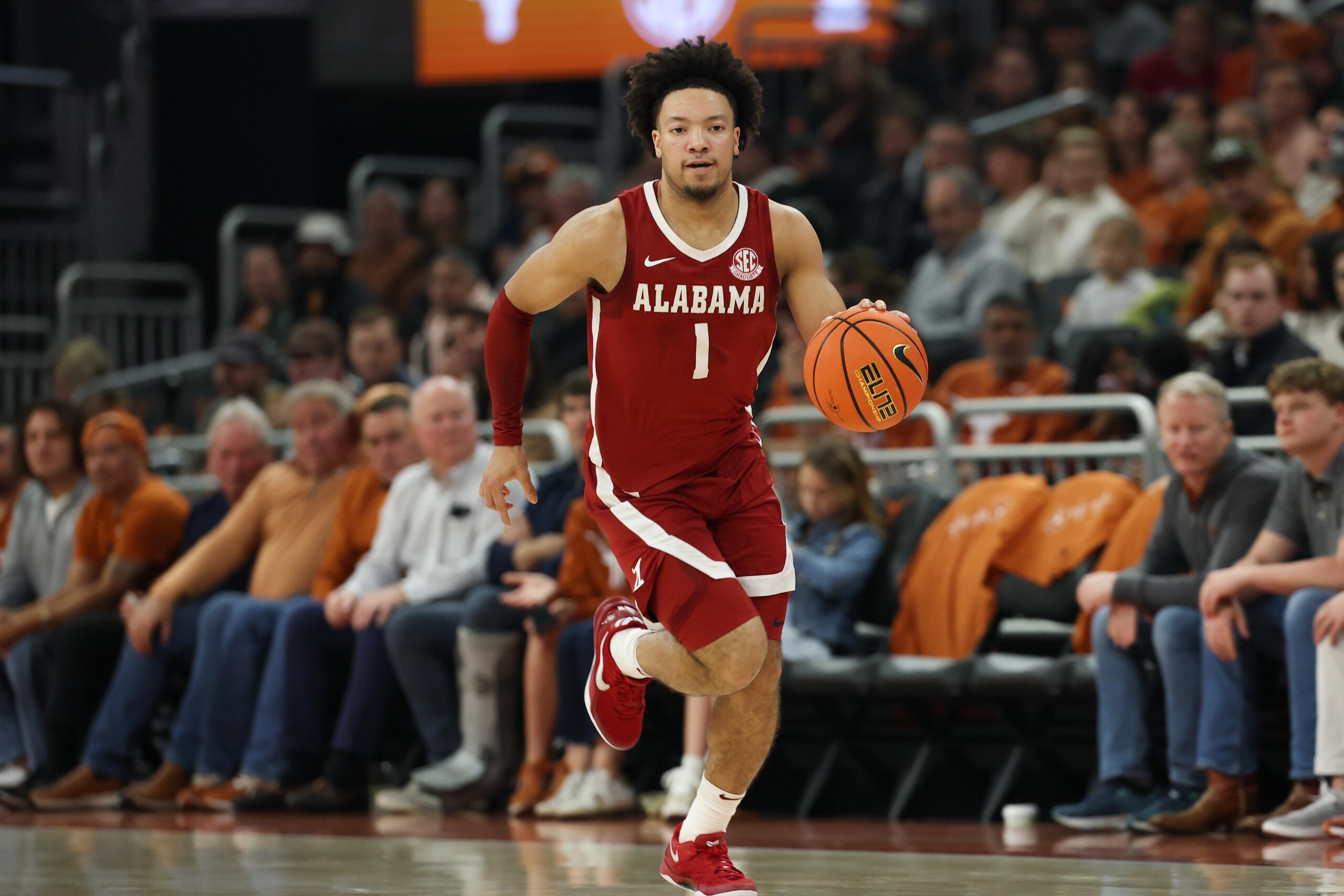
Achilles' Heel: Turnover Margin
We should begin this section by pointing out that Alabama's defense is a whole lot better than it was last year, improving from the 111th-best adjusted defensive efficiency to its current spot in the top 40.
With the addition of Clifford Omoruyi and improved play on that end by Grant Nelson, the Crimson Tide is much better on the defensive glass and at defending in the paint in general. They've also cut down free throws allowed by about 13 percent.
However, what this defense does not do is generate turnovers, ranking almost dead-last in the nation in defensive turnover percentage. And the offense coughs up the ball at pretty much exactly the national average rate, resulting in a per game turnover margin of minus-3.0.
It's not always a factor, of course, but in their four losses, they committed a cumulative total of 51 turnovers while forcing only 22 (minus-29). They were also minus-10 in that close call against Rutgers in the Players Era Festival. And it feels like a miracle that they were only minus-3 in their overtime win over a Houston team that typically dominates the turnover battle. (Houston PG Milos Uzan only playing 12 minutes before fouling out was no doubt a contributing factor there.)
Even with the giveaways, they still have one of the most efficient offenses in the country. And considering Alabama plays at the fastest tempo in the nation, there are enough possessions in the game for it to generally get away with a minus-3 margin. But if the Tide runs into, say, UCLA, Marquette or St. John's in the Sweet 16, that minus-3 could turn into a fatal minus-15 in a hurry.
3. Duke Blue Devils
8 of 10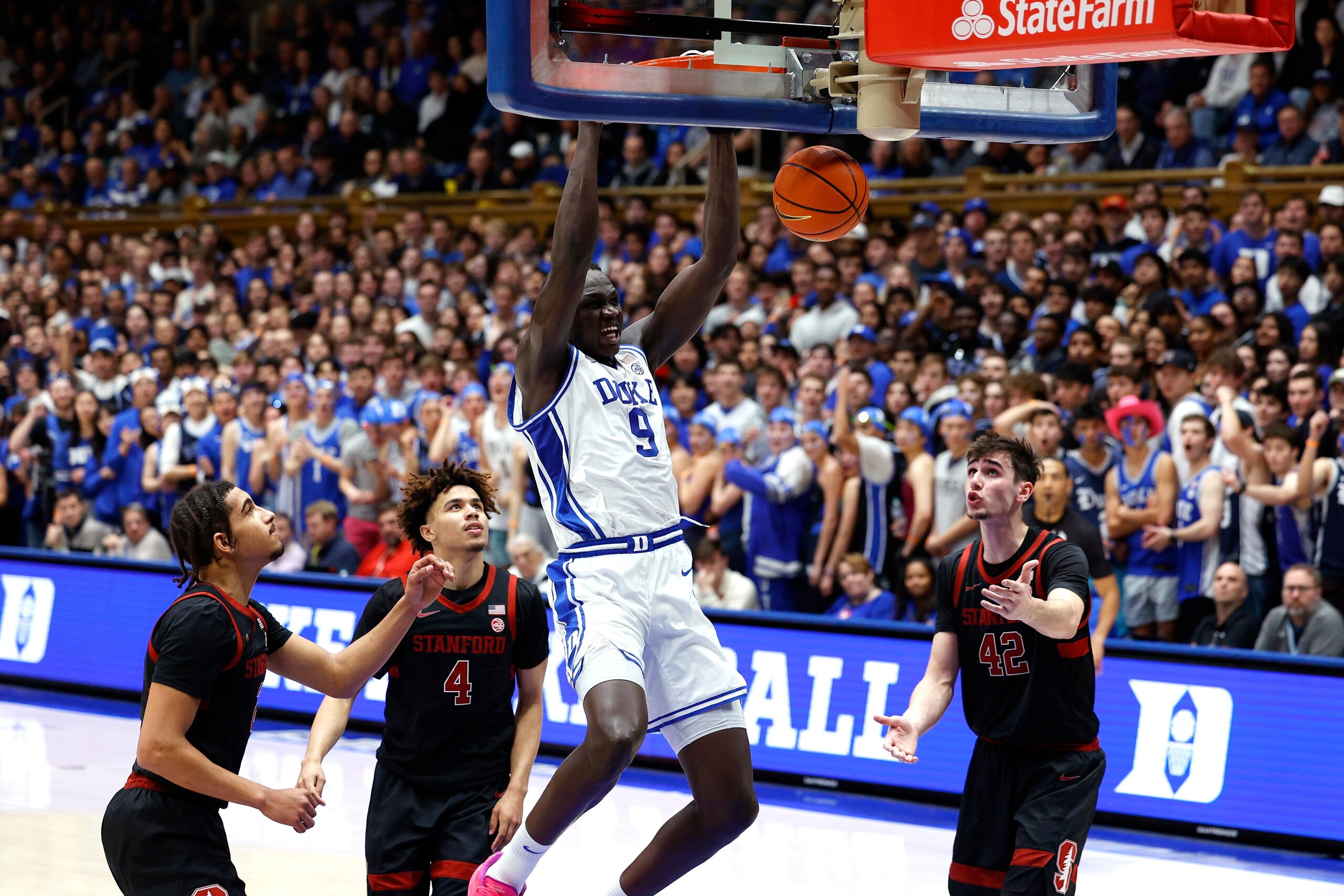
Achilles' Heel: Interior Scoring
Shooting percentage isn't the problem here. In fact, Duke ranks top-20 in the nation in two-point percentage, led in that regard by Khaman Maluach making 77 percent of his two-point buckets.
The 7'2" center from South Sudan is still developing, though, and is not yet a "feed him and let him go to work" type of big man. Most of his buckets come on putbacks or lobs, and he can be completely taken out of the game against quality opponents.
Case in point: In Duke's last six games against "Tier A" competition on KenPom, Maluach made a combined total of seven shots—four of those coming in the blowout of SMU, which is a "Tier A" opponent in name only. He was completely shut down in the loss to Clemson, as well as being held scoreless in the close call against Wake Forest.
And aside from Maluach, it's kind of "Cooper Flagg or Bust" in the paint for the Blue Devils, the soon-to-be No. 1 overall pick making more two-pointers than any of his teammates have attempted.
Granted, it usually works, and most teams would kill to be in a "Cooper Flagg or Bust" situation.
For all the height this Duke team has, though, it only does about 45 percent of its scoring via two-point buckets. It shot 12-for-31 inside the arc against Clemson, and 12-for-25 in the aforementioned Wake Forest game in which it only scored 63.
The Blue Devils do have a great perimeter attack and an even better defense, so it might not be a problem. But if and when they have an off-night from distance in the Dance—even that mighty 2018 Villanova team had a 4-for-24 game in the Elite Eight—can they manufacture some close-range buckets to turn the tide?
2. Florida Gators
9 of 10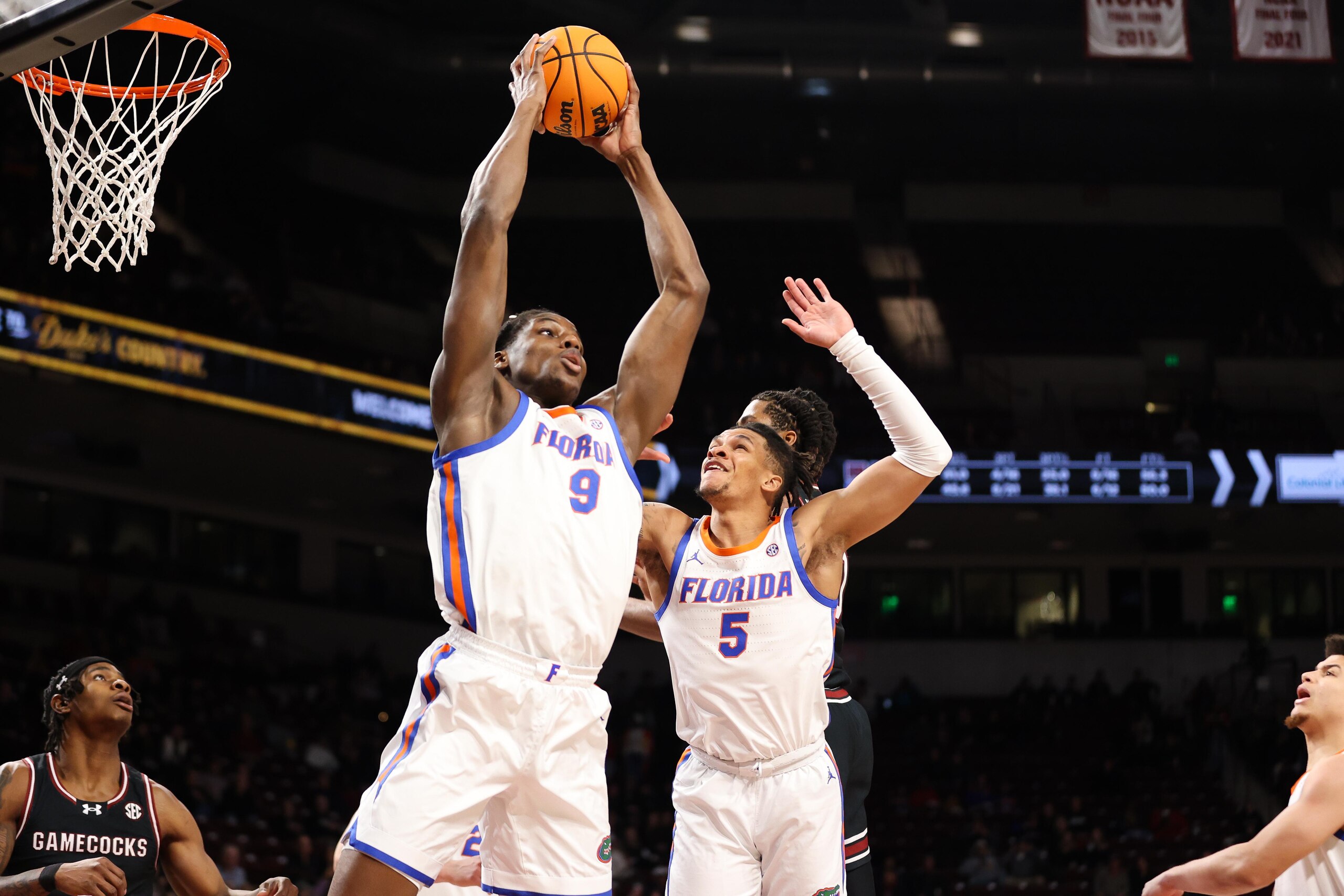
Achilles' Heel: Inconsistent Defense
From a birds' eye view of the KenPom profile, Florida's defense looks great. The Gators are top-10 in adjusted efficiency, top-five in effective field-goal percentage against and 72 percent of their opponents have been held below 70 points scored.
But how's this for a seven-game sequence of points allowed: 84, 45, 45, 106, 43, 63, 83.
Basically, when the wheels come off, they really come off.
The 106 game was, admittedly, an outlier. It was an early tip at Rupp Arena and the Wildcats couldn't miss, shooting 14-for-29 from three and 58 percent from the field en route to 1.47 points per possession.
But North Carolina couldn't buy a triple (5-for-28) and still put up 84 points on the Gators, and Missouri got just about any open look it wanted throughout that 83-82 win at Florida.
In all three games, turnovers were a major factor. The Gators generally aren't terrible at forcing turnovers, but it's also not a forte of theirs, and they finished those games at a combined minus-15 turnover margin.
Likewise, this is just an OK defensive rebounding team, and both UNC and Missouri created copious second-chance opportunities in those high-scoring games. Same goes for Auburn grabbing 15 offensive rebounds in that 90-81 affair.
Long story short, Florida generally does a considerably above-average job of forcing opponents to settle for tough shots, but there is a big difference between this top-10 defense and those of Houston, St. John's, Tennessee and Duke.
1. Auburn Tigers
10 of 10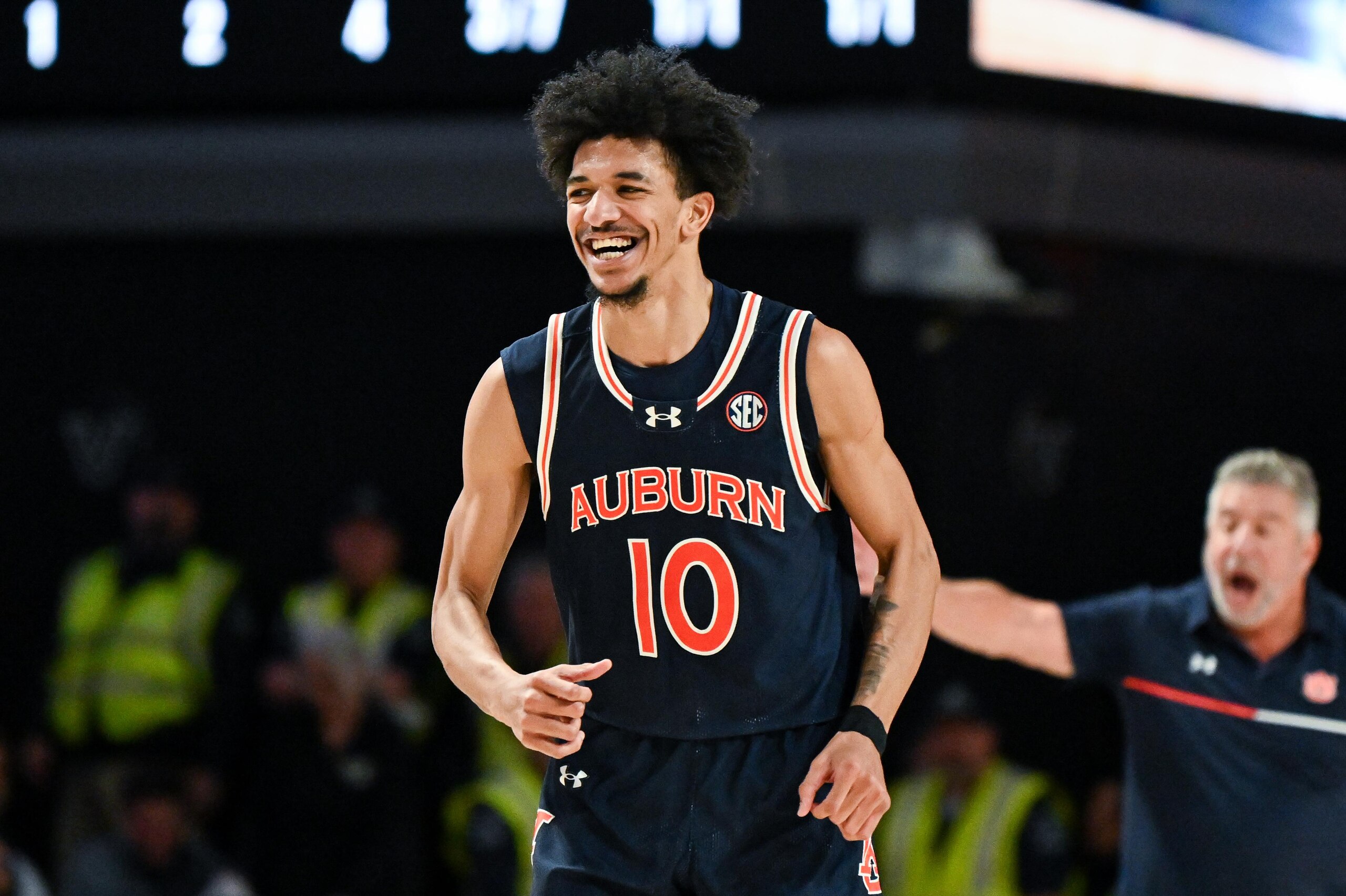
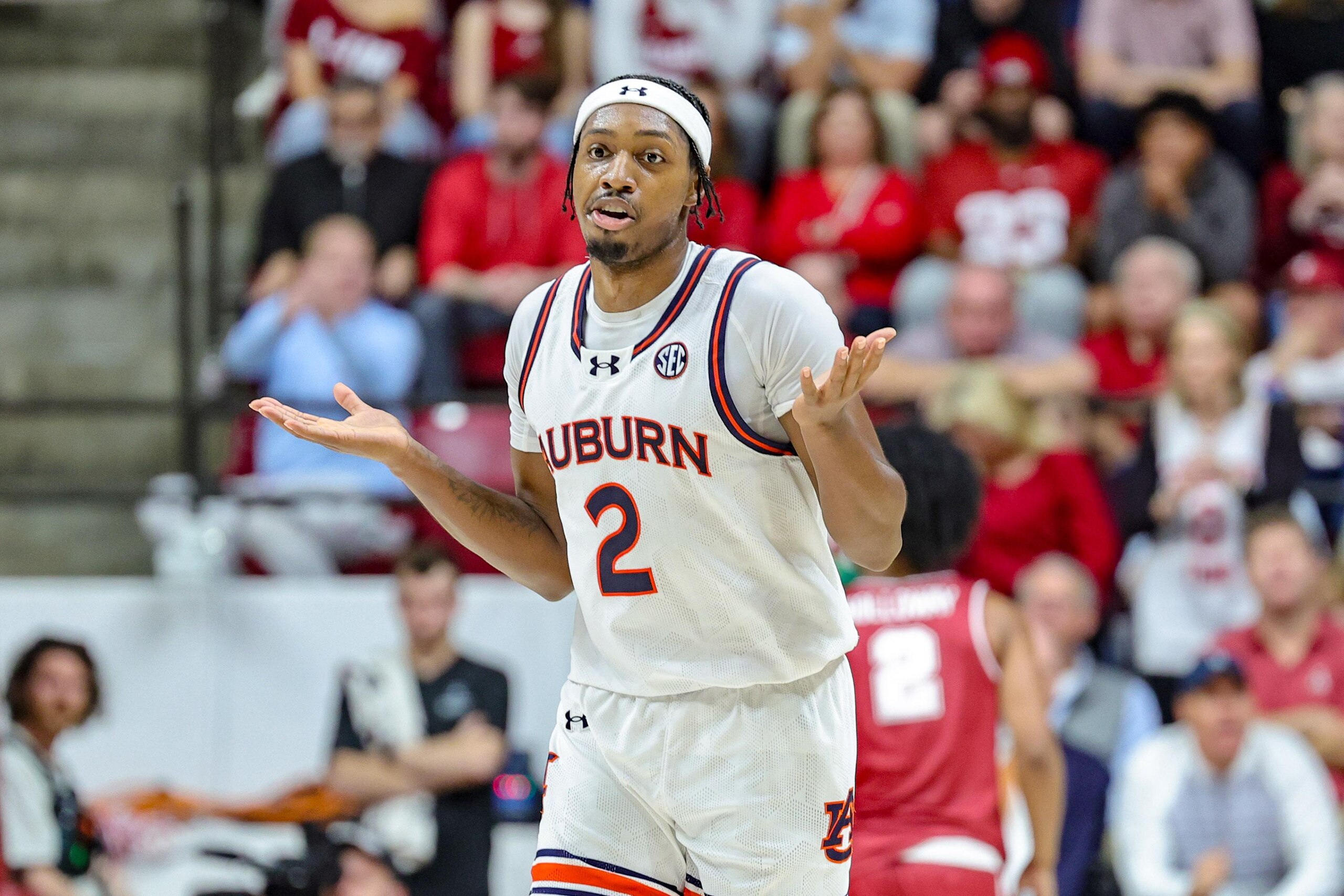
Achilles' Heel: Chad Baker-Mazara's Antics
It's hard to find much to complain about with Auburn, which has been a wagon throughout this season.
You could point to Denver Jones, who completely vanished in both of the Tigers' losses, as well as the 53-51 rock fight of a close call against Tennessee. Between those three contests, Auburn's starting point guard logged 91 minutes, shooting 0-for-16 from the field with a combined line of four points, seven assists and eight turnovers.
For the most part, though, Jones has played well enough that it hasn't felt like a mistake or anything that he's still consistently getting a bit more playing time than Tahaad Pettiford.
What feels like the real Achilles' heel here is, well, maybe this college basketball season's foremost 'heel' in the form of Chad Baker-Mazara.
For the most part, he's a major asset for the Tigers, ranking second on the team in scoring and leading the way in steals. For the two games that Johni Broome missed, it was clear he has the chops to be the leader of this squad.
But his style of play is a double-edged sword, his constant talking and his occasional flops and hard fouls making him a lightning rod for the officials' ire.
It was Baker-Mazara's flagrant 2 foul early in last year's first-round game against Yale that played a major role in Auburn losing that one. And he hasn't exactly learned his lesson, getting DQ'd in games against both Oklahoma and Alabama earlier this month as a result of flagrant fouls.
Could another CBM flagrant/ejection be the moment that undercuts this incredible season during the tournament, or will he mind his p's and q's to ensure he remains available for the Tigers?

.jpg?w=2560 "Grading MHJ Trade 📝")