

Barcelona's Pursuit of Arda Turan Indicative of Club's Very Immediate Thinking
It's a transfer story that's unfolded at a rapid pace, developments coming thick and fast following the predictable pattern, only to then take an unforeseen twist.
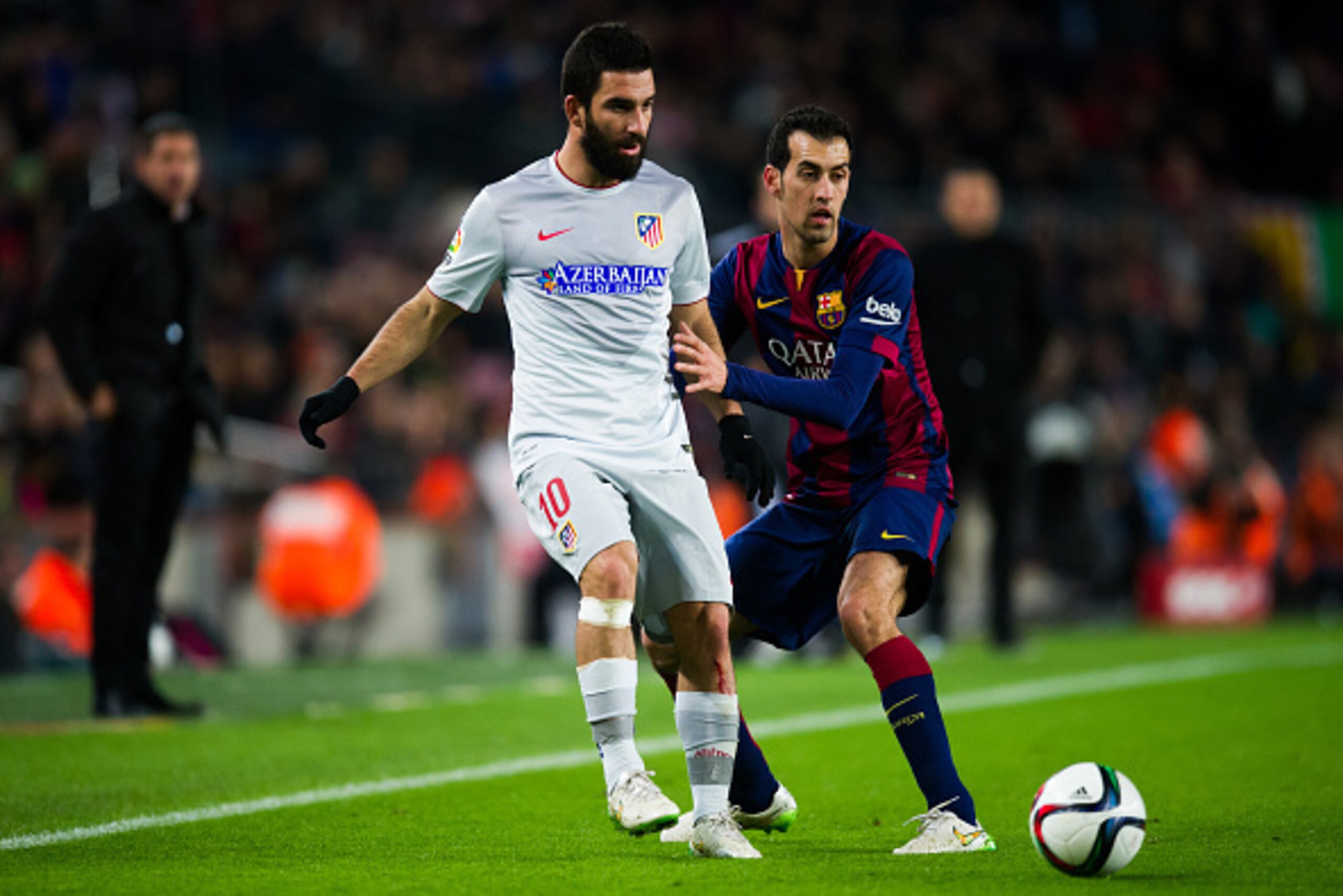
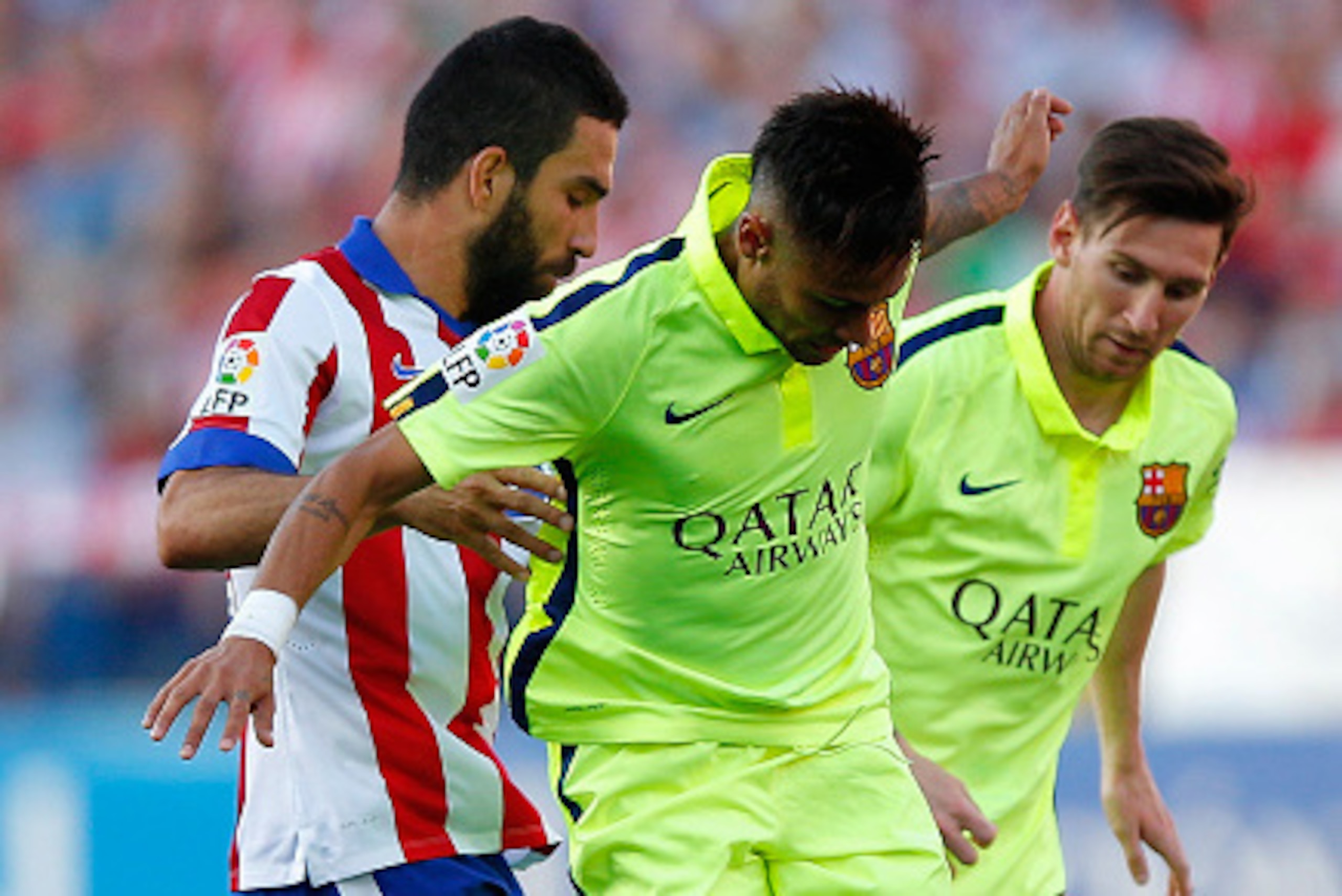
In the space of two weeks, Atletico Madrid midfielder Arda Turan has been linked with AC Milan, Paris Saint-Germain, Chelsea and Manchester United, has been the client of an outspoken agent and shopped around with little discretion, has been reported as being a key part in Josep Maria Bartomeu's election campaign at Barcelona and has taken to Twitter to clarify his situation himself.
Hectic, yes, but not entirely unpredictable. Until now.
TOP NEWS

Messi Picks Next Gen Talent 💫
Live World Football Goals and Highlights 🔥
5 Potential Replacements for Michael Carrick as Manchester United Manager Amid Rumors
"Arda Turan chooses Barcelona" ran Marca's headline on Wednesday. Over in Catalonia, Sport, running a similar headline, confirmed the story. According to the Barcelona-based daily, "if" isn't relevant: "The only doubt is when."
As the news broke, the natural reaction was to question the pursuit, as the fit initially seemed awkward.
Where would Turan play at the Camp Nou? How would he fit in? Surely he doesn't want to sit on the sidelines for six months until Barcelona's FIFA-imposed ban ceases?
Does he realise Barca's midfield was one that Xavi was struggling to get into last season?
Those questions remain pertinent even as the hours tick by, and they'll do so until Turan pulls on a Blaugrana kit for the first time next January. Yet move past the initial surprise of the Turk's impending move to the Camp Nou, and there is sense to be found in this—for both player and club.
More significantly, though, is that the pursuit of Turan is indicative of the immediate thinking being used at Barcelona.
Consider the club's prominent signings last summer: Claudio Bravo, Jeremy Mathieu, Thomas Vermaelen, Luis Suarez, Ivan Rakitic and Marc-Andre ter Stegen. When they arrived, those players were 31, 30, 28, 27, 26 and 22, respectively.
For expensive acquisitions, there was a degree of risk involved in such a haul. There's a growing perception that if you're gong to spend big in the transfer market, it better be on players who offer both short-term and long-term value; players with the bulk of their careers still to come, not players already in the second half of them.
But Barcelona went into the market with a win-now mentality—only the signing of Ter Stegen contradicted that—looking for talent bundled with experience and identifying players who weren't projects but ready to make an impact. Immediately.
Though one didn't—Vermaelen—most did: Suarez, Rakitic and Bravo were exceptional, while Mathieu was more than serviceable. The result was the toppling of La Liga, the Copa del Rey and the European Cup, as Barca became the first team in history to win a second treble.
That's not to say, of course, that the Catalans' transfer thinking is the only way; it most definitely is not. But it is a way, and Barcelona, recognising their own unique situation, opted for it and made it work. Now, Turan—and to a lesser extent, Aleix Vidal—represents a continuation of that.
When he makes his first appearance for Barcelona, assuming the deal transpires, the Atletico midfielder will be almost 29. For a player who could cost the club up to €41 million—the number needed to trigger his release clause, though Sport suggests the eventual fee will be lower—it's a hefty sum, particularly when you consider there isn't an obvious place for him in Luis Enrique's starting XI.
But dig deeper, and think more analytically: There is a solid rationale behind this.

Teams that scale the mountain like Barcelona did last season are always left in a delicate situation in the aftermath of the triumph. Having reached the pinnacle, ticking off the ultimate goal, some struggle to recapture the desire, their standard dropping with their appetites satisfied. Signing Turan is an act to protect against such a slip.
The 28-year-old, like Rakitic did, heightens the competition for places in Barca's midfield, giving Enrique a high-class second option behind Andres Iniesta. Naturally, cynics will rightly argue Turan isn't the player the Catalan is, yet there are some similarities between the pair—evasive skills, footwork, vision, close control. Yet it's what the Turk could do for Iniesta, and the team as a whole for that matter, that's significant.
One of La Liga's outstanding players, a resident in Spain for four years, Turan stands as a viable, ready-made successor to the Barcelona great (no one will ever be a replacement), giving Iniesta a direct competitor and something to rebel against.
Now 31, and with a staggering trophy collection to his name, the Spain international could benefit from a new source of motivation. Turan's lingering presence is potentially something to spur him on, pushing him to another level when logic (age) dictates he's soon ready to begin going the other way.
For the squad as a whole, the effect can be a similar one. The Atleti midfielder's arrival would be another injection of energy, ferocity and quality, providing a sense of renewal in the aftermath of triumph—essentially, another shot in the arm.
As much as anything, the coach and the club's hierarchy are sending a message to the playing squad, making it clear that sentiment won't drive them in 2015-16.
Interestingly, Barca's immediate, win-now approach in the transfer market is in stark contrast to that being used in the capital at Real Madrid.
Though Los Blancos under Florentino Perez have still pursued the Galactico model, much of the club's recent business has been conducted in the 21-24 age bracket—Asier Illarramendi, Isco, Lucas Silva, Toni Kroos, Danilo, Daniel Carvajal, Casemiro. Younger still have been Marco Asensio and Martin Odegaard, with Real Madrid taking a long-term but still expensive method.
But Perez remains his own worst enemy, ripping up the project every 12 months, dismantling lineups only just built and discarding managers with alarming regularity. As such, Real Madrid have suffered from a comparative lack of continuity compared with Barcelona and have helped their rivals capture five league titles in seven seasons.
In the history of Spain's behemoths, those seven years have represented a historic power shift. Not since pre-Alfredo Di Stefano have Real gone through a leaner stretch in the league, and this summer again the club is starting afresh, having sacked Carlo Ancelotti.
It's why Barcelona's immediate and short-term thinking in the transfer market makes sense. With Real Madrid too busy getting in their own way, the bolstering of depth with the addition of ready-made stars at the Camp Nou is heightening the Catalans' edge, allowing them to capitalise and build upon the Primera Division's power shift and get the most reward out of Lionel Messi's peak years.
It worked last summer with Suarez, Rakitic, Bravo and Mathieu. This summer, it could do so again with Turan.
.jpg?w=2560 "Texans Titans Football")
.jpg?w=2560 "Chargers Fall to 0-5 🤢")
.jpg?w=2560 "🚨 Texans Trade for MHJ")
.jpg?w=2560 "Grading MHJ Trade 📝")

.jpg?w=2560 "MHJ Bought Own Jugs Machine")