Chelsea Show a Real Touch of Class in Allowing Petr Cech to Move to Arsenal
They say that actions speak louder than words, but in the case of Roman Abramovich, we have nothing with which to compare. The Russian billionaire never speaks, meaning all we can ever judge him on is the decisions that he—or those to whom he delegates responsibility—makes.
In that regard, the Chelsea owner’s decision to permit goalkeeper Petr Cech to leave the club for Arsenal this summer is a commendable gesture, one of real class. In the modern football landscape, where niceties invariably fall by the wayside as soon as a competitive advantage is even perceived to be at stake, to allow a great player to join a rival is an increasingly rare moment of moral integrity that perhaps will restore a little bit of the child-like, romantic affection for the game that invariably fades as we get older, wiser, more cynical.



Chelsea fans, of course, may not be impressed with the transfer, which was finally confirmed on Monday, but all but the most belligerent of Blues supporters will agree, with differing degrees of reluctance, with Abramovich’s line of reasoning: Cech’s 11-year spell at the club, spanning four Premier League titles, four FA Cup wins and a Champions League success, has more than earned him the right to determine his own future.
Arsenal might be near the bottom of Chelsea’s preferred destinations for their second-choice goalkeeper, but if the Emirates were at the top of the Czech’s personal list, then it seems that was a decision they were laudably willing to accept. (The Blues also already have Cesc Fabregas in their ranks, so they know what it is to be on the other side of such an equation…)
"I'd like to thank him [Roman Abramovich] from the bottom of my heart for his support in this matter," Cech said in an open letter to Chelsea fans. "We will meet again but this time I will be in the other goal—I hope you will remember our history and understand it is time for me to begin a new adventure."

Of course, it is almost impossible to ever be completely devoid of cynicism, and it is tempting to suggest that Abramovich’s decision in this instance is not completely altruistic. We know that the oligarch had certain reservations about Jose Mourinho’s return to the club as manager two summers ago, and we know that clear-the-air discussions between the two about where exactly different elements of power and responsibility would lay were held long before the Portuguese was reappointed.
Mourinho, Abramovich made clear, would have to work within an overall structure that would not always indulge his desires. Chelsea’s subsequent success, romping to the Premier League title last season, has no doubt strengthened Mourinho’s position at Stamford Bridge, so it was interesting when he publicly expressed his preference for Cech not to join a rival.
By overruling Mourinho, Abramovich is perhaps making a wider point of his own in the direction of his manager.
“My answer is not important because the owner is the owner, he is the person with the perspective I admire a lot, respect a lot,” Mourinho said recently (per the Guardian), when asked about the Cech situation. “He respects a lot of people who do important things for him.
“I’m different. I have the same respect for Petr that everybody at the club has, but my answer [to a proposed move to Arsenal] would be: ‘No way.’ If the answer is different I will accept that.”
He went on to suggest he would want a player in exchange for any deal with Arsenal, although that too appears to be a stipulation that Abramovich has chosen to waive.
That is not to say Mourinho’s stance is wrong, or somehow unfair. As Chelsea manager, his responsibility is to do the best for his team, over and above any individuals and any loyalty or affection he may feel for them. Abramovich, grateful for the service Cech has given since arriving from Rennes for a bargain £7 million back in 2004, can afford to let sentimental reasons influence him far more than the man who ultimately lives and dies by results on the pitch.
The reason for Mourinho’s reluctance to see Cech head to north London is not hard to work out. Although opinions vary, the consensus is that Cech is a better No. 1 than any of the goalkeepers Arsenal currently possess, and thus he would further upgrade a team that had already appeared to have taken a genuine step forward last season.
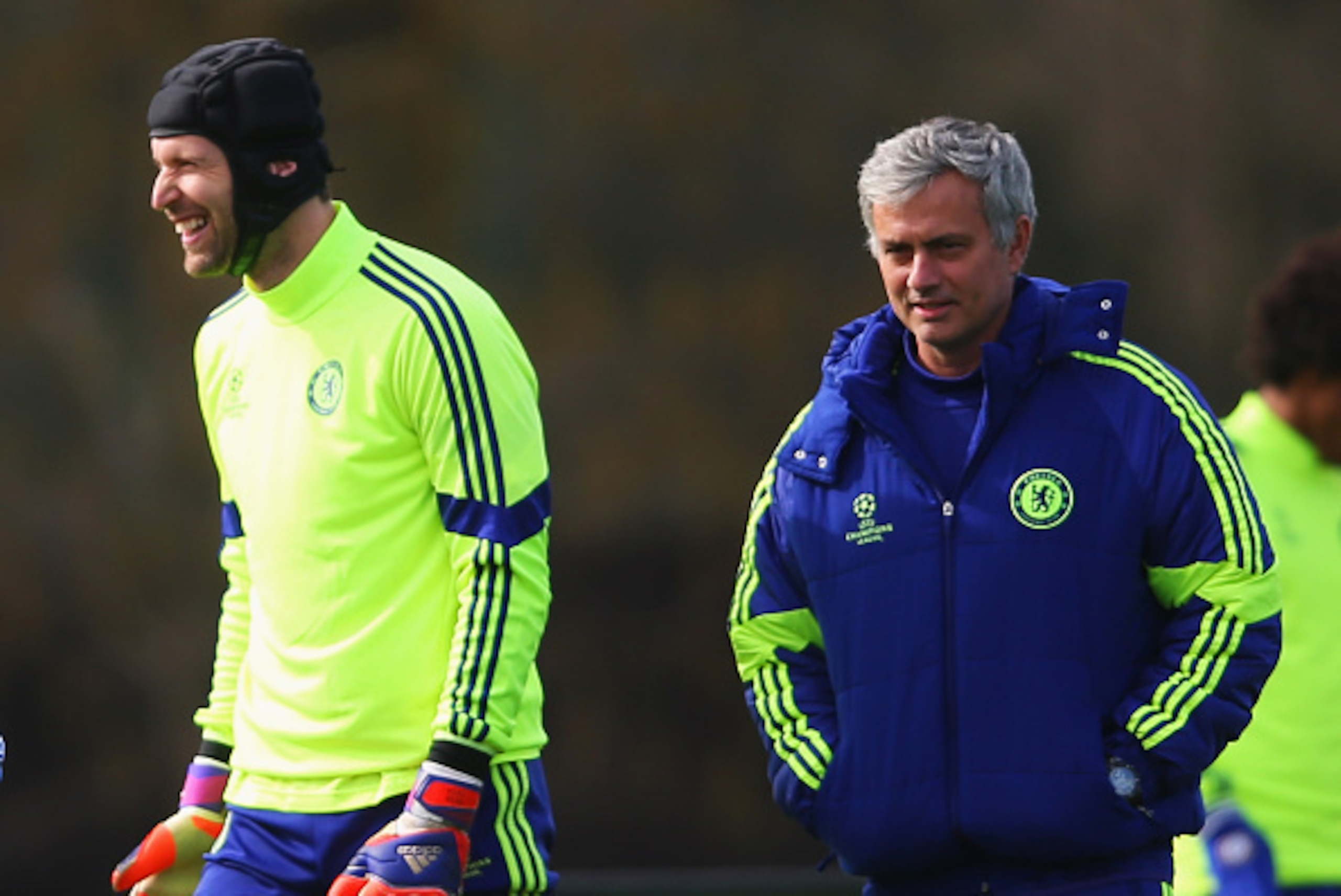
“There’s talk of Arsenal signing Petr Cech and, if they do get him, he will strengthen them for sure,” Chelsea captain John Terry told TalkSport this month. “He will save them 12 or 15 points a season.”
Considering Arsenal finished 12 points behind Chelsea last season, some quick back-of-the-envelope math suggests Terry believes the transfer immediately makes Arsene Wenger’s team legitimate title contenders. “He’s going to be sorely missed and will improve any side he goes to,” the Englishman added.
Mourinho, for his part, described Cech as “one of the three best goalkeepers in the world” in March—it’s just unfortunate that Chelsea’s other goalkeeper, Thibaut Courtois, resides somewhere in the top two.
The decision to make the Belgian the club’s No. 1 made sense in purely clinical terms—he is younger and just as good as Cech (if not better), meaning he has the twin benefits of having longer left at the top and more (presumed) room for growth—but that meant Cech's own journey was always going to end, sooner or later, with this tangled parting of ways.
Cech is still a brilliant goalkeeper—after a period of mild inconsistency and timidity following his horrific head injury in 2006, he had returned to a formidable level in recent seasons—and he would be the undisputed No. 1 at almost any other club in the world.
"We knew that the 2014-15 situation could not go on forever,” Chelsea goalkeeping coach Christoph Lollichon, who has worked with Cech for over a decade and become one of his closest confidantes, told RMC (per ESPNFC) recently. “It's magnificent to have two goalkeepers of that standard, but it can't continue. It's tough for a guy like Cech to be on the bench.”
At 33, Cech quite conceivably has six great seasons left in his career. He also has a young family, of course, and perhaps it is the latter consideration as much as the former one that is leading his decision-making this summer.
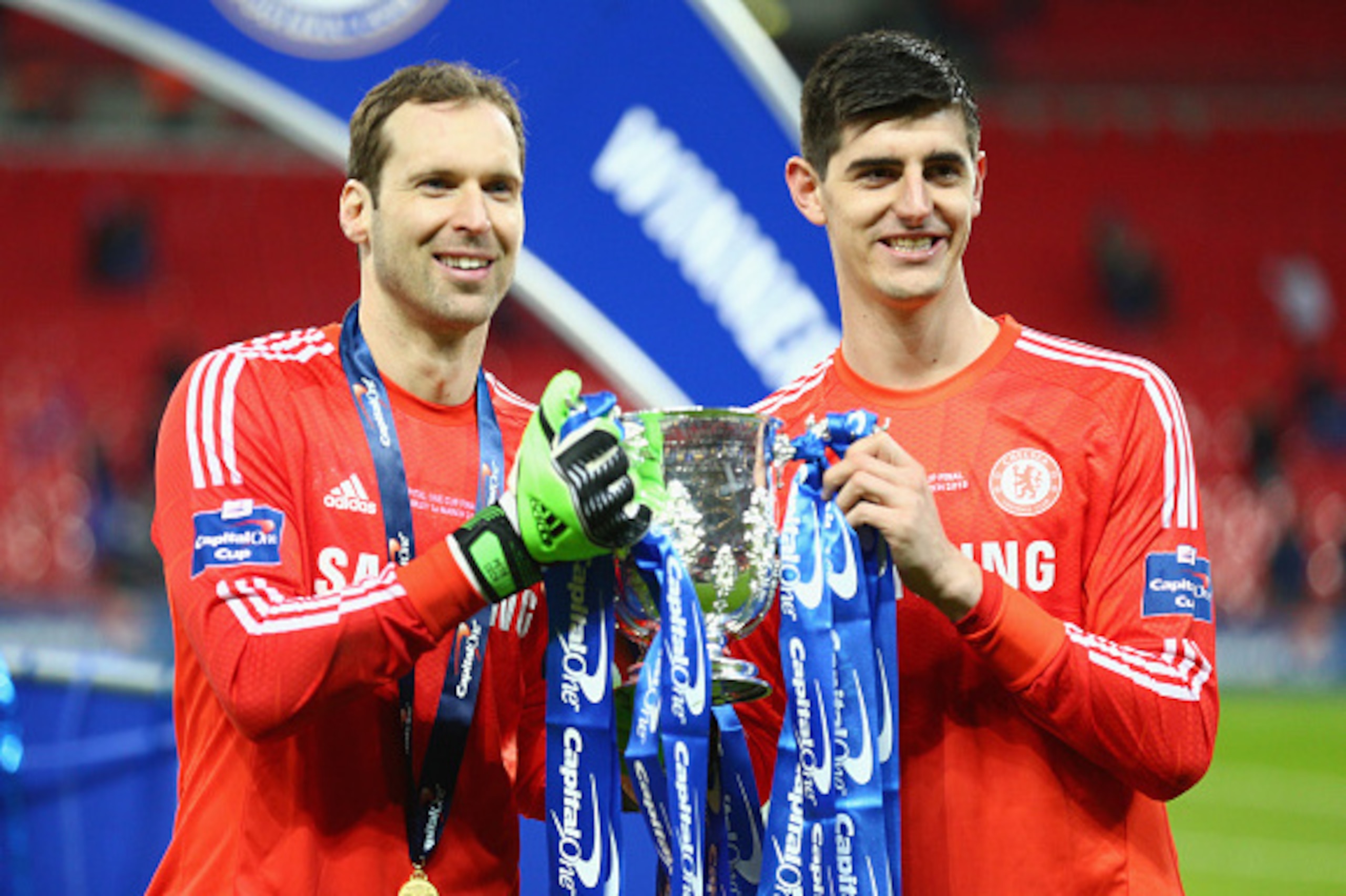
This is a side of transfers that we rarely consider. There are other lives involved in the decision, lives that can be changed irrevocably by the decision that is eventually made.
“I will decide based on that for me and my family was the best. And it does not matter whether it is England, Germany, France and Spain,” Cech said (per the Telegraph) in his last public comments on the issue. “...If I move, it brings difficulties. I must change everything, looking for housing, a school for children and so on.”
Staying in London avoids those potential issues. Cech could conceivably commute from the British capital to another (semi-local) European side (Paris Saint-Germain, for example, could work), but the Premier League is also a big draw.
"The problem is that when you have played in England, Ligue 1 seems light,” Lollichon noted. “He wants to stay in England…the advantage is that Arsenal is a top club, with a philosophy that pleases him and is based in London."
When Cech’s agent, Viktor Kolar, revealed in May that Chelsea had allowed his client to speak to other clubs, Wenger was initially cautious about the development, insisting (somewhat laughably) that he already had “three world-class goalkeepers.” After winning the FA Cup final to conclude the season, he was only marginally more open about his interest.
“If you look at the stats, [David] Ospina is the best goalkeeper in the league,” Wenger stated (per London24), before acknowledging: “I don’t know what is happening [with Cech], we have just won the cup and so I can’t come out and say anything straight after. You will see what we will do by the end of the transfer window.”
With the ensuing month seemingly revealing no more compelling bid for Cech’s services, Arsenal have now completed a transfer for a undisclosed fee reported to be around £11 million, according to the Telegraph. It's simultaneously a good deal for the selling club (who will make a profit on a player with only a year left on his contract) and the buying one (who markedly upgrade a key position for a fee that will feel like nothing if he even contributes three good seasons).
In announcing it, Wenger finally revealed his true feelings: "He [Cech] has proven over many seasons that he is one of the outstanding keepers in the world and he will add great strength to our squad.”
Chelsea may have chosen Courtois for the long term—implying that, in that one position, they will ultimately still remain better than their rivals—but Cech, even now, is better than Jens Lehmann was at his peak, and Arsenal were able to win the Premier League title (and reach the Champions League final) with the volatile German between the sticks.
They have never really replaced Lehmann, however, instead moving through a handful of temporary No. 1s who all seemed to be encumbered by at least one undermining inadequacy (Ospina, the latest in that line, has looked promising at times but is still to fully convince).
Signing Cech removes one of Arsenal’s longest-standing weaknesses, and leaves Wenger to focus on the few remaining areas where the Gunners could really be strengthened. It moves them a step closer to being a team capable of competing for the title, even if Chelsea lose nothing themselves in the transaction and will doubtless enhance their squad elsewhere before the transfer window is out.

The deal is marked by the logical nature of everyone's stance—except that of Abramovich. Cech is understandably eager to stay where his family is settled, while Mourinho is mainly worried about handing a rival a significant upgrade.
Wenger, in pursuing Cech, may be acting against type—having until recently eschewed “obvious” deals for big names in favour of more cost-efficient purchases—but he is certainly not acting against logic, as this is a deal that makes financial and sporting sense (as long as he can offload at least one of his other goalkeepers).
Only Abramovich is perhaps acting against his own self-interest, resisting what might be best for the team he owns by ensuring a valued and loyal servant departs with a suitable demonstration of respect and gratitude.
If Arsenal do go on to win the Premier League over the next few seasons, with Cech a visible part of the success, then perhaps Abramovich’s own attitude will change. Perhaps he will become less charitable and align himself more with Mourinho's unrelentingly pragmatic approach.
With the future still unwritten, however, his altruism can still be savoured by all parties. When Cech runs out onto a pitch in an Arsenal shirt next season, it will be the culmination of a rare, unexpected and commendable moment of class at the top table of modern football.

.jpg?w=2560 "Seahawks Chiefs Football")



.jpg?w=2560 "Latest Peyton-Colts Rumors")