

Sweden vs. Portugal: Where the 2015 European U21 Final Will Be Won and Lost
An enticing match awaits in the final of the 2015 UEFA European Under-21 Championship on Tuesday when Sweden and Portugal lock horns for the honour of calling themselves the very best in Europe for the next four years.
While Portugal go into the game as comfortable favourites, having beaten Germany and England on the way to the final and being touted as one of the best sides prior to the tournament, they know they will have to be at their very best to break down this stubborn Swedish side.
Hakan Ericson's side have won over a vast majority of the neutral fans at this tournament in the Czech Republic not through fancy, attacking football but rather the manner in which they have overcome each obstacle before them from one game to the next.


Nobody really gave this Swedish side a chance of making it out of their group, let alone reaching the final, and so their habit of consistently causing upsets has won over a number of fleeting football hearts.
But what about the game itself? How will both of these teams line up, and just how will either Portugal or Sweden hope to turn the tide in their favour?
Beginning with the Scandinavian nation, we can assume that Ericson will stick with the trusted 4-4-2 that has worked wonders for his side so far in the competition.
What we tend to see from Sweden in such matches is a very tight opening 20 minutes in which their side play with a solid back four and a midfield unit in front acting as a second defensive layer. The wingers double up with their respective full-backs, while Oscar Hiljemark and Oscar Lewicki battle it out in the middle of the pitch.
Another important factor in this system is the manner in which Ericson has both forwards—John Guidetti and Isaac Thelin—sitting on both opposing full-backs while also terrorising the central defenders. Sweden may be sitting deep, but they're also closing down their opponents as a unit.

When we take a look at WhoScored.com's heat map against Portugal in the group stages, we can see that Sweden earned themselves a 1-1 draw against the favourites by sitting very deep in their own half and focusing their attacks and positioning down each wing.
The focal point of attention in the Swedish side that day was their goalkeeper and the two central defenders, as we can see from the red marks on the heat map. Ericson's side are comfortable in their own skin and won't think twice about sitting on their own 6-yard line and playing the waiting game.
Up the other end of the park will be the two aforementioned strikers, who will play such an important role aside from their defensive work for the team.
Both forwards simply run their socks off in each and every game, and while Guidetti tends to play as the focal point of the attack, with his back to goal and hold-up play proving vital this summer, Thelin has made plenty of use running in both channels.
If we take a look at the WhoScored graphic below, which depicts the 50 passes both players made in Sweden's 4-1 win over Denmark on Saturday evening, we can see how both find themselves on each flank closing down full-backs but also in position to hold up the ball and start a play.
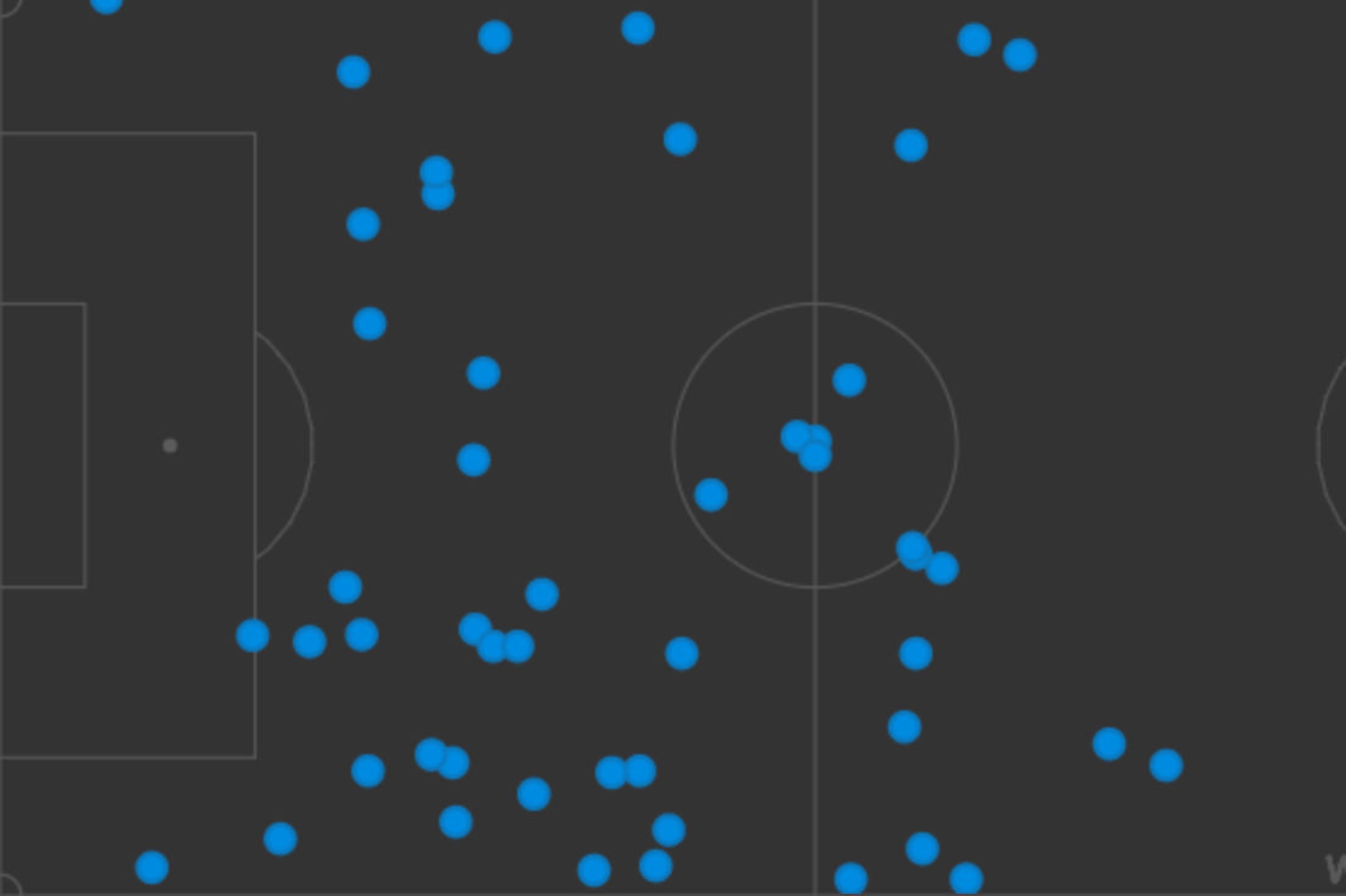
It's this double act which works almost like an attacking springboard which then allows Sweden to counter with such ferocity and tenacity. From these two forwards we will undoubtedly see wingers Simon Tibbling, Abdul Khalil and Robin Quaison (if/when he comes on) continuously surge forward and make runs in to the box.
This may all sound like speculation and wishful thinking, but it's a ploy that Sweden have crafted to perfection that could really get to Portugal's rather lightweight back line if done correctly. Sweden's opponents on Tuesday have a truly formidable attack but do have a back line that can buckle if countered properly.
When it comes to Portugal, we should see a style of play that will certainly look to make the most of the talent in their attacking line. Rui Jorge's side have made a name for themselves through playing attacking football with lightning pace and exceptional chemistry, which is exactly how they'll hope to get through Sweden.
The focal point of this entire team is undoubtedly the talented No. 10 Bernardo Silva, who despite only having one assist to his name in the competition really pulls the string for this side. Yet what really baffles most defences is the way he tends to float across the pitch from one flank to the other, rather than actually play through the middle like a normal No. 10.
Germany tried to contain the playmaker and failed spectacularly when they opted to bring in Johannes Geis to play alongside Emre Can in the middle of the pitch and simply shoulder and tackle their way through the midfield. Little did they know that Silva simply wandered off in search of space on the wings, and in turn Portugal overran Germany's wings and made short work of what was supposed to be one of the strongest sides in the competition.
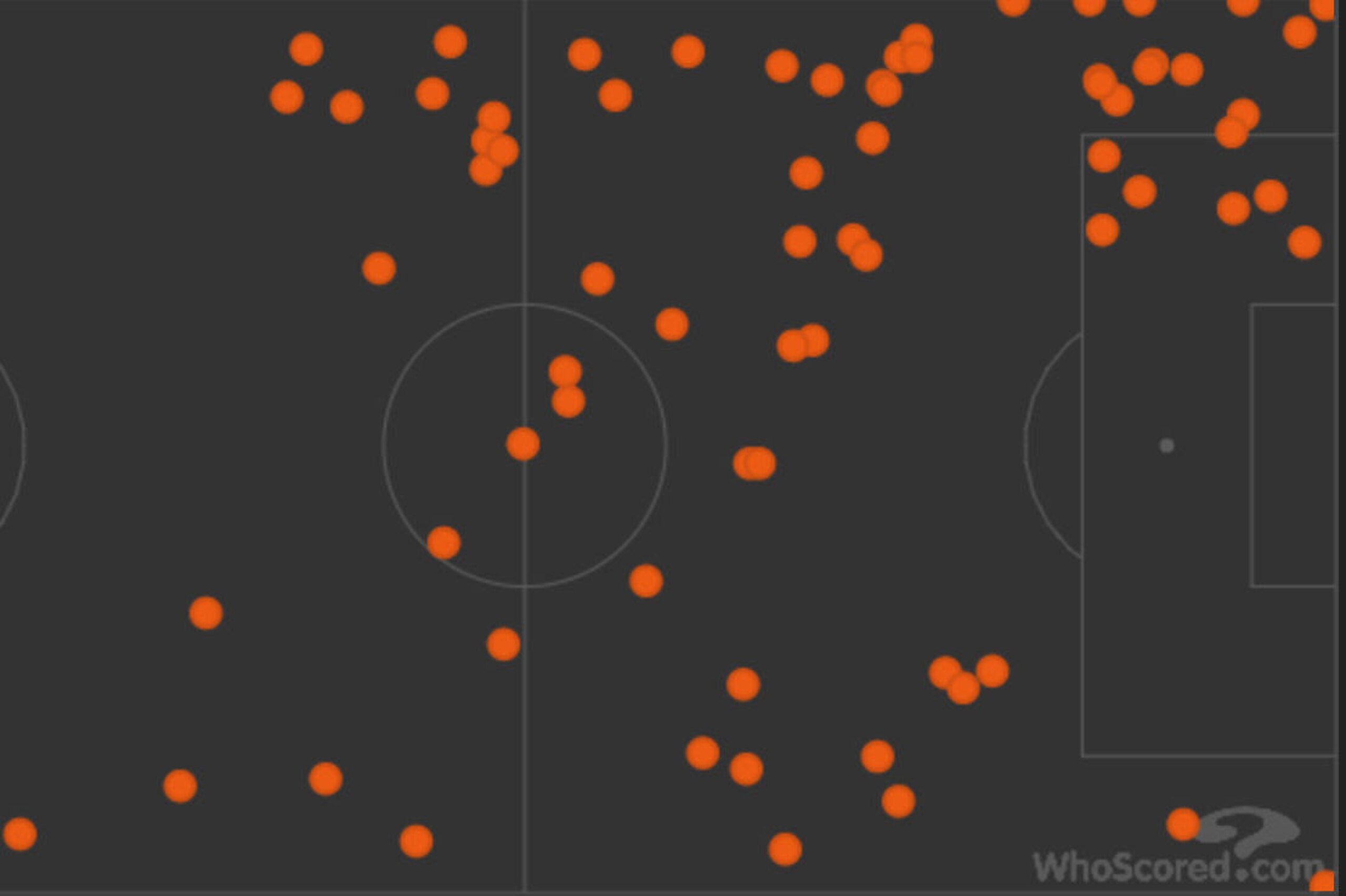
A perfect example of this was, in fact, against Sweden in the group stages. As we can see from the WhoScored graphic above, Silva's passing was primarily focused on both wings, rather than through the middle of the park. He's a magician on the ball with the deadliest of passes who can really show up anywhere on the pitch and cause bother.
The reason Silva can be awarded so much space and freedom in Jorge's side is because he has a truly remarkable central-midfield trio of William Carvalho, Sergio Oliveira and Joao Mario sweeping up counter-attacks and dominating play behind him.
All three players are exceptionally gifted in breaking down plays by closing down opposing midfielders, tackling and positioning themselves efficiently, yet each can also attack with pace and power when needed. The three work as a unit, defending as one and attacking as one, and so can protect their back line when they don't have the ball but play off Silva when they do.
What will perhaps be most interesting throughout the 90 minutes is how all these little factors across the pitch will come together to form a game of football. Sweden and Portugal simply couldn't have more contrasting styles.
We have the cold, measured, Scandinavian style of defensive, counter-attacking football against the free-flowing, gung-ho football of Portugal. Both teams have their own set ways of winning games, yet only one can be crowned champion.

.jpg?w=2560 "Chiefs, Steelers Eye WR Trades")






.jpg?w=2560 "WWE Raw Live Grades 🔠")