If you like talented rookies with your Major League Baseball, the 2015 season is the treat you've been waiting for.
As we noted recently, an invasion of young players that began a couple of years ago has hit its zenith in 2015. Many of baseball's best prospects have arrived, and as a bonus, some unheralded youngsters have also broken through and shown star potential.
But this is all happening right now. What we're going to do is gaze forward and determine which of 2015's most promising young players have the brightest futures.
To do this, we'll consider what players have shown they can do in the majors and what they project to do going forward. Since not all players have gotten the same amount of playing time, this means we'll have to lean on scouting reports for some players more than we will with others.
Another thing: We're not counting Yasmany Tomas, Jung Ho Kang or Alex Guerrero. While they may technically be "rookies," all three came to MLB with years of experience in foreign professional leagues.
Our countdown will begin with a list of honorable mentions, and then it's on to the 15 players with the brightest futures, ranked from least bright to most bright.
Honorable Mentions
1 of 16
Before we get going with the top 15, let's give props to some guys who were considered before falling to the cutting-room floor.
Billy Burns, CF, Oakland Athletics: Burns' elite speed makes him an asset on the bases and in the field, but he can only be so good of a hitter with a slap-hitting approach with little discipline.
Anthony DeSclafani, RHP, Cincinnati Reds: DeSclafani has shown that he can get by with sequencing and location, but his lack of overpowering stuff limits his ceiling.
Matt Duffy, INF, San Francisco Giants: Duffy has overachieved offensively, but he has made enough good contact to portray himself as a decent hitter who can also play anywhere.
Chi Chi Gonzalez, RHP, Texas Rangers: Gonzalez has a good collection of stuff, but he looks more like a quality contact manager than an overpowering starter.
Nate Karns, RHP, Tampa Bay Rays: Karns has a pretty good fastball/curveball combination, but he's not quite as hard to hit as his 21.6 strikeout percentage makes him look.
Trevor May, RHP, Minnesota Twins: The Twins have turned May into a strike-thrower who has just a 4.8 walk percentage, but he's basically a Phil Hughes clone in that he's not a great contact manager and isn't that overpowering.
Aaron Sanchez, RHP, Toronto Blue Jays: Sanchez's electric fastball/curveball combination creates plenty of uncomfortable at-bats, but who knows if he'll ever develop any command?
Jorge Soler, RF, Chicago Cubs: Soler has hit the ball better than his .724 OPS indicates, but it's hard not to worry about his wild approach and lack of a consistent fly-ball habit.
Steven Souza Jr., RF, Tampa Bay Rays: Souza hasn't had trouble mixing power and speed while drawing walks, but he strikes out too much and seems to be just OK on defense.
Devon Travis, 2B, Toronto Blue Jays: Travis was amazing earlier in the season, but he overachieved with his power and likely only projects as a solid two-way second baseman.
15. Chris Heston, RHP, San Francisco Giants
2 of 16
Before 2015, few fans had a clue who Chris Heston was. Now many know him as the guy who just threw a no-hitter and has also been a rock in the San Francisco Giants rotation.
To be sure, this doesn't mean Heston has been a star. He only has a modest 3.83 ERA in 14 starts, and that's pretty much in line with his peripherals. Rather than an ace, he looks like an innings-eater.
That's not a bad distinction, mind you. And in Heston's case, he should be the good kind of innings-eater.
He is a sturdy 6'3", and as Eno Sarris of FanGraphs noted, he has much livelier stuff after gaining 15 pounds over the offseason. His sinker has gone from the mid-to-high 80s to sitting right around 90 mph. Heston also has a curveball, slider and changeup, and Brooks Baseball says all three have whiff rates over 10 percent.
And regardless what Heston is throwing, he keeps everything low. All told, you can see why he has a 54.5 ground-ball percentage and solid, if not great, 20.4 strikeout percentage.
The catch is that Heston is 27 years old and thus likely finished developing. Be that as it may, a guy with a sturdy build, four solid pitches and the ability to command them is a guy who can be a good No. 3.
14. Kyle Schwarber, C, Chicago Cubs
3 of 16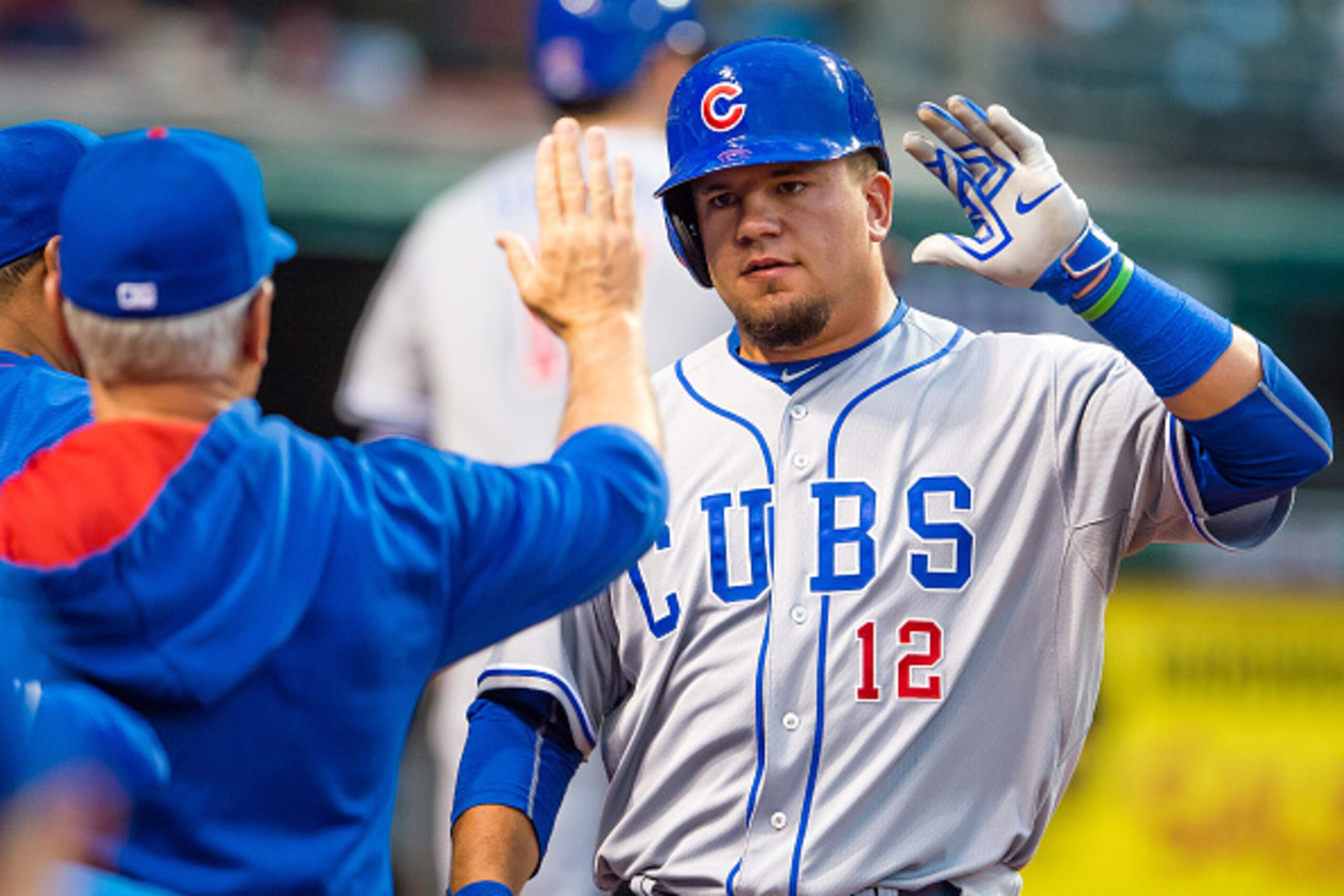
The Cubs recently provided an all-too-brief glance at Kyle Schwarber, but what he showed was definitely encouraging.
After destroying Double-A pitching with a .320/.438/.579 batting line in 58 games, Schwarber collected eight hits in 22 at-bats in six major league games, including a triple and a homer. Chicago promptly sent him back down to continue his development as a catcher, but what we saw was a real tease of his hitting potential.
As highlighted recently, this stems from a sturdy hitting base and loads of bat speed from the left side of the plate. These things allow him to drive the ball with ease, and the 17.3 walk percentage he has at Double-A this year is a fine testament to his pitch recognition and improving discipline.
However, Schwarber is not without limitations. He's going to swing and miss, and his spray chart at MLB Farm shows that he's likely too pull-happy. These two habits will make it difficult to hit for high averages. And as MLB.com noted, "most scouts outside the [Cubs] organization don't think he can make it as a backstop." It's more likely Schwarber will be a left fielder in the long run.
But though an elite-hitting left fielder isn't nearly as valuable as an elite-hitting catcher, any kind of elite hitter is still valuable. And with the pop and the patience he packs, Schwarber looks like he can be just that.



13. Maikel Franco, 3B, Philadelphia Phillies
4 of 16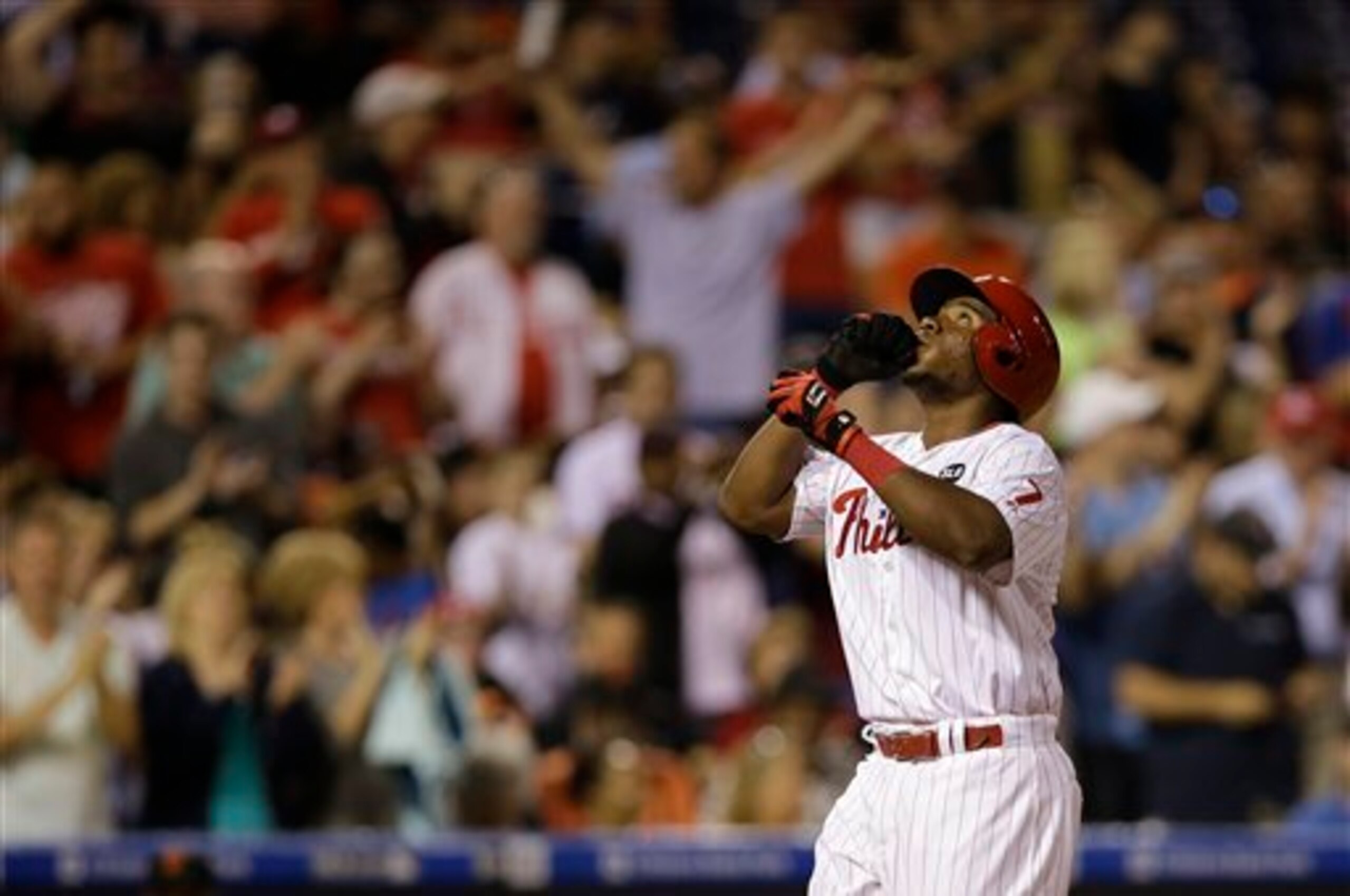
In a 2015 Philadelphia Phillies offense that's weighed down by aging, past-their-prime stars, Maikel Franco is a delightful exception. The 22-year-old third baseman is hitting .312/.353/.574 with nine home runs in 36 games—numbers that paint him as an ideal offensive threat for the hot corner.
At the least, the power is easy to believe. Power was Franco's main calling card in the minors, and the righty swinger has shown he can make it work at the major league level with, as MLB Farm can show, a steady diet of deep drives to his pull side. At Citizens Bank Park, that habit will play well.
That Franco is hitting for average, however, is unexpected. The books on him painted him as a hitter who would be too aggressive and too intent on hitting for power to make that happen.
But Franco looks poised to surprise everyone. His 15.6 strikeout percentage between the minors and majors this year shows he's a rare power hitter with a strong contact habit. And with a 48.7 swing rate and a 33.7 chase rate heading into Monday's action, his approach hasn't been as wild as his 5.3 walk percentage makes it look. And if this is how he's starting, it's not hard to imagine him improving.
On the other side of the ball, Franco isn't rating so well as a defender. But patience is advised there, as scouting reports offered by Baseball Prospectus and Baseball America insist he has a good feel and arm for the position. And as we've seen, he can put on a show.
So going forward, Franco could well be more than just a power threat. The goods are there for a power-hitting third baseman who can also hit for a decent average and field his position. That's a really good player.
12. Blake Swihart, C, Boston Red Sox
5 of 16
After entering 2015 as a top-20 prospect, Blake Swihart has gotten a rude introduction to the majors.
Through 36 games, the 23-year-old switch-hitting catcher is batting just .239/.282/.325 with one home run. He's also thrown out just 24 percent of runners, and Baseball Prospectus rates him as a below-average strike-framer.
In the process, Swihart has lived up to some of the more concerning aspects of his scouting reports.
Baseball Prospectus and Baseball America agreed Swihart's swing was better from the right side than the left side, and his 30.6 strikeout percentage and 4.7 walk percentage from the left side lend truth to that. Given that that's the side where he'll be batting most often, that's not good. And though he gets top marks for his throwing, it's apparent Baseball Prospectus wasn't wrong in saying Swihart "can be slow with release at times."
And yet, it's not all bad. Swihart's 24.7 line-drive rate is him living up to his reputation as a good line-drive hitter. And though it hasn't translated into results, Brian MacPherson of the Providence Journal can vouch that it's been apparent from the start Swihart boasts rare athleticism for a catcher. The goods are there for a good hitting, throwing and even running catcher, which is a rare breed.
It's fair to say Swihart is still more about potential than reality. But as mediocre as they've been, the 36 games he's played so far are too few to disregard his potential as a two-way threat at catcher.
11. Carlos Rodon, LHP, Chicago White Sox
6 of 16
Carlos Rodon made it to the big leagues in no time at all after being drafted third overall last year, so we shouldn't be surprised that he's shown some good and some bad.
Overall, he has been solid with a 3.75 ERA in 50.1 innings pitched. He's struck out 48 batters, but he's also walked 28 batters, which is not a strong rate.
Brooks Baseball can show that this is mainly a result of Rodon's fastball command being all over the place. And as Craig Edwards of FanGraphs noted, that gives batters less incentive to expand the strike zone while chasing after his slider.
But while this is a problem now, it should be fixable. The 6'3", 235-pound Rodon has a relatively low-effort delivery with good balance. He just needs to get better at repeating it, which should happen as the 22-year-old lefty gets more reps.
Assuming Rodon does develop better fastball command, he's going to be dangerous. After all, his fastball averages in the mid-90s. And with command, it'll set up a truly outstanding slider that, as Michael Baumann of Grantland put it, is like "a hurricane viewed from space."
What could keep Rodon from becoming a true ace is a lack of a projectable third pitch. But even if he remains a fastball/slider guy, he at least has the potential to be a No. 2 starter behind Chris Sale.
10. Eduardo Rodriguez, LHP, Boston Red Sox
7 of 16
Eduardo Rodriguez hit the ground running upon joining the Red Sox organization last summer, and he hasn't stopped this year.
A dominant run in Triple-A has given way to a successful early stint in the majors, as the 22-year-old southpaw owns a 3.13 ERA in 31.2 innings over five starts. Rodriguez has been overpowering in four of the five, allowing no more than one earned run in no fewer than six innings.
It's easy to see where Rodriguez's dominance comes from. He has an easy delivery that allows him to throw strikes, and he works off a fastball that averages in the mid-90s with late life. And though he's featured his heater the most, his secondaries are not to be overlooked.
Rodriguez throws both a changeup and a slider, and Brooks Baseball has the whiff rates on both pitches at over 13 percent. That his slider has the higher whiff rate at 15.8 percent is especially welcome news, as it had generally been rated as the inferior pitch of the two.
Thus, we bring up what one evaluator told Baseball America: "That kid can be Johan Santana Part 2. If his breaking ball improves one tick, he's going to be outstanding."
Well, Rodriguez's breaking ball has improved, and he has been outstanding. With good command and three plus pitches, he has the goods to be at least a No. 2 and perhaps a No. 1.
9. Lance McCullers Jr., RHP, Houston Astros
8 of 16
Entering the season, the top pitching prospect in Houston's system appeared to be former No. 1 pick Mark Appel. But in the days since then, Lance McCullers Jr. has happened.
He began his year by posting a 0.62 ERA in six appearances at Double-A and has continued it with a 2.45 ERA in seven starts in the majors. He's struck out 46 and walked only 13 in 40.1 innings.
McCullers' success stems from a nasty three-pitch mix. His mid-90s heater and sharp curveball have lived up to the reputations they already had, and Jonah Keri of Grantland highlighted how McCullers' changeup is now forging a reputation as the stuff of legend. It comes in around (and upwards!) of 90 mph with devastating movement.
"It's propelled me into a category where I have a chance to become a great starter," McCullers said of his changeup, per Keri, "because of three great pitches."
Though McCullers has outstanding stuff, he may never have complete command of it. The sheer movement of his pitches won't help him hit spots, and he also has a delivery with more than a few moving parts.
Even still, McCullers is more in control of his pitches than you'd expect a mere 21-year-old to be, so you can count on it getting better with experience. And with a combination of enough command and a lot of stuff, he has the goods to be at least a No. 2 and maybe even a No. 1.
8. Joey Gallo, 3B, Texas Rangers
9 of 16
Joey Gallo hasn't been in the majors that long, but it hasn't taken long for him to show that everything they said about his power was no joke.
In 18 games, Gallo has clobbered five home runs and slugged .476. And if anything, these numbers undersell how hard he's hit the ball. His hard percentage is a whopping 52.9, and per Baseball Savant, balls have left the 21-year-old lefty swinger's bat at an average of 92.4 mph.
That would be Gallo living up to his track record, which includes 113 home runs and a .628 slugging percentage in the minor leagues. It would also be him living up to his billing as a guy with real 80-grade power. Looking forward, it's easy to imagine him winning several home run titles.
However, chances are Gallo will never hit for average. Strikeouts were his Kryptonite in the minors, and his 40.3 strikeout percentage in the majors doesn't offer much hope that he'll ever cut down on his whiffs. Beyond that, that he's pulled 67.6 percent of his balls in play suggests he'll be easily shiftable.
But this doesn't mean Gallo will have only power to offer. His 12.5 walk percentage in the majors shows the strong eye he developed in the minors, and he should be a good defensive third baseman thanks to his plus-plus arm and, according to Baseball Prospectus, improving footwork and general skills.
So, here's what Gallo's future consists of: solid OBP, solid defense and lots of home runs.
7. Francisco Lindor, SS, Cleveland Indians
10 of 16
Francisco Lindor has only played eight games in the majors since his call-up and has failed to make an impression at the plate with just a .233/.233/.233 batting line.
However, to go immediately to Lindor's bat is to ignore his primary talent: his defense.
On that note, we'll leave it to MLB.com: "Lindor is an elite defensive shortstop, considered by many scouts to be the best defender in the minor leagues. He makes difficult plays seem routine thanks to his strong arm, impressive range and flashy glove work."
Since shortstop is the most important position on the diamond outside of catcher, the 21-year-old living up to his defensive reputation would make him a valuable player even if he never develops into an offensive threat. For example, just look how valuable Andrelton Simmons has been despite a subpar bat.
Fortunately, Lindor does have some potential on offense. The switch-hitter's 9.6 walk percentage and 14.6 strikeout percentage at Triple-A this year are reflective of an improving approach, and Baseball America praises him for having a line-drive stroke to all fields. Add in plus speed, and he has another tool with which to get hits, not to mention terrorize the opposition on the basepaths.
The only thing Lindor will likely never have is power. But even if that's true, he still has the makings of an elite defensive shortstop who will hit for average and steal bases. That's a darn good player.
6. Addison Russell, 2B, Chicago Cubs
11 of 16
Addison Russell came into the season as a top-five prospect. And though his transition to MLB hasn't been a roaring success, the 21-year-old has done enough to show that such hype was warranted.
Through 53 games, he is hitting .255/.320/.410 with five home runs—figures that qualify him as a roughly average hitter. Add in what's been elite-level defense at second base—no surprise given that his defense at shortstop received good marks—and he's made a solid all-around impact.
As of now, Russell's biggest limitation is the 31.1 strikeout percentage that looks out of place next to the 17.5 percent rate he posted in the minors in 2014. But what's encouraging is that he's not punching out a lot because he's been too aggressive, as he entered Monday with a roughly league-average chase rate of 31.1 percent.
Meanwhile, Russell is doing just fine when he does make contact. Though he's not crushing the ball with regularity, MLB Farm can reveal an all-fields assault that's a case of reports of his having good bat control coming to fruition.
Between that and what should develop into a strong approach, Russell has the goods to hit for average. He also has good power and speed for a middle infielder, giving him the potential to have a complete offensive profile.
Add that to his excellent defense, and you're looking at a guy who has the potential to be one of baseball's best everyday second basemen.
5. Noah Syndergaard, RHP, New York Mets
12 of 16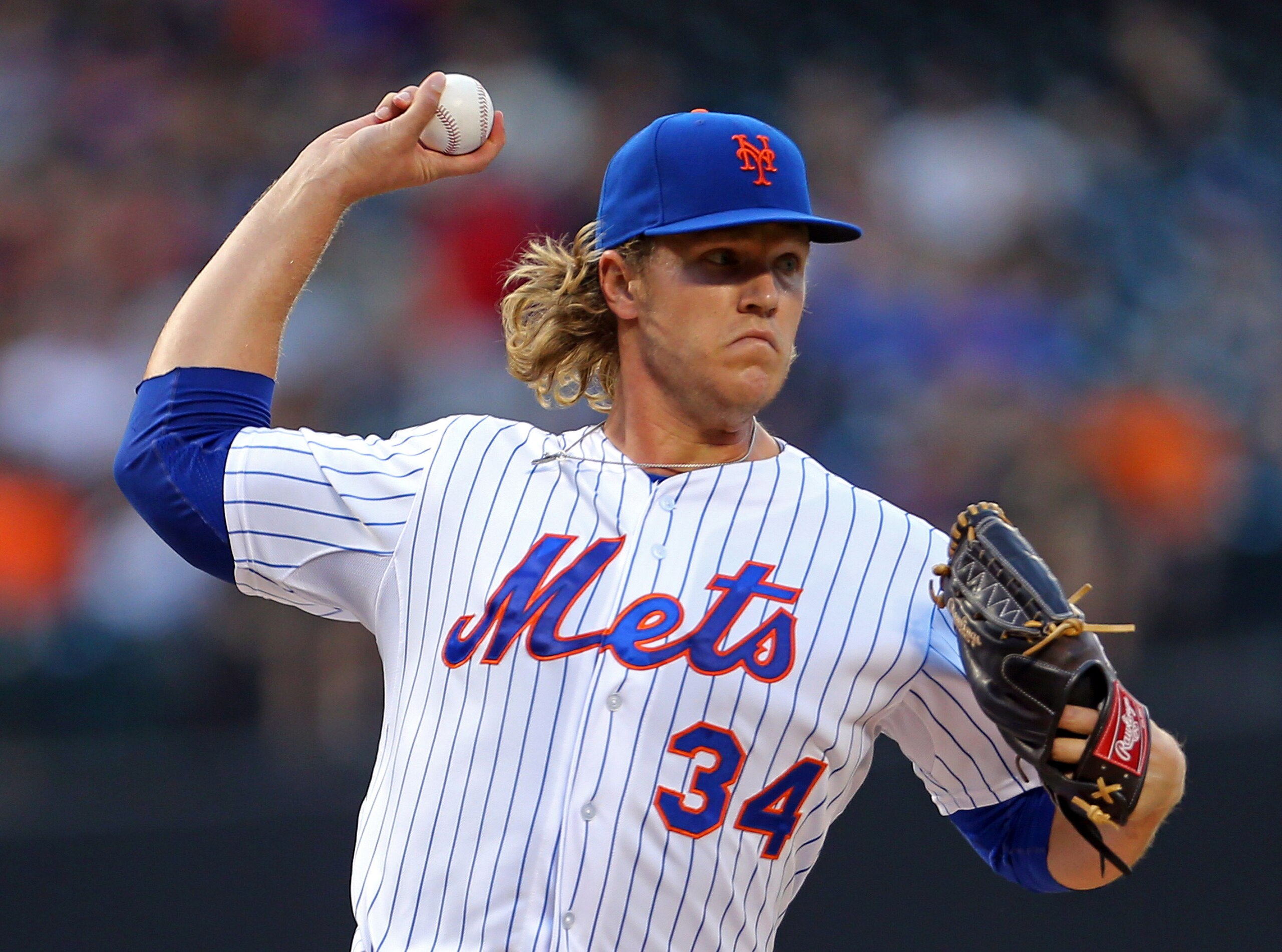
Not that the Mets needed another hard-throwing right-hander with lots of potential, but they recently welcomed one in Noah Syndergaard.
A top-10 prospect coming into the year, the 22-year-old has debuted to a modest 4.03 ERA in eight starts. That undersells how effective he's been, though, as he has a ratio of 48 strikeouts to 10 walks in 44.2 innings and has been victimized by a .349 average on balls in play.
Regardless of his results, it's easy to see why Syndergaard (aka "Thor") was so well thought of as a prospect. He's a hulking 6'6" and 240 pounds, and he already has a combination of stuff and command.
Syndergaard throws both a four-seamer and a two-seamer, and he averages 97 mph when he calls on the heat. He also has a changeup and a curveball that, per Brooks Baseball, have whiff rates over 15 percent.
That Syndergaard has just a 5.2 walk percentage fits with his track record, as he had just a 7.0 percent rate in the minors. The only gripe is that he's shown Baseball Prospectus was right in its assessment that his command was only of the "area variety." He can throw strikes, but he needs to work on hitting spots.
But given that Syndergaard already has better command than most 22-year-olds, that's not asking much. For the long run, he has the size, stuff and command to be a No. 1 starter.
4. Joc Pederson, CF, Los Angeles Dodgers
13 of 16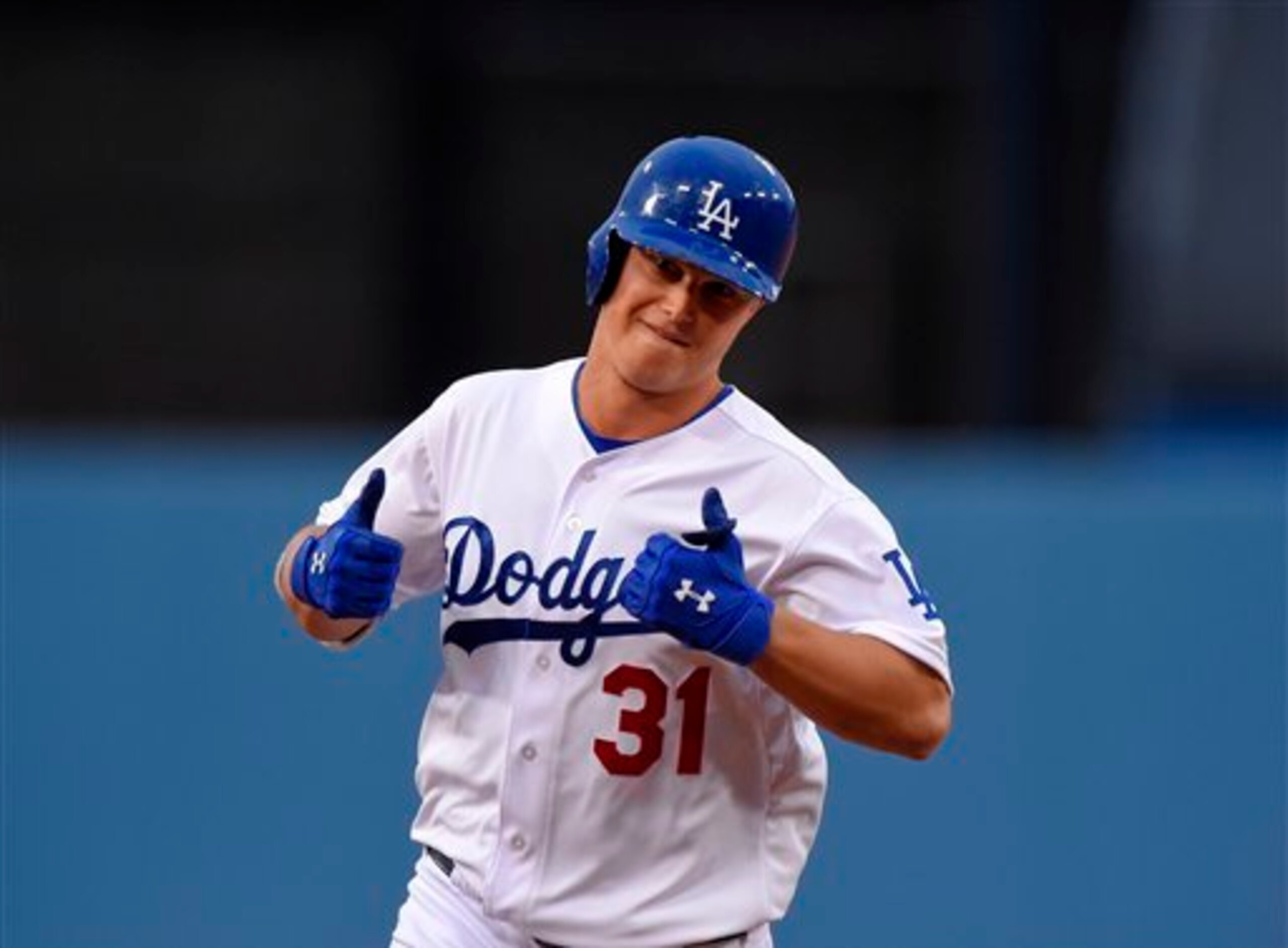
Remember when the Dodgers seemed to be rolling the dice in giving their starting center field job to Joc Pederson? Oh, if only we knew.
Through 70 games, he has been one of 2015's best players. He's batting .252/.393/.551 with 19 home runs, and he's also playing strong defense in center field. In the process, he's shown off some skills that have staying power.
The most notable is Pederson's power, which stems from an extreme fly-ball habit and plenty of hard contact. According to Baseball Savant, only Giancarlo Stanton has a higher average exit velocity than Pederson.
As his 17.2 walk percentage can attest, the 23-year-old lefty swinger also has an outstanding eye. As for his defense in center field, Dodgers announcer Vin Scully recently called Pederson the "the best fielding center fielder the Dodgers have ever had." And if anyone would know, it's him.
Mind you, Pederson isn't perfect. His 28.2 strikeout percentage is reflective of a swing-and-miss habit that will limit his ability to hit for average, and his struggles at stealing bases recall how Baseball America rated him as only a "slightly above-average runner."
Nonetheless, Pederson doesn't need these talents to be a great player. He's a center fielder who can hit for power, get on base and play excellent defense, and there aren't many of those out there.
3. Kris Bryant, 3B, Chicago Cubs
14 of 16
Given the amount of hype surrounding him when he came into the league, it would have been easy for Kris Bryant to disappoint in his rookie season. But if you've been watching, you'll know he hasn't.
He has had little trouble carrying his elite offense over from the minors to the majors, as he's batting .282/.384/.485 with 10 home runs and five stolen bases in 60 games. And knowing what he's shown, this is likely him just scratching the surface of his potential.
With a 29.5 strikeout percentage, Bryant does have a swing-and-miss habit. But his 13.1 walk percentage is a testament to his strong eye, and he doesn't waste the balls he does put in play. MLB Farm can show he's covered the whole field, and he doesn't make much weak contact. He entered Monday with just a 16.2 soft percentage.
And fear not—the best of Bryant's power is still to come. We've seen just how immense his raw power is, and he has the high fly-ball rate (46.6 percent at the start of Monday) to make the most of it. He's also been making louder contact as the season has moved along, setting himself up to start translating his raw power into game power in a big way.
As for the other side of the ball, Bryant will likely never be a Gold Glover. But one of the advanced metrics actually thinks he's been solid at third base, and that may not be a mirage. He may be big for a third baseman at 6'5" and 215 pounds, but he's a good athlete with a plus arm.
If Bryant can be average defensively at third base, that's good enough. Because the way he's headed with his ability to hit for average and power with some speed on the side, it won't be long before he's counted among the game's most dangerous offensive players.
2. Byron Buxton, CF, Minnesota Twins
15 of 16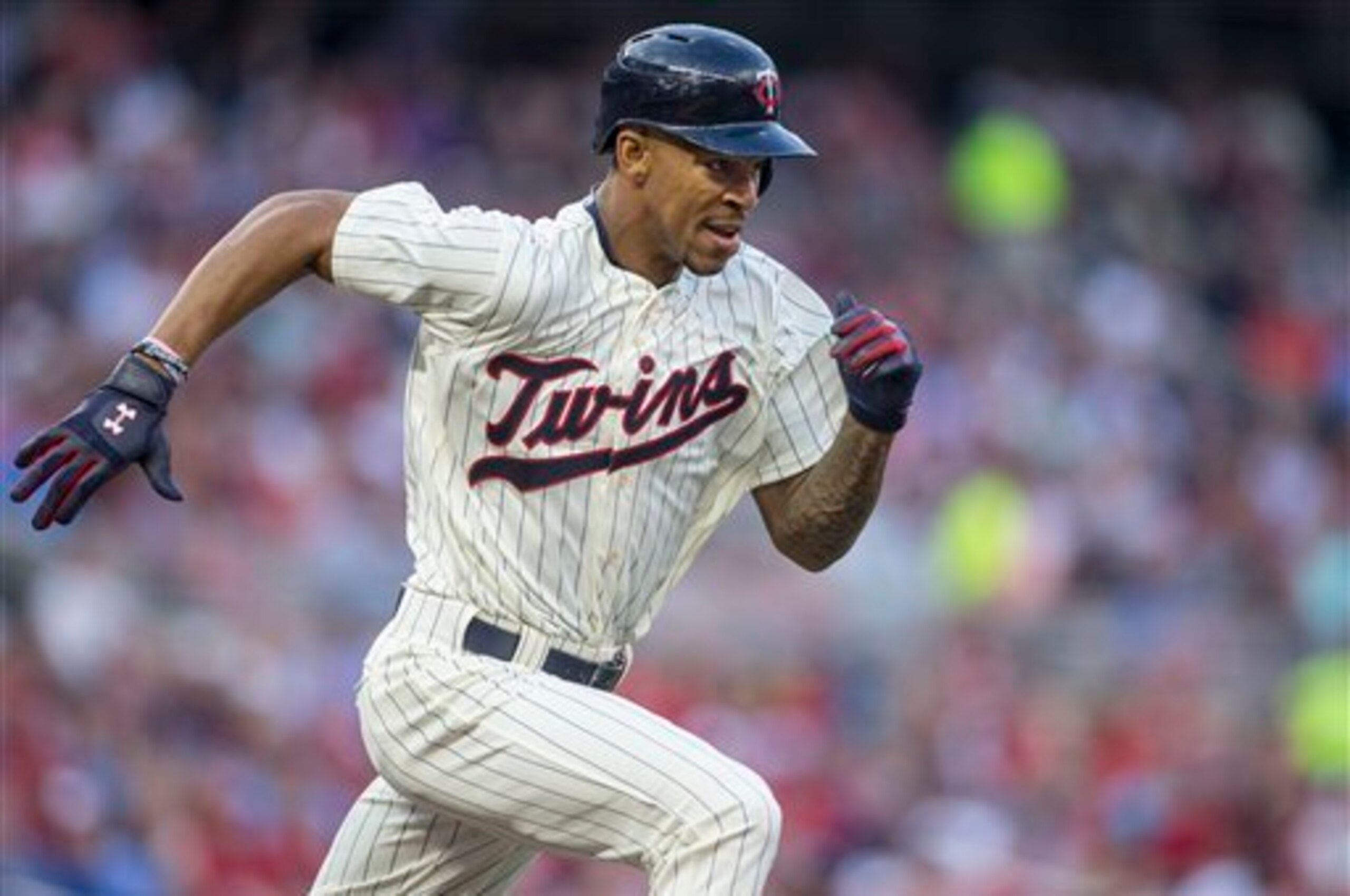
Like Francisco Lindor, Byron Buxton hasn't hit the ground running in the short amount of time he's been in the majors. In nine games, he has just six hits.
But also like Lindor, Buxton's bat isn't necessarily the first thing we should turn to. The 21-year-old's main calling cards are his speed and defense, as MLB.com can vouch for: "He has as much speed as anyone in the minors and he's a skilled baserunner to boot. He's a plus defender in center field, using his speed for outstanding range, while also possessing a cannon for an arm."
So just like Lindor, Buxton can be a productive player even if his bat never develops. Good center field defense is valuable, and Buxton's speed is the kind that could produce annual 50-steal seasons.
Where he differs from Lindor, however, is in how his bat has loads of potential.
Buxton is a career .296/.380/.486 hitter in the minors, and Baseball America praises him for excellent bat speed and an advanced approach. And though it's not quite there yet, his spray chart at MLB Farm can show that Buxton's power is developing.
All told, you can see why Buxton is generally considered baseball's very best prospect. We haven't seen it yet, but his future is that of a center fielder who will hit for average and some power while stealing a lot of bases and playing elite defense.
1. Carlos Correa, SS, Houston Astros
16 of 16
At the time the Astros called up Carlos Correa to the big leagues, ESPN.com's Keith Law had rated him as the best prospect in baseball. Watching him so far, it looks like Law may have been right.
In his first 14 games, Correa is hitting .288/.323/.508 with three home runs and four stolen bases. He's also already rating as an asset defensively at shortstop, which rings true when considering the highlight-reel plays he's added to his collection.
And really, none of this comes as a surprise.
The 20-year-old was a .313/.392/.491 hitter with 28 homers and 54 steals in the minors, where he showed off a strong eye (10.5 BB%) and contact habit (16.7 K%). And this year especially, he's been showing off his excellent hit tool and developing power. As MLB Farm can show, he's been walloping the ball all over the yard.
One concern is that Correa will lose speed and have to be moved off shortstop as he adds more weight to his 6'4" frame. But that's likely several years down the line, and until then he should entrench himself as a slick-fielding shortstop who can hit for average, hit for power and steal bases.
In other words, Correa should soon find himself in the running for the honor of being the game's best all-around player.
Note: Stats courtesy of Baseball-Reference.com and FanGraphs unless otherwise noted/linked.

.jpg?w=2560 "Chiefs, Steelers Eye WR Trades")