2015 UEFA European Under-21 Championship: Saturday's Day 4 Takeaways
The European Under-21 Championship entered its second round of group-stage games on Saturday, and Group A's final order is now clearer. Germany defeated Denmark 3-0 after the Czech Republic whipped Serbia 4-0, as the tournament delivered its first two convincing victories.
Here are our takeaways from yet another entertaining night's action.
1. Czech Republic start bright, then stay bright
When Pavel Kaderabek thumped home 35 minutes into the Czechs' opener against Denmark on Wednesday, it was a just reward for a bright, energetic start by the hosts. Despite the Danes boasting the clearly superior teamsheet, the hosts pressed, harassed and harried to level the playing field, then hammered home the advantage in style.
The problem was, they couldn't keep it up; the intensity lasted just one half. The second period was all Denmark, who scored the two goals required to turn the game on its head. The equation for Czech Republic manager Jakub Dovalil to solve ahead of Round 2, then, was a fairly simple one: How can he extract a 90-minute performance from his Lionets, rather than a 45-minute one?
Whatever he said or did, it worked: The Czechs flew out of the blocks on Saturday against Serbia, took the lead inside 10 minutes and then quickly doubled their advantage. Jan Kliment went on to score a hat-trick and Martin Frydek added a wonderful volley from a lifted Jiri Skalak cross.

"We played very well in the first half against Denmark, and we learned the lesson of that," Dovalil told UEFA's website after the game. "We played the way we wanted to today."
Despite losing Vaclav Kadlec after just half an hour with an ankle issue, the Czech spirits weren't dampened. The Czech Republic outplayed Serbia—who outplayed Germany in the opening round themselves—from the first whistle to the last. And the 4-0 scoreline could have been even more uneven. Kadlec smacked the bar at 1-0, and Kliment missed two further one-on-ones, squandering the chance to take his personal tally to five.
It was a stunning performance all told, and the ingredients were simple: The Czechs started bright and stayed bright—something they failed to do against the Danes.
2. This is the Germany we all fear
Credit where credit is due: Germany manager Horst Hrubesch may have screwed up his team selection for the opener against Serbia, but he fixed his errors and was rewarded with a brilliant performance against Denmark. While fans raised their eyebrows after Germany's tepid draw against the Eagles, they were suitably impressed, nodding along appreciatively as their team took apart the Danes.
Removing Philipp Hofmann from the XI, placing Kevin Volland up front, starting Leonardo Bittencourt and unleashing Emre Can as a more offensive-minded midfielder were all good moves. Enhanced movement, link-up play and speed were the results, allowing Germany to find their feet and take over after around 20 minutes.
In the midfield, Joshua Kimmich ran the show, as FCB Media's Cristian Nyari noted:
Die Mannschaft peppered the channels outside the centre-backs with runners and through-balls, slipping Volland, Bittencourt and Amin Younes into space frequently. Denmark had no answer and could only pack numbers in the box as a barricade against a siege of cut-backs from the byline.
Hrubesch's men entered the tournament as favourites due to their remarkable squad strength, and now, after a humbling opener, they've found their feet. Call them formidable once more.
3. Serbia and Denmark collapse
One of the great likability factors this tournament boasts is its unpredictability; the small sample size, intense pressure and young players combine to create a cocktail you simply cannot second guess.
A tight opening round of fixtures across both groups yielded three close, one-goal victories and one draw. But the second round started with two severe beatings, as Germany destroyed Denmark and the Czech Republic ran riot against Serbia. Who could have called that, based on each team's opening gambit?
Serbia were astonishingly poor; they looked like a group of 11 players who had never met before, failing to produce even a five-minute spell of good football or control. Against Germany, they killed the tempo by instigating periods of flat possession, passing across the back line, so it was a big surprise they didn't try that here to stem the Czech tide.
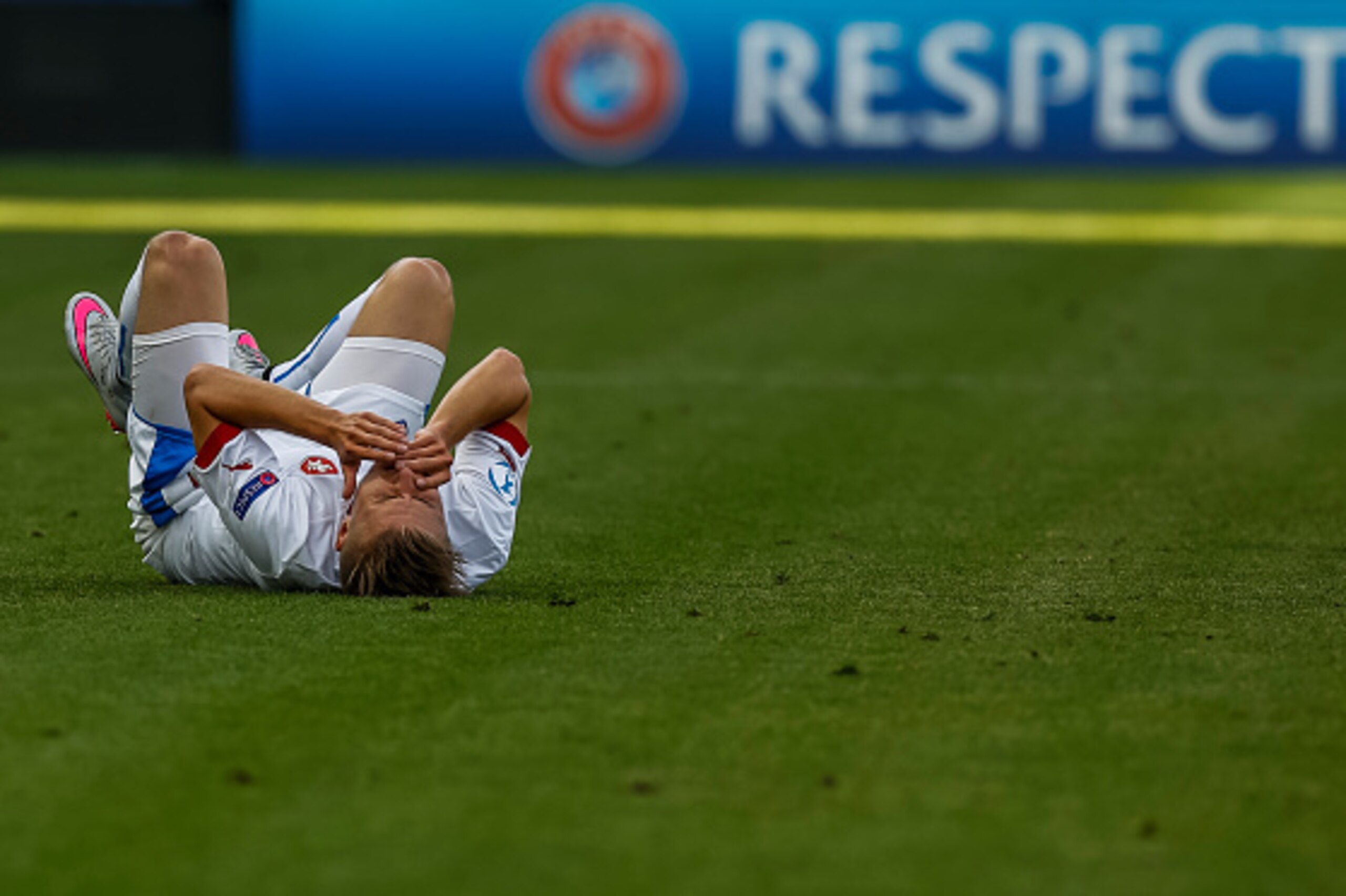
They went from containing Younes, Volland and Max Meyer to being torn apart by Skalak and Kliment. It was truly bizarre. The midfield pair of Darko Brasanac and Goran Causic looked a shadow of their usual selves, and striker Aleksandar Pesic did nothing. Again.
Denmark's collapse was more understandable, as Germany hit form. Die Mannschaft are an incredible outfit when placed in a position to win. They cut their opponents to pieces, threading balls into the channels and using byline cut-backs to engineer clear-cut chances. They took three of those opportunities on Saturday.
How will both Denmark and Serbia rebound from this in the final round of group play? All four sides are still in with a shout of qualifying for the semi-finals, with Denmark still one win away from securing one of the four berths. Can they recover from this?
4. Jannik Vestergaard impresses despite shellacking
There weren't many positives to take from this Danish performance, but despite the scoreline and the overwhelming display of superiority from the Germans, one man in red stood out for the right reasons.
Vestergaard was a colossus in central defence, and although he eventually relented in tune with his team, he made a number of vital tackles, interceptions and headed clearances, stepping in to cut out attacks in a proactive fashion.
Vestergaard is a Per Mertesacker-esque figure with added mobility, allowing him to play more effectively in a higher line and remain an unbeatable aerial presence in the penalty box. So many of Germany's cut-backs found his head or trailing leg rather than a German attacker's. He really was superb in spite of the circumstances.
He scored in the first game, giving Denmark a platform to go on and beat the Czech Republic, and he followed that up with a good individual showing in Round 2. Could Werder Bremen soon be fielding calls for the young defender?


.jpg?w=2560 "Terrell Owens Being Sued for Defamation")
.jpg?w=2560 "CJGJ Shares Cryptic Post 🤔")