It's been in the rearview mirror for a while now, but none of us are going to forget the most recent Major League Baseball offseason any time soon. It was big and loud, and it seemed to foretell great things for the biggest and loudest players and teams.
And yet, here we are several months later, and an alarming number of those players and teams have been collected into a pile of smoldering wreckage.
If we're going to pick away at it—and we're obviously going to—we have to start with where the big money went.



When Bleacher Report's Jason Catania looked in late January, he found that the 2014-2015 offseason had seen more money spent on free agents than all but two other winters in recorded history. By the end, the 2014-2015 offseason moved up to second with $1,732,025,000 spent on free agents.
That's the kind of number that'll make you involuntarily raise your eyebrows. But here's another one for you: Of that roughly $1.7 billion, about 70 percent of it went toward just 15 contracts.
Not surprisingly, that's where the lens of wins above replacement (the Baseball-Reference.com versions for hitters and pitchers) reveals a large amount of the aforementioned wreckage:
| Max Scherzer | SP | 30 | Nationals | 7 | $210,000,000 | 3.6 |
| Jon Lester | SP | 31 | Cubs | 6 | $155,000,000 | 0.4 |
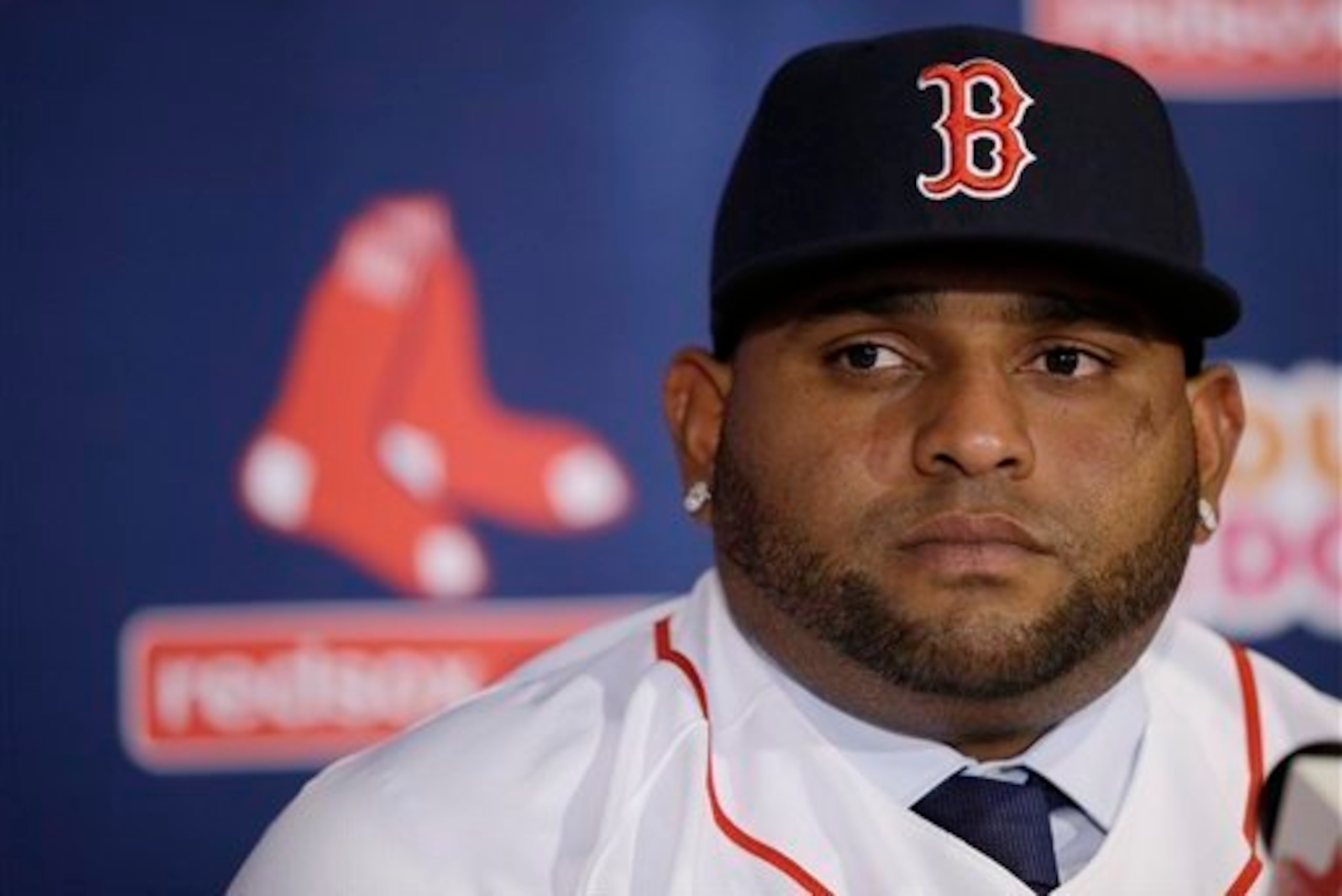
| Pablo Sandoval | 3B | 28 | Red Sox | 5 | $95,000,000 | 0.0 |
| Hanley Ramirez | LF | 31 | Red Sox | 4 | $88,000,000 | -0.7 |
| Russell Martin | C | 32 | Blue Jays | 5 | $82,000,000 | 2.5 |
| James Shields | SP | 33 | Padres | 4 | $75,000,000 | 1.2 |
| Yasmany Tomas | 3B | 24 | Diamondbacks | 6 | $68,500,000 | 0.2 |
| Victor Martinez | DH | 36 | Tigers | 4 | $68,000,000 | -1.0 |
| Nelson Cruz | RF | 34 | Mariners | 4 | $57,000,000 | 2.3 |
| Ervin Santana | SP | 32 | Twins | 4 | $55,000,000 | 0.0 |
| Chase Headley | 3B | 31 | Yankees | 4 | $52,000,000 | -0.4 |
| Brandon McCarthy | SP | 31 | Dodgers | 4 | $48,000,000 | -0.3 |
| David Robertson | RP | 30 | White Sox | 4 | $46,000,000 | 1.0 |
| Nick Markakis | RF | 31 | Braves | 4 | $44,000,000 | 1.2 |
| Melky Cabrera | LF | 30 | White Sox | 3 | $42,000,000 | -0.2 |
Note: These WAR totals are current through Wednesday, June 17.
I've highlighted the success stories, and there are few of those.

Max Scherzer and James Shields have been top-of-the-rotation starters for the Washington Nationals and San Diego Padres, respectively. Russell Martin has been an excellent two-way catcher for the Toronto Blue Jays. Nelson Cruz has been a big-time power supply for the Seattle Mariners. Nick Markakis has been a steady right fielder for the Atlanta Braves. David Robertson has been a shutdown closer for the Chicago White Sox.
However, you'll notice that these success stories account for just six of the 15 stories pictured above. For the most part, this past winter's richest contracts have been duds.
Here are the CliffsNotes versions of those stories:
- Jon Lester's ERA has gone from 2.46 in 2014 to 3.99 in 2015 with the Chicago Cubs.
- Pablo Sandoval has given the Boston Red Sox league-average offense and disastrous defense.
- Hanley Ramirez has given the Red Sox solid offense but impossibly bad defense.
- Yasmany Tomas is giving the Arizona Diamondbacks a .328 batting average, but with little power and cringe-worthy defense at third base.
- Victor Martinez's offseason knee surgery is a major reason why the Detroit Tigers are getting the worst year of his career.
- Ervin Santana has yet to make a start for the Minnesota Twins because of an 80-game suspension.
- Chase Headley is giving the New York Yankees below-average offense and defense.
- Brandon McCarthy gave the Los Angeles Dodgers a 5.87 ERA before going in for Tommy John surgery.
- Melky Cabrera has given the Chicago White Sox one of baseball's worst bats.
These nine contracts account for $671.5 million of the money spent on the winter's free agents. So, thus far nearly 40 percent of the offseason's free-agent spending has gone to waste.
Hard to look at? Undoubtedly.
But unpredictable? Not necessarily.
We know courtesy of J.C. Bradbury of Baseball Prospectus that baseball players tend to peak just before or at the age of 30. That's also right around when most free agents—including everyone but Tomas pictured above—hit free agency.
Ergo, spending big on free agents is always going to be a risky proposition. It means spending big bucks on players whose best days are likely behind them. As the Dothraki would say, it is known.
But spending big on free agents figured to be especially risky this past winter. The rise of extensions has been consistently robbing free-agent markets of top talent, and this past winter's market was particularly barren of top talent. When Grantland's Ben Lindbergh crunched the numbers, he found that this past winter boasted the "weakest free-agent class in recent memory."
So as exciting as it was to watch the money rain from the sky, what's happened with the bulk of the big-money contracts is a case of an inevitability coming to fruition.
And sadly, that's only half the story with this pile of wreckage. The other half concerns the big-spending teams that have gone "pluh" in 2015.
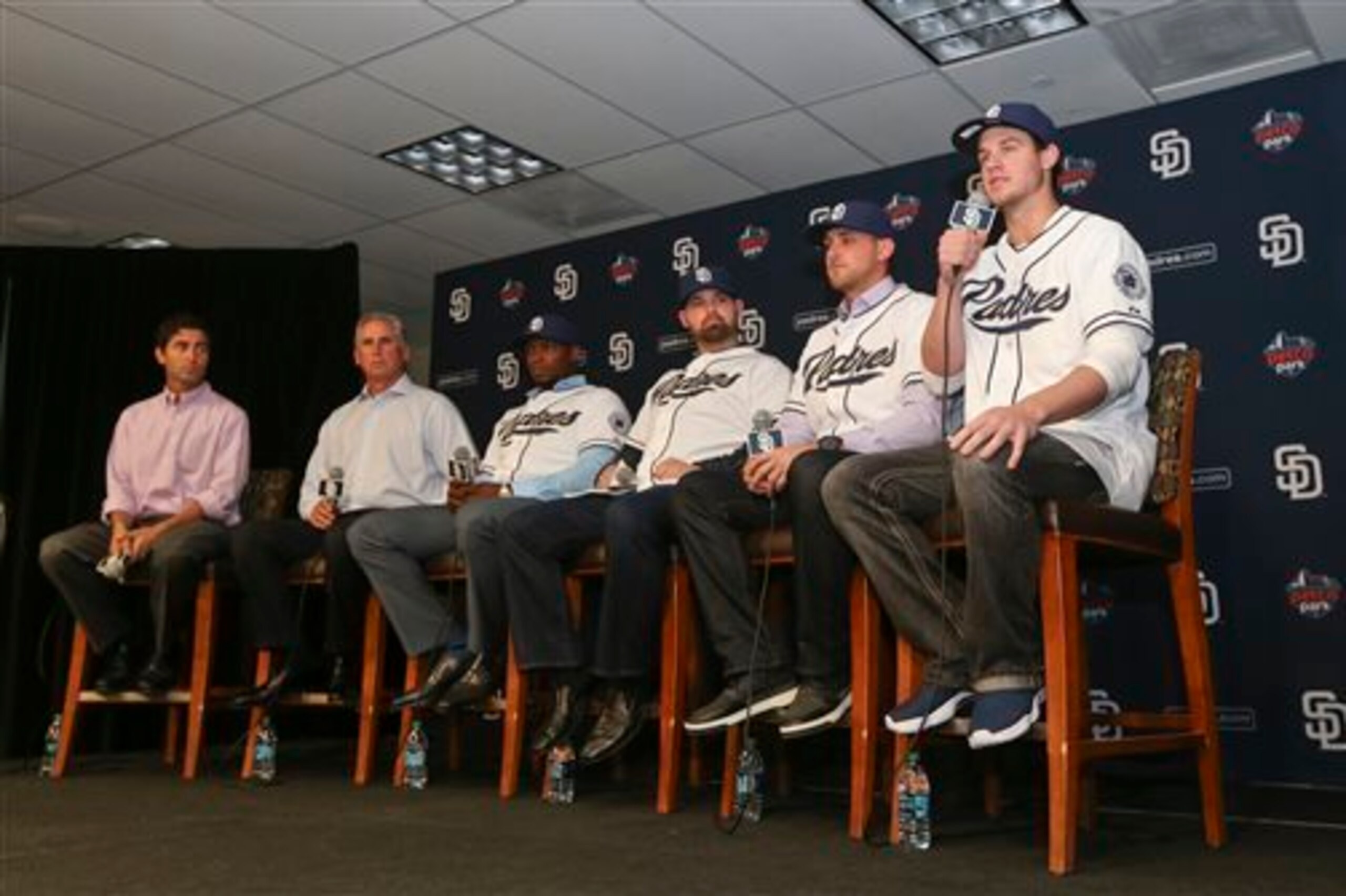
At the end of every offseason, there's always talk of the "winners" and "losers" of the winter. This year, four teams got the most mentions: the Red Sox and White Sox in the American League and the Padres and Marlins in the National League.
And rightfully so. All four teams responded to poor seasons in 2014 by acquiring star power and, as a result, escalating their payrolls. According to figures compiled by the Associated Press and organized by Deadspin, the Opening Day payrolls of the Red Sox, White Sox and Marlins were more than $20 million higher than they had been in 2014. The Padres didn't go that high, but they did increase their payroll by over $10 million.
Instead of success, what these four clubs have gotten for their dollars is nothing but misery.

All four clubs are under .500. The Marlins and Padres have already tried to spur improvement by firing their managers. Meanwhile in Boston and Chicago, Red Sox general manager Ben Cherington is self-flagellating, and White Sox general manager Rick Hahn is teasing a pulling of the plug.
As for what exactly has gone wrong for these clubs, that's asking for four long stories. The short version of what's gone wrong, however, is that all four clubs simply haven't had enough go right with their big offseason acquisitions.
For the Red Sox, Sandoval and Ramirez have been disasters. But a $9.5 million deal for fallen ace Justin Masterson was a gamble that also failed, and trades for 2014 breakout star Rick Porcello and 2012 Rookie of the Year contender Wade Miley have resulted in a great big heap of inconsistency.
For the White Sox, Robertson is the only big addition that's worked. Cabrera and trade acquisition Jeff Samardzija have both been busts, while Adam LaRoche and Zach Duke have been merely adequate.
In the case of the Marlins, they got a huge steal when they traded for Dee Gordon. But they haven't had the kind of luck with Mike Morse that the San Francisco Giants had with him in 2014, and they've also failed to resuscitate the once-strong careers of Mat Latos and Martin Prado.
And then there are the Padres. Shields has worked out, and so has trade acquisition Justin Upton. But Matt Kemp and Craig Kimbrel have both been big disappointments, and Wil Myers has proved to be no healthier for them than he was for the Tampa Bay Rays. And overall, criticisms of San Diego's lineup being too right-handed and defensively inept have proved to be well-founded.
The Red Sox, White Sox, Marlins and Padres all tried to do the same thing: make the process of turning a bad team into a good team look as simple as adding a bunch of recognizable names at once. We can otherwise call this the "2013 Red Sox Effect," and it's something we probably haven't seen the last of.

We can assume that partially because it worked for the effect's namesake, but also partially because it fits with the times. These are the days of two wild cards, increased parity and more spending money for all. The bar for contending is low, and the money to build a contender in a hurry is there.
But as the Red Sox, White Sox, Marlins and Padres can obviously vouch for, that's easier said than done. They look like the rules that prove the exception of the 2013 Red Sox.
Meanwhile in the realm of elsewhere, it's hard to ignore how teams like the Cubs, Astros and Twins have turned losers into winners by using the polar opposite approach. All three clubs spent years building foundations for future winners through drafting and developing and have made the leap this year by properly mixing the fruit of those foundations with new additions.
Sure, Lester has been a dud for the Cubs. But next to homegrown stars like Anthony Rizzo, Kris Bryant and Addison Russell and bargain buys like Jason Hammel, Miguel Montero and Dexter Fowler, that hasn't mattered.
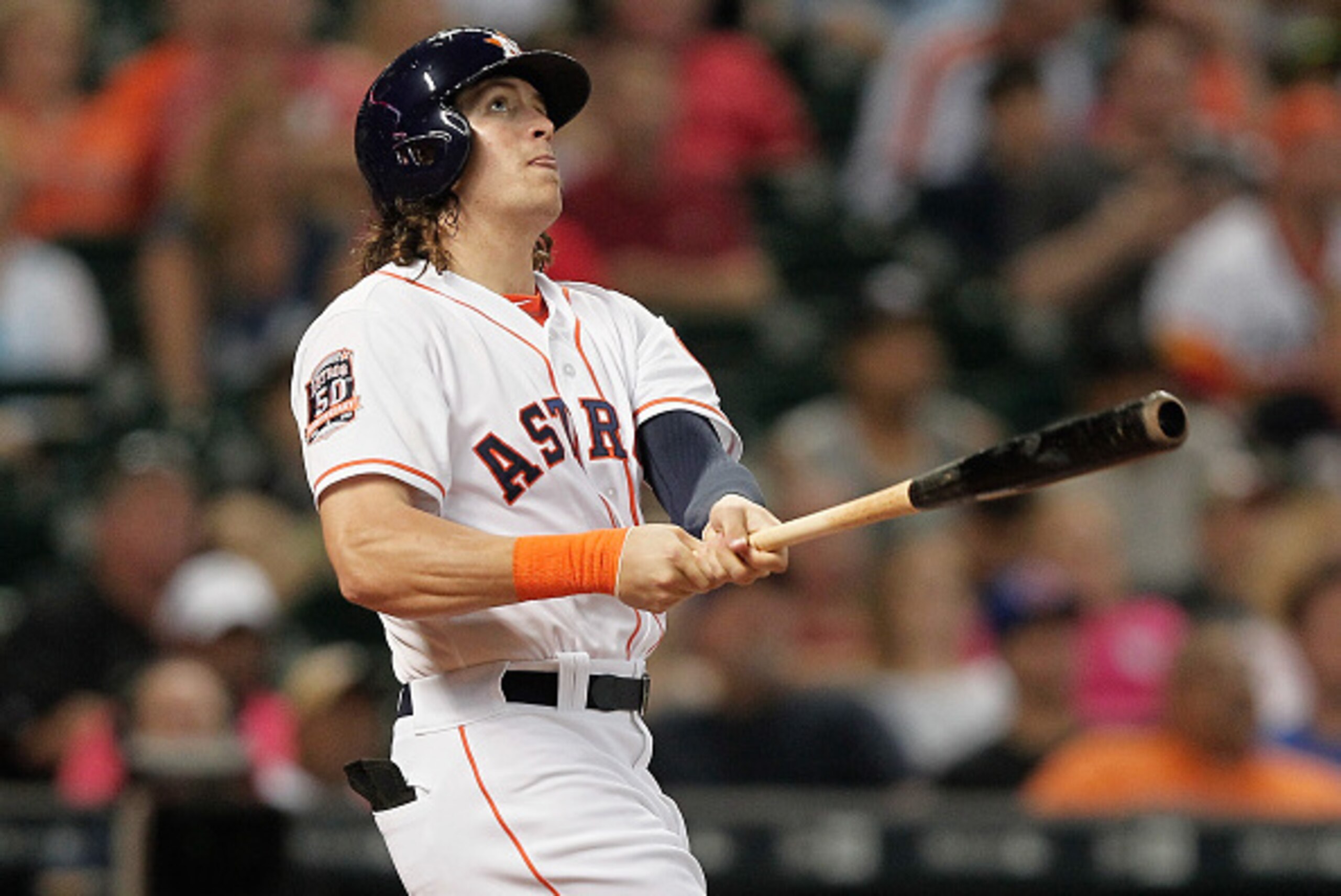
In Houston, the Astros have augmented a homegrown core featuring Jose Altuve, George Springer and Dallas Keuchel with bargain buys like Colby Rasmus, Evan Gattis and Luis Valbuena. And though everyone's focus is on Carlos Correa now, let's not forget how awesome Jed Lowrie was before he got hurt.
In Minnesota, the Twins are getting good stuff out of homegrown products Brian Dozier, Trevor Plouffe, Kyle Gibson and Glen Perkins and have probably gotten more out of Torii Hunter than his minus-0.2 WAR says they have. There's some luck behind their record but also some deft front-office work.
If this is beginning to sound like a "spending money is bad and stupid and dumb!" ultimatum, understand that's not what this is all about. Case in point, eight of the teams within the top-10 payrolls are over .500. So are 11 of the 16 teams that upped their Opening Day payrolls by over $10 million.
So no, spending in itself isn't a bad thing.
Rather, the big takeaway here is that wild and/or aggressive spending during the winter can be a bad thing. Most of the products on the shelves are inherently risky investments, and one big shopping spree isn't guaranteed to solve all a team's problems.
And yet, here's thinking we'll have this conversation again somewhere down the road. It's not as if teams have anything else to do during the winter.
Stats courtesy of Baseball-Reference.com and FanGraphs unless otherwise noted/linked.
If you want to talk baseball, hit me up on Twitter.


.jpg?w=2560 "Chiefs, Steelers Eye WR Trades")



.jpg?w=2560 "Latest Peyton-Colts Rumors")