MLB Stars Who Have Clearly Entered Their Decline Years
It's Father's Day, so what better time to talk about one of the most well-known dads around, Father Time, and what a curmudgeonly old fart he can be, especially when it comes to baseball? Sooner or later, he grabs hold of everyone—even the game's biggest stars—and doesn't let go.
His presence is easy to see when it comes to pitchers, as we need only look at the radar gun to see a significant drop in velocity that signals the beginning of a player's decline, as we've recently seen with CC Sabathia and Jered Weaver.
When it comes to position players, it's often not as easy to realize when he's grabbed hold of someone and has begun to drag them down. Some lose a step in the field and simply can't get to balls that they used to routinely scoop up, while others can't get around on a fastball like they used to.
Whether we want to admit it or not, it's clear that for the five stars that follow, Father Time and the downside of their careers has arrived—and it's hitting some of them harder than others. This doesn't mean they can't still be productive players in one form or another, but their glory days are long gone.
OF Carlos Beltran, New York Yankees
1 of 5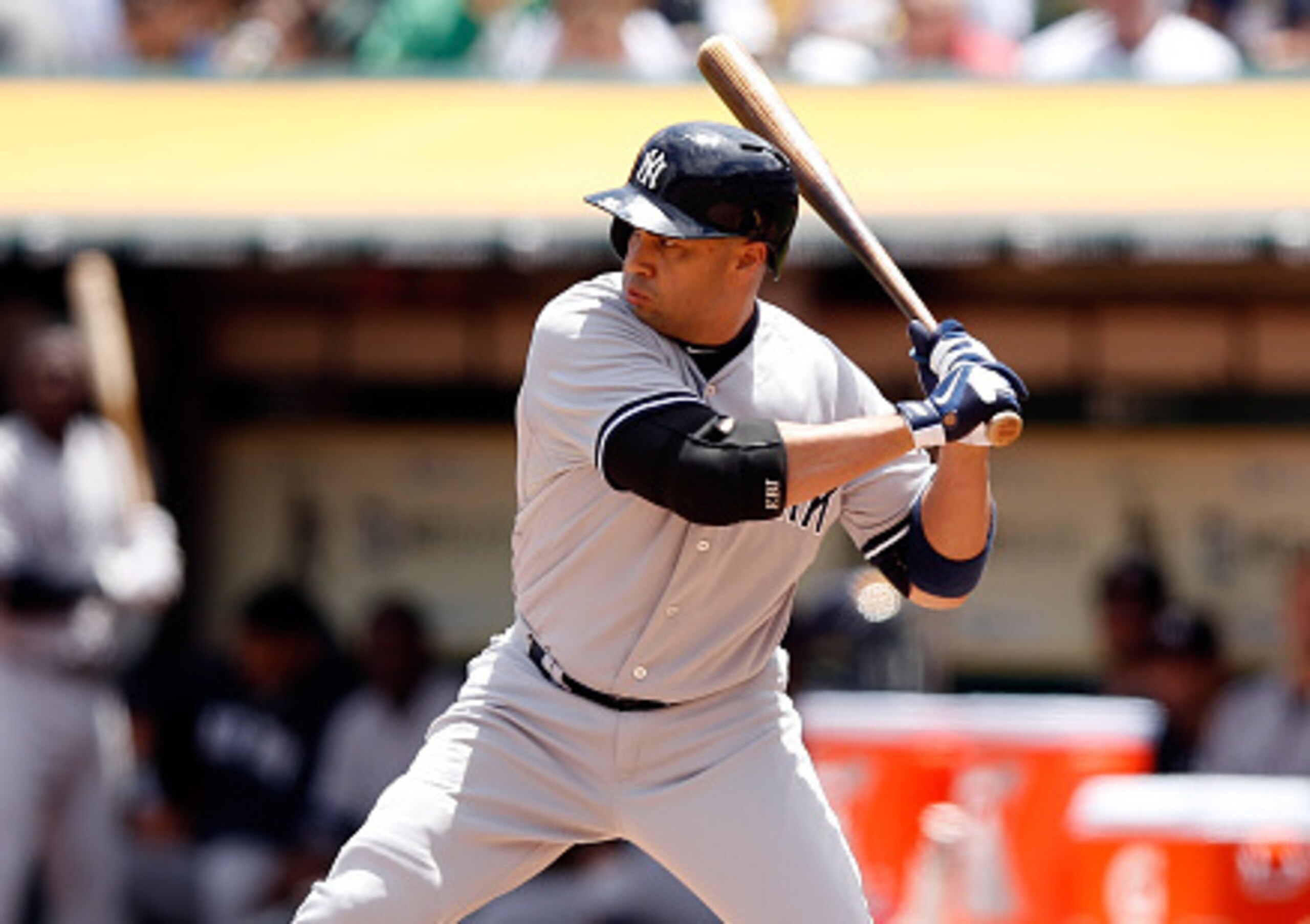
Shortly after signing a three-year, $45 million deal with the New York Yankees in December 2013, ESPN's Dan Szymborski wrote that Carlos Beltran's best days were behind him:
"Beltran had two solid years in St. Louis and is one of the most underrated players of this generation, but the Yankees are signing Beltran two years too late. If you graph the aging curve of late-30s outfielders -- and they're mostly good ones because the lesser lights are long gone at this point -- it looks like you're drawing a really cool water slide.
"
So far, the Beltran that the Yankees have gotten barely resembles the player who compiled a .283/.359/.496 slash line over parts of 16 seasons.
Over the variety of injuries that limited him to only 109 games in 2014, Beltran is still capable of getting hot in bunches, as evidenced by his recent run of three home runs in as many games.
But he's clearly not the player that the Yankees thought they had signed. Beltran has become a far less patient hitter, chasing more pitches out of the strike zone than ever before, and his walk rate, which was well over 10 percent only a few years ago, sits at 7.2 percent over his time in the Bronx.
No longer a threat to take off running when he gets on base and a liability in the outfield, Beltran would be best served as a full-time designated hitter, a role that's filled on the Yankees by Alex Rodriguez. So Beltran will continue to play the field, where his decline will be front-and-center for all to see.
2B Robinson Cano, Seattle Mariners
2 of 5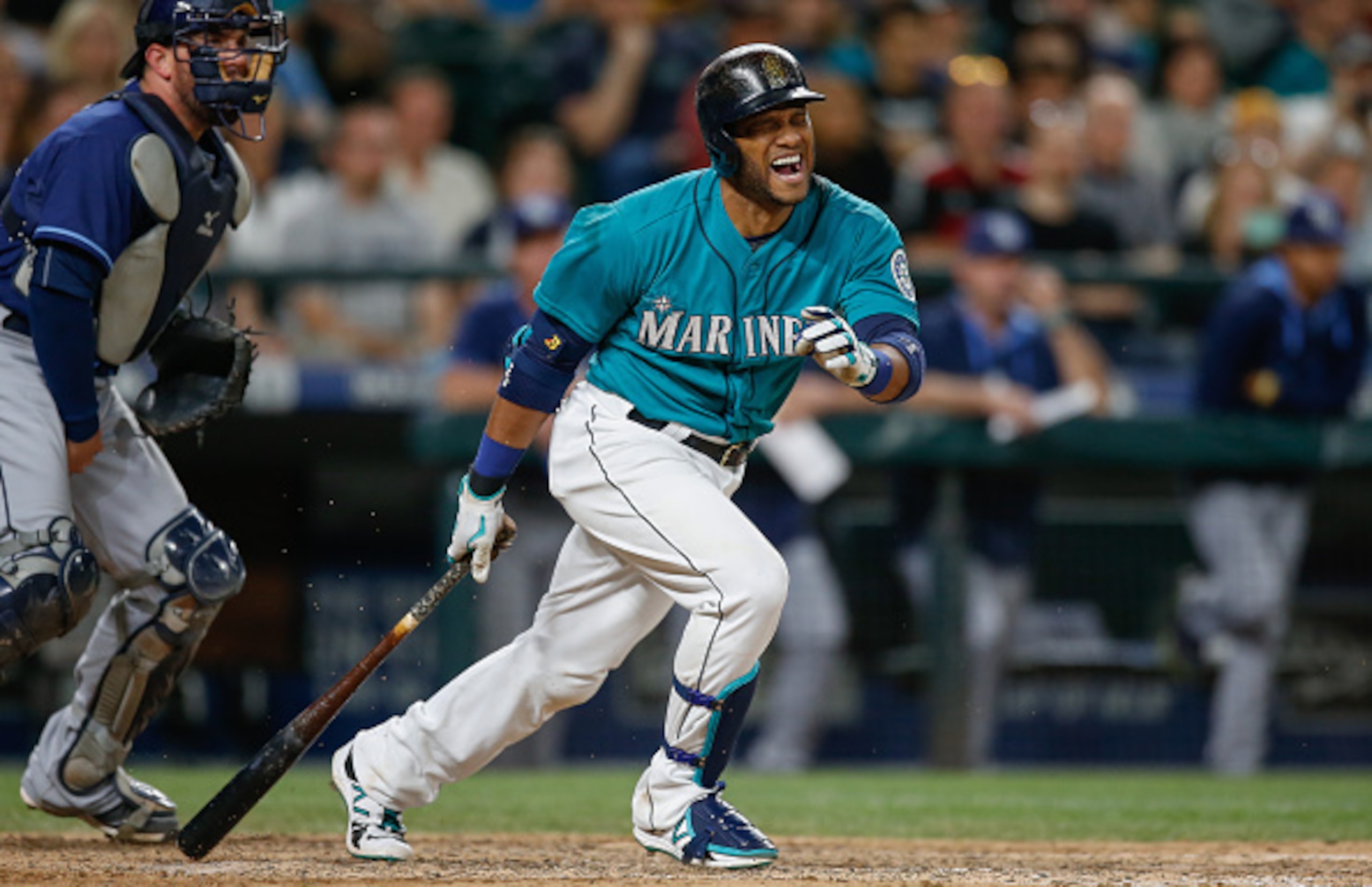
Upon seeing Robinson Cano's inclusion here, chances are that one of four things is running through your mind:
- "He's too young to be entering the downside of his career."
- "Stop overreacting, he's just off to a slow start."
- "Just because he's not hitting home runs doesn't mean he's in decline."
- "Stupid Yankees fan."
While it's true that my rooting interest has always resided—and always will reside—in the Bronx, the simple fact is that Cano has quickly proven that he'll never live up to the expectations that come along with the behemoth 10-year, $240 million deal that he signed with Seattle before last season.
He's become prone to putting the ball on the ground in Seattle, as evidenced by a 52.9 percent ground-ball rate that ranks 12th in baseball since 2014. Consequently, his fly-ball rate has plummeted to 24.3 percent, which ranks 126th out of 137 qualified batters.
His decline becomes even more evident when you include his declining walk rate, his increased penchant for striking out and the fact that he's not making hard contact quite as often as he did in the prime of his career. As ESPN's Tony Blengino recently wrote, "losing just a little bit of juice on balls in the air turns a homer into a double or a flyout."
Is Cano as bad as his current .245 batting average and .620 OPS would indicate? Of course not. But the days of him hitting .300 with 20-plus home runs and sitting as one of the premier run producers in baseball are behind him, and what lies ahead doesn't figure to be pretty.
DH David Ortiz, Boston Red Sox
3 of 5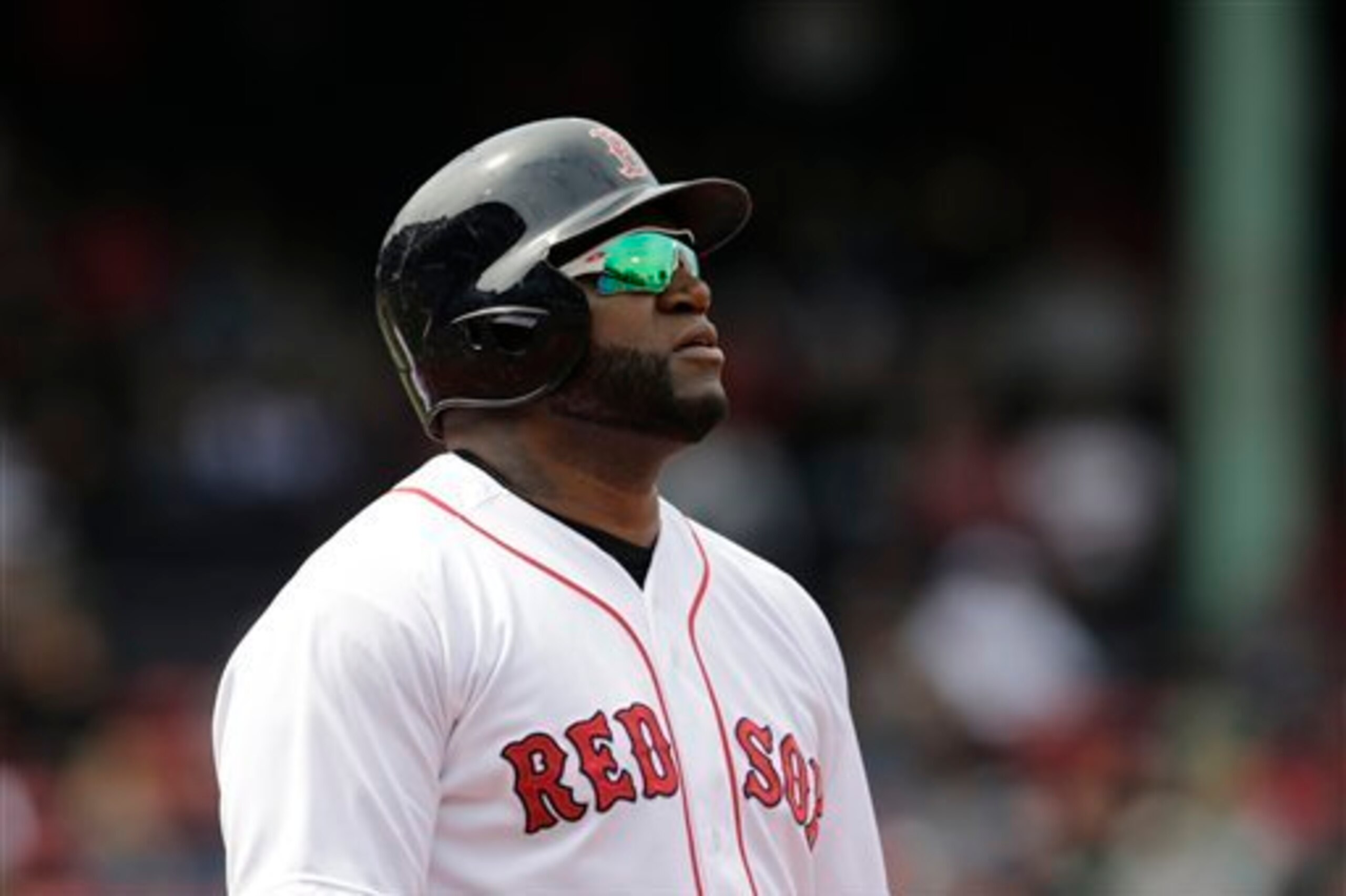
It seems like we predict David Ortiz's demise every season, only to watch him do Big Papi things and make his doubters eat their words. One of the most feared sluggers of his generation, Ortiz has proved that he doesn't need to hit .300 in order to be a force in Boston's lineup.
Take last season for example, when he hit a rather pedestrian .263 but still went deep 35 times, drove in more than 100 runs and finished with a 135 wRC+, tied with Houston's Jose Altuve for the 11th-highest mark in the American League.
Therein lies the rub, of course, because about the only time you'd expect to see Altuve and Ortiz mentioned in the same breath is when discussing players whose last names begin with a vowel.
He may be on track to post his 14th consecutive season with at least 20 home runs, but Ortiz is clearly not the same force at the plate that he once was, as ESPN Boston's Gordon Edes noted after Big Papi took Atlanta's Shelby Miller deep last Thursday:
"There has been a growing consensus that Ortiz has lost bat speed that rendered him unable to catch up with the game's harder throwers.
Ortiz's success against Miller on Thursday suggested that judgment might be premature, although overall, he is just 4 for 34 (.118) against pitchers identified by baseball-reference.com as power pitchers.
"
Over the past 15 years, has there ever been a time when anyone was concerned about Ortiz's ability to catch up to heat? He'd foul off fastball after fastball until he got a pitch that he could drive deep into the night. Edes continues:
"The biggest difference in Ortiz's performance is illustrated by his left-right splits. He is just 9 for 73 (.123) with no home runs and four RBIs against lefties, while posting a robust .284/.395/.527/.923 slash line against righties.
"
While he's always been more productive against right-handed pitchers, Ortiz posted an OPS of .826 against southpaws from 2003 to 2014, the fifth-highest mark among players with at least 2,000 plate appearances against lefties during that time.
SS Jimmy Rollins, Los Angeles Dodgers
4 of 5
It's been said that pitchers are creatures of habit, but the same is true of position players.
So it's understandable why Jimmy Rollins, after spending the better part of 14 years and nearly 7,000 plate appearances batting at the top of Philadelphia's lineup, isn't a big fan of hitting at the bottom of the order in Los Angeles.
“I’m not comfortable with this but I understand the reasoning,” he told CSN Philadelphia's Mark Brown. “I’m learning, and there is a difference whether you’re hitting seventh or eighth. Hitting lower and eighth, you’re in the position just ahead of the pitcher, and that’s a new situation for me.”
While he hit a career-worst .243 for the Phillies in 2014, Rollins was still productive atop the lineup with 43 extra-base hits (17 home runs), 28 stolen bases (in 34 attempts) and providing his customary above-average defense at shortstop.
Rollins hasn't come close to replicating his production in Philadelphia with the Dodgers, regardless of where he's been slotted in the lineup. He's lost a step or two as well, and both his baserunning and defense have suffered as a result.
With top prospect Corey Seager continuing to rake in Triple-A and calls for his promotion growing louder, Rollins is beginning to run out of time to show that he's got anything left to offer as an active player besides leadership.
2B Chase Utley, Philadelphia Phillies
5 of 5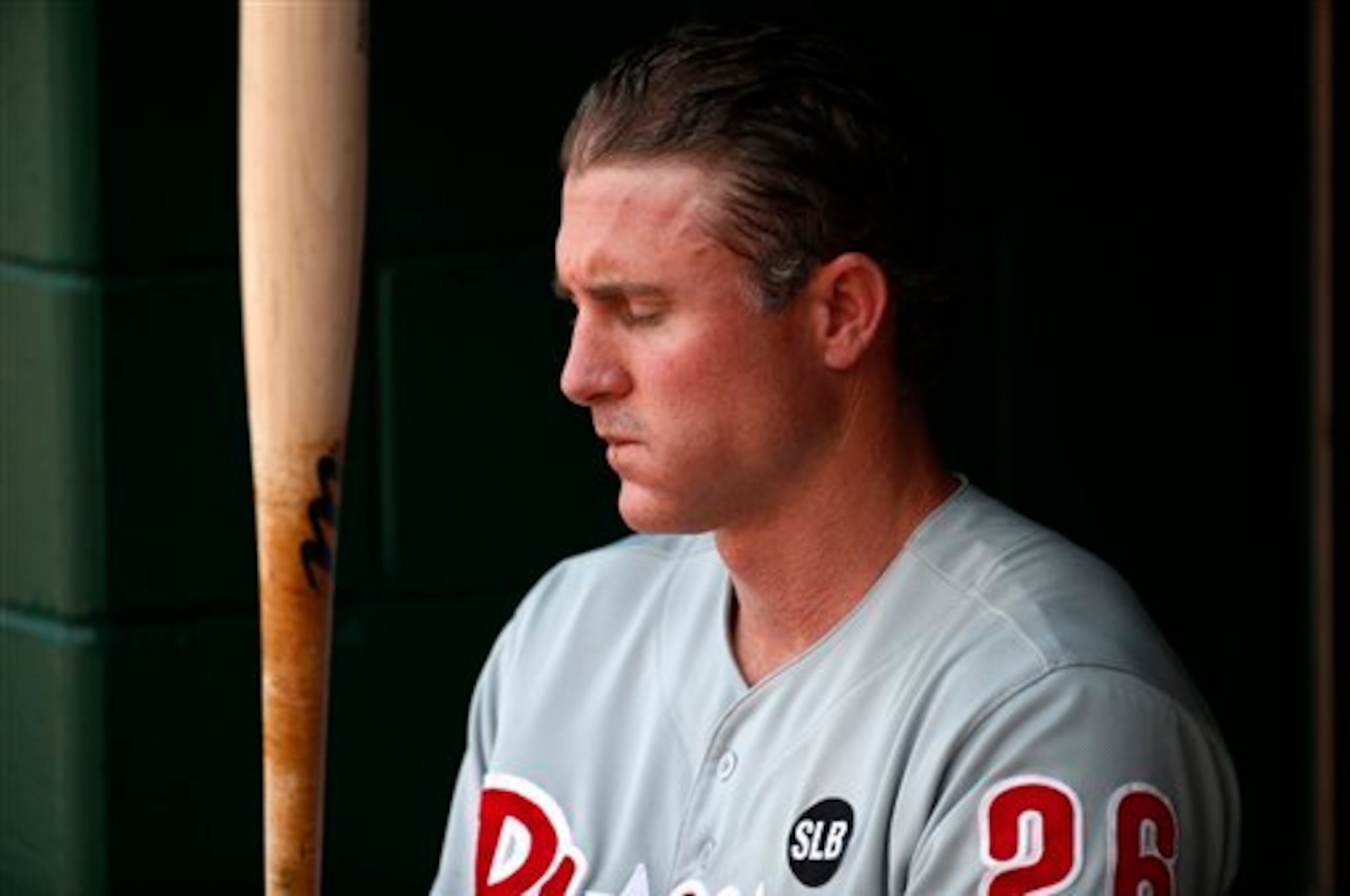
Years from now, when the debate about whether Chase Utley belongs in the Hall of Fame is raging, nobody's going to point to his 2015 campaign and say "That's the reason he doesn't belong!" OK, maybe a few people will, but one down season doesn't erase what has been an incredibly productive career.
Philadelphia's current favorite son has been incredibly unlucky this season, with an unfathomably low .188 BABIP (batting average on balls in play), which ranks 164th out of 166 qualified hitters. But there are signs everywhere that he's simply not the player he once was.
Per Baseball Savant, we can see that not only is Utley struggling with breaking balls and off-speed pitches—something he's always had an issue with—but he's no longer able to get around on the hard stuff like he once did.
That he's not as quick through the strike zone as he once was has led to a drop in his line-drive rate and hard-hit ball percentage, which obviously makes it easier for the opposing team to field whatever he puts in play.
It's something that hasn't gone unnoticed by Phillies manager Ryne Sandberg.
"He's not stinging the ball like he was in April and May," Sandberg told Ryan Lawrence of the Philadelphia Daily News. "I don't know [what can be done]. He's had the days off. It looks like he's strong and everything. It looks like it might be a combination of mental and mechanical, I guess at some point."
Utley isn't as bad as his numbers would suggest, but the days of him being in the conversation as one of the game's premier second baseman are long gone.
Unless otherwise linked or noted, all statistics courtesy of Baseball-Reference.com and FanGraphs and are current through games of June 20. All contract information courtesy of Cot's Contracts.
Hit me up on Twitter to talk all things baseball: @RickWeinerBR.


.jpg?w=2560 "Chiefs, Steelers Eye WR Trades")
.jpg?w=2560 "Cowboys Handle Eagles on MNF 🤠")