Copa America 2015: Wednesday's Day 7 Takeaways
Wednesday's solitary Copa America fixture certainly lived up to the hype, as Colombia finally scored a victory over Brazil—who had Neymar, at his petulant worst for much of the evening, sent off after the final whistle—in a competitive fixture to reignite their tournament hopes.
A surprise defeat to Venezuela in their tournament opener meant Jose Pekerman's side had little margin for error if they wanted to progress from Group C. They could surely not afford to lose to Brazil—as they did at last summer's World Cup and again in a friendly a few months later—in Santiago if they wanted to have matters in their own hands come the final group game.



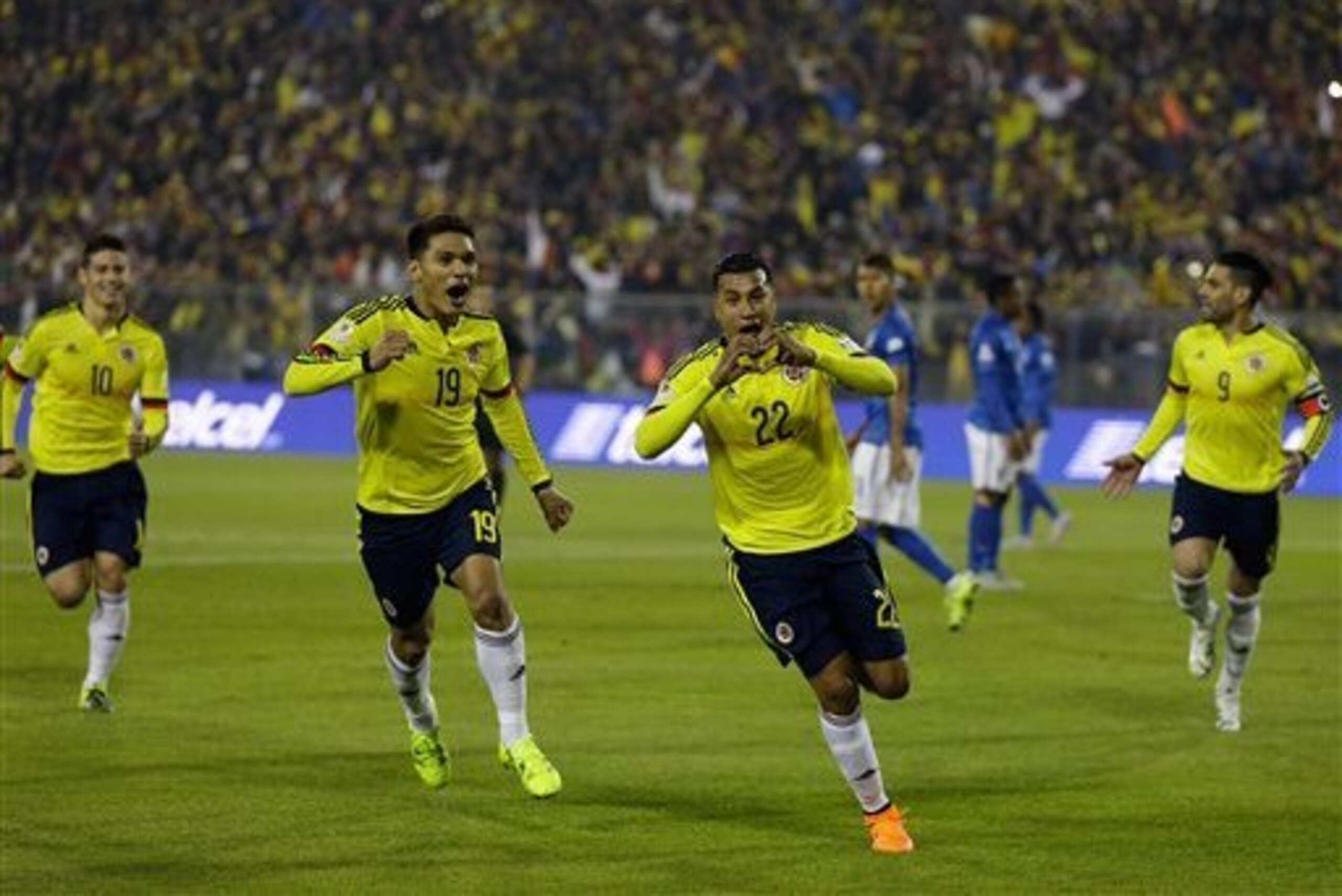
Dunga's side therefore had the dual incentive of both being able to secure their own place in the last eight with a win, while potentially knocking out one of their main tournament rivals in the process. However, central defender Jeison Murillo notched the game's only goal in the 36th minute to ensure Colombia were the ones left celebrating.
That was not the end of the drama, however, as a feisty conclusion to the 90 minutes developed into a full-on brawl at the final whistle. The instigator was Neymar, who petulantly kicked the ball into the back of Murillo in the seconds after the referee brought the game to a close.
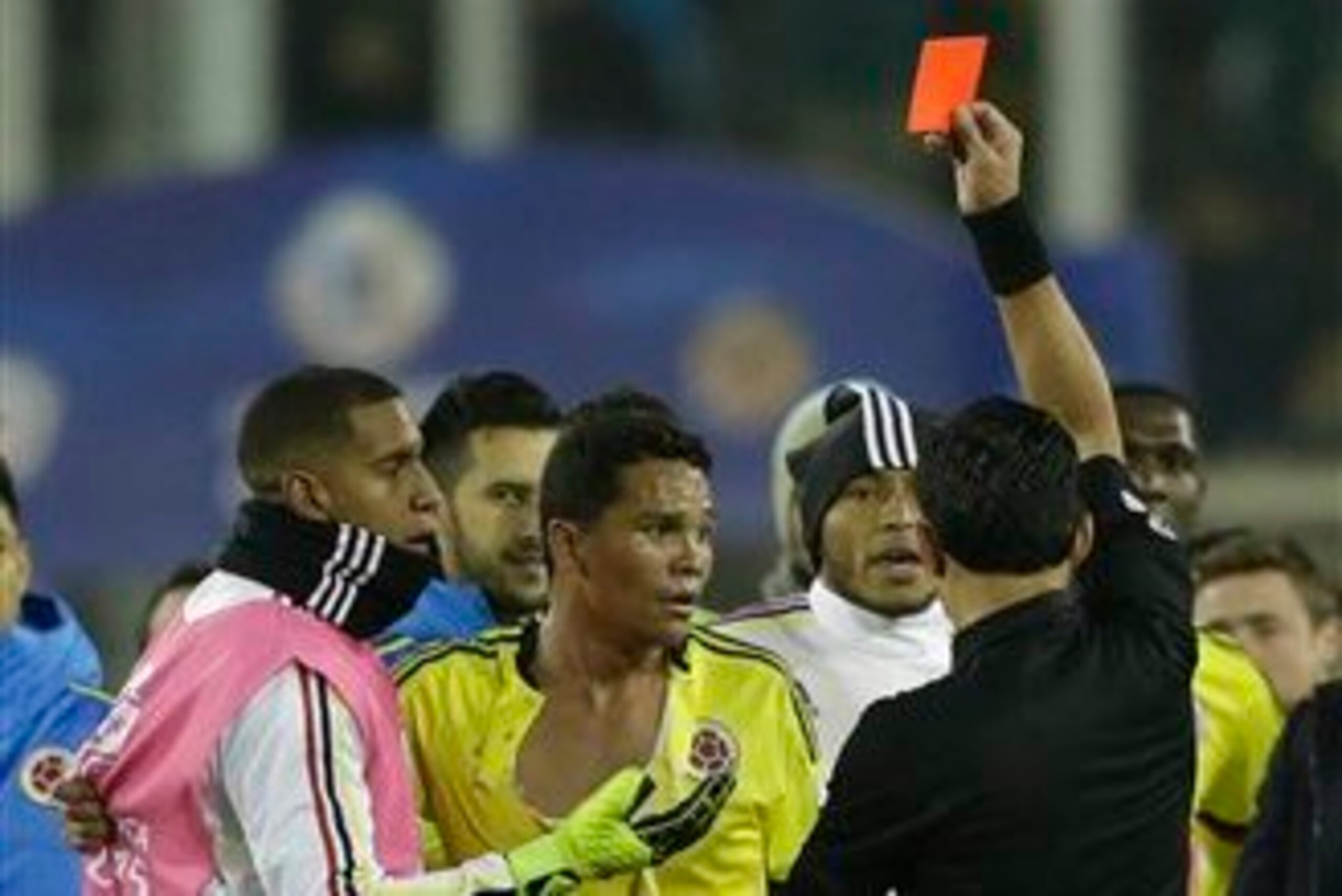
Colombia substitute Carlos Bacca, not unreasonably, took exception to the Barcelona man's actions and proceeded to shoulder-charge him, sparking a melee between both sets of players (and coaches) that ended with Neymar and Bacca being dismissed.
That means Neymar, who was booked earlier in the game, will now miss both Brazil's final group game and their quarter-final tie (assuming they get that far). If Wednesday's game is any indication, his absence could loom large, as the Selecao are not exactly full of attacking ideas that do not involve him in a major way.
Here are some of the main takeaways from Day 7's solitary game.

1. Neymar's petulance could cost Brazil dearly—and deservedly so
Wednesday's game was perhaps a match Brazil could afford to lose—they face Venezuela in their final group game, and a win will see them through—but it was not one they wanted to.
The cost of defeat was high: Not only have they now given Colombia, a side they used to hold a psychological edge over, a huge mental boost ahead of a potential knockout rematch, but they will now also be without Neymar for their next two games.
That is a huge blow, as Neymar is clearly at the centre of everything Dunga is trying to do with this team. The Brazil coach has a reputation for dour, unadventurous football, and his side are hardly doing much to disprove that so far in Chile. Full-backs are only occasionally bombing forward to join the attack, and almost all passing moves are being routed through their Barcelona star.
Journalists Tariq Panja and David Cartlidge share their thoughts on Neymar's negative behavior:
In the second half, when they were desperately trying to get an equaliser, Brazil's plan seemed to consist of getting the ball into wide areas and then flinging a cross into the box, a strategy that looked ill-advised on many levels (for starters, Neymar and Roberto Firmino are hardly the tallest of forwards).
That was bad enough, but Brazil's problems were compounded by the fact that Neymar was clearly off his game. Bold and influential early on, the captain quickly seemed to lose his touch due to the physical attention he was receiving from Colombia's defenders, his frustration growing as his hold over the match began to wane.
He had one gilt-edged chance to score just before half-time—a close-range header that he put straight at the goalkeeper—but he was booked in the aftermath for a handball that may or may not have been deliberate. The combination of both frustrations seemed to send him over the edge.
Neymar was never mentally in the game after that point, being told to calm down by his team-mates but proving utterly unable to do so.
It was a poor display from the captain, the man who was supposed to galvanise his team-mates, and it was no surprise that Brazil struggled to create any dangerous chances of note without their talisman to do it for them.
Yet, that is exactly what Dunga and his team will now have to try to do for the next phase of the competition, after their leader earned himself a red card following the final whistle for finally letting his anger boil over.
Perhaps he did not mean to hit Murillo, whom he had got in a pushing match with just minutes before the final whistle, as he booted the ball out of play at the game's conclusion. Perhaps Carlos Bacca overreacted (his response was certainly robust), along with the rest of the players already on edge after a game that was played at high intensity and with intimidating physicality.
But it was still a stupid thing to do, and it certainly warranted at least a second yellow card.
Brazil now have to go to war against Venezuela without their star, and they'll be forced to repeat the trick in the quarter-finals against whomever they are paired with. Unless they undergo an overnight transformation, that will not be easy, and opponents will fancy their chances of keeping them out.
Neymar is supposed to be Brazil's leader, their driving force—and in fairness to him, he invariably has been in almost every game for the last few years. But this was a stunning off-night for him, and his team may only fully feel the consequences in two games' time.
2. A note of credit to the referee, who dealt well with difficult circumstances
A note of praise for referee Enrique Osses, who dealt well with a very difficult match. As has previously been discussed, there is little love lost between these two teams and, while passions occasionally boiled over, Osses did well to keep things in check as long he managed.
Brazil may disagree with any positive assessment of the referee—much of the frustration, and particularly Neymar's, seemed to stem from his decision-making—but the man from Chile was proactive in situations when many others would not have been. That point was made quite clear in the 20th minute, when he mistakenly handed the game's first yellow card to Colombia full-back Pablo Armero.
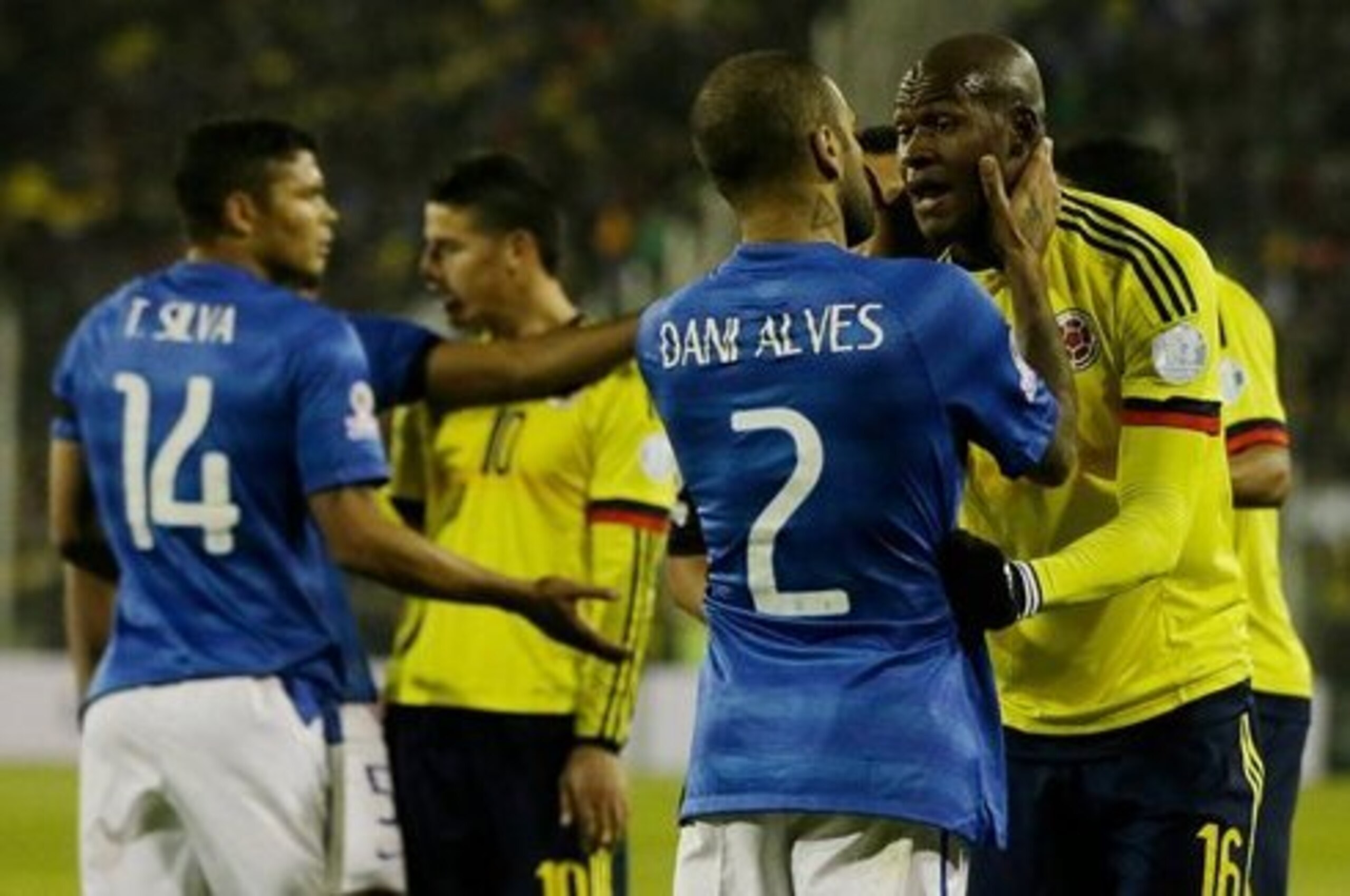
Striker Teo Gutierrez had actually been the man guilty of the foul, a fact that was obvious to most people on the pitch and in the stadium. Osses could have stuck belligerently to his first instinct, but he soon realised his mistake and reassigned the yellow card, a case of sensible officiating that we do not always see (in similar circumstances) in the Premier League.
Such instincts were also in evidence at the final whistle, when the referee had to somehow separate a brawl that seemed to involve most players from both teams. In the end, his red cards for Neymar—whom he essentially had to chase down the tunnel to dismiss—and Bacca seemed to identify the instigator and main offender of the unsavoury scenes, a sensible and reasonably fair way to draw a line under the matter.
It was not the greatest refereeing display on an incident-by-incident basis, but in the big moments, Osses did well to get things right—even if it occasionally took him a while.
3. Think again, Manchester United?
Brazil may have lost, but it is worth remembering that they had the game's two best chances—both of which they should surely have turned away. First, there was Neymar's header that went straight at David Ospina in the Colombia goal. In the second half, Roberto Firmino somehow contrived to blast over the bar after Ospina had succeeded only in clawing the ball to his feet.
Firmino has been strongly linked with a move to Manchester United in recent days, according to Jack de Menezes of the Independent. Perhaps Ed Woodward, Louis van Gaal and Co. will be reconsidering that interest now...
4. Cuadrado finds the South American air much more to his liking
After standing out as one of the very best players at last summer's World Cup in Brazil and continuing that form in the early part of the season for Fiorentina, Juan Cuadrado arrived at Chelsea in January and proceeded to do nothing for almost the entire second half of the campaign.
Relegated to pointless three-minute cameos at the end of games by the conclusion of the season, Cuadrado has yet to show his undoubted class to the fans who turn up every week at Stamford Bridge. So it was certainly interesting to watch him in Santiago, as he waltzed around the pitch with the same pace and incision that became so familiar 12 months ago.
Journalists Miguel Delaney and Rik Sharma were impressed with Cuadrado's performance:
He had a hand in Colombia's solitary goal and was at the heart of almost every good attacking move they made, including one rasping 30-yard strike that flew only inches wide of the goal. The winger clearly remains a very good player; it is just at Chelsea where he is unable to find his best form.
Perhaps he just needs time—or perhaps Jose Mourinho has robbed him of some confidence—but Blues fans will undoubtedly be both pleased and perplexed by how dominant Cuadrado looked in the yellow of his country.
The same can also be said, albeit on a lesser scale, for Carlos Sanchez. After often struggling to get into the Aston Villa team under Tim Sherwood last season, he was seen in Santiago successfully shackling Neymar for much of the afternoon.
The same cannot be said for Radamel Falcao, at least, who remained a shadow of his former self in a nervous, panicked performance. The impending Chelsea arrival snatched at a couple of good chances at goal and generally looked short of both form and fitness, proving that perhaps a return to South America does not have magical healing powers for all players.

.jpg?w=2560 "Seahawks Chiefs Football")



.jpg?w=2560 "Latest Peyton-Colts Rumors")