Biggest NFL Depth Chart Question Marks This Offseason
For NFL general managers, the offseason can become a process of alternating between needing and wishing.
"I want a workhorse running back like LeSean McCoy" is one thought. Then McCoy magically appears a few phone calls later.
"I need to replace Darrelle Revis" might be another. Before that thought is fully formed, the mental wheels come to a screeching halt. It doesn't compute, because truly replacing a player of Revis' caliber isn't possible.
Successfully addressing a need during the annual offseason tumbling of roster dominoes can require a delicate dance. It can mean overpaying and taking a risk in free agency, or perilously reaching during the draft. Or it can mean dangling future picks through a trade.
Often it involves a sacrifice, and if the pieces or salary-cap realities don't align just right, the need receives only a half measure or it stays unaddressed.
The meandering offseason road is slowly reaching its conclusion. So let's explore 10 needs that largely remain, and the depth-chart questions created.
Buffalo Bills Quarterbacks
1 of 10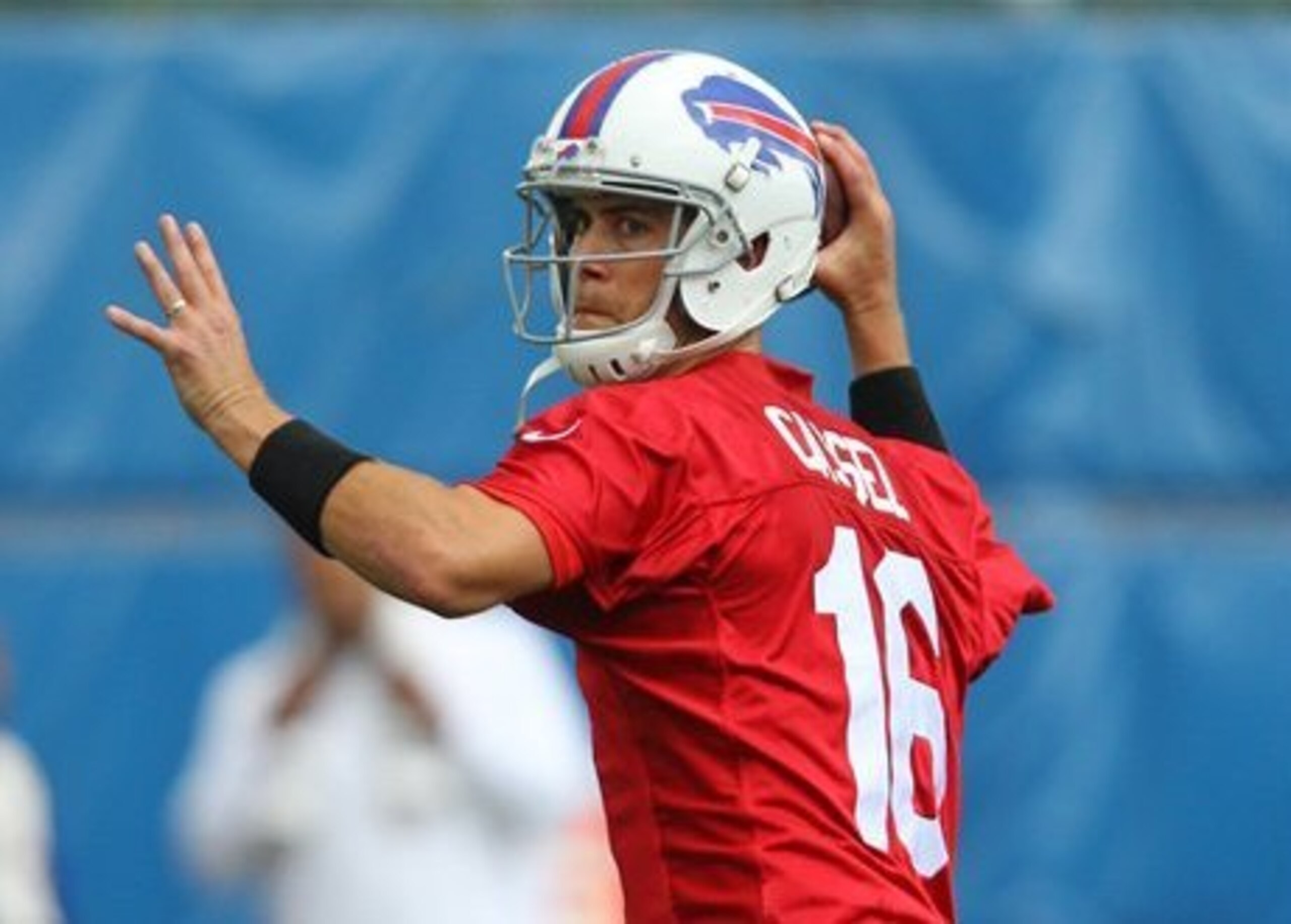
The Buffalo Bills went for the full Oprah Winfrey this offseason (minus the bees, of course).
It feels like they looked at every offensive position on their depth chart, and said you get a Pro Bowler. They added four of them: wide receiver Percy Harvin, running back LeSean McCoy, fullback Jerome Felton and guard Richie Incognito. Then there’s tight end Charles Clay, who could get his Hawaii invite soon with an increased role after ranking 10th at his position in receiving yards over the past two seasons.
That shuffling fed giddiness, and was the fuel for some vintage Rex Ryan-isms during the new head coach’s introductory press conference (“Is this thing on? Because it’s getting ready to be on”). But alas, by necessity one rather important position was nearly neglected: quarterback.
Quarterback moves that were made
The Bills were handcuffed at quarterback this offseason by, well, themselves.
General manager Doug Whaley was staring down a cavernously deep draft at wide receiver in 2014. Yet he still sacrificed a 2015 first-round pick to move up and acquire Sammy Watkins. He did that with the assumption/praying hope that quarterback EJ Manuel would course correct and pull up from his smoking career spiral.
When that didn’t happen Whaley faced two equally uninviting options: Either hope a second-tier quarterback in the draft is a solution (not likely), or try to unearth a gem in the annual sludge pile of free agents at the position (even less likely).
Instead he rammed through door No. 3, and completed a trade with the Minnesota Vikings for Matt Cassel. Later he also signed Tyrod Taylor as a free agent, filling out one of the league’s most uninspiring quarterback depth charts.
Moves that could have been made
Sadly, Whaley likely sprinkled all the pixie dust he could muster on his quarterback conundrum. You can make a case that, despite inducing face-palms regularly, Chicago Bears quarterback Jay Cutler has had far more moments of competence than any arm the Bills will field. But trading for him wasn’t feasible due to Cutler's iceberg of a salary.
The end product
The Bills are currently choosing between a 33-year-old with a career per-attempt average of 6.6 yards (Cassel), a possible draft bust who lost his job to Kyle Orton and completed only 58.6 percent of his passes in 2014 (Manuel) and a third upstart quarterback who's thrown all of 35 meaningful passes over four NFL seasons (Taylor).
The goal will be to make the quarterback death hole matter as little as possible by leaning heavily on a premier defense to keep scores close, and offensively funneling chain-moving duties through McCoy. He'll be supported by a stable of capable receivers who can churn out yards after the catch following short, high-percentage throws.
New offensive coordinator Greg Roman has quarterback-hiding experience after minimizing Alex Smith while the San Francisco 49ers went to the NFC title game in 2011. But getting Cassel to be even exceptionally adequate is quite the task.
San Francisco 49ers Middle Linebackers
2 of 10
A San Francisco 49ers offseason that ended with middle linebacker Patrick Willis playing elsewhere was always unlikely, but still possible. A 30-year-old player coming off two injury-plagued seasons was set to account for a salary cap hit of $8.3 million in 2015, per Spotrac.
The 49ers would have faced a decision with fellow middle linebacker NaVorro Bowman coming back from injury, and the far less expensive while equally effective Chris Borland playing on a rookie contract.
That scenario would have set up the best problem to have: Three great middle linebackers, and only two starting spots. Then suddenly Willis retired and made the 49ers decision for them.
The mourning period after Willis’ retirement would have been focused more on the loss of a franchise icon if it wasn’t paired with Borland’s decision to walk away, too.
His announcement was jarring. It left the 49ers without both a five-time All Pro, and a linebacker who had incredibly amassed 43 run stops during his rookie season, per Pro Football Focus. Borland didn’t play a defensive snap until Week 6, yet he still recorded 107 tackles.
How do you go about replacing the core of your defense after two unexpected retirements? You don’t, really.
Linebacker moves that were made
Philip Wheeler continued his journey around the NFL, signing with his fourth team in three years. He’ll provide the veteran depth San Francisco is so badly thirsting for at the linebacker position, especially with Bowman likely not ready to be the 2013 version of himself yet after a severe knee injury.
Wheeler has shown fleeting glimpses of reliability in coverage, though we have to dig far back in the PFF archives to find those glory days. In 2011 with the Indianapolis Colts, he allowed an opposing passer rating of only 78.7 while targeted 26 times. Later his 2013 rating on 65 targets ballooned to 108.7.
Willis was among the best coverage linebackers of his era, and that’s where his absence will show up first.
Moves that could have been made
There’s never a good time for a middle linebacker implosion, but the 49ers picked a particularly brutal offseason. Once David Harris re-signed with the New York Jets, there was a sharp talent decline on the open market. And even if there were other appealing options in free agency, the 49ers were tight against the salary cap. At one point they were in the red by about $3.7 million.
The end product
The 49ers were screwed, basically, and left to pick up scraps like Wheeler while hoping the likes of Michael Wilhoite and Nick Moody can step up. There’s hope if Bowman can return to be at least 75 percent of his former self. If not, middle linebacker will become the gushing waterfall among the 49ers’ many defensive holes.
Atlanta Falcons Pass-Rushers
3 of 10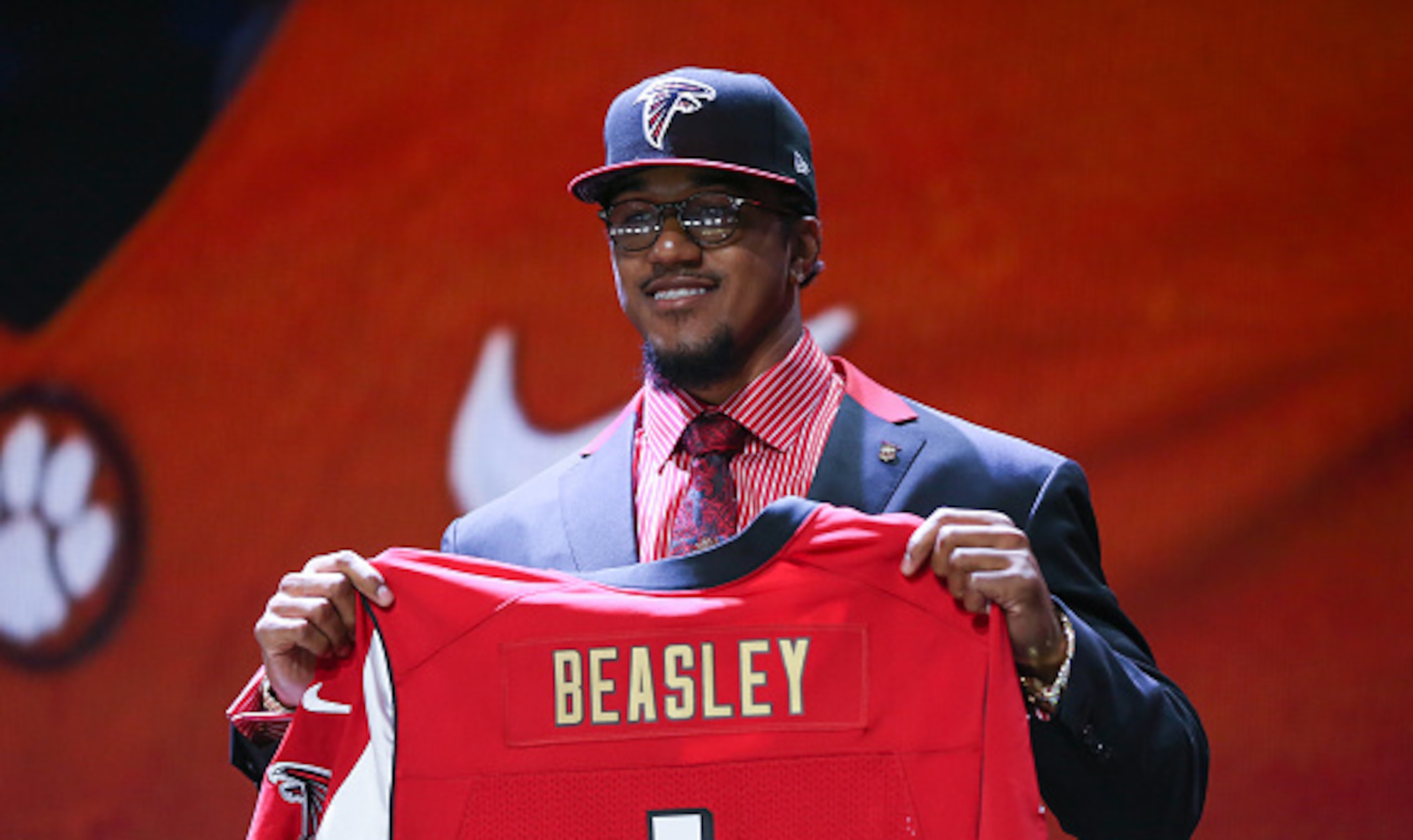
Opposing quarterbacks have experienced max comfort against the Atlanta Falcons' pass rush in recent years. I’m talking eight-foot wide beanbag-chair comfort, and 1,450-sized monster slipper comfort.
Over the past three seasons the Falcons have totaled 83 sacks. That’s a cozy pace of 1.7 per game, and they’ve ranked 28th or worse during each year. A need was screaming at Falcons general manager Thomas Dimitroff. His response?
Pass-rusher moves that were made
Dimitroff gifted Vic Beasley to new defensive-minded head coach Dan Quinn, and now the most explosive edge-rusher in the 2015 draft—and Clemson’s all-time sack leader—slides in as the ideal fit for the “Leo” role, which is a sort of hybrid between defensive end and outside linebacker.
Beasley will give life to a stagnant unit with his explosiveness that's drawn comparisons to Denver Broncos outside linebacker Von Miller. But the pass-rusher question shifts for Atlanta then, and uncertainty remains.
Will Beasley be enough? Not likely in a division where containing quarterbacks Drew Brees, Cam Newton and now Jameis Winston is necessary for survival. That means in addition to counting on an immediate and significant impact from Beasley, the Falcons will also be hoping defensive end Adrian Clayborn can avoid ripping something for a full season.
Clayborn was signed to the classic “prove it” deal, inking a one-year contract worth $3 million. He’s been effective when healthy, recording 13 sacks during his two full 16-game seasons. But he’s also missed 28 games over four years due to significant injuries, including an ACL tear.
Relying on a fully functioning Clayborn will end with many sleepless nights.
Moves that could have been made
Adding Brian Orakpo would have heaped more injury worry on top of the concerns brought by Clayborn. But if you’re going to invest in questions, making them Pro Bowl-level questions is always wise. The Falcons could have been more aggressive in their pursuit of Orakpo, who’s only a year removed from 10 sacks during his last healthy season in 2013.
At one point in free agency, Atlanta was considered a front-runner to sign Orakpo, according to ESPN’s Dianna Marie Russini. Instead they waited on a bargain in Clayborn, and also added former Houston Texans outside linebacker Brooks Reed.
The end product
The Falcons pass rush will certainly improve in 2015 when Beasley is plugged into Quinn’s pressure-generating system. But how far that goes beyond what he can give as a rookie rests with Clayborn’s health.

New England Patriots Cornerbacks
4 of 10
The New England Patriots had to deal with their own mass exodus long before they were shining Super Bowl rings that are roughly the size of a human head.
They lost four cornerbacks from a championship team. Among them was Darrelle Revis, the league’s very best cornerback if you’re talking to, um, Darrelle Revis. The Seahawks’ Richard Sherman has a much different opinion on both that and the difficulty level of athletic feats.
The Patriots lost Sherman, Brandon Browner, Kyle Arrington and Alfonzo Dennard, which created a swirling vortex of lost snaps. In total those four combined to be on the field for 2,756 snaps including the playoffs, and Revis gave up a reception only once every 14.8 snaps in coverage, per PFF.
Replacing a Revis doesn’t happen. Instead the hope is that Revis’ equivalent is elsewhere in your defensive backfield.
Cornerback moves that were made
The Patriots allocated their available funds to safety Devin McCourty instead of paying Revis.
McCourty owns real estate at the top of his position, too, which is why the Patriots paid him $47.5 million over five years to stay in New England. Now McCourty’s $9.5 million average salary ranks second among all safeties, per Spotrac.
I mention that here because signing both McCourty and one of the top cornerbacks—like, say, Revis—became impossible. So instead the Patriots are prepared to live dangerously and have few fingernails left while leaning on ascending youth in the form of Malcolm Butler and Logan Ryan, along with free-agent signing Bradley Fletcher. The same Fletcher who was absolutely torched in 2014, giving up a league-worst 1,072 yards in coverage, per PFF.
Moves that could have been made
Again, rostering both McCourty and Revis stretches the budget a little too far. But the likes of Cary Williams and Perrish Cox were both available at a reasonable price. Cox was given $15 million over three years by the Tennessee Titans, while Williams received $18 million over three years from the Seattle Seahawks.
The end product
The Patriots will rely on pressure up front to mask defensive backfield holes, which is why the addition of outside linebacker and/or defensive end Jabaal Sheard is key. That versatility makes Sheard the ideal movable cog for Patriots head coach Bill Belichick. Sheard’s snaps decreased during his final year with the Cleveland Browns, but in 2013 he recorded 38 total quarterback pressures.
Houston Texans Quarterbacks
5 of 10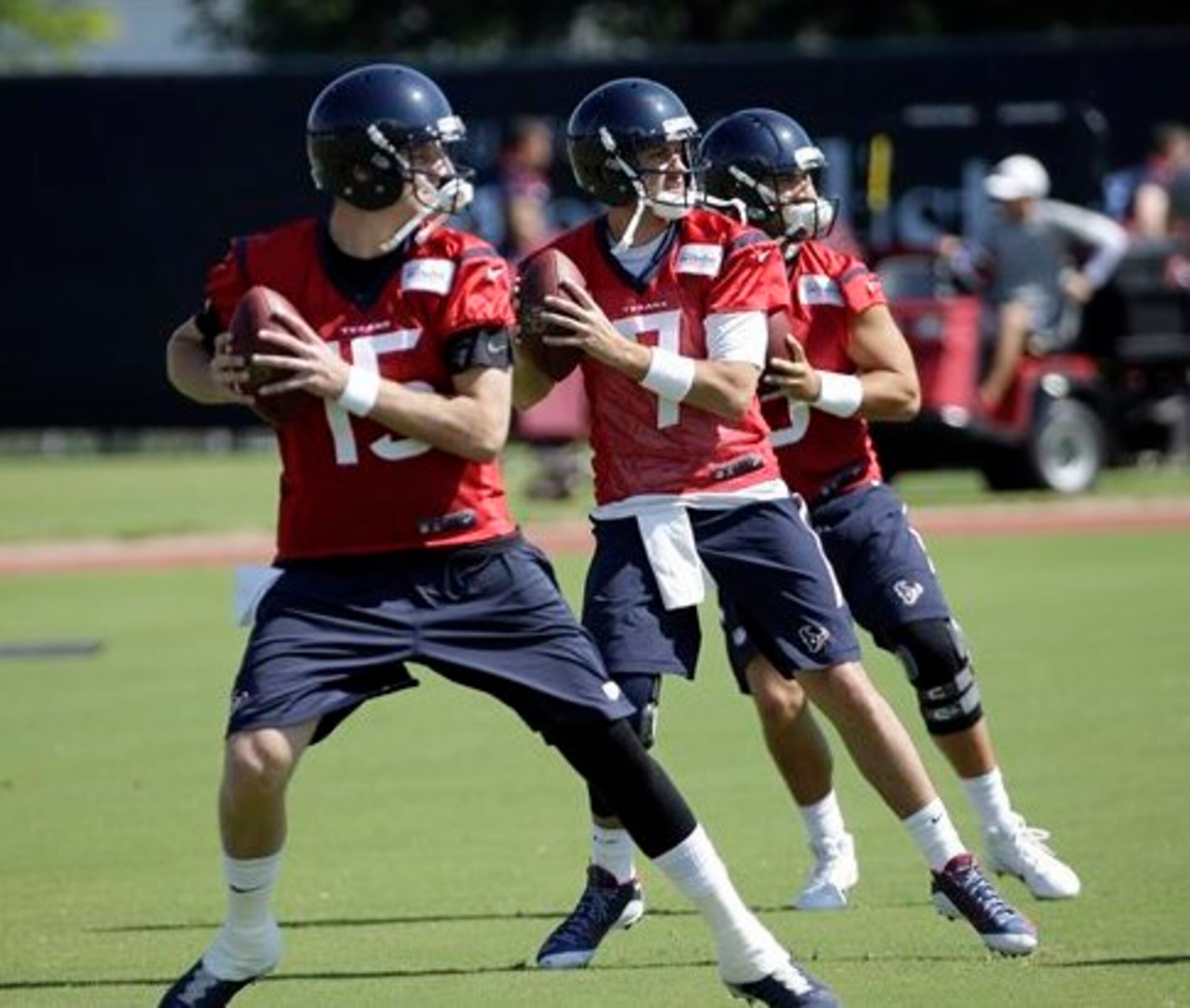
Familiarity can be a strange addiction in the NFL, especially as it relates to quarterbacks. The dot connecting is often far too simple: A quarterback has previously played in the system run by his current head coach or offensive coordinator, and that comfort will lead to quick results.
It’s a fine recipe for hopeful success, and at worst a solid backbone to fall on when few better options exist. Which is exactly what the Houston Texans did this offseason by adding another quarterback who has a history with head coach Bill O’Brien.
Soon they’ll be reminded that familiarity can only be the beginning, and not the entire foundation of a quarterback depth chart.
Quarterback moves that were made
The Texans signed Brian Hoyer to a two-year contract worth $10.5 million, and he’s been described as “smooth, smart and accurate” during OTAs and minicamp by John McClain of the Houston Chronicle. The third part there should prompt instinctive eyebrow raising.
Hoyer spent three seasons as Tom Brady’s backup in New England, and therefore also three seasons working with O’Brien, who was first the Patriots quarterbacks coach at the time and later ascended to offensive coordinator. So sure, maybe some familiarity will produce an instinctive clicking more often, and give Hoyer some added passing crispness. But that alone won’t cure a consistently wayward quarterback.
Please remember that no matter how impressive and smooth Hoyer looks between now and preseason games, he’s still a quarterback who was benched by the Cleveland Browns in 2014 after completing only 55.3 percent of his passes. At best he’s an offensive caretaker who can be asked to screw up as little as possible while the running game and defense does the heavy lifting.
Moves that could have been made
Any ideas here? Because I’m all out.
The Texans did all they could to salvage some shred of satisfactory quarterback play this offseason by signing Hoyer and re-signing Ryan Mallett, who also has previous experience working with O’Brien from their days in New England. In 2014, he appeared in three games (two starts) and completed a woeful 54.7 percent of his pass attempts.
A mediocre 9-7 record in 2014 meant the Texans sat perched at No. 16 overall on draft day, far removed from quarterback territory. Instead they put on hip waders and walked deep into the quarterback free-agent toxic waste, returning with a whole lot of good vibes from familiarity.
The end product
O’Brien has said he won’t name a starter until after his quarterbacks face a real opponent, most recently repeating that stance to McClain. Which is wise, because there will likely never be much separation between two replacement-level quarterbacks.
While McClain seems ready to give the starter tag to Hoyer, Chronicle colleague Stephanie Stradley writes that neither quarterback has stood out so far during offseason workouts. Ultimately, the quarterback who makes the fewest crushing mistakes will be given the job.
Jacksonville Jaguars Offensive Line
6 of 10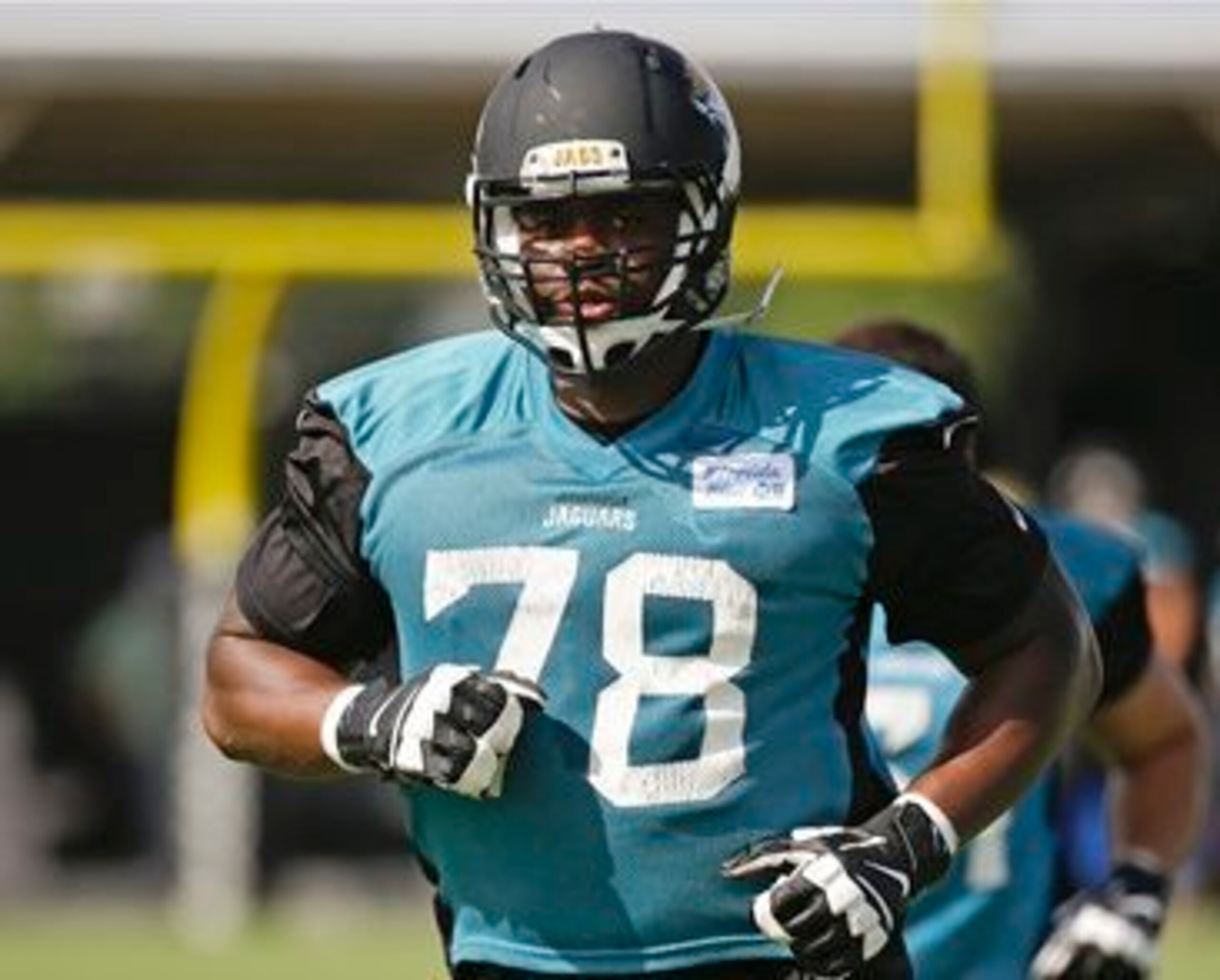
Any number tied to Blake Bortles’ rookie season communicates one thing: awfulness.
The Jacksonville Jaguars quarterback threw far more interceptions (17) than touchdowns (11), while finishing last in passer rating among the 39 passers who took at least 25 percent of their team’s dropbacks, per PFF. He also averaged a mere 6.1 yards per attempt, and completed only 58.9 percent of his throws.
But one stench-filled number was at least in part out of his control. Bortles took 55 sacks, which led the league even though he started only 13 games. Incredibly, he was sacked an average of once every 10 dropbacks.
Bortles has the tools and size to correct his rookie-season flaws, and justify his third overall pick status. But exposing him to that kind of punishment early is a fine way to shatter the young quarterback’s confidence.
There’s hope now that Bortles will be given some more precious time and space. Just not much, and it’s still likely frantic times will continue.
Offensive line moves that were made
The Jaguars threw cash at tackle Jermey Parnell, desperately overpaying just as they did with tight end Julius Thomas. Parnell had started only seven career games with the Dallas Cowboys, and yet now the soon-to-be 29-year-old has been awarded with a five-year contract worth $32 million.
Parnell’s average annual salary of $6.4 million ranks third among all right tackles, per Spotrac. Over a limited sample size of 507 snaps during his final year in Dallas he was sufficiently sturdy, allowing only one quarterback hurry and zero sacks.
Moves that could have been made
This is another case of barren cupboards and full pockets. Starting with the Packers’ Bryan Bulaga and the Cowboys’ Doug Free, the top tackles all re-signed with their current teams, leaving the Jaguars feeling lonely with their wad of cash and bruised quarterback.
Parnell was the best among the second-tier free-agent tackles, and a lack of supply drove his price skyward.
The end product
Uncertainty follows Parnell, but maybe he’ll be just fine on the right side even after being exposed to a higher snap volume. The right side isn’t the problem, though, but the left side manned by possible draft bust Luke Joeckel.
Joeckel was a flame-out in 2014 while allowing eight sacks (tied for third-worst among all tackles, per PFF) and 44 total pressures. Bortles has his shortcomings, too, but he’s doing more ducking than throwing when his blindside protection is whiffing that much.
Tennessee Titans Running Backs
7 of 10
The Tennessee Titans believe they drafted a franchise-altering quarterback with their second overall pick in 2015. There’s also hope Marcus Mariota can help head coach Ken Whisenhunt and general manager Ruston Webster in their efforts to maintain football employment. No pressure, kid.
Mariota is one potential solution, and he’s beginning his career a year after another hopeful answer at a core offensive position did the same.
Running back Bishop Sankey was the first selected at his position in 2014, and he had to wait until the Titans’ 54th overall pick. After finishing his collegiate career at the University of Wisconsin with 1,870 rushing yards as a junior (the nation’s fourth-highest rushing total that season), Sankey was labeled as the future of Tennessee’s backfield.
Surely his cutting and slashing would make Chris Johnson a memory, right? About that…
Running back moves that were made
Sankey immediately became an indecisive runner, and frequently danced in the backfield throughout his rookie season. He showed a lack of vision to identify running lanes, and not enough aggression to capitalize when they emerged. The result: a meager two 15-plus yard runs in 2014, and an average of only 3.7 yards per carry.
Sankey forced the Titans to draft a new potential running back of the future when they invested a 2015 fifth-round pick in David Cobb. He was also a steady yardage compiler in college, and finished with 1,626 rushing yards during his final season with the Minnesota Golden Gophers.
But the flaw with Cobb as an every-down back is his insufficient breakaway speed once he gets to the second level. As a larger back (Cobb weighs 229 pounds) he’s the ideal candidate to shoulder a heavy workload and lead a power-running attack. But Cobb’s top-end speed of only 4.81 in the 40-yard dash could severely limit his chunk gains.
Moves that could have been made
The Titans entered free agency with plenty of salary-cap riches, and at $27.8 million they still have the second-highest cap room. They had more than enough cash to pluck one of the top-tier running backs from free agency not named DeMarco Murray, like Justin Forsett or Frank Gore.
Instead their early efforts were primarily focused on defense, with outside linebacker Brian Orakpo and safety Da’Norris Searcy signed.
The end product
Shonn Greene was released Tuesday, per NFL.com's Kevin Patra, which became an inevitable move with Cobb a similar but more effective runner who does less plodding.
Over time Cobb will likely climb past Sankey on the depth chart, and Dexter McCluster will stay in place as the passing-down back. But this Titans offense will still be without what it had when Chris Johnson was in his prime: an imposing home run swinger in the backfield.
Cleveland Browns Tight Ends
8 of 10
Remember when tight end Jordan Cameron re-signed with the Cleveland Browns? Then he actually didn’t, instead heading to the Miami Dolphins after inking an identical two-year contract worth $15 million.
That was at the height of a particularly zany mid-March free-agency period, and it left only a deep, dark hole where the Browns tight end depth chart was once scribbled. A hole deeper and darker than the one Ozzie Smith is still tumbling down.
The top three Browns tight ends currently listed on that depth chart of nothingness combined for 39 receptions in 2014.
Tight end moves that were made
The Browns chased Rob Housler after losing Cameron mostly because he was frustrated with the team’s lack of offensive direction and quality quarterback play, as ESPNCleveland.com’s Tony Grossi reported.
At that point they needed to sign pretty much anyone capable of catching a pass and playing tight end, because Gary Barnidge and Jim Dray—both almost exclusively used as blockers—frighteningly were the top rostered options remaining.
There’s low-risk upside with Housler, who is being paid only slightly more than nothing by NFL standards on a one-year contract worth $1.76 million, and he comes to Cleveland after being an afterthought with the Arizona Cardinals. Tight ends typically wither and fade away in a Bruce Arians offense.
Back at the 2011 scouting combine, Housler showcased his athleticism at 6’5” and 250 pounds, running the 40-yard dash in 4.55 seconds. For perspective, the man he’s replacing posted a time of 4.59 at the same combine.
Moves that should have been made
Housler could become something between serviceable and fine as an emergency glass case signing after the Browns were stiff-armed by Cameron. But with cap space not a concern (they still have $21.9 million to work with), Cleveland could have found a better upgrade by signing Charles Clay to an offer sheet, just as the Bills did.
That would have required overpaying and absorbing a possible future cap anchor. But throwing money at a problem often becomes a necessary evil during desperate times.
The end product
Housler could develop into a quality volume catcher with his size and athletic ability. But he lacks an established history of production, and trusting him as a band-aid solution might end in tears.
Tampa Bay Buccaneers Safeties
9 of 10
The Tampa Bay Buccaneers pass defense was set up to improve in 2014, or at least be something much better than terrible. Cornerback Alterraun Verner was added to a defensive backfield that already had hard hitting safeties Dashon Goldson and Mark Barron, and new head coach Lovie Smith would implement his famed Cover 2 scheme.
Then the crumbling started. Barron wasn’t a fit for Smith’s defense, and was shipped off at the trade deadline. Verner allowed 741 yards in coverage, which was awful enough to place him 99th among the 116 cornerbacks who were on the field for at least 25 percent of their team’s snaps, per PFF. And eventually Goldson was traded to the Washington Redskins for the lowly price of a 2016 sixth-round pick.
The result of that gradual decay was a 28th-ranked secondary, and the Bucs allowing 255.2 passing yards per game along with 7.6 per attempt. The solution, it seems, was to bring in and/or retain the absolute worst part of Smith’s Chicago Bears defenses.
Safety moves that were made
The Buccaneers signed Chris Conte and re-signed Major Wright, who both do fine turnstile impressions.
Conte missed four games due to various injuries in 2014. During the previous season, his 474 yards allowed in coverage ranked 80th among 84 qualifying safeties, per PFF. Who ranked 84th that year? Wright, of course, after he flailed his way to 512 yards allowed alongside Conte during his last season in Chicago. Go Bears!
Moves that should have been made
The Buccaneers didn’t have to take hammers to innocent money jars in their search for a more viable option than Conte, and more support for promising-though-still-relatively-unproven second-year safety Bradley McDougald.
For example, Da’Norris Searcy eventually agreed to a contract that pays him an average of $5.9 million annually, and he’ll account for a cap hit of only $3.6 million in 2015.
The end product
The Bucs apparently believe McDougald—who went undrafted in 2013—has a chance to become an elite safety, according to Ira Kaufman of the Tampa Tribune. He flashed promise with six passes defensed and a passer rating allowed in coverage of only 86.9 after replacing Barron for the final five games of 2014.
But expecting McDougald to make that jump quickly is taking a mighty leap of faith without any safety net. Wright, Conte and recently claimed D.J. Swearinger (he of the 475 passing yards allowed in 2014 and five touchdowns) offer little more than below-average play for an already below-average secondary.
Carolina Panthers Left Tackles
10 of 10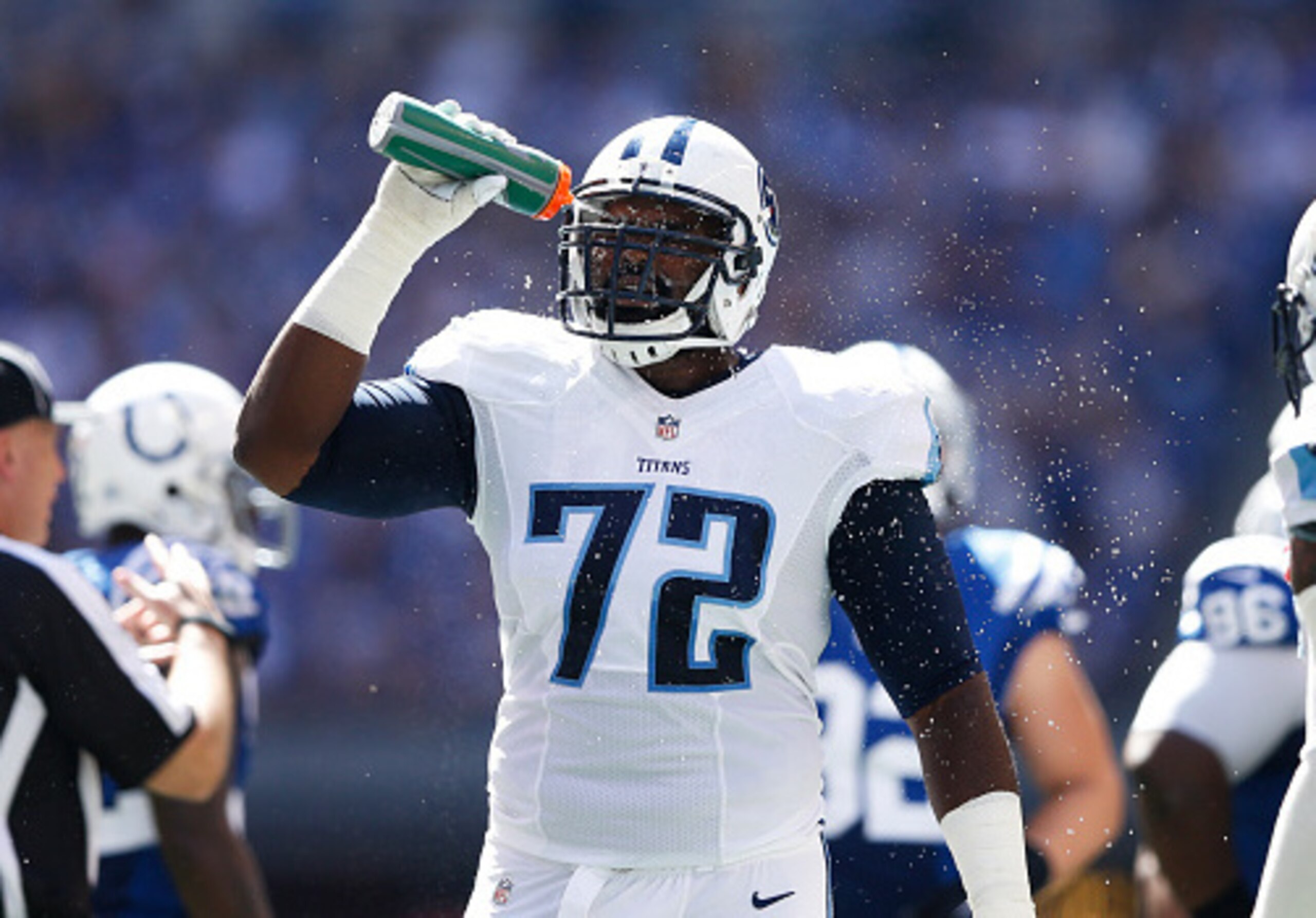
The Carolina Panthers may have been better off putting a large cardboard cutout of quarterback Cam Newton at left tackle in 2014.
That contraption would have been more mobile than Byron Bell. He was nearly invisible, an impressive feat for a 340-pound man. The 26-year-old was routinely embarrassed at left tackle while giving up nine regular-season sacks and 52 pressures, per PFF, which both ranked as the second-worst totals at his position.
Improving at left tackle shouldn’t have been too much of a challenge for the Panthers then, as there was only one direction they could go after a disastrous season. Or, on second thought, maybe there was another option: sideways.
Left tackle moves that were made
The Panthers signed Michael Oher, who was last seen failing as a right tackle with the Tennessee Titans. You know, the easier side, and the one without “make sure the quarterback doesn’t get viciously thumped from behind” in the job description.
Before his season ended five games early due to a toe injury, Oher was at right tackle for 397 passing snaps. During that time he allowed six sacks and 36 pressures, per PFF. Both numbers there are glaring, but especially the latter when it’s compared to other tackles.
The Jets’ D’Brickashaw Ferguson allowed 37 pressures, for example, but he needed 588 passing snaps to get there. Oh, and he plays left tackle, which is remarkably where Oher now finds himself, with the also swinging gate-like Jonathan Martin behind him on the depth chart.
Moves that should have been made
The tackle market wasn’t exactly overflowing with talent during free agency. That rarely happens, but the Panthers still had an opportunity to pursue La’el Collins as an undrafted free agent.
The end product
Oher will be painful in a very literal way. Newton’s problems in 2014 were often self-induced, as his accuracy regressed and he often made poor reads. But a lack of time to set his feet contributed to an inconsistent season, and now he’ll be fighting for every second in the pocket again.
.jpg?w=2560 "Seahawks Chiefs Football")



.jpg?w=2560 "Latest Peyton-Colts Rumors")