

Breaking Down the USWNT's Biggest Issues from Group Stages and How to Fix Them
It seems almost cruel for a team to emerge from the "Group of Death" only for the journey to get increasingly difficult from here on. Alas, such is life at the Women's World Cup and the fate of the United States women's national team.
The United States solidified their place atop Group D on Tuesday night with a 1-0 victory over Nigeria, finishing with a 2-1-0 mark overall. While the result itself is a relief, there is still reason for significant consternation as the USWNT enters the knockout round.
A stout defense—buoyed by centerback revelation Julie Johnston and the steady play of keeper Hope Solo—has covered up numerous warts in the squad. While the United States haven't often been troubled, they have also struggled to cause trouble for the opposition.


Improvements must be made if the United States are going to fulfill their mission of winning their third World Cup.
The General Midfield Disaster Area
We’ve all had that sinking feeling when we've gotten on a flight somewhere only to discover we’ve left something important at home, be it medication, a phone charger, or even the youngest member of the family. As SB Nation’s Kevin McCauley points out, it’s fair to wonder if Jill Ellis has got that feeling about now.
"Would be cool if we could bring on Dunn or Huster or Mewis or Buczkowski or Averbuch or DiBernardo or Killion. Any of them is fine, really.
— Kevin McCauley (@kevinmccauley) June 17, 2015"
"Oh wait LITERALLY ALL OF OUR REAL MIDFIELDERS ARE HOME
— Kevin McCauley (@kevinmccauley) June 17, 2015"
While Christen Press, Morgan Brian and Tobin Heath have all floundered on the flank opposite Megan Rapinoe, the real issues have been in central midfield. Lauren Holiday and Carli Lloyd have failed to get involved going forward, and neither is a destroyer in the center of the pitch.
In fact, there seems to be some confusion over what their roles have actually been, as exemplified by these tweets from ESPN’s Jeff Carlisle and Grantland’s Mike Goodman.
What options does Ellis have at her disposal?
The first option is a radical one, and not the sort of thing the United States should try unless they’re absolutely desperate and all hope is otherwise lost.
A move to the 4-3-3 has been much discussed, but without this wrinkle: move Johnston into the holding midfield role behind Holiday and Lloyd. Not only does Johnston have the skill set to play the position quite well, she has the experience after playing there in college.
The gamble, of course, is that Johnston has been the best player on the team thus far, and you don’t want to mess with a good thing.
The better option is to do nothing, rely on the defense and attack, and hope some semblance of chemistry develops throughout the unit as the tournament marches on. The Netherlands made it to the semifinals in the men’s World Cup last summer virtually ignoring their lack of a midfield, so the blueprint is there for a run.
Finding the Right Strike Partnership
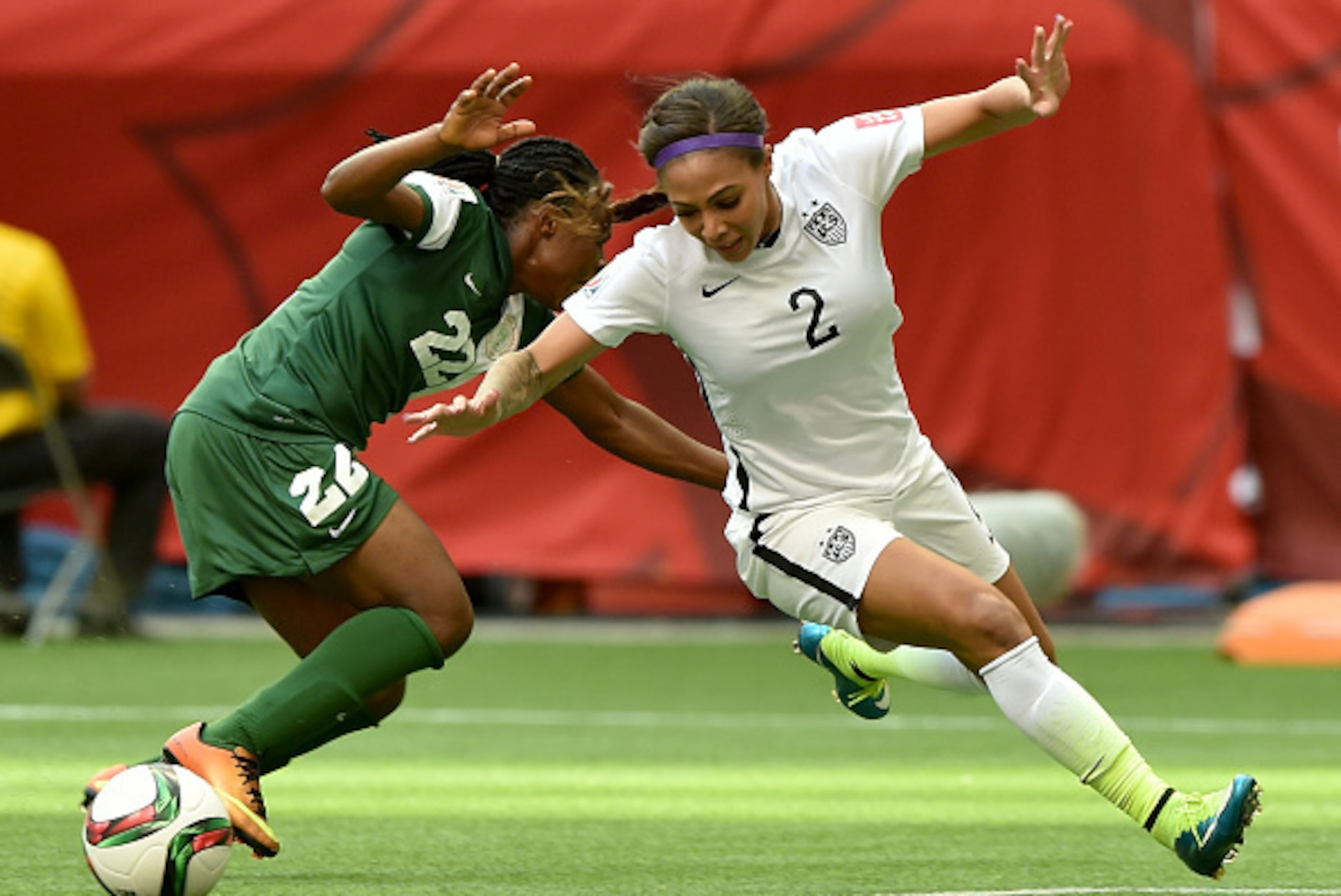
The extent to which the USWNT is overrun with strikers can be summed up thusly: Kelley O’Hara, the deputy for Ali Krieger at right back, won the Hermann Trophy as a forward at Stanford University.
So why can’t Ellis find the right combination at the top of her 4-4-2 formation?
Through the group stage, players occupying the two forward roles have combined for one goal—Abby Wambach’s finish from a corner against Nigeria—and one assist, which came courtesy of Sydney Leroux following a brilliant run down the left against Australia.
That simply isn’t enough for a team intent on winning their third World Cup.
The question comes down to this: Can the 35-year-old Wambach and injury-addled Morgan survive four more games on unforgiving artificial turf? Do the United States even have a choice in the matter?
It is perhaps best if Wambach answers that question, via Jere Longman of the New York Times:
"We need Alex Morgan to win this tournament, whether it’s her starting or coming off the bench. We feel good about the way she played. Yeah, we want to score more goals. All teams want to score more goals. But she’s coming along fine.
"
While the pressure may seem harsh, let’s not forget who we’re talking about. Morgan not only holds the record for latest goal in U.S. women’s national team history with her 123rd-minute strike against Canada in the 2012 Olympics, but she also is the only woman to record both a goal and an assist in a World Cup final, doing so against Japan in 2011.
Taking Advantage of Dead-Ball Situations
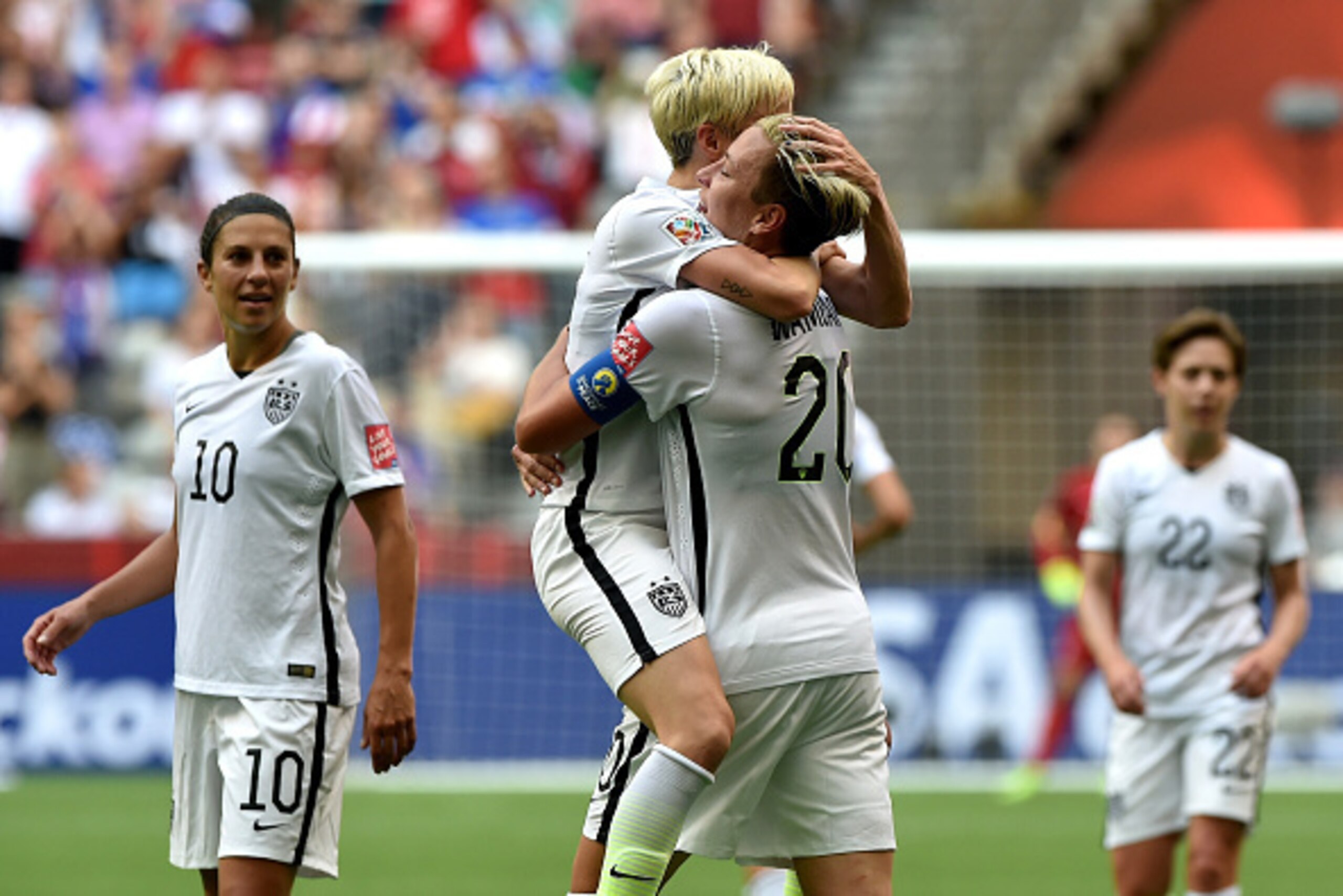
Despite numerous opportunities, the United States have thus far managed only one goal from a set piece this tournament.
Just how abysmal has their record been? The United States attempted 38 free kicks and 16 corners in the group stage.
Much of the struggle has been a product of their own doing.
With Wambach on the bench against Sweden, the USWNT opted to keep play moving along, an odd strategy considering they only managed to get two shots on goal the entire match.
Against Australia and Nigeria, Rapinoe and Holiday would frequently take short corners when the opportunity presented itself, often resulting in nothing more than a feeble flick into the box.
The United States have been clear in their intent to play the ball into Wambach as often as possible. They need to continue that approach in dead-ball situations, giving Wambach—and Julie Johnston—opportunities to win their battles at both posts.

.jpg?w=2560 "Seahawks Chiefs Football")






.jpg?w=2560 "Raiders Sticking with Cousins")