Copa America Awaits a Show of Force from Nation Who Would Be Kings
One thing was pleasingly absent from the opening ceremony of the Copa America last Thursday. There were no speeches. It was a wise decision. With the organisers of South American football under something of a cloud after the FBI investigation into FIFA's dealings, and the Chilean government with scandals of its own, this was not a time for grandstanding. It was a moment to give centre stage to the players—and to the fans.
The Copa has grown enormously in recent years. This is the sixth version of the tournament that I have covered. At the first one, in Paraguay 16 years ago, some of the games had more police than supporters in the stadium. Not any more. The continent has become richer. More people can afford to fly.


.jpg?w=2560 "Seahawks Chiefs Football")
The first signs were in the previous tournament, four years ago in Argentina, where there was a sizeable following from Colombia. It was a hint of what was to come in the 2014 World Cup, with its huge travelling armies of Latin American fans. And many of them are back this year, braving the mid-winter Chilean cold.
Colombia pull up lame in opener
On Sunday I caught the 8:40 a.m. train out of Santiago, bound for Rancagua, just over an hour away, where Colombia were due to face Venezuela. The train arrived some six hours before kick-off. Even so, along with a smattering of Venezuelans it was packed with Colombian fans heading for the match. They packed the little stadium in Rancagua—which like so many Chilean grounds has a splendid setting, with a range of mountains providing a stunning backdrop.
Hopefully they enjoyed the view, because there was precious little to enjoy from their team. Colombia were dreadful, and could hardly complain about their 1-0 defeat. The tournament dark horses were running very lame indeed, in a game which at the same time symbolised an early trend of the 2015 Copa, and was out of key with much of what has happened in the first few days.

The difference lay in the lack of excitement. The tournament has so far more than lived up to expectations that the balance might be tipped toward attack. Four years ago in Argentina the defences came out on top. But four years ago Argentina had yet to find a way to get the best out of Lionel Messi. Neymar was a callow youth, far closer to promise than reality. James Rodriguez was still with the Colombian under-20 side. Chile were in an awkward inter-regnum, with Claudio Borghi in unsuccessful command between either side of the reigns of Marcelo Bielsa and Jorge Sampaoli.
Feast of attacking football
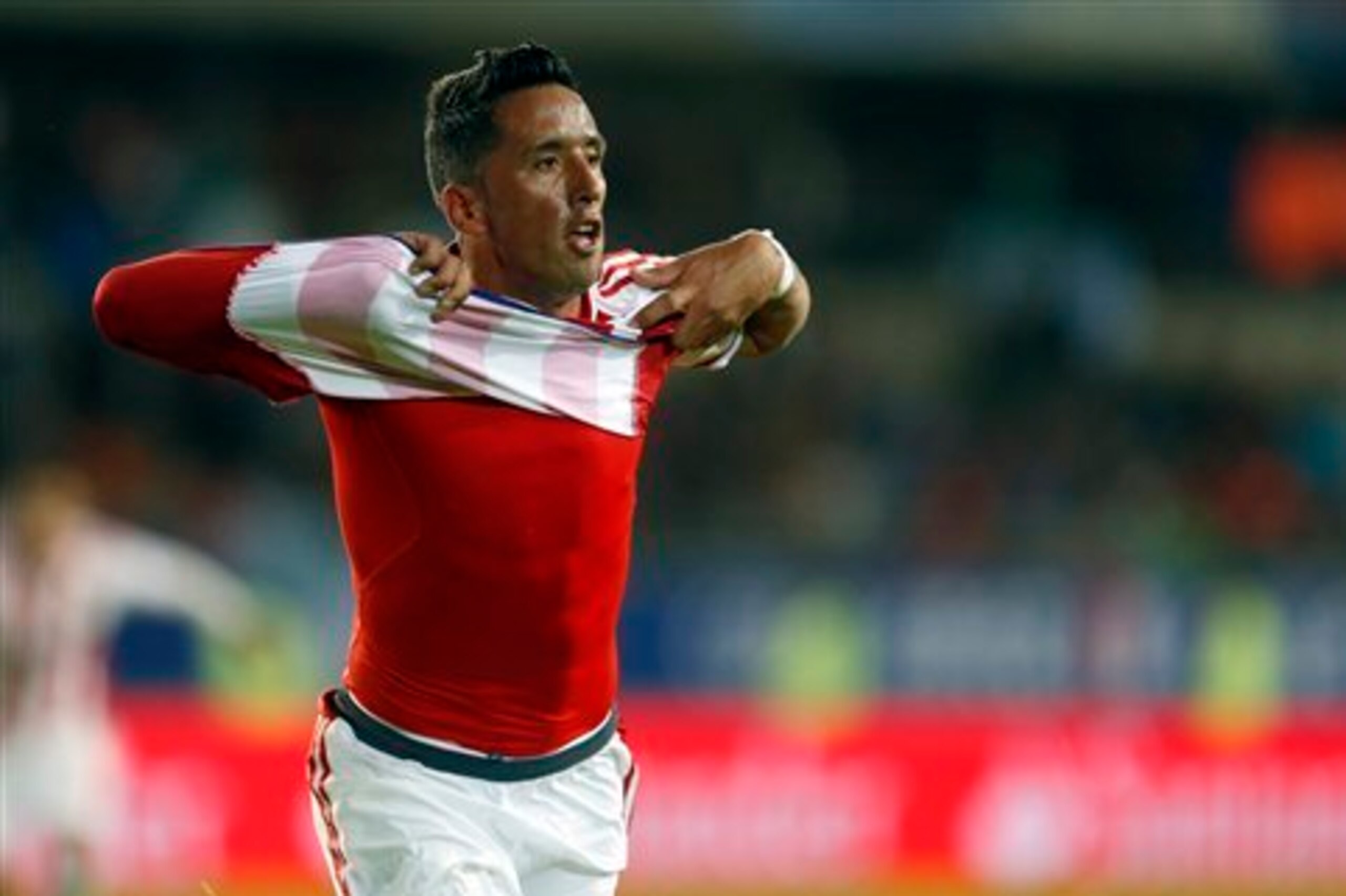
This time round, then, most of the leading challengers look better equipped to attack—a hope that has been more than borne out by events. It was barely conceivable, for example, that Bolivia would score three times in 45 minutes against Ecuador. Or that Paraguay would hit back so strongly to draw 2-2 in a delightfully crazy match against Argentina. Or that Mexico’s second string side would take part in a game as exhilarating as Monday night’s 3-3 draw with Chile. So far 22 goals have been scored—and the eight opening games have certainly whetted the appetite for the remaining 18.
Less than convincing favourites
But if the poverty of Colombia’s debut was not nearly so pleasing on the eye, in another sense it was in perfect harmony with the opening exchanges. To a remarkable extent, the first six days of the 2015 Copa have been defined by the limitations of the favourites.
After the three seeds (Argentina, Brazil and the hosts) Colombia were seen as next on the list of likely winners, a team well set up to build on last year’s achievement of reaching the World Cup quarter-finals for the first time. But the return of Radamel Falcao Garcia, who missed Brazil 2014 through injury, would appear to have created a problem. Since he is unhappy operating up front on his own, Colombia can no longer play a five-man midfield.
And with Abel Aguilar injured, the central midfield duo of Carlos Sanchez and Edwin Valencia lack the passing nous to knit the side together. Against Venezuela a side coach by Jose Pekerman was, very unusually, reduced to hitting hopeful long balls forward for the strikers to chase.
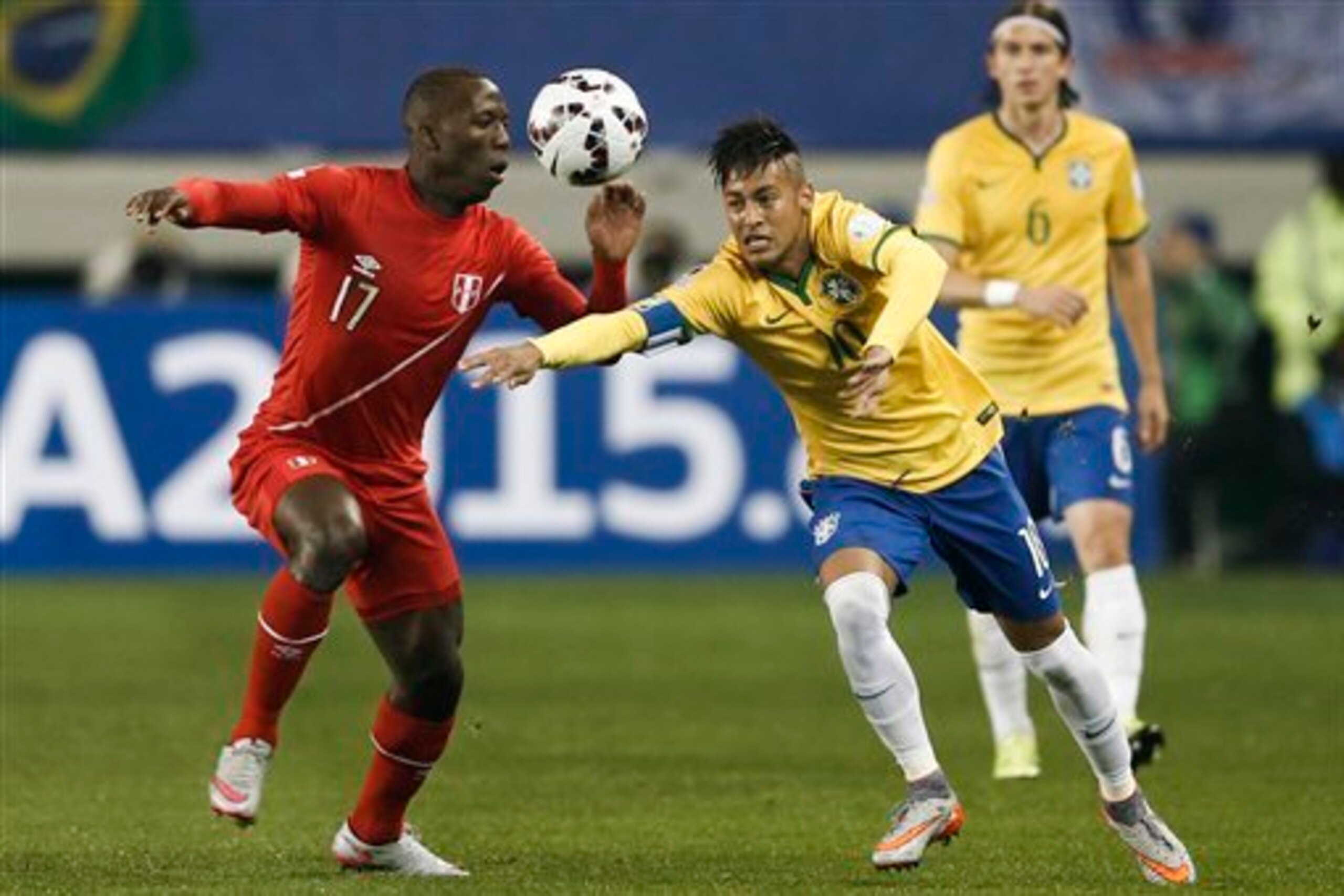
Their next opponents are Brazil, whose dependence on Neymar seems to grow by the game. One wonders what might happen if he gets injured or has an off day. Perhaps the likes of Willian or Roberto Firmino can rise to the occasion. Alternatively, Brazil might look very ordinary indeed. And at the other end, they are clearly missing the positional sense of injured holding midfielder Luiz Gustavo—and centre-back David Luiz always looks capable of making an important mistake.
Meanwhile, Argentina’s entire defensive unit creaked and gave way under pressure in that extraordinary second half against Paraguay. It is astonishing that such an experienced side could go to pieces against such undercooked opponents. The attack had a wasteful afternoon, and coach Gerardo Martino is understandably under fire for some bizarre substitutions. But the main question mark hanging over Argentina is their capacity to defend.
They got back on track with a battling win over Uruguay, with Sergio Aguero once again showing his class in front of goal with a brilliant header, but question marks remain.
Hosts Chile have some work to do
And what of Chile? Back on Thursday their opening night 2-0 win over Ecuador came across as a nervy affair. Of course, there were first night nerves. There is also the tactical question brought about by playing at home. Under Sampaoli (and previously under Bielsa) Chile have become known for the frantic directness of their play, their bold charges throwing plenty of players forward at pace. Sampaoli, though, has recognised that, at home, there needs to be a bit more patience in the mix.
Opposing teams will inevitably sit back. Chile are trying to adapt by giving more emphasis to retaining possession, and then choosing their moment for the charge. The danger is clear—the team could be caught midway between two ideas. This, perhaps, was part of the problem against Ecuador, when Chile’s goals both came at moments when the visitors were looking stronger.

I came away from the stadium in Santiago last Thursday a little bit worried about the Chileans—not that the host population seemed to care. They took to the streets in numbers, with a late-night crowd gathering to celebrate at the traditional Plaza Italia meeting point. Perhaps they could see a few days into the future. Because after the other teams had taken the field, Chile’s performance did not look so shaky after all.
Indeed, compared to Brazil’s stoppage-time win, Argentina’s draw and Colombia’s defeat, the Chilean triumph was the most convincing of the lot. And surely, with those nerves now out of their system, they would go on to beat Mexico and make a firm statement of their ambitions in this tournament. And yet I have just come away from the stadium in Santiago a little bit worried about the Chileans again.
True, in patches they came up with some wonderful stuff, especially early in the second half. And if the goal by Alexis Sanchez had not been harshly ruled out for offside they would be celebrating another victory, with the winner coming from a flowing move to be remembered for many years to come.
Instead, though, it was impossible not to dwell on the deficiencies of the Chile defence. Their lack of height at the back makes every ball lobbed into their box a heart stopper. And for the third Mexican goal the entire back line were caught out by one simple punt over their heads. They let a second string Mexico side score three times against them, and threaten others. That is surely a cause for substantial concern.
Time for a genuine contender to step forward
And so, after six days and 10 games of the 2015 Copa, we are still left with a giant question mark. When is a side going to show the sort of flair and maturity, solidity and balance to announce themselves as the team likely to go home with the trophy? Who is really in it to win it? Week 2 should come up with some answers.
Tim Vickery will be contributing in text and video to Bleacher Report during the Copa America tournament from a base in Chile.