

Women's World Cup 2015: Day 2 Takeaways
Germany and Norway sit atop Women's World Cup Group B after the first round of matches on Sunday at TD Place Stadium in Ottawa, Ontario.
Both of Group B's European sides impressed against tournament newcomers in their openers, but Germany was a cut above, scoring at will in a 10-0 demolition of Ivory Coast. In the day's first game, Norway raced to a three-goal halftime lead before defeating Thailand 4-0.
The two lopsided results produced a number of talking points, which we present below in our key takeaways from the second day of the Women's World Cup.




Just how good is Germany?
In the day's second game, Germany turned in a masterclass against an overwhelmed Ivory Coast side, winning 10-0 as Celia Sasic and Anja Mittag hit a hat-trick each. The Germans scored five times in both halves without ever really moving out of second gear, and the result was the second-highest scoring total for any team in a single Women's World Cup game, per STATS Football.
The record of 11 also belongs to Germany, specifically to the 2007 side that went on to win a second straight world title. At this point, it's hard not to interpret that as an omen.
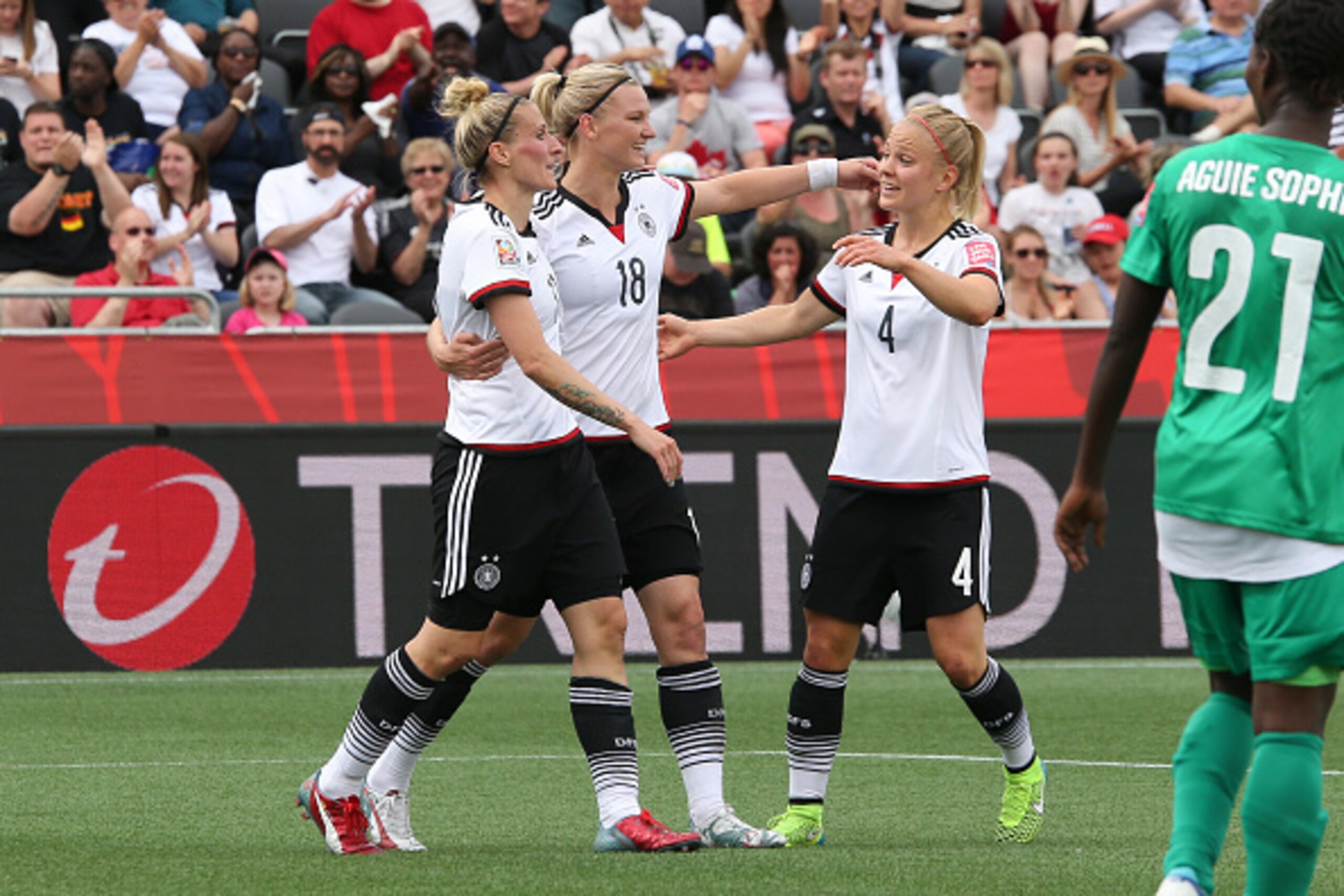
Sasic had to wait only until the third minute to net her first goal, and her 31st-minute hat-trick was the fastest in World Cup history. Mittag and Sasic were the third set of teammates to notch separate hat-tricks in the same match, per ESPN's Paul Carr. Almost inevitably, that 2007 Germany team also accomplished the feat.
Simone Laudehr, Sara Dabritz, Melanie Behringer and Alexandra Popp also scored on the day, but there were fine performances all over the pitch for the world's top-ranked side. Based on Sunday's scoreline, it's almost too easy to tip Germany for glory again this summer. And yet, how much did we really learn from this result?

Before the tournament, we already knew Germany was strong. Silvia Neid's team traveled to Canada with FIFA's top ranking. Ivory Coast, on the other hand, entered as the tournament's lowest-ranked side at No. 67 and had only played one match this year in preparation for the World Cup.
Simply put, Ivory Coast had no chance against Germany. The six-time European champions boast a deep squad with talented players filling every position across the pitch. Coupled with that is a good blend of youth and experience, making Germany the favorite on paper to win it all.
Once the game started, the mismatch played out in real time. The Germans showed Sunday that they are ruthless, efficient and clinical, and they even did it without a number of key players.
It was old news that Nadine Kessler (the reigning FIFA World Player of the Year) and Fatmire Alushi would miss the tournament. But on Sunday, Germany also played without promising young playmaker Dzsenifer Marozsan, who was reportedly not at full strength.
Even without all those star names, however, Germany was light-years ahead of Ivory Coast. Stiffer challenges await, but this 10-goal win put down a marker to every other team in the tournament.
"We had judged them to be better than they were today," Neid said, per FIFA's website. "We were very focused and concentrated heading into the match. We scored early on, and stood our ground, we outran them, and we are glad that we took home the three points."
Complaints over competition miss mark
Obviously, a 10-goal rout is not the ideal level of competition for the World Cup, football's most important international tournament. But while some might point to the increased number of teams in this year's tournament as a primary cause for Sunday's lopsided result between Germany and Ivory Coast, it's not entirely clear whether that's the problem.
As noted above, Germany scored 11 goals in a game during the 2007 World Cup, which featured 16 teams. Thus simply reducing the number of teams wouldn't necessarily lead to closer competition. In addition, as CSN's Daniel Squizzato noted on Twitter, the men's World Cup in 1998—the first to feature 32 teams—included a number of blowouts.

In order for the women's game to grow, it was important for the World Cup to expand to 24 teams this summer. Developing footballing nations need to have time to improve, and limiting the World Cup to only the elite teams would not allow that. Playing against the best will only make the newcomers better, regardless of how much pain they feel now.
Take the example of the most recent Women's World Cup champion. In its first five trips to the tournament, Japan went out at the group stage on four occasions. The first three appearances ended with a combined goal differential of negative-27, and in 1991, in its second-ever World Cup match, Japan lost to Sweden 8-0, with Pia Sundhage scoring one of the goals.
But in 2011, the Japanese stunned the world and won the tournament, beating powerful Germany, Sweden and the United States in the knockout stage. And in an interesting coincidence, the U.S. coach in the final was none other than Sundhage.
That is not to say Ivory Coast will definitely emulate Japan and win a World Cup one day. It's only to say that this is just the beginning for the Africans and other newcomers like them.
"Our girls discovered something today—a high level of competition, and it did have an effect on us a little bit," Ivory Coast coach Clementine Toure said, per FIFA's website. "We must forget the score from today, forget the negative points, and learn from this. Playing the best team in the world is also the best way to learn for us."

Norway impressed, with Thailand overmatched
Norway encountered little difficulty in beating Thailand decisively, recording an easy 4-0 victory in Sunday's opening game. The Europeans led by three goals at halftime and were obviously the better side. With the win, Even Pellerud's squad will now go into its second match, against Germany, with at least some confidence.

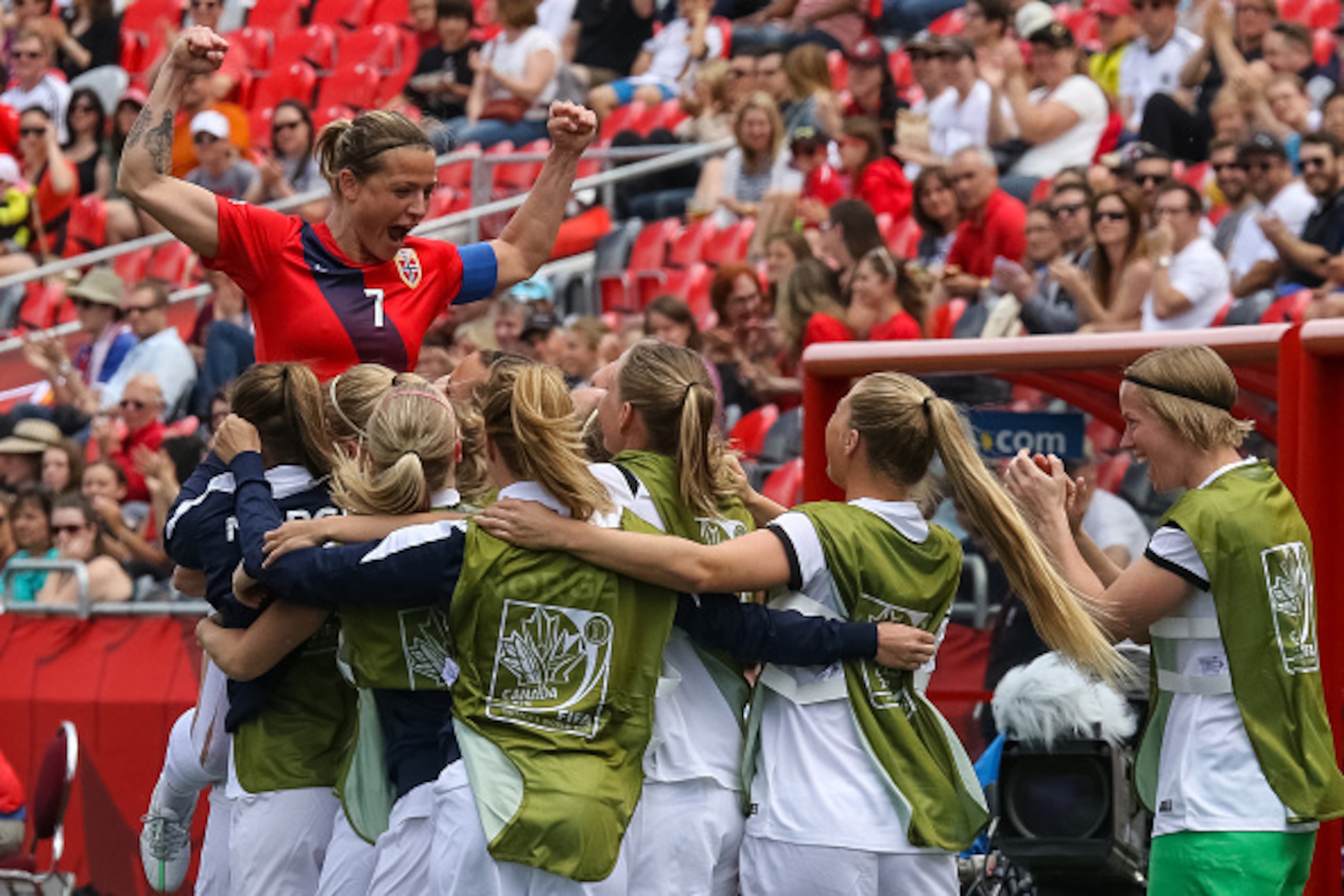
Trine Ronning broke the deadlock with a 15th-minute free-kick, and the goal seemed to open up Thailand's previously tight defense. Isabell Herlovsen added two more before halftime, celebrating the second with a mock-selfie with her teammates. After the break, 19-year-old Ada Hegerberg netted the fourth in the 68th minute, slamming in from close range following Elise Thorsnes' cross from the right.
Maren Mjelde had a penalty saved later in the second half, but the miss mattered little for Norway. Pellerud's side is full of goalscorers in spite of the absence of injured winger Caroline Graham Hansen. Hegerberg, in particular, appears to be a promising prospect.
For its part, Thailand was clearly overmatched, only rarely threatening to create danger in Norway's end of the pitch. But as opening matches go, Norway must be rather pleased. With a minimum of fuss, the Europeans have three points in hand and can look forward to what will surely be a completely different test next time out.
"The first game of the tournament is always nerve-wracking," Pellerud told FIFA's website. "We are happy to have three points, but we have to improve aspects of our play against other teams. We're ready for the game against Germany on Thursday."
But Norway's real test is next
Pellerud, who led Norway to the 1991 World Cup title, knows what his team is up against in Group B. The Grasshoppers were always expected to win—and win easily—against newcomers Thailand, and that will be the case against Ivory Coast as well. In between, however, is a much more difficult match against Germany.
Overall, Pellerud must be happy with Norway's performance. But one issue that might concern the coach was on display early in the first half against Thailand.
In the fifth minute, Kanjana Sung-Ngoen raced free of her marker down Thailand's right flank, catching Norway out in transition. She centered for Silawan Intamee, who had a free look on goal but fluffed the chance.
Germany—who defeated Norway in the Euro 2013 final—will not be so wasteful. If the European champions can catch their opponents in transition, the goals will likely flow.

Angerer's flaps give Germany something to watch
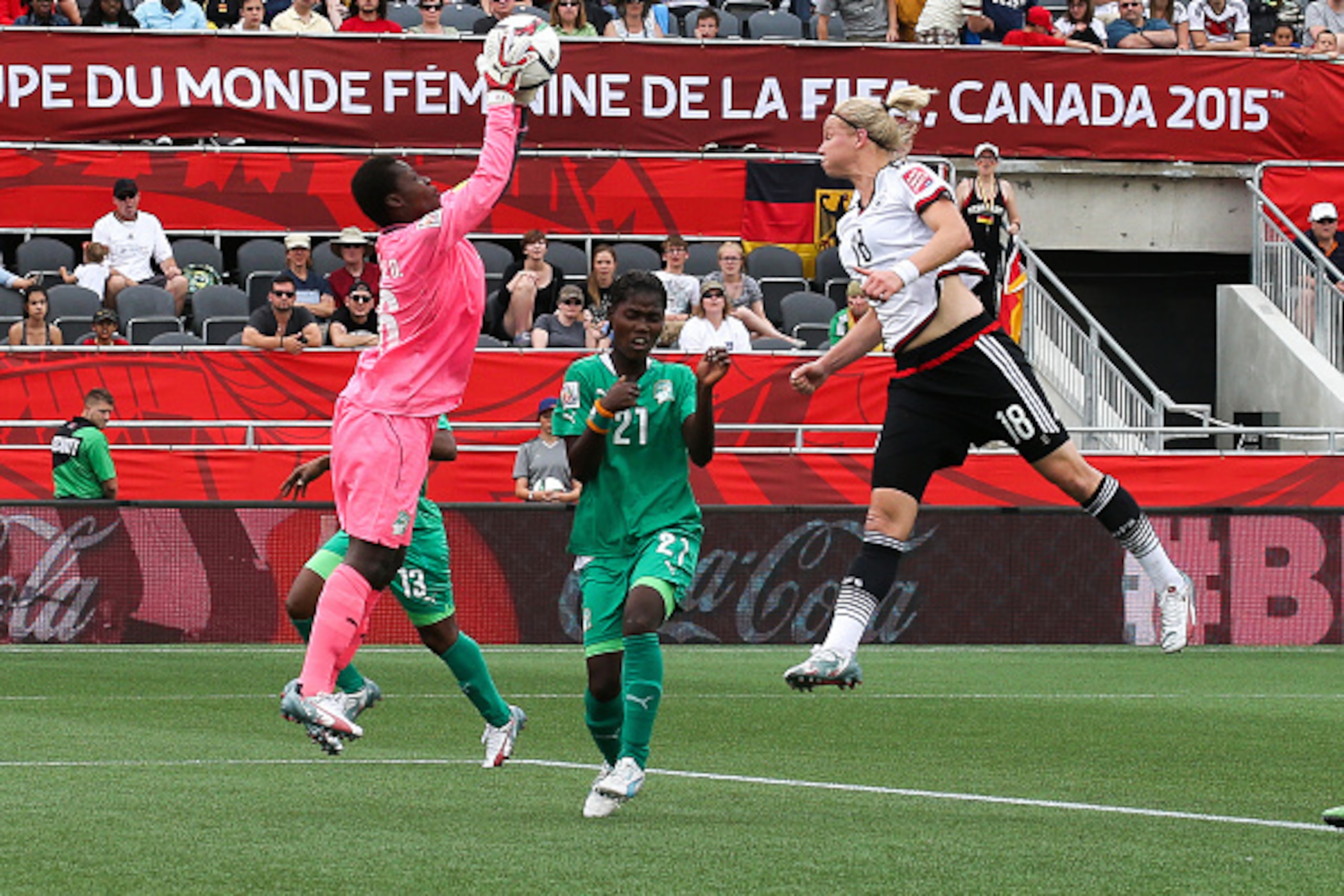
Goalkeeper Nadine Angerer is generally one of the best performers in Germany's loaded lineup. But the 2013 FIFA World Player of the Year made a pair of mistakes against Ivory Coast, both of which nearly gave the Africans a goal.
Both incidents occurred in the second half as Angerer flapped at and dropped high balls in her box. While both did no harm in the end, Neid might harbor the slightest of concerns about her No. 1 goalkeeper heading into the most important group match, against Norway on Thursday.
More pitch problems
On Fox's telecast of the match in the U.S., sideline reporter Julie Stewart-Binks noted that the temperature on the pitch had reached 130 Fahrenheit in the second half of the match between Norway and Thailand.
Such a brutal temperature, which could begin to melt players' shoes, provided a further argument against playing important matches on artificial pitches.
Goal differential already playing a part
It seems odd to think that Thailand, after losing its opening match by four goals, could still have a decent shot at advancing to the knockout stage. But under the new format of the tournament, four of the six third-placed finishers will move on to the round of 16.
For Thailand, then, all is not lost. In "limiting" Norway to four goals, the Asian team kept itself ahead of Ivory Coast in the race for the knockout stage, if nothing else.
On the other hand, Thailand still has to face Germany.
Follow @MiguelCominguez.


.jpg?w=2560 "Chiefs, Steelers Eye WR Trades")






.jpg?w=2560 "Raiders Sticking with Cousins")