10 Things We Learned from 2014/15 Champions League
This season's Champions League might have ended in a rather familiar fashion, with Barcelona winning the famous trophy once again, but there were plenty of surprises and unpredictable events along the way.
At the start of the season few would have predicted Juventus would be the final team left standing in the battle to deny Luis Enrique's side, or that not one Premier League side would manage to make it into the last eight of the competition.
Similarly, not many will have predicted that the likes of AS Monaco and Porto would join Europe's usual powerhouses in reaching the quarter-finals of the competition, or that Shakhtar Donetsk striker Luiz Adriano would finish just one goal shy of being the tournament's top goalscorer.
There was a lot to learn and digest. Click on for a selection of the key lessons from another memorable European competition.
Barcelona Are Officially Europe's Modern Dynasty
1 of 10
Ten seasons, four titles. If there was previously any doubt that Barcelona are the dominant force in European football, then this season surely ended it, as the Spanish champions added the 2015 crown to their previous triumphs in 2006, 2009 and 2011.
Considering that no side has ever managed to retain the Champions League in its current form—a nod not only to how difficult it can be to win in its current format but also the quality of the handful of illustrious clubs that are always vying for glory—then it is clear that such a sustained run of success (a 40 per cent winning percentage!) is hard to take lightly.
We analyse and investigate it, but the ultimate truth is unavoidable—no club can match Barcelona right now. Eleven seasons ago the club had won just one European Cup (along with the likes of Feyenoord, Aston Villa and Steaua Bucharest), yet Barcelona have five titles (level with Liverpool and Bayern Munich, behind only AC Milan and Real Madrid).
Seven seasons ago they had never won the treble, yet now they are the only European club in history to do it twice.
"If you look back at the last 10 years, without a doubt the best club in Europe is Barcelona," their coach, Luis Enrique, told reporters after Saturday's final. "We want to continue along this road."
With Lionel Messi still in their side and yet to pass his peak, the Blaugrana will surely have that opportunity. They have a fearsome strike force that is still young and will presumably get better over the next few seasons, while they retain a core of academy graduates that will guarantee the club's formidable style of play continues.
Even if, as a worst-case scenario, this is the last time they are kings of European for a while, we are unlikely to see such dominance from any one side for a long time.
English Teams Have Slid Well off the Pace
2 of 10
If it was another hugely successful season for Barcelona, then it was a shocking one for English clubs. After having Premier League representation in seven of the eight finals between 2005 and 2012, it is now three seasons since an English side reached the showpiece match.
That would indicate either a drop in the quality at the top of the Premier League or, alternatively, a significant improvement in the quality of the best teams elsewhere in Europe. But the fact that no English side even managed to reach the quarter-finals this season (something repeated in the Europa League) would rather suggest the former is more likely.
This season Liverpool were abject in failing to get out of a group that featured Ludogorets and Basel, while Manchester City were perhaps unlucky to run into the Barcelona buzz saw in the first knockout round of the competition. But Arsenal (against Monaco) and Chelsea (against Paris Saint-Germain) had little excuse to fall out of the competition when and in the way they did, with both sides contriving to shoot themselves in the foot in their respective home legs.
Considering both those victorious French sides would go out of the competition in the next round (albeit to the two eventual finalists), it is not as if either capital side went down to the cream of the European crop.
Perhaps it was just a blip—an unlucky series of events for all four participants—or perhaps it was symptomatic of an alarming decline. Either way, exponents of the Premier League as "the best in the world" will be hoping to see a better showing next season.
Cristiano Ronaldo Is a Singular Genius, Lionel Messi an Inclusive One
3 of 10
This season Cristiano Ronaldo and Lionel Messi finished atop the Champions League goalscoring charts with 10 goals apiece (joined, in the dying seconds of the competition, by Neymar), but the manner in which they got there was markedly different.
Reports out of Spain suggest that next season Ronaldo could play as the out-and-out striker for Real (bad news for Karim Benzema's future), a transition that would not be altogether surprising when you consider how this season has panned out for him. The Portuguese has been more and more of a goalmouth threat for Real this season, becoming less of the dribbling wide-man he was in his youth to more of a poacher looking to get on the end of chances finished by others.
Unsurprisingly, he has become spectacularly good at it—able to score all sorts of goals with all parts of his body as a No. 9 of unusually versatile skill.
Messi, in contrast, seems to have gone in the other direction—becoming more withdrawn on the pitch to create space and time for both himself and his teammates. Over the second half of the season he seemed to turn into more of a provider than a scorer. He used his mastery of the ball and ability to pick a pass, allowing his fellow attackers Neymar and Luis Suarez (who finished the tournament with seven goals) to rip opposition defences to shreds.
Often, they, and not their team's main star, scored the goals to send Barca through the knockout rounds.
Messi got plenty of goals himself—such quality cannot be denied—but, unlike Ronaldo, his goals barely scratched the surface of his contribution. Barca boss Luis Enrique said after the final that all three of his side's goals were "born in [Messi's] boots" even though he himself did not score, and that was perhaps true of most of their goals throughout the season.
Yet while Messi's class elevates the whole team, Ronaldo's approach does not have the same effect. Nowhere was this more in evidence than in the semi-finals: Barcelona swept through to the final as Messi first broke Bayern's resistance himself and then started creating goals for his teammates to see them through, while Real Madrid crashed out as Ronaldo hung around the penalty area, waiting for someone else to provide him with the chance to be the hero that never quite came.
Ronaldo has won the last two Ballon d'Or awards, but it would take a huge turn of events in the first part of the 2015-16 season for Messi to miss out on the prize this year. He deserves it.


Injuries (and Suspensions) Become Vitally Important in the Knockout Stages
4 of 10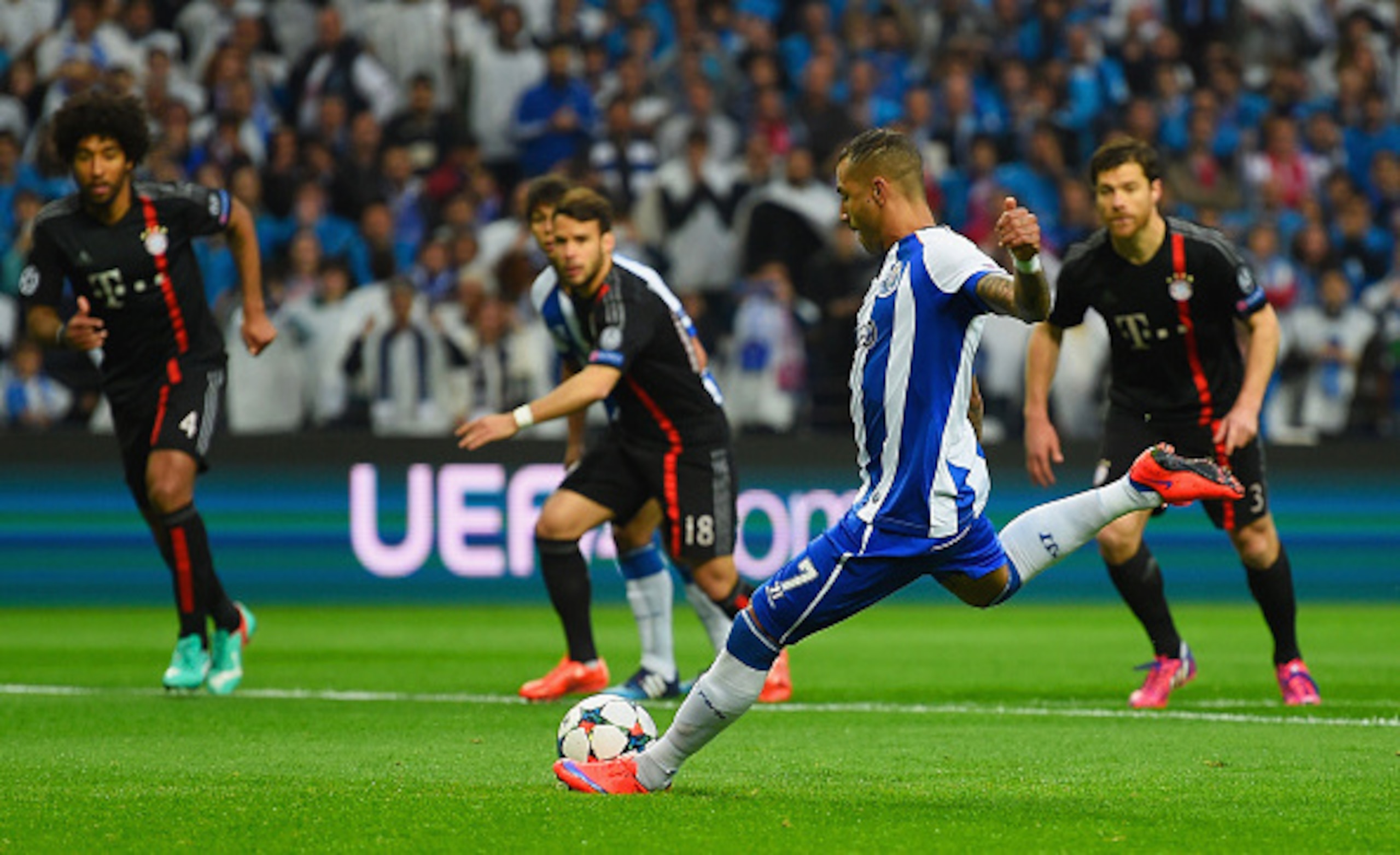
This season's knockout stages often seemed to be characterised by which teams had suffered which injuries at which times, with some ties and matches wildly affected by those players who were not on the pitch.
Bayern Munich were perhaps most affected by this issue, as they were without Franck Ribery and Arjen Robben (two of their decisive attacking forces) for key parts of the season run-in. That was not a problem in the Bundesliga, which they had long since opened up a lead in, but it cost them dearly in European competition.
It nearly cost them against Porto, when a heavily depleted side lost the first leg and then (with a few returning faces) managed to scrape through at the Allianz Arena. But it certainly cost them against Barcelona, where Pep Guardiola was far more hamstrung in his selection choices than his opposite number.
We can debate for a long time on whether having Robben, Ribery, David Alaba and others in their ranks would have seen Bayern win that semi-final instead, but it nevertheless diminished whatever chances they had. Paris Saint-Germain might agree: The French champions were similarly handicapped when they faced the Blaugrana, with Zlatan Ibrahimovic and Marco Verratti both left to watch the first leg from the sidelines due to suspension.
Then, to cap things off for Laurent Blanc, defender Thiago Silva collapsed after barely five minutes—forcing the coach to bring on David Luiz, who was still recovering from an injury.
By the time many of those players were available for the second leg, the tie was effectively over.
The squads of elite European sides are getting bigger and bigger, but there remain the same finite number of world-class difference-makers available, and each top team has only so many of them. When one or more of them miss a game, the difference is noticeable.
With the overall quality of the Champions League increasing once we reach the knockout rounds, an increasing factor in deciding tight ties is often who isn't on the pitch, as much as who is.
Modern Goalkeeping Is a Different Beast
5 of 10
OK, so the art of goalkeeping has been evolving for a few years now, but perhaps this season in the Champions League the changes became more obvious than ever. The final in Berlin was a case in point, with Gianluigi Buffon and Marc-Andre Ter Stegen exhibiting the old and the new of the No. 1 role.
Buffon, 37, is very much a classic goalkeeper—always inside his own box, communicating positioning with his defenders and focusing primarily on shot-stopping and cross-claiming. Ter Stegen, 23, is a product of the new school—a goalkeeper who stands near the half-way line when his side have the ball, ready to sweep up any long-ball counterattacks. He will also run well outside his six-yard box to offer a backpass option to his defenders when they are under pressure.
The nuts and bolts of saving shots are just one part of his repertoire, with his distribution and technical skills equally important.
Of course, these are all elements of goalkeeping that we have seen another German, Manuel Neuer, exhibit for a number of seasons now (something he continued to do impressively this season). It's an approach to the position that more and more youngsters coming through are likely to be comfortable with. But Ter Stegen is one of a new breed of goalkeepers in another way, in that he splits the No. 1 role with a teammate.
This season the German was Barcelona's "cup" goalkeeper, with Claudio Bravo winning the Zamora (awarded to the best goalkeeper) in La Liga for Luis Enrique's side. Other teams have implemented a similar system: Both Atletico Madrid and Real Madrid did it for parts of the season, while Chelsea also flirted with the idea when the fancy took Jose Mourinho.
Whether Barcelona retain such a setup or, after buying two goalkeepers prior to their current transfer ban, it was simply a short-term system implemented to keep both happy remains to be seen. But one way or another, it became clear this season that the responsibilities of the goalkeeper, both in playing style and playing time, are changing significantly at the biggest clubs.
Winning Your Group Is Still Important but Not Vital
6 of 10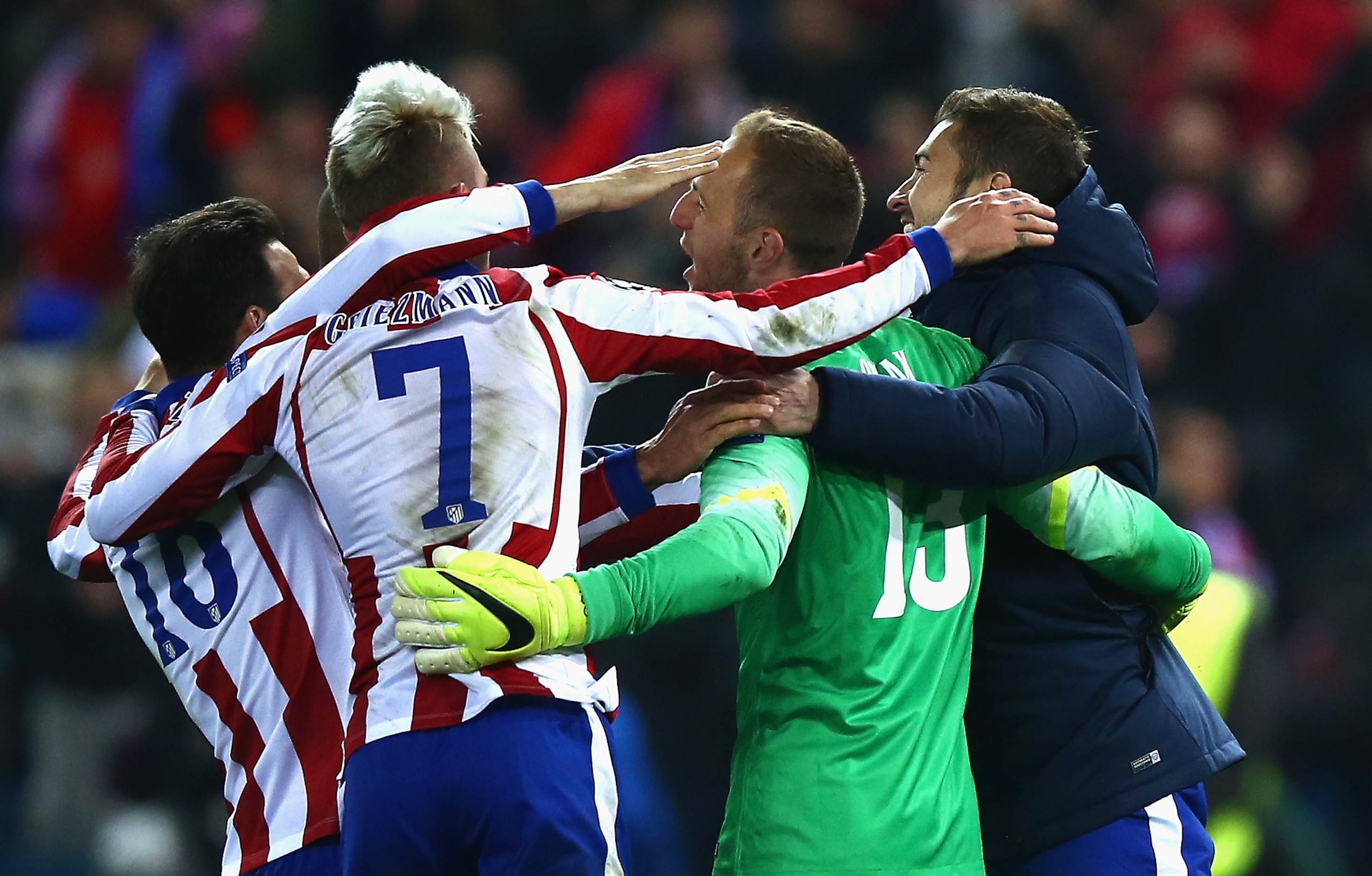
The benefit of winning your Champions League group is that you get drawn with a runner-up from another group in the last 16, while you also get to play the second leg of that tie at home. That is definitely an advantage: This year, six of the eight group winners made it to the quarter-finals of the competition.
It is not the be-all and end-all, however, as both Juventus and Paris Saint-Germain managed to progress despite finishing second in their groups. Juventus went all the way to the final (beating two other group winners along the way), showing it can be done any number of ways.
Then again, some would argue that those two sides were better than many of the group winners anyway and were simply unfortunate to be drawn with another strong side in the initial stages (PSG were in the same group as Barcelona, Juventus were narrowly edged out by Atletico Madrid).
Nevertheless, it would seem a distinct advantage to win your group if you want to progress deep in the competition. Take the example of Arsenal, who once again finished second in their group (to Borussia Dortmund) and were then counting their blessings when they drew against one of the weakest of the group winners, AS Monaco.
Yet Monaco went on to beat them, taking full advantage of the fact that winning their group meant that Arsenal were just about the hardest side (except for perhaps Juventus) they could have faced. One season does not make a trend, but it would seem to suggest that winning your group is worth the additional effort in the long run.
UEFA Reforms Are Not Making the Competition Less Predictable (Yet)
7 of 10
Barcelona vs. Manchester City. Chelsea vs. Paris Saint-Germain. Real Madrid vs. Schalke. All were ties during the knockout stage this season—and during the knockout stage last season as well.
The UEFA has subtly tinkered with the qualification criteria for the Champions League over recent seasons, yet continued dominance of a select band of clubs means the knockout stages of the competition are starting to grow wearily familiar to neutral observers, with many of the same ties picked out of the hat year after year.
That is perhaps inevitable when you consider that certain teams are always going to be among the last 16, but UEFA's bid to get more clubs from "fringe" nations into the group stages (e.g., this season we had Basel, Olympiakos and Anderlecht all qualify automatically, whereas the likes of Malmo, APOEL, Ludogorets and BATE Borisov eventually joined them through the play-offs) has seemingly only served to make the group stages something of a procession.
The only excitement comes when three teams get thrust together (e.g., Bayern, Manchester City and Roma this season), yet the upshot seems to be that the same 12-14 teams are reaching the knockout stages, ensuring the same ties are always at risk of cropping up.
Whether that is a problem or not depends on your perception, but it does mean the competition lacks some excitement and pizzazz for the neutral observer until we reach the latter stages.
Juventus Bucking the Italian Trend or Adding to a European One?
8 of 10
Juventus may have ended up disappointed in the end, but their run to the final of the Champions League ended something of a horror run for Italian clubs in Europe's top competition.
Their appearance in the final was the first for a Serie A side since 2010 (when Inter Milan won it), so Massimiliano Allegri's side had already restored some pride and honour in their league even before they proved unable to match up to Barcelona's brilliance.
It was a timely boost for Italian football, especially after the two other teams who qualified for the Champions League failed so miserably. Napoli failed to get past Athletic Bilbao in a qualifier for the group stages (although they did ultimately reach the Europa League semi-finals, as did Fiorentina), while Roma were unable to escape their group that included Bayern Munich and Manchester City.
It will be now interesting to see if Juventus' run has a rejuvenating effect on other Serie A sides (Lazio and Roma will join them in the competition next season), or if they will now become the league's sole viable European contender over the coming seasons. With greater financial muscle than their domestic rivals, there is certainly that possibility, and it would jibe with what seems to be happening from representatives from other leagues.
If we take Monaco's run to the quarter-finals as a blip, then this season we saw Paris Saint-Germain continue as France's main threat, Bayern Munich as Germany's dominant contender and Barcelona and Real Madrid as Spain's two-headed beast (Atletico Madrid also fared well, but can they sustain that much longer?).
The struggle of English sides was used as evidence of the falling standards of the Premier League, but elsewhere we are not seeing teams from certain leagues rise and fall; rather, the same smattering of heavyweights from each country contest positions in the latter stages. There are always a few wild cards—for example Porto if, as this year, they recruited well the summer before—but in general the same faces stay at the same stage of the competition.
All those teams mentioned—Bayern Munich, Barcelona, Real Madrid, Juventus—pillage their own leagues for the best talent to enhance their own squads without much challenge (and Juventus have already started doing it this summer, grabbing Paulo Dybala from Palermo). That is something Premier League sides are less able to do, as the competition at the top is more equal and their targets invariably have other equally appealing options to consider.
So perhaps Juventus' run this season is not a sign of Italian football's slow rejuvenation, but rather that Serie A has finally become like many other European leagues—utterly dominated by one side, which is now able to enhance its own strength year after year by feasting on those beneath it.
Not Good Enough for the Champions League? The Europa League Won't Be Any Better
9 of 10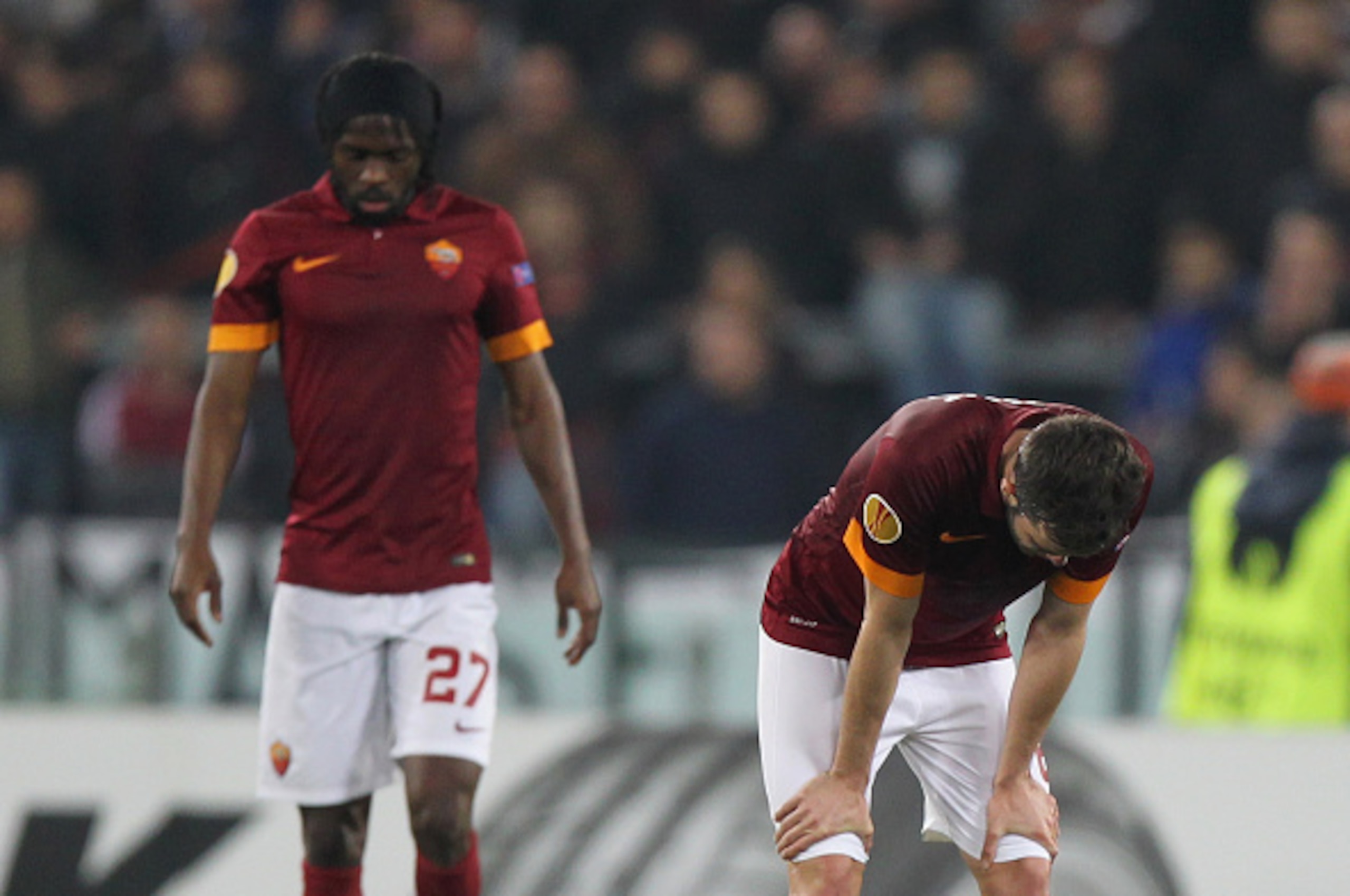
The consolation prize for finishing third in your Champions League group is a spot in the Europa League knockout round, a second chance at glory that is not universally approved of. Perhaps critics of the system (which sees many Europa League teams toil away to reach the last 32, only to be drawn against a fallen European giant and crash out) should not worry so much, though, as this season showed that if a side fails in the Champions League, it will fail in the Europa League as well.
This season, of the eight Champions League teams to fall into Europe's second competition, only one of them (Zenit St. Petersburg) managed to make it to the quarter-finals of the competition. Meanwhile, five of them lost their first knockout tie to squander two European opportunities in double-quick time.
The two other sides who did make it to the last 16, Ajax and Roma, both went out at the next stage (to eventual finalists Dnipro Dnipropetrovsk and semi-finalists Fiorentina respectively).
Dnipro, for what it's worth, failed in final qualifying for the Champions League group stage—as did their semi-final opponents, Napoli. But winners Sevilla were never in Champions League contention and yet stormed to their second successive victory in the competition.
Their reward is becoming the first team to earn a Champions League spot through Europa League victory. It will be interesting to see how they fare, but the fate of those teams who went in the other direction this season would suggest the gap between the two competitions is not as big as we often perceive.
Great Players Beat Great Managers, and Pep Guardiola Needs to Change Things
10 of 10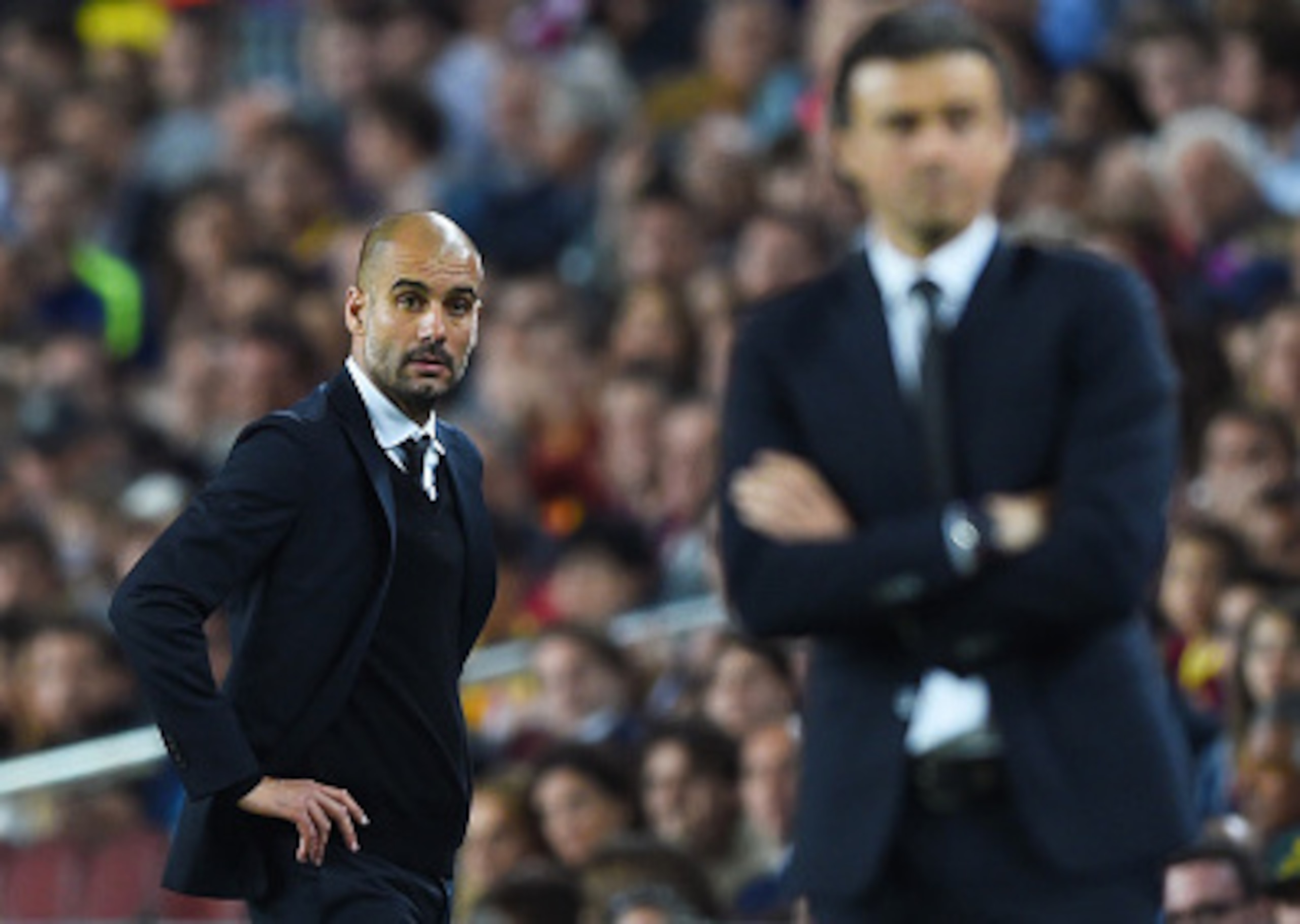
Lionel Messi now has four Champions League titles as a player, while Pep Guardiola still has "only" two as a coach. The greatest player can win Europe's biggest club prize without the man perhaps regarded as the best manager, but the reverse is not (yet) true.
That was underlined when Guardiola's Bayern Munich met Messi's Barcelona in the semi-finals of the competition this season, a tie that saw Guardiola's many tactical tweaks and variations get torn to shreds by Messi's individual class.
"He is the best player of all time, I compare him with Pele," Guardiola said after the second leg of that tie, via the BBC. "He is back, he is there where I had the privilege to train him. He is definitely back at his best."
For Guardiola, the pressure is starting to grow on him to prove that he can cultivate a team capable of winning the Champions League—for a team that is not blessed to have the best player in the game at its disposal. For the second season in a row Guardiola seemed to overthink himself on the biggest stage, as his three-man defence to start the game at the Nou Camp was a mistake—although at least one he amended far more quickly than the previous season's calamity against Real Madrid at the Allianz Arena.
Entering what some suspect will be his final season at Bayern, Guardiola almost has to win the Champions League to ensure his tenure is seen as a success. To do that he needs to refine his tactical approach, but he also needs to calm down, pick his strategies better and perhaps trust his players more.
Then maybe he will finally rebut the growing argument that the greatness once assigned to him should have been assigned to his players, and perhaps one in particular.
As Barney Ronay of the Guardian noted the night after Bayern's latest exit:
"The cult of Pep has after all been a constant counterpoint to his many successes. Much has been made over the past five years of Guardiola’s shining principles, his self-flagellating meticulousness, with awed descriptions of details as minor as his habit of eating only a few small cubes of cheese on matchdays. Perhaps, with football’s spotlight now shifting elsewhere, we can look forward to equally gushing paeans to Luis Enrique’s toast soldiers, Carlo Ancelotti’s Bombay mix and Garry Monk’s Bounty bar.
What is clear as Bayern prepare to reinforce an ageing team is that adversity can have a clarifying effect. In many ways Guardiola has become more rather than less fascinating with the revelation across successive semi‑final defeats (combined score: 10-3 to the other guys) that those zealously followed principles of possession‑based attacking football can leave his teams doubly vulnerable to more powerful opponents.
"
But perhaps, whatever he does, the simple truth is that—if other factors are equal—the influence of one great player will always be greater than that of a great coach.
.jpg?w=2560 "Seahawks Chiefs Football")