Jack Sock Gives USA a Chance to Shock the Men's Tennis World vs. Rafael Nadal
If you're a fan of American men's tennis, you know that the second week of the French Open has been devoid of rooting interests for what feels like forever.
This year, at long last, that has changed.
On Monday, 22-year-old Jack Sock will face off against nine-time French Open champion Rafael Nadal in the fourth round at Roland Garros. He'll be a huge underdog, as he should be given the fact that Nadal has made it to the fourth round of Roland Garros all 11 times he's played the tournament, while this is Sock's first time in the fourth round of any major.

.jpg?w=2560 "Rams Raiders Football")

However, for fans of the USA, Sock is providing something that has been much-needed in recent years, particularly on clay: hope.
Sock has been hyped since he was a junior, but it wasn't until the past year that things started to come together for the Nebraska native. He's up to a career-high ranking of No. 37—and that should improve to at least the top 32 at the end of this tournament—and won his first ATP singles title in April, at the clay-court tournament in Houston.
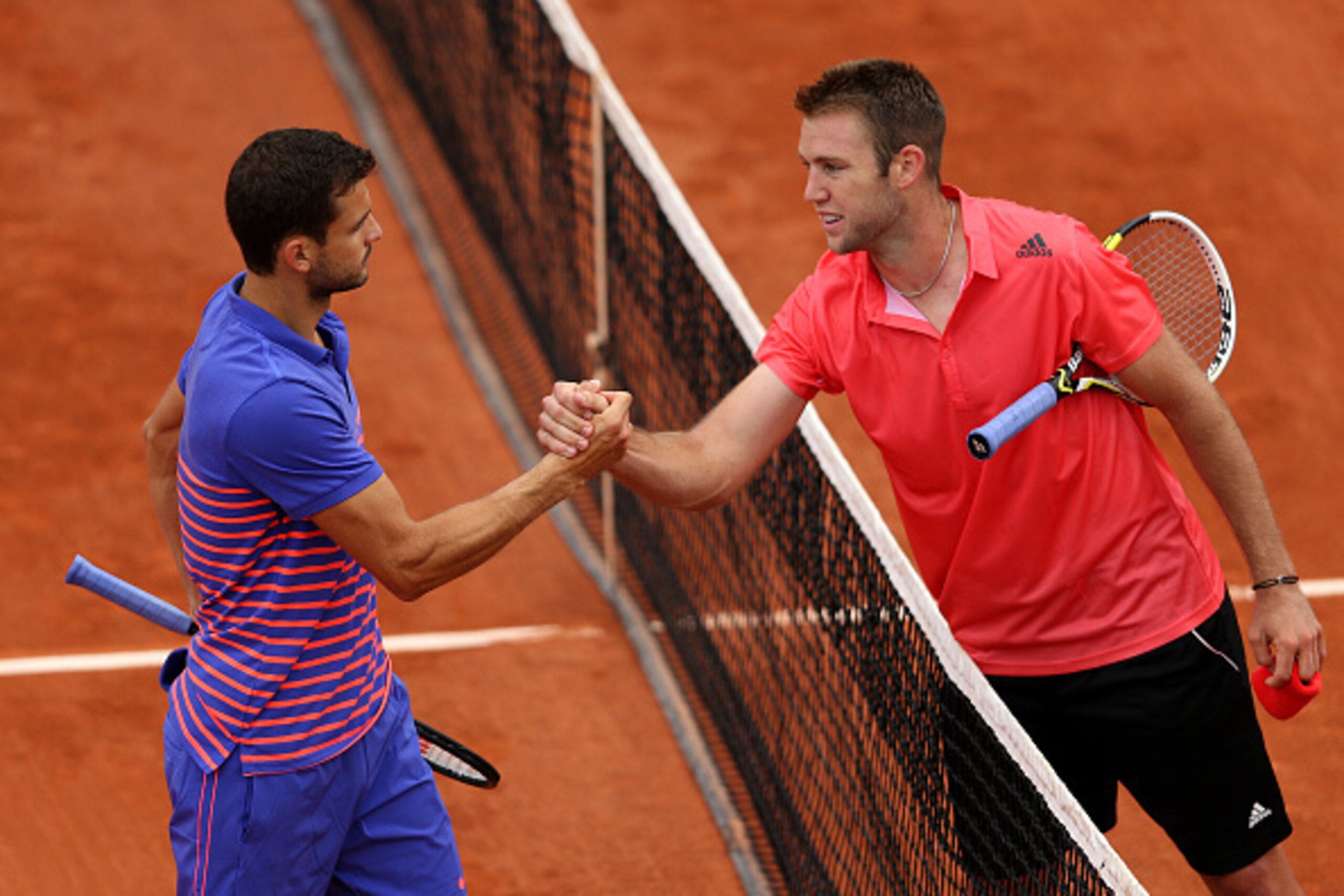
While the European clay season wasn't as kind, Sock seemed to carry his confidence from the Houston win right over to Roland Garros. He started the tournament with a dominating straight-sets upset over No. 10 Grigor Dimitrov. And he followed that up by ousting a young Spaniard, Pablo Carreno Busta, 6-7, 7-6, 6-1, 7-6 in the second round.
The third round featured his most complete performance to date. Playing 18-year-old up-and-coming sensation Borna Coric, Sock was able to boss the teen around the court like the relative veteran he is and won the match 6-2, 6-1, 6-4. It didn't even feel that close.
As Courtney Nguyen of Sports Illustrated wrote, Sock's forehand has been one of the most damaging weapons of the fortnight:
"Through it all it has been the forehand that has proven devastating. He has hit 128 winners in the tournament—including an astounding 67 against Carreno Busta—with more than half of those winners coming off the forehand side (68 to be exact). By comparison, his backhand wing has produced just 16 winners. But Sock's backhand has improved, as has his ability to protect that corner. Coric found it nearly impossible to exploit on Saturday.
"
As Nguyen points out, while his forehand is punishing, it's Sock's improved weaknesses that are really taking him to the next level: His fitness and footwork are no longer huge question marks, and his backhand is no longer a huge liability.
That formula has made Sock the youngest American man to reach the fourth round of the French Open since Pete Sampras in 1993. That's pretty great company, and Sock is certainly much more comfortable and confident on clay than Sampras ever was.
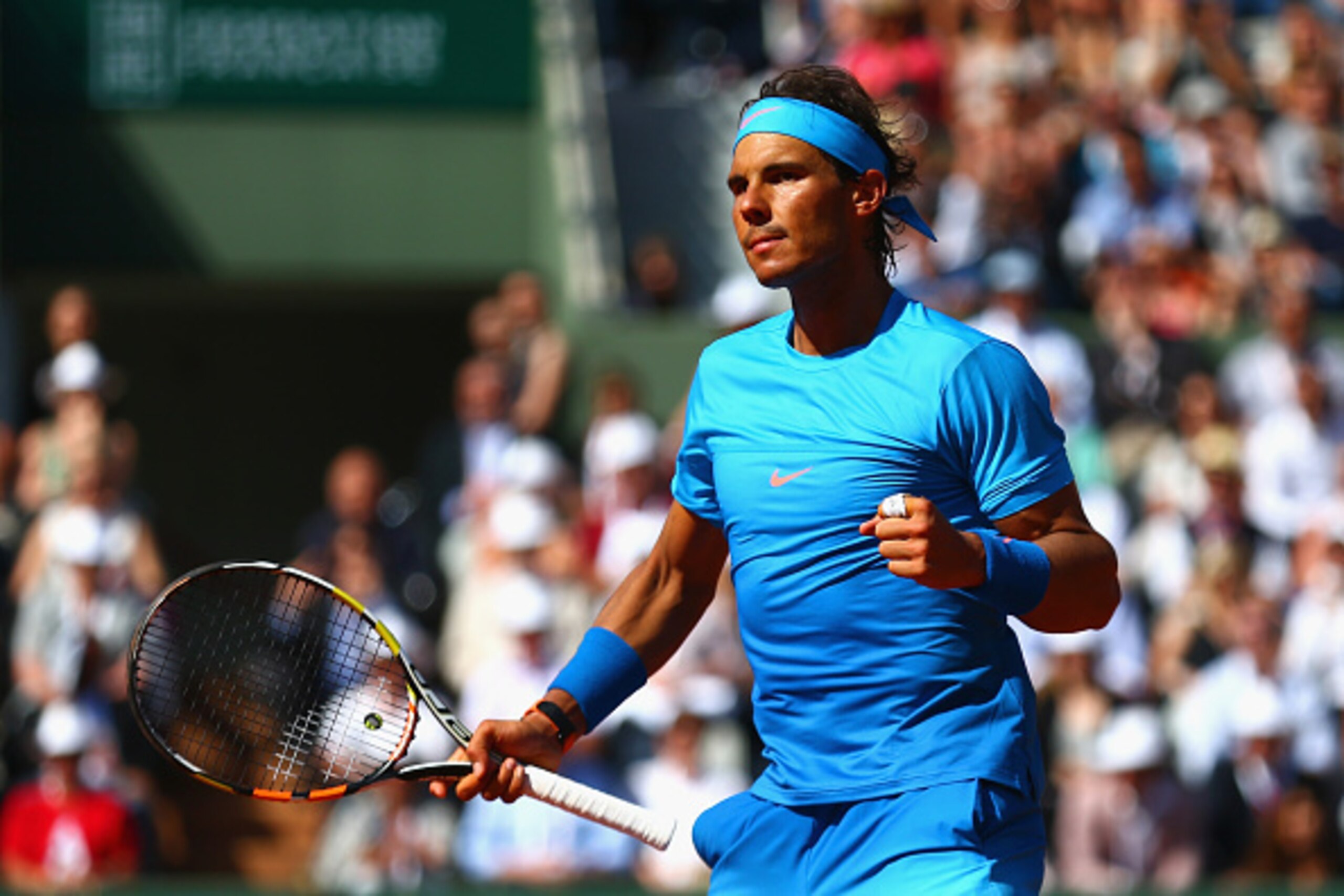
Of course, his opponent on Monday will be the greatest clay-court player of all time. Nadal came into this French Open surrounded by doubts, as he went without a title throughout the European clay-court swing for the first time in his career and generally looked slow and unsure of himself as his ranking dropped down to No. 7 in the world.
But through his first three matches, there have been no signs of crisis from the 14-time Grand Slam champion. Nadal hasn't dropped a set yet and he's rarely been pushed, though it's certainly worth noting that he's yet to face an opponent ranked in the top 100.
While the two have never faced off before, Sock is the type of big-hitting, aggressive player who has given Nadal trouble in the past, and the young American is one of the only men on tour with a forehand comparable to Nadal's. While Nadal leads the tournament in fastest average forehand RPMs at 3,019, Sock ranks second at 2,921.
It's promising that Sock doesn't sound worried or overly nervous about his big-time match against Nadal. In fact, he's looking forward to seeing how his forehand holds up against the legend, as reported by Greg Garber of ESPN:
"I'm kind of excited to see the forehand-to-forehand battle. Obviously we are both going to be trying to do similar things. It will be pretty interesting to see the different game plans going on. Obviously we are both looking to hit forehands. For me, the ad side of the court and him the deuce side of the court obviously and try to find the other's backhand and maneuver the ball around. I think it will be kind of a chess match and who can find the forehand first and kind of open up the court.
"
Sock, who is coached by Troy Hahn, certainly sounds like he has the tactics down. But once he takes the court against Nadal on Monday in the round of 16, it's going to be all about execution: The American will have the chance to see how he stacks up against the best.
If Sock notches the upset, he will become the first American to make the quarterfinals of the French Open since Andre Agassi back in 2003. And even if he doesn't leave the match as the victor, he has still given fans of the Stars and Stripes reason to be excited about the future.
Other Americans have reached the fourth round of the French Open over the past decade—John Isner did it last year, Robby Ginepri did it back in 2010 and Andy Roddick did it in 2009. But Sock is different from those players because his breakthrough on the clay courts in Paris is coming at the beginning of his career.
Robin Soderling is still the only man to ever beat Nadal at Roland Garros, and it happened six years ago in the fourth round. Sock has a chance to send similar shockwaves throughout the tennis world Monday, and in the process turn hope into history.
.jpg?w=2560 "Steelers Saints Football")

.jpg?w=2560 "Packers Safety Slams Refs 🤬")

.jpg?w=2560 "🚨 Week 8 AP Top 25 Poll")