


One thing you have to be willing to do early on in any given Major League Baseball season is forgive bad performances. It can, after all, take time for guys to get on track.
But having reached (well, actually slightly surpassed) the one-quarter mark of the 2015 season, we're past that point now. It's safe for us to let out a deep sigh, shake our heads and face the fact that some guys have just plain stunk.
If you're looking to get caught up on the worst of the worst, you've come to the right place. We're going to go position by position and break down the biggest duds—based strictly on performance, both results-wise and process-wise—of the first quarter of the 2015 season. In the end, we'll have a team that even the 1962 New York Mets would have a chance against.
Step into the box whenever you're ready.
Catcher: Rene Rivera, Tampa Bay Rays
1 of 11
Rene Rivera entered 2014 as a 30-year-old journeyman and exited as a pleasant surprise. In 103 games for the San Diego Padres, he hit .252 with a .751 OPS while providing outstanding defense behind the dish.
The Rays were clearly hoping to get more of the same in 2015. Instead, they're getting the baseball equivalent of "bleh."
In 37 games, Rivera is hitting just .144 with a .414 OPS. In terms of adjusted offense (meaning wRC+), he's been MLB's worst offensive catcher among those with at least 100 plate appearances.
As much as he would probably like to, Rivera can't blame his poor performance on bad luck. He has just a 3.2 percent walk rate that's dwarfed by a 27.2 strikeout percentage, and Baseball Savant put his average exit velocity at just 87.43 mph heading into Saturday's action. That placed him in the bottom 10 among qualified catchers.
Fortunately, Rivera has at least been helpful to Tampa Bay's pitchers, as Baseball Prospectus once again has him among the game's elite strike-framers. But because he's excelling neither at blocking pitches nor throwing out runners, it's fair to say his defense has actually taken a step back.
Rivera got to be a star for a year in 2014. But in 2015, he's back to being a journeyman.
First Base: Michael Morse, Miami Marlins
2 of 11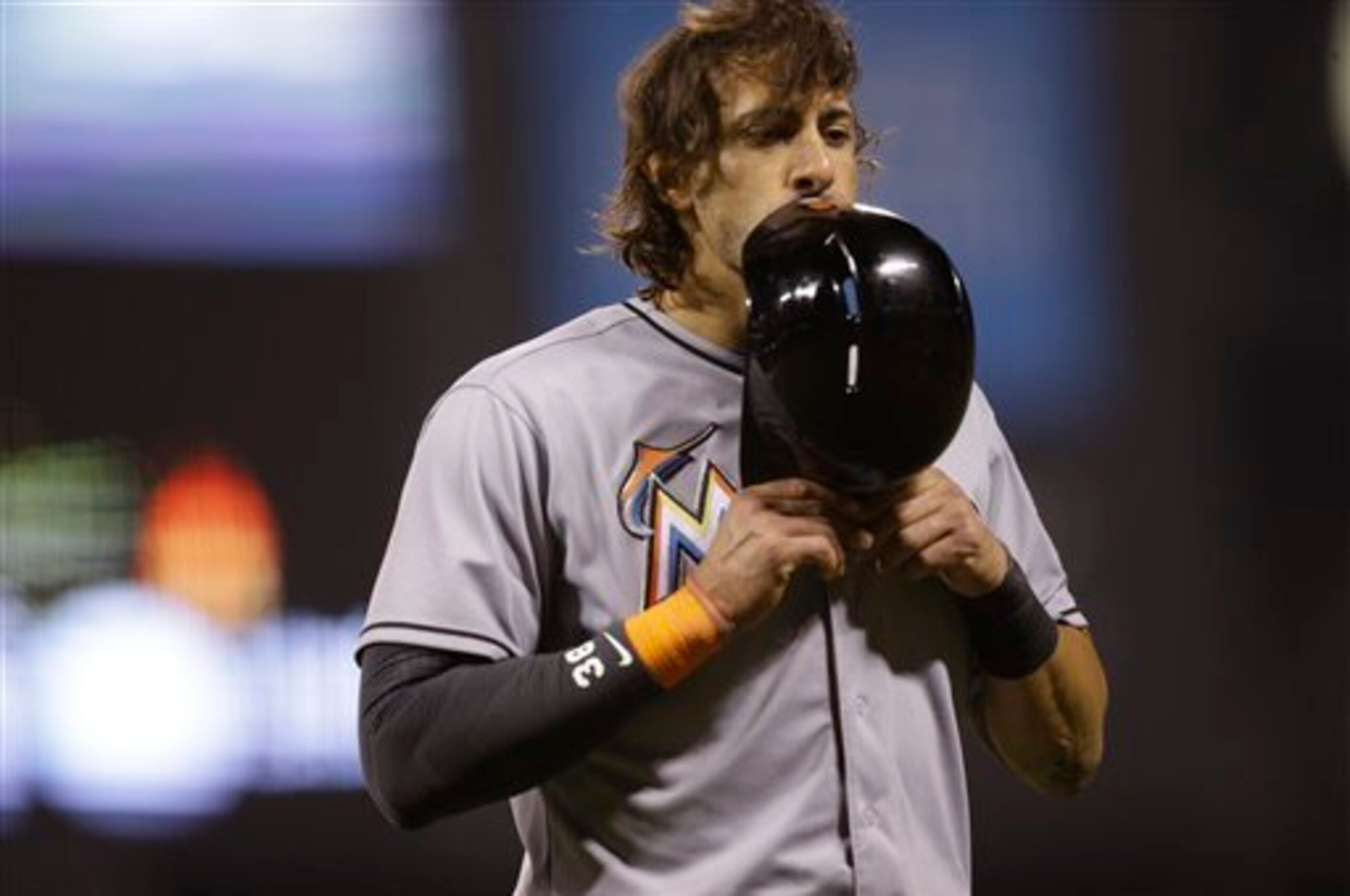
Only eight teams got less offense out of their first basemen than the Miami Marlins did in 2014. Their response was to sign the slugging Michael Morse to a two-year deal.
This seemed like a good idea after Morse had hit .279 with an .811 OPS for the San Francisco Giants. But now? Uh...well...
Yeah, Morse isn't off to the best start with his new team. Through 37 games, he's hitting just .211 with a .557 OPS, making him the worst offensive first baseman in MLB.
And just like with Rivera, there's no blaming Morse's poor offense on bad luck. He has a 28.3 strikeout percentage and just a 5.8 walk percentage, and his average exit velocity heading into Saturday was 91.83 mph. That's not bad in the grand scheme of things, but it puts him in the middle of the pack among his fellow first basemen.
Interestingly, the advanced metrics say Morse could be worse on defense. But given that both UZR and DRS rate Morse as just an average defensive first baseman, that's something of a backhanded compliment.
Bottom line: As bad as things were at first base in 2014, the Marlins would actually be better off going back to what they had.
Second Base: Scooter Gennett, Milwaukee Brewers
3 of 11
Without a doubt, Chase Utley is the easy target here. But whereas you can make a case for him as one of MLB's unluckiest hitters, there's only one way to explain Scooter Gennett's season.
He was bad at playing baseball.
We say "was," of course, because the Brewers recently demoted Gennett to the minors, and rightfully so. With just a .154 average and a .403 OPS, he stands as MLB's worst offensive second baseman among those with at least 50 plate appearances. And no, it's not close.
Just like with Rivera and Morse, there's no excusing Gennett's lousy production. When he got sent down, he owned a 27.5 strikeout percentage and a 2.9 walk percentage, and he was averaging 85.13 mph on his batted balls. That's the numeric way of saying, "Yeah, dude couldn't hit."
Cue Brewers general manager Doug Melvin not mincing words, via Adam McCalvy of MLB.com: "I told [Gennett] we don't have a time frame. I said, 'I would like to think you're going to be back in a couple of weeks, but don't hold me to it, because if you're not performing well, it won't happen. If you're performing well and playing good defense, it could happen.'"
Those are harsh words from a guy who once angrily mocked Gennett's doubters—but also very much justified.

Third Base: Casey McGehee, San Francisco Giants
4 of 11
The Giants had to get somebody to replace Pablo Sandoval at third base. That somebody ended up being Casey McGehee, which seemed like a solid idea after he hit .287 in 2014.
Instead, McGehee is doing everything in his power to make it harder for Giants fans to forget Sandoval.
He is hitting just .191 with a .518 OPS, making him the worst offensive third baseman in MLB. And while he could actually be working worse at-bats and making quieter contact, there's definitely a limit to how much we rationalize McGehee's hitting.
Many of his hard-hit balls go to waste because of his extreme ground-ball habit. He entered Saturday hitting 58.5 percent of his batted balls on the ground, a rate more befitting a top-of-the-lineup speedster than a corner infielder. And just like in 2014, too many of his grounders are producing two outs.
Then there's McGehee's defense at the hot corner, which hasn't been good. Even in only rating him as slightly below average, the advanced metrics might actually be overrating his defense.
The Giants had a pretty good third baseman once. They don't now. They designated McGehee for assignment on Sunday, per The Associated Press (h/t ESPN).
Shortstop: Danny Santana, Minnesota Twins
5 of 11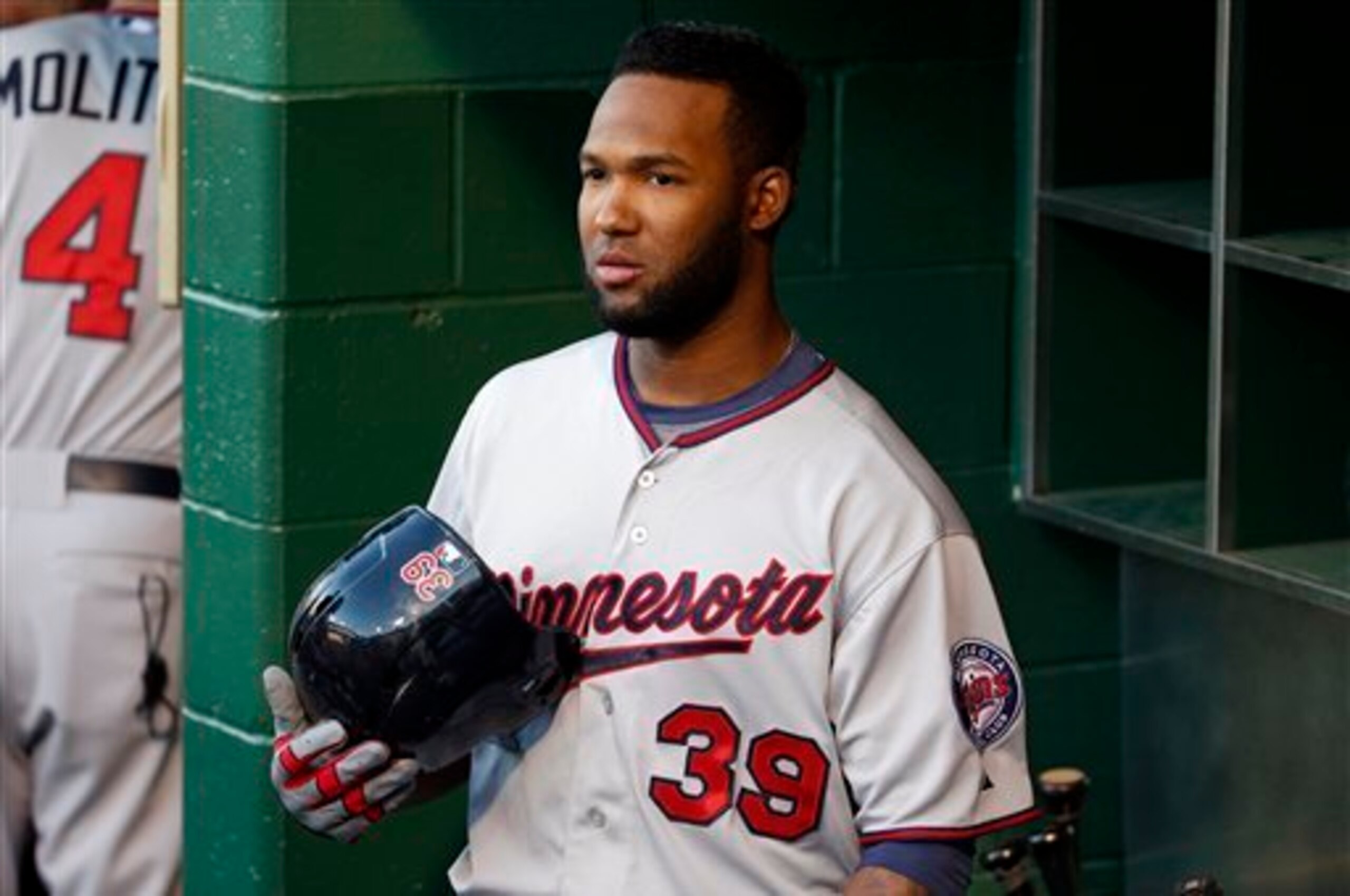
Man, are there a lot of options to choose from here. Such is life when pretty much the entire shortstop position has forgotten how to hit. It's bad. Really bad.
But Danny Santana? He's the worst.
After hitting .319 with an .824 OPS in a surprise 2014 season, Santana is hitting just .233 with a .573 OPS in 2015. This doesn't quite make him MLB's worst offensive shortstop, but he might as well be.
For one, it's really bad that Santana has 42 strikeouts and only two walks in 157 plate appearances. For two, he entered Saturday averaging only 85.81 mph on his batted balls. That put him in the bottom 20 among his fellow shortstops.
Santana has thus arguably been even worse than his results on offense. And when you look at his defense, things look bleaker. He entered Saturday at minus-1.2 runs above average in the eyes of UZR and a staggering minus-nine in the eyes of defensive runs saved.
In terms of results, there are worse shortstops than Santana. But in terms of actual play...well, that appears to be a whole 'nother story.
Left Field: Matt Joyce, Los Angeles Angels
6 of 11
When Josh Hamilton's 2015 season started to unravel before it even began, the Los Angeles Angels actually seemed destined for a bit of addition by subtraction. They had Matt Joyce to fill in for Hamilton, and he's usually pretty good.
But all of a sudden, he's not.
After coming into 2015 as a career .250 hitter with a .783 OPS, Joyce is hitting just .161 with a .483 OPS. Among qualified left fielders, you can find him at the bottom of the offensive pile.
Just like with the others, there's no blaming it on bad luck. Joyce's 8.4 walk percentage isn't bad, but it comes with a 22.1 strikeout percentage and lots of quiet contact. He entered Saturday averaging just 84.19 mph on his batted balls, putting him at fourth worst among fellow left fielders.
And no, Joyce isn't making up for it with good defense. Both defensive metrics have him rated as a below-average defensive left fielder, further sinking his overall value.
If I were him, I'd be in no hurry to get to the ballpark, either.
Center Field: Drew Stubbs, Colorado Rockies
7 of 11
Very quietly, Drew Stubbs enjoyed something of a career revival in Colorado in 2014. Albeit in a limited role, he hit .289 with an .821 OPS, 15 dingers and 20 steals. That's a good season.
But in 2015, he's gone from The Matrix to The Matrix Reloaded. It's been that bad.
Stubbs is no longer around, as the Rockies demoted him to the minors earlier this week. He earned that by hitting just .118 with a .437 OPS, figures that still make him easily MLB's worst offensive center fielder. And somehow, his peripherals manage to make those numbers look even worse.
In 51 plate appearances, Stubbs racked up 31 strikeouts and just three walks. That's a 55.4 strikeout percentage to a 5.4 walk percentage, and he earned that partially by racking up a 19.4 swinging-strike percentage. As Brooks Baseball can show, it's baffling how many of his whiffs occurred inside the strike zone.
In light of all that, it almost doesn't matter how well Stubbs actually hit the ball when he did make contact. But while we're on the subject, his solid exit velocity doesn't show how his actual hard-hit percentage dropped from 36.6 all the way down to 23.8.
All told, the list of things Stubbs has to fix in the minors has just one word on it: everything.
Right Field: Allen Craig, Boston Red Sox
8 of 11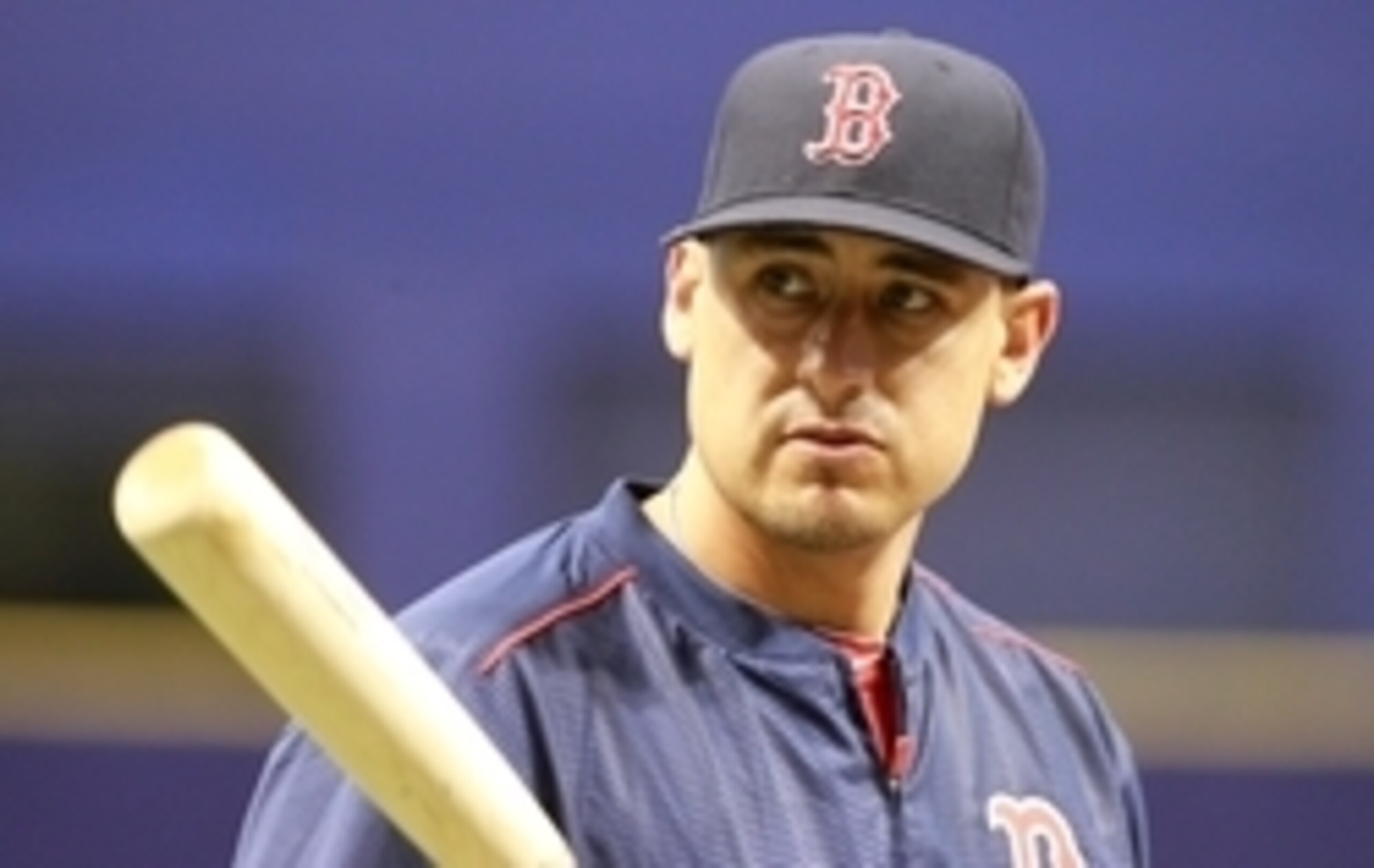
When they acquired Allen Craig from the St. Louis Cardinals last summer, the Boston Red Sox had the right idea when they decided to roll the dice on him. Surely, a hitter with his track record could bounce back from the .215 average and .594 OPS he posted in 2014.
Instead, Craig got even worse.
The Red Sox optioned him to the minors earlier this month, and that was really the only choice they had after he hit just .135 with a .430 OPS in 24 games, making him MLB's worst offensive right fielder. That was with a 28.8 strikeout percentage and an average exit velocity of just 85.96 mph.
Craig is now a shell of the guy who hit .312 with an .863 OPS between 2011 and 2013. So much so, in fact, that Alex Speier of the Boston Globe found that Craig's drop-off is actually historic:
"But Craig’s falloff from a 136 OPS+ from 2011-13 to less than half of that mark – a 62 OPS+ – in his age 29-30 seasons stands out as the biggest decline ever. His drop of 74 points in OPS+ is the largest ever. Only two other players...ever had a decline of more than 40 points in OPS+ between their age 26-28 seasons and their age 29-30 campaigns.
"
The Red Sox may have made a good gamble when they acquired Craig. But now, it's safe to say it's one they've lost.
Designated Hitter: Victor Martinez, Detroit Tigers
9 of 11
No hitter was more dangerous than Victor Martinez in 2014. In hitting .335 with a league-best .974 OPS, he also darn near racked up as many home runs (32) as he did strikeouts (42).
But then came left knee surgery in February, which threatened to derail Martinez's follow-up attempt before it could even get going. And sure enough, that's pretty much what's happened.
In 34 games, he has hit just .216 with a .578 OPS. His 10.8 walk percentage and 10.0 strikeout percentage go to show that his at-bats have been characteristically excellent, but the hard contact just hasn't been there. With an average exit velocity of 85.01 mph, V-Mart is the softest-hitting designated hitter in MLB.
In fairness to Martinez, it's not like he could possibly be doing any better. When the Tigers put him on the disabled list this week, they were up-front about his knee not being 100 percent yet.
"I think he finally came to the realization that it was more than just pain," said Tigers skipper Brad Ausmus, per Anthony Fenech of the Detroit Free Press. "It was an injury that had to be taken care of, or he wouldn't be able to perform the way he was used to performing."
Here's hoping Martinez makes a full recovery. Baseball needs as many great hitters as it can get.
Starting Pitcher: Taijuan Walker, Seattle Mariners
10 of 11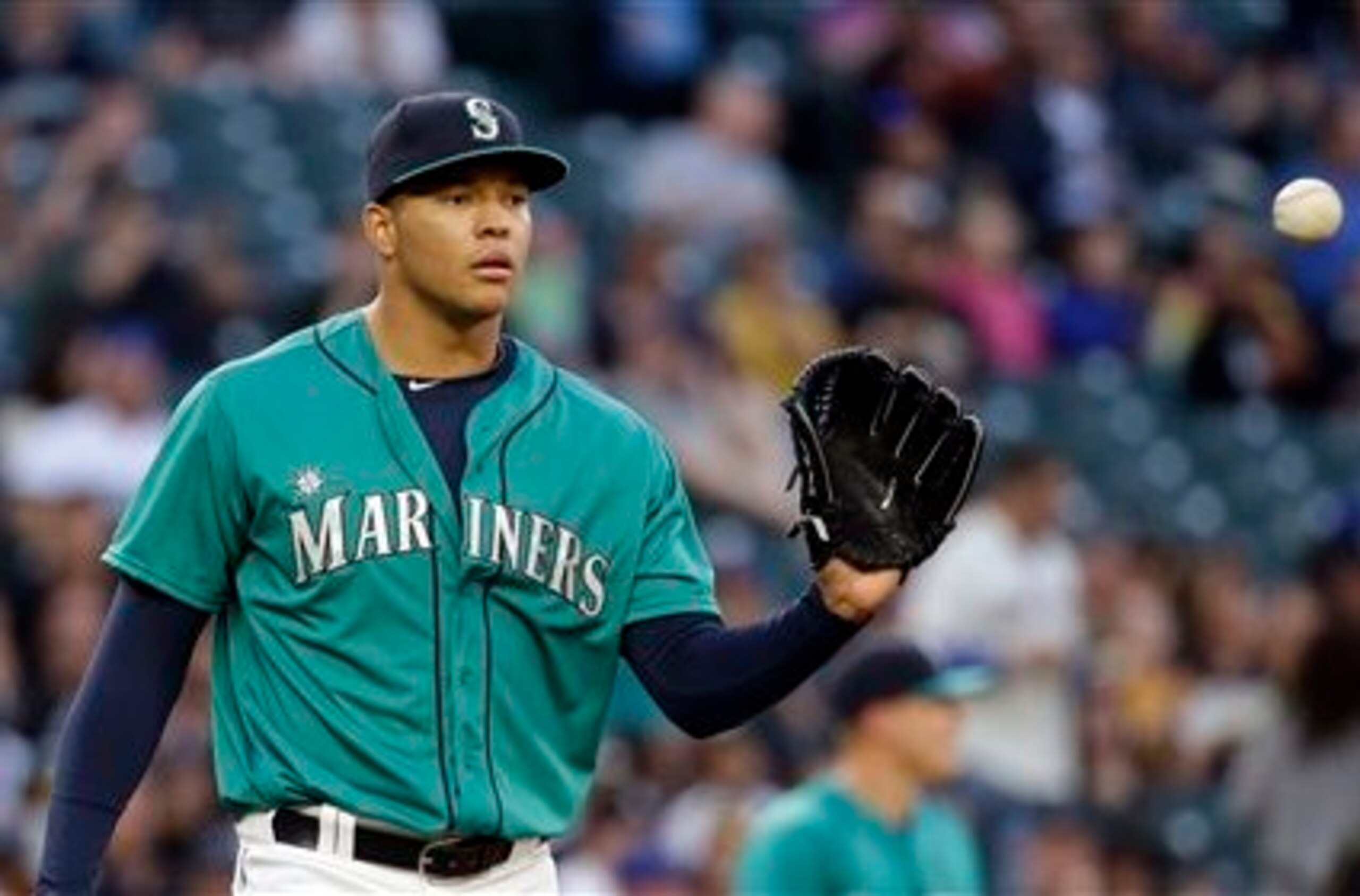
Back in April, a certain dingbat tried hard to convince everyone that Taijuan Walker was going to be one of the great breakout players of 2015. Heck, wasn't it obvious after his red-hot spring?
What a fool. What a damn fool.
The young right-hander has not broken out. Instead, he's posted a 7.47 ERA through eight starts that ranks as the worst in MLB among starters with at least 30 innings. And while he does have peripherals that say he hasn't actually pitched that poorly, it's hard to trust them.
For one, Walker has one of MLB's highest walk rates at 10.6 percent. For two, his average exit velocity of 91.21 mph puts him among the league's 10 hardest-hit pitchers. For three, his 20.0 strikeout percentage masks how he's really not much better than the average starter at drawing whiffs (9.2 percent to 8.9 percent).
There's no denying that Walker has the stuff to survive in the majors, as he throws in the mid-90s and has as many as three above-average secondaries on a good day. But his results reflect what the eye test has to say, which is that he still has a thing or two to learn about pitching.
Relief Pitcher: Burke Badenhop, Cincinnati Reds
11 of 11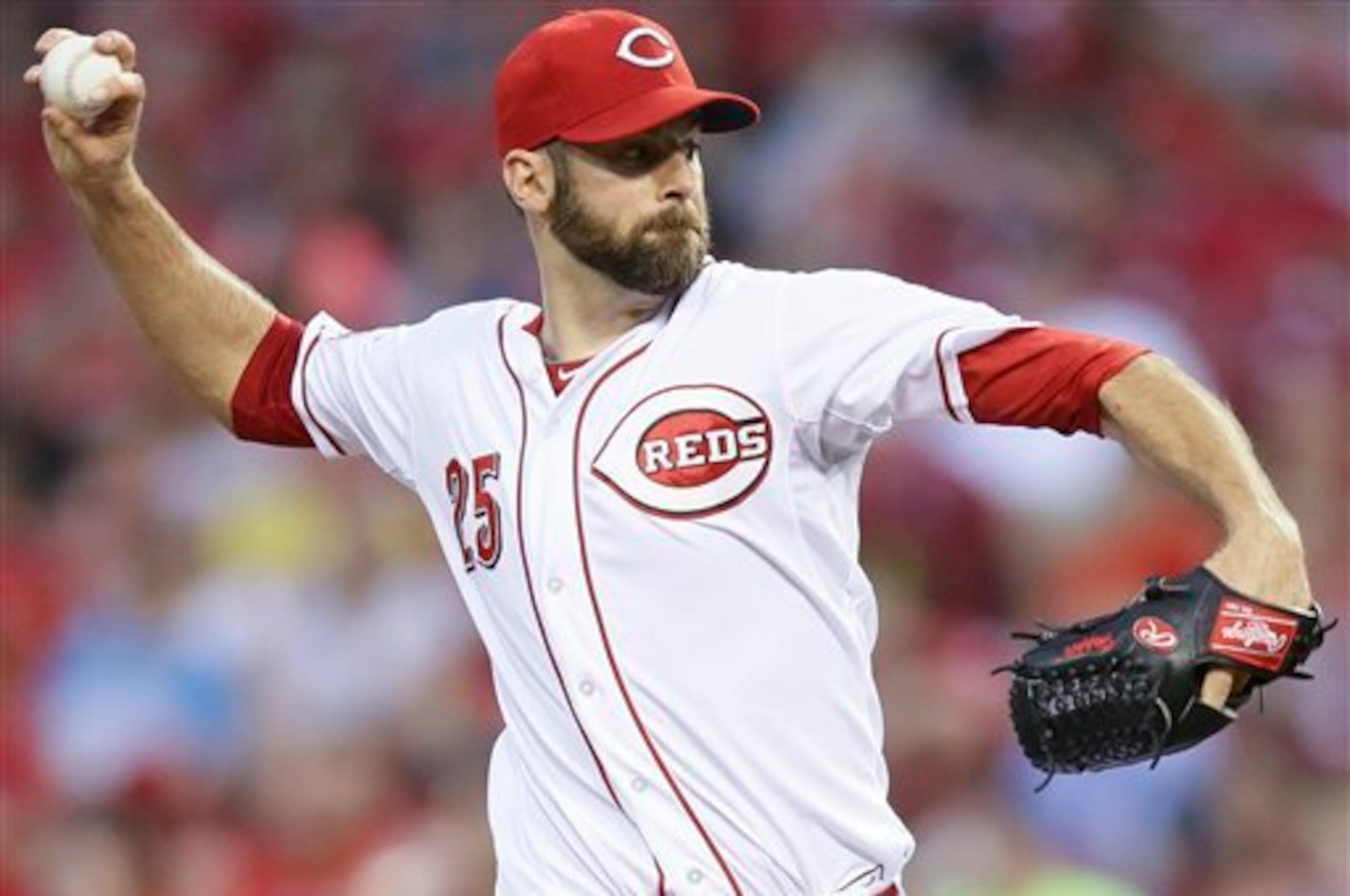
You can really take your pick here. There are a lot of bad relievers out there. Some of them are really bad. Some of them are worse. Others wouldn't even be good enough for red-shirt duty on Star Trek.
But Burke Badenhop? He takes the cake.
It's easy enough to say as much based on the right-hander's 8.04 ERA, which is the highest among qualified relievers. And while Badenhop's peripherals say he hasn't actually been that bad, his other peripherals beg to differ.
Badenhop is only striking out 9.5 percent of the batters he faces, so he absolutely needs to limit hard contact. He can usually do that thanks to his ground-ball habit, but that hasn't been the same in 2015. He entered Saturday with a 50.0 ground-ball percentage, easily below his career rate of 55.4 percent.
Even worse, contact against Badenhop has been loud. That doesn't show up in his exit velocity, but it does in the fact that he's among MLB's worst relievers at limiting hard contact and collecting soft contact.
So if you find yourself needing to explain the concept of "relief pitching" to a clueless friend, now you know who not to use as an example.
Note: Stats courtesy of Baseball-Reference.com, FanGraphs and Baseball Savant unless otherwise noted/linked.


.jpg?w=2560 "Rodgers Iced Out on Plane 💎")
.jpg?w=2560 "Raiders Could Start Mendoza")
.jpg?w=2560 "🚨 Week 8 AP Top 25 Poll")
.jpg?w=2560 "Mahomes Told Teammate to Leave Meeting")
.jpg?w=2560 "Lamar Being Out Shocked Ravens")

.jpg?w=2560 "Packers Safety Slams Refs 🤬")
