
Hypothetical College Basketball Trades Worth Considering Before 2015-16 Season

After a hectic six-plus weeks of draft declarations, outgoing and incoming transfers, coaching moves and high-profile freshman commitments, we finally have a pretty good sense of what each college basketball team will be bringing to the table when the 2015-16 season begins in November.
It's the perfect time for completely hypothetical trade proposals.
We'll reiterate it again: These are 100 percent fictitious. Trades cannot officially happen in college basketball. If you don't like them, calm down and remind yourself that these are infinitely less applicable than the mock drafts and bracket projections that always bring out so much ire.
It's fun to pretend, though.
Many of the teams in these trades would be improving immediately to contend in 2015-16. Others would be selling high on upperclassmen in order to both speed up and enhance what figures to be a rebuilding situation in the very near future.
These trades have nothing to do with locker room chemistry, academics, off-the-court issues, etc. It's all about looking to improve the on-court product in a vacuum.
As always with hypothetical trades, the big question is "Who says no?" As such, let us know in the comments which of these trades would never happen in a million years and which trade proposals you think would help better your favorite program.
Clemson and Kentucky
1 of 19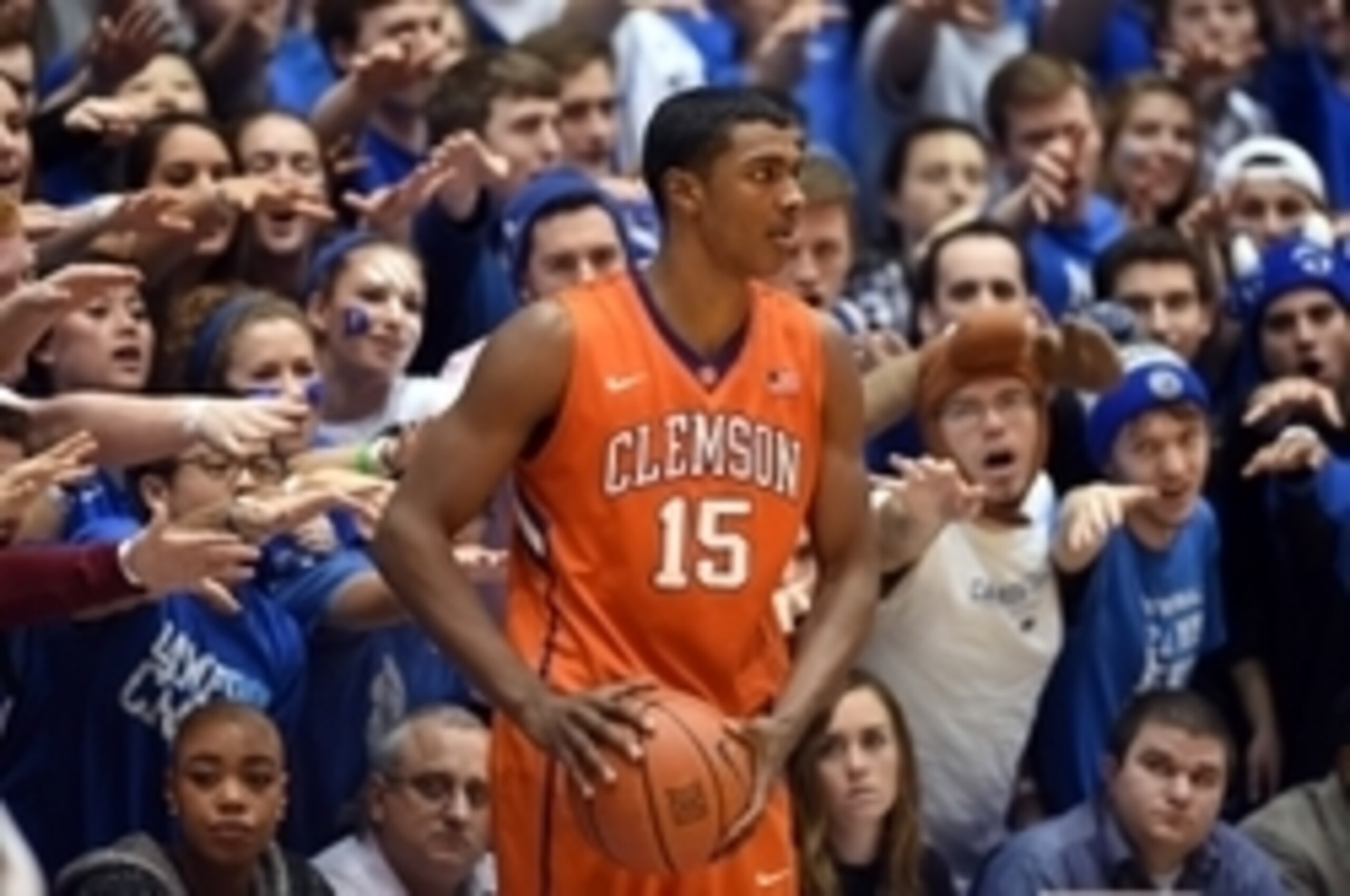
Clemson Receives: Dominique Hawkins
Kentucky Receives: Donte Grantham
What happens if Alex Poythress isn't fully healthy? We're all expecting pretty big things from the Wildcats, as per usual, but doesn't that change in a heartbeat if Poythress gives them limited or ineffective minutes?
Meanwhile, in what possible scenario does Dominique Hawkins play important minutes for Kentucky this season?
Adam Zagoria of ZagsBlog has been reporting for awhile now that John Calipari would like to get Jamal Murray to reclassify to this year and sign with Kentucky. Even if that doesn't happen, there's still a pretty big logjam in the backcourt between Tyler Ulis, Isaiah Briscoe, Charles Matthews and Mychal Mulder.
Hawkins isn't a poor player by any means, but we've already seen over the past two seasons that he isn't one of the top options off the bench. That shows no signs of changing so long as he's in Lexington.
Ship him off to Clemson in exchange for some depth at small forward, though, and he'd get to play significant minutes for at least one season until Shelton Mitchell and Marcquise Reed become eligible—since, in this make-believe world where trades are legal, these players get to participate immediately while transfers still have to sit out a year.
Donte Grantham didn't exactly set the world on fire as a freshman with the Tigers, but he's got some three-point range and was one of the team's best defenders. He wouldn't be a bad insurance policy for Poythress.
Georgetown and Texas
2 of 19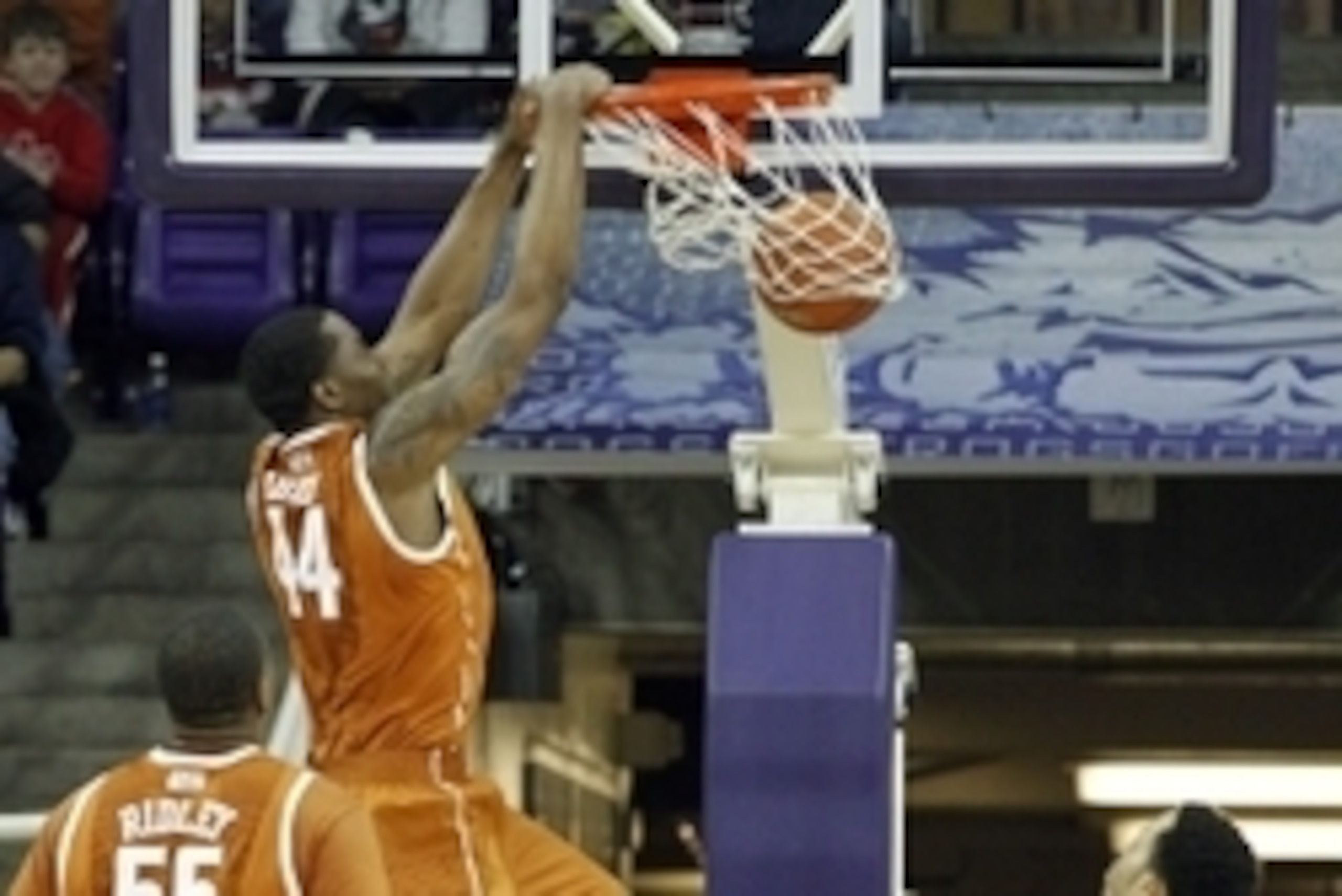
Georgetown Receives: Prince Ibeh
Texas Receives: Marcus Derrickson
This is my third "hypothetical trades" piece in the last 12 months, and Prince Ibeh has been a part of each of them. The rationale hasn't changed: Texas has too much depth in the frontcourt.
The Longhorns aren't nearly as deep now without Myles Turner and Jonathan Holmes, but they still have big men Connor Lammert and Cameron Ridley to welcome a new coach who basically wrote the book on small ball over the past few seasons at VCU.
We're not entirely sure what to expect from Shaka Smart with this roster, but let's just say we're not anticipating Lammert logging many minutes at small forward this year.
Besides, the proposed trade wouldn't reduce the number of options that Texas has in the frontcourt. Adding a freshman power forward in place of a senior center just makes the team a bit younger and more prepared for the future.
Meanwhile, Georgetown needs an immediate-impact big man after losing seniors Joshua Smith and Mikael Hopkins. That big man doesn't need to be nearly the mountain that Smith was, but someone with more bulk than Isaac Copeland would be the preference at center.
Maybe incoming freshman center Jessie Govan is ready to be that interior guy, or maybe he needs a year to develop and the addition of Ibeh could really help fill a need for a team with studs on the perimeter and gigantic question marks in the offensive rebounding and shot-blocking departments.
It would at least be worth letting go of one of the three big men the Hoyas are scheduled to add in November.
Gonzaga and UC Riverside
3 of 19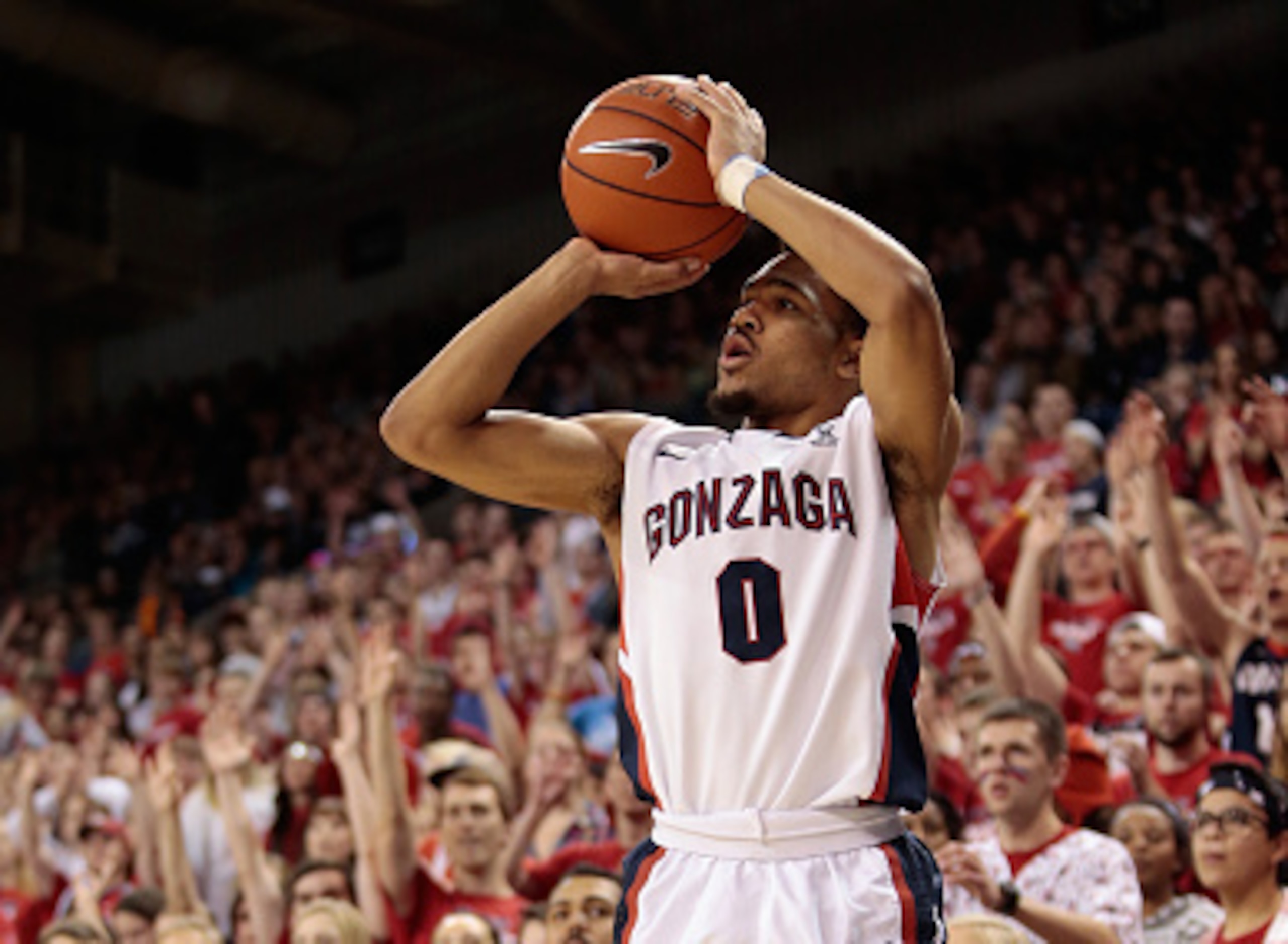
Gonzaga Receives: Jaylen Bland
UC Riverside Receives: Eric McClellan and Silas Melson
If there's one thing Gonzaga needs next season, it's a guard who can shoot three-pointers.
Yes, the Bulldogs still have Kyle Wiltjer, the freak of nature who is 6'10" yet drained 46.6 percent of his three-point attempts in 2014-15. However, what they don't have is Kevin Pangos or Gary Bell Jr. to supplement that strength.
Silas Melson attempted 6.7 triples per 40 minutes and made 34.0 percent of them in less than 10 minutes per game, but can Mark Few really count on him to improve his percentage while drastically increasing his playing time as a sophomore?
It's most certainly not beyond the realm of possibility, but why try to "build" a guy who can make 38.8 percent of his 7.9 attempts per game when you can trade for one in this fictitious world of ours?
That's precisely what Jaylen Bland brought to the table last season.
Bland had a very brief, 74-minute cup of coffee with Murray State back in 2011-12 before blossoming at College of the Canyons the following year. After sitting out a year before joining the UC Riverside Highlanders, he averaged an impressive 3.1 made triples per game.
To get one year of that player, it's reasonable to assume the Bulldogs would give up three years of Melson—particularly with two years of Nigel Williams-Goss beginning in 2016-17—as well as Eric McClellan as a means of helping to replenish some of the veteran backcourt leadership they're taking in the trade.
After losing five seniors who stand 6'5" or shorter this offseason, it's a two-for-one swap the Highlanders would almost have to consider.

.jpg?w=2560 "Rams Raiders Football")

Virginia Tech and Washington State
4 of 19
Virginia Tech Receives: Josh Hawkinson
Washington State Receives: Malik Mueller, Satchel Pierce and Johnny Hamilton
It's one of just two three-for-one swaps on the list, but it's a price Virginia Tech would be willing to pay to become a fringe contender in the ACC.
Don't be fooled by the 11-22 record. The Hokies put up a valiant fight in many of those losses and were really just one piece away from making some noise last season.
That piece is an insatiable rebounder.
According to Sports-Reference.com, they were out-rebounded by an average margin of 6.4 boards per game. Kenpom.com ranked Virginia Tech 318th in offensive rebounding percentage and 340th on the defensive end.
Had the team done a better job of closing out defensive possessions and/or extending offensive ones, things might have been much different.
Well, Josh Hawkinson was a sensational rebounder this past season, ranking third in the nation in defensive rebounding percentage by corralling more than 31 percent of the opposition's misses while on the court. He also shot 85.3 percent from the free-throw line and averaged more than a block per game.
For two years of Hawkinson's services, Buzz Williams' squad would be sacrificing much of the bench by giving up sophomore shooting guard Malik Mueller, sophomore center Satchel Pierce and incoming JUCO center Johnny Hamilton.
It wouldn't immediately make Washington State a contender, but it'd help the Cougars more rapidly rebuild after seeing DaVonte Lacy, Jordan Railey and Dexter Kernich-Drew graduate.
Michigan and St. John's
5 of 19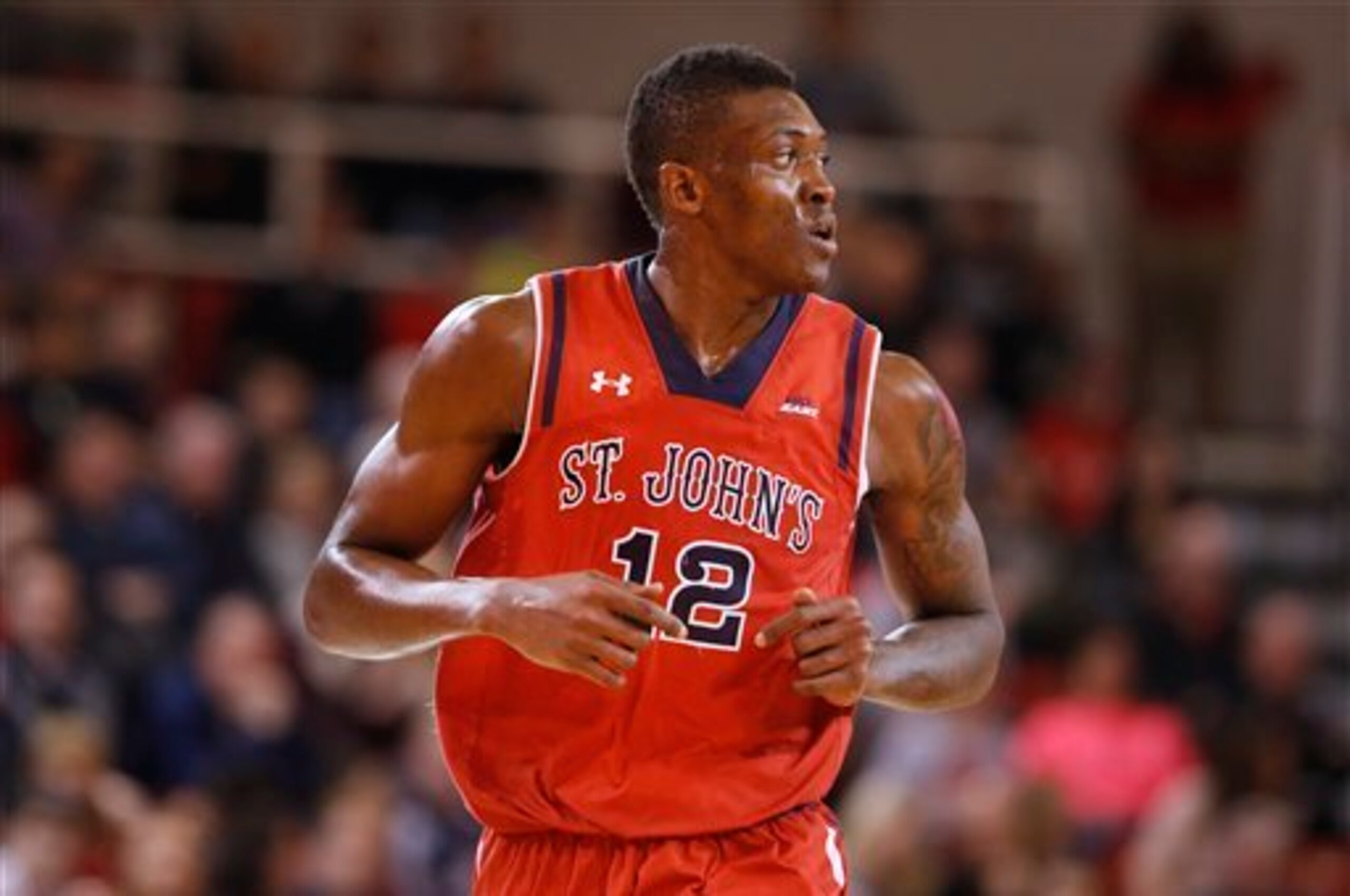
Michigan Receives: Chris Obekpa
St. John's Receives: Aubrey Dawkins and Mark Donnal
With all due respect to the Red Storm, that team isn't going anywhere this season. Teams don't lose four of their six leading scorers, hire a head coach who has never coached at any level and simply keep the status quo.
It's tough to say how long the rebuilding process will last at St. John's, but it definitely isn't happening overnight, so Chris Mullin and company would be wise to cash in Chris Obekpa for something.
Michigan is a school that could desperately use the services of one of the nation's best shot-blockers. Despite all the "Just you wait and see!" optimism about Ricky Doyle and Mark Donnal, the Wolverines had a predictably paltry post presence, rarely blocking shots or frankly doing much of anything to keep the opposition from scoring inside the arc last season.
Outside the three-point line, they were pretty great. They'll also be getting substantially better in that department with the reinfusion of a healthy Caris LeVert and Derrick Walton Jr.
But a legitimate defensive center could be the difference between making the NCAA tournament and actually vying for a title.
That's why Michigan would be willing to part with a pair of players who have a total of six years of eligibility remaining in order to get just one year of Obekpa.
Aubrey Dawkins was a pleasant surprise last year, but he'll be lucky to even touch the court in a Big Ten game in 2015-16 if everyone stays healthy. Donnal is a bit more of a sacrifice, but the Wolverines still have Doyle and Kameron Chatman to help Obekpa anchor what figures to be (at least) a three-guard lineup at all times.
Michigan State and UC Irvine
6 of 19
Michigan State Receives: Mamadou Ndiaye
UC Irvine Receives: Gavin Schilling, Javon Bess and Colby Wollenman
Like their in-state rivals, the Spartans need to step up their big-man game to match their terrific guard play.
Between Tum Tum Nairn, Eron Harris, Bryn Forbes, Denzel Valentine and incoming freshman Matthew McQuaid, Michigan State's backcourt should be pretty phenomenal. It's the type of perimeter rotation that champions are of.
However, the frontcourt situation took a bit of a hit when Caleb Swanigan changed his mind about becoming a Spartan before signing with Purdue.
Now, even if Deyonta Davis is somehow capable of replacing Branden Dawson without a hitch, there's still the 6'9" platoon situation of Gavin Schilling and Matt Costello at center.
Wouldn't it be great if the Spartans could just have a giant patrolling the paint?
Three players is a hefty price to pay, but Mamadou Ndiaye is a pretty hefty man at 7'6". His offensive game is far from polished, but Tom Izzo would be bringing him to East Lansing to become a one-man wrecking crew on defense.
Facing Ndiaye in the tournament, Louisville's Montrezl Harrell—widely regarded as one of the most unstoppable power forwards in the country last season—played 38 minutes and scored just eight points.
Ndiaye would be a nightmare for Big Ten opponents all season long.
Despite trading one of the most coveted big men in the country, UC Irvine would remain a minor-conference force to be reckoned with by adding three Spartans and promoting 7'2" Ioannis Dimakopoulos to the position of "starting center with whom no one in the Big West Conference can possibly stand nose-to-nose."
Duke and Villanova
7 of 19
Duke Receives: Ryan Arcidiacono
Villanova Receives: Sean Obi and Amile Jefferson
Of the four players Duke lost from its championship roster, it's the one with no chance of being a lottery pick whom the Blue Devils may miss the most.
Without Quinn Cook, there's simply no veteran leadership on this roster. Derryck Thornton should be great, but our faith in a repeat performance would be a lot stronger if a guy with 322 career minutes (Grayson Allen) wasn't the most experienced member of the projected starting backcourt.
Enter Ryan Arcidiacono, who is loaded with experience and simply feels like a prototypical Duke point guard. No, not because of his skin color. Give me some credit here. He's a floor general who hits enough three-pointers to keep you honest but also distributes more than enough to get everyone else involved.
He would basically become Greg Paulus 2.0. Maybe Duke wouldn't need him much by the end of the year, but his 3,310 career minutes would be invaluable in getting this roster to reach its full potential in a hurry.
Obviously, Villanova isn't just going to give "Arch" away. The Wildcats also have an outstanding freshman point guard next season (Jalen Brunson), but they want to keep Arch for the exact same reason that Duke would want to acquire him.
However, their need for a power forward far outweighs their need for some backcourt insurance.
With JayVaughn Pinkston out of the picture, Darryl Reynolds is Jay Wright's only conventional big man aside from Daniel Ochefu, and he only played 4.0 minutes per Villanova game last season.
Adding Amile Jefferson and Sean Obi would give the Wildcats more than enough depth in the paint to make a spirited run at another Big East title and NCAA tournament No. 1 seed.
East Tennessee State and Mississippi State
8 of 19
East Tennessee State Receives: Oliver Black and Fallou Ndoye
Mississippi State Receives: Petey McClain
After three lackluster seasons under Rick Ray, Mississippi State is ready for a rapid revival under Ben Howland.
The Bulldogs bring back most of their key players for another season and recently landed a couple of huge commitments in Malik Newman and Aric Holman. Howland announced Holman's signing on Twitter on Thursday.
However, their biggest bugaboo last season was turnovers, as they averaged 14.8 per game. While Newman should be a fantastic addition, freshman point guards are rarely immune to the turnover bug.
That's why ETSU's Petey McClain would be the perfect addition. As a junior, he recorded a 3.1 assist-to-turnover ratio while almost never looking to create his own shot. He averaged 2.7 field-goal attempts per 40 minutes on the court. He did commit five turnovers in one game against VCU, but, really, who hasn't?
McClain would fill a role similar to the one Cody Doolin played last season for UNLV, serving as the primary ball-handler during crucial junctures of the game yet predominantly deferring to the better, more assertive scorers while on the court.
For that veteran in the backcourt, Mississippi State would exchange a pair of sophomore forwards who would greatly help ETSU rebuild and immediately become more competent on the glass and in the paint.
Northwestern State and Ohio State
9 of 19
Northwestern State Receives: Austin Grandstaff and A.J. Harris
Ohio State Receives: Jalan West
For seemingly the 10th consecutive season, Ohio State is losing all of its best scorers. (How does Thad Matta not get more respect for constantly keeping this team nationally relevant in the face of incessant roster turnover?) D'Angelo Russell was a one-year wonder before leaving for the NBA lottery while Shannon Scott, Sam Thompson and the entire frontcourt trio of Amir Williams, Trey McDonald and Anthony Lee are out of years of eligibility.
Add it all up, and it's looking like Marc Loving and Jae'Sean Tate or bust for the Buckeyes.
But they have one heck of a deep incoming class, with five 4-star recruits joining the program this season. Couldn't they afford to part with some of that freshmen depth in order to add the type of do-it-all stud they're losing in Russell?
Jalan West certainly fits that bill. We have to take his numbers with a grain of salt because of Northwestern State's fast pace of play, but the man averaged 20.0 points, 7.7 assists and 2.1 steals per game while shooting 42.2 percent from three-point range.
One more season like that and he'll join Gary Payton in a very exclusive club of college basketball players with a career of at least 2,100 points and 850 assists.
Tempo schmempo. Those are absurd numbers no matter how you slice it, and he's exactly the combo guard Ohio State needs after losing its starting backcourt.
For Northwestern State, this is one of two trades designed to really help put the Demons on the map for years to come.
Northwestern State and Syracuse
10 of 19
Northwestern State Receives: Tyler Lydon and Franklin Howard
Syracuse Receives: Zikiteran "Zeek" Woodley
In conjunction with the Ohio State trade on the previous slide, this would give Northwestern State four 4-star freshmen. For as great as Jalan West and Zeek Woodley have been, the Demons would be completely insane to not take those deals. How else are they going to get one 4-star recruit, let alone four?
From Syracuse's side of things, the Orange really need their scholarship players to start packing a punch, as their number of allotted scholarships will be reduced by three from 2016-20 because of the sanctions levied against them in March.
Tyler Lydon and Franklin Howard might both be pretty good, but Woodley almost led the nation in scoring last season at 22.2 points per game.
Again, grain of salt because it's Northwestern State, but this is a guy who ranked second in the nation in O-rating (a tempo-free statistic) among players used on at least 24 percent of possessions, according to KenPom.com. Other players in the top 10 on that list included Frank Kaminsky, Delon Wright, Jerian Grant, Kyle Wiltjer, Karl-Anthony Towns and Tyler Harvey. You may have heard of those guys.
And, let's be honest, Syracuse desperately needs a scorer. Rakeem Christmas graduated. Chris McCullough declared for the NBA draft. B.J. Johnson and Ron Patterson have transferred. The Orange are pretty much down to Trevor Cooney, Michael Gbinije and Tyler Roberson—two of which have only one year of eligibility remaining.
Why wouldn't they make this swap to get two seasons of a guy who can light up the scoreboard while also getting back one scholarship that they can put to use elsewhere?
Iona and Utah
11 of 19
Iona Receives: Kyle Kuzma and Jeremy Olsen
Utah Receives: A.J. English
Best of luck finding a player who was more irreplaceable than Delon Wright over the past two seasons. According to Sports-Reference.com, he ranked fifth in total win shares in 2013-14 and second in the category last year. Rather than list everything he did for the Utes, it'd be quicker to mention the things he didn't do.
But he's basically all that they're losing this offseason, so they could be pretty doggone competitive if they can figure out a way to replace him.
Iona's A.J. English is one of very few players in the country who could fill that role. He averaged 20.1 points, 5.1 rebounds and 5.1 assists last season while playing 37.4 minutes per game. As far as durability and versatility go, it could be a pretty seamless transition.
Iona wouldn't even remotely want to give him up, but the Gaels still have Isaiah Williams and Schadrac Casimir as lethal perimeter players who can pace the offense. After losing double-double machine David Laury, trading English to replenish the frontcourt with Kyle Kuzma and Jeremy Olsen would be an avenue worth considering.
For Utah, it's now or never. The Utes would only be getting one year of English, but Brandon Taylor, Jordan Loveridge and Dakarai Tucker are each entering their senior season, as well. It's hardly a stretch to assume this will be Jakob Poeltl's final year in college, too. They will inevitably be in rebuilding mode in 2016-17. Might as well really chase a 2016 banner in the process.
Denver and Oregon State
12 of 19
Denver Receives: Daniel Gomis
Oregon State Receives: Marcus Byrd
Oregon State is close to being very good, but the Beavers were undeniably horrible on offense last season. Center Olaf Schaftenaar was the only player on the roster who made at least 33 percent of his three-point attempts, and he wasn't exactly Steph Curry 2.0 at a clip of 37.4.
Denver's Marcus Byrd, however, was a dandy shooter, converting on 44.1 percent of 111 attempts. If he brought that stroke to Corvallis, he would immediately become the team's primary small forward and help propel the Beavers to Pac-12 relevance and possibly a berth in the NCAA tournament for the first time since 1990.
While Oregon State couldn't shoot, Denver couldn't block a shot or grab an offensive rebound if its life depended on it. The Pioneers ranked dead last in the nation in offensive rebounding percentage and weren't much better in the blocks department with just 1.8 per game as an entire team.
Daniel Gomis would be a massive help, as he led the Beavers in offensive rebounding percentage and averaged 1.4 blocks per game.
Denver needs a lot to bounce back from a 12-18 season while losing Brett Olson and Cam Griffin, but Gomis might keep the 2015-16 season from being a complete disaster.
Dayton and Nevada
13 of 19
Dayton Receives: AJ West
Nevada Receives: Darrell Davis and Bobby Wehrli
Archie Miller did an excellent job with what he had, but you can't teach height. After dismissing Devon Scott and Jalen Robinson from the team and being left with no one taller than 6'6", it's no surprise that Dayton's two biggest weaknesses were offensive rebounding and shot-blocking.
Acquiring AJ West, however, would go a long way toward killing both of those birds with one stone. West led the nation in offensive rebounding percentage and ranked 29th in block percentage.
Not that it did Nevada any good. The Wolf Pack went 9-22 thanks to some of the most horrific offense in recent history. They ranked second-to-last in the nation in three-point field-goal percentage and 11th-to-last in two-point accuracy. Without West to clean up their messes, they might have averaged 50 points per game.
With only a handful of returning players, Dayton doesn't have a ton to offer for West, but Darrell Davis and Bobby Wehrli are accurate three-point shooters who could help Nevada immensely. Davis shot 45.2 percent to serve as one of the most accurate freshmen in the country. Wehrli attempted only 24 triples, but he sank half of them.
By adding players who actually make shots, that outstanding offensive rebounder would become a little easier to let go.
Miami (Ohio) and Purdue
14 of 19
Miami (Ohio) Receives: Isaac Haas
Purdue Receives: Eric Washington
Purdue and Gonzaga might be the only two teams in the country with more frontcourt talent than can possibly be properly utilized, making Caleb Swanigan's decision to commit to Purdue about as logical as Myles Turner's decision to sign with Texas one year ago.
If you're supposed to be one of the best incoming big men in the country, why wouldn't you want to go to a program that needs a center as opposed to one where you'd be lucky to play 18 minutes per night? The Boilermakers already have too many great centers with A.J. Hammons and Isaac Haas, and they've got a pretty great power forward in Vince Edwards, too. Where does Swanigan expect to fit into that equation?
But I digress, because the solution to the problem is to trade away one of the centers to improve a very shaky backcourt situation.
Purdue has already added former UT-Arlington point guard Johnny Hill, but could really use a guy who had an assist-to-turnover ratio better than 1.15 last season. Eric Washington's ratio of 1.63 wasn't a whole lot better, but he's a pretty good scorer and defender who would do a better job of avoiding turnovers on a roster with multiple scoring options.
Pair the nation's seventh-best assist rate with a shooter like Kendall Stephens and paint presences like Edwards and Hammons and you've got a very formidable scoring attack.
Miami (Ohio) needs a lot of help to finish above .500 for the first time since 2008-09, but a 7'2" center like Haas who rebounds well, blocks shots and draws fouls like a madman is a very good start.
Butler and Louisville
15 of 19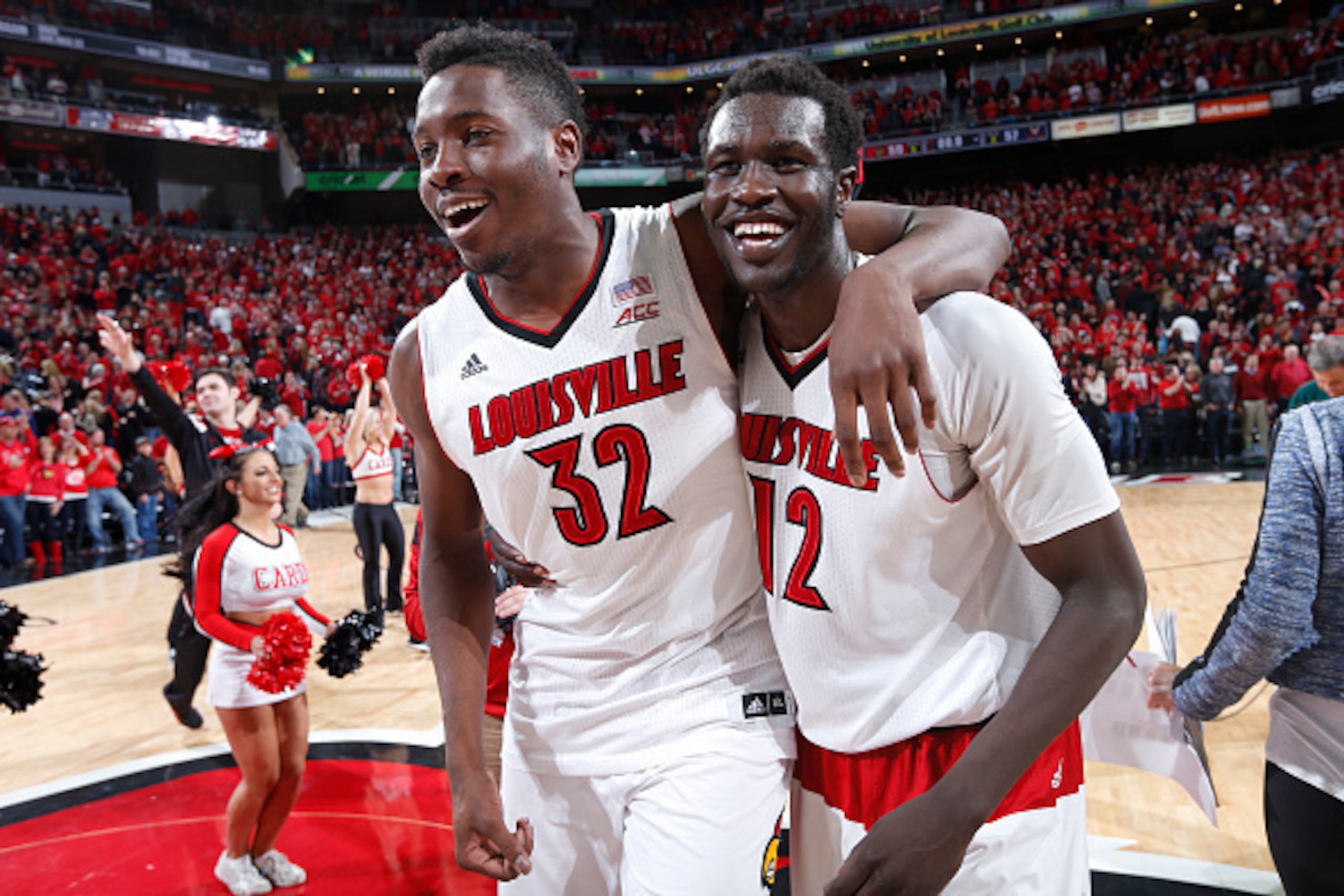
Butler Receives: Mangok Mathiang or Chinanu Onuaku
Louisville Receives: Kelan Martin
Tough to say which big man Rick Pitino would rather give up, but Chris Holtmann would welcome either Mangok Mathiang or Chinanu Onuaku in a heartbeat.
With Kameron Woods graduating, Butler is left with some large question marks in the paint. Woods was the only member of the 2014-15 roster listed at 6'9" or taller, and while the Bulldogs have a 6'9" center in this year's recruiting class, Nathan Fowler isn't exactly the sure thing that Jahlil Okafor was. Chances are, their starting frontcourt will be made up of 6'8" foul-prone Tyler Wideman and 6'7" and rebound-averse Andrew Chrabascz.
Considering Butler will have a backcourt made up of Tyler Lewis, Kellen Dunham and Roosevelt Jones, a step up at center could be the difference that makes this team a real threat to win the Big East. It doesn't need to be a high-scoring center, either. Someone with height who could grab a rebound and contest shots would do just fine.
In the red corner, Louisville has big men to spare and a hole at small forward to plug. Sophomore Quentin Snider and grad transfers Damion Lee and Trey Lewis should provide some outstanding perimeter production, but a guy like Kelan Martin could help bridge the gap between the electric backcourt and the poor-scoring frontcourt.
The Cardinals are counting on freshman Deng Adel to be that guy, but Martin would provide some insurance at the position for the low cost of one of the five players on the roster standing 6'9" or taller.
Montana and West Virginia
16 of 19
Montana Receives: Daxter Miles Jr. and Brandon Watkins
West Virginia Receives: Brandon Gfeller
West Virginia was already a very poor shooting team, and it's only going to get worse with the graduation of Juwan Staten and Gary Browne.
Fortunately, the Mountaineers have plenty to offer from their deep, defensive-minded rotation to make a trade happen. There are a handful of good potential trading partners with a well-above-average shooter and a dire need for improved defense, but Montana seems to take the cake.
With Martin Breunig back for one more year, a pretty solid supporting cast around him and a Big Sky title up for grabs with Eastern Washington losing Tyler Harvey among several others, this is the time for the Grizzlies to strike.
However, they need to get better defensively to pull it off. The 110-99 loss to Davidson was just the tip of the iceberg, as they regularly allowed moderately competent opponents to score at least 70 points per game despite playing at a below-average tempo.
With Brandon Watkins and Daxter Miles Jr.—the latter of which could probably use a change of scenery after his infamous prediction last March—Montana would improve its defense both inside and outside the arc for the price of an accurate three-point shooter in Brandon Gfeller (42.1 percent).
That may seem expensive, but it's not like Miles was a terrible scorer during his freshman year at West Virginia. He could well develop into just as much of an asset as Gfeller was last season.
Green Bay and North Carolina State
17 of 19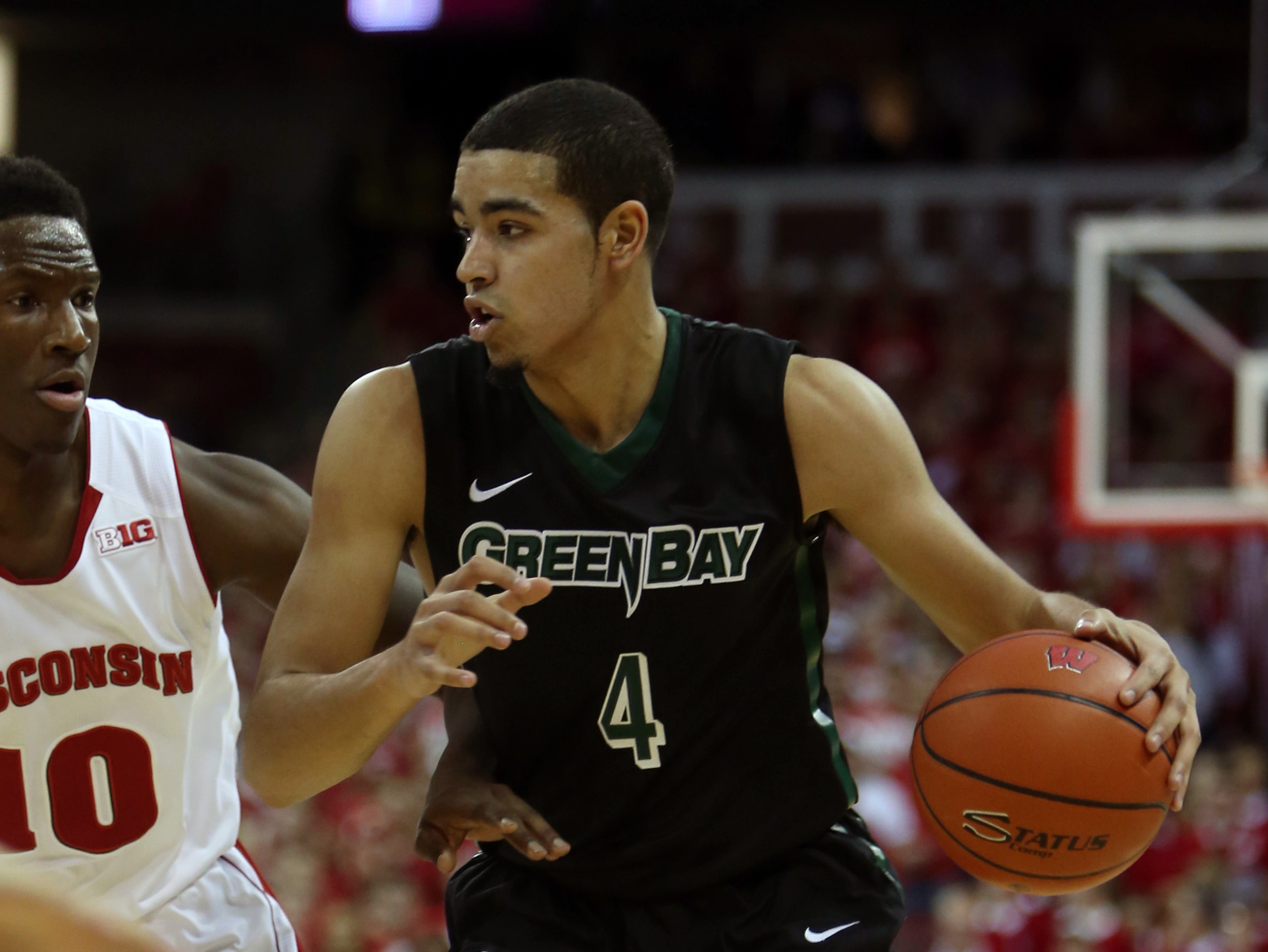
Green Bay Receives: Lennard Freeman and Shaun Kirk
North Carolina State Receives: Jordan Fouse
When the 2014-15 season officially drew to a close, NC State was looking like a fine sleeper pick for next year. All the Wolfpack were losing was Ralston Turner, but West Virginia transfer Terry Henderson was on his way after sitting out this past season and will likely be even better than Turner was.
But then Trevor Lacey decided to declare for the NBA draft and Kyle Washington decided to transfer. Suddenly Mark Gottfried is left with one legitimate three-point shooter on the roster and a trio of sophomore forwards from which to choose two starters.
Meanwhile, in Green Bay, the run is over. Keifer Sykes is gone, as are Greg Mays, Alfonzo McKinnie and Daeshon Francis. It's time to rebuild, which means parting ways with Jordan Fouse rather than letting his senior year go to waste. He does absolutely nothing to solve NC State's three-point dilemma, but he provides veteran leadership, proven talent and some much-needed defense for the Wolfpack at small forward.
Ideally, Green Bay would get either Cody Martin or Caleb Martin in this deal, but we wouldn't even suggest splitting up a pair of brothers in a fictitious situation. And there's no way NC State would willingly part with Abdul-Malik Abu. That leaves Lennard Freeman and incoming freshman Shaun Kirk as the dowry to acquire Fouse.
As a result, Green Bay takes a few steps toward getting back on top of the Horizon League and NC State shores up a weakness in the starting lineup while creating a lesser one in the form of backcourt depth.
Kennesaw State and San Diego State
18 of 19
Kennesaw State Receives: Al Skinner's choice
San Diego State Receives: Yonel Brown
Kennesaw State has been one of the worst teams in the entire country for the past five years. Going 10-22 in 2014-15 was its best record since 2009-10. Of those 22 losses that the Owls suffered, 10 were by a margin of at least 19 points, including each of their final three games against Atlantic Sun foes—not one of which was North Florida or Florida Gulf Coast.
But there was one lonely category where they were better than most other teams: Free-throw shooting. That isn't because the entire team was above average, but rather because one primary ball-handler almost never missed. Yonel Brown made 135 of his 150 free-throw attempts last season for a conversion rate of 90 percent.
The complete inverse of Kennesaw State, San Diego State has been one of the nation's better teams for the past half-decade, but the Aztecs were just plain awful from the free-throw line this past season. Among players who attempted at least seven free throws, only Aqeel Quinn shot better than 68 percent, and he only converted 70.4 percent of the time.
In exchange for a player who can actually make a one-pointer, I like to think Steve Fisher would tell Kennesaw State it can take any player on the roster not named Winston Shepard, Skylar Spencer, Malik Pope, Zylan Cheatham or incoming freshman Jeremy Hemsley. It's up to Al Skinner to decide whether he'd rather have Trey Kell, Matt Shrigley or Dakarai Allen.
North Carolina and Vanderbilt
19 of 19
North Carolina Receives: Jeff Roberson
Vanderbilt Receives: Joel James
This is a rare match made in heaven. Both teams are trading out of their surplus and drastically improving what could have been a problem area.
For the Tar Heels, Jeff Roberson helps fill the spot vacated by J.P. Tokoto. They'll likely go with a starting five of Marcus Paige, Justin Jackson, Theo Pinson, Brice Johnson and Kennedy Meeks, but Roberson—a 6'6" small forward who rebounds well and shot 45.5 percent from three-point range last season—would be one of the first guys off the bench.
The Commodores are willing to part with him because they would still have an overloaded backcourt made up of Wade Baldwin, Riley LaChance, Matthew Fisher-Davis and Cornell transfer Nolan Cressler. Also, they desperately need another big man. Damian Jones is an animal, but he can't be the team's only post presence with James Siakam and Josh Henderson now out of the picture.
Luke Kornet is 7'0", but he took more shots from three-point range than he did inside the arc last year. A conventional big man like Joel James would be a huge plus, and an attainable asset with Johnson, Meeks and Isaiah Hicks already keeping James from getting the minutes his talent deserves.
It's a case of teams swapping bench players, but it enhances North Carolina's chances of winning the national championship and greatly improves Vanderbilt's odds of at least making the tournament.
Kerry Miller covers college basketball for Bleacher Report. You can follow him on Twitter @kerrancejames.
.jpg?w=2560 "Steelers Saints Football")

.jpg?w=2560 "Packers Safety Slams Refs 🤬")
.jpg?w=2560 "🚨 Week 8 AP Top 25 Poll")