

The Biggest Takeaways from the 2015 Italian Open for Roland Garros
The final week of competitive action for most before the 2015 French Open is over, as Novak Djokovic and Maria Sharapova reigned supreme in the eternal city of Rome once again.
It was certainly a chaotic and eventful week in the Italian capital, with testing three-setters and big-name withdrawals.
The Serbian world No. 1 went the distance in his opening three matches before stepping up his level to down David Ferrer and Roger Federer in straight sets in the semis and final, respectively. Sharapova herself came back from a set down in her final to beat a weary Carla Suarez Navarro. Elsewhere, Andy Murray and Serena Williams pulled out of the event within minutes of each other.
As the draws for the second Grand Slam of the year at Roland Garros are about to be made, what has the Italian Open taught us about certain players’ clay-court form?
Confident Djokovic Is Playing as Well as He Ever Has
1 of 6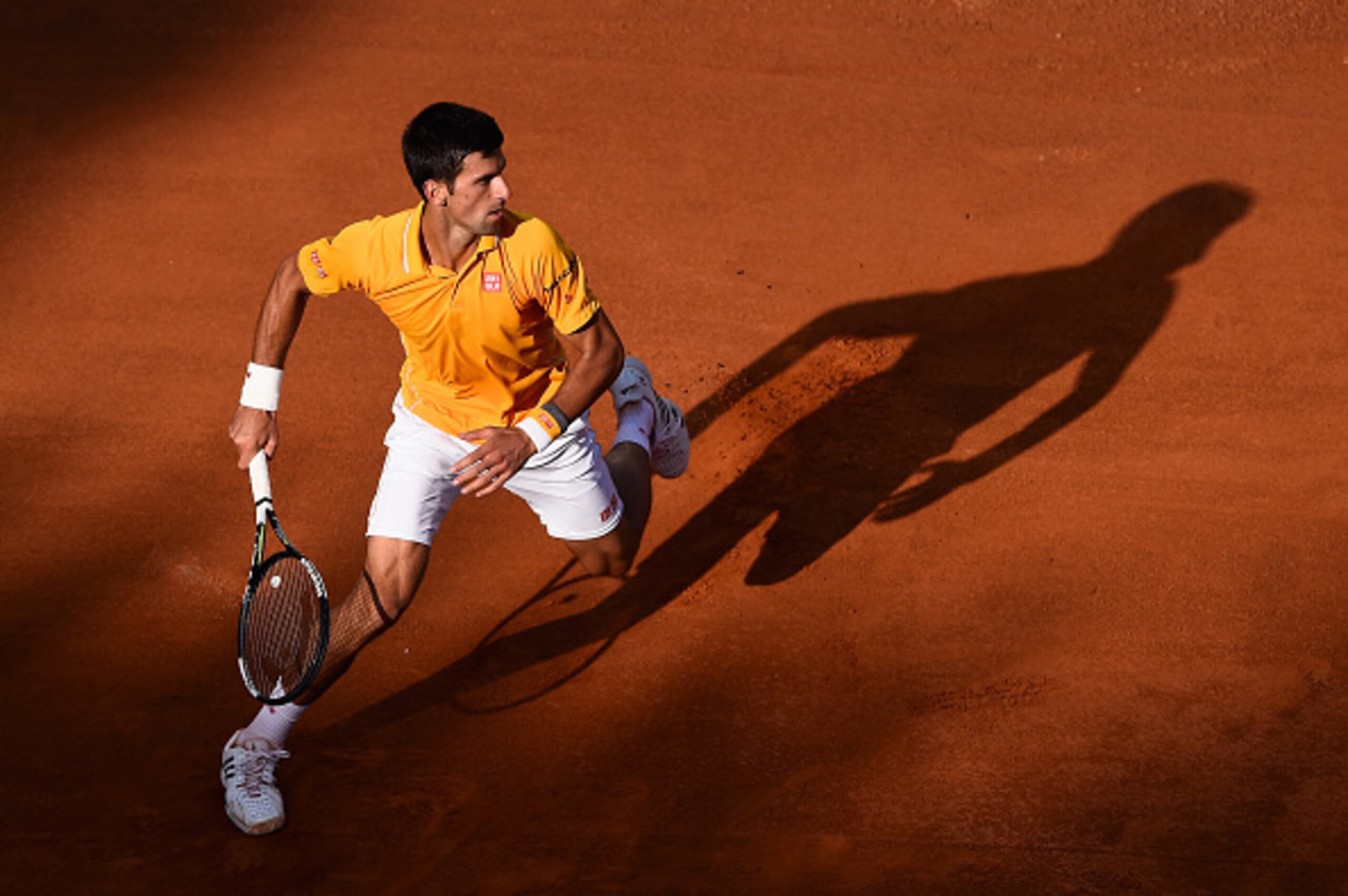
The world No. 1 is playing like his ranking suggests right now. In 2015, he has won a Grand Slam in Melbourne and four (yes, four) of the five ATP Masters 1000 events (he didn’t actually play in Madrid). He only has two losses this year so far (to Federer in Dubai and Karlovic in Doha), and beating him has surely never felt harder.
Even when pushed into a deciding set, you just know he can raise his level, get more returns back into play and increase his length when it really matters. Regardless of Rafael Nadal’s nine French Opens and despite what rival Federer claims, he is evidently the undisputed favourite right now to win at Roland Garros for the first time.
He is the best from the baseline by some distance at the moment, with only Andy Murray coming close. In the Rome final against the Swiss great, Craig O’Shannessy highlights for the ATP website that, “at 6-4, 3-0, Djokovic had won a staggering 30 baseline points to only 12 for the Swiss.”
He continues that, “it was the pressure of Djokovic’s smothering baseline game that was the dominant factor more than anything Federer did technically or tactically wrong”.
To beat him in Paris, a player is going to have to serve exceptionally well and play short, sharp points with precision and power. Federer is undoubtedly capable of this, but over five sets on a slow, high-bouncing clay court, this will be extremely difficult to accomplish.
The only thing stopping the Serb could be the thought that he has never won the French Open before; he has tried and failed to Nadal on many occasions on Court Philippe Chatrier. But winning five big titles this year already should fill him with confidence.
Federer Should Make Deep Run in Paris
2 of 6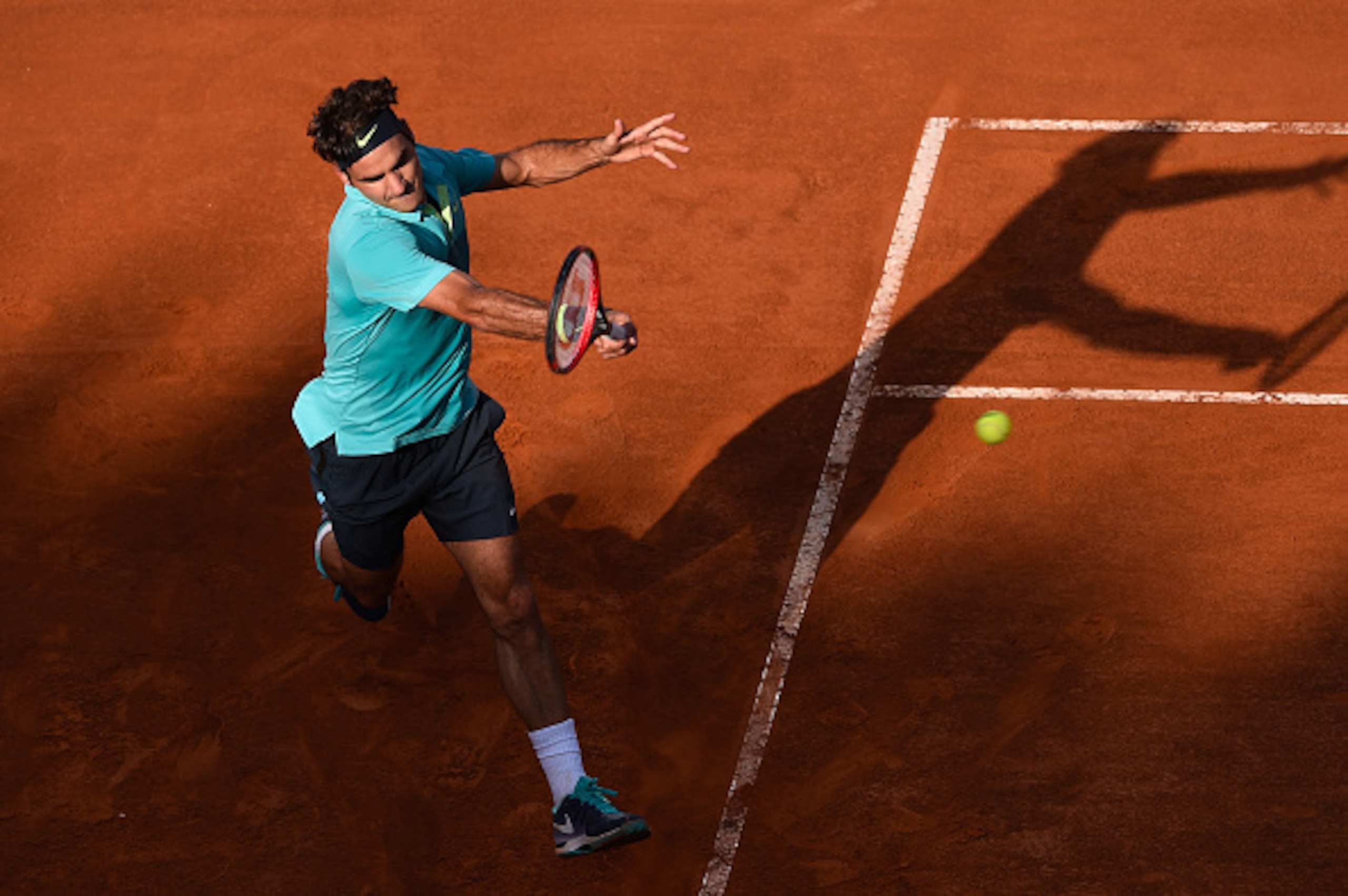
After worrying early losses in Monte Carlo and Madrid, Roger Federer fans would be forgiven for being concerned that a Melbourne-like exit was on the cards for the 17-time Slam champion in the French capital.
However, his performances in Rome were much more encouraging, beating Tomas Berdych and Stan Wawrinka comfortably. If he can avoid any potentially dangerous clay-courters, like Gael Monfils, Fabio Fognini and John Isner, in the opening rounds, he should make it deep into the second week.
Yet the final against Djokovic won’t fill him with confidence. His game usually matches up well with the Serb’s on other surfaces, but he was outplayed on the Roman clay and couldn’t muster much threat of a comeback in the second set.
Still, Roger would certainly prefer to see the world No. 1 on the other side of the net than his great Spanish rival, Rafael Nadal, whose spinning forehand into the Swiss’ one-hander continues to provide nightmares.
Talking to ATP World Tour website, Federer played up his title chances after the Rome final: "I don’t want to get myself too down because it was a good tournament for me...I really hope it's not just the two of them (referring to Nadal and Djokovic)…I hope there's going to be some other guys who will be a part of that group and I hope in particular myself."
Never count out a man who has won 17 of these marathon two-week events.
Murray Believes He Can Win Roland Garros
3 of 6
By withdrawing from the Italian Open after a win in his first match over Jeremy Chardy, two-time major winner Andy Murray showed he was deadly serious about his Roland Garros preparation and is expecting a deep run, if not a title.
Eyebrows have been raised and ears opened by the Scot’s recent performances on the dirt that he grew up on as a 15-year-old in Barcelona. He won his first two titles, back-to-back, on the surface in Munich and then, even more impressively, in Madrid.
Beating Rafael Nadal on clay is one of the great achievements in the modern game, yet Murray has been quick to quash any media buildup of him. BBC Sport tweeted "Could @andy_murray be the new king of clay?" to which he replied "hahahaha! No."
He is certainly right to do so as well. As solid as Murray was, Rafa was nowhere close to his best that day. He was making errors like we haven’t seen before, with seemingly simple groundstrokes not even reaching the net at times. Andy will know this as well as anyone.
Murray served superbly in Spain though, really kicking his usually ineffective second serve up and winning 80 per cent of second serve points in the final (even more than with his first serve in play at 67 per cent). If he maintains that, it’s tough to find a weakness in his game on clay.
However, beating Novak Djokovic is certainly now a psychological issue as well as a physical one, having lost seven times in a row to the Serb (including three already in big matches in 2015).
Anyway, after those two previous weeks in Europe, he was fatigued, and he didn’t want to risk his chances in Paris by playing on in Rome. He is confident that he is going to go well into the second week and emulate his last-four appearance last year. He knows that, to beat the likes of Djokovic and Nadal again, he needs to be in prime physical fitness and emotionally rested.
Can he quite unexpectedly win his third Slam at Roland Garros? Well, he definitely has a strong chance, but Novak or Rafa in five sets could be one step too far for the former US Open and Wimbledon champion.

.jpg?w=2560 "Steelers Saints Football")
.jpg?w=2560 "Rams Raiders Football")
Opposite to Djokovic, Nadal Is Suffering from a Lack of Confidence
4 of 6
The rhythms and patterns of form and confidence in tennis are amazing, aren’t they? You can win pretty much every match in every tournament on clay courts for 10 years, yet injuries, a few unexpected losses and a typically hyperbolic media reaction can suck that confidence out of you in the matter of weeks.
That’s what has happened to one of the game’s greats: Rafael Nadal.
He is not hitting the ball like we all know he is capable of; his groundstrokes are very often short in the court right now. He’s played extremely well in parts over the European clay-court season, particularly in wins over John Isner in Rome and Tomas Berdych in Madrid. But he hasn’t been able to consistently string together a run of strong performances. If he can do that anywhere though, it’ll be at Roland Garros.
The best-of-five set format there could help him considerably. If he can navigate his way through the opening rounds, he may rediscover his dominant clay-court form for the latter stages and have that belief back.
The Spaniard will go into his favourite event of the year without a clay-court title for the first time since 2004 and seeded outside the Top Four (likely No. 7).
This run is very similar to Roger Federer in 2013, where everyone said that was it for the great Swiss and he was on the decline. He may not have won a Grand Slam since, but Federer certainly had all the other answers to his critics in 2014, getting back to No. 2 in the world. Who would put it past his old rival to do the same?
Nadal said after his loss in Rome to Stan Wawrinka: “If I go to Roland Garros and I lose, I don’t play well…life continues. It’s not the end of the world.”
Keeping this relaxed approach is crucial for Rafa over the next couple of weeks; remembering that he has achieved all he could ever have dreamed of on Court Philippe Chatrier and anything else is a bonus. The “King of Clay” hasn’t got anything to prove to anyone.
Women’s Championship at Roland Garros Too Close to Call
5 of 6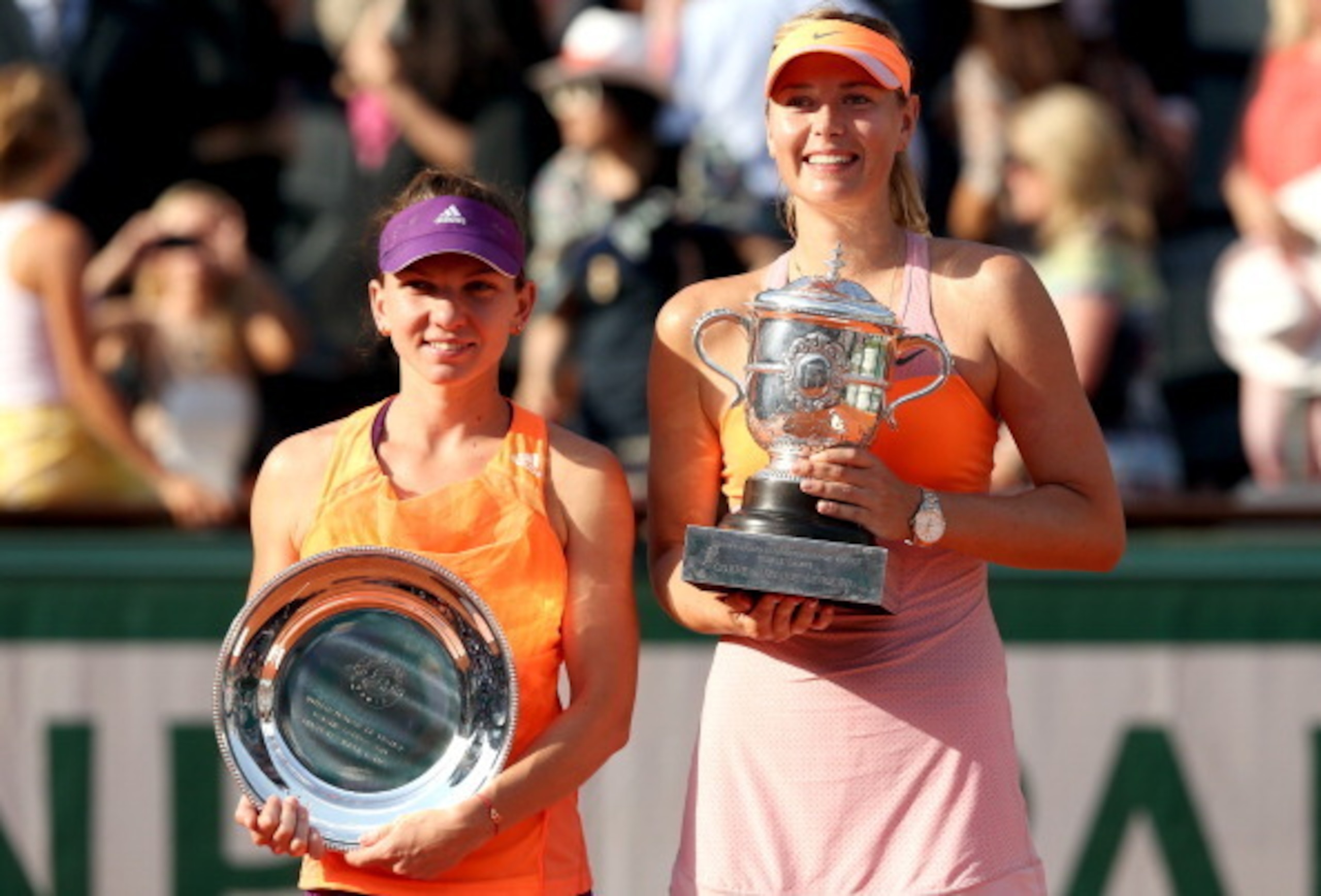
The past few months since Serena Williams’ Australian Open triumph have been remarkably inconsistent on the WTA tour, with all four members of the current Top Four winning big titles.
No. 3 Simona Halep won in Indian Wells; Serena in Miami; No. 4 Petra Kvitova took Madrid; while No. 2 Maria Sharapova won Rome last week. None of them have been playing title-winning tennis on a regular basis though, which makes calling Roland Garros very difficult.
Serena, as always, will be the favourite. When she plays at her highest level and serves as beautifully as she can, no one has the power to stop her. With the immense pressure she is under though, she is always vulnerable in the early rounds of a Slam.
There is an air of her really just floating through the other tournaments these days, just picking up enough points to keep her at world No. 1. All she really wants in the twilight of her illustrious career is to catch up with Steffi Graf and Margaret Court on 22 and 24 Grand Slams, respectively. She ducked out of Rome last week with claims of an elbow injury, showing her focus is firmly on Paris.
Defending French Open champion Maria Sharapova was resilient on the Italian clay last week, outlasting Carla Suarez Navarro to win the title. She hammered dangerous Victoria Azarenka on the way too, which was impressive despite the Belarusian’s fatigue.
But her results before on the surface have been inconsistent, surprisingly losing to Angelique Kerber in Stuttgart and Svetlana Kuznetsova in Madrid.
Simona Halep’s game, centred on her fluid movement, translates well to clay, as shown by her run to the final at Roland Garros in 2014. She suffered an early loss on clay too, though (to Alize Cornet in Madrid).
She played exceptionally well in Rome up until about an hour into her semi-final with Suarez Navarro, where she lost her composure and started missing a lot of balls, ultimately losing.
After that 2014 final though in Paris, the Guardian’s Kevin Mitchell wrote: "Halep, 22, really does look at home on the big stage, a well-prepared athlete with excellent foot speed, good anticipation and the ease of execution familiar to all champions."
She is certainly a prime contender for her first Slam on the clay of Roland Garros.
Czech Petra Kvitova has also played dominant tennis at times—particularly in Madrid, where she thrashed an out-of-sorts Serena Williams with some powerful serving and shot-making and later won the title. She did lose her opening match in Stuttgart to Madison Brengle, though, and to Suarez Navarro in Rome.
It’d be excellent for the WTA tour if all of the Top Four women could reach the latter stages and produce some engaging, tense battles for the title, like Sharapova vs. Halep from last year.
Of late, female seeds seem to tumble out early in the Grand Slams, like at the 2014 U.S. Open—which had a hardly mind-blowing last four of Serena, No. 10 seed Caroline Wozniacki, No. 17 Ekaterina Makarova and unseeded Peng Shuai.
Fognini and Suarez Navarro Among Clay-Court Dark Horses
6 of 6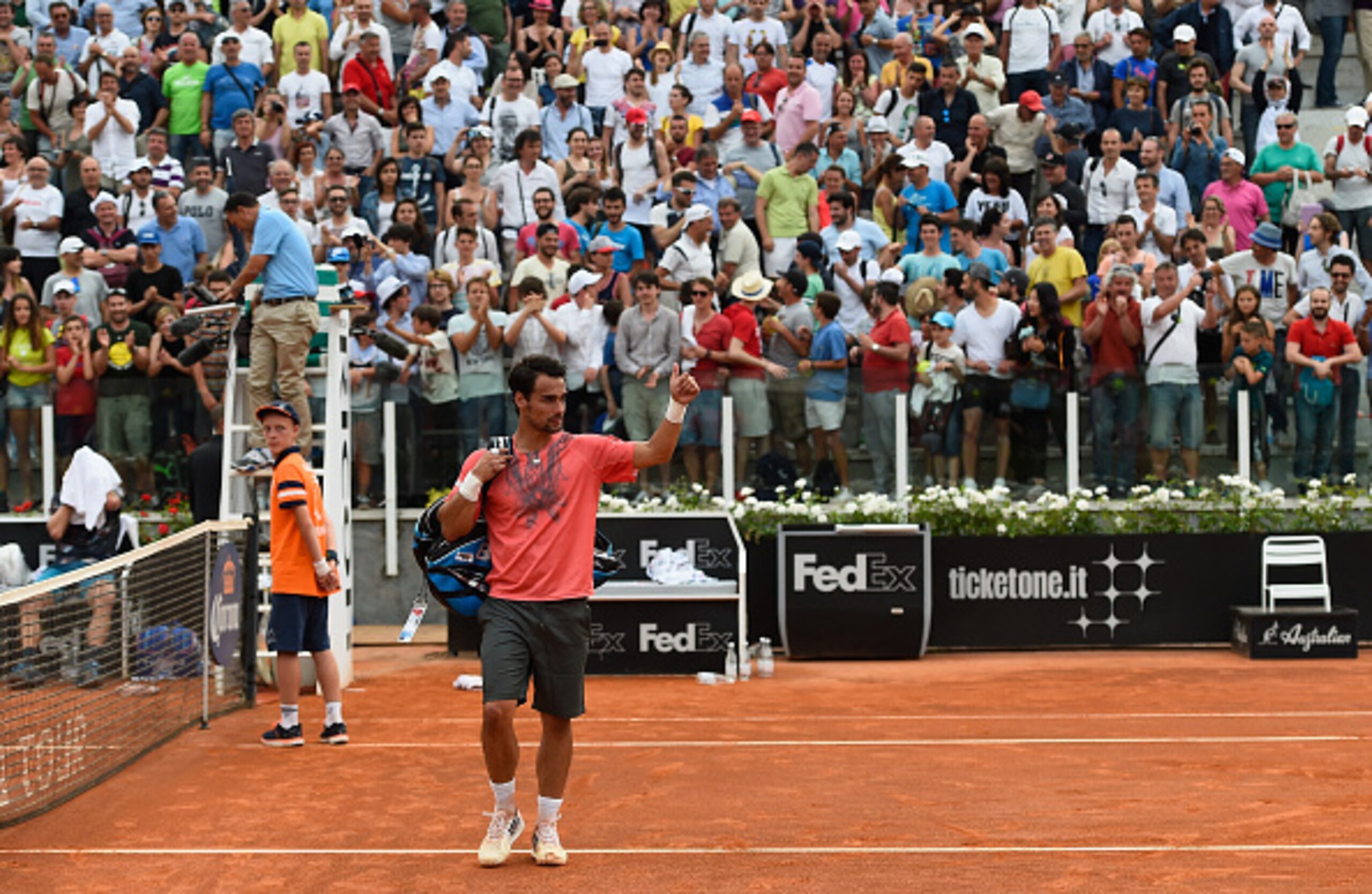
Supported by a boisterous home crowd at the Foro Italico, Fabio Fognini showed glimpses of the clay-court tennis skills he possesses that can beat anyone in the world on his day.
He played superbly well in defeating Grigor Dimitrov (6-0 in the deciding set) and losing in a final-set tiebreak to Tomas Berdych, in matches that felt like Italian home Davis Cup rubbers. The world No. 29 has incredibly beaten Rafael Nadal twice on clay in 2015 so far.
Yet, his form fluctuates with his frail mental attitude. He has inexcusably lost his opening match at six tournaments this year. He is extremely dangerous though, and if he can produce a few stable performances in a row, he could advance deep into the tournament. Fabio is definitely a player that the big guns will want to avoid in their sections of the draw.
Carla Suarez Navarro is almost the exact opposite of Fognini, as her strengths are her consistency, her calmness and mental resolve on court. The Spaniard has had a career year thus far, sitting at No. 4 in the WTA race with 2,655 points and now ranked at No. 8. She has reached the quarter-finals at every tournament she has entered this year, bar the Australian Open (a little unfortunate really).
Her ability to stay in matches has served her well (no pun intended) this season, and she showed that in Rome. She staved off Eugenie Bouchard in a final-set tiebreak and Simona Halep 7-5 in the third. Ultimately, she was too exhausted to keep up with Maria Sharapova in the final after taking the opening set. With a week’s rest, she could really trouble the main contenders in the French capital.
Victoria Azarenka—who is steadily making her way back to the top—Gael Monfils and John Isner are other players to watch out for.

.jpg?w=2560 "AP Poll Top Five Week 9")
.jpg?w=2560 "Packers Safety Slams Refs 🤬")
.jpg?w=2560 "Lamar Being Out Shocked Ravens")
.jpg?w=2560 "Mahomes Told Teammate to Leave Meeting")

