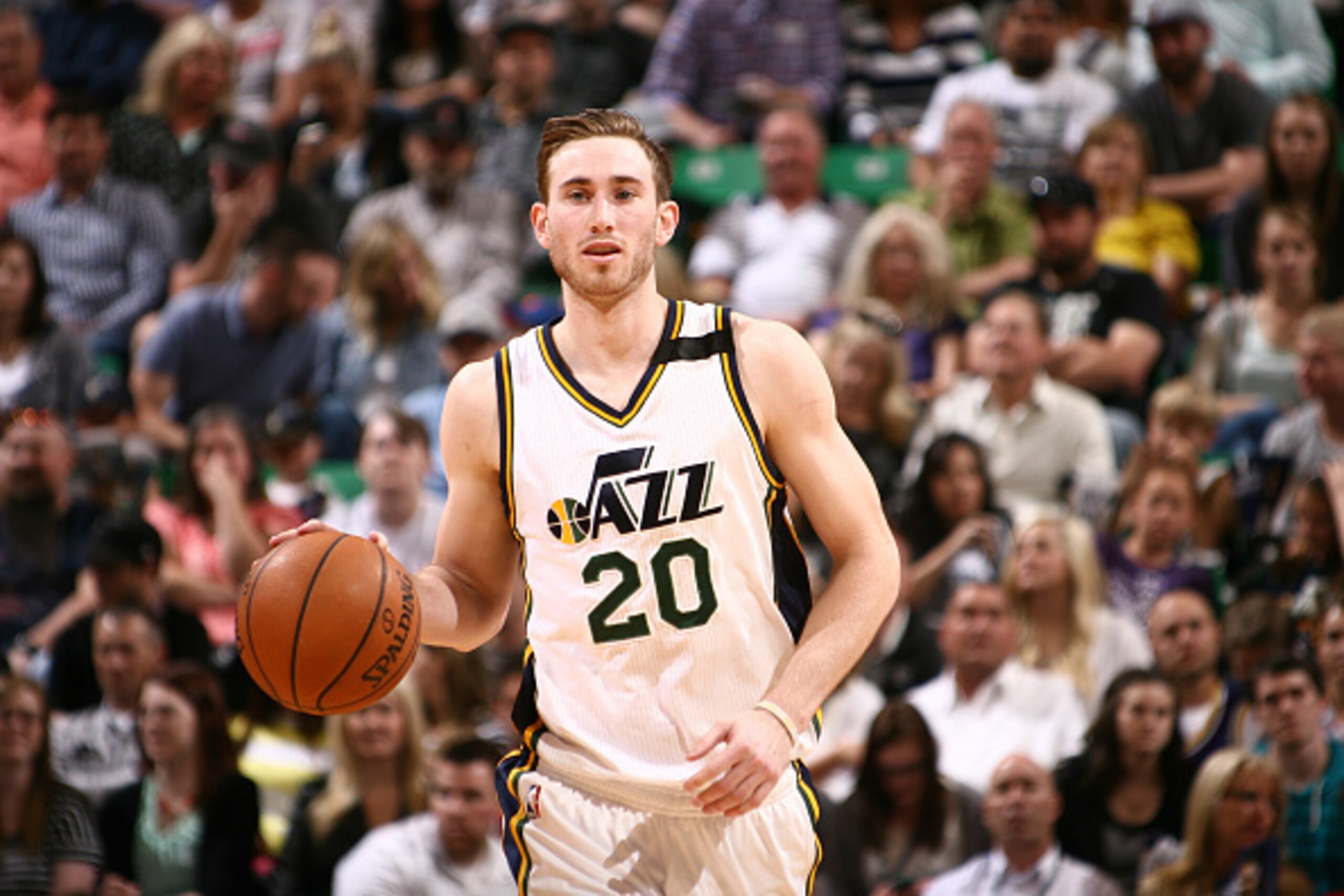

The Utah Jazz could realistically be one offseason away from returning to the NBA playoffs. Given where they were just one year ago, that's astounding.
Going from 25-57 in 2013-14 to 38-44 in 2014-15, with roughly the same group, speaks volumes to the development of Utah's young core, the coaching of Quin Snyder and the overall direction provided by general manager Dennis Lindsey.
The team already vastly outperformed expectations in the final months of last season, making this summer's priorities a bit unconventional. The Jazz don't need to make a splashy trade or free-agency acquisition. The current roster's already proven it can win at a 50-plus-win pace.
Following the All-Star break, Utah posted the league's best defensive rating, giving up just 94.8 points per 100 possessions. At 99.4, the second-place Memphis Grizzlies weren't even close to that stingy.
The amazing defense, coupled with just enough offense from Gordon Hayward and Derrick Favors, led to a 19-10 record to close the season. That's a 54-win pace, a record that would put Utah in the playoffs, even in the crowded Western Conference.
So the priorities of this offseason need to be geared toward making another big leap this summer. Further development of the talent in place, augmentation through the draft and maybe one or two understated moves in free agency is all Utah needs.
5. Add a Veteran Point Guard
1 of 5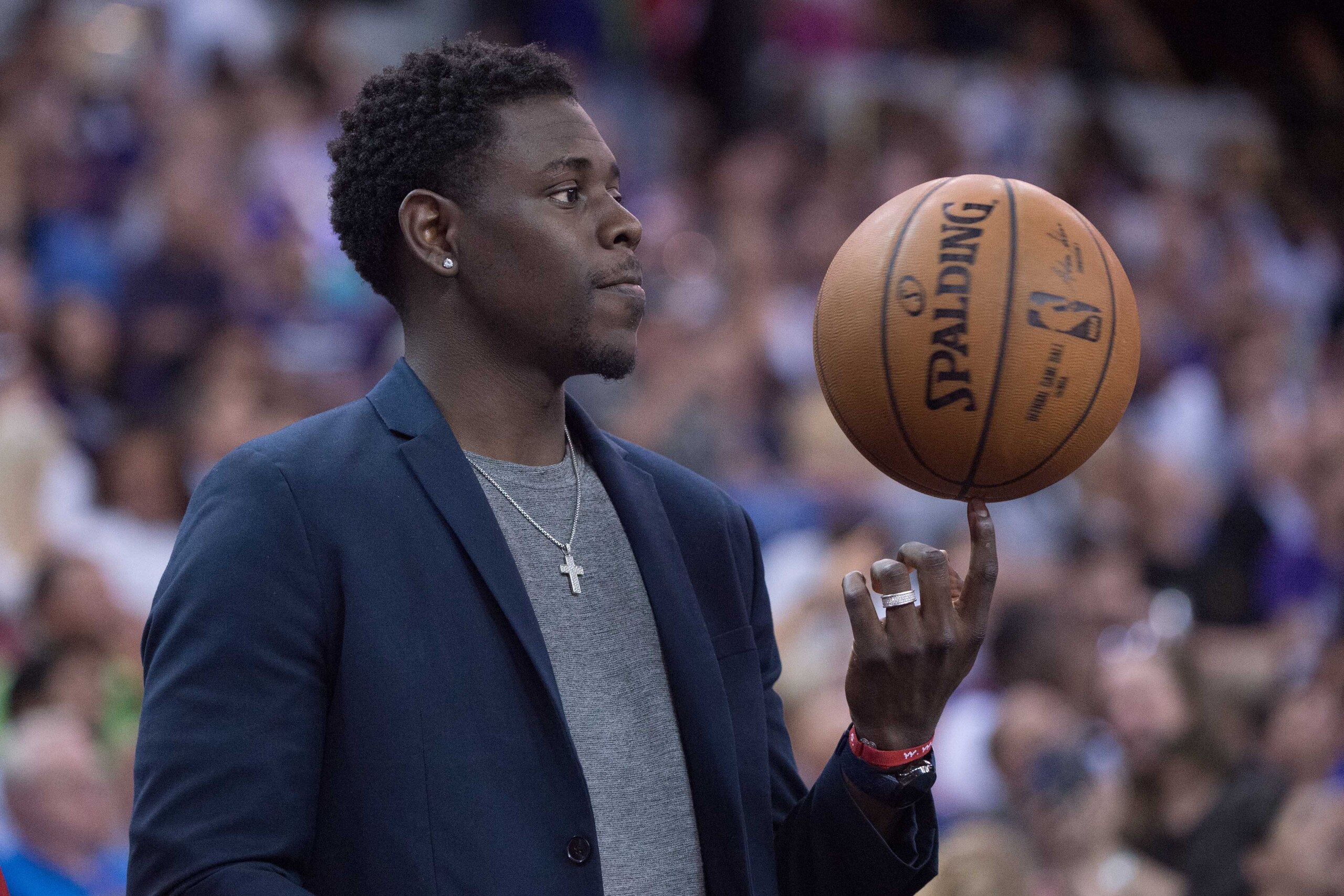
Adding a point guard is last on this last for the simple fact that it may not need to happen at all. Utah developed some very real chemistry at the end of the 2014-15 season, but the baseline production from the point guard position was terrible.
Because Dante Exum and Trey Burke both had effective field-goal percentages below 45 and combined to average fewer than 18 points, there are plenty who think the team needs an upgrade.
Salt City Hoops' Ben Dowsett is in that group. And he's been advocating win-now moves for months, including a recent look at whether or not Utah might be able to trade for Jrue Holiday and how he might fit.
"Holiday and Exum could easily share the court for significant periods. Both have the size to guard 2s, and their skill sets offensively don’t project to overlap much even if Dante makes a leap over the summer. Holiday would be on the books for two guaranteed seasons at reasonable money, plenty of time to continue bringing Exum along and assessing their play together.
"
Trading for a player like Holiday would require a very real shakeup of the roster, and probably the forfeiture of Utah's 2015 first-round pick.
The front office would have to feel committed to Holiday or any other trade targets long term for a move like that to happen. And in Holiday's case, there's a definite argument for a 24-year-old point guard.
However, Exum and Burke (neither of whom are near as productive as Holiday) were both part of the chemistry-building turnaround the Jazz experienced last season.
Dowsett said, "...developing young players and adding outside talent are not mutually exclusive categories." But breaking up the core—which a trade would do—might disrupt that budding chemistry.
A less flashy option might be adding an inexpensive point guard through free agency—someone who comes in expecting a bench role and is eager to be a mentor to the younger guards.
Some of the free agents who could fit that description include C.J. Watson, Aaron Brooks and Jeremy Lin (if he's able to accept that he's a bench player).
4. Re-Sign Joe Ingles
2 of 5
Once he acclimated to his new life in Utah and the NBA style of basketball, Joe Ingles became a very effective weapon on the floor and an important leader off of it.
As essentially the backup point forward to Gordon Hayward, Ingles was third on the team in assist percentage (minimum 500 minutes played). And he became Utah's most effective floor spacer in the second half of the season, shooting 42.7 percent from three after the All-Star break.
He was also a capable defender, often tasked with staying in front of wings who were seemingly more athletic. He countered a lack of raw quickness with great footwork, instincts and awareness. Always being in the right position helped Ingles finish second in steal percentage among Jazz players who logged 500 minutes.
But perhaps more important than all of that is the impact Ingles made as a natural leader, something Salt City Hoops' David J. Smith wrote about:
"Despite his rookie status, and the requisite pink backpack, Ingles was one of the team’s oldest players. Given his established pro career, he was also among the most senior. It was clear that his teammates looked up to him. His affable, self-effacing and humorous personality seemed to add immensely to the feeling of the locker room.
Ingles clearly had the trust of the Snyder and company. He always did what was asked of him, never complaining — a consummate professional. On a team that was working on gaining its identity, Ingles was very much a vital part of that process on and off the court. He fit in with the community, having regular media appearances. Along with teammates, Ingles stuck up for the organization when certain comments were made by a former Jazz player. His long-time relationship with Dante Exum also cannot be ignored.
"
All things considered, it's tough to come up with a reason not to bring Ingles back. He can lead the second-unit offense, hit timely threes, keep everyone's spirits up off the floor and won't cost much to re-sign.
3. Develop Internally
3 of 5With an average age of 23.5, Utah was the youngest team in the NBA last season. Half of its final roster was made up of rookies. So with all of that young talent, internal development is critical.
The front office clearly knows that and has been employing creative training methods for years. Most notably, the entire roster spends time at the Santa Barbara, California-based P3, the new-age training facility seen above.
The difference was evident in Gordon Hayward last season. Throughout the first half of 2014-15, the token talking point from opposing broadcasts was his beefed-up physique.
Hayward talked about the impact that made on his game in his personal blog, GordonHayward20.com:
"I’ve definitely noticed an all around difference in my game as a result of the work I put in this offseason. I can see and feel things on the court that are different. My ball handling has been a lot better, and I feel so much stronger. That was a big part being able to matchup up with LeBron.
He can’t bully me as much as he used to, and I’m able to stand my ground against him. That’s going to be huge against a lot of the bigger threes that I’ll be playing since I’ve been playing a little bit more small forward this year.
"
In addition to engaging its youngsters in cutting-edge fitness programs, Utah has also enlisted its former stars to help with more focused coaching. In previous offseasons, Karl Malone has worked with Derrick Favors and Enes Kanter, while John Stockton has worked with Trey Burke and Alec Burks.
If Stockton and Malone are willing to spend some time with Rudy Gobert, Dante Exum and others this summer, the Jazz could accelerate their development curve just a little bit more.



2. Add Depth Through the Draft
4 of 5
Assuming the front office doesn't trade any of its picks, Utah will select three players in the 2015 draft, all of whom could have a shot at the opening-night roster.
The lottery pick has the best shot of being in the rotation, potentially as an eighth or ninth man. In addition to the need for point guard depth, Utah could really use a stretch big who can play alongside Rudy Gobert or Derrick Favors.
If he's available, Wisconsin's Frank Kaminsky is the perfect fit. ESPN's Amin Elhassan wrote about why:
"An excellent shooter and good passer, Kaminsky would be a nice (if unorthodox) fit alongside either Gobert or Favors, who could hopefully subsidize his defensive deficiencies to take advantage of his offensive gifts.
"
Other options include UCLA's Kevon Looney or Arkansas's Bobby Portis. 6'9" Looney has the size and the guard skills to play the 3 or the 4. Portis, meanwhile, is slightly bigger (6'11"), and his combine interview suggests he may have a little of the crazy Utah lacked at times in 2014-15.
Utah has two second-round picks as well. The thinking that one or both could make the team is rooted in the fact that the Jazz called up a whopping nine players from the D-League last season.
The front office showed it was more than willing to give second-rounders and undrafted players a shot at the back end of the roster.
One intriguing player for Utah's No. 42 pick is Notre Dame's Pat Connaughton, who was perhaps the biggest riser at this year's combine.
At 44", he had the second-highest vertical leap ever recorded at the event and scored 18 points in one of the five-on-five scrimmages. Sean Deveney of the Sporting News relayed one league executive's thoughts on Connaugton:
"He is an impressive kid. He was not really registering on anybody’s radar when this season started. But you can’t help but notice that he does all the things you want from a guy to win. He hustles, he’s tough, he can shoot it, he is impressive in interviews. I don’t know that there is a coach out there who would not want him on their team.
"
Utah's already used the draft to build a very exciting core of five or six players. Adding two or three more from the 2015 class could be the frosting on top of this rebuild.
1. Don't Sacrifice the Future for the Present
5 of 5
After going 19-10 post-All-Star break (the sixth-best record in the league during that stretch), Utah is tantalizingly close to competing for a postseason berth.
That, combined with Dennis Lindsey's masterful accumulation of assets (several non-guaranteed contracts and a boatload of future draft picks), will make win-now moves very tempting for the Jazz.
The Phoenix Suns found themselves in similar territory last season. They were on the cusp at the end of the 2013-14 campaign and adding Isaiah Thomas at such a low price seemed like a smart move at the time.
Unfortunately for the Suns, the shakeup threw off their chemistry and started a chain of events that led to Thomas and Goran Dragic being traded at the deadline.
The Jazz would be wise to remember they're not immune to similar ramifications.
They're in darn-near uncharted territory. For a team this young to play as well as it did in the second half of last season with no veteran presence is remarkable.
Allowing that to grow organically has merit. Not allowing the chemistry that emerged following the Enes Kanter trade to keep developing could lead to a massive what-if.
Behind stalwart defense and unselfish offense, this group has already proven it can win at a 50-plus-win pace. Developing the talent that's already there and augmenting it with the draft should be the course.
Unless otherwise noted, all stats and salary figures are courtesy of NBA.com and Basketball-Reference.com.
Andy Bailey covers the NBA for Bleacher Report. Follow him @AndrewDBailey.

.jpg?w=2560 "Raiders Could Start Mendoza")

.jpg?w=2560 "Rodgers Iced Out on Plane 💎")
.jpg?w=2560 "Packers Safety Slams Refs 🤬")
.jpg?w=2560 "🚨 Week 8 AP Top 25 Poll")