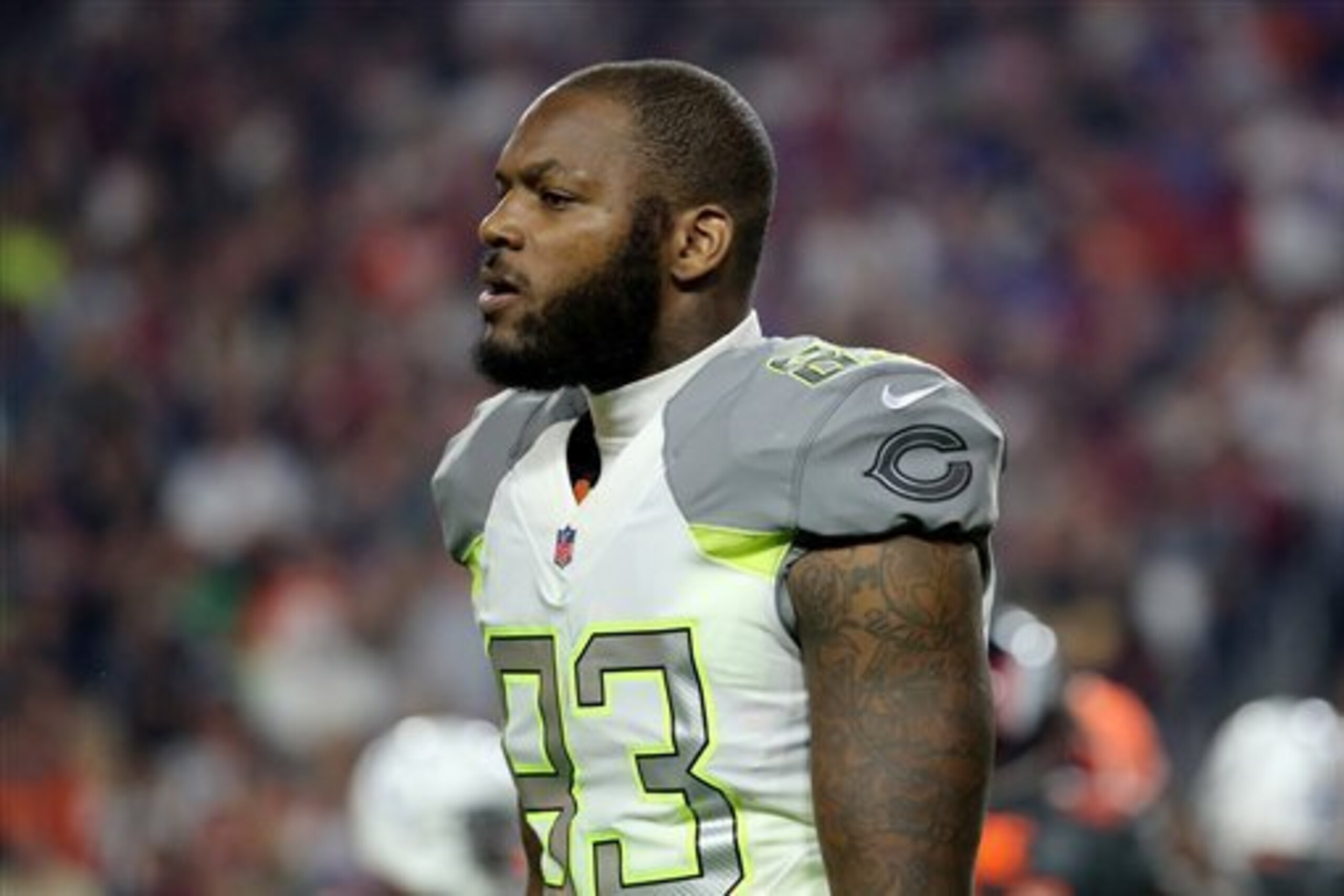

Realistic NFL Trades That Should Happen in 2015 Offseason
Trades in the NFL are typically about as common as scandals over deflated footballs.
So if you're a fan of both, this offseason has delivered so far.
Before the mild surprises that emanated from Ted Wells' Deflategate report and the New England Patriots' rebuttal, attentive football fans were shocked by a number of big trades. The most shocking of all was a kind of move that is typically only made by two friends on Madden: a starting quarterback swap.
Chip Kelly's Philadelphia Eagles sent Nick Foles packing to Jeff Fisher's St. Louis Rams for Sam Bradford. At almost exactly the same time, the Seattle Seahawks swapped starting center Max Unger and a first-round pick for New Orleans Saints starting tight end Jimmy Graham and a fourth-round pick.
Each of those were relatively huge names, considering the kind of player who is typically traded in the NFL.
That wasn't the end, though.
Rex Ryan's first big move with the Buffalo Bills was to trade linebacker Kiko Alonso to the Eagles for running back LeSean McCoy. Staying in the AFC East, the New York Jets acquired star wide receiver Brandon Marshall from the Chicago Bears to upgrade their passing attack.
The Saints shipped starting left guard Ben Grubbs to the Kansas City Chiefs, while young receiver Kenny Stills followed him out the door to the Miami Dolphins. That move allowed the Dolphins to trade veteran Mike Wallace to the Minnesota Vikings.
With the draft over and free agency now only offering limited options, trades are the best option for teams to improve their rosters before the start of the season.
It's even more unlikely for a star player to be traded at this stage of the offseason. Therefore, any speculation about potential moves should focus on need acquisitions for role players or surplus talents that offer good value.
With the help of OvertheCap.com's Jason Fitzgerald, who provided the financial details at the end of each slide, read on to see six potential trades that would benefit both teams involved.
Ladarius Green to the Atlanta Falcons
1 of 6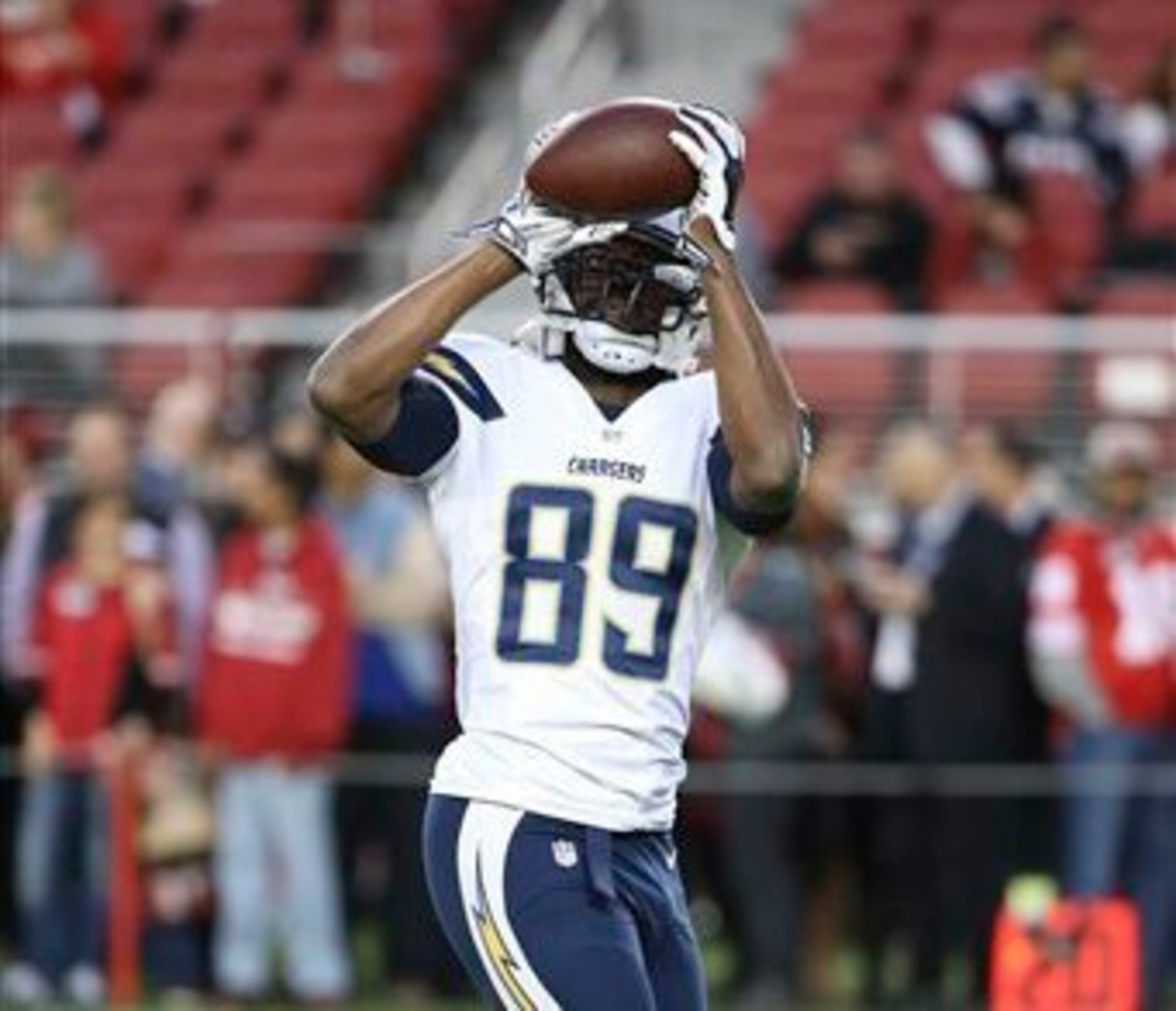
Why the Trade Makes Sense for Both Sides
Ladarius Green has just one year left on his current contract, his first in the NFL. Therefore, his trade value is determined by the potential compensatory pick that the San Diego Chargers would receive if he simply left in free agency after this season.
At this point, it seems unlikely that Green would sign a big contract. He would need to break out this season for the Chargers to expect even as much as a fourth-round pick back.
Betting on a breakout season seems foolish if Green stays in San Diego because of how little the Chargers have used him to this point.
Head coach Mike McCoy recently spoke about the need to use Green more, per Michael Gehlken of the San Diego Union-Tribune, but that seems like an empty sentiment. Green has never been more than a limited role player for the Chargers. He played just 296 snaps in 2014, per Pro Football Focus, catching 19 of his 40 career receptions.
With Antonio Gates, Stevie Johnson, Malcom Floyd, Keenan Allen, Danny Woodhead and Melvin Gordon all needing snaps, it's hard to buy into McCoy giving Green a substantial role.
While Green has barely played for the Chargers, the 2012 fourth-round pick has shown off huge potential when given opportunities. That would make him an appealing addition to the Atlanta Falcons' roster.
It's clear that the Falcons need a starting tight end, but this wouldn't be a pure need move. Not only is Green very talented, he also shares a similar skill set to Jordan Cameron, a player Falcons offensive coordinator Kyle Shanahan did outstanding work with in Cleveland last season.
Chargers' Compensation
There are three potential developments for the next part of Green's career.
1. He takes over Gates' starting position at tight end and breaks out for the Chargers.
2. He endures another muted season and signs a small deal with another team, giving the Chargers either a late-round pick or no compensation at all for the 2017 draft.
3. The Chargers guarantee themselves multiple mid-round picks they can use in the 2016 draft by trading him to the Falcons.
While it may be the least exciting option, the safest route for the Chargers is to trade Green. It also is the most logical choice, considering the plethora of weapons that they have surrounded Philip Rivers with. Gates will need to be replaced soon, but even if Green plays well in 2015, it'll be difficult to find a logical contract to keep him past next season.
Green's Fit with Falcons
In Shanahan's offense, Cameron averaged an incredible 17.7 yards per reception, despite playing with subpar service from the quarterback position.
Cameron lined up at different spots to get open down the field, but what stood out most was Shanahan's ability to use play action that sent him running free behind the defense from tight end spots. Cameron mostly only needed to be athletic enough to get downfield in a hurry to make those plays.
Green has similar size to Cameron and may be an even greater athlete. He can comfortably cover ground downfield and has shown off a comfort catching the football in different situations.
Because the Falcons have more receiving talent than the Cleveland Browns had, Shanahan wouldn't need to move Green around as much in Atlanta. This would force him to act as a blocker on a regular basis. While his blocking isn't overly impressive, he has enough ability and athleticism to be an effective moving piece in space.
Matt Ryan's downfield accuracy can be inconsistent, so a tight end with Green's size and ball skills coming free downfield after play action would be a major help to him.
Financial Details:
"The final year of Green's contract is worth just $660,000, as he failed to earn the Proven Performance Escalator. The contract would have a negligible impact on each teams' salary cap, with the Chargers gaining just $150,000 in space and the Falcons adding just $150,000.
If the Falcons want to sign Green to a new contract, they can easily do so because they have $15 million in cap room."
Chris Clemons to the New York Giants
2 of 6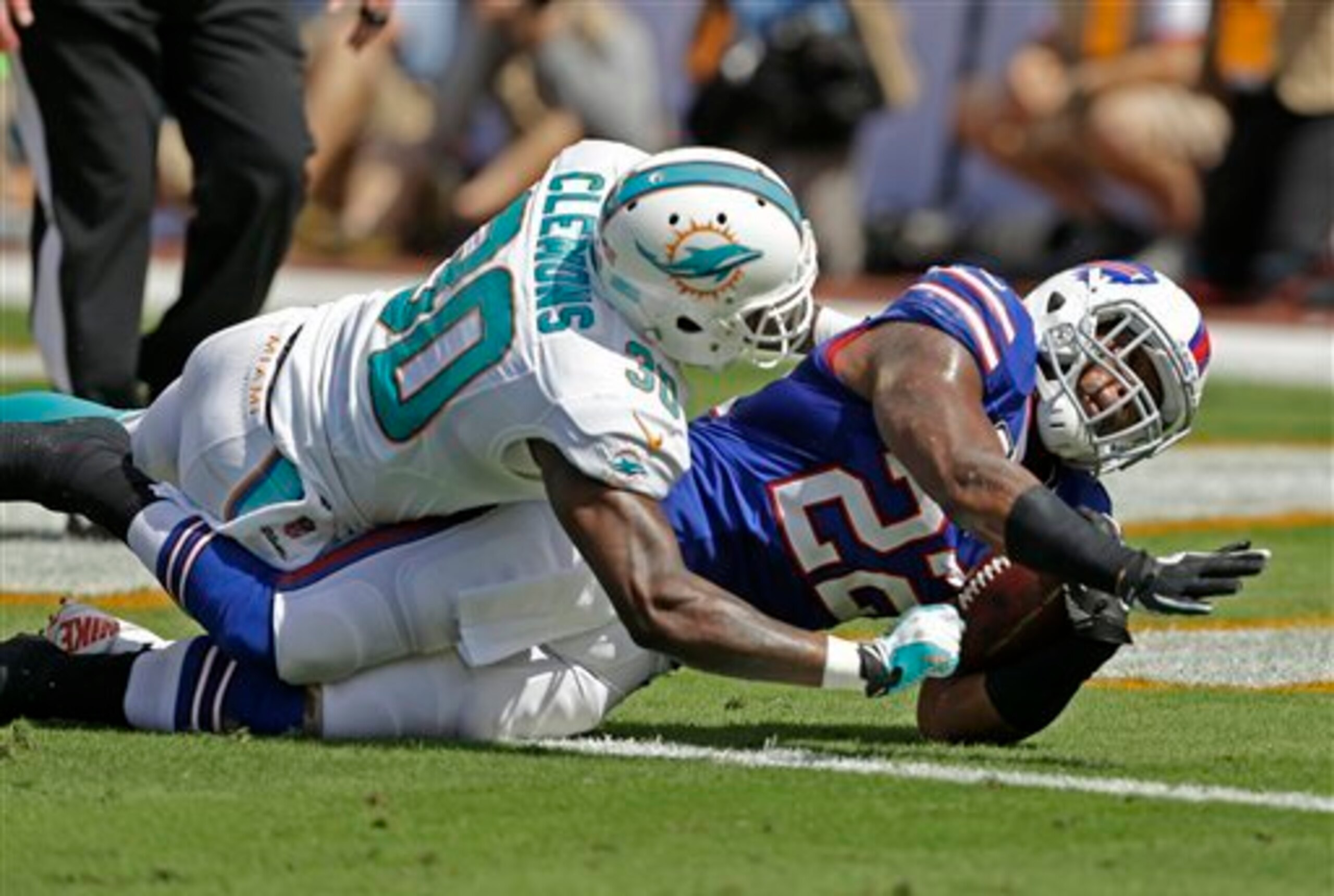
Why the Trade Makes Sense for Both Sides
Chris Clemons' career took a bizarre turn after leaving the Miami Dolphins in 2014.
Most media analysts expected Clemons to be one of the top defenders on the market. Yet, after the first wave of signings, Clemons remained on the market. He was forced to wait for a few weeks until the Houston Texans signed him to a modest two-year contract.
Incredibly, despite starting the two previous seasons for the Dolphins and playing well by the measures of most, Clemons couldn't even make the Texans' roster out of training camp. He never stepped onto the field for his new team, ultimately being left on the free-agent market once more when the regular season began.
The Arizona Cardinals signed Clemons in early December, but he only made one appearance on special teams over the final month of the season.
At this point, Clemons is languishing behind Tony Jefferson, Tyrann Mathieu, Rashad Johnson, Deone Bucannon and potentially others on the Cardinals' depth chart. He is so far down the roster that he will fight for his roster spot in training camp again this season.
If the New York Giants traded for Clemons, meanwhile, he would immediately become the most experienced safety on their roster.
Three of the five safeties listed on the Giants' depth chart are rookies. Landon Collins is expected to start as the strong safety after the franchise traded up to draft him atop the second round this season. Fifth-round pick Mykkele Thompson and undrafted free agent Justin Currie will compete with Nat Berhe and Cooper Taylor for the other starting spot.
Cardinals' Compensation
Considering the Cardinals can't even be certain that Clemons makes their roster, the compensation to part ways with him wouldn't need to be high. A conditional pick based on how many games Clemons starts for the Giants would allow them to minimize their risk while maximizing the Cardinals' potential reward.
This is how the trade would break down:
- If Clemons fails to make the Giants' final 53 out of training camp, the Cardinals will receive a 2015 seventh-round pick.
- If Clemons starts one game after making the Giants' final 53 out of training camp, the Cardinals receive a sixth-round pick.
- If Clemons starts five games after making the Giants' final 53 out of training camp, the Cardinals receive a fifth-round pick.
- If Clemons starts 16 games after making the Giants' final 53 out of training camp, the Cardinals receive a fourth-round pick.
- If Clemons starts 16 games and makes a Pro Bowl or All-Pro after making the Giants' final 53 out of training camp, the Cardinals receive two fourth-round picks.
From the Cardinals' point of view, this would be like getting free money. Even if Clemons fails to make the Giants' roster, they would still gain a seventh-round draft pick. At the very worst, they would be forced to sign a free-agent safety to fill Clemons' role on the roster if disaster struck and the safety spot was ravaged by injuries.
Clemons' Fit with Giants
When Clemons was at his best with the Dolphins, he showed off impressive versatility.
Clemons isn't Earl Thomas or Kam Chancellor. He won't be a center fielder or a thumping box safety who essentially acts as another linebacker. He can be a very effective coverage player in Cover 2-type situations where his discipline and athleticism can excel instead of being overstretched.
As a tackler, Clemons can be unreliable, but that's a flaw of most safeties in the NFL, and he isn't especially bad in this regard. Clemons is good enough to drop into the box and be counted as an extra number, even if he doesn't intimidate opponents or take on offensive linemen.
Pairing Clemons with Collins would allow both players to move around the field while still primarily playing to each's strengths.
Collins is better suited to line up closer to the line of scrimmage, but he also has the flexibility to drop deep. Clemons is the exact opposite, so defensive coordinator Steve Spagnuolo would have the option to drop a little bit of creativity into what appears set to be a fairly rigid defense in New York.
Financial Details:
"The Giants will only have roughly $5.5 million in cap space after their rookies are all officially signed, but Clemons is only slated to make $745,000 this season. Clemons fits the type of financial investment that the Giants need to make to fill out their roster.
Clemons' departure would create $235,000 in cap space for the Cardinals."
Doug Martin to the Dallas Cowboys
3 of 6
Why the Trade Makes Sense for Both Sides
Doug Martin was a first-round pick in the 2012 draft and had a very impressive rookie season. Since then, however, next to nothing has gone right for the Boise State running back.
Martin has started just 17 games over the past two seasons because of health issues, while the regime that brought him to the Tampa Bay Buccaneers has been replaced. The new regime drafted a running back, Charles Sims, in the third round of the 2014 draft to potentially hint that they weren't going to rely on Martin.
While Sims hasn't been sold as a direct replacement for Martin, the Buccaneers' depth chart is stacked at the position. Martin, Sims, Bobby Rainey and Mike James have all flashed starter quality in their relatively short careers.
Martin has the highest trade value of each back, and the Buccaneers' roster has many, many holes elsewhere that need to be addressed, so draft picks will be valued.
The Dallas Cowboys have a similar plateauing of talent on their depth chart at the running back position, but with a lower overall level of quality. After letting DeMarco Murray go in free agency, the Cowboys took the cheap routes in searching for a replacement.
Adding another potential starter to Ryan Williams, Lance Dunbar, Joseph Randle and Darren McFadden makes a lot of sense.
Buccaneers' Compensation
Finishing with the worst record in the NFL in 2014, drafting a new quarterback and moving on from many key players from the 2014 roster suggests that the Buccaneers are entering a rebuilding phase. Whenever a team is rebuilding, they want to add as many young players as possible to compete for roster spots.
Even though Martin was a first-round pick just a few years ago, the value of running backs always declines as the years go by. Furthermore, Martin's contract only has one season left on it after the Buccaneers declined his option for 2016.
With that in mind, Dallas would likely send over a fourth-round pick without hesitation for a running back who the Buccaneers don't desperately need.
Martin's Fit with Cowboys
Martin may not be viewed as a perfect fit in the Cowboys' running game, but he has proven in the past that he can be an explosive one-cut runner.
When given space to work in before the line of scrimmage, Martin can attack any area of the defense. Unfortunately for him over the past two seasons, when he has been on the field, the offensive line has never given him a chance to perform.
The Buccaneers have had one of the worst lines in the NFL, and often, they have been at their worst with Martin on the field. In Dallas, the Cowboys would be able to consistently put Martin in space behind the line of scrimmage with wider running lanes to attack ahead of him.
It's clear that Martin has the explosiveness and vision to take advantage of this support if he can stay healthy. Furthermore, he also would be the Cowboys' most dangerous receiving threat, even if he struggled with his consistency catching the ball in Tampa Bay.
Financial Details:
"The Cowboys have approximately $12 million in cap space with rookies factored in. Martin earns $1,315,000 in 2015 but would cost the Cowboys just $805,000. If Greg Hardy's suspension is overturned, Dallas will not have the cap room to pay him for a full season, so adding Martin would be difficult in that scenario.
It would be especially problematic if Orlando Scandrick receives the increase in pay that he is expecting.
Adding Martin could result in a corresponding move at the running back spot, with both Lance Dunbar and Darren McFadden costing more than $1,000,000 this season. Releasing either player would free up the space to accommodate both Hardy and Martin."
.jpg?w=2560 "Rams Raiders Football")

Ronald Leary to the Miami Dolphins
4 of 6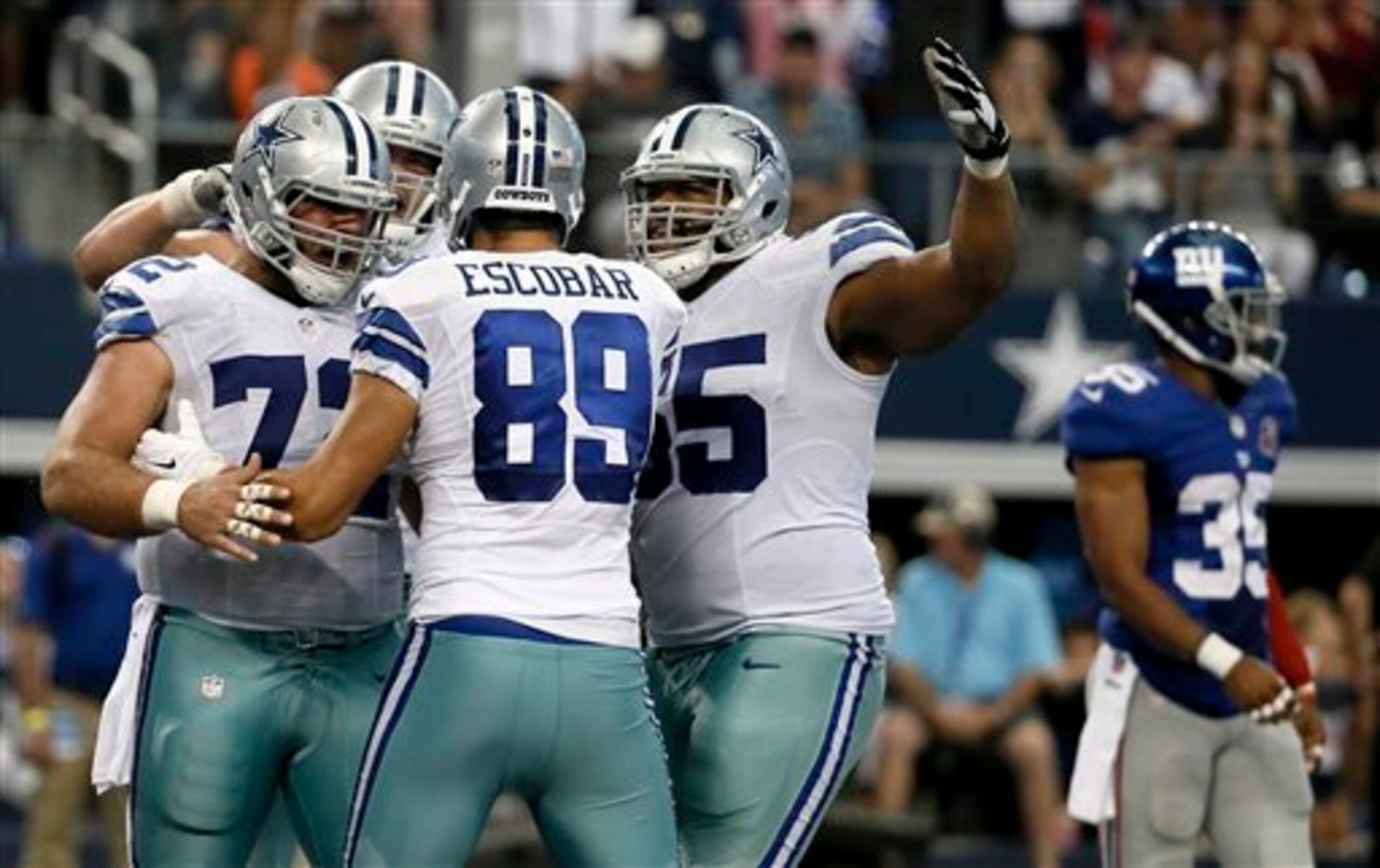
Why the Trade Makes Sense for Both Sides
Ronald Leary may have lost his starting job on the Dallas Cowboys offensive line without ever really doing anything to lose it.
Leary was an impressive player on the league's best offensive line last year. Despite his decent play between Travis Frederick and Tyron Smith, Leary is likely to be replaced by undrafted free-agent La'el Collins. It's rare that an undrafted free agent will walk into a starting role over a proven starter, but Collins was a first-round talent who fell out of the draft because of one of the most peculiar set of circumstances ever.
If Collins assumes Leary's starting spot at left guard as expected, the veteran should be a highly sought-after piece in a league that is severely lacking quality guard play. Leary isn't a superstar player, but he is a good fit in a zone-blocking scheme and an established starter. That is something the Miami Dolphins are missing.
Billy Turner and Dallas Thomas are currently expected to start inside for the Dolphins, with fourth-round rookie Jamil Douglas in position to challenge in training camp.
None of Turner, Thomas or Douglas can assure the Dolphins of starter quality, however. Thomas struggled massively when he played last season, Turner barely saw the field at all and Douglas has obviously never even dressed for a professional game.
Leary hits every need for the Dolphins. He's still young at 27, he's cheap and he's proven.
Cowboys' Compensation
The Cowboys won't trade Leary away for nothing because he's cheap enough to be kept as a sixth offensive lineman, and there is no guarantee that Collins can start from Week 1 of his rookie season. The experience of guard Mackenzy Bernadeau and the addition of rookie tackle Chaz Green makes it an option, though.
Mike Tannenbaum, the Dolphins' executive vice president of football operations, has never been afraid of making an aggressive move. Although the Cowboys would ideally like to add to their defense, the Dolphins are in a similar position with their defense, so they don't have talent to spare. Instead, wide receiver Rishard Matthews would make sense as part of a package for Leary.
Matthews recently asked to be released or traded because of the Dolphins' offseason additions, according to Adam H. Beasley of the Miami Herald. The Dolphins haven't accommodated him because he has flashed talent on the field when given opportunities and is under contract for less than $1 million this year.
In Dallas, Matthews could push for playing time as the Cowboys' depth chart is largely unimpressive behind Dez Bryant. Terrance Williams and Cole Beasley are their best complements to Bryant, and neither player has proven to be a quality starting option to this point in their respective careers.
Because Leary has done more at a position of greater value, Matthews alone won't make the trade happen. The Dolphins would need to add in a fourth-round and a sixth-round pick to balance the deal.
Leary's Fit with Dolphins
Leary isn't a good pass-blocker in space. That is his most obvious and significant flaw.
However, the Dolphins wouldn't ask him to take on exceptionally difficult assignments in pass protection on a regular basis. As a unit, they rely heavily on movement and play fakes to create hesitation or drag defenders away from the pocket on passing plays.
This is perfect for Leary, as he is a versatile and consistent run-blocker.
In the Dolphins' zone-heavy rushing attack, an ability to move laterally while showing good balance and strength at the point of contact is crucially important. Leary can not only do that, he also has the ability to advance to the second level where he can make impact blocks in space.
Leary would essentially be doing what he did in Dallas, but to a greater extreme. In Dallas, he played between Smith and Frederick. The Dolphins may not have that level of talent, but Branden Albert and Mike Pouncey are still very highly regarded starters.
Financial Details:
"Swapping Leary and Matthews would effectively be a push for both sides. Leary earns the minimum, $585,000, that he is allowed to earn, while Matthews is in the same situation, earning just $660,000. The only notable contract detail is the rights Miami would receive to Leary's restricted free agency in 2016.
A restricted free-agent tender in 2016 would likely be worth around $1.6 million."
Johnathan Joseph to the New England Patriots
5 of 6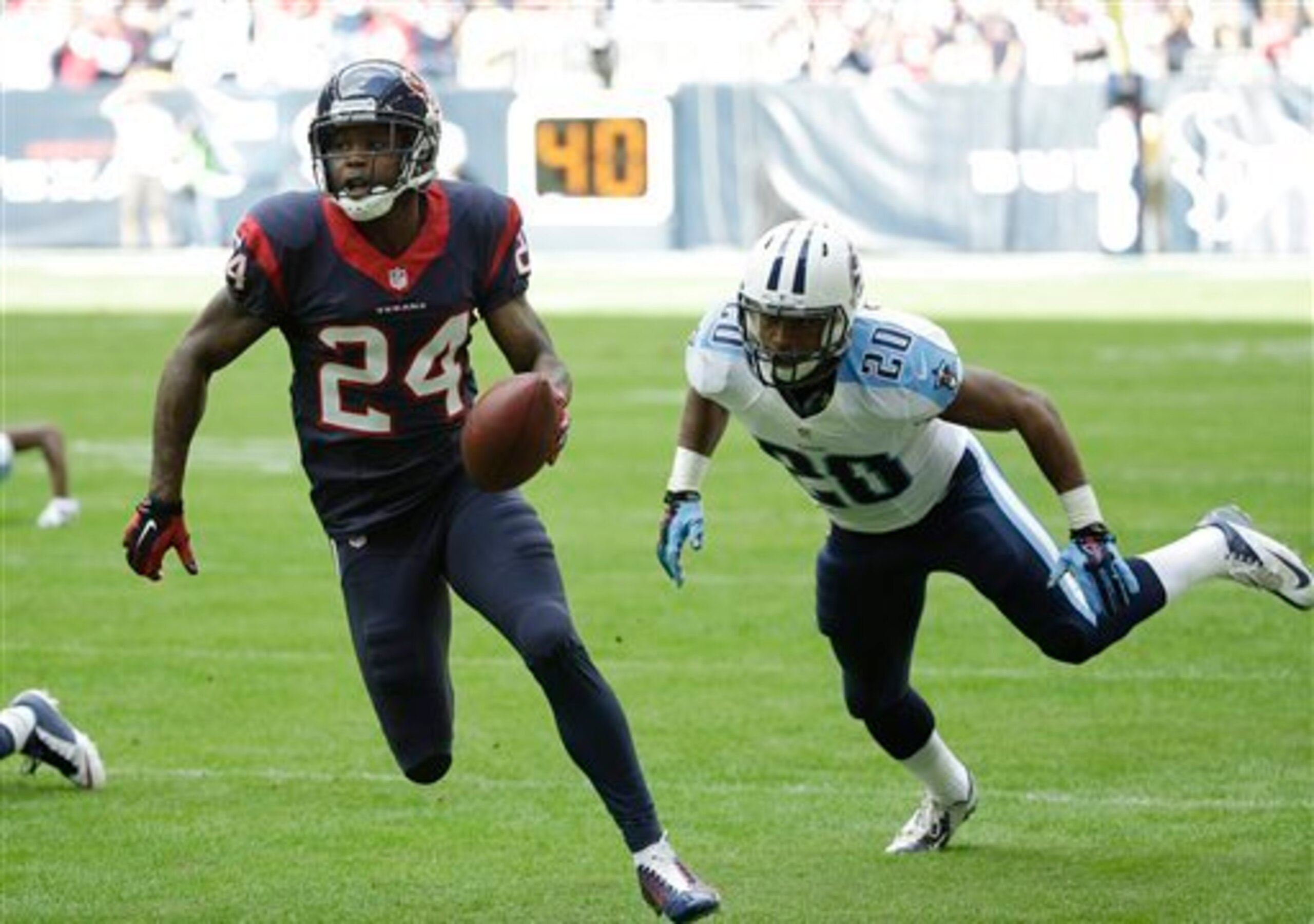
Why the Trade Makes Sense for Both Sides
By re-signing Kareem Jackson and spending a first-round pick on Kevin Johnson, the Houston Texans all but guaranteed that Johnathan Joseph wouldn't be re-signed after the 2015 season.
Joseph, a 31-year-old cornerback, is entering the final year of his deal. He was a marquee free-agent signing back in 2011, when he agreed to a five-year, $48.75 million deal. With more than $8 million left on that contract and a seemingly slim shot at winning the Super Bowl this year, it makes sense for the Texans to get out of Joseph's contract earlier than expected.
The veteran may have declined somewhat over recent seasons, but he's still a quality starter in the right situation. He'd clearly be the New England Patriots' most talented cornerback.
Even before the Patriots decided to move on from Alfonzo Dennard and Kyle Arrington, their cornerback depth chart was bare. For a team that is trying to close out Tom Brady's career with another Super Bowl in the short term, they are relying on a lot of limited experience and youth at crucial spots on the field.
Texans' Compensation
Overpaying for a talented veteran at an important spot right now shouldn't be a major concern for the Patriots. Understanding the potential offset that comes with a compensatory pick in the future also should help convince the Patriots that giving up a third-round pick for Joseph is a smart move.
The Texans can't be certain that Joseph will return that kind of compensation after his free agency in 2016, so locking up that third-rounder would be very valuable to a team that is in the process of rebuilding its roster.
For a third-round pick, the Texans can comfortably rely on A.J. Bouye again instead of Joseph in their three cornerback alignments.
Joseph's Fit with Patriots
Joseph isn't Darrelle Revis. That should go without saying.
He's not of the same quality, but he also is not a similar style of cornerback. Joseph is versatile enough to excel in press coverage or working off the line of scrimmage, but he is best suited to stay on the outside instead of following receivers into the slot.
Even though the Patriots moved on from slot specialist Arrington, they still have a number of different players who can compete for that role inside. Joseph would be a plug-and-play starter outside with the ability to match up to any kind of receiver.
Unlike Brandon Browner or Dennard, Joseph doesn't need to win in specific ways to be successful. He is a 5'11", 188-pound cornerback with the strength and footwork to play aggressive coverage while also possessing the recovery speed and agility to track routes deep down the field.
Joseph may not be in his prime, but with Devin McCourty at free safety and a renewed array of talent in the front seven, the Patriots wouldn't need him to be a superstar.
Financial Details:
"Joseph has a $12,250,000 cap figure for the Texans right now. If they trade him to the Patriots, they will free up $8,000,000 in cap space. The trade is straightforward for the Texans, who would more than double their remaining cap space with this move, but more complicated for the Patriots.
The Patriots would pick up Joseph's $8,000,000 on their cap, which would push them to $1,000,000 of space after signing all of their rookies. This is fine for the moment, but once rosters are trimmed to 53, they would be pushed over the cap.
If this trade was to happen, the Patriots would need to tweak Johnson's contract to make it work."
Martellus Bennett to the Denver Broncos
6 of 6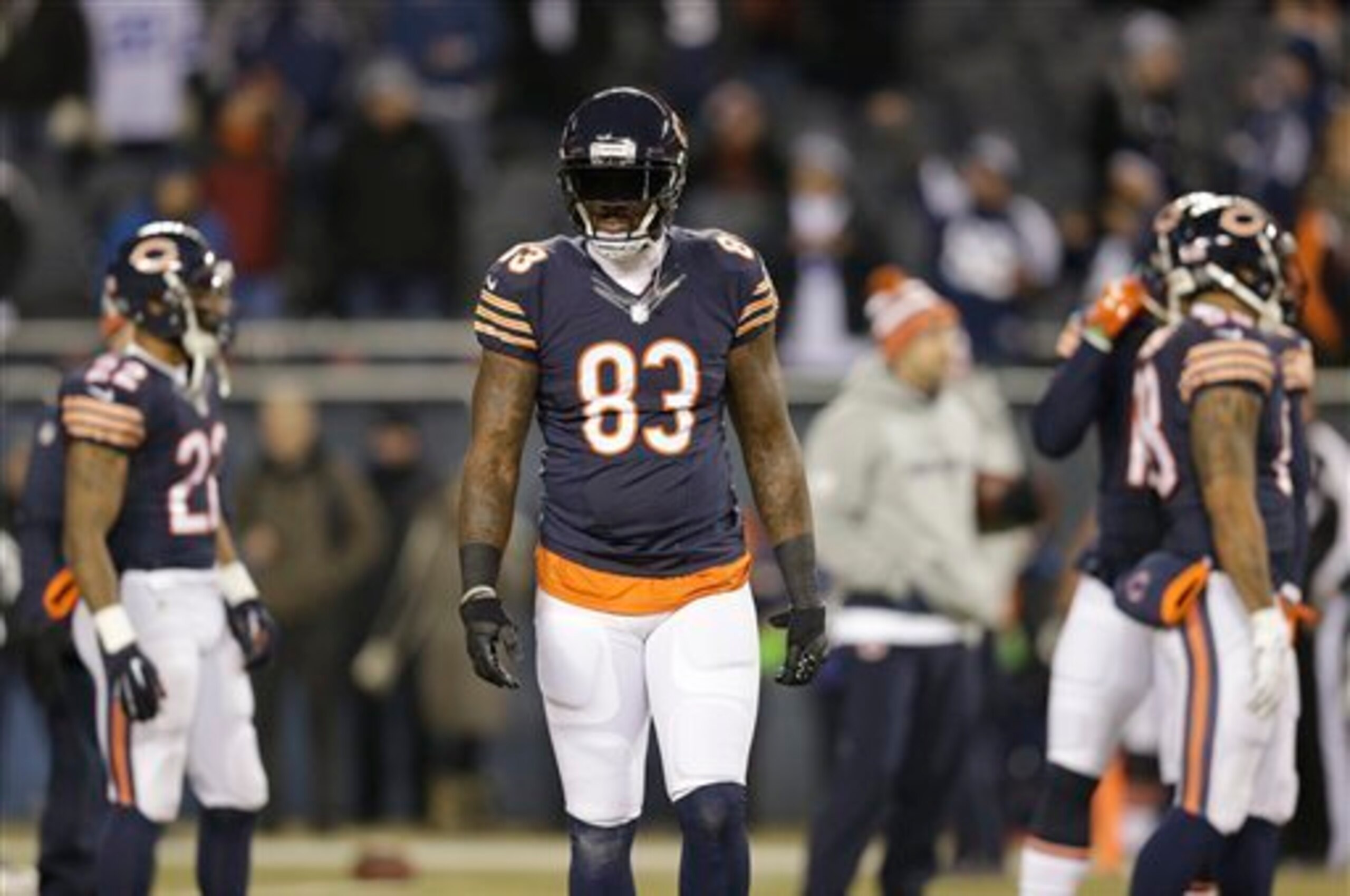
Why the Trade Makes Sense for Both Sides
Reports that the Chicago Bears attempted to trade up for Marcus Mariota during the draft, with Jay Cutler as part of the deal, per Bleacher Report's Dan Pompei, only served to reaffirm the idea that the Bears are entering a lame-duck season.
The Bears are essentially waiting around to rebuild their roster in 2016, when it will be much easier to get out of Cutler's contract. Therefore, disgruntled veterans who are more affordable to trade may be available. Tight end Martellus Bennett fits that billing, as he is apparently unhappy with his contract situation, according to Dan Wiederer of the Chicago Tribune.
At 28, with just two years left on his current deal, it's hard to see Bennett as an integral piece of the Bears' long-term future.
Despite changing their coaching staff this year, the Denver Broncos likely aren't overly concerned about the long term right now. The final season of Peyton Manning's career may be ahead, and his arsenal of receiving options looks barer than it has for many years.
The Broncos lost Julius Thomas in free agency and haven't retained Wes Welker. Welker likely isn't worth re-signing at this point, and it's unclear if Cody Latimer is ready to play what could be a starting role. Jeff Heuerman, a third-round pick of the 2015 draft, was expected to help replace Thomas, but he tore his ACL during rookie camp.
Even before Heuerman's injury, the Broncos were likely looking to add more receiving options. Bennett may not have been the obvious choice—a wide receiver was probably preferable—but now, acquiring him would make a lot of sense.
Bennett blends the strengths of both Thomas and Welker as a receiver, while also offering huge impact as a run-blocker. He is one of the most talented tight ends in the NFL and a perfect fit with Gary Kubiak.
Bears' Compensation
Bennett's value in a vacuum is probably a second-round pick, but it might be hard for the Bears to find a team willing to part with that kind of currency for him at this stage, as ESPN.com's Jeff Dickerson noted. Landing a third and a fifth may actually work out better for the Bears either way.
The Bears' roster appears to be going in the right direction, but they still need to add quantity as well as quality to their defense.
John Fox and Vic Fangio should do a better job of fitting players into their defense, so the value of mid-round picks will be greater in theory than they were under the previous regime. Bennett is only one of a number of players who the Bears could part with to stockpile draft picks over the coming seasons.
Bennett's Fit with Broncos
Any team that adds Kubiak to their coaching staff in any capacity is expecting a renewed focus on the running game. That also is what makes most sense for Manning at this stage of his career. While Manning and Kubiak will need to find a balance between their respective philosophies, both should place an emphasis on the tight end spot.
Kubiak has a track record of making use of two tight end sets with great effect. Manning is an outstanding middle of the field passer, who understands how to make use of bigger bodied targets.
Bennett and Owen Daniels or Virgil Green would provide huge value both as receivers and as extensions of the zone-blocking rushing attack that Kubiak will undoubtedly emphasize. For a team with limited offensive line talent and experience, two added blocking options can only help.
Although he doesn't get mentioned alongside the best tight ends in the league, Bennett is as talented a two-way tight end as anyone not named Gronkowski. He blends the explosive, vertical threat of Thomas with the well-rounded, possession threat of Welker, and he's also a potentially dominant run-blocker.
He would be a perfect fit for Kubiak, a perfect support for Manning and a perfect complement to Emmanuel Sanders and Demaryius Thomas.
Financial Details
"This is a simple trade for the Bears to make. If they trade him now, they would create roughly $3,300,000 in cap space. If they wait until the summer, they will create $4,500,000 in space. A trade would also create $6,300,000 in space next year.
For the Broncos, this might be a tough trade to agree to.
When the regular seasons begins, the Broncos will have around $5,500,000 in cap space. Adding Bennett would use up around $4,500,000 of that space. That would leave them no freedom to make moves during the season.
Bennett is also unhappy with his current deal, so he would either need an extension or an agreement to void Bennett's 2016 season so he could hit free agency after 2015.
Agreeing to an extension with wide receiver Demaryius Thomas to alleviate the impact of his franchise tag would free up enough space to give the Broncos flexibility with Bennett. The two sides appear to be at an impasse right now, though."
Quotes obtained firsthand, unless otherwise noted.
.jpg?w=2560 "Steelers Saints Football")




.jpg?w=2560 "🚨 Week 8 AP Top 25 Poll")