
NFL Draft 2015: The Player Each Team Will Most Regret Passing on
We're at the point where the draft feels like it occurred months ago, despite the fact that less than two weeks have passed. Some fans will look back on the weekend's action and wish they could swap selections for draft choices they didn't agree with.
There are years where you see a player like Justin Houston fall to the third round and say to yourself, "He's going to make 31 teams look foolish." Houston is an example of a pick every team wishes they would have swapped a selection for before the Kansas City Chiefs were able to snag him in the middle rounds. He's a player everyone regrets passing.
Now there are only so many Houstons in the world, but that feeling of "I wish my team would have drafted X instead of Y" is a typical reaction that develops not in the immediate aftermath of draft weekend but years down the line. In an attempt to fast-forward to that point, we'll break down the player each team will regret passing up on the most, given their current situation.
For some franchises, these are top-10 picks; for others, they are fourth-round choices. Either way, on paper, these names seem to be the clubhouse leaders for the "How did we pass up on Justin Houston for Jonas Mouton?" category regarding the 2015 class.
Arizona Cardinals
1 of 32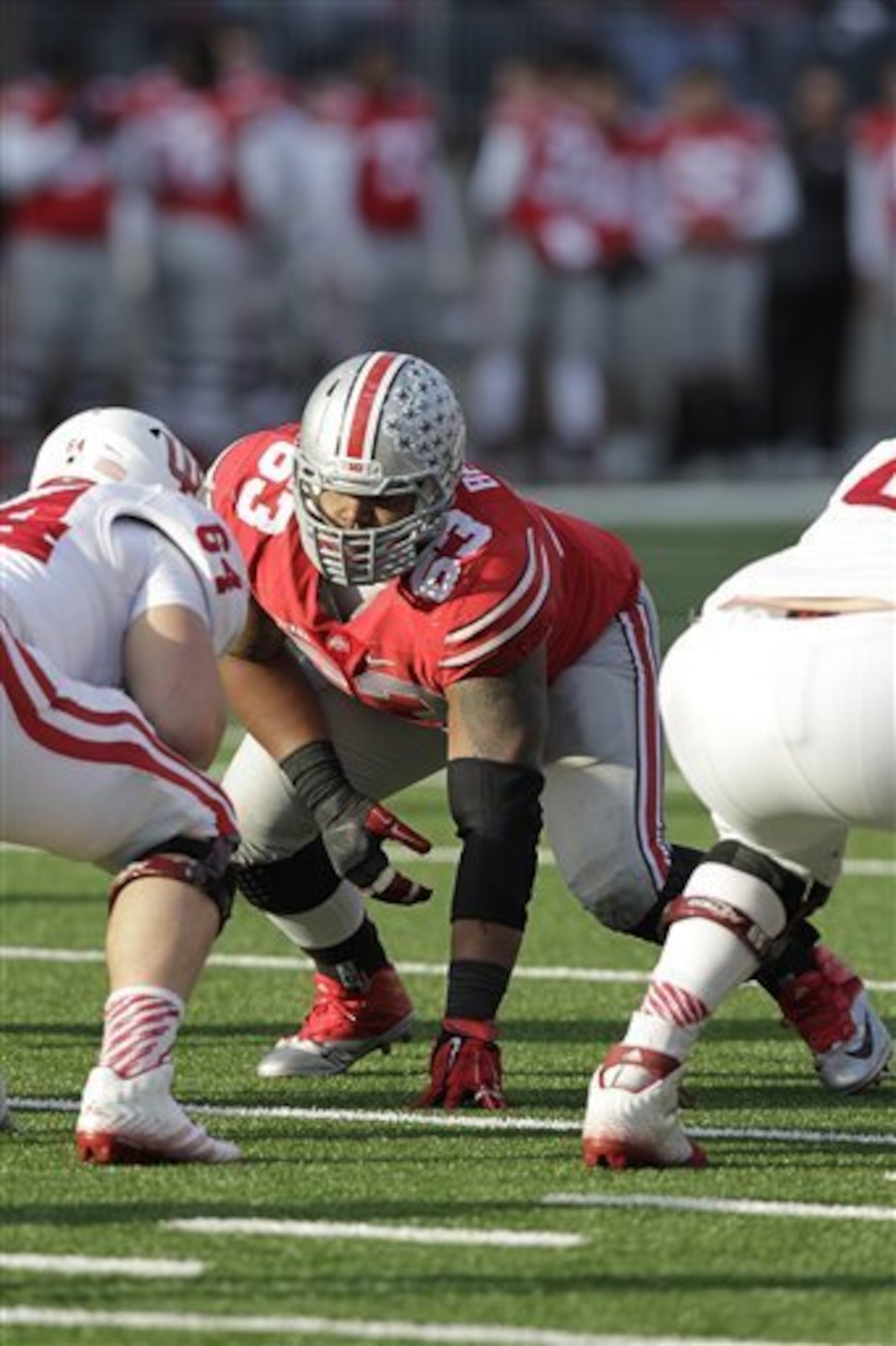
In the fourth round of the draft, the Arizona Cardinals traded up for a small-school defensive lineman by the name of Rodney Gunter. Coming out of Delaware State, a vast majority of draft fans never got a chance to watch Gunter in the fall. Even for some analysts, his name did not appear on their rankings.
It's obvious that the Cardinals badly wanted him as a 3-4 defensive end in their new scheme, with defensive coordinator Todd Bowles leaving town to take the head coaching gig with the New York Jets. Still, it's hard to imagine that there weren't better options on the market than a defensive lineman who virtually no one had heard of before.
One of the name still on the board was Michael Bennett, who, unlike Gunter, was invited to the combine. Bennett was a key piece to Ohio State's championship defense, playing quality offensive linemen down the stretch—another way he's more tested than the Delaware State product. Bennett has a great first step and could have contributed as a 3-technique in the Cardinals' hybrid defense.
With Bowles gone, the Arizona defense might have an issue with pressure generation. Under their old scheme, the Cards used to rack up sacks with seemingly no elite pass-rushing talent. Can they replicate that success with a new defensive play-caller? If they can't, Bennett would have been a great interior pressure option.
Atlanta Falcons
2 of 32
After taking Vic Beasley, a pass-rusher from Clemson, in the first round, the Atlanta Falcons continued to build their pass defense in the second round. In 2014, the team was second-to-last in team sacks, a number that should rise with the additions of Beasley, Brooks Reed and Adrian Clayborn this offseason.
The second selection by the team was Jalen Collins, a cornerback from LSU who started less than a full season with the Tigers before declaring early for the NFL draft. Collins has all the measurables one would wish an elite cornerback could possess. He's 6'1" with 32 ⅛" arms and runs a 4.48 40-yard dash.
He's still very raw, though, and I'm not sure how much development the Falcons can really take on at this point. Beasley is already going to be a project, and the window for an Atlanta Super Bowl seems to be closing. Plenty of their stars, such as Roddy White, are aging rapidly, while the contracts of others, like Julio Jones, are coming to an end in the near future.
Some of their key contributors are either going to leave due to retirement or free agency, and those who stay will take up larger portions of the salary cap than they are currently, making it hard for the squad to retain its current talent or bring in more talent. For that reason, I think an experienced cornerback such as Eric Rowe, who succeeded at both cornerback and safety at the University of Utah, would have been a better selection for the team.
Rowe could have played either high safety or boundary cornerback for the team—both positions that need high-level contributors for Dan Quinn's defense to work—on day one. The Falcons should be playing for 2015 and 2016, but their draft selections indicate the team's mentality is focused on three years from now.
Baltimore Ravens
3 of 32
Overall, the Baltimore Ravens had one of the best classes in the draft. This should be no surprise, as general manager Ozzie Newsome routinely comes out a winner on draft day. A draft-and-develop squad, the Ravens often are able to take risks on slipping developmental players, as the staff has proved enough to lean on its job security, while other front offices know they have one year left on their contracts.
Because of the strong Baltimore class, it's hard to pick out which pick they might "regret." The best option might be Javorius "Buck" Allen, the fourth-round running back from USC. Allen is a solid tailback, but he declared as a junior. with only one year of true full-time experience. However, he is going to be 24 years old before the season starts. At most, you're getting a contract-and-a-half out of Allen, as far as quality play is concerned.
An option still on the board at the time of the selection was Mike Davis of South Carolina, who would immediately come off to the San Francisco 49ers just one pick after Allen was chosen. Davis is three inches shorter than Allen at 5'9", but he was a second-team SEC runner and is still very young, playing last season as a 21-year-old and turning 22 on Feb. 19.
The difference to me is the distance both are from the deadly 30-year-old mark for the position. Almost any running back worth his share could have produced behind Baltimore's amazing offensive line last season. Allen should do fine, but I give Davis a slight edge in the short term and a large edge in the long term due to age.
.jpg?w=2560 "Rams Raiders Football")

.jpg?w=2560 "Steelers Saints Football")
Buffalo Bills
4 of 32
Matt Cassel, E.J. Manuel, Tyrod Taylor and Jeff Tuel. I understand the Buffalo Bills gave up a first-round pick to move up for Sammy Watkins during the 2014 draft, but there's no reason why the Bills should be confident in their quarterback unit heading into 2015.
After Jameis Winston and Marcus Mariota went off the board in the first two picks, there wasn't another passer selected until the 75th pick of the draft. Buffalo passing on the Garrett Grayson sweepstakes with their first choice, a second-rounder, can be rationalized, but every other thrower still available in the draft pool was available in the third round when the Bills were on the clock in the 81st slot.
With that selection, they chose John Miller, an interior offensive lineman from Louisville. He's a solid player, but someone needs to lead the team in the huddle—or the Bills' peak will cap off around an even record again in 2015.
A selection such as Bryce Petty of Baylor wouldn't ensure success, but it would have given the team hope at quarterback. With all of those proven below-average passers in northern New York, that's exactly what they need.
Carolina Panthers
5 of 32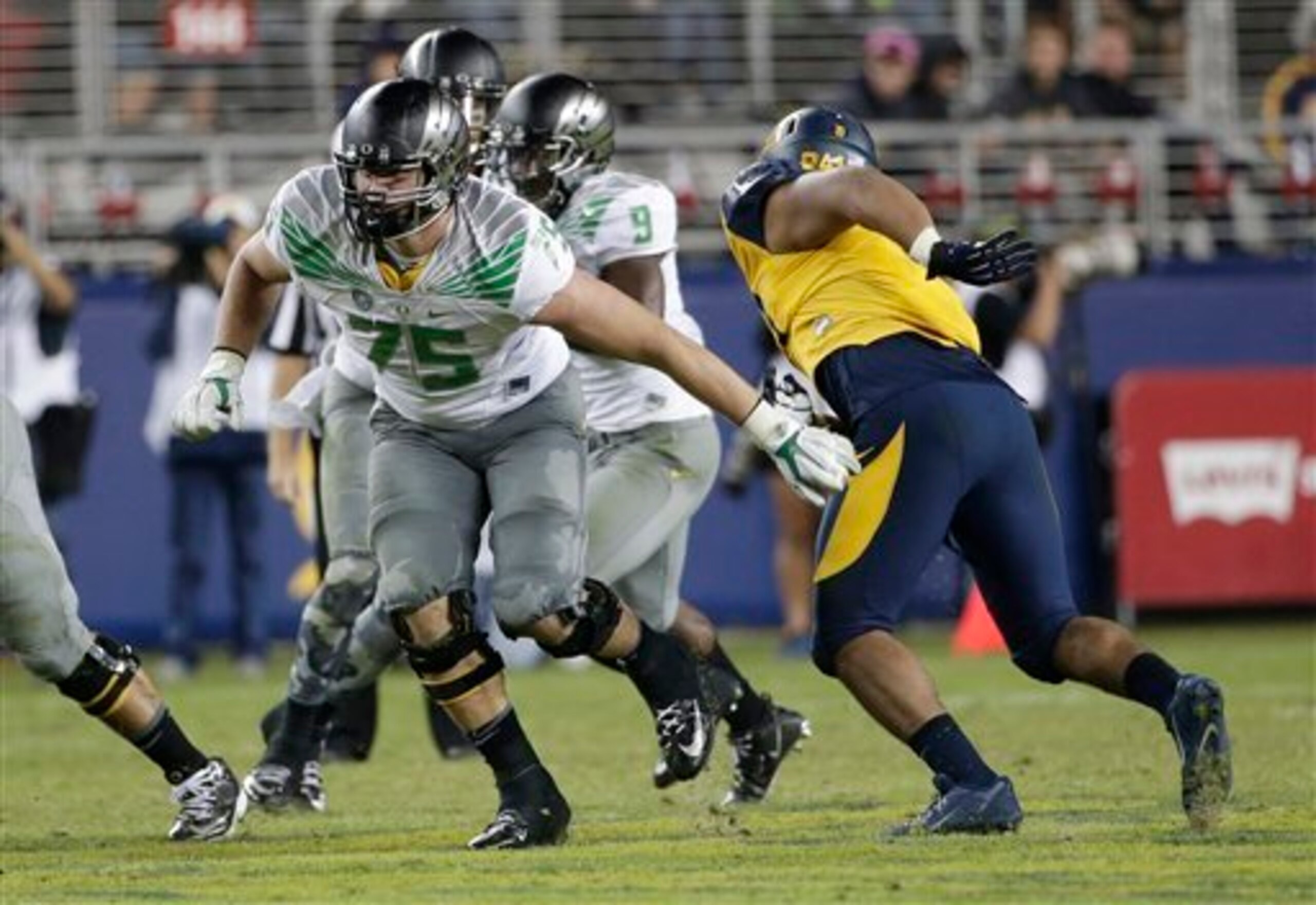
For years, the Carolina Panthers didn't invest on the offensive side of the ball with premier selections. Because Cam Newton was selected first overall, it seems the team just leaned on him to be a transcendent talent. Carolina learned the hard way that one man can't beat a defense alone.
Last year, the Panthers selected Kelvin Benjamin, a jumbo receiver from Florida State, in first round. In the second round of this year's draft, the squad chose to pair him with Devin Funchess, another tall pass-catcher. Funchess is a solid prospect, but Carolina's offensive line still needs massive help.
Jake Fisher of Oregon was still on the board when the Panthers were on the clock for the Funchess pick. Fisher played right and left tackle for the Ducks and projects well on the inside as a strong zone-blocking guard. The Bengals thought of Fisher so highly that they chose him despite the fact they already have two starting-caliber tackles on their roster and took Cedric Ogbuehi, another offensive tackle, in the first round before adding Fisher.
Another weapon for Newton to play with in Carolina is an asset to the offense, but if there's no protection to allow him to get the ball to said assets, then what's the point? It almost feels like the squad is collecting talent instead of building a team. That may come around to bite the Panthers in the backside down the stretch.
Chicago Bears
6 of 32
Matt Forte is one of the best running backs in the league. While Jay Cutler has been up and down in his time in Chicago, the Bears have been able to lean on Forte's consistency. Forte is a 29-year-old, though, and the 30-year mark is basically a death sentence in today's NFL.
With Jacquizz Rodgers and Ka'Deem Carey on the squad, the team had its change-of-pace backs set before draft weekend. Still, the Bears took Jeremy Langford of Michigan State in the fourth round. Langford is a solid back, but if the team thinks he can be a quality every-down starter when Forte inevitably declines, it may be in for a rude awakening.
One back still on the board in the fourth round was Jay Ajayi, who played a lot like Le'Veon Bell in his college days. Ajayi had lingering injury issues coming out of Boise State, but if the St. Louis Rams were fine taking Todd Gurley, who is recovering from a torn ACL, in the top 10, then the Bears shouldn't have had an issue taking Ajayi very early on Day 3.
Ajayi has the upside of a quality starter, unlike Langford, if he can flip a switch to turn his east-west running style into a north-south mentality.
Cincinnati Bengals
7 of 32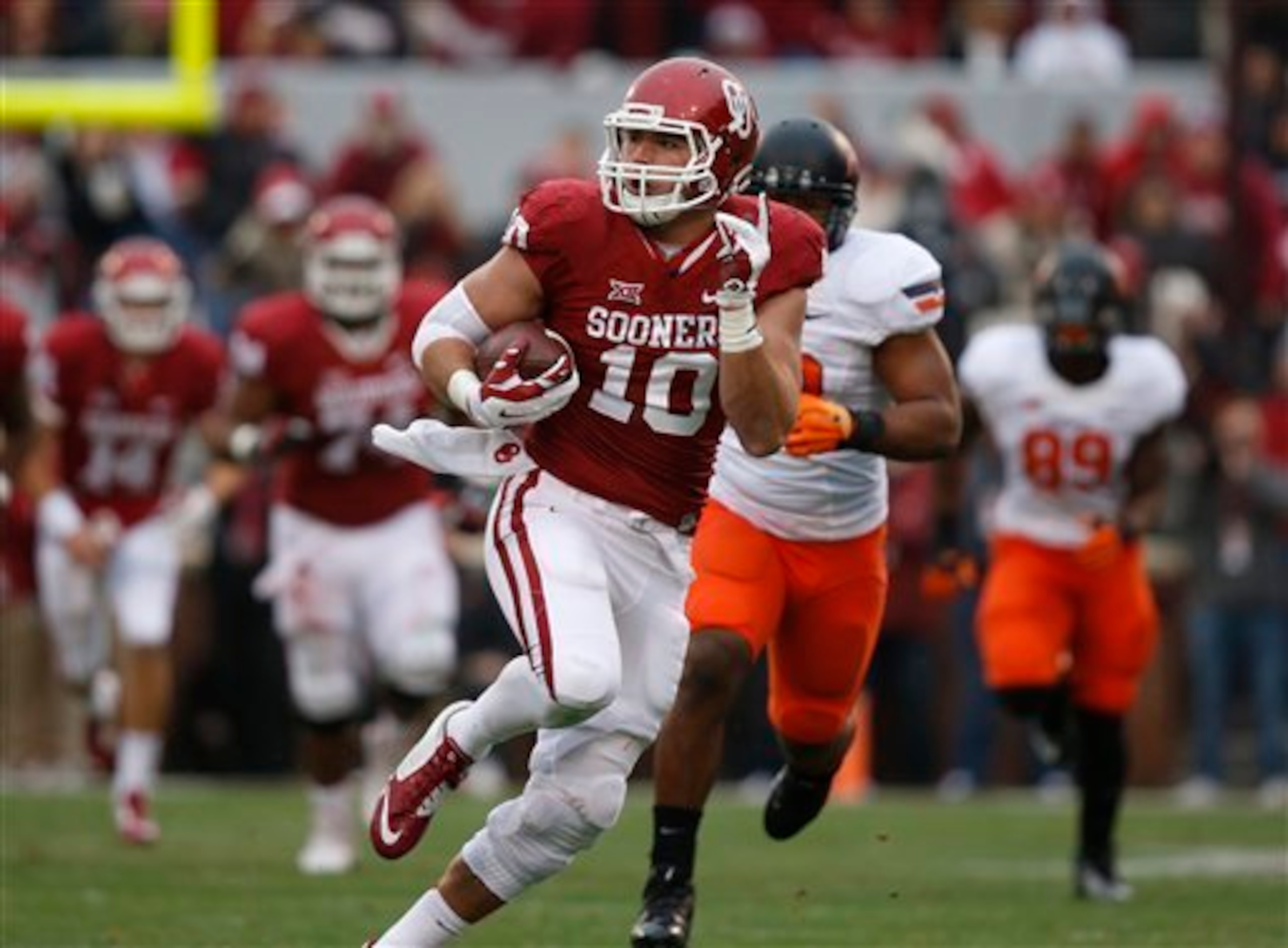
For some reason, the Cincinnati Bengals feel as though they need to have two quality pass-catching tight ends on their roster at all times. The old pair used to be Jermaine Gresham, who was their 2010 first-round pick, and Tyler Eifert, who was their 2013 first-round pick.
With Gresham gone, the team prioritized the position, taking Tyler Kroft of Rutgers with the 85th overall pick of the 2015 draft. Kroft declared early as a hybrid receiver and tight end, likely fitting in as a "move" tight end at the next level.
If the squad were to go that route, I believe that Blake Bell of Oklahoma, who was taken 117th by the San Francisco 49ers, would have been better suited for the selection. Bell started his career as a quarterback but was transitioned to tight end after he lost the starting job for the Sooners.
He has limited time at the position, but it earned him a bid to the East-West Shrine Game, where he showed his ability to work in space as a 6'6", 252-pound athlete. According to Mock Draftable, the player most similar to his combine testing is Gavin Escobar, a second-round pick from a few years ago. His fourth-most similar comparison is Julius Thomas, who's currently a back-to-back Pro Bowler.
Cleveland Browns
8 of 32
With the 51st overall pick, the Cleveland Browns took Nate Orchard's name off the board. Orchard is a pass-rusher from Utah, where he put up massive production in the Pac-12. The issue with Orchard is that he lacks the baseline athleticism to win at the NFL level at the most athletically demanding position in the league.
To many, Orchard is the Jarvis Jones experiment all over. Jones was a first-round pick by the Pittsburgh Steelers, who currently employ a 37-year-old James Harrison and just drafted a first-round edge defender in Alvin Dupree this past draft. To say the least, the Jones selection hasn't worked out so far, but that didn't stop the Browns from attempting to learn the lesson themselves.
I assume the plan for Orchard is to take over the role of run-stopper currently held by Paul Kruger when his contract is finished, but Cleveland doesn't have the interior penetrators to not put out two pass-rushing specialists on the field.
Danielle Hunter, who was taken a round after Orchard, will look like a better choice in three or four years. Hunter is raw coming out of LSU, but he has all the tools to succeed. He needs time to grow, and you'd need faith in your coaching staff to develop him, but this is how gems are found in the NFL.
Dallas Cowboys
9 of 32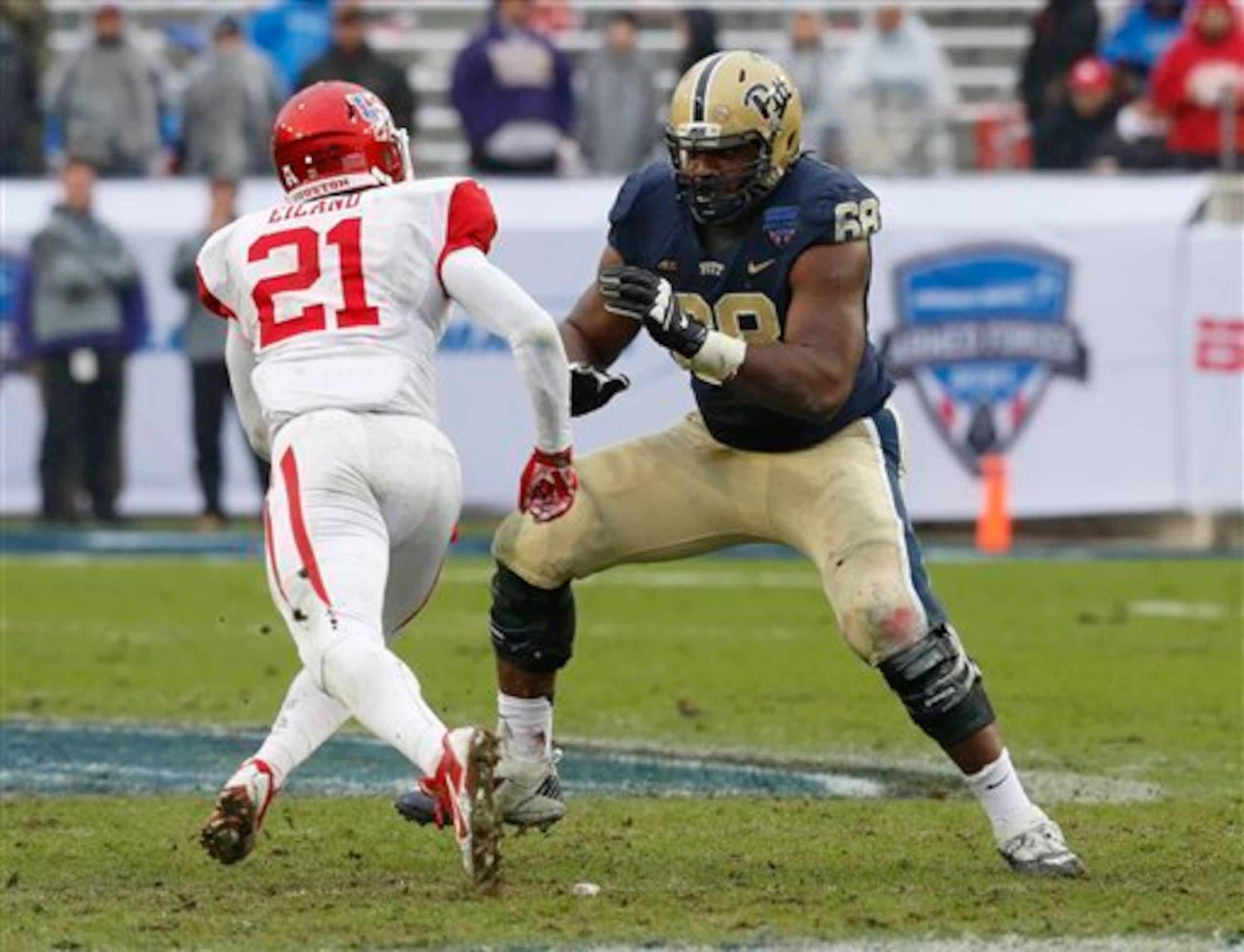
One of the biggest "sliders" of draft weekend was T.J. Clemmings, who was thought of as a fringe first-rounder out of the University of Pittsburgh. Clemmings was a defensive lineman with a basketball background for Pittsburgh before flipping to the offensive side of the ball, proving to have elite skills for a college right tackle.
A nagging injury allowed for his slip, but when he recovers, he should be great. In the third round, the Dallas Cowboys instead chose Chaz Green of Florida over Clemmings. There's no hurry for the squad to push an offensive lineman into the starting role, so I don't understand why the Cowboys didn't take the better talent, despite the growing pains on the bench that Clemmings will have.
Doug Free is the only offensive lineman in the starting lineup who isn't a long-term option for the team. Imagine an offensive line comprising of Tyron Smith, La'el Collins, Travis Frederick, Zack Martin and Clemmings for years. Those are five potential Pro Bowlers who could have led the way for any running back to a 1,000-yard season and kept quarterback Tony Romo, who has a back injury hanging over his head, clean.
Denver Broncos
10 of 32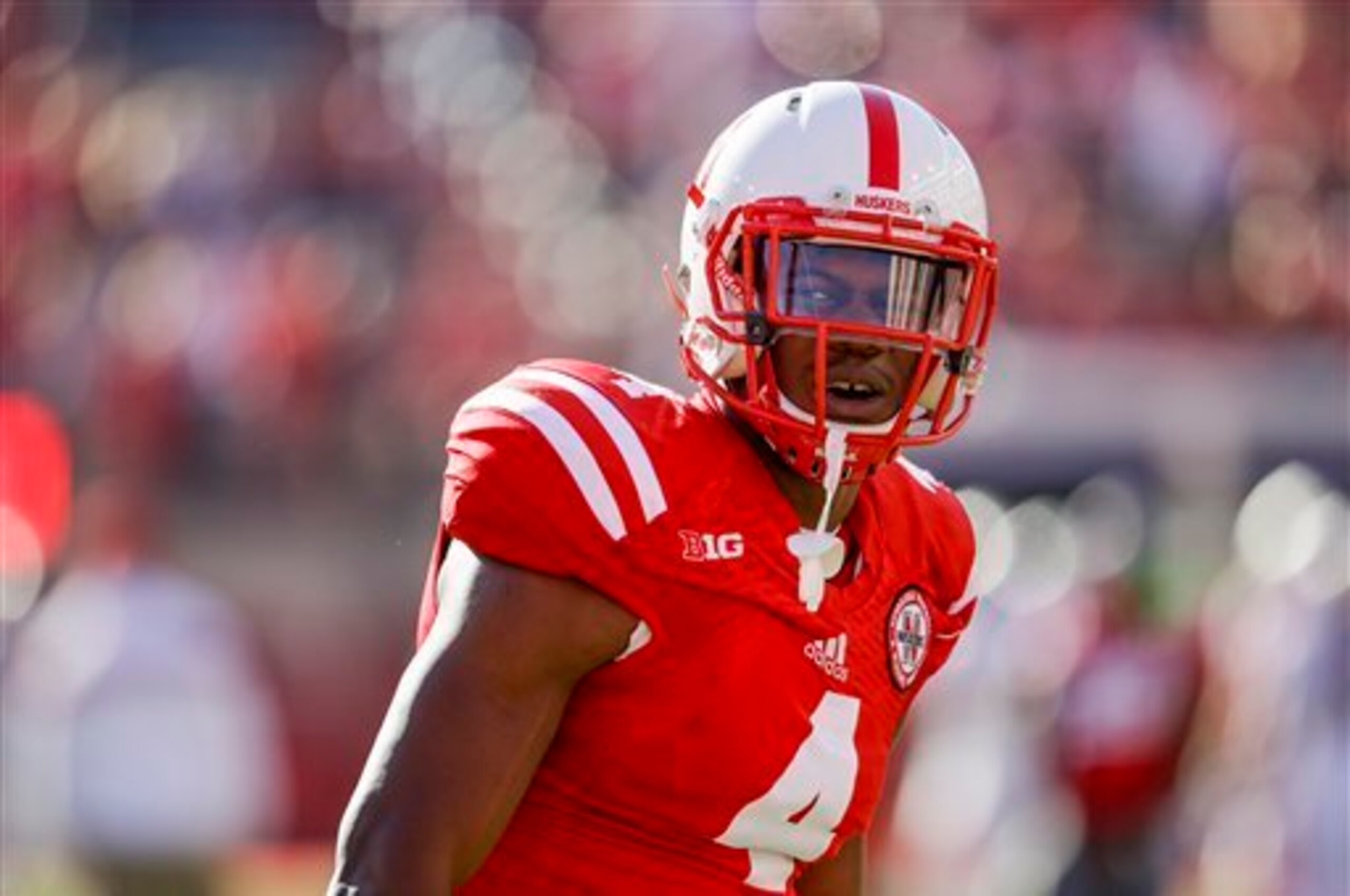
Shane Ray of Missouri was once looked at as a top-10 selection, but he fell to the 23rd overall pick and might have fallen further had the Denver Broncos not traded up to draft the pass-rusher. The reasons for his slip were a marijuana citation late in the draft cycle and a toe injury, which kept him out of the combine.
He ran at his pro day, but all of his athletic scores, other than his 40-yard dash, were poor. That could have been a lingering effect of the toe issue. On the other hand, Randy Gregory of Nebraska, who was picked with the 60th selection of the draft by the Dallas Cowboys, also had a similar background.
Gregory was a longer and more efficient pass-rusher, but his failed combine drug test led to his drop from a potential top-five pick to going in the late second round. My question is this: If Gregory was the better talent on film, which he was, then why didn't the Broncos take the better outside linebacker with a drug-related issue? I don't think that question has been asked enough by those in the media.
Detroit Lions
11 of 32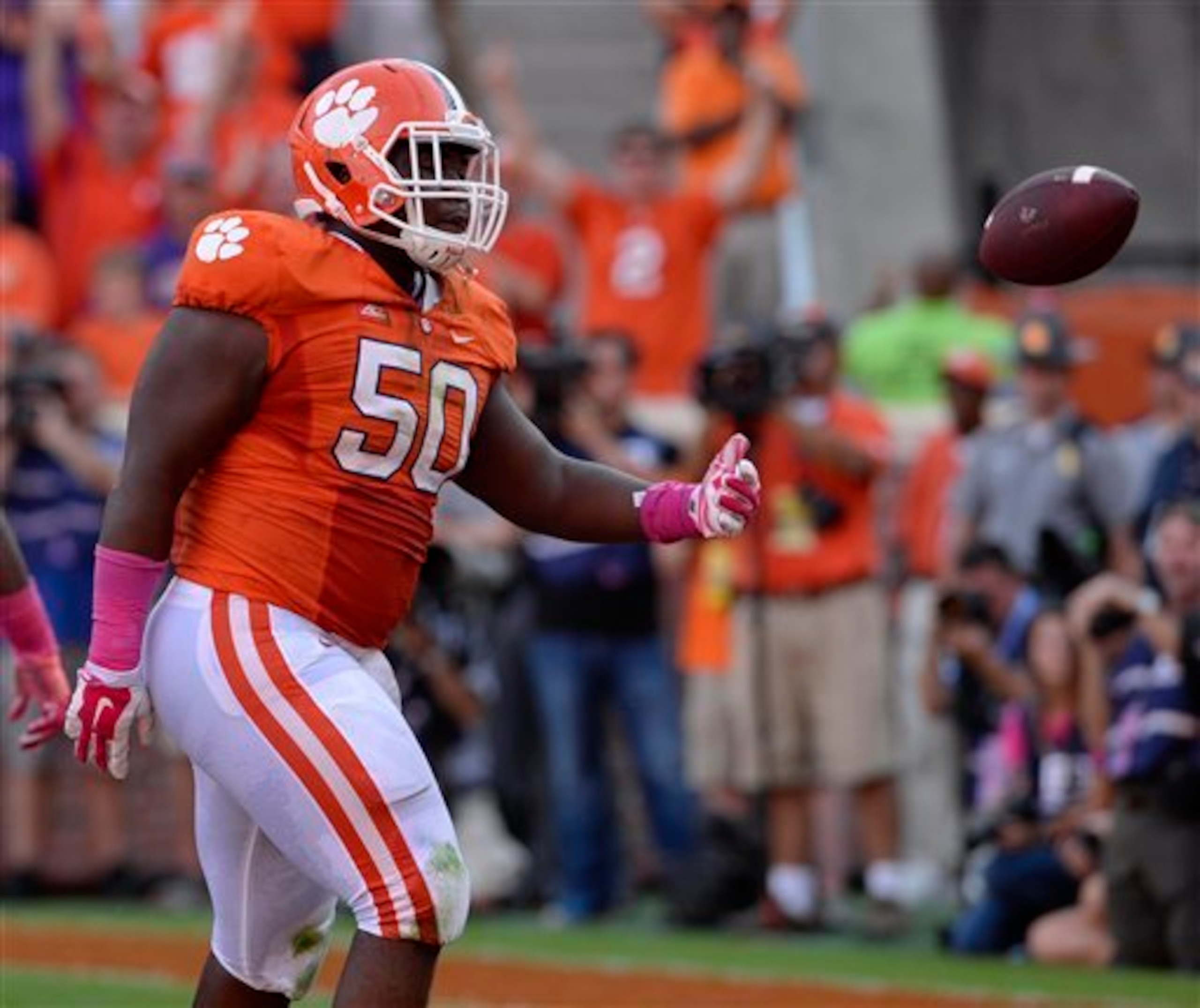
I can't tell if the arrow is pointing up or down for the 2015 Detroit Lions. They've been able to add talent, but they lost two key defensive tackles in the past free-agency period. The holes left empty by Ndamukong Suh and Nick Fairley created a need for the team at both the 1-technique and 3-technique interior defensive line positions.
The front office filled the 1-technique hole by trading for Haloti Ngata, an aging superstar by way of Baltimore. Still, 3-technique was a position of need for the team entering the draft weekend. Caraun Reid of Princeton was drafted on Day 3 of the 2014 draft, but going from a reserve rookie to 16-game starter is a huge task for a defensive lineman.
In Day 3 of the 2015 draft, the team took Gabe Wright, an undertackle prospect from Auburn. He's a solid player, but with Grady Jarrett still on the board, I wonder what the discussions in the Lions' war room were. Jarrett was one of the best undertackles in college football last season with the Clemson Tigers, and some had compared his potential to that of Geno Atkins, a 3-technique Pro Bowler.
No one is really sure why Jarrett fell, but he eventually landed with the Atlanta Falcons as a Day 3 selection. That pick may look like a slam dunk in three years, when 31 teams in the league, not just Detroit, question where they went wrong during their evaluation.
Green Bay Packers
12 of 32
Damarious Randall of Arizona State was Green Bay's first pick of the draft. He was a late riser in the process but had played safety in college, which made his selection especially peculiar considering the Packers had just drafted Ha Ha Clinton-Dix of Alabama as a safety in the first round one year ago.
Randall is going to transition to cornerback for the team, but looking back, I'm not sure the Green Bay front office would have made the same choice if it had the option to choose again. Malcolm Brown of Texas, who was viewed as a top-20 defensive lineman, was still on the board, and the Packers were able to address the cornerback position again in the second round when Quinten Rollins of Miami (Ohio) fell into their lap.
Green Bay has been known to fall on the sword in the running game because of their tendency to rely on undersized defensive linemen, and a talented big body dropped right in front of them; the need left in free agency by Tramon Williams and Davon House led to the team passing him up, though.
If general manager Ted Thompson and Co. had the choice to flip those picks knowing what they were going to be able to land in the second round, I think Brown would be in green and gold.
Houston Texans
13 of 32
I don't think anyone has an issue with the Houston Texans selecting a linebacker in the second round of the 2015 draft, but I'm not sure that they took the most talented one on the board. Benardrick McKinney of Mississippi State was the choice, and he was the heart of a Bulldog defense that surprisingly sprang the school as a national contender for a couple of weeks.
McKinney was billed as a freak athlete, but his combine performance didn't confirm that notion. When you watch him on film, he's a bit limited in space and coverage. I think he's a good "Mike" linebacker prospect, but if the Texans try him out on the edge as an outside linebacker, they could be in trouble.
Once player who can play both spots—while former first overall pick Jadeveon Clowney is out with his knee issue—is Eric Kendricks, who was drafted by the Minnesota Vikings later in the round. He covered running backs and tight ends with ease at UCLA, which translates to the "Sam" role, and has the tackling ability and closing speed to compete at the Will and Mike positions.
The only thing he can't do is rush the passer as a weak-side defender. Kendricks would have allowed the Texans to be more flexible with their future, which to me is a plus since Clowney's career is up in the air. McKinney is a plug-and-play prospect but can really only contribute in one role.
Indianapolis Colts
14 of 32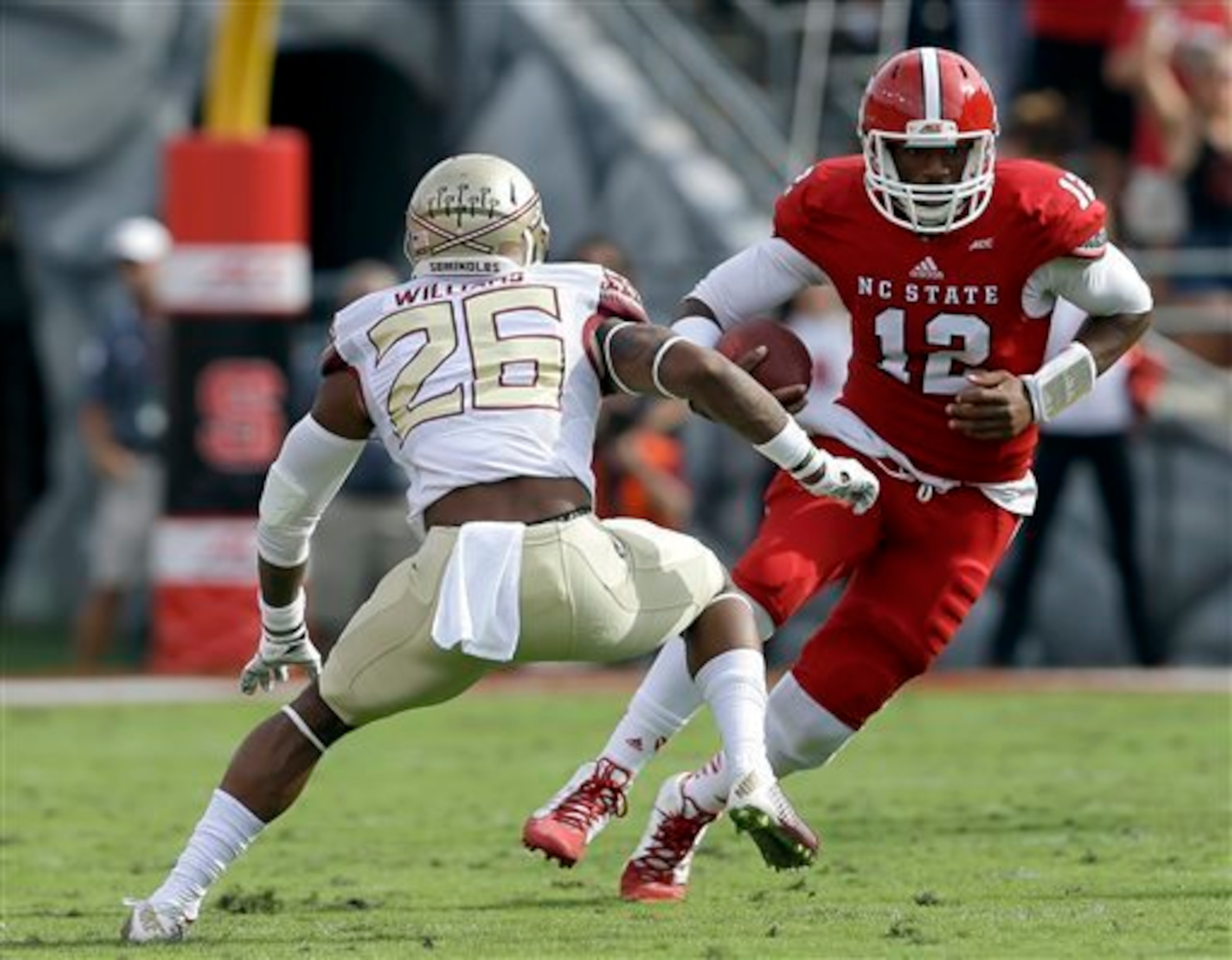
With the first pick of the third round, the Indianapolis Colts selected D'Joun Smith, a cornerback from Florida Atlantic University. The Colts like to dig for players who are unheard of, with athletes on their roster from the Canadian Football League and Europe. Some small-school prospects, such as T.Y. Hilton, even hit with the team.
Smith fights hard and competes on a down-to-down basis, but there are questions regarding his athleticism that makes him an iffy transition to a starting cornerback outside of a true Cover 2 scheme, which doesn't really exist in today's NFL. Taking small-school players who are high-effort contributors in college is one way general managers get fired. One of the recent examples of this is Gene Smith, who ran the Jaguars front office from 2009 to 2012.
An alternative pick could have been P.J. Williams, who easily can translate to the pro game. Williams was a national champion cornerback with Florida State and doesn't have a glaring flaw in his skill set like Smith.
Williams' issue was an offseason DUI arrest. Jim Irsay, the owner of the Colts, had a DUI in 2014, so maybe the squad didn't want to deal with the media backlash of the selection. But he's a tier or two better as a pure coverage corner than the player the Colts picked before Williams.
Jacksonville Jaguars
15 of 32
This is a tough one. I don't think the Jacksonville Jaguars made a poor choice in selecting Dante Fowler of Florida with the third overall pick, but there's no doubt that if you asked the front office honestly, it would want a redo at this point. On the first day of rookie camp, Fowler tore his ACL, officially ending his rookie season before it even got started.
When looking at other available pass-rushers, the options are thin. Shane Ray and Randy Gregory dropped out of the top-20 range because of their off-field drug issues. Alvin Dupree skated just out of that range because of his raw ability, which hasn't yet been channeled.
The only selection that makes any sense at the position would be Vic Beasley, who might be the best pure pass-rusher in the class. He doesn't have the size or anchor to compete much in the run game, but there's few even at the professional level who possess his ability to bring down a quarterback.
Beasley was the most feared ACC defensive end over the past two years with the Clemson Tigers and could have started in a hybrid "Leo" role for the Jaguars from day one.
Kansas City Chiefs
16 of 32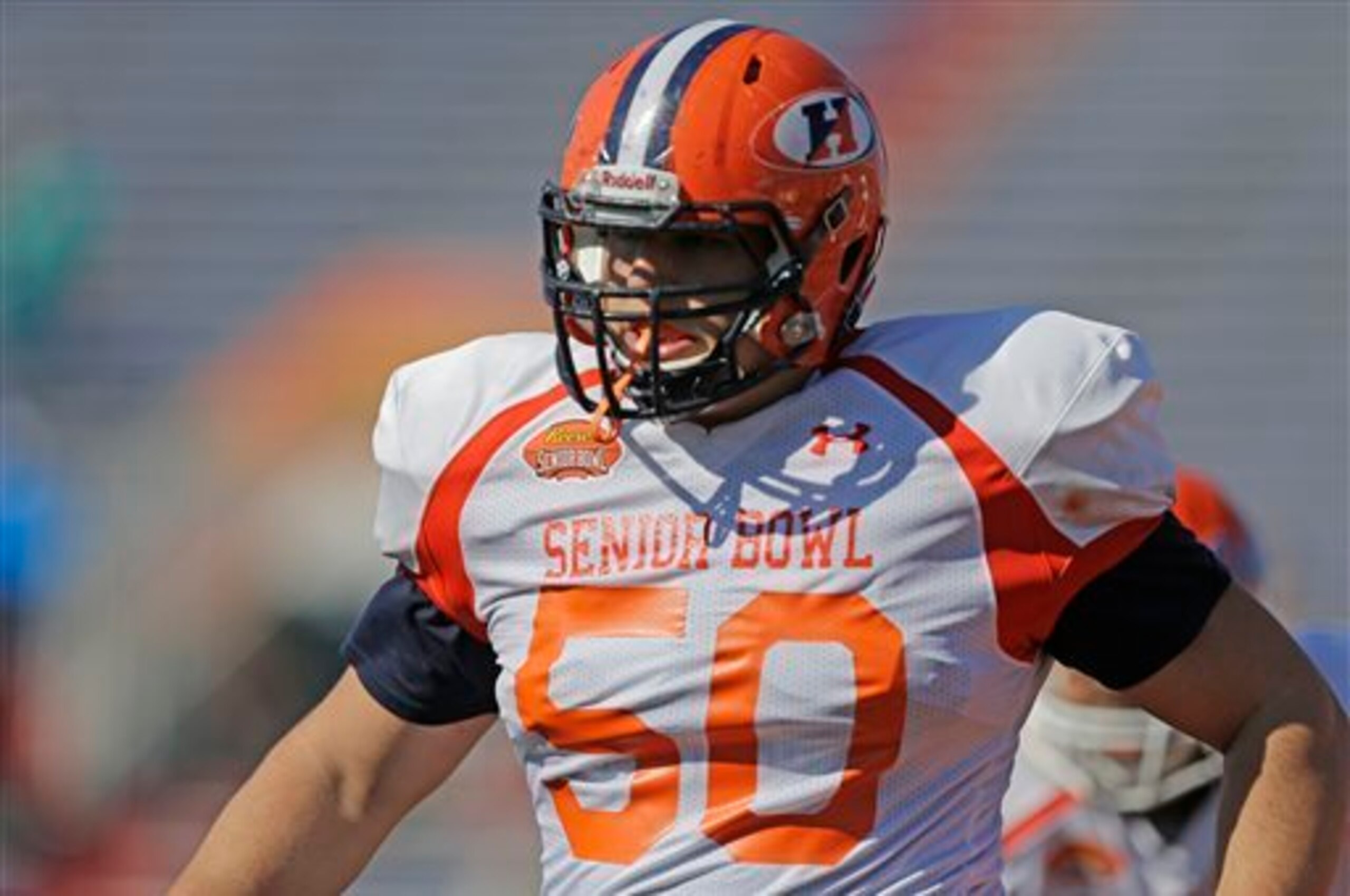
In the middle of the second round, the Kansas City Chiefs made one of the most surprising picks of the draft by taking Mitch Morse of Missouri. Morse, who played in-state, was a college tackle but projects best as a center at the NFL level. In some ways, he's a lot like a poor man's David Bakhtiari as a prospect.
Still, Bakhtiari went in the fourth round, and a lesser version of him isn't second-round material. Another interior offensive line option the Chiefs could have drafted is Ali Marpet of Hobart. Marpet was a virtual unknown before the Senior Bowl, when he held his own versus the likes of Danny Shelton, a top-15 nose tackle.
Marpet played left tackle in college for over 40 games but proved his worth as a guard in Mobile, Alabama. The Chiefs needed center help after Rodney Hudson left in free agency for Oakland, but if Marpet can get snaps off, I see no reason why he wouldn't have been the choice with their second pick.
Miami Dolphins
17 of 32
The Miami Dolphins added two large body defensive tackles to their roster in 2015. The first was Ndamukong Suh, an All-Pro player who might be the top free agent to hit the market since Reggie White. On a much quieter note, the squad also took Jordan Phillips of Oklahoma in the second round.
Phillips has a back issue similar to the one Justin Harrell did coming out of college. If you aren't familiar with Harrell's name, he was a first-round pick who just might be the biggest bust of a defensive tackle over the course of the last decade or so. The history of big-body players with bad backs doesn't have a good track record.
Instead of taking Phillips, the team could have netted Carl Davis of Iowa, who has elite ability when he's motivated. When looking at his Mock Draftable profile, his top athletic comparison is Leonard Williams, who went sixth overall in this class, and his third comparison is Suh, who signed a $114 million contract with Miami.
It just makes more sense to go after a rare player with motivational issues rather than selecting one who has a broken body.
Minnesota Vikings
18 of 32
I think everyone viewed the Minnesota Vikings' selection at 11th overall as a turning point in the draft coming into the weekend. All of the top-tier talent would be gone, but there were a few rumored names that kept occurring during mock drafts. The first was DeVante Parker, Teddy Bridgewater's receiver at Louisville who would eventually be drafted 14th overall by the Miami Dolphins.
The second was Trae Waynes of Michigan State, who compared similarly to Xavier Rhodes, whom head coach Mike Zimmer is developing into a great cornerback. Lo and behold, Waynes found his way to Minnesota.
Maybe Zimmer shouldn't be trying to match two of the same players opposite of each other, though. Instead of throwing out two very good athletes who need time to develop, they could have used a plug-and-play physical cornerback. Marcus Peters of Washington, who would later come off the board 18th overall to the Chiefs, is in that mold.
Peters was kicked off of the Husky football team for a violation of team rules, but he was by far the best press-man defensive back in the class, and one can make the case he was the best overall secondary prospect in the draft. It would have been interesting to have two styles for Zimmer to work with, especially considering Peters' talent.
New England Patriots
19 of 32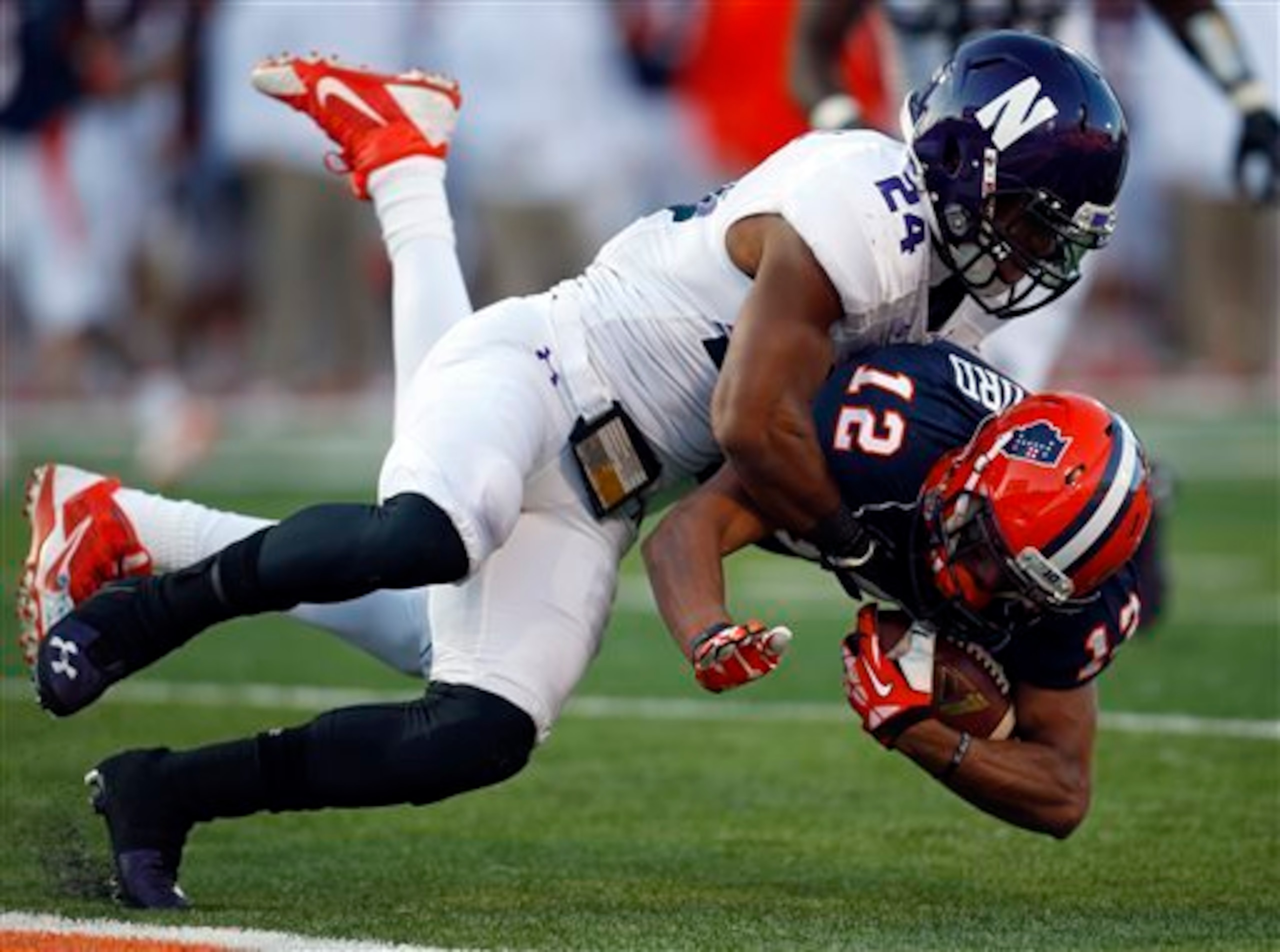
One of the "reach" picks of the draft was Jordan Richards of Stanford. The Pac-12 safety was listed by most as a late-rounder or undraftable player. For example, NFL Draft Scout, CBS Sports' draft affiliate, had him down as a fifth- or sixth-rounder. He was not only drafted but selected much earlier than expected.
Coming off the board with the 64th overall pick, many were shocked. Devin McCourty has the high-safety role locked up for a long time in New England after signing a five-year deal this offseason. The one spot up for grabs is strong safety, where Richards figures to battle Patrick Chung for starting time.
If Richards is being looked as a box-only safety, though, there were better options on the market. Ibraheim Campbell of Northwestern, a fourth-round pick by the Cleveland Browns, could have fit the mold a round-and-a-half after Richards' selection.
Campbell hits as a linebacker, like a sawed-off version of Kam Chancellor. If he could have kept his hamstring issues behind him, Campbell could have contributed early as a strong safety and special teams player for the Patriots.
New Orleans
20 of 32
In the second round, the New Orleans Saints added Hau'oli Kikaha of Washington to their roster. In college, Kikaha was a very productive pass-rusher, but there are some factors that may keep him from being a full-time starter, or at least a quality starter, at the professional level.
Kikaha has a history of knee issues, including two surgeries that ended separate seasons for him in Seattle. He also is a poor athlete on paper and is undersized for the position. He's a high-effort player with great technique, but "he's just a football player" turns into "he was just a football player" quicker than most like to admit in the NFL.
One round after Kikaha was drafted, an NFC team stole a pass-rusher. The New York Giants selected Owamagbe Odighizuwa of UCLA, and he figures to be their new version of Justin Tuck. Like Kikaha, Odighizuwa has an injury issue, this one involving his hips. The difference between the two is that Odighizuwa's injury doesn't hinder his athletic ability. He's not far behind Alvin Dupree, who was taken in the first round by the Pittsburgh Steelers.
New York Giants
21 of 32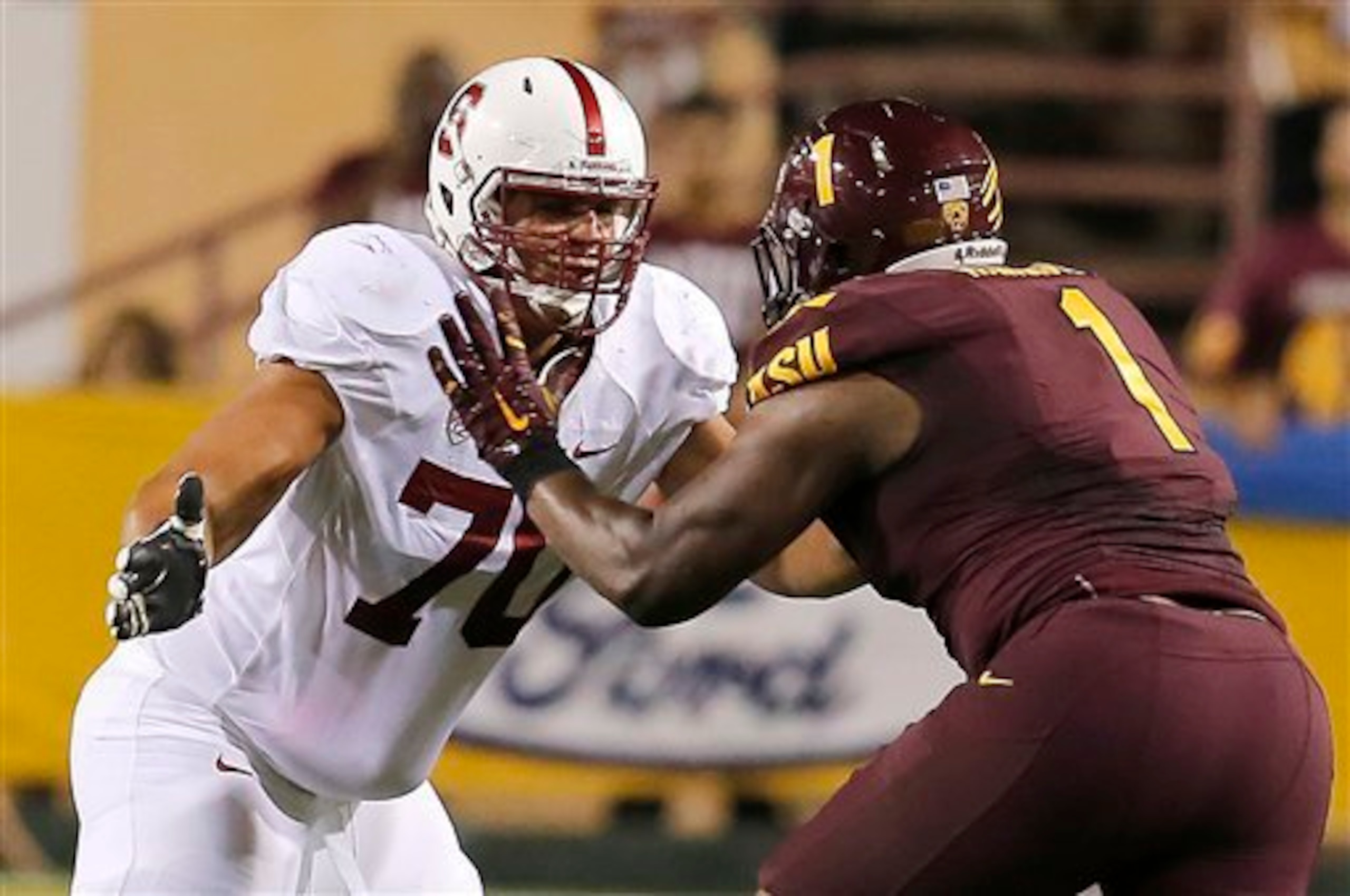
The selection I would switch for the New York Giants came in the top 10 picks. I'm still pretty surprised that Ereck Flowers went as high as he did. An offensive tackle at the University of Miami, Flowers' top competition last year came when he faced Randy Gregory of Nebraska. Gregory, a second-round pick by the Cowboys, only was used as a pass-rusher for a few plays against the tackle, but he absolutely abused him when he did get a shot.
To me, Flowers is a little soft and needs some very real NFL coaching for his crossing feet. A more NFL-ready tackle is Andrus Peat, formerly of Stanford, who was the second offensive tackle off of the board when the New Orleans Saints drafted him in the 13th overall slot.
Peat loses initial contact often but wins with length and recovery ability. That is better film than being rag-dolled by a sub-250-pound pass-rusher in limited snaps. I think there's at least a round's difference between the film grade of Peat and Flowers, and I'm very interested to see how this situation plays out in New York.
New York Jets
22 of 32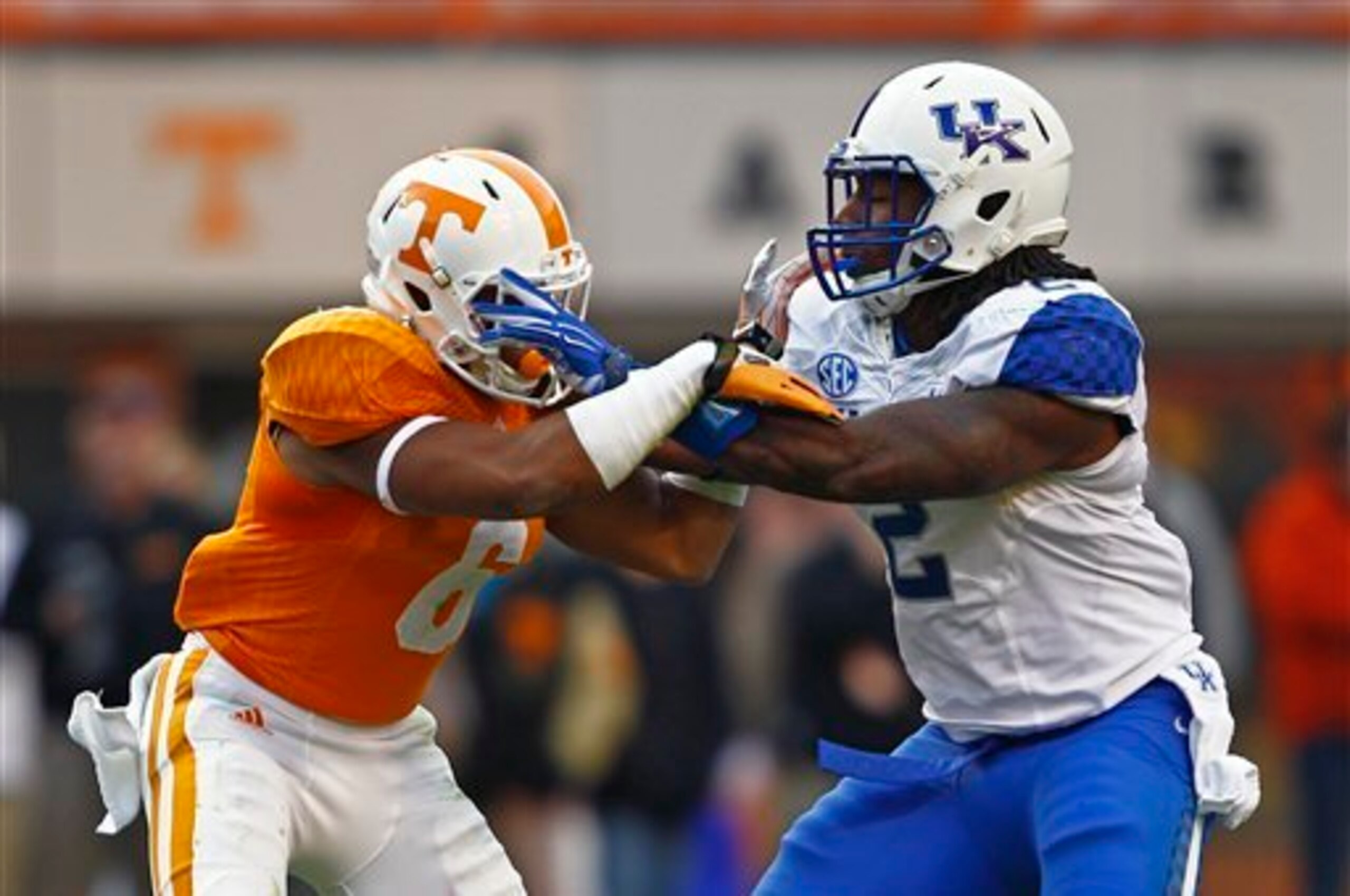
The New York Jets got a steal in the first round by taking Leonard Williams with the sixth overall pick. Many had Williams ranked as the best defensive player in the draft, but the first two selections of the week were spent on quarterbacks, then the Jaguars and Raiders passed on Williams' potential as a 3-technique undertackle in their 4-3 defenses. The Redskins, who were already strong on the line, also left him on the board.
The Jets scooped him up, despite the fact they have their starting 3-4 defensive ends in Muhammad Wilkerson and Sheldon Richardson already on their squad. Best player available only matters to an extent. At the end of the day, you're not collecting talent. Rarely are there trades in the NFL where you can flip extra assets at one position to fill holes in positions of need. You're building a team.
New York is just one quality pass-rusher away from becoming a top-five defense in the league, which would make them a contender in the overall weaker AFC. Head coach Todd Bowles loved bigger edge defenders while in Arizona, and Alvin Dupree, the pass-rusher from Kentucky, would have been a perfect fit for what he likes to do. Dupree has the potential of Cameron Wake, which would give the team much more value than quality legs off the bench.
Oakland Raiders
23 of 32
In the second round, the Oakland Raiders drafted Mario Edwards of Florida State to fill their "Leo" spot. As a weak-side pass-rusher, Edwards will need to play similar to what he showed on his junior film, not his senior film, when he ballooned to a weight around 300 pounds.
Outside of Justin Tuck, the team doesn't have another starting-caliber edge defender. Edwards looks to fill Tuck's role down the line as a base defensive end and interior pass-rusher in nickel reps. Some even thought that Edwards' game worked best inside as a defensive tackle, considering the size he played at during his final year with the Seminoles.
My worry for him is that his NFL transition looks like Mike Neal's. Neal went from an interior defensive lineman for Purdue to being a pass-rushing edge defender at the professional level. In five seasons, he's notched 15 sacks after being drafted in the second round.
Another player in that role who doesn't have to reshape his body is Preston Smith. Smith was drafted shortly after Williams by the Washington Redskins. At Mississippi State, he was able to bend the edge while also destroying interior offensive linemen in obvious passing situations. Minimizing risk is a big factor in the NFL, and Edwards' weight situation screams "red flag."
Philadelphia Eagles
24 of 32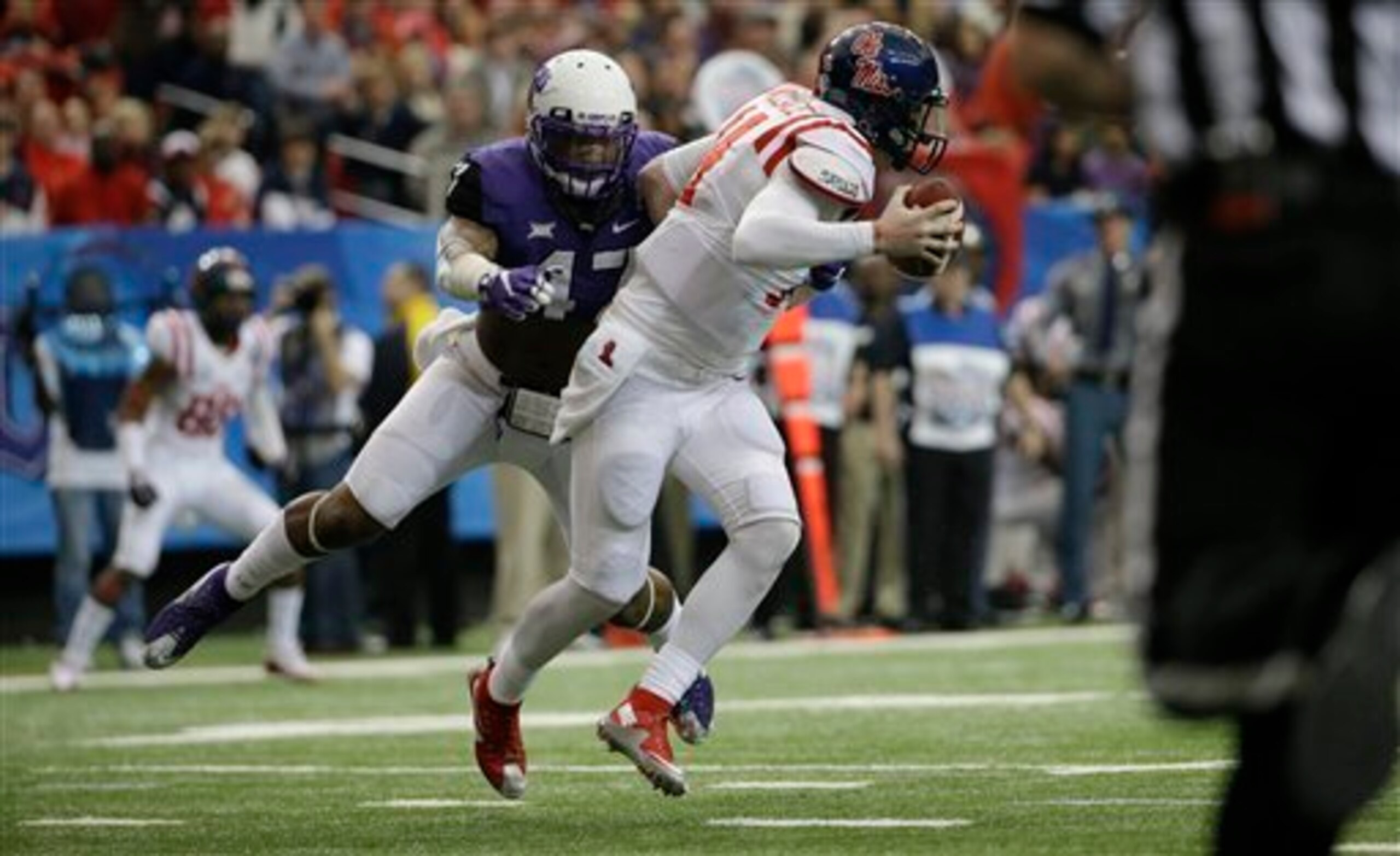
The Philadelphia Eagles didn't need to address the linebacker position during the draft, but with selections of receiver and cornerback already made and few options on the board, they went for an athlete at the position. Jordan Hicks of Texas is great on paper, but I'm not sure he was worth a third-round pick.
Mychal Kendricks and Kiko Alonso are already on the roster as linebackers with great speed, and DeMeco Ryans is a great run defender. Wouldn't it have been better to be two deep at each mold of linebacker rather than having three of your top four as the "better athlete than player" types?
Paul Dawson of TCU was still on the board at this point in the draft. Dawson had a great season in Ft. Worth but had a poor combine. In recent memory, Vontaze Burfict had a similar turnout. Burfict was once thought of as a first-round linebacker, but poor testing led to his undrafted status.
Burfict would make the NFL pay for doubting him, though, when he made the Pro Bowl in his second season in the league. Dawson may go down the same route, while Hicks is still learning how to control his raw but talented ability.
Pittsburgh Steelers
25 of 32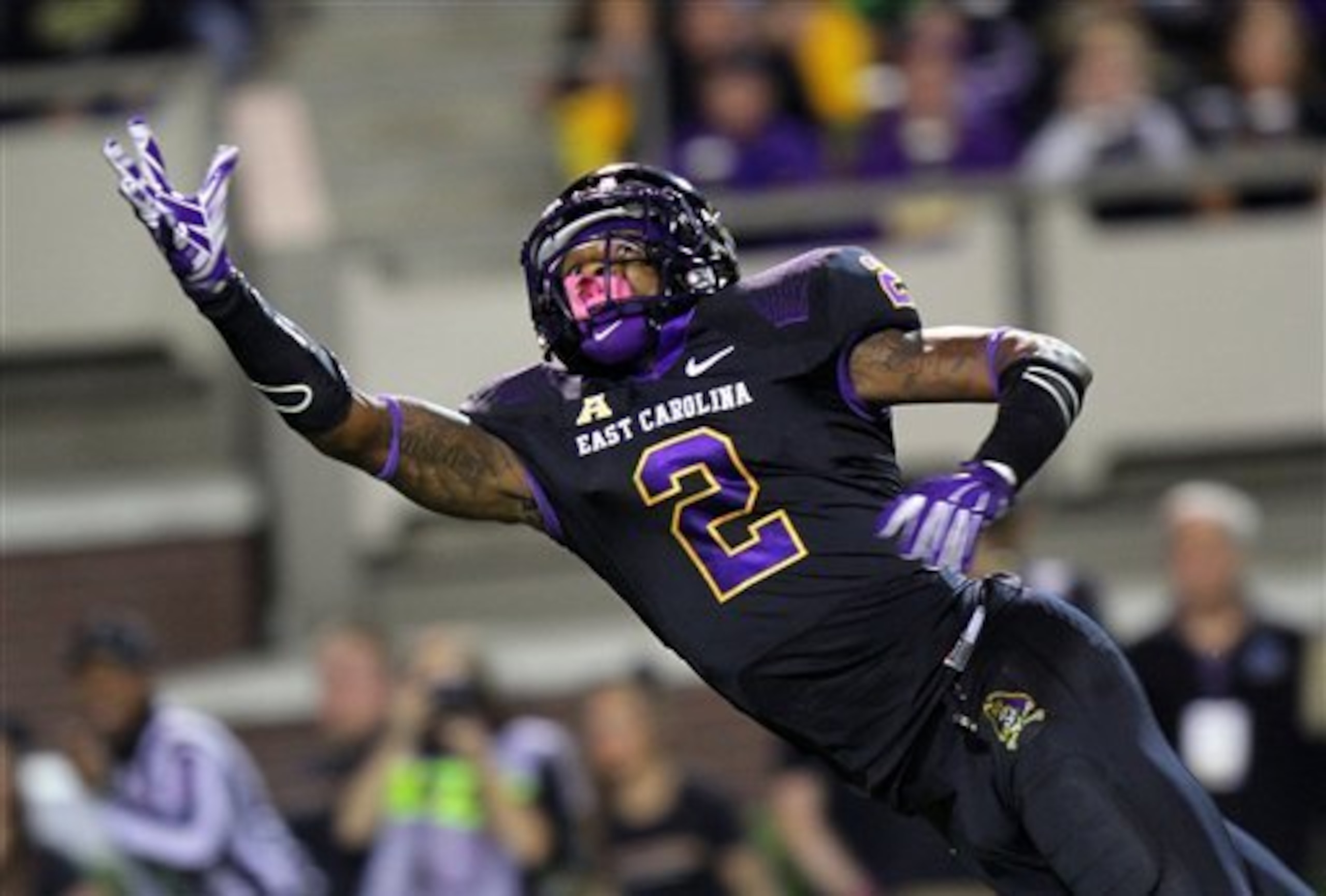
The Pittsburgh Steelers have a strong case that they're the best franchise in the NFL at developing wide receivers. The team drafted both Emmanuel Sanders and Mike Wallace in the third round in the recent past. Both have made a Pro Bowl in their careers, along with Antonio Brown, a former sixth-round pick.
Waiting in the wings are Martavis Bryant and Markus Wheaton, mid-round selections from the 2014 and 2013 draft classes, respectively. Still, the team decided it wanted another threat—Sammie Coates of Auburn—during Day 2 of the 2015 draft.
Coates has the upside of a Terrell Owens, but he has a long way to go to reach his potential. My question is why the team needs another big-body project to work on when Bryant is already on the roster and is showing development. Brown is the speed demon, Bryant is the stretch pass-catcher and Wheaton is what was supposed to be the possession player.
If there's one role that isn't pulling its weight at this point, it's the possession side from Wheaton. A receiver such as Justin Hardy of East Carolina could have filled that role with this selection instead of stretching the team's assets and coaching influence between Bryant and Coates.
San Francisco 49ers
26 of 32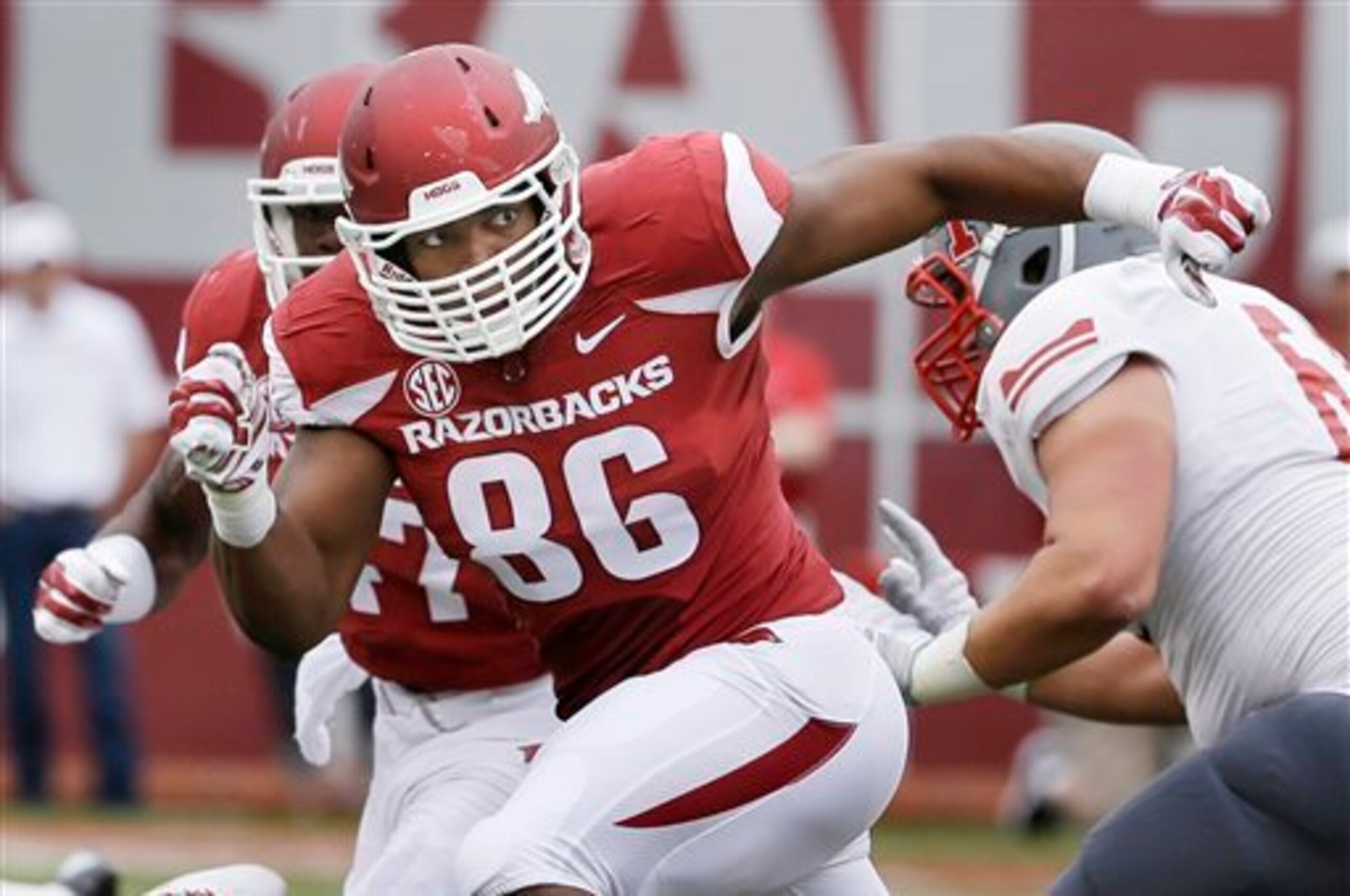
Pass-rusher Eli Harold of Virginia declared early after draft hype started to buzz around him. Even during the week of the draft, some were claiming that he was a potential first-round pick. When the dust settled, he was considered a "steal" when he fell to the San Francisco 49ers in the third round.
Harold fell with good cause, though. At his size, his combine performance and athleticism can be rationalized. He may be fast, but at the NFL level, you're going to get a hand on you. Being able to translate that speed into force is key for undersized players, and the 247-pound Harold hasn't yet proved he can do so.
He's a developmental player behind the likes of Aldon Smith, Aaron Lynch and Ahmad Brooks, but there's another edge defender I think the 49ers will look back at as a better overall option for the squad. Smith and Lynch are the sack artists, while Brooks is more of a true linebacker.
What's missing in the unit is a run-first outside linebacker who can contribute in short-yardage situations while still doing enough in the passing game to get clean up sacks and stay on the field.
Trey Flowers of Arkansas is that exact player, and he went a round later to the New England Patriots. Flowers is very long and lacks the overall explosion that Harold possesses, but he uses his strength to get inside. Winning inside rather than outside, he makes his lane to the quarterback smaller, limiting how important that closing speed and burst really are.
San Diego Chargers
27 of 32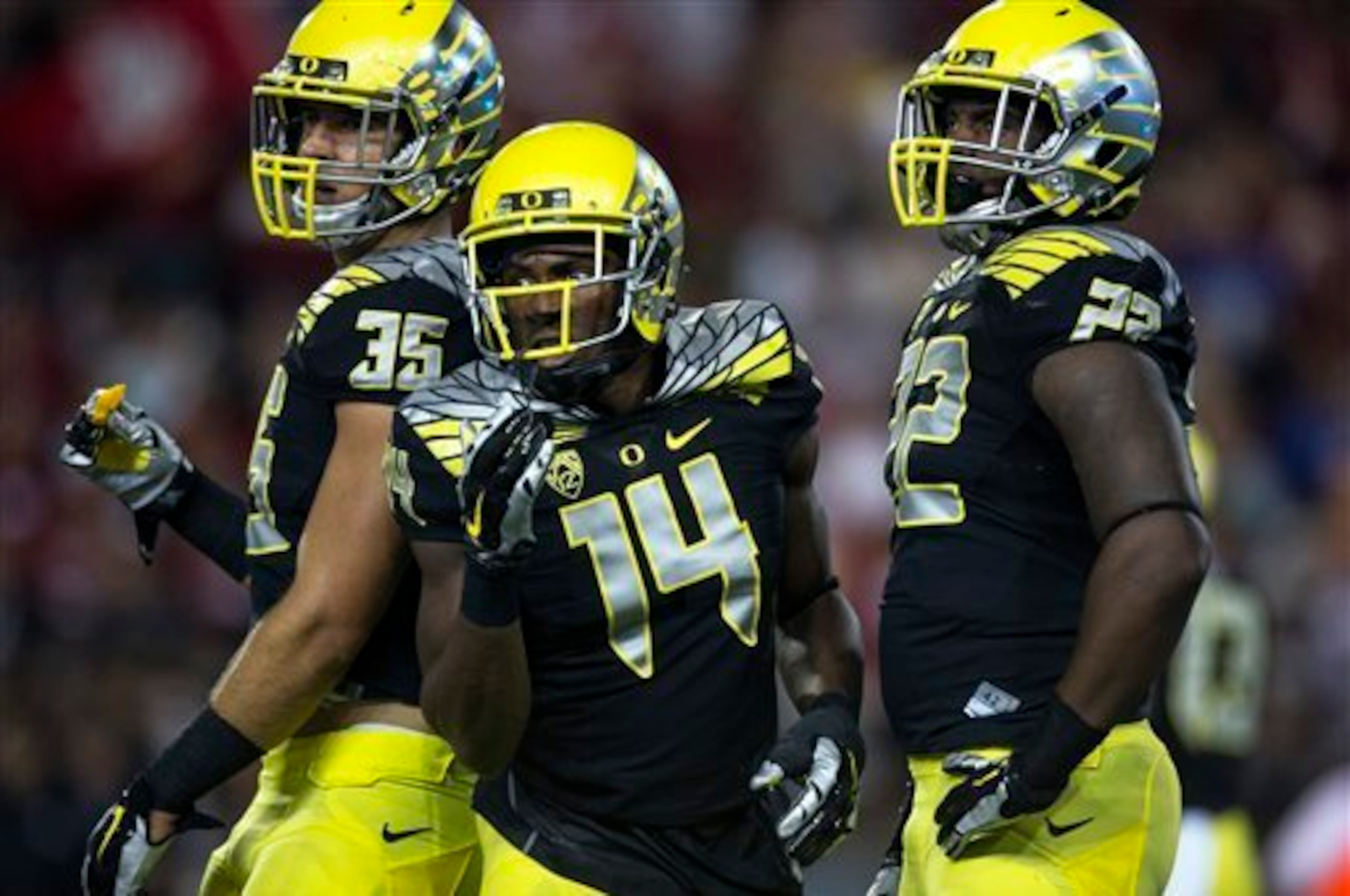
Craig Mager of Texas State was a late riser in the draft cycle. A four-year starter at a Sun Belt school, the selection of Mager by San Diego over some of the remaining names in the middle third round may be shocking to some, but he can play.
My issue with the selection is one specific name: Ifo Ekpre-Olomu. Ekpre-Olomu was a three-time All-Pac-12 cornerback at the University of Oregon and was considered to have been the top cornerback in college football last year. He sustained a non-contact ACL tear during postseason practice, but Todd Gurley and Cedric Ogbuehi are recovering from ACL tears, too, and they were drafted in the first round.
This "regret" option isn't specifically for the Chargers—it's for all 31 teams that passed on the undersized but talented cornerback. Maybe the San Diego staff was scared to invest in another boundary option after Jason Verrett, last season's first round pick, ended his rookie year on IR after his shoulder, which has bothered him since his days at TCU, had another issue.
There's no reason, short of Ekpre-Olomu's leg falling off to gangrene, that he should have still been on the board in the seventh round, where the Browns, who hoard cornerbacks, drafted him. If you would have said that Ekpre-Olomu would have been drafted late in Day 3 just one year ago, everyone would have laughed you off. He just possessed too much talent to imagine that to be fair market value, and I doubt a single ACL injury did that much damage to his athleticism.
Seattle Seahawks
28 of 32
The Seattle Seahawks are still mourning over their Super Bowl loss, which came via a red-zone interception late in the game. Before the draft, many thought that final play had changed the approach of the Seattle front office in regard pass-catchers. It was pretty clear that the Percy Harvins and Paul Richardsons weren't going to help the team near the goal line.
The Seahawks traded for jumbo slot Jimmy Graham, who is known for red-zone production. It seemed like Russell Wilson was going to have longer targets heading into 2015, but then the draft finally came. After not having a first-round pick, the team's second selection was a third-round choice, which would eventually be used on Tyler Lockett of Kansas State.
Lockett measured in at the combine at just under 5'10" and 182 pounds. Once again, the Seattle front office took a swing at another small receiver, hoping to catch lightening in a bottle. In the best interest of the team, maybe it's time to leave the dream of replicating a college version of Harvin in the past. Immediately after Lockett went off the board, Jaelen Strong, a 6'2" receiver from Arizona State, was selected.
In just two years, Strong proved himself worthy of an early selection. Some thought he was going to be a first-round pick, but in the third round, the Texans made a slam dunk choice. When Seattle heads into the red zone, will Wilson want to be looking at Strong or Lockett? Length helps in constricted space, and there's no points added on the scoreboard for receiving yardage between the 20s.
St. Louis Rams
29 of 32
After spending the second overall pick on Greg Robinson, an offensive tackle from Auburn, last season, the St. Louis Rams used their second-round pick of 2015 on another offensive lineman. Rob Havenstein of Wisconsin was the prospect, and he's a giant at 6'7" and 321 pounds. Robinson flexed between guard and tackle last year, but he projects to be the left tackle with Jake Long no longer with the team.
What if Robinson can't hack it at tackle, though? We've seen him perform well at guard, but his future as a bookend is still up in the air. Havenstein is a tackle, but a right tackle only, as he wins with strength and length but is a liability in space. The selection of an offensive lineman such as Ty Sambrailo would have made more sense with that aspect in mind.
At Colorado State, Sambrailo played in a pro-style offense as a left tackle. He held his own there but projects as a player who might be able to contribute at any of the five slots on the offensive line. It would be a shame to see a team square-peg a former second overall pick because of the personnel around him. Sambrailo would have allowed for Robinson to have flexibility, maximizing his potential at the NFL level.
Tampa Bay Buccaneers
30 of 32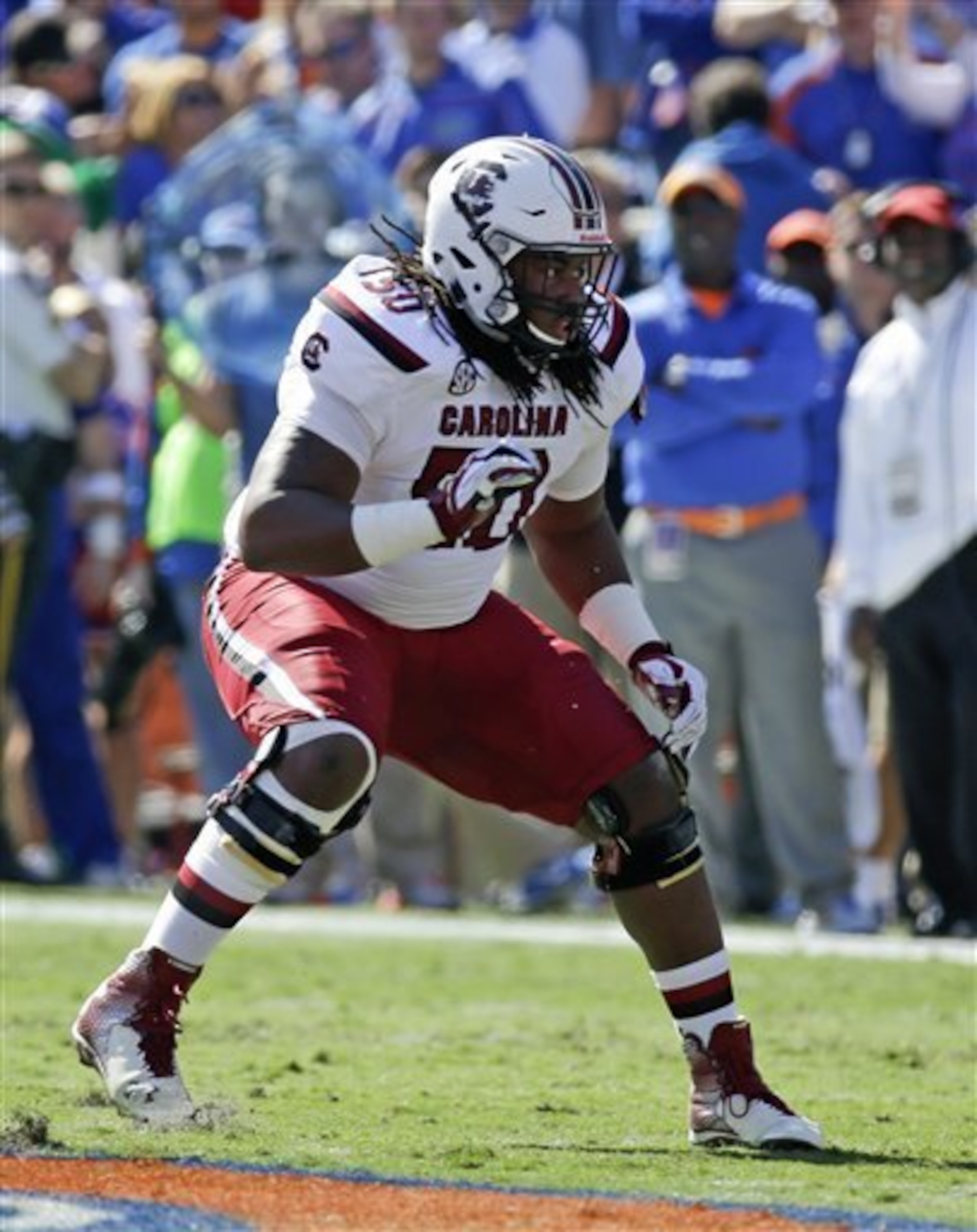
In 2015, you're going to hear a lot about Christian Hackenberg, the quarterback from Penn State. As a freshman, Hackenberg looked like an Andrew Luck type of prospect, but with Bill O'Brien leaving Happy Valley for the Houston Texans, the true talent of the Nittany Lions was exposed.
Hackenberg is still a great talent, but if you follow the 2016 draft, I'd be willing to bet that the Penn State offensive line will come up early and often, as the unit didn't give the quarterback room to breathe last season. That didn't stop the Tampa Bay Buccaneers from taking Donovan Smith, Penn State's left tackle, at the top of the second round, though.
Smith was an early declaration but had graduated, so he was allowed to participate at the Senior Bowl. He did well there, but not on tape, so teams had to guess which player he was. The logic of looking at his career as a collegiate player rather than his week in drills would seem like the strongest choice, though.
Instead of taking a mid- to low-end tackle prospect early because five went in the first round, the Buccaneers could have taken an interior offensive lineman, as their front needs help across the board. They did so later in the second round with the selection of Ali Marpet of Hobart, another Senior Bowl gem, but if they could have added A.J. Cann, a hybrid guard-center prospect from South Carolina, they could have given Jameis Winston some strength up front early.
Pressure can ruin quarterbacks; we've seen that with Derek Carr and Blaine Gabbert. Hackenberg looked to be getting their as a sophomore behind Smith. For the Buccaneers' sake, I hope Smith is what he was in Mobile, Alabama.
Tennessee Titans
31 of 32
In the fourth round, the Tennessee Titans took Jalston Fowler, a fullback from Alabama, with their draft choice. This shouldn't be a great surprise, as their running back coach, Sylvester Croom, was a former SEC head coach. The position is dying, though, and the assets of the franchise could have been better allocated.
In the third round, the team took Jeremiah Poutasi of Utah. Poutasi was a guard prospect, but what if the Titans had taken a guard with the Fowler selection, opening up the option for the team to take another position with a top-100 selection? It's not like fullbacks can't be found on the cheap. John Kuhn, one of the most consistent fullbacks in the NFL, is on a one-year deal worth the veteran minimum.
A name that was still available in the fourth round was Tre' Jackson, who helped lead Florida State to one of the best stretches in program history over the past two years, only losing to the Oregon Ducks in the national semifinal. Jackson is a threat in the run game and was probably the second-best offensive lineman on the squad during that stretch, just behind Cameron Erving, who was drafted in the first round by the Cleveland Browns.
Washington Redskins
32 of 32
Basically everyone in the draft media had a top-10 grade on Leonard Williams of USC. Williams first played 3-technique defensive tackle in the Trojans' Tampa 2 scheme before moving to a 5-technique defensive end role when the defense switched to a 3-4. The consensus was that he and Dante Fowler of Florida were ranked as the top two defenders in the class in some order.
Fowler was chosen third overall, the first non-quarterback drafted, but the Oakland Raiders selected receiver Amari Cooper and the Washington Redskins took offensive lineman Brandon Scherff before Williams' name was said in Chicago. Scherff, likely a guard, was the top interior offensive lineman drafted in at least three decades.
Did the Redskins think Scherff was the best guard prospect in the past 30 years? If not, it's hard to imagine the Iowa product being a top-five pick in a re-draft of the draft class in five to 10 years, meaning the selection will have low value on a relative scale.
Washington had just added Stephen Paea as a defensive end in the offseason, so there's some element of team building versus talent hoarding involved when discussing this selection, but that didn't stop the Jets, who took Williams while having two Pro Bowl-caliber defensive ends already on their roster. Sometimes there's just talent that is transcendent. If there is one player who's been talked about as a transcendent athlete in this class, it's Leonard Williams.
.jpg?w=2560 "Cowboys Packers Football")




.jpg?w=2560 "🚨 Week 8 AP Top 25 Poll")