There are 62 prospects expected to attend this year's NBA combine, which will take place in Chicago from May 12-17.
However, only 36 of those names will be participating in basketball-related activity. That should consist of everything from ball-handling and shooting drills to actual five-on-five competition.
Those 36, along with the another 23 projected first-round prospects, will undergo physicals, take measurements and perform in athletic testing.
The gym is traditionally loaded with NBA scouts, executives and high-ranking decision-makers.
Make sure to keep an eye on the following names and storylines heading into the predraft process' official kickoff event.
The No-Shows and Semi-Participants
1 of 11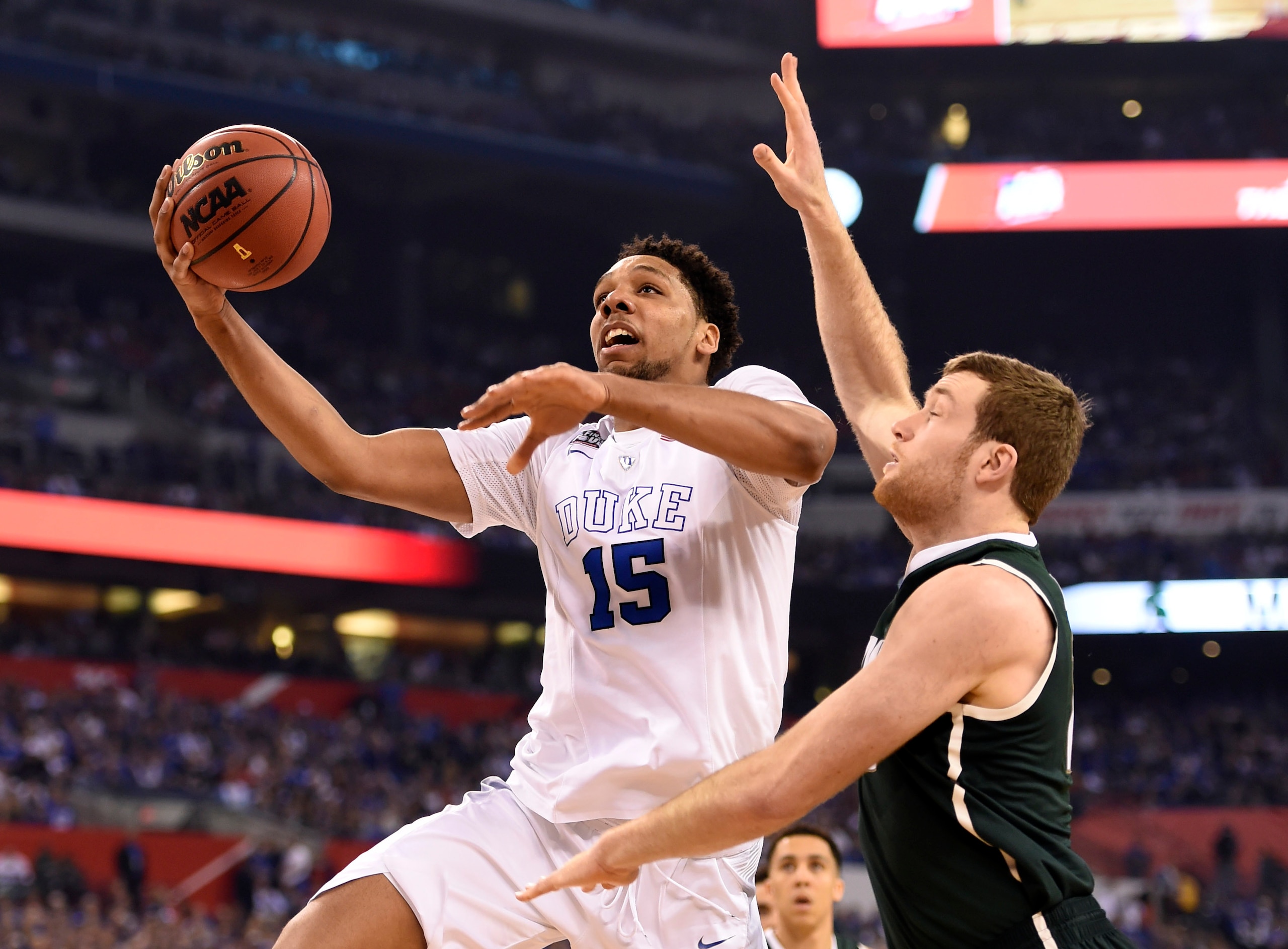
We've reached the point where any projected first-round prospect is being advised to sit out basketball-related activities at the combine. Agents just fear their clients have more to lose than gain by participating.
Some of the top prospects won't even show up at all. This year, that list includes Duke's Jahlil Okafor and Kentucky's Karl-Anthony Towns, as well as lottery-bound international players Kristaps Porzingis (Latvia), Mario Hezonja (Croatia) and Emmanuel Mudiay (China).
There are 23 other prospects (projected first-rounders) who will just be there for the medical and physical portion. They'll get measured and go through various drills to test their vertical leap, speed, lateral quickness, reaction time and strength.
According to ESPN NBA Insider Chad Ford, those expected to participate in the medical, physical and athletic testing only include:
Cliff Alexander, Kansas, Freshman
Justin Anderson, Virginia, Junior, SF
Devin Booker, Kentucky, Freshman, SG
Willie Cauley-Stein, Kentucky, Junior, C
Sam Dekker, Wisconsin, Junior, SF
Montrezl Harrell, Louisville, Junior, PF
Rondae Hollis-Jefferson, Arizona, Sophomore, SF
R.J. Hunter, Georgia State, Junior, SG
Stanley Johnson, Arizona, Freshman, SF
Frank Kaminsky, Wisconsin, Senior, PF/C
Tyus Jones, Duke, Freshman, PG
Kevon Looney, UCLA, Freshman, PF
Trey Lyles, Kentucky, Freshman, PF
Chris McCullough, Syracuse, Freshman, PF
Jarell Martin, LSU, Sophomore, PF
Cameron Payne, Murray State, Sophomore, PG
Bobby Portis, Arkansas, Sophomore, PF
D'Angelo Russell, Ohio State, Freshman, G
Kelly Oubre, Kansas, Freshman, SF
Myles Turner, Texas, Freshman, C
Justise Winslow, Duke, Freshman, SF
Christian Wood, UNLV, Sophomore, PF
Rashad Vaughn, UNLV, Freshman, SG
Delon Wright, Utah, Senior
Five-on-Five Scrimmaging
2 of 11
For the first time since 2008, NBA evaluators will actually get the chance to see the prospects play five-on-five.
Unfortunately, there won't be any high-profile names participating. The games will consist of mostly second-rounders fighting for second-round position.
Those likely to benefit most from five-on-fives will be the fringe prospects just hoping to get drafted. Competitive play actually gives them a chance to stand out and make an impression on general managers likely seeing them live for the very first time.
According to ESPN NBA Insider Chad Ford, the following prospects will be divided into four teams:
Brandon Ashley, Arizona, Junior, PF
Ryan Boatright, Connecticut, Senior, PG
Anthony Brown, Stanford, Senior, SF
Rakeem Christmas, Syracuse, Senior, PF/C
Pat Connaughton, Notre Dame, Senior, SG
Quinn Cook, Duke, Senior, PG
Branden Dawson, Michigan State, Senior, SF
George de Paula, Brazil, 1996, PG
Michael Frazier II, Florida, Junior, SG
Olivier Hanlan, Boston College, Junior, PG/SG
Andrew Harrison, Kentucky, Sophomore, PG
Aaron Harrison, Kentucky, Sophomore, SG
Tyler Harvey, Eastern Washington, Sophomore, SG
Corey Hawkins, UC Davis, Senior, G
Jonathan Holmes, Texas, Senior, SF
Richaun Holmes, Bowling Green, Senior, PF
Vince Hunter, UTEP, Senior, PF
Treveon Graham, VCU, Senior, SG/SF
Mouhammadou Jaiteh, France, 1994, C
Dakari Johnson, Kentucky, Sophomore, C
Jordan Mickey, LSU, Sophomore, PF
Larry Nance, New Mexico, Senior, PF
Terran Petteway, Nebraska, Junior, SF
Norman Powell, UCLA, Senior, SG
Michael Qualls, Arkansas, Junior, SG
Chasson Randle, Stanford, Senior, G
Terry Rozier, Louisville, Sophomore, G
Keifer Sykes, Green Bay, Senior, PG
J.P. Tokoto, North Carolina, Junior, SG
TaShawn Thomas, Oklahoma, Senior, PF
Marcus Thornton, Williams & Mary, Senior, SG
Robert Upshaw, Washington, 1994, C
Chris Walker, Florida, Sophomore, PF/C
Dez Wells, Maryland, Senior, SG
Aaron White, Iowa, Senior, PF
Alan Williams, UCSB, Senior, PF
Joseph Young, Oregon, Senior, SG
Featured Prospect: Robert Upshaw, Former Washington Center, 7'0", 1994
3 of 11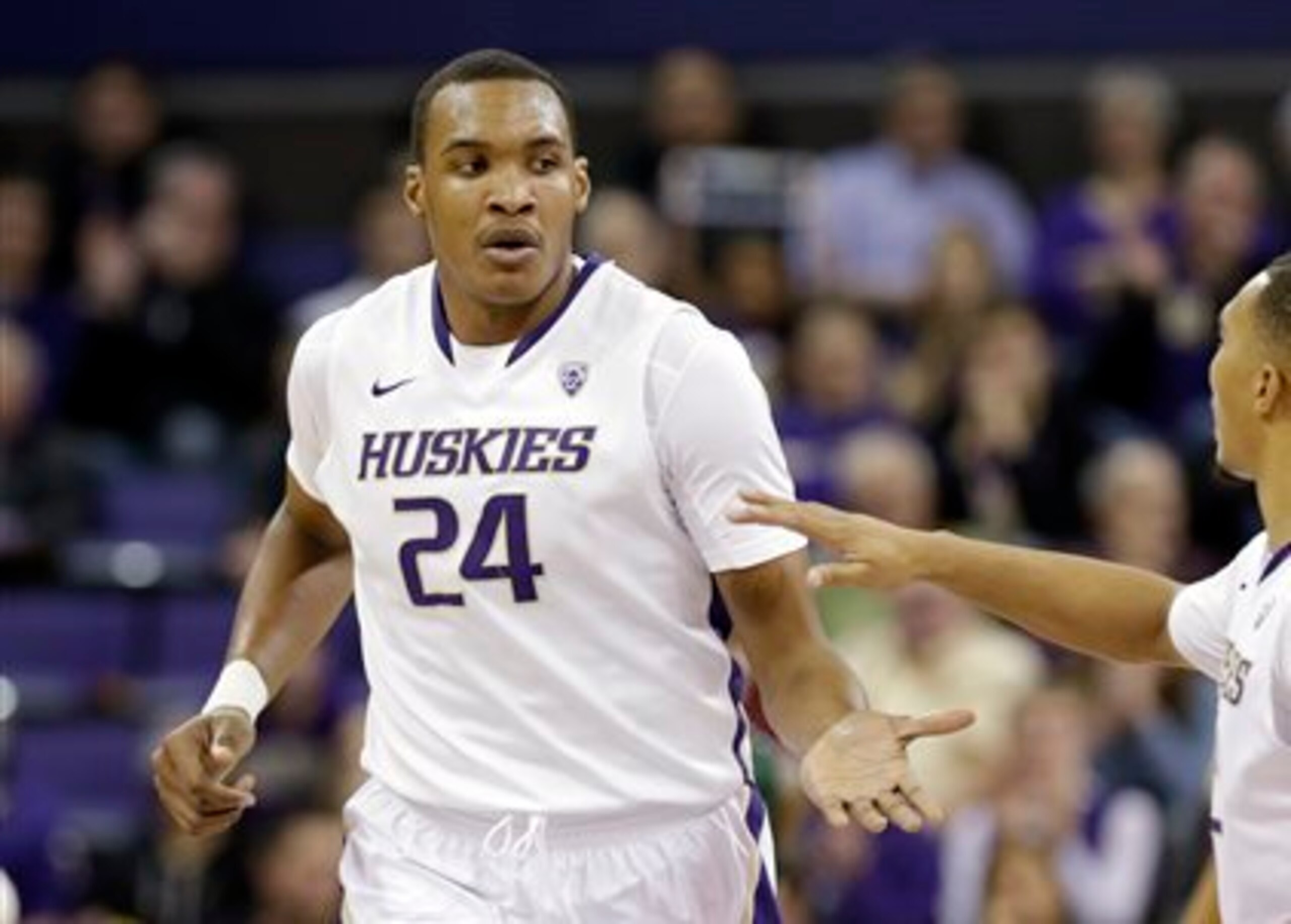
Arguably the top prospect expected to play five-on-five, Robert Upshaw may also be the most controversial.
In January, he was dismissed from Washington, just two years after he was dismissed from Fresno State. According to ESPN Insider Jeff Goodman, Upshaw "failed multiple drug tests while at both schools."
But it's just impossible to ignore Upshaw's play prior to leaving the Huskies in January, as well as the value his particular set of strengths could hold in the pros.
He was leading the county in shot blocking, while playing just 24.9 minutes per game. He swatted an astounding 7.2 shots per 40 minutes and registered a ridiculous 17.4 percent block percentage, per Sports-Reference.com.
Upshaw ended his college career by going for 13 points, nine boards and six blocks against a tough Utah team and projected 2016 lottery pick Jakob Poeltl.
Interviews will obviously be huge for Upshaw at the combine. He'll somehow have to explain getting kicked out of separate programs.
But there is always at least one general manager out there willing (or desperate enough) to overlook character concerns for talent.
Five-on-fives will be a great chance for Upshaw to separate himself from the mostly second-round prospects he'll be playing against.
He'll need to say the right things when questioned, but with a strong showing in Chicago both on and off the floor, Upshaw will have a serious shot at finding the first round.



The Athletic-Test Heroes
4 of 11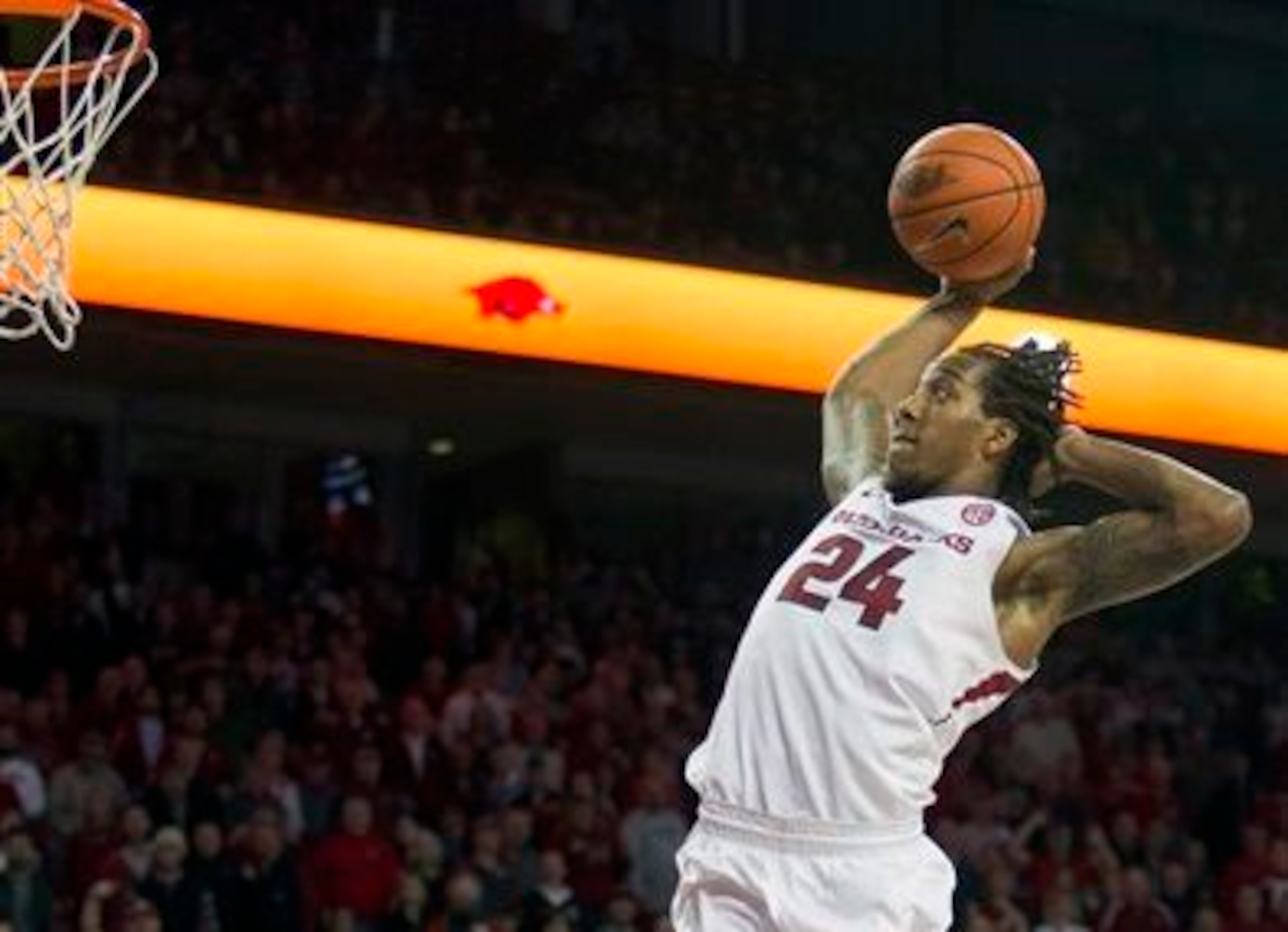
Every year, there are a few prospects who generate buzz during athletic tests. Last year, Aaron Gordon and Zach LaVine earned everyone's attention during the vertical leaps and foot drills.
Expect this year's athletic-test heroes to include:
Willie Cauley-Stein, Kentucky, 7'0", C, Junior
If Cauley-Stein participates in athletic testing, it wouldn't be shocking to see him approach a few big-man combine records. You just don't see 7-footers who can jump as high and move as quick laterally as Cauley-Stein.
Norman Powell, UCLA, 6'4", SG, Senior
Powell is one of the best transition athletes and defenders in the country. He'll be a must-watch prospect during max vertical leaps and the shuttle run.
Michael Qualls, Arkansas, 6'6", SG, Junior
You can fill up a 10-minute highlight mixtape just with his dunks alone from the past three seasons. Look for Qualls to easily clear 40 inches vertically and draw a crowd in the process.
Keifer Sykes, Green Bay, 6'0", PG, Senior
Sykes can fly. Rumor has it, according to Adam Doster of Grantland, that Sykes has a 45-inch vertical.
The vertical test at the combine may actually be more important for Sykes than most. It's a chance for him to show scouts he makes up for height with undeniable springs and explosiveness.
The Shooters
5 of 11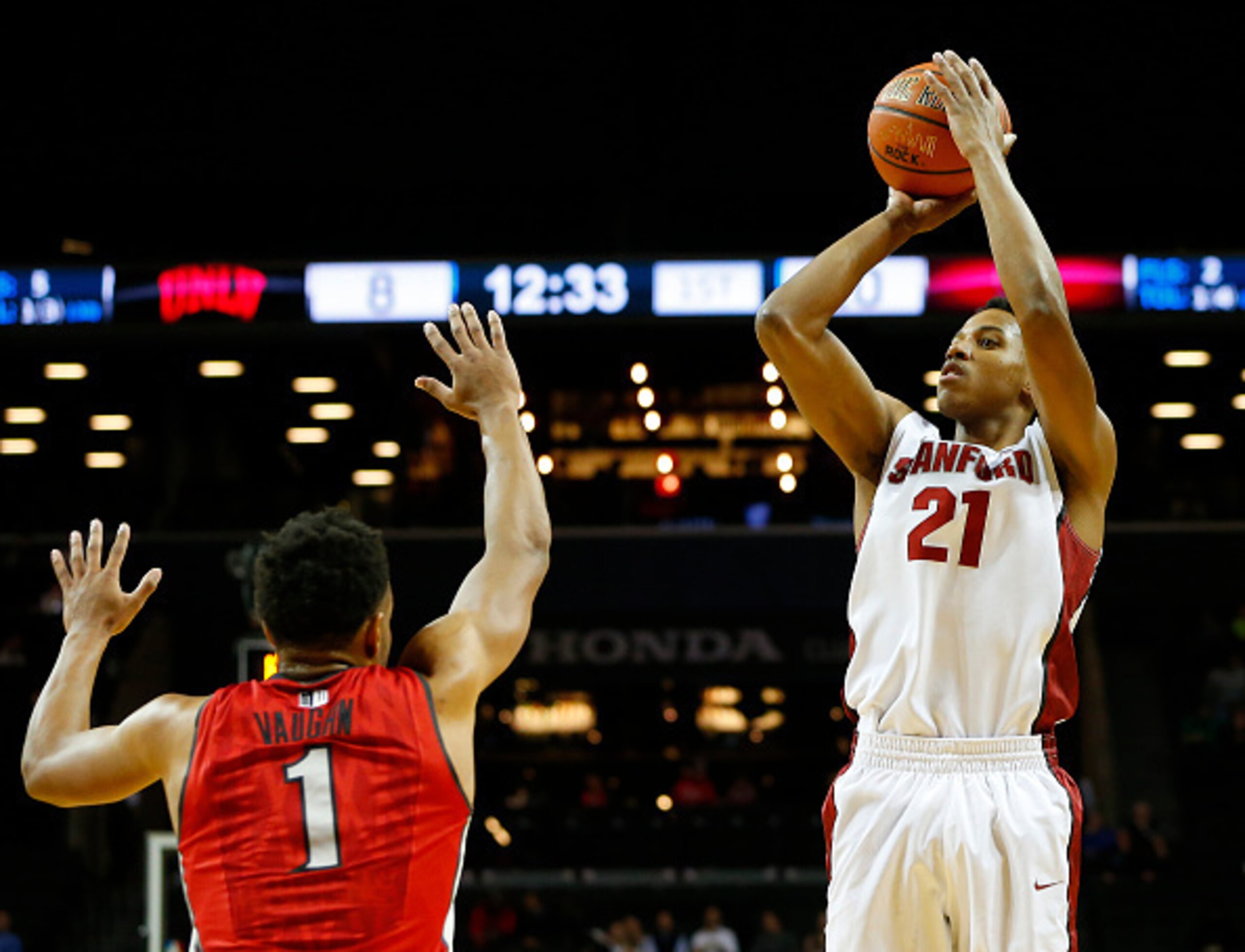
Shooters are like the new big men. When in doubt, the rule has evolved into: draft a player who can spread the floor and knock down open shots.
There will be a handful of potential specialists auditioning their jumpers in front of NBA evaluators. Players traditionally run though drills that include spot-ups and pull-ups.
Look for the following snipers to try and establish themselves as draft options based on their dependable, convincing shooting strokes:
Anthony Brown, Stanford, 6'6", SF, Senior
Brown could be last year's C.J. Wilcox—a veteran wing who sneaks into the back of the first round, thanks to that reliable, promising jumper. Brown hit 79 threes at a 44.1 percent clip after making 45.3 percent of his threes as a junior.
Corey Hawkins, UC Davis, 6'3", G, Senior
Hawkins put up threes in volume without ever seeming to miss. He hit 2.9 threes per game and still managed to shoot 48.8 percent from downtown. While his 20.9 points per game are obviously attractive, it's Hawkins' shooting stroke that earned him an invite to the combine.
Michael Frazier II, Florida, 6'4", SG Senior
At 6'4", Frazier must lean on his jumper to carry him into the league. He's made 227 threes and shot 43.2 percent from downtown in three seasons at Florida. His mechanics are textbook. If a general manager can get over the inch or two he lacks in height, we'll likely see Frazier go second round.
Pat Connaughton, Notre Dame, 6'5", SG, Senior
Connaughton will be at the combine for one reason. He's a solid athlete, a high-IQ player and a 42.3 percent shooter who knocked in 2.4 triples per game. Connaughton will have the chance to catch someone's eye as a potential NBA three-point specialist.
Marcus Thornton, William & Mary, 6'4", SG, Senior
Thornton hit 102 threes at a 40.2 percent clip this past season, marking the third year in a row he's made at least 90. Those numbers are just impossible to ignore, regardless of who they came against.
Can Florida's Chris Walker Make Any Noise?
6 of 11
Chris Walker entered his freshman year in 2013-14 as a McDonald's All-American and likely one-and-done first-round pick.
But eligibility issues would cost Walker the first 21 games of his career at Florida. Rust and a lack of feel would limit him the rest of his freshman season, as he'd only average 4.8 minutes over the Gator's final 18 games.
So Walker would return in 2014-15 with something to prove. Only he averaged just 4.7 points as a sophomore, never scoring more than 13, while shooting 38.6 percent from the line.
And here he is now—entering the draft having accomplished very little through two years in college. His ball skills and jumper remain extremely limited.
However, at 6'10" with above-the-rim bounce, Walker's size and athleticism could still be attractive to teams willing to wait on his development.
The physical testing portion of the combine could be a good chance for Walker to remind scouts as to what fueled all the hype surrounding him out of high school. But five-on-fives will also be a big opportunity for Walker, who's shown very little in terms of what he can bring to a set offense and defense.
Watch Out for Tyler Harvey in Five-on-Fives
7 of 11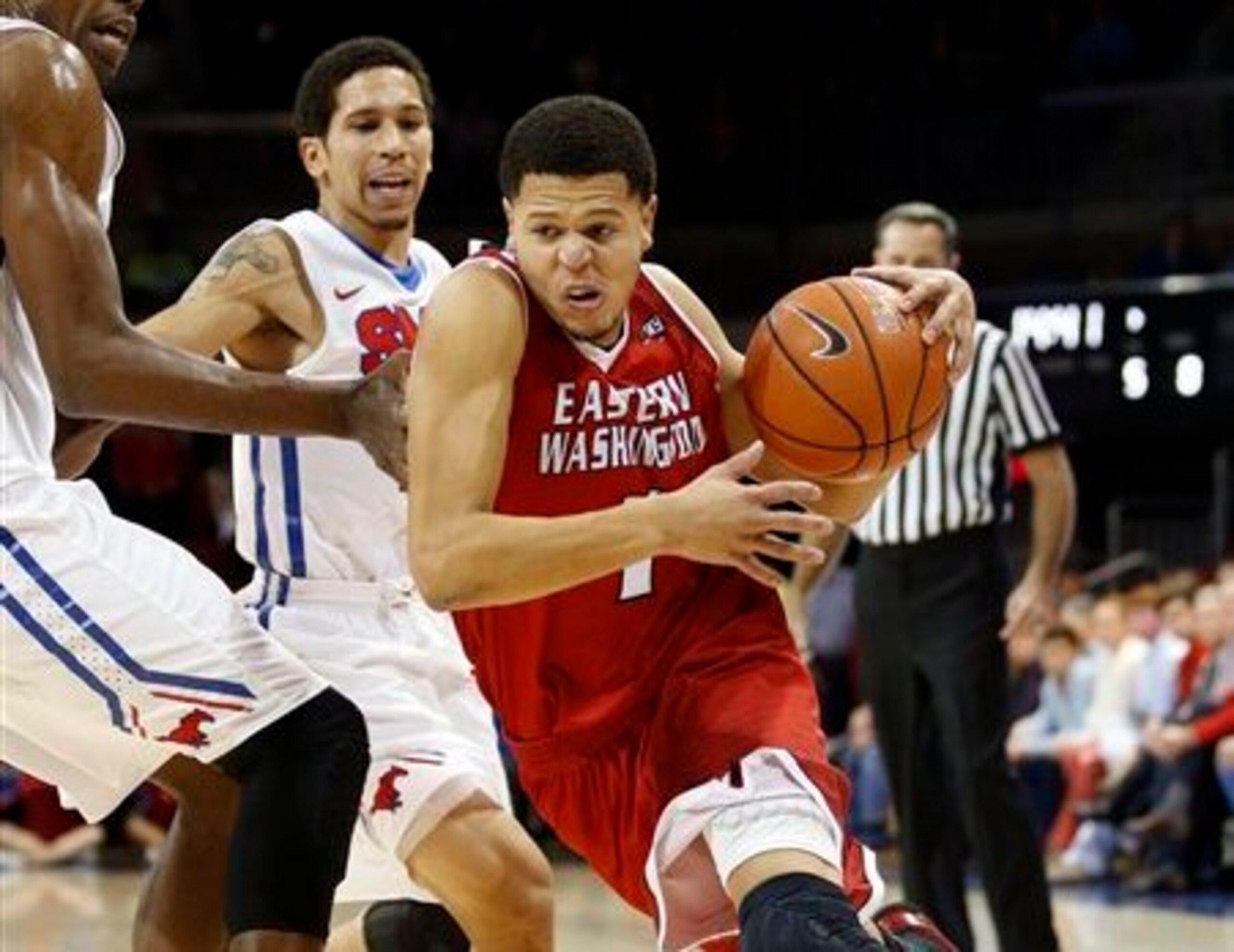
Tyler Harvey led the country in scoring this season with 23.1 points per game. He put up 21.8 a night as a freshman, so it's obvious the kid has a knack for putting the ball in the hole.
Only he's done so against mostly Big Sky competition. At the combine, he'll be going up against power-conference guards and rim protectors in front of general managers who probably didn't spend much time traveling to Eastern Washington.
Taking over five-on-fives would certainly be a good look for Harvey. It's worth noting that as a sophomore, he did put up 24 points against SMU, 25 against Indiana, 21 against Washington (with Robert Upshaw), 31 against California and 27 against Georgetown in the NCAA tournament.
Harvey is a 2-guard, but at 6'4", he's a tad undersized for a good—not great—athlete. He projects as a perimeter-scoring specialist, having led the nation with 128 three-pointers, while shooting a terrific 43.3 percent from downtown.
From pull-ups, jab steps and step-backs to deep spot-ups, Harvey can create and make shots from all over the floor.
Of all the prospects participating in basketball-related activities at the combine, Harvey may have as good of chance as anyone at propelling himself into the late-first-round conversation.
The Late Rise of Bowling Green's Richaun Holmes
8 of 11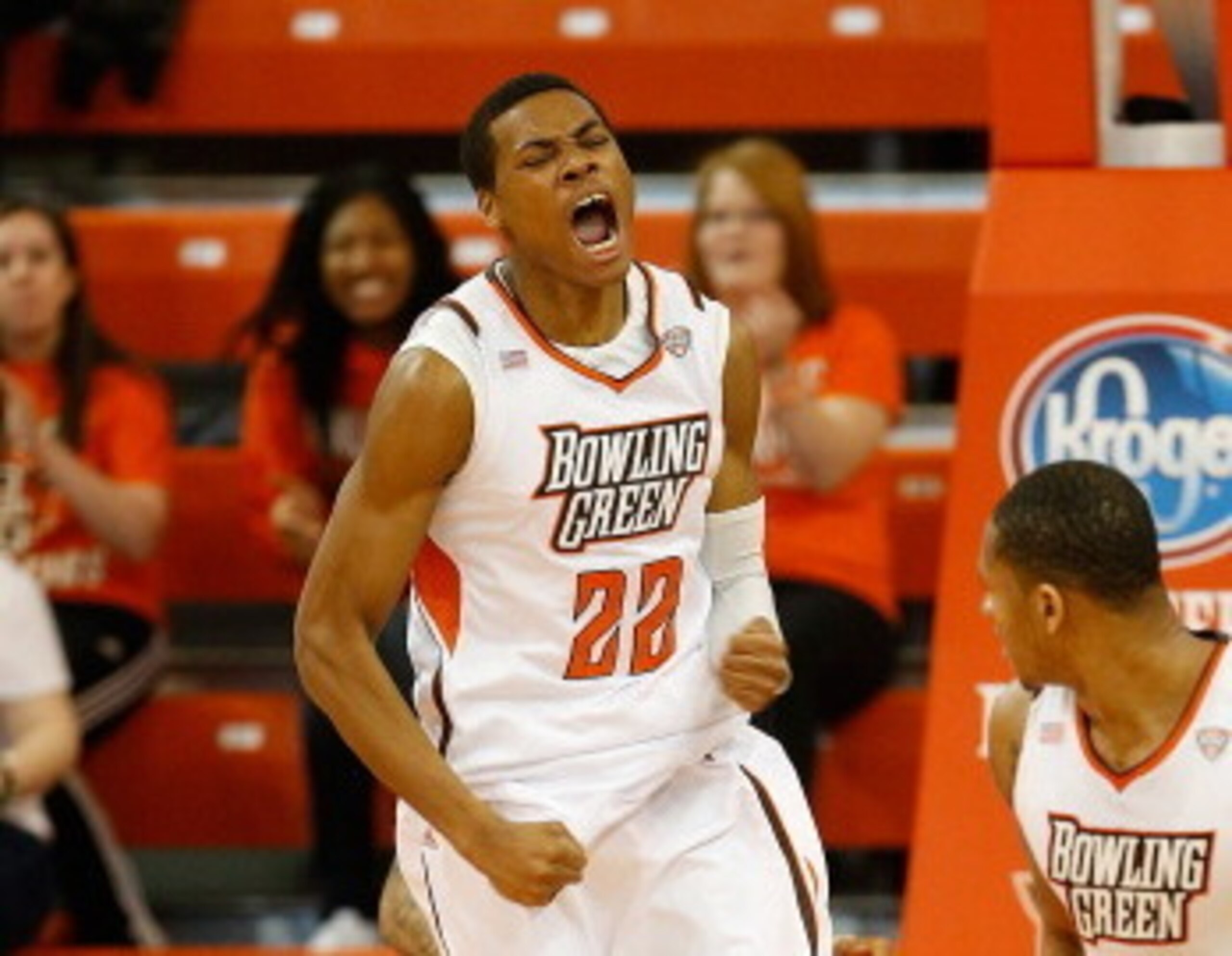
You didn't hear Richaun Holmes' name much this past season. But Holmes generated buzz following last month's Portsmouth Invitational, where he averaged 14.7 points, 7.7 rebounds and 3.7 blocks.
And the breakout likely played a role in his invite to Chicago.
Holmes, a projected power forward, measured 6'8½" with a strong 7'1½" wingspan. He's an above-average athlete who can face up and attack. And he shot an impressive 18 of 43 from behind the arc this past season.
His quickness and length also translated on defense, where he blocked 2.7 shots in only 28.8 minutes per game.
Having not faced one ranked opponent or power-conference school all season, scouts will likely be locked into Holmes during five-on-fives. Another strong performance could solidify his spot in this year's second round.
The Harrisons
9 of 11
Andrew and Aaron Harrison's NBA future has been debated for two years now. They each entered their freshman seasons as projected first-round picks. And despite reaching back-to-back Final Fours, both have seen their stock fall closer and closer to irrelevance.
In defense of the Harrisons, they weren't exactly in a great position to make a convincing pitch. Both played fewer than 26 minutes a game in a lineup loaded with weapons.
Five-on-fives at the combine will give them a chance to play with a little more freedom.
At this stage, it looks like Andrew has to have the brighter draft-night outlook. He's still a 6'6" point guard who can attack, pass and knock down jumpers. Andrew even raised his assist percentage and improved his turnover percentage as a sophomore. He should be locked into this year's second round, regardless of how he performs at the combine.
None of Aaron's strengths have really stood out for a projected 2-guard. At 6'6", he has standard size with below-average athleticism, minimal playmaking ability (1.4 assists per game) and an erratic shooting stroke (31.6 percent from three).
If Aaron gets drafted, it's going to be for his shot-making skills. He's been inconsistent, but he's capable of knocking down jumpers with range. It wouldn't hurt him to catch fire during shooting drills and five-on-fives in Chicago. He could be in jeopardy of going undrafted.
Will Louisville's Terry Rozier Be Able to Sell Himself as a Point Guard?
10 of 11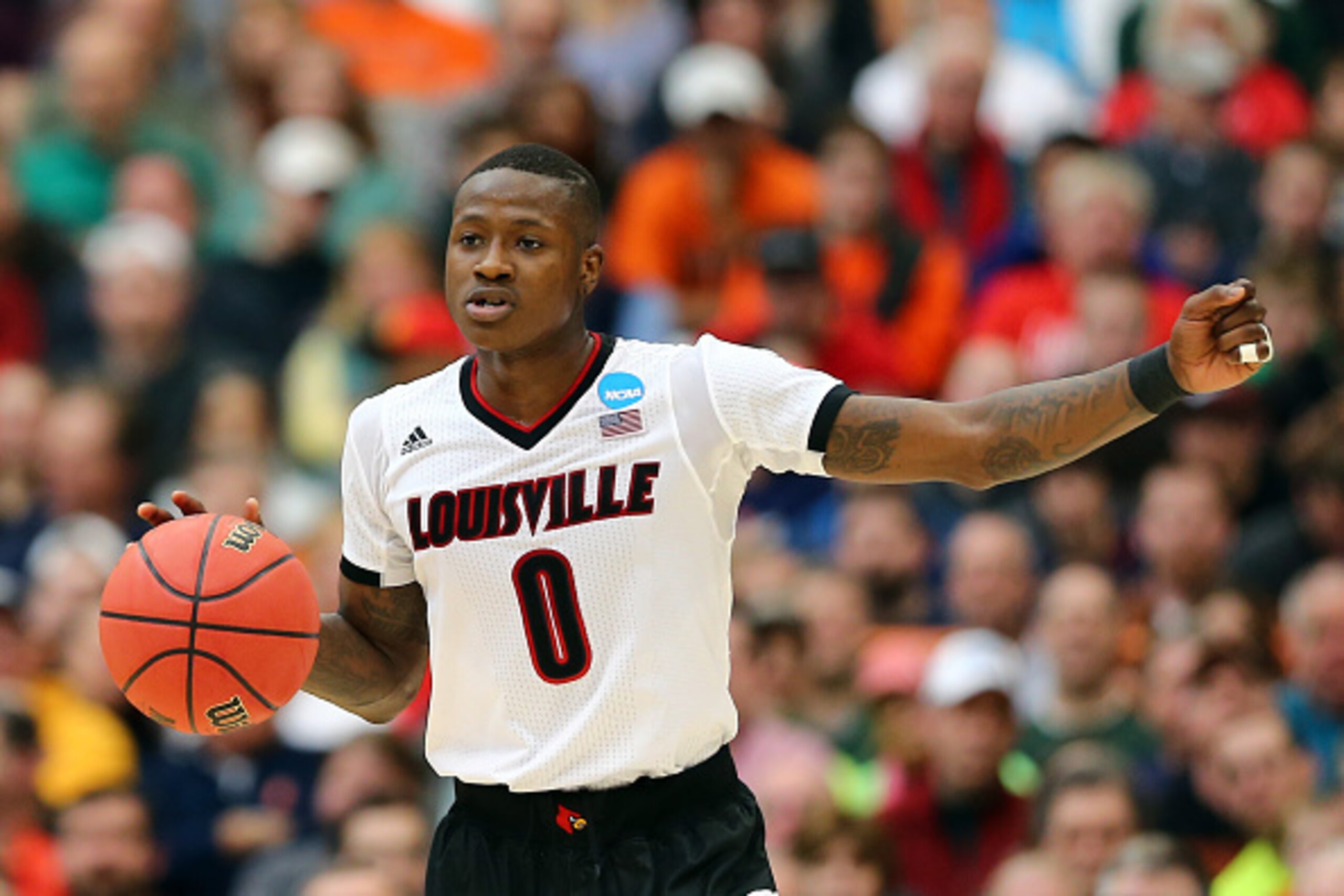
Terry Rozier is a first-round talent with zero first-round security. That's because he played in a role that didn't quite allow him to showcase what teams will be looking for: point guard instincts and playmaking ability.
Rozier finished his sophomore year with a shaky 3-2 assist-to-turnover ratio while playing mostly the 2 alongside Chris Jones or Quentin Snider. And though he averaged 17.1 points per game, general managers may have a tough time getting excited about a 6'1" shoot-first scorer who only made 30.6 percent of his threes.
Rozier should impress during the athletic testing portion of the combine. But his big test will come in five-on-fives, where he could have the chance to prove he can create for others, as well as get his own as a scorer.
If he can convince general managers he's capable of playing point guard in the future, it will improve his odds dramatically of finding the first round.
The Internationals
11 of 11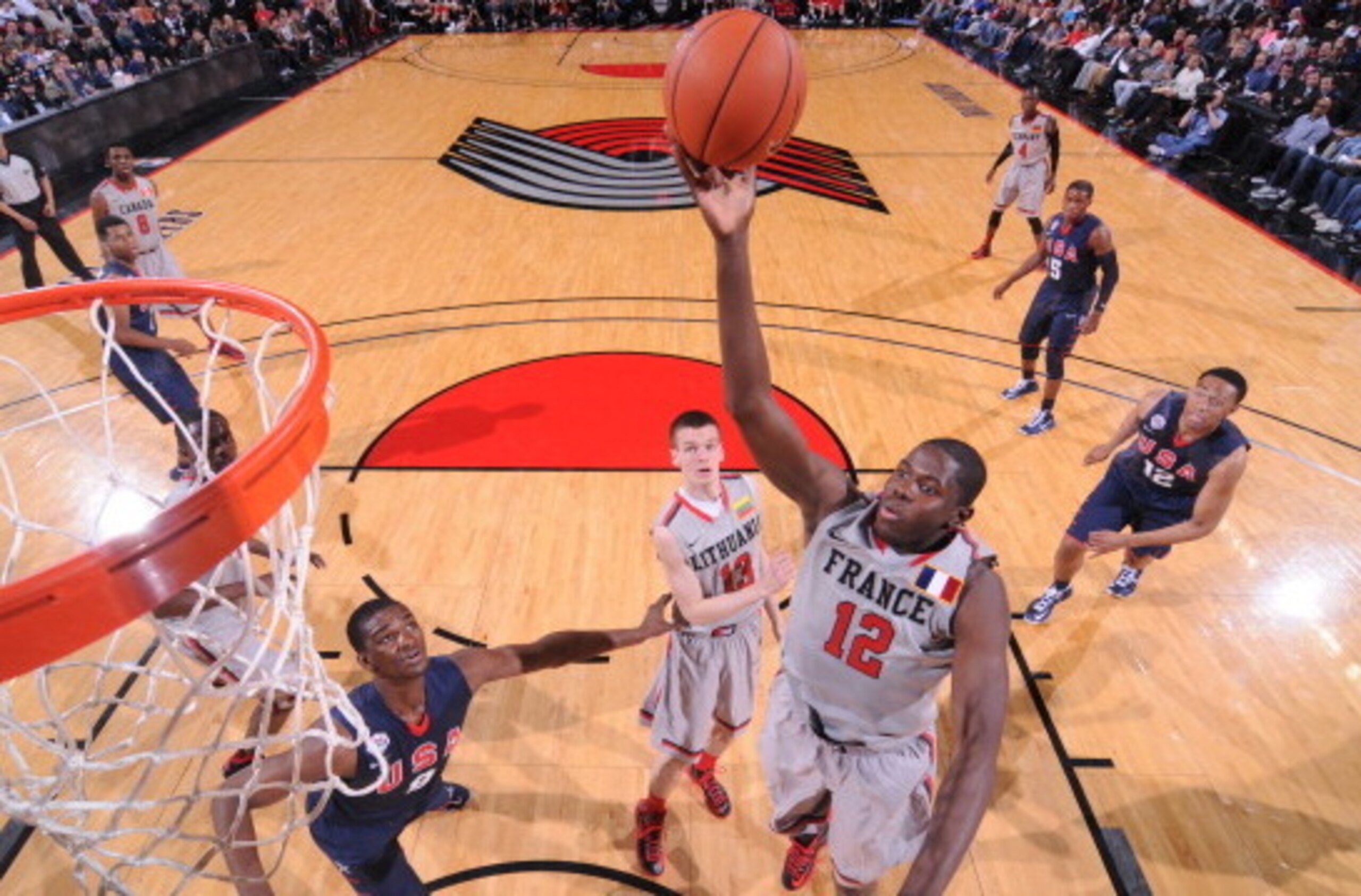
It's always interesting when international prospects attend the combine. Scouts get a chance to see how they stack up against NCAA prospects their own age.
This year, the name to watch is George de Paula, who played mostly in Brazil's developmental league before earning an invite to April's Nike Hoop Summit.
De Paula has eye-opening 6'6" size and monster length for a point guard. Like Giannis Antetokounmpo and Bruno Caboclo were, he's completely raw entering the draft.
But there is obvious upside tied to a ball-handler with de Paula's can't-miss physical tools. A standout performance in Chicago could potentially trigger a late-first-round team to consider drafting-and-stashing.
The other name to watch is French big man Mouhammadou Jaiteh, who's been on the radar for the past few years and is coming off a strong season in Pro A France.
At 6'11" with a 7'4" wingspan and a toned upper body, Jaiteh, 20 years old, projects as an interior specialist who protects the rim and cleans up around it.
He's likely more of a second-round option, though for teams picking in the late first looking to avoid paying rookie salary, the draft-and-stash approach could also work with Jaiteh.

.jpg?w=2560 "Raiders Could Start Mendoza")

.jpg?w=2560 "Rodgers Iced Out on Plane 💎")
.jpg?w=2560 "Packers Safety Slams Refs 🤬")
.jpg?w=2560 "🚨 Week 8 AP Top 25 Poll")