Nick Kyrgios' Evolution into a Unique Star Continues with Roger Federer Upset
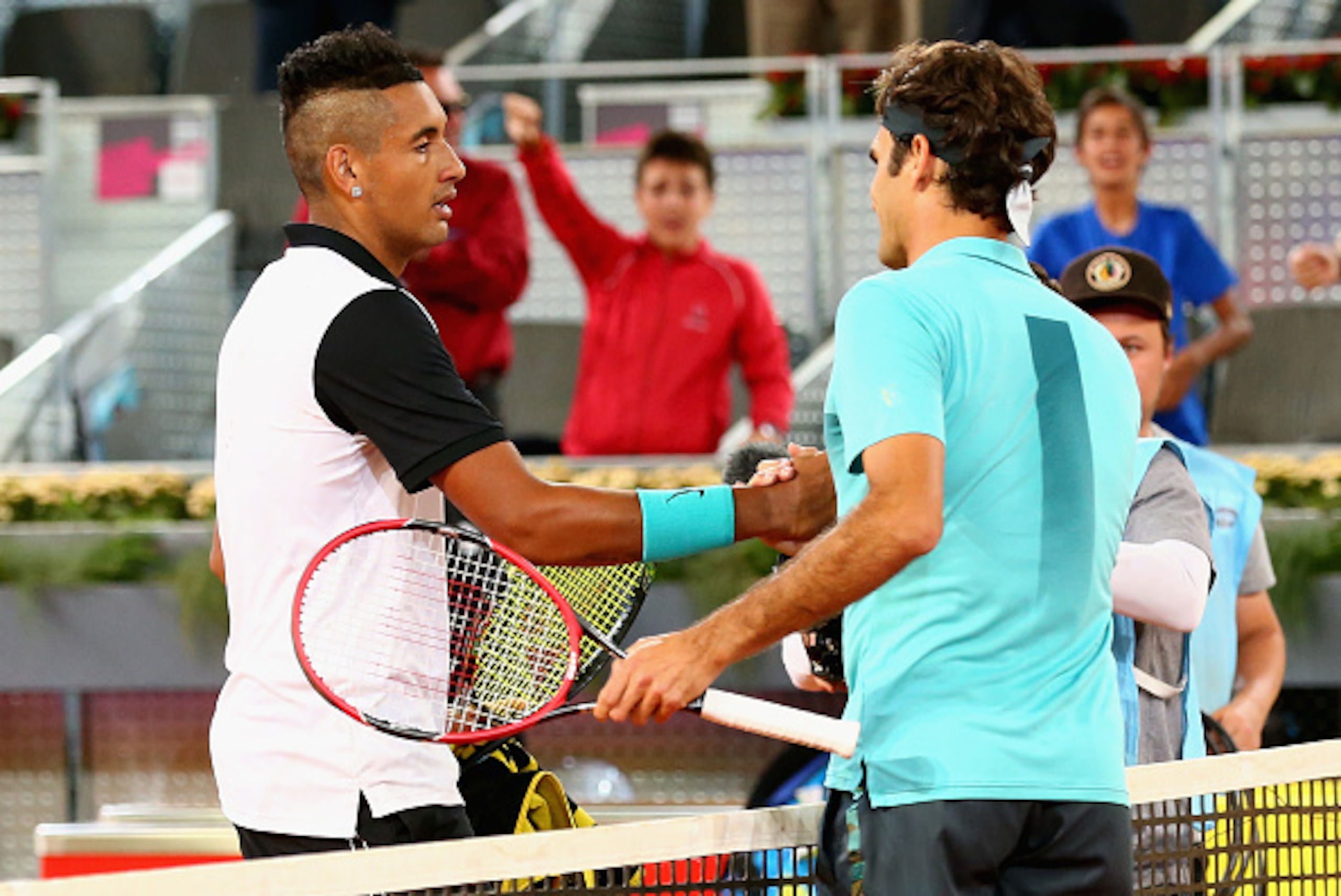
Nick Kyrgios shook up the 2015 Madrid Masters when he took two of three tiebreakers from No. 1 seed Roger Federer to win their second-round showdown.
He showed his big-match capability after he survived two match points and a 14-12 third-set tiebreaker. He also showed that he is green, when he was outgunned a day later by big-serving John Isner.
There’s a lot of buzz about the 20-year-old Australian, even though his best tournament result to date was his recent loss to Richard Gasquet in the final at Portugal’s level-250 Estoril Open. Nevertheless, he’s evolving into a composite of stars from the past, but with his own unique brand.

.jpg?w=2560 "Rams Raiders Football")

Last summer, Brian Phillips wrote a profile about Kyrgios’ combustibility for Grantland, calling him “a force of nature, a wild, thrilling talent who has yet to be dammed or tamed or harnessed.
Following his victory over Federer, Peter Bodo of ESPN opined that Kyrgios reminded him a little bit of John McEnroe with his ability to channel negative energy into better play.
All of this is interesting food for the appetites of insatiable tennis fans looking for the next big thing on the ATP because it’s been nearly a decade since Andy Murray and Novak Djokovic drafted on Rafael Nadal’s immediate and sensational success.
But the truth is we don’t know if Kyrgios will eventually become a great champion.
Big Battles and Winning the War
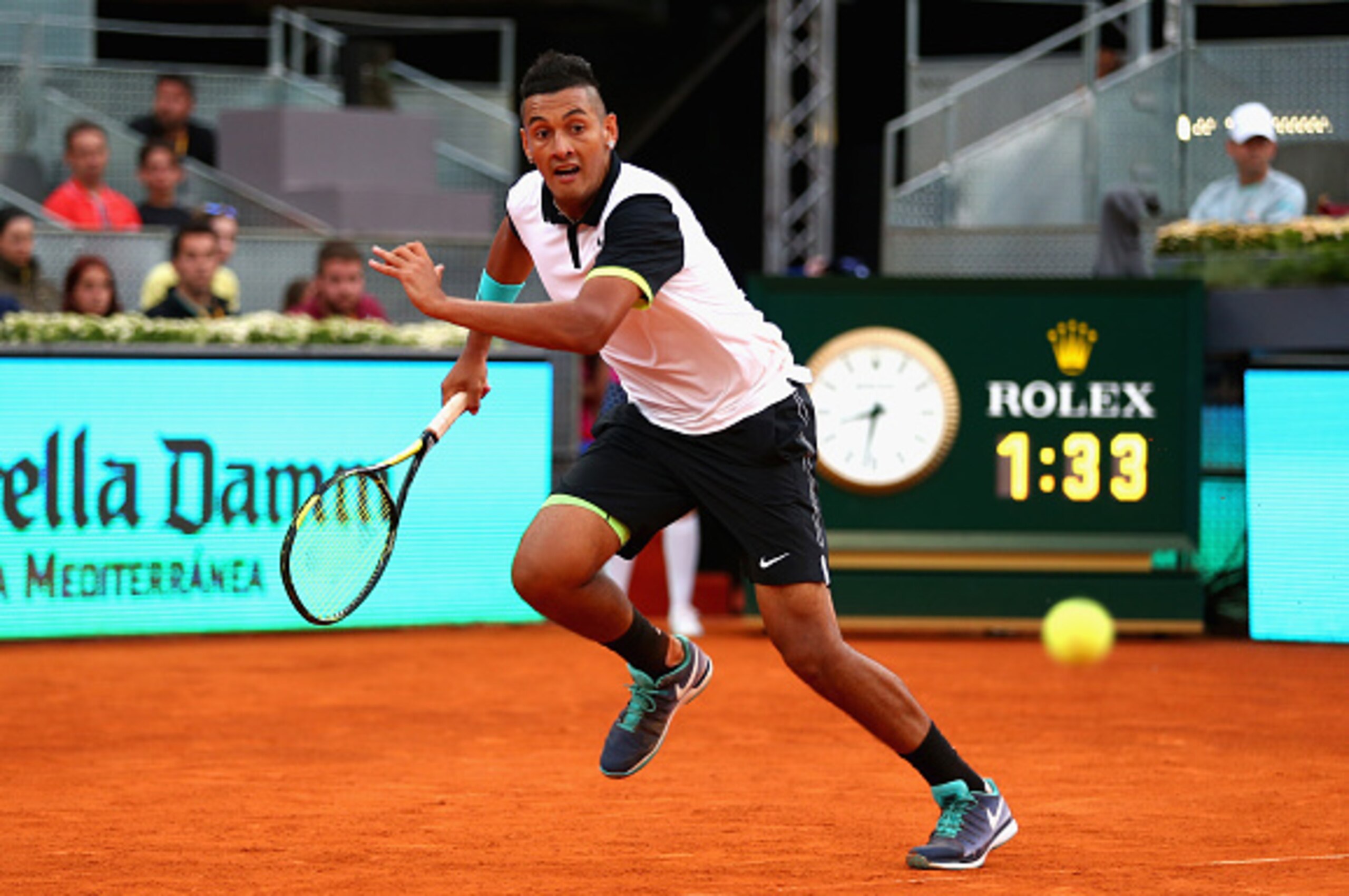
Kyrgios has proved he can beat the best players in the game. He now has two victories and no defeats against the two best players of the 21st century, Rafael Nadal and Federer, defeating the former at legendary Wimbledon and the latter on the clay Madrid.
By contrast, Bulgarian star Grigor Dimitrov will turn 24 years old before the French Open starts on May 24. He is 0-6 against Nadal and 0-3 against Federer. He’s been a shade inside the top 10 but has done nothing to show he can beat the best players on the biggest stages for titles that will be remembered.
So score one for Kyrgios. There’s something about the way he competed against the two legends, playing the confident challenger with boundless energy. He’s war-like Sparta flexing his strength at legendary, innovative Athens, looking to take the lead in a classical play for world dominance.
Winning battles is not enough. Sparta ultimately defeated Athens in the Peloponnesian War but never achieved the lasting contributions and acclaim of the Greek capital. If Kyrgios is indeed to supplant Federer, Nadal and Djokovic, he will need to create his own kind of persistent ingenuity, epitomized by Ancient Rome.
Meanwhile, Kyrgios is still only ready to move up to No. 30 in the ATP Rankings on Monday. He’s scored a few big victories, but a legacy requires many more dimensions and consistent results. The rankings reflect a year of results. It will take a lot of winning in small matched and big matches for a very long time. How soon he will make it to the top, if ever, is anyone’s guess.
Myth to Legend?
Much of Kyrgios’ early success is due to his huge serve and powerful forehand but especially because his seasoned opponents have not played him enough to poke at his patterns, tendencies and weaknesses.
He can also be unpredictably brilliant at times and very cool under pressure with that serve. Federer converted just 18 of 85 service returns, saying to ATP World Tour:
"My problem was I couldn't return his first serve. [It] was just a horrible performance on the return. As the match went on it got so bad that I just couldn't get into decent positions on the return, so it made it very difficult to get any sort of rhythm after that.
But credit to him for serving well and keep doing what he was doing. But I'm very disappointed by that. That's what cost me the match, in my opinion.
"
Perhaps overlooking irony, Federer lamented his own frustrations at another's big serving, which has traditionally been a huge edge for him against Nadal and Djokovic. Yet the Swiss Maestro remains the model of all-court abilities for the aspiring Kyrgios.
Right now, Kyrgios is flexing his muscles with unflappable serving not unlike a young Pete Sampras. So much of Sampras’ greatness came under pressure and with perhaps the greatest second serve ever. Kyrgios, like Sampras, possesses marvelous instincts and smooth athleticism, although he’s shown little of Sampras’ stoic demeanor and coolness.
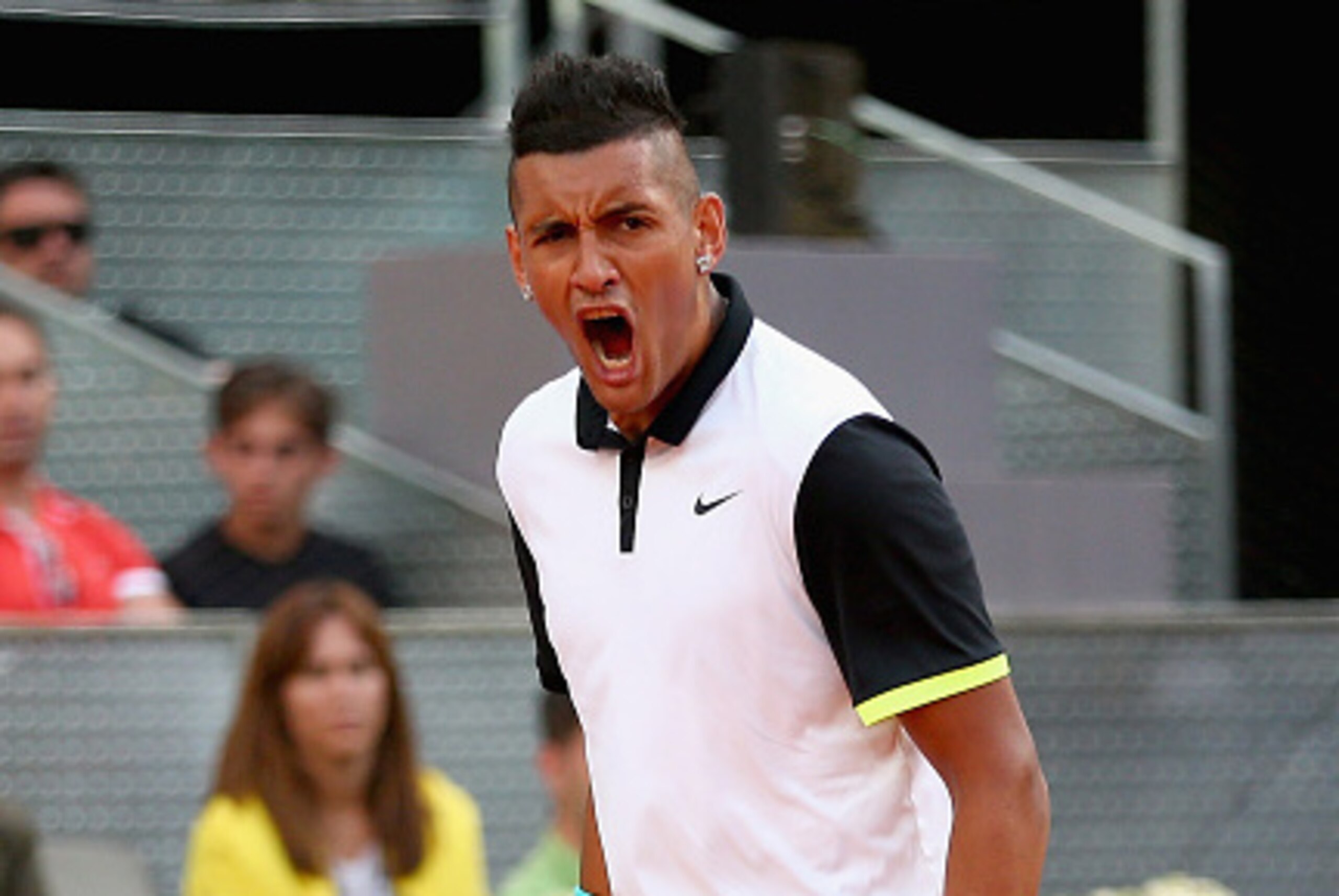
In truth, Kyrgios mutters and spits fire like a young Boris Becker, but this outward emotion seems to fuel his success. He’s unafraid to throw his entire package at the top players when he has nothing to lose, but how will he do if he is expected to reach the final stages of every tournament? Will he thrive or erupt?
We can look at the paths of past stars as indicators that will likely mean very little when Kyrgios carves out his own destiny. For instance, Federer was known to be more temperamental when he was working his way up to Wimbledon in 2003, but he gained greater composure through dominant winning and grace through tough losses.
The young Aussie’s forehand is a bit unpredictable—powerful and flat—similar to the way Ivan Lendl liked to clear the net by inches to blow it past more methodical baseliners. It’s beautiful when he reacts to the flow of the moment, letting thousands of hours of repetition and muscle memory deliver it safely.
But the forehand is also a loose cannon. He’s unlike Rafael Nadal, who could stay completely composed with his forehand spin and stay within the patient parameters of his game. Kyrgios frequently tries to blast shots when the percentages favor him to set up a more sure winner with just a few more shots or coerce an error out of his opponent.
Kyrgios’ backhand is very raw, but the reflexes and potential are there. Unlike Dimitrov’s defensive slice, which really has no teeth, Kyrgios has height to lift and blast his shots. He’s not too bothered by heavy topspin, but he often replies with self-inflicted short or misdirected shots.
Ongoing Trial to Be a Champion
The making of a champion is not so simple. People are praising Kyrgios for isolated wins and expecting much from his potential. He’s earned this, but that’s not easy to live with. He’s coming of age at a time of social media, Twitter and streamed matches from every tournament. He’s also aware of the media and his press in a world in which microwaves, Instagram and immediate results are often not fast enough.
Will he breathe, eat and love to work hard at the details? Will he develop his baseline skills and strategic attacks with purpose and adaptability? Will he live with the day-to-day focus that Federer, Nadal and Djokovic have shown for many years.
Not every great talent can handle the ups and downs of winning and losing on tour. Resilience can only be tested when it happens, and to this point, Kyrgios is merely cutting his teeth on a couple of big wins.
How will he handle the grind of being on the tour? Isner said that Kyrgios looked tired in their matchup, but young Nadal showed he could win up to four tournaments from mid-April to early June every year.
So far so good for Kyrgios. He is showing he can win the big points and keep his nerve as an up-and-comer. He is not going to be like icy Bjorn Borg or stoic Pistol Pete Sampras. He's not going to react like Nadal, who can lock in and raise his game when things are a struggle, but he might respond in a very different and just as effective manner.
He’s a fascinating talent, but it would be a stretch to expect him to win big in Rome or at the French Open. Maybe he’ll evolve right before our eyes to blast his way through Wimbledon or rock the concrete summer courts in America.
Give Kyrgios time to evolve into his own unique star.

.jpg?w=2560 "Steelers Saints Football")

.jpg?w=2560 "Packers Safety Slams Refs 🤬")
.jpg?w=2560 "🚨 Week 8 AP Top 25 Poll")