
10 NFL Rookies Drafted by the Wrong Team
A dream came true for 256 former college football players this past weekend, as each of them was selected in the 2015 NFL draft. Some of those players, however, might have been better off landing with teams who have greater needs at their positions and/or have schemes that better match their playing styles.
The players included on this list were not necessarily the wrong selections by the teams that made them. In some cases, these players qualified as the best talents available on the board and were drafted because of their value, which will likely prove to be a shrewd move in the long run.
As far as the opportunities each of these players will have to make an immediate impact as 2015 rookies, however, all of these draft picks could have ended up in better situations.
In order for these players to make significant contributions to their new franchises from the get-go, they will have to work extra hard to prove their worth. Their teams will either have to find creative ways to get them involved or kick players in front of them on the depth chart to the curb.
Andrus Peat, OT, New Orleans Saints
1 of 10
The New Orleans Saints’ selection of Andrus Peat, one of the best offensive tackle prospects in the 2015 NFL draft, was praised by many because it showed the team’s commitment to protecting 36-year-old quarterback Drew Brees. Even Bleacher Report’s Matt Miller, who felt the pick was a slight reach at No. 13 overall, said the decision to draft Peat was “very smart” for that reason.
What makes the Saints’ decision to draft Peat somewhat questionable—and what could make going to New Orleans a less-than-ideal scenario for the Stanford product—is that it is unclear if and when Peat will actually have an opportunity to make his way into the starting lineup.
The Saints already have two solid starting offensive tackles, Terron Armstead on the left side and Zach Strief on the right, who were among the 32 tackles who received positive grades from Pro Football Focus last season.
Saints coach Sean Payton acknowledged in his press conference after Round 1 that Peat might not have an opportunity to start right away.
“Terron and Zach we feel are ones of veteran experience,” Payton said. “One’s a tremendous leader for us at right tackle and one’s a real sharp and talented left tackle. Andrus will come in and I’m sure we’ll give him reps at both positions.”
That doesn’t necessarily mean Peat can’t beat out either of the veterans for a starting spot, but if he doesn’t, it could be as long as two years before he sees significant playing time. Armstead is signed through the 2016 season, while Strief is under contract until 2018.
Not being thrown into the fire as a rookie starter might truly be a good thing for Peat, as he needs to become stronger and more technically sound. As the Saints’ likely left tackle of the future, he is an addition that should pay solid dividends down the line.
But because the Saints already have solid options in his place—and Payton also said they won’t be moving Peat to guard—Peat’s opportunity to establish himself as a cornerstone player could be delayed.
Phillip Dorsett, WR, Indianapolis Colts
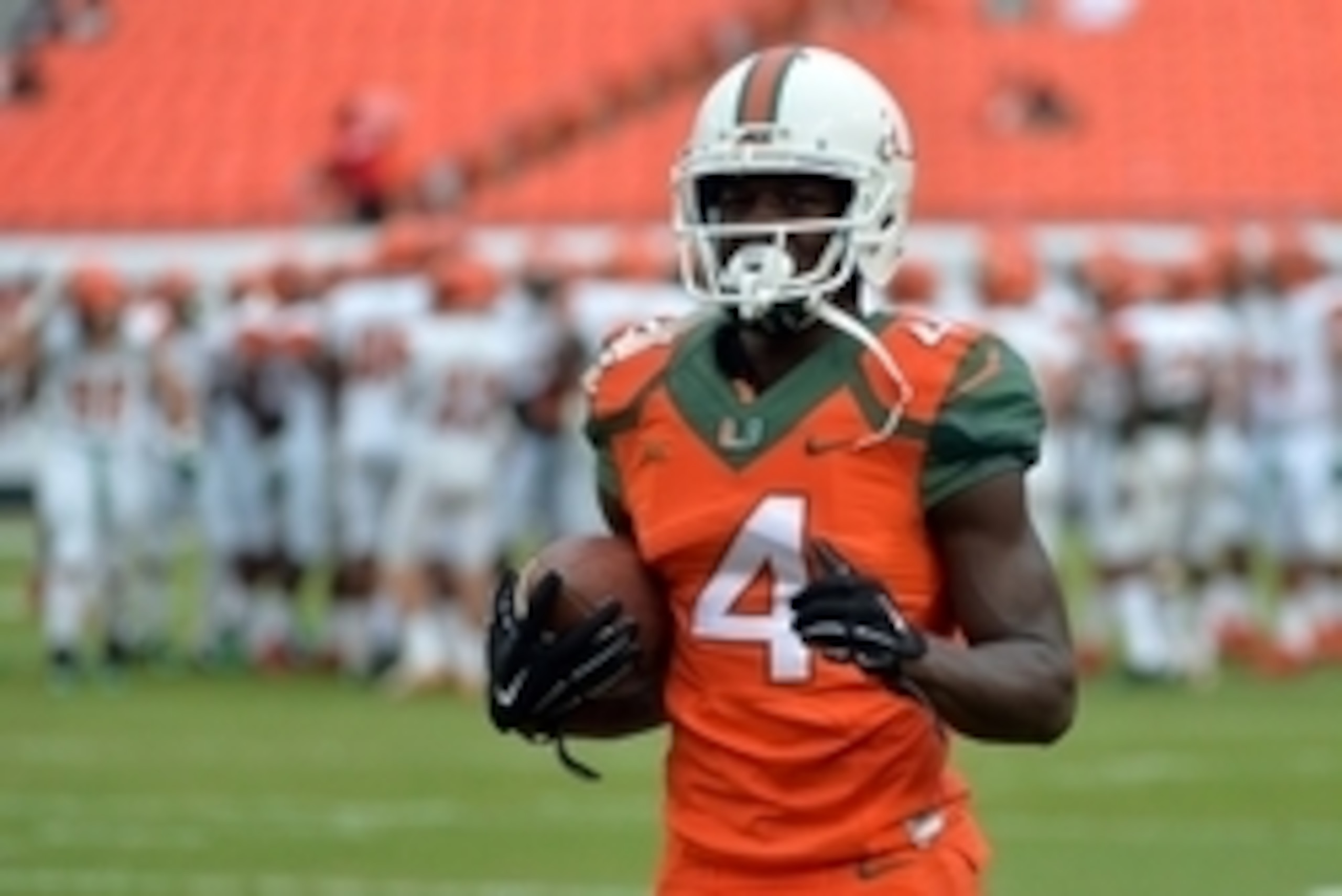
2 of 10It’s easy to see the appeal that enticed the Indianapolis Colts to select Phillip Dorsett with the No. 29 overall pick. A true burner who can take the top off any defense with his 4.33-second 40-yard-dash speed, the former Miami wide receiver is a player all opponents will have to account for because of his ability to make a big play at any time.
Dorsett’s attributes would seemingly be more valuable to most NFL teams other than the Colts, however, because Indy already has a strong starting trio of wide receivers, including one star, T.Y. Hilton, who is essentially a more polished and elusive version of Dorsett.
From a measurable standpoint, Dorsett and Hilton are nearly identical. Dorsett came in at 5’10” and 185 pounds at the NFL Scouting Combine, while Hilton, a former Florida International standout who made the Pro Bowl last season, ran a 4.34-second 40 at his 2012 pro day, according to NFLDraftScout.com.
The two are so similar, in fact, that Bleacher Report’s Matt Miller used Hilton as Dorsett’s comparison in his NFL Draft 400 series, written before the draft began.
In addition to Hilton, the Colts also have potential future Hall of Fame wide receiver Andre Johnson, who they signed after his release from the Houston Texans this offseason, and Donte Moncrief, another burner who ran a 4.40-second 40-yard dash at the 2014 combine and performed well in limited action as a rookie.
Given that, Dorsett is unlikely to project any higher than fourth on the Colts’ wide receiver depth chart, barring injuries. And because the Colts already had so much speed at the position with Hilton and Moncrief, there might not be a great deal of situational reasons to get Dorsett on the field in 2015.
Hilton is entering the final year of his contract with the Colts, according to Spotrac, so it is possible Dorsett could be his heir apparent for 2016 and beyond. Hilton will almost certainly be in the market for big money next offseason, and the Colts might have to make some savings as they prepare to re-sign quarterback Andrew Luck to what will almost certainly be a record-breaking contract.
Either way, Dorsett’s potential to make an immediate impact is limited, which makes him a questionable first-round pick for a Colts team that should legitimately be a Super Bowl contender this season. Given that, multiple Colts players are reportedly unhappy with the team’s strategy to draft Dorsett, according to Pro Football Talk’s Mike Florio.
“The thinking is that the Colts should have taken a safety like Landon Collins or a tackle (defensive or offensive) with the 29th overall pick in the draft,” Florio wrote Monday.
Damarious Randall, CB/FS, Green Bay Packers
3 of 10
There was speculation leading up to the draft that the Green Bay Packers would draft a defensive back in Round 1, and CBSSports.com projected that Arizona State defensive back Damarious Randall would be a first-round pick, so it makes sense that the two parties ended up together with the No. 30 overall pick.
Based upon what the Packers need for their secondary and what the best aspects of Randall’s game are, however, he might not be a great fit.
After losing Tramon Williams and Davon House to free agency, what the Packers really needed to draft was an outside cornerback. They might get that out of their second-round pick, Quinten Rollins of Miami (Ohio), but Randall projects more ideally to a nickel cornerback/free safety role.
A plus athlete with solid coverage skills, Randall could be a valuable player in that role, but the Packers didn’t have a need there. They already have a quality nickel cornerback/third safety in Micah Hyde, who has performed well both on defense and as a punt returner in his first two NFL seasons.
As Bleacher Report’s Ian Kenyon suggested, the selections of Randall and Rollins could mean the Packers are preparing to move on from Hyde, but it seems unlikely that replacing Hyde with Randall would make Green Bay a significantly better team, at least not in 2015.
Assuming the Packers keep Hyde, Randall projects to be no better than Green Bay’s sixth defensive back, as they already have two other cornerbacks ahead of him (Sam Shields and Casey Hayward) and a solid pair of starting safeties (Ha Ha Clinton-Dix and Morgan Burnett).
Randall reportedly said that more NFL teams looked at him as a cornerback than as a safety, according to Marques Eversoll of TheFan1075.com, but optimally, the best situation for Randall to be drafted into would have been one where there was a need for someone to play immediately at free safety and/or nickel cornerback.
Instead, Randall will have to stand out to prove that he belongs on the field, on defense and/or on special teams, and prove that Packers general manager Ted Thompson—whose drafting track record is among the NFL’s most impressive—did not make a rare mistake by overdrafting a player who seemingly does not fit Green Bay’s specific needs.

.jpg?w=2560 "Steelers Saints Football")
.jpg?w=2560 "Rams Raiders Football")
Denzel Perryman, ILB, San Diego Chargers
4 of 10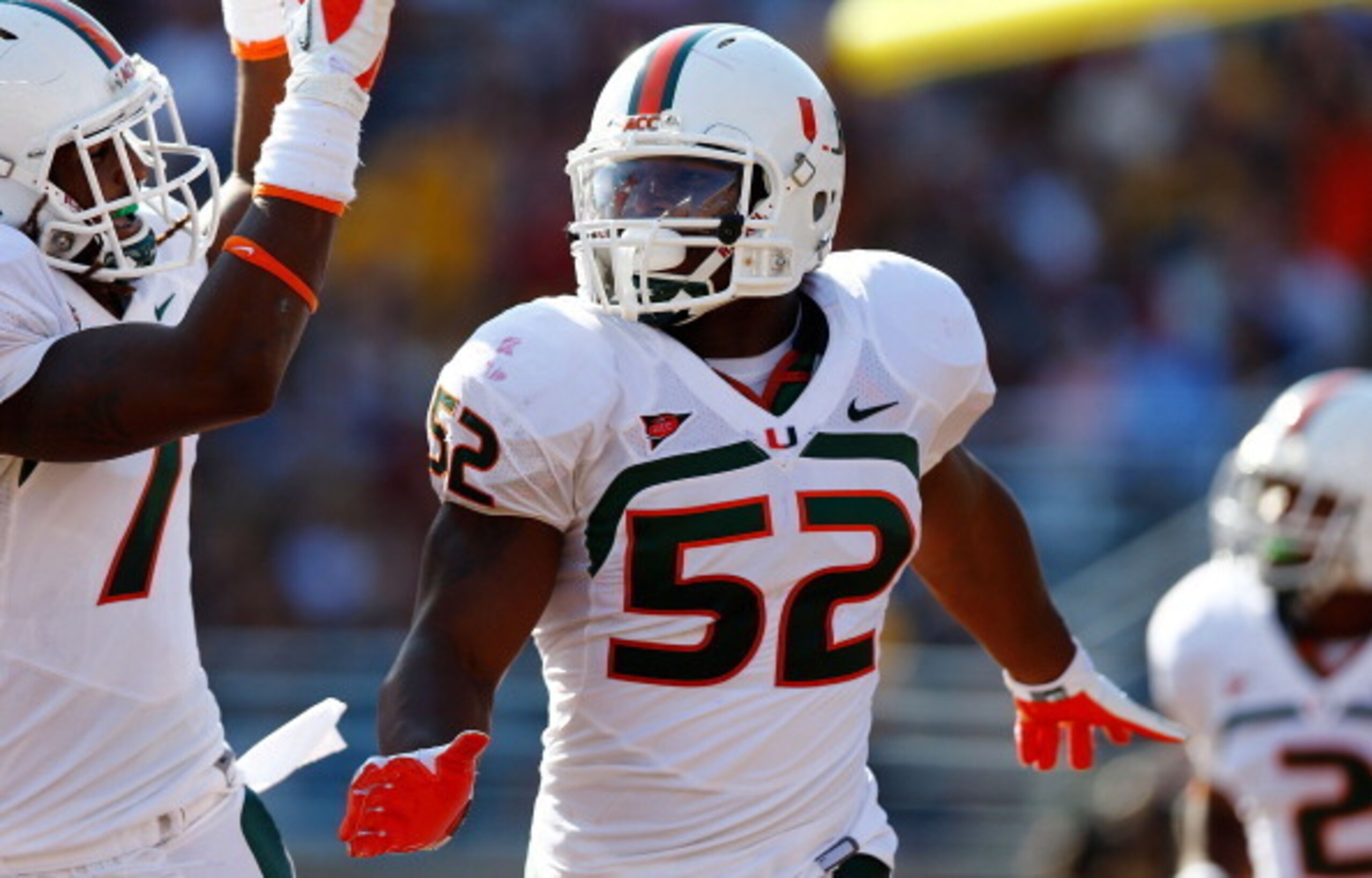
The best between-the-hashes linebacker in the 2015 draft class, Denzel Perryman brings a hard-hitting authority to the field that can make him an asset to any NFL defense, especially against the run. Coming from a Miami program that has repeatedly produced productive NFL linebackers, Perryman brings top-notch instinctiveness and tackling ability.
All of that said, Perryman is also a player who is limited by his measurables. While his instincts keep him around the ball frequently, he lacks the speed and change-of-direction quickness to be a sideline-to-sideline player against fast-moving NFL offenses.
The positives of Perryman’s game are very much enough to warrant the No. 48 overall pick with which the San Diego Chargers drafted him. The problem with Perryman being drafted by the Chargers, however, is that they already have a player with similar strengths and weaknesses in 2013 second-round pick Manti Te’o.
Like Perryman, Te’o was a star playmaker for his collegiate defense—in his case, Notre Dame—but is somewhat limited in the NFL by his lack of top-end athleticism.
Perryman should challenge Te’o and fellow starting inside linebacker Donald Butler for immediate playing time and should at least take on a rotational role. That said, it seemingly would have been more valuable for the Chargers to draft a more rangy, athletic linebacker to complement Te’o, as Perryman might be an upgrade over either linebacker against the run but probably won’t be against the pass.
With Te’o under contract for at least two more years, and Butler inked up through 2020, Perryman was not drafted into a situation where he is likely to start quickly, except in the event of injuries.
Jordan Richards, SS, New England Patriots
5 of 10
It has become clear over the past four years that Bill Belichick and media draft analysts do not see eye-to-eye on how to evaluate the safety position. 2012 second-round pick Tavon Wilson, 2013 third-round selection Duron Harmon and his most recent safety choice, this year’s No. 64 overall pick Jordan Richards, were all players widely regarded by prognosticators as Day 3 picks or undrafted free agents.
Belichick’s track record of success has earned him the benefit of the doubt, but to this point, the selections of Wilson and Harmon have not made him look smart. So that’s not exactly an encouraging sign for the selection of Richards, who could be a good fit for New England’s philosophies but does not face a clear path to prompt playing time.
Wilson and Harmon might not stand in Richards’ way for playing time, but two other safeties on the roster—Patrick Chung and Nate Ebner—might. Chung, the Patriots’ strong safety, performed well in his Super Bowl-winning return campaign to New England last year; Ebner does not see much playing time on defense, but is a capable in-the-box backup who is also one of the team’s best special teams players.
In some ways, the Patriots seem like a perfect fit for Richards. Belichick is a big proponent of players who are workhorses and who can contribute on special teams, and Richards—whose collegiate coaches “rave about his communication, his leadership, his football character on and off the field,” according to Belichick (per Karen Guregian of the Boston Herald)—appears to be exactly that.
As for his skill set, however, Richards is a box safety who lacks the athleticism to take on deep-coverage assignments. On the Patriots' depth chart, that projects him as a backup to Chung and not necessarily as the second-string player at the position.
It certainly cannot be said that the draft did not work out well for Richards, as he could have stayed on the board much longer had the Patriots not been interested. As it is, however, he might not have landed in a situation in which his skill set offers something new and a reason for New England to make sure it gets him on the field in the next couple of years.
Jeremiah Poutasi, OT/G, Tennessee Titans
6 of 10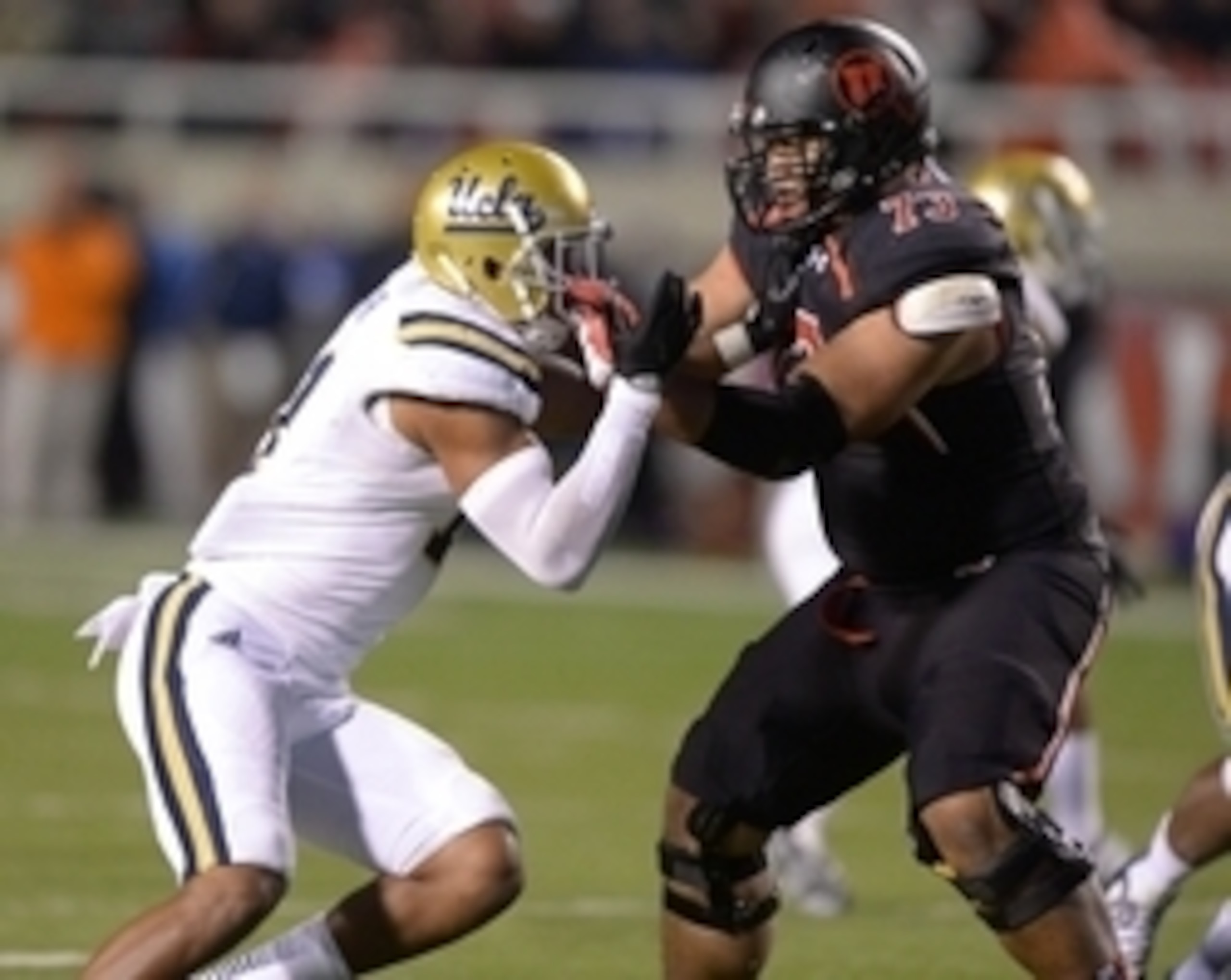
The Tennessee Titans entered the draft with a clear need at the right tackle position. They addressed that need with their third-round pick, No. 66 overall, but did so by drafting a player who is best suited to convert to guard in the NFL.
A left tackle at Utah, Jeremiah Poutasi certainly has the length—at 6’5” with 33 7/8” arms—to play offensive tackle in the NFL. He does not appear to have the lateral quickness to stay in front of outside speed rushers, however, while his massive size (335 lbs) and power-based game make him a more natural fit to pave the way inside.
Poutasi’s versatility to play both positions certainly bolsters his value, and that might be why the Titans opted to draft him over other available options. It might not be the right situation, however, for Poutasi to earn a long-term starting role on the field.
Given that the Titans’ other options at right tackle consist of Byron Bell, Byron Stingily and Jamon Meredith, Poutasi might win that job even with his athletic deficiencies. It’s fairly unlikely that the Titans are going to end up with a regularly effective pass protector on the right side out of that group of players.
Ultimately, though, the best opportunity for Poutasi to reach his full potential would be one in which he has a path to a starting guard position. That might not be the case in Tennessee, where left guard Andy Levitre is signed through 2018, while right guard Chance Warmack was the No. 10 overall pick in the 2013 draft.
Xavier Cooper, DE/DT, Cleveland Browns
7 of 10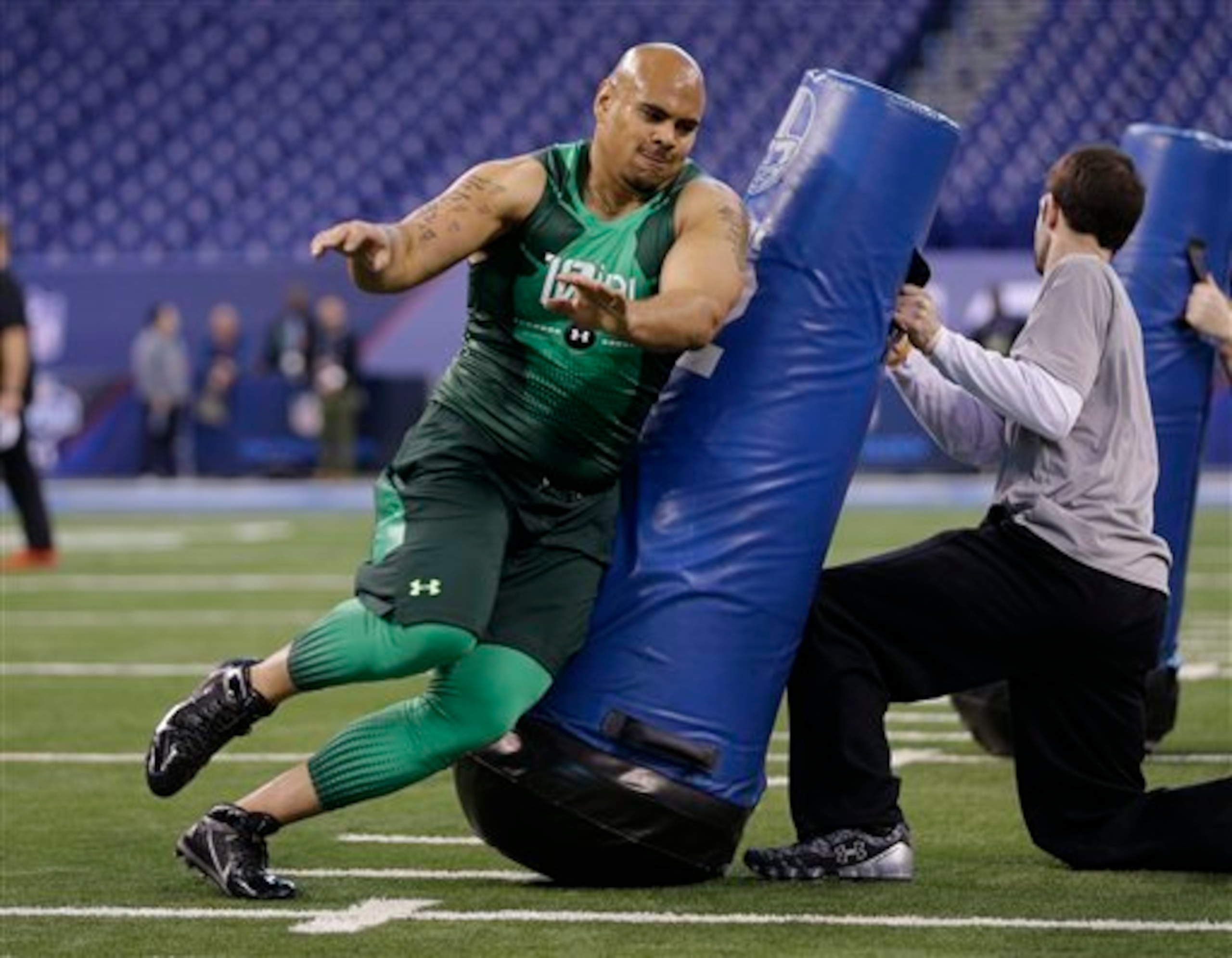
Don’t get me wrong: Xavier Cooper might prove to be one of the best selections of the entire NFL draft. The most athletic interior defensive line prospect in the entire draft class, as I explained in a predraft breakdown of his game, Cooper was very much a steal—and worth trading up for—for the Browns after they made a deal with the New England Patriots to acquire the No. 96 overall pick late in Round 3.
The point of this slide is not to suggest that the Browns made a mistake in trading up for Cooper or that he will be a bust for Cleveland. It is, however, to indicate that the Washington State defensive tackle might not have ended up in the right scheme to maximize his potential.
At 6’3” with 31 1/2” arms, Cooper does not have the length typically required to be a full-time, two-gapping defensive end in a 3-4 scheme, like that which the Browns run.
Possessing an excellent burst off the line of scrimmage, with linebacker-like athleticism and quick hands, Cooper has high upside as a penetrator and should be an immediate asset in pass-rushing situations.
Drafted into a one-gap, 4-3 scheme, however, Cooper would have more potential to be a full-time starter rather than a package player. He exhibits enough point-of-attack strength to be a three-down player as a 3-technique defensive tackle, but it’s hard to envision him being more than a penetrating specialist in three-man fronts.
The Browns run a hybrid scheme under coach Mike Pettine, implementing elements of the 4-3 within their base 3-4 and playing alongside the team’s first-round pick, massive space-eating nose tackle Danny Shelton, should increase Cooper’s ability to shoot gaps and win up the middle. Schematically, though, Cleveland does not appear to present the best fit for Cooper’s game.
Brett Hundley, QB, Green Bay Packers
8 of 10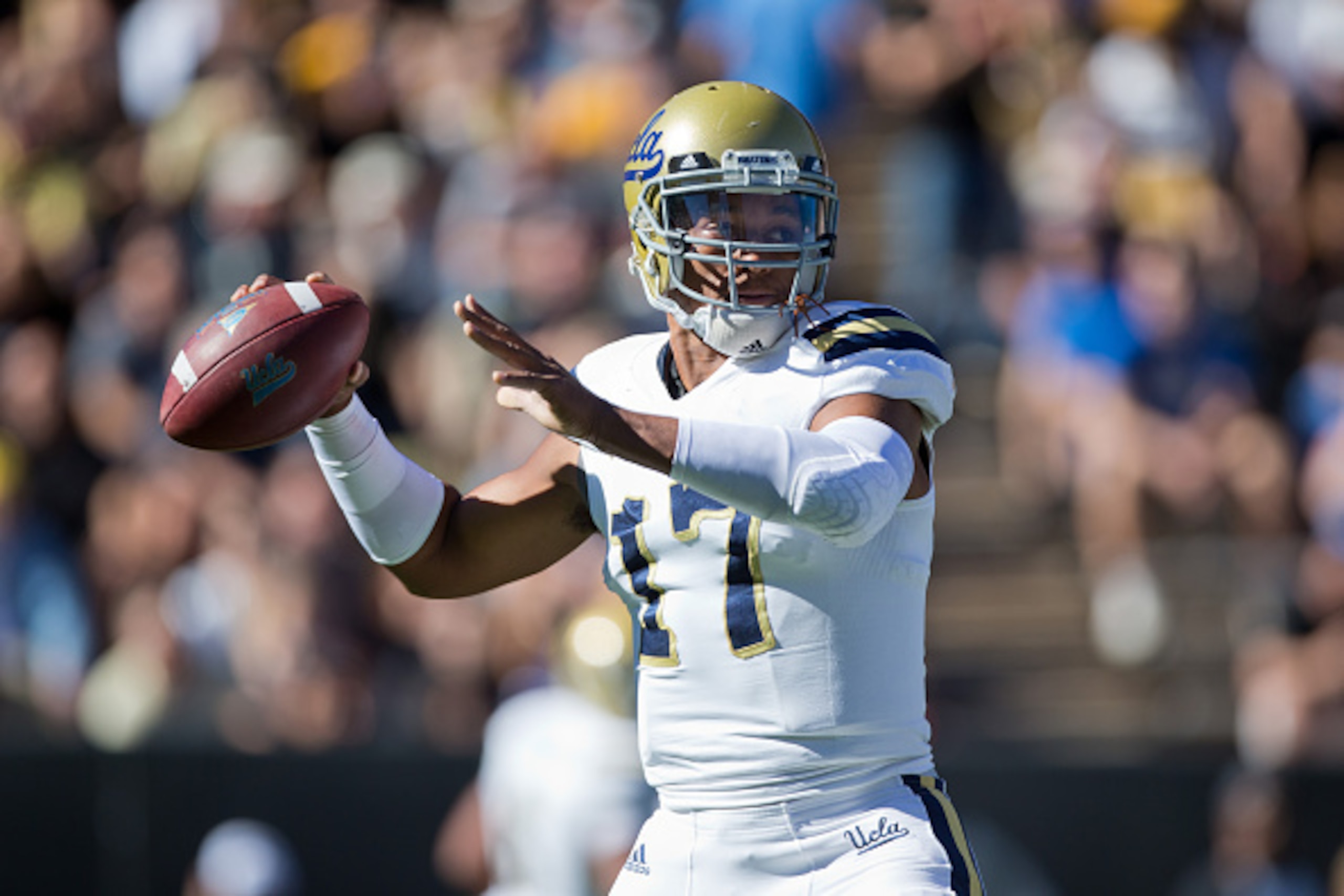
Many analysts have suggested that landing with the Green Bay Packers is a great situation for former UCLA quarterback Brett Hundley; Bleacher Report’s Zach Kruse actually described it as “perfect.” But while ending up in Green Bay should be beneficial to Hundley’s long-term development, it deprives him of the potential to compete for a starting job that he might have had elsewhere.
It’s easy to see why the Packers traded up with the New England Patriots in the fifth round, to the No. 147 overall pick, in order to draft Hundley—in fact, I graded it as one of the steals of the draft. A big, athletic and strong-armed signal-caller, Hundley has the most upside of any quarterback in the 2015 rookie class not named Jameis Winston or Marcus Mariota.
Hundley is far from ready to be an NFL starting quarterback; if he is going to be one, he needs to become significantly better at making plays under pressure. With a year or two of development, however, he will have the tools to potentially be a quality playmaker under center for an NFL offense.
Having fallen to the fifth round, Hundley was not going to be anointed as any NFL team’s starter in 2015, but going to a team with long-term uncertainty at the position would have given him a real shot at climbing to the top of a team’s quarterback ladder.
In Green Bay, that’s not going to happen unless an injury or something else entirely unexpected happens with Aaron Rodgers, the NFL’s reigning MVP, in the next four years. No matter how good Hundley might become, he’ll never have a chance at unseating Rodgers, the preeminent quarterback in the league.
So while going to the Packers could be a good step toward Hundley’s long-term progression, it also limits his opportunity to contend for extended playing time until at least 2019. As becoming a starter within the first four years of his career would significantly increase the likelihood of Hundley making big money in the NFL, being cemented as a backup in Green Bay is probably not the outcome he was hoping for on draft weekend.
Bradley Pinion, P, San Francisco 49ers
9 of 10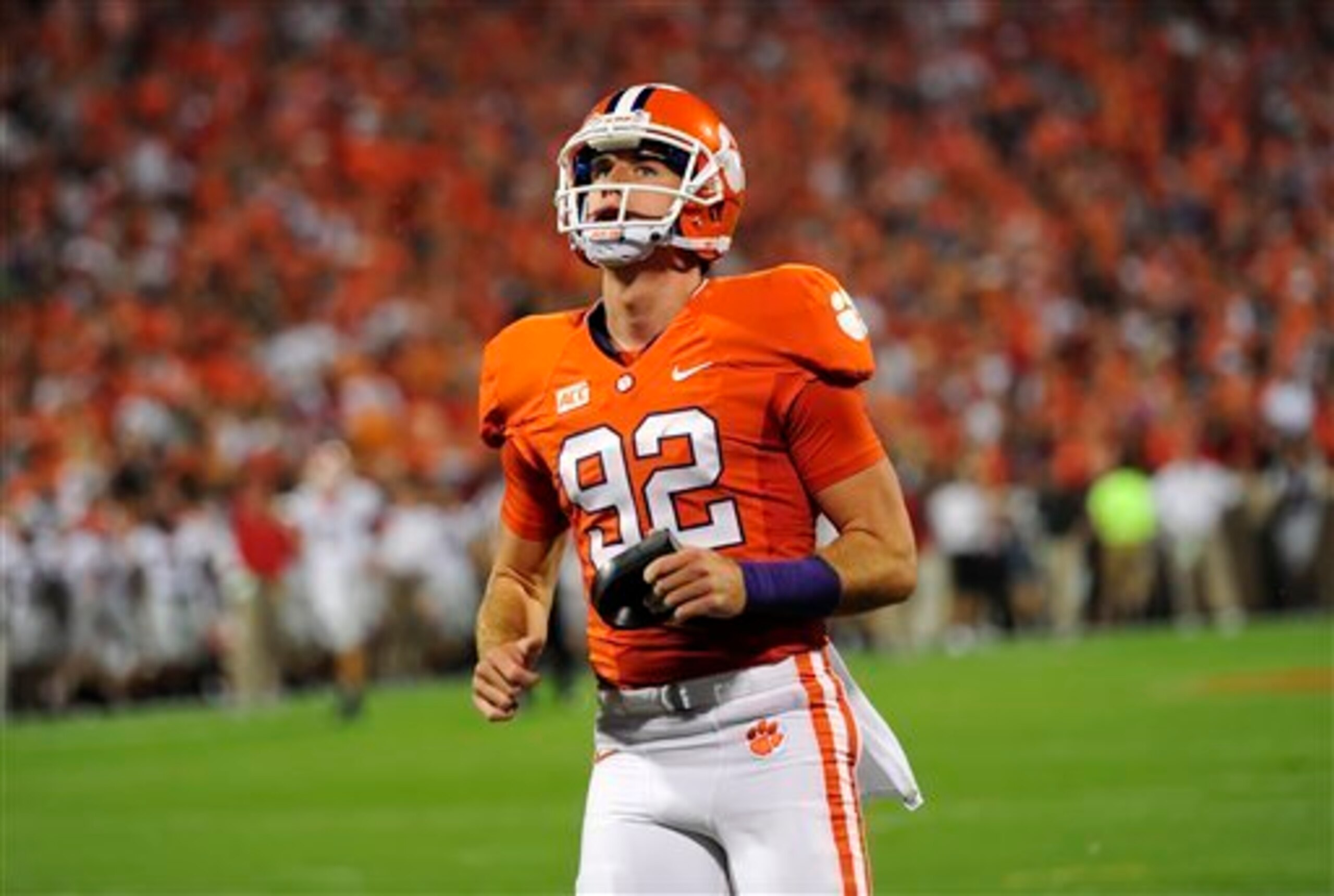
The only kicking specialist to be selected in this year’s draft, former Clemson punter Bradley Pinion certainly has reason to celebrate after being chosen in the fifth round, with the No. 165 overall pick, by the San Francisco 49ers.
Going undrafted, however, might have actually given Pinion a better shot at making an NFL 53-man roster this season.
Had Pinion gone unselected, he likely would have had his pick of the litter among teams looking to bring in a punter for camp, which would have enabled him to choose a team that has reason to replace its incumbent.
San Francisco should present Pinion with a fine opportunity to show his punting ability in the preseason, which could potentially lead him to a job with another organization afterward, but it would be a surprise if it remains his long-term home. That’s because the 49ers already have Andy Lee, a four-time All-Pro who is still considered one of the NFL’s elite punters.
There’s obviously a motive behind the 49ers selecting Pinion in Round 5, so it’s possible they could release Lee in a cost-cutting effort. Lee is set to make $2.55 million this season, and cutting him would save the team $1.55 million.
As Eric Branch of SFGate.com noted, "The message is clear: A tie goes to the cheapest guy,” which would be Pinion, but “Pinion will have to prove he’s in the same league” as Lee. If Lee’s consistent excellence over the past 11 seasons is any indication, Pinion will have a tough task trying to unseat him.
Still, a $1.55 million savings should not be a reason to cut one of the NFL’s best punters, unless Pinion proves this preseason he is just as good.
Tre McBride, WR, Tennessee Titans
10 of 10
Leading up to the draft this past week, William and Mary wide receiver Tre McBride was widely projected to be a third- or fourth-round pick; Bleacher Report’s Matt Miller, for one, projected that the New England Patriots would choose him with the No. 96 overall pick (which, as mentioned before, they ended up trading to the Cleveland Browns, who selected Xavier Cooper).
Instead, for one reason or another, the small-school standout fell deep into the seventh round before the Tennessee Titans finally scooped him up with the No. 245 overall pick. Presumably, it must have been a relief for McBride to finally hear his name called, hours and perhaps even a day later than he expected, but it did not put him in a great position to make a 53-man roster this summer.
While the Titans went into the offseason with a need at wide receiver, they already filled that in free agency (Harry Douglas, Hakeem Nicks) and in the draft (No. 40 overall pick Dorial Green-Beckham) well before they took a flier on McBride.
With Kendall Wright and Justin Hunter also on the roster as returning starters, it leaves McBride behind four wide receivers—Nicks being the only exception—who are under contract for at least two more seasons and should figure prominently in the team's plans.
That means McBride, just to make the roster, might have to beat out Nicks, who is coming off a down year but is still only 27 and previously had a strong five-year run with the New York Giants. Even if he does, he projects as no better than the team’s fifth wide receiver, while he could also face competition from numerous others, including Jacoby Ford, Clyde Gates and undrafted rookie Deon Long.
Accounting for how far he fell in the draft, McBride was not going to end up in any situation in which he would have a fast pass to playing time. Still, for a player who was highly regarded by many draft analysts before the event, it’s hard to see McBride taking on a large role for the team that drafted him.
All measurables courtesy of NFL.com unless otherwise noted.
Dan Hope is an NFL/NFL Draft Featured Columnist for Bleacher Report.
.jpg?w=2560 "Chiefs Giants Football")
.jpg?w=2560 "Titans Ravens Football")
.jpg?w=2560 "🚨 Week 8 AP Top 25 Poll")

.jpg?w=2560 "Packers Safety Slams Refs 🤬")