
It's Ted Thompson's world, and we're just living in it.
The Green Bay Packers' general manager raised some eyebrows with some of his selections in the 2015 NFL draft. And, to be clear, they were his selections.
"It's not a democracy," Thompson said in his pre-draft news conference. "We don't vote. Ultimately I make the call."
Thompson has a very specific draft strategy, and he and his team of scouts put in hundreds of hours in the pre-draft process refining their big board. When it's done, they trust it. It's that simple.
"There's a certain amount of weighting in terms of need, but I am adamant that that's not the way to draft," Thompson said in his conference. "The way to draft is to take the best player. You don't know what you're going to need."
That helps explain why the Packers took a wide receiver in Round 3, though they already have Jordy Nelson, Randall Cobb, Davante Adams, Jared Abbrederis and Jeff Janis on the roster, three of whom were added last year. (The selection, Ty Montgomery, will almost certainly also be a key special teams returner).
It also explains why the Packers used their first two selections on defensive backs, both of whom could be considered projects but above all are "football players," a term Thompson loves to use.
"The pressure, in my view, is making sure we take good players," he said before the draft, and that could be considered the theme of this year's draft. Prospects Damarious Randall (Round 1), Quinten Rollins (Round 2) and Montgomery (Round 3) are all playmakers, even if it was a surprise to hear their names called.
It was one of Thompson's more interesting drafts, especially the trade up for quarterback Brett Hundley, the fact that he didn't draft an offensive lineman for the first time since he arrived in Green Bay and for the number of players who seemed like projects.
But in Green Bay's draft-and-develop system, projects are necessary.
What follows is an analysis of Green Bay's draft: the good, the bad and the baffling. "Baffling" doesn't have a negative connotation here but simply means aspects of the draft that came as a surprise.
The Good: Replenishing the Secondary
1 of 6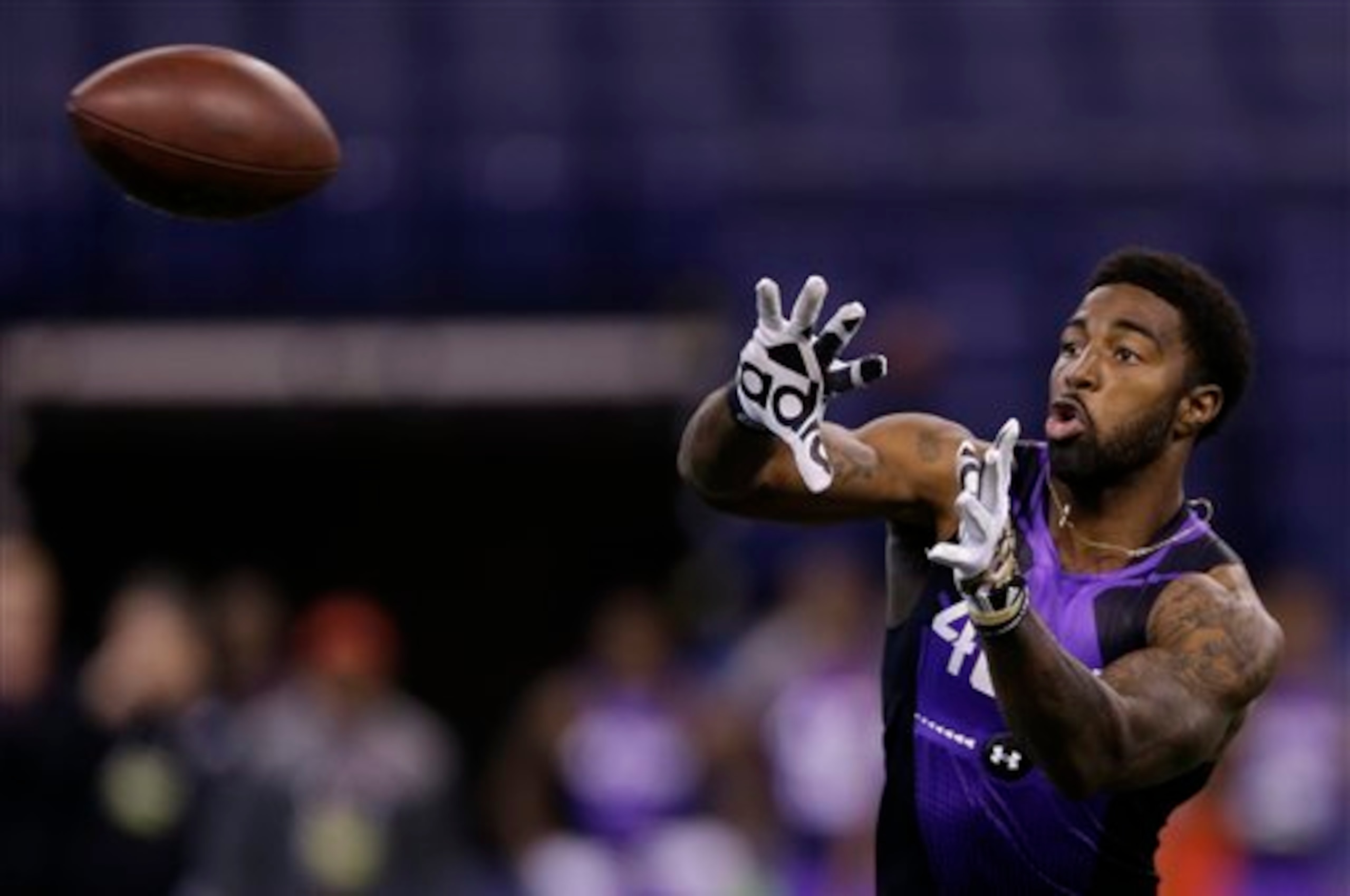
One former starting outside cornerback, Tramon Williams, and one potential starter, Davon House, departed in free agency. It was Ted Thompson's job to replace them by either free agency (which was unlikely) or the draft, and he did, albeit creatively.
During his tenure in Green Bay, Thompson has never drafted a cornerback in the first round. Despite ending up with two defensive backs in his first two selections, he still hasn't, technically. Arizona State's Damarious Randall came into the draft listed as a safety, but he'll move to corner for the Packers.
After Day 1 and the selection of Randall, it seemed like Green Bay potentially planned to move fourth-year player Casey Hayward to the outside opposite Sam Shields and then have Randall and Micah Hyde either compete for or rotate in on the slot corner position.
On Day 2, however, Thompson raised some eyebrows when he drafted another defensive back: Miami of Ohio cornerback Quinten Rollins.
Now, cornerbacks coach Joe Whitt and defensive coordinator Dom Capers have the personnel to run a fluid, sub-package heavy defense that will be especially well-matched against opposing spread offenses. Hayward, Randall and Rollins could play outside, inside, or all of the above. Expect to see a lot of the "Big Dime" (2-3-6) defense in Green Bay this season.
Time will tell if Randall and Rollins prove to be viable replacements for Williams and House. They're each something of a project, with cornerback not being their primary position. But they're also playmakers, with the inherent physical gifts to excel in Capers' scheme.
"We're happy to have the two men that we have coming in," Whitt said in a press conference Friday. "The CB room has changed this year with Tramon and Davon leaving and Jarrett up in the air...it's exciting for me as a coach to be able to take a new group of skill sets to try to work to our team goal to win a championship."
The Bad: Waiting Until Round 4 to Draft a Linebacker
2 of 6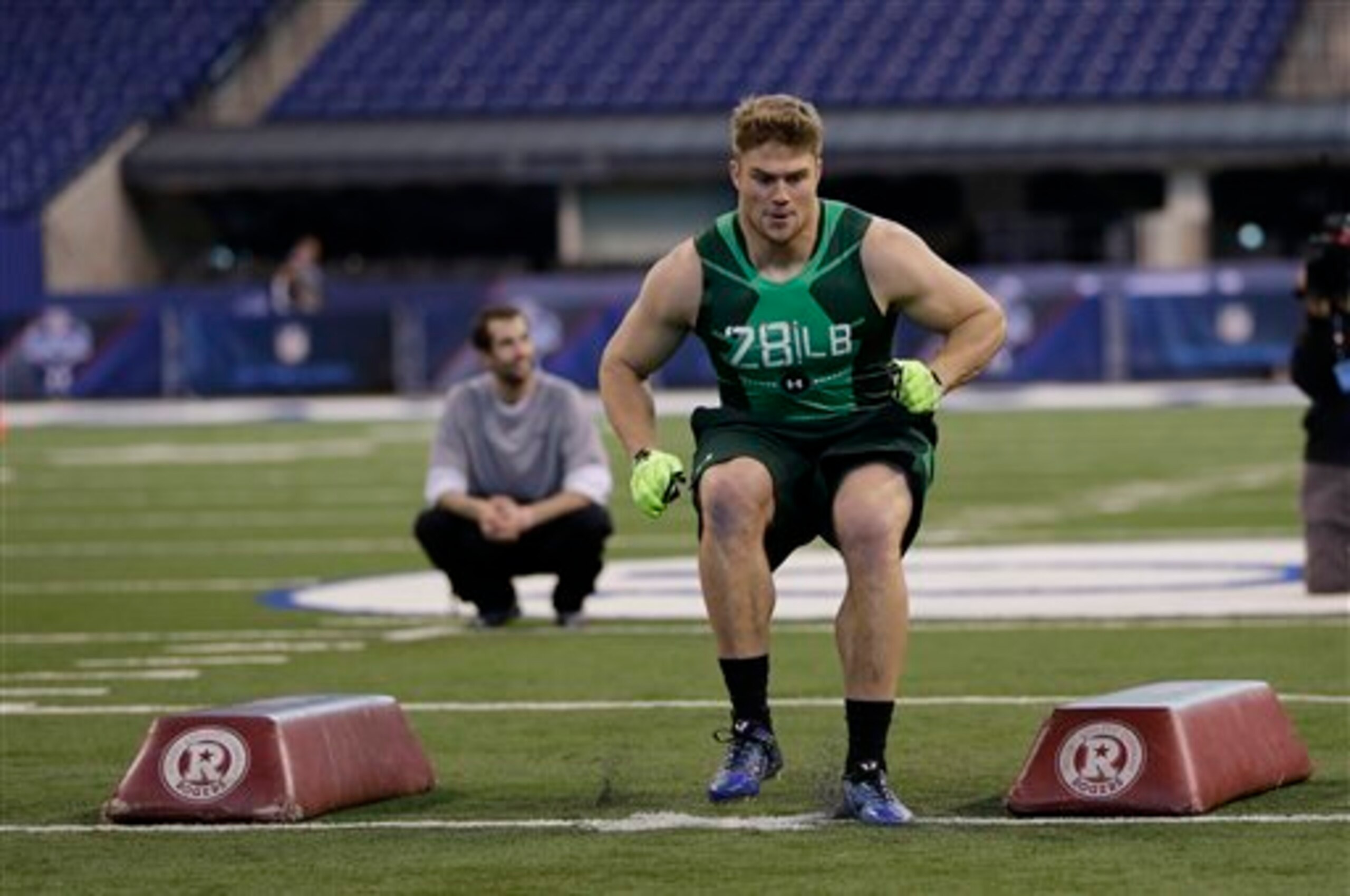
Now, none of us are qualified to to classify anything about the Packers' drafts as "good" or "bad," first because none of the rookies have taken so much as a snap, and secondly because Ted Thompson and his team of scouts know a lot more about the prospects than any analyst ever will.
That being the case, it seems like the Packers had multiple opportunities to take an impact inside linebacker early in the draft, from having their pick of the class in Round 1, to TCU's Paul Dawson being on the board in Round 3, and a whole crop including their eventual pick, Michigan's Jake Ryan, being available in the mid-rounds.
It's entirely possible the Packers didn't have a first-round grade on any inside linebacker—few teams seemed to. It's also a possibility that they had taken Dawson off their board and thus were inclined to skip over him at No. 94. We will never know, and therefore it's not easy to condemn the decision to wait until Round 4 to address the position.
Still, Green Bay had the league's 23rd-ranked run defense in 2014, allowing an average of 119.9 rushing yards per game.
Packers inside linebackers combined for 21 missed tackles last season, per Pro Football Focus. A.J. Hawk and Brad Jones both allowed over 10 yards per completion into their coverage. Happily, Sam Barrington was the best of the group, allowing "only" 8.9 yards on average and missing just three tackles. But he can't do it alone.
Green Bay knows more than anyone about its current crop of options at inside linebacker and clearly felt it had the personnel to get the job done. At the halfway point in 2014, the Packers were ranked 32nd against the run.
After inserting Clay Matthews into the lineup in sub-packages at inside linebacker through the final eight games of the season, they finished at 23rd. Clearly Matthews will continue to be a factor on the inside in 2015; if he weren't, it's unlikely Green Bay would have waited to draft a linebacker.
The Packers also have outside linebacker-turned-inside linebackers Carl Bradford and Nate Palmer on the roster, as well as undrafted free agent Joe Thomas. They also signed CFL player Josh Francis this offseason. It's possible someone in that group is further along than we'd think.
Ryan should be an instant contributor as well; despite his draft position, he has the diverse skill set to potentially become a three-down linebacker in the NFL.
However, it's not clear Ryan will be starting in Week 1 next to Barrington. More likely, the Packers will nail down Barrington at the "Mike" linebacker position and rotate Matthews, Ryan and Bradford at the "Jack" spot situationally.
Still, it's hard not to wonder what could have been in 2015 if the Packers had nailed one of this year's complete, starting-ready prospects—Clemson's Stephone Anthony or UCLA's Eric Kendricks—to hold down the open starting job and moved Matthews back to rushing off the edge full-time.
"The higher the round they select someone, the better the chance he'll have of being a factor," Tom Silverstein of the Milwaukee Journal Sentinel wrote in February.
But now, as always, we'll have to trust that Thompson and the defensive coaching staff have a plan, and that it will work out.
The Baffling: Targeting a Wide Receiver in Round 3
3 of 6
The Packers were on deck at No. 94, and there were plenty of prospects for them to draft. TCU inside linebacker Paul Dawson had inexplicably slipped all the way to the end of the third round.
Though he had a poor combine performance and scouts had expressed concerns about his character, based on his tape alone Dawson was one of the best linebackers in this class. In his final positional rankings released just before the draft, NFL Media's Mike Mayock still had Dawson listed at No. 1 among all inside linebackers.
A few other intriguing defensive options were also still on the board, including Arkansas defensive end Trey Flowers. Ohio State defensive tackle Michael Bennett somehow slipped to No. 180.
After taking three wide receivers in the 2014 NFL draft, few might have guessed Ted Thompson would come back to the position in Round 3 this year. But that's exactly what he did, selecting Stanford receiver Ty Montgomery.
The pick makes more sense if you think about it this way: By drafting one prospect, Thompson actually gave head coach Mike McCarthy three different players. Montgomery, who earned consensus All-American honors as a kick returner, averaging 30.3 yards per return and multiple scores, can be a full-time kick returner.
Having also led Stanford with 61 catches for 958 yards and 10 touchdowns, Montgomery is a clear target on short to intermediate routes. And at 5'11.7/8" and 221 pounds, he's a "bigger Cobb," Sam Seale, the Packers' scout for the West region, said, via ESPN.com's Rob Demovsky.
That means Montgomery can also be used as a pass-catcher out of the backfield, as Cobb often is.
Thompson has one of the best eyes in the league for spotting wide receiver talent, and the Packers have enjoyed major success developing them. There's no question the Packers have a role—multiple roles—for Montgomery to fill.
Still, I have yet to find someone who will admit they were expecting the Packers to draft a wide receiver in Round 3.
.jpg?w=2560 "Rams Raiders Football")

.jpg?w=2560 "Steelers Saints Football")
The Good: Strengthening Special Teams
4 of 6
Head coach Mike McCarthy made it abundantly clear this offseason that his goal in 2015 was to improve Green Bay's special teams unit.
In the Dallas Morning News' annual special teams rankings, the Packers finished dead last for 2014. They had 14 punts land inside the 20-yard line and allowed a league-worst seven blocked kicks.
The Packers, bless them, have been taking major organizational strides to correct the issue. McCarthy fired special teams coach Shawn Slocum and promoted Ron Zook, and he relinquished play-calling duties to have a bigger hand in the overall picture on game day of offense, defense and special teams.
Still, they lacked the necessary personnel to really excel in that area. They officially put punter Tim Masthay, who had one of his worst seasons in 2014, on notice by signing former Alabama punter Cody Mandell in January.
But Green Bay still needed gunners and an exceptional returner. Its return game, in particular, has been cobbled together from players who were too valuable in their offensive or defensive roles to go all out.
They appear to have gained those personnel pieces in the draft.
Stanford wide receiver and third-round selection Ty Montgomery could become a full-time returner. In 2014, he had a team-high 12 punt returns for 238 yards (averaging 19.8 yards per return) and two touchdowns.
Montgomery also tallied 17 kick returns for 429 yards, averaging 25.2 yards per return.
Defensive backs Damarious Randall and Quinten Rollins can be used as special teams weapons as well, Randall potentially also in the return game and Rollins as a gunner.
"You don’t get second down and third down on special teams," Zook said in February, per Packers.com's Mike Spofford. Their draft shows that the Packers are serious about making those crucial special teams plays count.
The Baffling: Ted Thompson Doesn't Draft an Offensive Lineman
5 of 6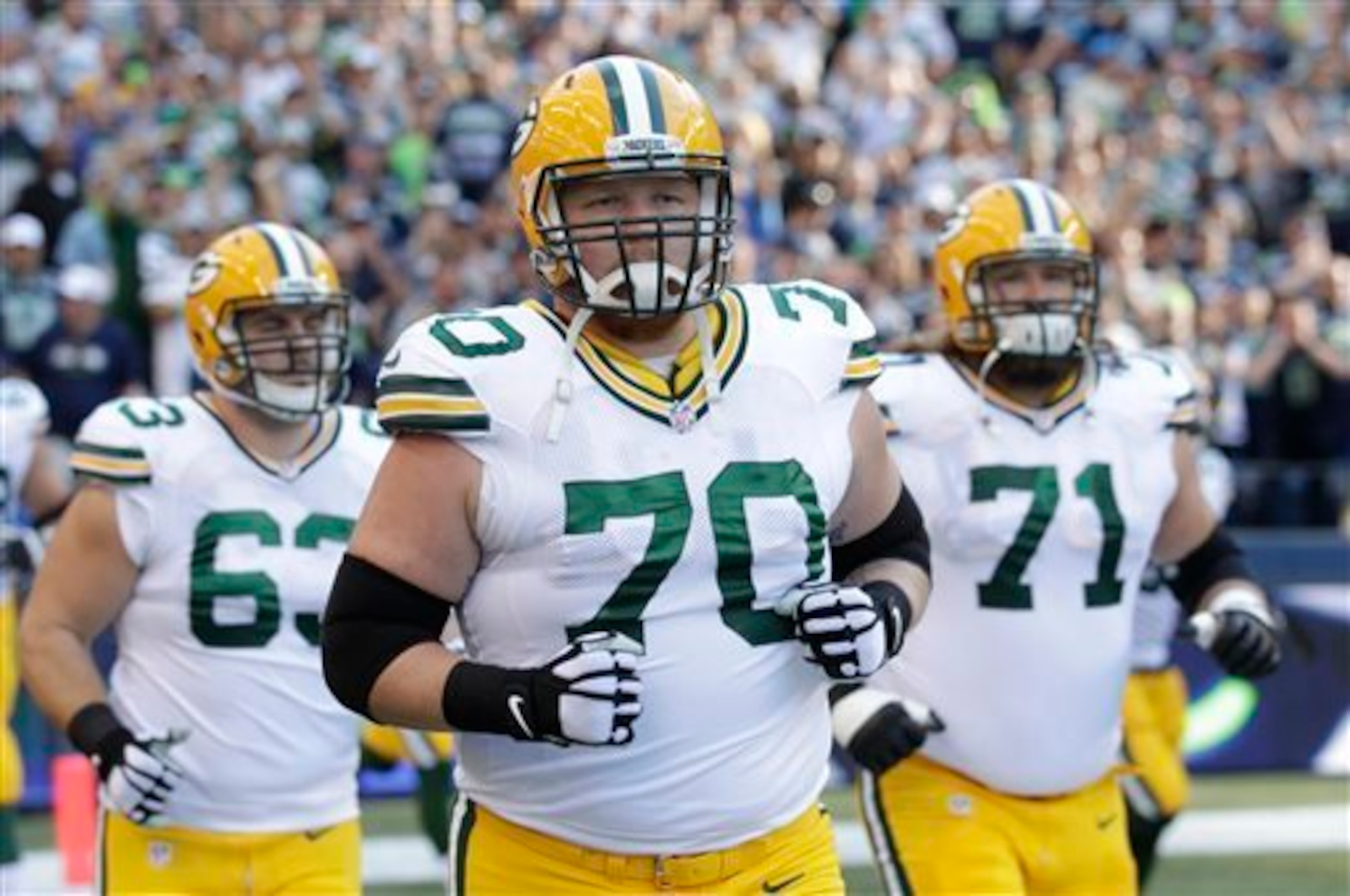
Ted Thompson has drafted an offensive lineman in every year he's been at the helm in Green Bay, from 2005 on. That is, until this year, which was the first that Thompson did not add a tackle, center or guard through the draft.
If there were any year Thompson would choose to bypass the offensive line in the draft, 2015 makes sense. The Packers head into training camp with quite possibly the best line configuration they've had in the Thompson-Mike McCarthy era.
They've got David Bakhtiari at left tackle. Right tackle Bryan Bulaga was the fourth-best player at his position in 2014, per Pro Football Focus. T.J. Lang and Josh Sitton were among the top four guards in the league last season, per Pro Football Focus, and rookie center Corey Linsley was in the top five.
For depth, veteran Don Barclay returns after missing the 2014 season with a torn ACL, and J.C. Tretter is entirely capable should Linsley ever go down.
Still, Thompson's history of drafting offensive linemen suggests a pattern not easily broken. Moreover, most of Thompson's best finds haven't required big-ticket draft picks; Sitton, Lang and Bakhtiari were fourth-round selections. Linsley was drafted in Round 5.
And more than just drafting one offensive lineman every year since 2005, Thompson has often taken two. He has drafted a total of 18 linemen during his tenure in Green Bay.
Perhaps this year the value wasn't there, or Thompson felt it was more important to add help at tight end and defensive line. (Fullback over offensive line was something of a head-scratcher, though.)
If the starting five remain intact, no one may even remember the year that Thompson didn't draft a lineman. If two or more injuries occur, though, it'll certainly be remembered, for the wrong reasons.
The Good: Packers Clearly Comfortable with TE Group, Supplement It Late
6 of 6
The draft is an excellent measure of how a team feels about a particular position group and the players within it.
If the Packers had drafted a tight end early—and they had multiple opportunities, as most of the prospects didn't come off the board until Round 5 or later—it would have suggested that they didn't feel great heading into the season with Andrew Quarless and Richard Rodgers as their primary options for the starting role.
However, Green Bay didn't address tight end until its final pick of the draft: No. 213, a compensatory pick. And they didn't take one of the bigger-name prospects available, like Notre Dame's Ben Koyack, who had a Round 4-5 projection.
Instead, Thompson selected lesser-known Kennard Backman out of UAB, a 6'3", 258-pound prospect who was projected to go undrafted.
The Packers have had success with late-round prospects earning starting roles—Donald Driver was a seventh-round selection—but somehow it doesn't seem like Backman will be legitimate competition for the No. 1 job.
That more and more likely seems to belong to Rodgers, whose development during his rookie season last year was nothing short of impressive.
In the first half of the season, Rodgers started four games but had just seven catches for 111 yards and zero touchdowns. Per Pro Football Focus, he played 214 snaps in that span.
After the Week 9 bye, Rodgers played 277 snaps and totaled 114 yards over 13 receptions for two touchdowns.
In Weeks 1 to 8, Rodgers was the sixth-worst tight end in the league in run blocking and the 19th-worst in pass blocking among the 63 tight ends who played at least 25 percent of snaps in 2014, per Pro Football Focus. In Weeks 10 to 17, he had improved to 48th among tight ends in run blocking and 20th in pass blocking.
Then there's Quarless, who revealed recently that he considers himself among the "top echelon" of tight ends, per Tyler Dunne of the Milwaukee Journal Sentinel.
His numbers have yet to support that, but he's been good for a critical catch here and there, including in Green Bay's epic fourth-quarter triumph over the Miami Dolphins.
Backman's skill set could help him become a successful H-back for Green Bay. But it looks like Rodgers and Quarless will once again duke it out for the majority of snaps.
.jpg?w=2560 "Cowboys Packers Football")



.jpg?w=2560 "🚨 Week 8 AP Top 25 Poll")