NBA Draft 2015: Underrated Prospects Who Will Rise During Predraft Process
Basketball is basketball. It's a phrase you'll often hear scouts and league executives say, particularly when discussing draft prospects. If a player performs well at one level of basketball, odds are he'll translate well to the next.
Nine of the 10 top-ranked players in last year's 247Sports' composite recruit rankings will likely be first-round picks in June; at least five will go in the lottery. The top four in 2013 all wound up being top-seven picks a year later. Five of the top six were first-round picks from 2012; the other would have been had his career not been cut short.
Point being: Youth basketball has become so ingrained in our culture that we're pretty good at this stuff. Busts still happen plenty at the NBA level, but I'd posit that no sport's high school rankings has a higher professional success rate.
TOP NEWS

Embiid Out vs. Pistons
Luka 50 Piece in Win 🔥

Power Ranking Every NBA Team's Starting Lineup 🔢
Add in the relatively small amount of players selected, and concepts like "sleepers" are very relative when discussing NBA prospects. Even the most casual college hoops fan has heard of 90 percent of the players who will be selected in Round 1. Most will probably know more than half of the second-rounders.
So, instead of using silly buzzwords, here is merely a list of guys I feel will rise up boards once teams begin zeroing in on this class.
Cameron Payne, PG, Murray State
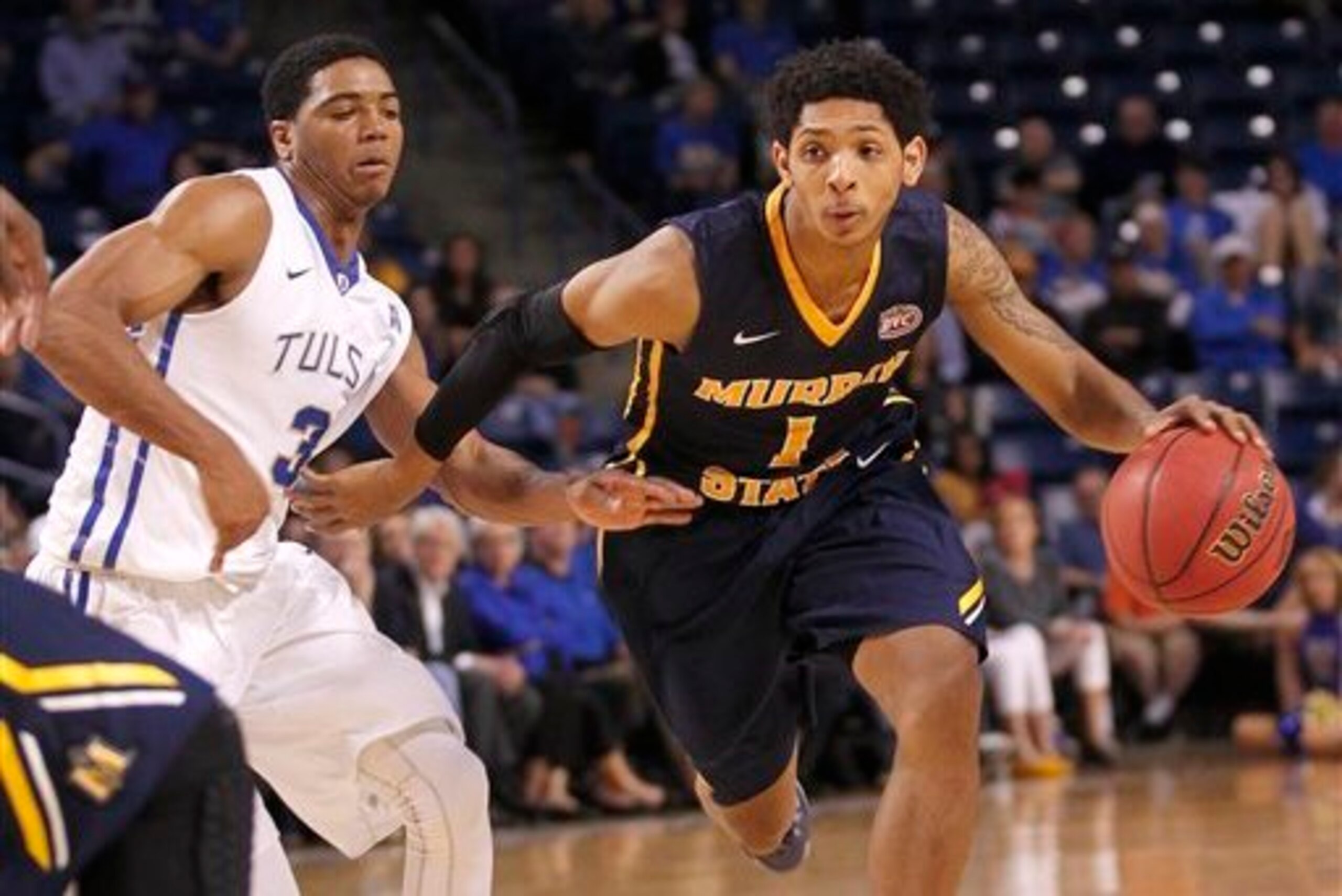
Every draft needs a small-school guard who winds up pushing his way into the lottery. The trend birthed from Stephen Curry is on a three-year winning streak, with Damian Lillard, C.J. McCollum and Elfrid Payton coming off the board and finding NBA success.
Payne will be the next on that list, and may wind up pushing his way into the top 10 by June. He averaged 20.2 points and 6.0 assists as a sophomore last season, pushing Murray State to an undefeated regular-season Ohio Valley record before falling just short in the conference tournament.
Listed at 6'2" and 180 pounds, Payne doesn't match perfectly with any of his predecessors, but you could talk yourself into inklings of their games. Payne is a natural, pass-first point guard like Payton, yet can score when he needs to—he made 37.7 percent of his threes last season. He's also an under-the-basket player like McCollum, yet has a little Lillardian quickness.
For all its depth around the NBA, point guard is a little shallow in this class. Payne will be competing with Tyus Jones and Jerian Grant to be the silver medalist behind Emmanuel Mudiay. (I don't grade D'Angelo Russell as a point guard.)
Jones probably has the upper hand at this point coming off his tournament run, but Payne's the better prospect. I wouldn't be surprised at all if he comes out of the combine as the player generating the most discussion.
Devin Booker, SG, Kentucky
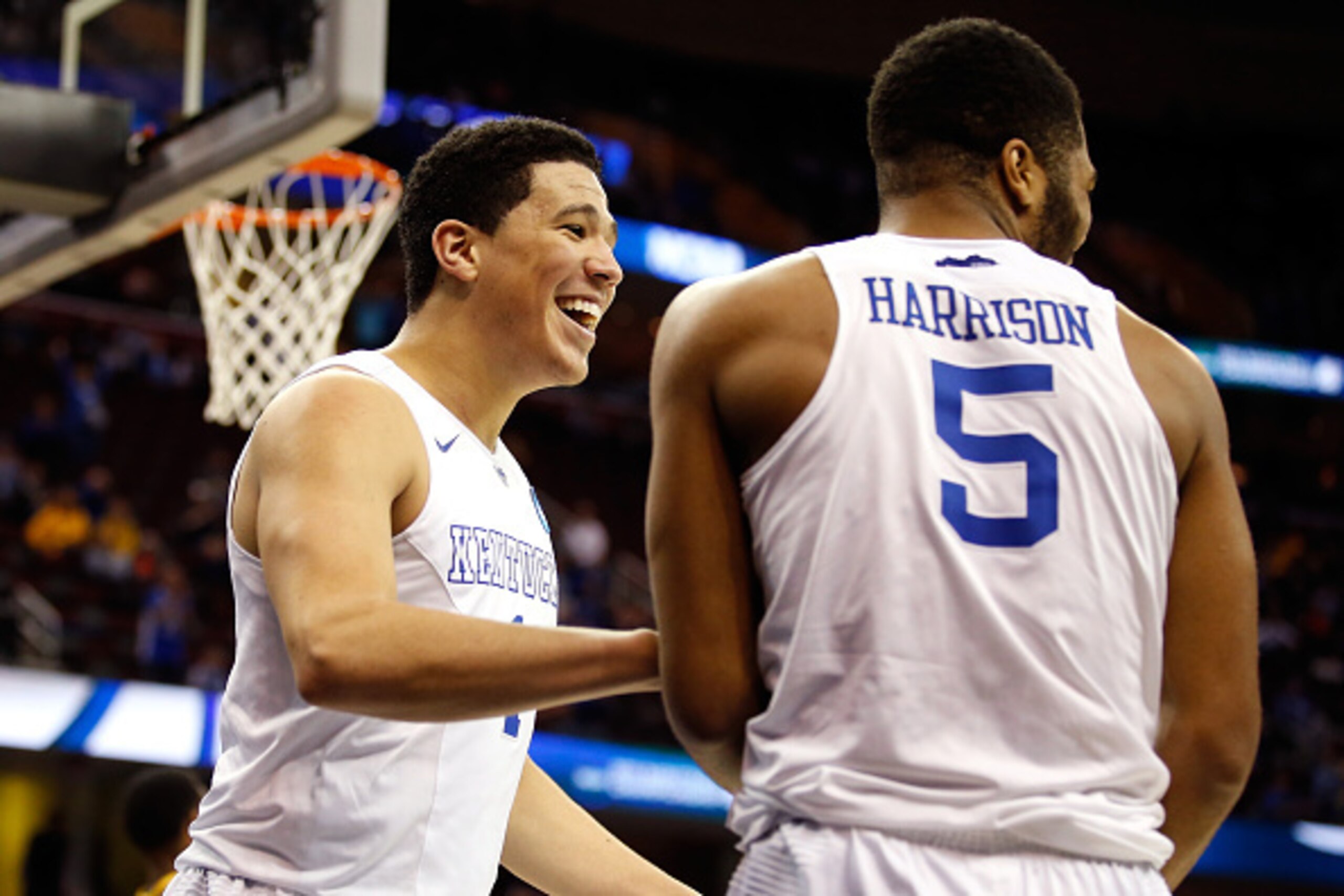
It's pretty hard to go overlooked on perhaps the most overexposed college basketball team of this generation. Yet Booker, the generally quiet young guard who consistently played his role for John Calipari, did just that.
While he rarely jumped off the screen when surrounded by Kentucky's long-limbed freak athletes, Booker was integral when he was on the floor. He provided consistent spacing on a team that sorely needed it, knocking down threes at a 41.1 percent rate and rarely forcing his looks. He was also an underrated team defender who rarely gambled his way out of position for bad steals.
Right now, I have Booker graded as a late-lottery selection. I'm not quite sure what else he does other than shoot at this point—OK, I do, it's nothing really—but he's one of the youngest players in this class who possesses the NBA's most important trait.
We live in a world where Jodie Meeks gets paid $8 million a year. Kyle Korver was an All-Star. Never in league history has there been a greater emphasis on outside shooting. Freakish athleticism and tantalizing potential are always going to have a place in the NBA, but I have a feeling we're moving toward an era where being an actual basketball player matters.
The era of Tyrus Thomas going No. 4 overall based on build and a couple of dope tournament moments is over. Booker and guys like him are the late-lottery wave of the future.
Cliff Alexander, PF, Kansas

Here is the moment in the program where I totally contradict myself. Alexander did nothing at Kansas to look remotely deserving of first-round distinction. His stat line (7.1 points, 5.3 rebounds) was nondescript, his impact was anonymous and he wound up sitting out the tournament due to an eligibility issue.
It's fair to call his college experience a disaster. Alexander was the fourth-ranked player in the country coming out of high school and was supposed to keep Kansas in national championship contention along with fellow frosh star Kelly Oubre. Instead, Oubre's barely keeping his head above water in the lottery conversation, and Alexander might be a second-rounder if we drafted today.
He won't be once the draft process gets underway.

Though he rarely showed it under Bill Self, Alexander is an explosive athlete with a chiseled frame who has the potential to make a real two-way impact. Listing him at 6'8" is underselling his 7'4" wingspan, which allows him to get shots up underneath or stuff them on the other end against taller opponents.
A focused Alexander projects as a terror defender, quick enough to defend stretch 4s and strong enough to work against more traditional lineups.
There are a ton of kinks to be worked out, but Self has never been a coach who does well at highlighting NBA skills. His brand of basketball is very within the system, and we saw what Andrew Wiggins did when unrestrained as a rookie.
Alexander will wind up a top-20 pick before all is said and done. Call it a belief in the system.
Joseph Young, SG, Oregon

Here's an early June spoiler: An "analytics team" will select Joseph Young. It will probably be at the beginning of the second round, where Houston, Boston and Philadelphia each have selections in the 30s.
Granted, it's unfair to call any franchise an "analytics team" at this point. Every NBA front office has an analytics arm that is growing by the day. It just so happens that those three franchises are a bit ahead of the game and do things a little better.
Young, who played the last two seasons at Oregon after transferring from his native Houston, is one of the most natural scorers in this class. He's undersized for a shooting guard at 6'2", but does nearly everything you'd want in a microwave scorer otherwise. He creates off the dribble, finishes through contact at the rim and can launch his shot from anywhere on the floor.
Concerns about his defensive acumen are valid, but you're not finding perfect players at the end of Round 1 or early in Round 2. It's about finding players who can even stick in the NBA whatsoever. There's no question in my mind Young can fit for a long time in sixth- or seventh-man role. A number of players are going to be selected ahead of Young based on potential alone and flame out a lot earlier.
Follow Tyler Conway (@tylerconway22) on Twitter.

.jpg?w=2560 "Rodgers Iced Out on Plane 💎")
.jpg?w=2560 "Raiders Could Start Mendoza")
.jpg?w=2560 "🚨 Week 8 AP Top 25 Poll")
.jpg?w=2560 "Mahomes Told Teammate to Leave Meeting")
.jpg?w=2560 "Lamar Being Out Shocked Ravens")

.jpg?w=2560 "Packers Safety Slams Refs 🤬")