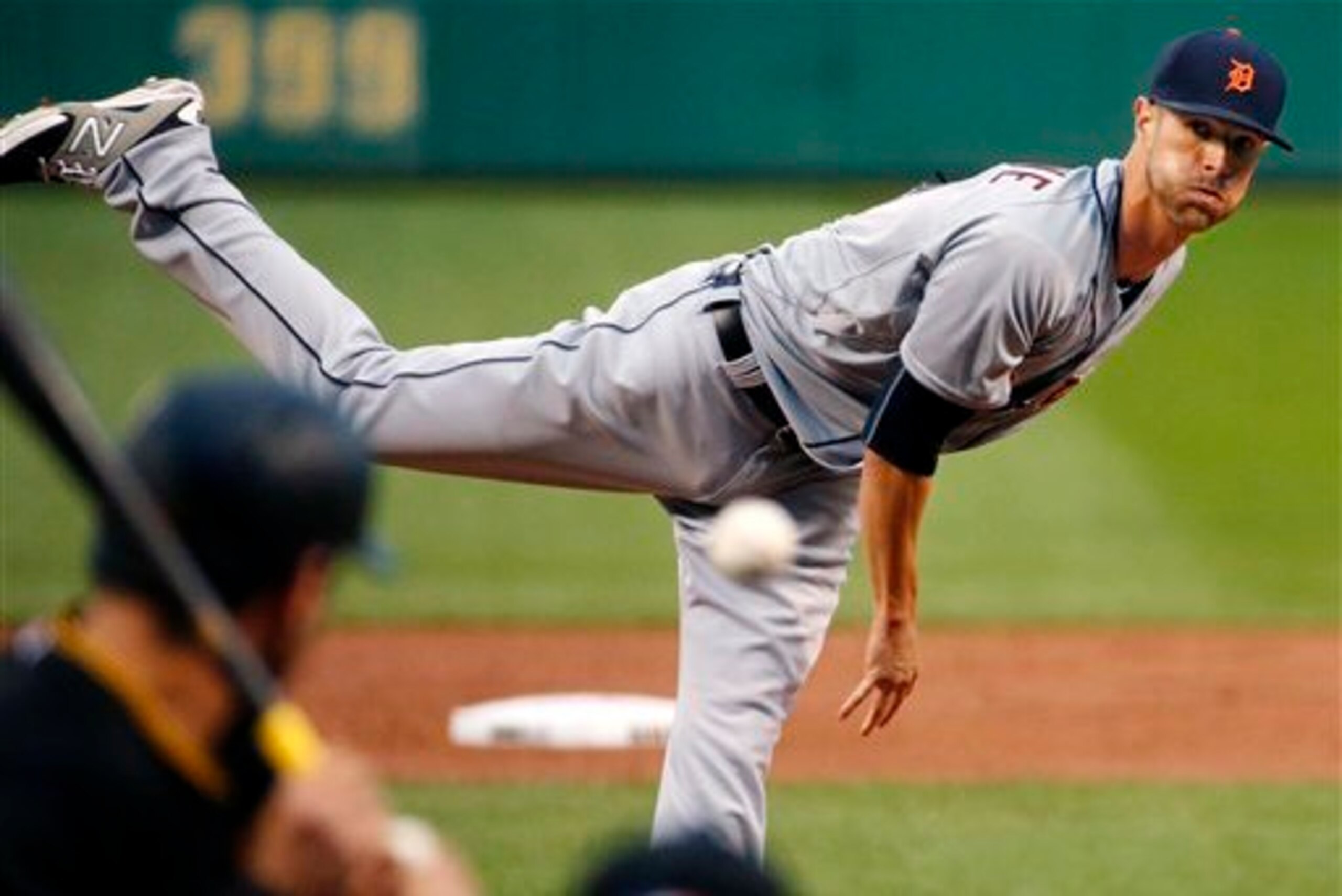

Early-Season MLB Phenoms You Should Not Take Seriously
Nothing captures the imagination—or attention—of baseball fans better than a red-hot start to the regular season. It's still early enough where we believe that maybe, just maybe, what we're seeing unfold before our eyes is for real, that "Player X" can sustain this kind of production for the next five months.
When "Player X" happens to be a youngster playing the part of a phenom, that only raises the excitement level. We tend to think of phenoms as first-year players, and while we'll try to stick with that, we're expanding the label to include players who are a bit older but are in their first few years as an everyday player.
Yet for all that excitement, the reality is that there's not a legitimate MVP or Cy Young Award contender in the bunch.
To be fair, there were a number of candidates that I could have included on this list, but those who made the cut were selected for one primary reason—the hype surrounding their torrid starts—which is close to getting, well, silly.
Now, before you start throwing things and causing a scene, remember: Nobody's saying that these players aren't any good. They're just not this good.
Here's why.
*Note: Players who have gotten off to scorching starts after battling injury for the past few seasons, like San Diego's Yonder Alonso, and those firmly entrenched as part of a platoon, like Oakland's Stephen Vogt, were considered but ultimately cut from the list.
A healthy Alonso might very well be a .300 hitter, as many thought he'd be back when he was a prospect, while Vogt's inability to hit left-handed pitching makes him far too one-dimensional to consider a "phenom."
SP Archie Bradley, Arizona Diamondbacks
1 of 7
2015 Stats: 3 GS, 2-0, 1.45 ERA, 0.96 WHIP, 18.2 IP, 7 H, 5.3 BB/9, 5.8 K/9
It seems like Arizona has been waiting an awfully long time for Archie Bradley to make an impact in the big leagues, and the seventh overall pick of the 2011 draft has done just that across his first three major league starts.
Bradley hasn't been the power arm everyone expected, however, as he's transforming himself into a ground-ball pitcher by keeping his fastball low in the strike zone, as noted by FanGraphs' Jeff Sullivan. It's working thus far, as only Houston's Dallas Keuchel (69.2 percent) has a higher ground-ball rate than Bradley (65.2 percent).
But Bradley's shaky command—11 walks to 12 strikeouts—makes you wonder whether he'll be able to consistently locate his fastball down in the zone, and it touches on perhaps the bigger issue facing the 22-year-old:
He's become a two-pitch pitcher.
Per Brooks Baseball, Bradley has become even more reliant on his heater than he's been in the past, occasionally mixing in his curveball and, every once in a while, dusting off his changeup.
Pitchers with only two offerings don't tend to last very long in major league rotations, and if Bradley begins to miss his spots with his fastball more frequently, things could get ugly quickly.
SP Anthony DeSclafani, Cincinnati Reds
2 of 7
2015 Stats: 4 GS, 2-1, 1.04 ERA, 0.77 WHIP, 26 IP, 14 H, 2.1 BB/9, 7.3 K/9
Unlike some of the other pitchers on this list, a lack of strikeouts and a plethora of walks aren't issues for Anthony DeSclafani. In fact, his current walk and strikeout rates are right around where they were over parts of three minor league seasons—2.0 BB/9 and 7.7 K/9.
The 25-year-old has mixed up his arsenal, becoming less reliant on his fastball and turning to his sinker, slider and changeup far more frequently than he has in the past, according to Brooks Baseball, and he's been able to keep batters off-balance as a result.
When batters do make contact, they're hitting the ball right at a Reds defender, as evidenced by DeSclafani's minute .174 BABIP. But his history tells us that isn't something that will last, as he's spent the bulk of his professional career with a BABIP hovering in the low .300s.
That doesn't doom him to failure by any means—he pitched to a combined 3.23 minor league ERA despite posting a BABIP under .300 only once, over a 12-game stretch for Triple-A New Orleans in 2014. But it suggests that the outs he's recording now are going to turn into hits, pushing his ERA and WHIP upward and making him look far less phenom-like than he currently does.
2B Dee Gordon, Miami Marlins
3 of 7
2015 Stats: 87 PA, .390/.407/.463, 5 XBH, 10 RBI
It's been said that history repeats itself, and Dee Gordon is a subscriber to that theory. So if the tear that Miami's speedy second baseman has been on seems familiar, its because we watched him do the same thing last year.
In fact, his numbers are shaping up to be eerily similar:
| 2014 | 96 | .344 | .375 | .478 | .385 |
| 2015 | 87 | .390 | .407 | .463 | .444 |
It's true that Gordon's BABIP is always on the high side. That tends to be the case for players with big-time speed, as they're able to leg out more hits from ground balls than their slower counterparts.
But both the .385 BABIP he posted last April and the .444 clip he's carrying now are well above his career mark of .334, which tells us that some regression is in store.
So do his career splits, which tell us that between May 1 and August 31, Gordon is a .254/.302/.323 hitter—a sizable drop from the .320/.346/.398 triple-slash line he carries in the regular season's bookend months.
Gordon's inability to draw a walk is always going to conspire against his on-base percentage being where you'd like to see it for a guy with wheels like his, and ultimately, the balls that are finding holes now will soon start smacking into the leather of a defender's glove.


SP Shane Greene, Detroit Tigers
4 of 7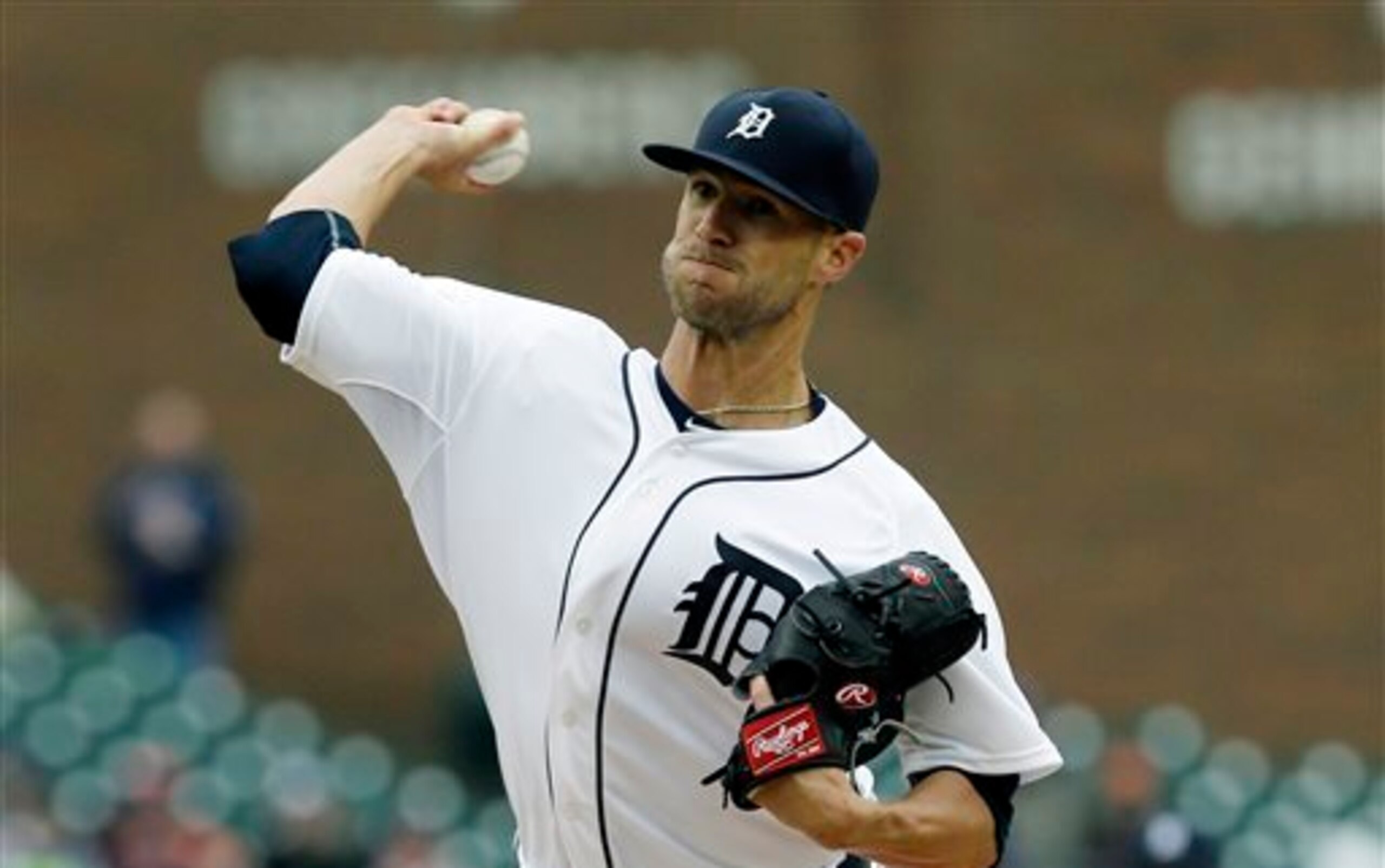
2015 Stats: 4 GS, 3-1, 3.00 ERA, 1.04 WHIP, 27 IP, 21 H, 2.3 BB/9, 4.0 K/9
A day before the Cleveland Indians rocked Detroit's Shane Greene for eight earned runs over four innings on April 24, Neil Greenberg of The Washington Post went into detail as to why Greene's red-hot start for the Tigers was a mirage.
As Greenberg noted, both Greene's astonishing drop in strikeouts and increased fly-ball rate were significant reasons to be concerned, and he's right. After averaging more than a strikeout per inning for the New York Yankees in 2014, Greene has fanned only 12 over 27 innings of work this year.
While he still induces plenty of ground balls, at least three of the fly balls that have been hit off Greene would have left the yard had they been hit elsewhere—one of the reasons why his xFIP of 4.23 is a far more accurate representation of his effectiveness than his 3.00 ERA.
Greene is a good, young pitcher, and the Tigers will win more often than not when he toes the rubber. But a front-of-the-rotation arm he's not.
2B DJ LeMahieu, Colorado Rockies
5 of 7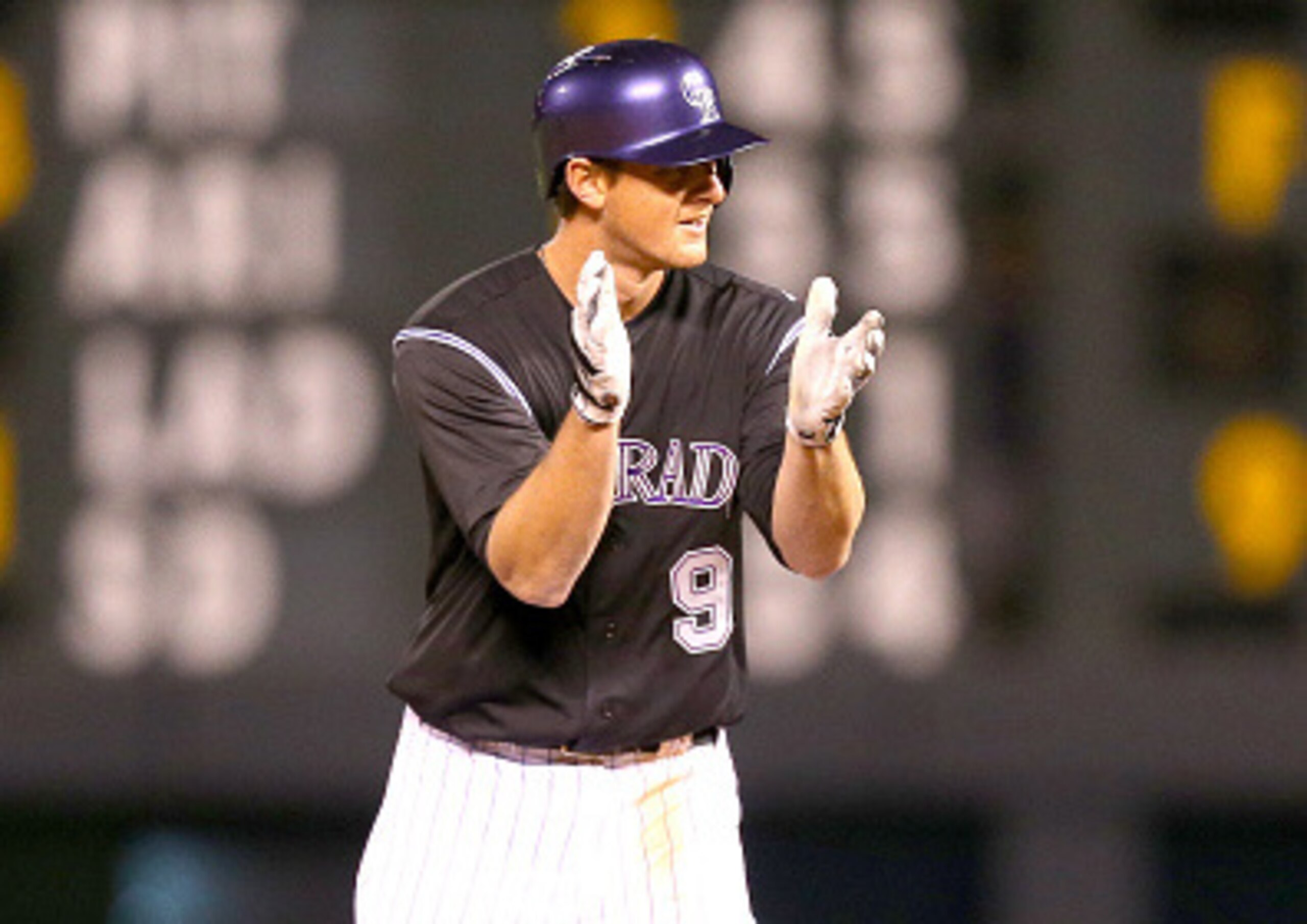
2015 Stats: 67 PA, .419/.455/.548, 5 XBH (1 HR), 12 RBI
A year ago, DJ LeMahieu's defense garnered him national attention and the first Gold Glove Award of his career. Now, it's the 26-year-old's bat that's got people talking.
While the rest of us might be surprised to see LeMahieu leading baseball with a .419 batting average, Colorado manager Walt Weiss isn't, as he explained to The Denver Post's Patrick Saunders:
"It was just a matter of time for DJ. Sometimes for guys like DJ, it takes a little bit longer to grab attention from those outside the game, and maybe even some inside the game. But as far as we are concerned around here, we know how valuable he is.
Over time, people start to appreciate him more. But it's also hard to ignore his hot start.
"
It's a hot start that LeMahieu has no chance of maintaining for long. While he's squaring up to the ball better than ever, resulting in a career-high 29.6 percent line-drive rate, it's an otherworldly .472 BABIP that has powered him to early-season success.
That's nearly 150 points higher than his career mark of .337, and it's a pace that's simply not sustainable, even with LeMahieu playing half of his games in Coors Field.
A career .283 hitter, LeMahieu may be poised for a breakout campaign, one that finds him posting the first of many .300 seasons going forward. But the best hitter in baseball, LeMahieu is not.
SP Nick Martinez, Texas Rangers
6 of 7
2015 Stats: 4 GS, 2-0, 0.35 ERA, 1.12 WHIP, 26 IP, 21 H, 2.8 BB/9, 3.8 K/9
After pitching to a 4.55 ERA and 1.46 WHIP over 140.1 rather forgettable innings for Texas in 2014, Nick Martinez wasn't a big part of the Rangers' plans in 2015. But injuries have once again decimated the team's rotation, forcing the 24-year-old into action.
What a difference a year makes.
Over four starts, Martinez has allowed only one earned run through four starts and is holding the opposition to a .223/.295/.255 triple-slash line. He's mixed up his repertoire of pitches, as FanGraphs' Neil Weinberg recently detailed, and he very well may be a better pitcher than anyone gave him credit for.
But Martinez isn't a Cy Young Award contender, much less the best pitcher in baseball.
Advanced metrics laugh at his minuscule 0.35 ERA, with a 3.36 FIP and 4.85 xFIP, and they're not wrong to do so. Given Martinez's inability to make batters swing and miss, he's relying heavily on the defense behind him and a healthy dose of luck to get by.
Over the past 10 seasons (2005-2014), only three starters have finished the season with an ERA below 2.75 while averaging less than six strikeouts per nine innings of work—Oakland's Bartolo Colon in 2013 and Miami's Henderson Alvarez and Washington's Doug Fister in 2014.
The odds of Martinez, with a total of 166.1 major league innings under his belt, becoming the fourth member of that group is slim to none, especially when you consider that the only luck hanging out around Globe Life Park in Arlington these days is bad luck.
2B Devon Travis, Toronto Blue Jays
7 of 7
2015 Stats: 70 PA, .359/.414/.688, 11 XBH (5 HR), 16 RBI
Since 1901, only two qualified rookie second basemen have finished the season with a slugging percentage higher than .500—Duke Kenworthy (.525) of the Federal League's Kansas City Packers in 1914 and Joe Gordon (.502) with the 1938 New York Yankees.
Devon Travis is on pace to shatter both of their marks. In fact, he's on pace to rewrite the record books for slugging by a rookie, regardless of position. Travis' .688 slugging percentage would trump current leader Rudy York's .651 mark, set with the 1937 Detroit Tigers, by nearly 40 points.
Not bad for a player who, at the time Detroit traded him to Toronto in exchange for center fielder Anthony Gose, ESPN's Keith Law called a "non-prospect."
Law later explained his stance on a youngster that Baseball America's Ben Badler had named Detroit's top prospect heading into 2015: "He has leaky hips and starts his swing from a dead stop with his hands loaded low, making up for it a bit with strength, something that won't work as well against major league pitching."
So far, Travis' mechanics haven't been a problem. But dropping one's hands tends to result in an uppercut swing, and Travis doesn't have the kind of raw power to maintain his ridiculous 23.8 percent home run-to-fly ball ratio. Those fly balls are going to start turning into outs.
While he's always made consistent contact, Travis doesn't generate a ton of line drives. Heading into games of April 26, his 15.7 percent line-drive rate ranked 148th out of 189 qualified batters.
Travis might very well be Toronto's long-term solution at the keystone—but he's not the second coming of Roberto Alomar or Jeff Kent at the plate.
Unless otherwise linked/noted, all statistics courtesy of Baseball-Reference and FanGraphs and are current through games of April 26.
Hit me up on Twitter to talk all things baseball: @RickWeinerBR




.jpg?w=2560 "Mahomes Asked OT to Leave Meeting")
.jpg?w=2560 "Jonathan Taylor Landing Spots 📍")

.jpg?w=2560 "Five Teams Eyeing Taylor")

