

Why Rafael Nadal Is No Longer Invincible on Clay
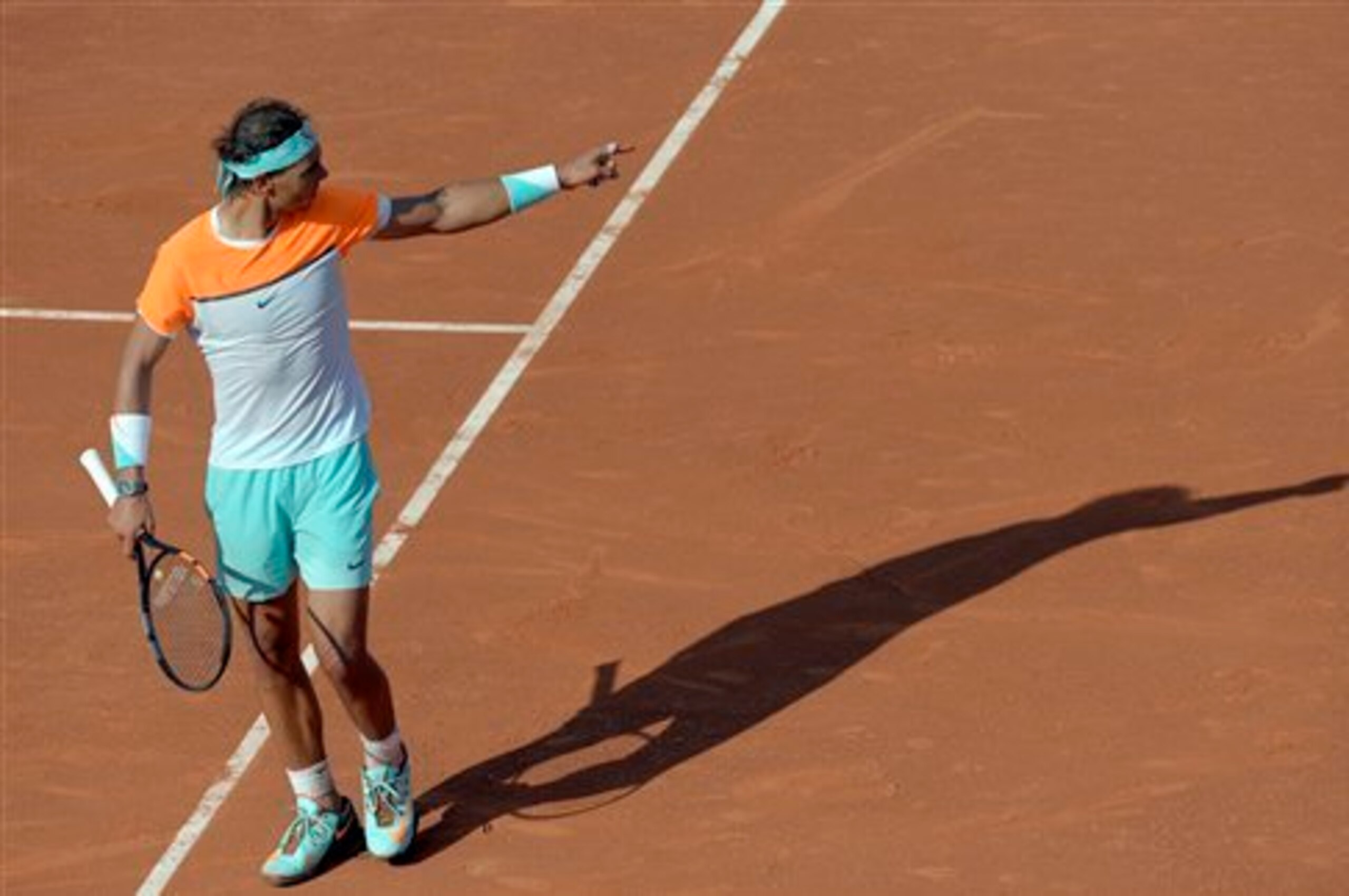
Rafael Nadal’s 6-4, 7-6(6) loss to Fabio Fognini at the Barcelona Open was another clay-court blow for the Spanish superstar. Not long ago, any defeat to tennis’s all-time King of Clay on Europe’s red clay would have been a screaming headline.
Not anymore.
Fognini, too often a volatile performer, collected the match point with all the emotion of a routine workout. And we know better than to suspect that he has reformed into a Roman stoic.
TOP NEWS
.jpg?w=2560 "Chiefs Giants Football")
Mahomes Told Teammate to Leave Meeting

Brown with an all-time summary of relationship with Tatum
.jpg?w=2560 "Titans Colts Football")
5 Teams Eyeing Jonathan Taylor
It’s a stark contrast to the ways opponents used to praise the heavens and fall down in utter disbelief. At the 2012 Madrid Masters, Fernando Verdasco fell on his back as if he had been shot, relishing in his triumph upon blue clay. Following victory at the 2013 Monte Carlo Masters, Novak Djokovic let out his primal bellow, arms stretched to the side as if he had defeated Zeus.
Fear Factor Missing
Make no mistake about it. Nadal is still a great player on clay, and the favorite against anyone on clay not named Djokovic. He will win more clay-court championships and flash legendary reminders of the past decade. He might even win another French Open title or two.
But his opponents don’t fear him the way they once did. Patrick Mouratoglou said as much a few weeks ago (h/t Peter Bodo for ESPN):
"For some years there wasn't a player who thought he could beat him on clay; they all went on the court already defeated. Now things are sure to change.
"
Technically Impatient
The change has been subtle, the erosion perhaps obscured by issues like injuries, rust, surgery, fatigue, age, equipment shifts and searches for confidence. This has not been a drop off a cliff but it has been a decline.
“I didn't have enough power or speed on my forehand. I didn't have control of the points with my forehand,” Nadal bluntly said in his press conference, according to ATP World Tour.
And that’s only the beginning. Nadal is no longer crushing opponents with his inside-out forehands. He rarely pulls it down the line with depth and accuracy. Opponents like Fognini can move up on the baseline and pounce on too many short balls, and they are unafraid to dictate on even terms.

When Nadal is struggling, Fognini and others are circling sharks. Their bites are bolder, producing more winners and forcing Nadal into uncharacteristic errors.
Nadal’s last great peak during the 2013 summer hard-courts series saw him open his offensive game with more aggression and variety on both sides of the court. And while this was the optimum way for him to evolve against Djokovic on hard courts, it may have produced a more confusing shift of tactics on clay.
It's a conundrum. He needs to keep evolving to stay ahead of the curve, but is he developing impatient, foreign habits? True, Nadal is no longer the relentless defensive retriever he was a few years ago, and so he has compensated with more offensive success and sometimes quicker points.
The trade-off has been more uncomfortable tennis, more errors and less control. Occasional experiments in strategy have undermined some of his grinding consistency, his ability to outlast and wear out his opponents through attrition.
He overtopped his forehand often enough against Fognini and misfired on too many short angles, either missing the court entirely or setting up his opponent. He lacks the punch that he needs to bruise and batter his opponents.
Searching for Rafa
Where is the Nadal who played as if he can suffocate his opponents as much mentally as physically? The psychological advantage has been mostly muted and his fist pumps are more to urge on his own belief than to rub out the hopes of his opponent.
There’s more desperation in his body language and game these days.
Nadal’s press conference was a soul-searching couch session, again through ATP World Tour, in which he called himself out repeatedly:
"Today is a bad day, but my challenge is to get back to my best level again and I will work until that happens. I have the conviction that it will happen.
It was a disaster today. Fabio played better than me and he deserved to win. I didn't deserve to win. Until I sort out the ups and downs I'm suffering from this season, I will continue to be vulnerable.
"
His challenge is clear and genuine. There’s a visible strain of suffering as he wilts away on red clay. This was his empire, built match by match through years and titles that may never be approached by another player. And now it’s increasingly difficult to hold on.
Madrid and Rome are calling and nobody is going to lay down. But it’s really less about the others and more about Nadal finding another streak of dominant consistency. Maybe a few great matches can turn his year. Despite his relative struggles to the Nadal of clay-court past, he could very well turn the ship and cruise through Roland Garros.
If so, he will need to reestablish his invincibility on clay, because right now it’s missing.



.jpg?w=2560 "NFL investigating Eagles")


.jpg?w=2560 "Jonathan Taylor Landing Spots 📍")