Signs That Some of MLB's Worst Early-Season Slumps Are Ending
April stats constantly trick MLB fans into reaching false conclusions.
Could the New York Mets make a World Series run? Maybe. Or maybe their patchwork bullpen will open the floodgates as their offense begins missing the injured David Wright and Travis d'Arnaud.
Maybe Chris Carter will maintain a slugging percentage below .200. Wait, no he won't. The three-true-outcome slugger always endures brutal rough patches, but everyone notices more without months of stats to bury the slump.
At any given juncture of the 162-game campaign, several prominent players will be mired in slumps. Unfortunately for those who are starting the season slow, everybody will notice now before paying no mind to the same scenarios in August.
These bad beginnings won't last forever. For some stars who are showering April with poor play, there are already signs of brighter days ahead. The basic numbers rarely tell the whole story, especially through such a small sample size.
Look deep enough and hope is on the horizon.
Albert Pujols, 1B, Los Angeles Angels
1 of 7
Despite his .196 batting average through 15 games, everything else looks OK enough for Albert Pujols, who has blasted three long balls through his funk.
This early in the season, no stat deceives as much as batting average. A mark that fluctuates from year to year proves especially vulnerable in April, when one game can cause a seismic swing.
Everything is fine if Pujols goes 3-for-4 during the Los Angeles Angels' next two tilts. Given his top-notch power and recovering discipline, the future Hall of Famer doesn't rely on average anyway.
Pujols won't finish the season with a .182 batting average on balls in play (BABIP), so there's no reason to fret his slow start. His keen eye remains present with a 9.7 walk percentage, and a .196 isolated power (ISO) shows he'll still laser balls over fences with the best of them.
Stephen Strasburg, SP, Washington Nationals
2 of 7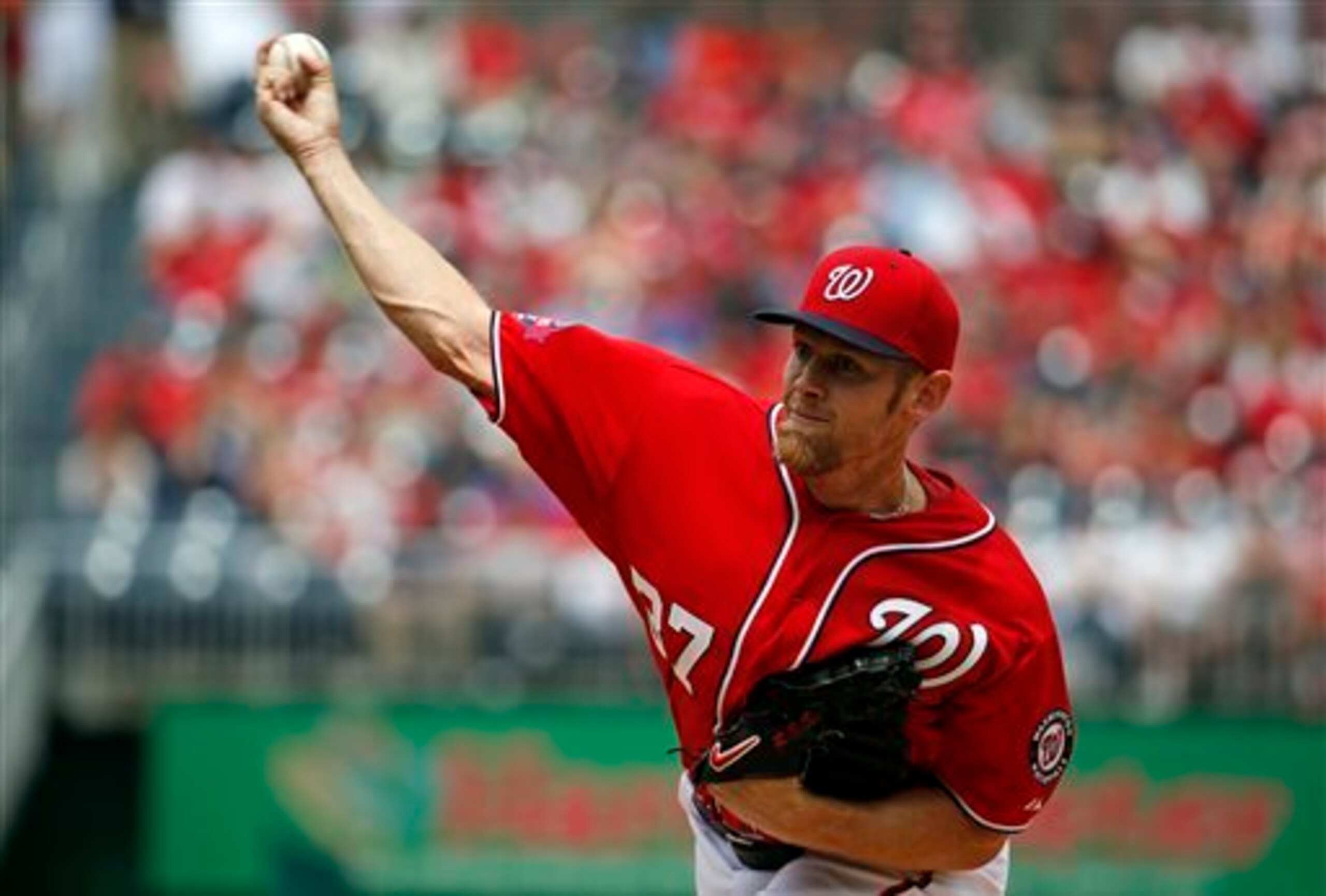
Stephen Strasburg offers a perfect case study about not fretting mid-April results. With the help of J. Walter Weatherman and a terrible Philadelphia Phillies offense, Strasburg taught everyone a lesson about getting fooled by small sample sizes.
A Cy Young contender entering 2015, Strasburg faltered with nine hits, three walks and six runs—three earned—during his season debut against the New York Mets. Then he relinquished 10 hits and five earned runs versus the Boston Red Sox.
He wasn't particularly sharp against the red-hot Mets and revamped Red Sox. During his third start of the year, however, Strasburg rebounded, allowing one run and striking out seven through 7.1 sharp innings.
Last year, he also started slow, exiting his opening four starts with a 6.00 ERA. He turned out just fine, as he will this season.
And that's why you don't abandon an established star after two rough outings.
Daniel Murphy, 2B, New York Mets
3 of 7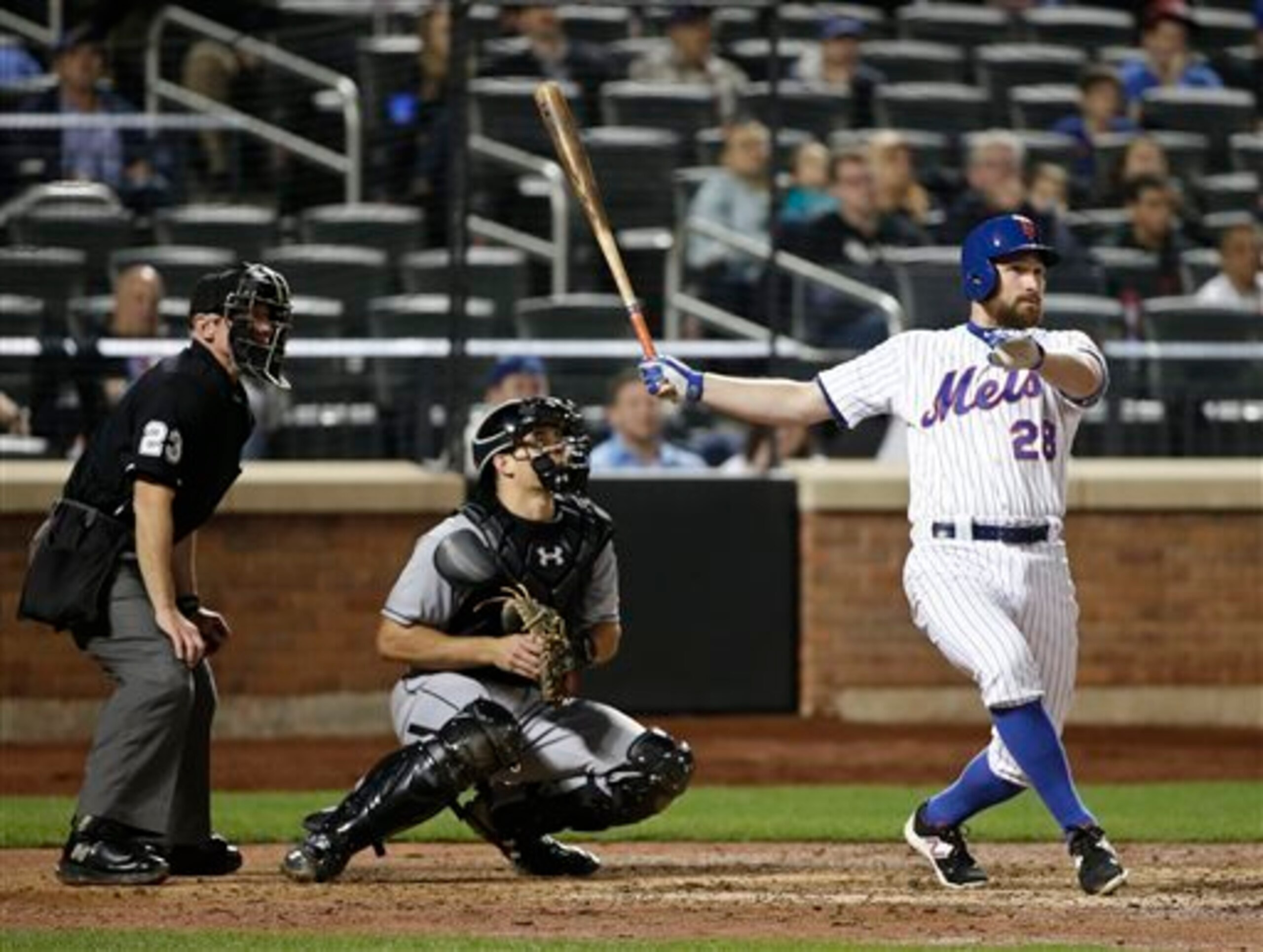
Daniel Murphy is a career .287 hitter who is currently batting .140. Six seasons of data seem more significant than a 15-game short story.
The usually steady Mets second baseman is battling off rust, as he pulled his right hamstring during spring training. Originally expected to start 2015 on the disabled list, Murphy might have benefited from another two weeks to make up for lost time in March.
So far the 30-year-old is making weak contact, generating a microscopic 6.3 line-drive percentage. He is, however, making contact, only ending three of 56 plate appearances via strikeout.
As long as he's healthy and keeps making contact, better fortune will eventually come his way. He'll never deliver glossy power or a tremendous walk rate, but Murphy has made a career of churning out hits.


Jon Lester, SP, Chicago Cubs
4 of 7
Jon Lester's issues throwing to first base have circulated this month. While that mental block will cost his new employer some runs if not fixed, the Chicago Cubs are more concerned with all the runners reaching base.
During his first three starts, the southpaw has yielded 24 hits and 12 earned runs. That's not great for a 31-year-old who is set to earn $155 million through 2020. A bloated 40.6 line-drive percentage, an indicator of the opposition making strong contract, is especially alarming.
But for now, Lester deserves the benefit of the doubt. His 60.2 percent strand rate is well below his career 74.6 percent rate, so many of those hits have been clustered together. Heck, his 2.88 fielding independent pitching (FIP), slightly below last year's 2.80 mark, still paints the portrait of an ace.
Did Chicago overpay for Lester? Probably. He sports a career 3.61 ERA, with last year's 2.46 ERA representing his only season clip below 3.20. The team accountants are sweating, but fans should still expect a high-quality starter who will help the club compete for a playoff spot.
Cole Hamels, SP, Philadelphia Phillies
5 of 7
Unlike everyone else listed, Cole Hamels has performed worse than his surface stats indicate. A solid Wednesday night outing lowered his ERA to a passable 3.75, yet his FIP still hovers at an ugly 6.45.
He has already relinquished seven home runs and a dozen walks through 24 innings, yet his numbers aren't atrocious due to a fortuitous .172 BABIP and 93.8 left on-base percentage. In simpler terms, he should thank his lucky stars all seven homers were solo blasts.
Doesn't this all mean Hamels will get worse? If your average Joe Schmo brandished the same FanGraphs page, then probably. Since this is a tried and tested ace with a 3.29 career ERA, he'll flourish after escaping this rough spot relatively unharmed.
On the bright side, the 31-year-old has manufactured 23 strikeouts and a 55.4 ground-ball percentage. He is also a notorious slow starter, posting a career 4.12 ERA over March and April regular-season games in his career. After he tossed six strong innings against the laboring Miami Marlins, the worst appears to be behind Hamels.
Carlos Gonzalez, OF, Colorado Rockies
6 of 7
In a sign of the bizarro world that is baseball data in April, Carlos Gonzalez is hitting .080/.115/.120 (3-for-25, one double) in Coors Field. On the road, he has managed a more serviceable .258/.294/.452 slash line during eight games.
There are many worries regarding Gonzalez. Actually, scratch that. There are two. Will he stay healthy, and how will he hit away from Coors? If a healthy Gonzalez is slumping because of subpar home production, consider that a positive.
This is the same Gonzalez with a career .325/.383/.595 slash line inside his hitter's haven. If he hasn't accomplished anything in six home games, simply wait another six and hope an injury doesn't occur along the way.
The outfielder suffered his worst season last year, with his 24.9 strikeout percentage and poor road splits stifling his worth. His strikeout percentage is down to 16.7 percent, so stay patient and wait for a hot streak.
Cody Allen, RP, Cleveland Indians
7 of 7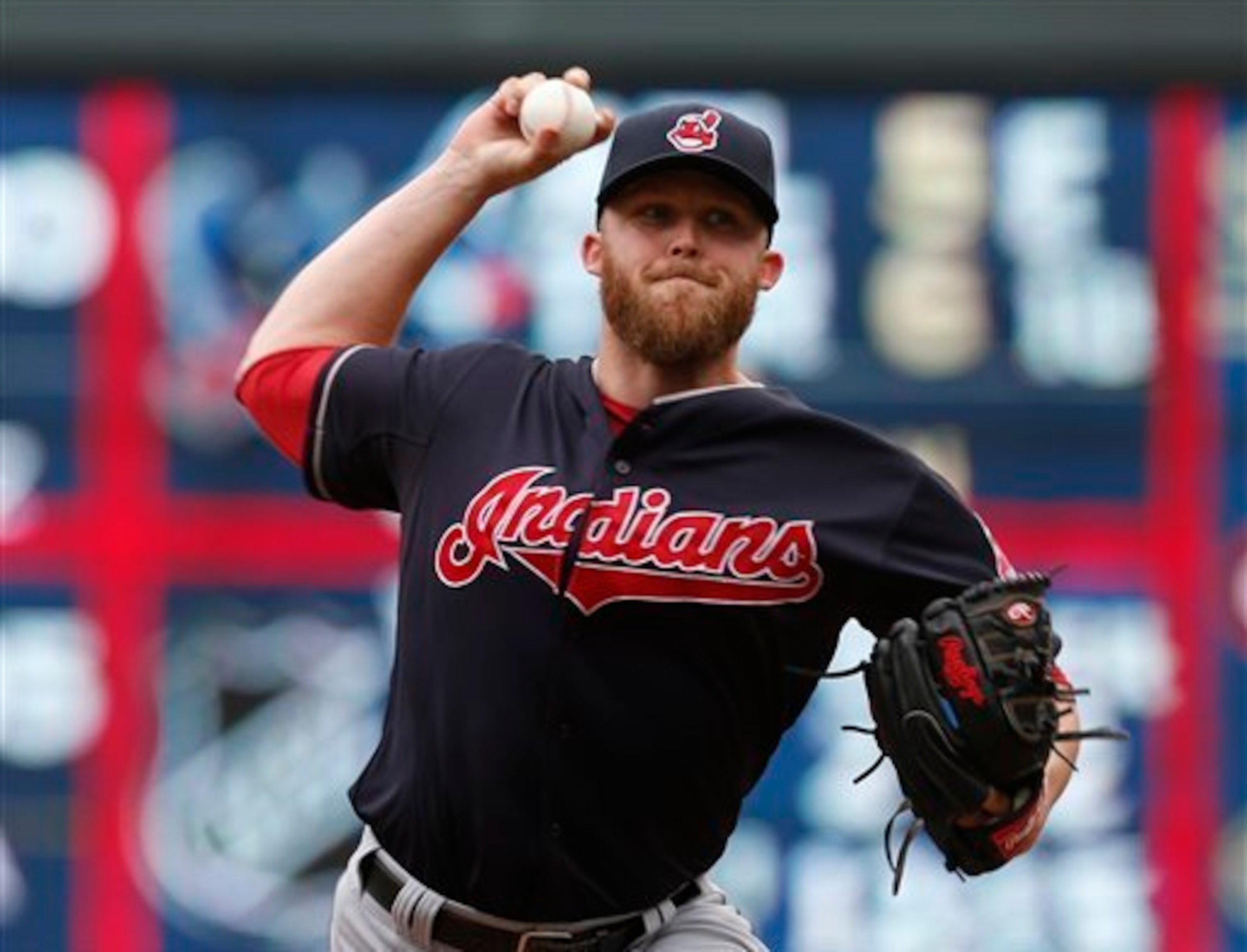
Cody Allen's first six relief outings have been puzzling, to say the least. The Cleveland Indians closer has twirled a hitless inning through four of those appearances. During the other two, he imploded.
Allen has twice become victimized to a tune of four runs. Combining April 11 and April 20's meltdowns, he surrendered 13 baserunners (nine hits, four walks), retiring only three batters before receiving a premature mercy pull each time.
As a result of those blowups, Allen—who holds a 2.84 career ERA in his fourth MLB season—now owns a ghastly 14.40 ERA through five frames.
After Allen's latest unraveling, manager Terry Francona insisted to Cleveland.com's Paul Hoynes that he won't make a ninth-inning change:
"Cody is about as trustworthy and dependable as anyone we have. Monday night wasn't a lot of fun, but if there's anybody we believe in, he's right at the top of the list. I hope so bad that we have a lead tonight and we can give it back to him. When you believe in somebody that much, some nights hurt. ... I think we believe in him so much, he'll be OK.
"
Francona stayed true to his word, and Allen rewarded his skipper's faith with a three-up, three-down save against the Chicago White Sox. Along with his ability to bounce back, a 3.27 FIP supports his skills, while an MLB-high .643 BABIP indicates brutal luck that will even out over a larger sample size.
He's already inflicted too much damage to match last year's 2.07 ERA, but Allen should right the ship as a valuable late-inning arm.
Note: All advanced stats are courtesy of FanGraphs.

.jpg?w=2560 "Mahomes Told Teammate to Leave Meeting")
.jpg?w=2560 "5 Teams Eyeing Jonathan Taylor")


.jpg?w=2560 "NFL investigating Eagles")
.jpg?w=2560 "Jonathan Taylor Landing Spots 📍")