


The 2015 Major League Baseball season has reached the midpoint of its first month and, with it, the deadline for all 30 teams to hand in their first tests.
Time to see how they did.
What we're going to do is grade the early performances of all 30 MLB teams. That means looking at their records, obviously, but more so at how they've played in the key phases of the game: offense, defense and starting and relief pitching.
Granted, it's way too early to know just how good or bad teams really are. The season won't be out of Small Sample Size Territory for another couple weeks. In the meantime, the general look and feel of clubs will be prone to wild fluctuations.
So, to be clear: We're not drawing any conclusions here. We're only evaluating first impressions.
If that sounds good to you, step into the box whenever you're ready.
Note: Stats courtesy of Baseball-Reference.com and FanGraphs, and are accurate going into games for Friday, April 17.
Arizona Diamondbacks
1 of 30
In the wake of a 98-loss season in 2014 and an offseason where rebuilding was the name of the game, the Arizona Diamondbacks were supposed to be a laughingstock in 2015.
But they've refused to be one so far. They're a respectable 5-5 through 10 games, and they own a plus-one run differential that says that's not a total fluke.
Led by hot hitting from Ender Inciarte, A.J. Pollock and Paul Goldschmidt at the top of the lineup, the D-Backs have a .242 average and a .680 OPS that's just shy of the league average of .690. And according to defensive runs saved, the D-Backs have also played solid defense with a plus-two rating.
But as many suspected it would be, Arizona's pitching has been dicey.
Though its starters have peripherals that suggest they've pitched better than their 5.01 ERA, the reality is that only Archie Bradley has stood out. Take away his 1.42 ERA, and the rest of Arizona's starters have produced a 6.07 ERA. Arizona's relievers, meanwhile, are lucky to have a 2.97 ERA despite a well-below-par 6.4 strikeout-per-nine rate and 1.2 home runs-per-nine rate.
So, though the D-Backs have been better than expected, don't be quick to call them good.
Grade: C
Atlanta Braves
2 of 30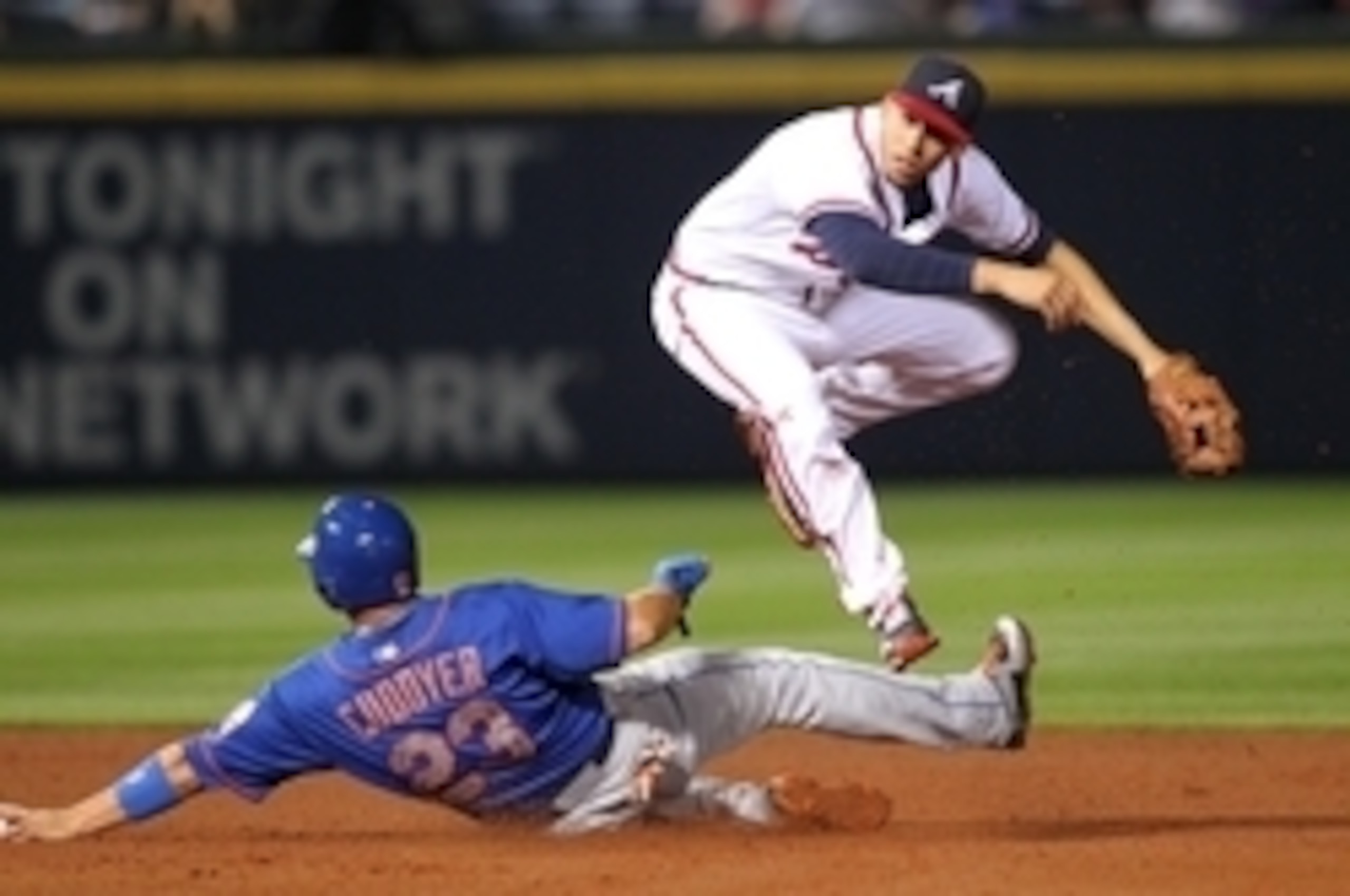
After new president of baseball operations John Hart jettisoned virtually all of Atlanta's stars over the winter, the Atlanta Braves seemed doomed to begin 2015 by falling flat on their faces.
So, of course they've been one of baseball's best teams so far. Though they've cooled off after winning their first five, they're still at the top of the NL East at 6-3.
It hasn't been an all-out dominant effort, as the Braves have just a plus-seven run differential. The club's offense has been roughly average with a .236 batting average and a .686 OPS. Also, Braves starting pitchers have made it interesting by being worse than league average in walks (4.1 BB/9) and strikeouts (6.3 K/9).
Fortunately, the Braves are excelling in two other areas. Their bullpen has had no trouble getting easy outs via strikeouts (9.8 K/9) and ground balls (56.6 GB%) en route to a 2.06 ERA. On defense, Andrelton Simmons is already dazzling as part of what defensive runs saved sees as a strong all-around effort.
So though the Braves' 6-3 record doesn't quite reflect a dominant team, they haven't gotten there purely by luck. They've played some solid baseball.
Grade: B
Baltimore Orioles
3 of 30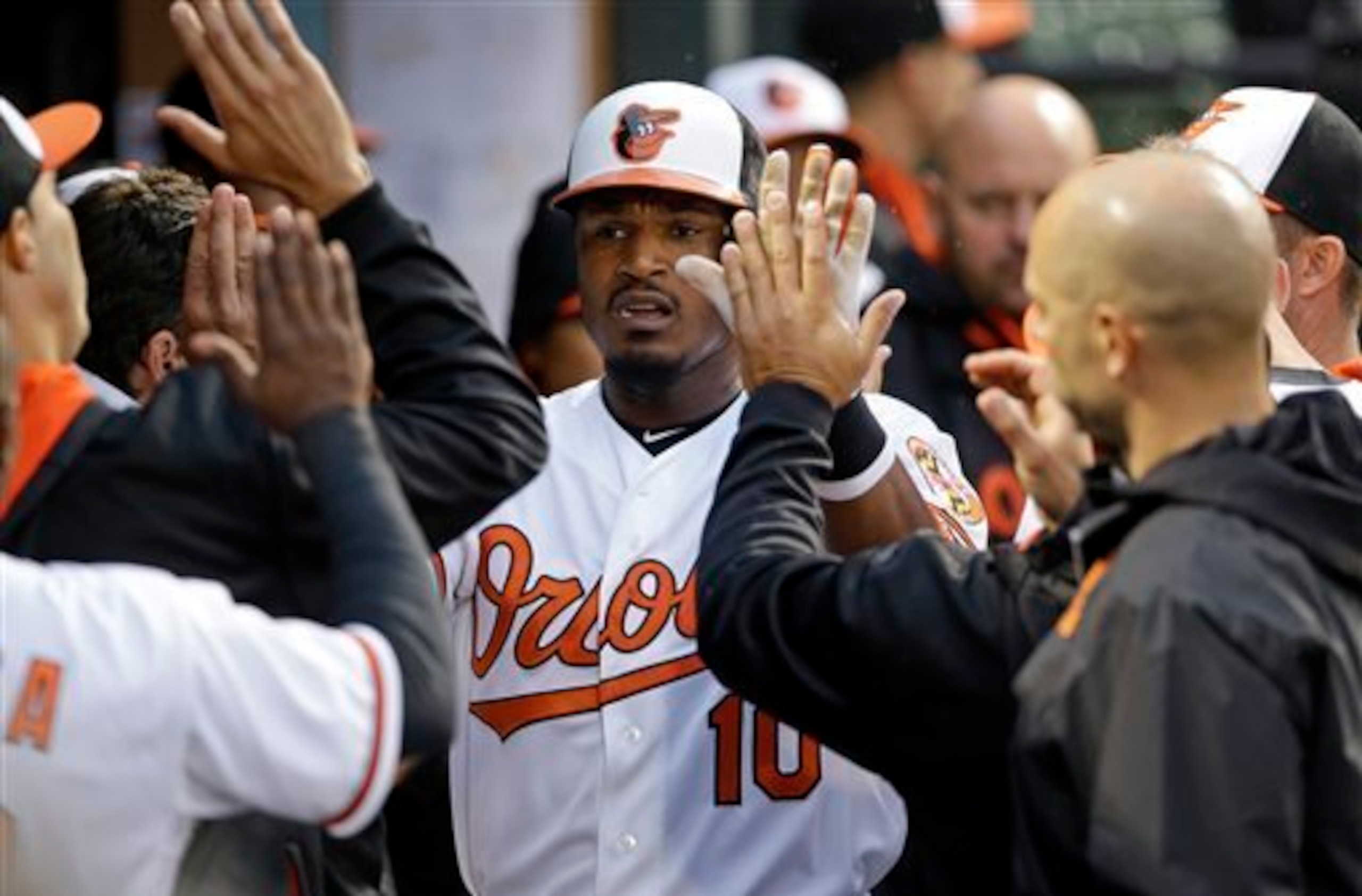
Depending on where you're coming from, the Baltimore Orioles are either that team with a knack for overachieving or that team that people really need to stop underestimating.
Right now, however, they're a team with a 5-4 record. That puts them in good-not-great territory, and their plus-one differential confirms it's where they belong.
Their starters own a 4.18 ERA that should be worse in light of their 3.6 BB/9 and 1.3 HR/9. Their relievers own a 5.23 ERA, largely because things have been shaky outside of Zach Britton and Brad Brach. They have a 1.11 ERA and 11-3 K/BB ratio. Everyone else has a 3.73 ERA and 21-10 K/BB.
Also, the Orioles are playing uncharacteristically poor defense. Defensive runs saved puts them at minus-four so far, with Adam Jones and Alejandro De Aza standing out as problem areas.
The good news? The Orioles are hitting .270 with an .813 OPS, and they're once again leading MLB in home runs with 15. Jones has more than made up for his iffy defense with a .406 average and four home runs, and his shockingly low strikeout rate suggests more goodness is to come.
So, it's the same old Orioles story: You can get away with a lot when you're swinging big bats.
Grade: C+



Boston Red Sox
4 of 30
The early results of the Boston Red Sox's offseason roster rebuild look pretty good. They've won each of their first three series, giving them a 6-3 record that puts them atop the AL East.
And yet, things really haven't been all that great. The Red Sox have beaten some weak competition, and have done it to the tune of a modest plus-six run differential.
Pitching has been Boston's main shortcoming. The 8.7 K/9 and 54.8 ground-ball percentage possessed by Red Sox starters can vouch that they haven't been as bad as their 6.16 ERA indicates. But outside of two dominant efforts from Clay Buchholz and Joe Kelly, mediocrity has been the name of the game.
The 2.97 ERA owned by Boston's bullpen says it's been better, but its peripherals suggest otherwise. Red Sox relievers have a modest 2.3 K/BB ratio and have given up five home runs in 39.1 innings.
The bright side, however, is that Boston's refurbished lineup is working out OK. It's hitting .253 with a .721 OPS, with a good balance of power (11 homers) and speed (seven steals). Mainly thanks to Mookie Betts' wizardry in center field, Boston's defense has the approval of defensive runs saved (plus one).
So, at least the Red Sox are winning games the way they're designed to win them.
Grade: B-
Chicago Cubs
5 of 30
The Chicago Cubs decided to go for it over the winter, hiring Joe Maddon and adding Jon Lester and other notables to a team that already had the foundation of a winner.
So far, it's working. The Cubs are 5-3 and tied atop the NL Central. And though they have only a plus-five run differential, that might actually undersell how well they've played.
Though the Cubs are hitting only .224, their .315 OBP and .390 slugging percentage amount to a respectable .705 OPS. Patience and power have helped, as they're among the National League elites in walk rate (10.1 BB%) and raw power (.165 ISO).
Chicago's starting pitching has been better than its 4.50 ERA indicates. That's happened despite strong strikeout (8.4 K/9) and walk (2.2 BB/9) rates, and Cubs starters have given up only one homer. The real culprit is a .373 BABIP that exists despite what defensive runs saved sees as good defense (plus four).
The one area the Cubs are overachieving is in their bullpen, which doesn't have the peripherals to match its sterling 1.38 ERA. But with Pedro Strop, Hector Rondon, Jason Motte and Phil Coke combining for 15 strikeouts, two walks and one earned run in 16.2 innings, there's a strong core in place.
All told, it's hard to find fault in how the Cubs have started the season.
Grade: B+
Chicago White Sox
6 of 30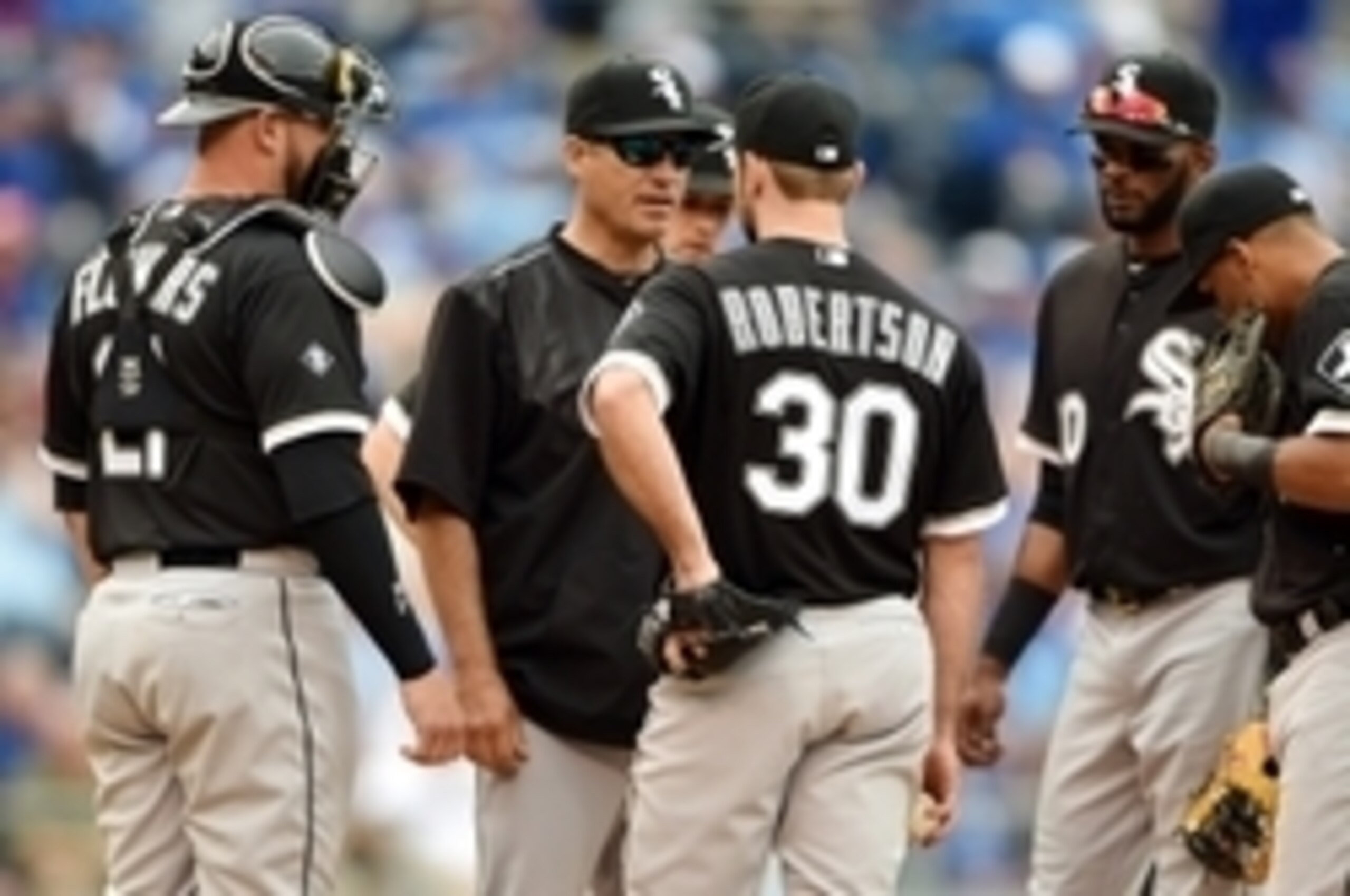
The Chicago White Sox entered 2015 carrying a lot of buzz after making several high-profile signings and trades over the winter, so it seemed fitting that their first test was against the reigning AL champs.
But that didn't go so well, as the White Sox got swept by the Royals in Kansas City. They've won three of four since but are still only 3-5 with a minus-14 run differential through eight games.
Pitching has been a problem, and both White Sox starters (5.00 ERA) and relievers (4.30 ERA) share the blame for that. Jeff Samardzija's rough start and Chris Sale's delayed return have made good starting pitching hard to come by. And outside of new closer David Robertson, who has eight strikeouts and one walk in four scoreless appearances, Chicago's bullpen has been hit or miss.
Meanwhile, Chicago's offense wishes it could say it's been hit or miss. It's been mostly miss, as White Sox batters are hitting just .227 with a .633 OPS. The problem begins with the White Sox's table-setters, as Adam Eaton and Melky Cabrera are both hitting under .200 with zero walks between them. This has meant a shortage of chances for hot hitters Jose Abreu, Adam LaRoche and Avisail Garcia.
In short, not exactly how the White Sox drew it up.
Grade: D-
Cincinnati Reds
7 of 30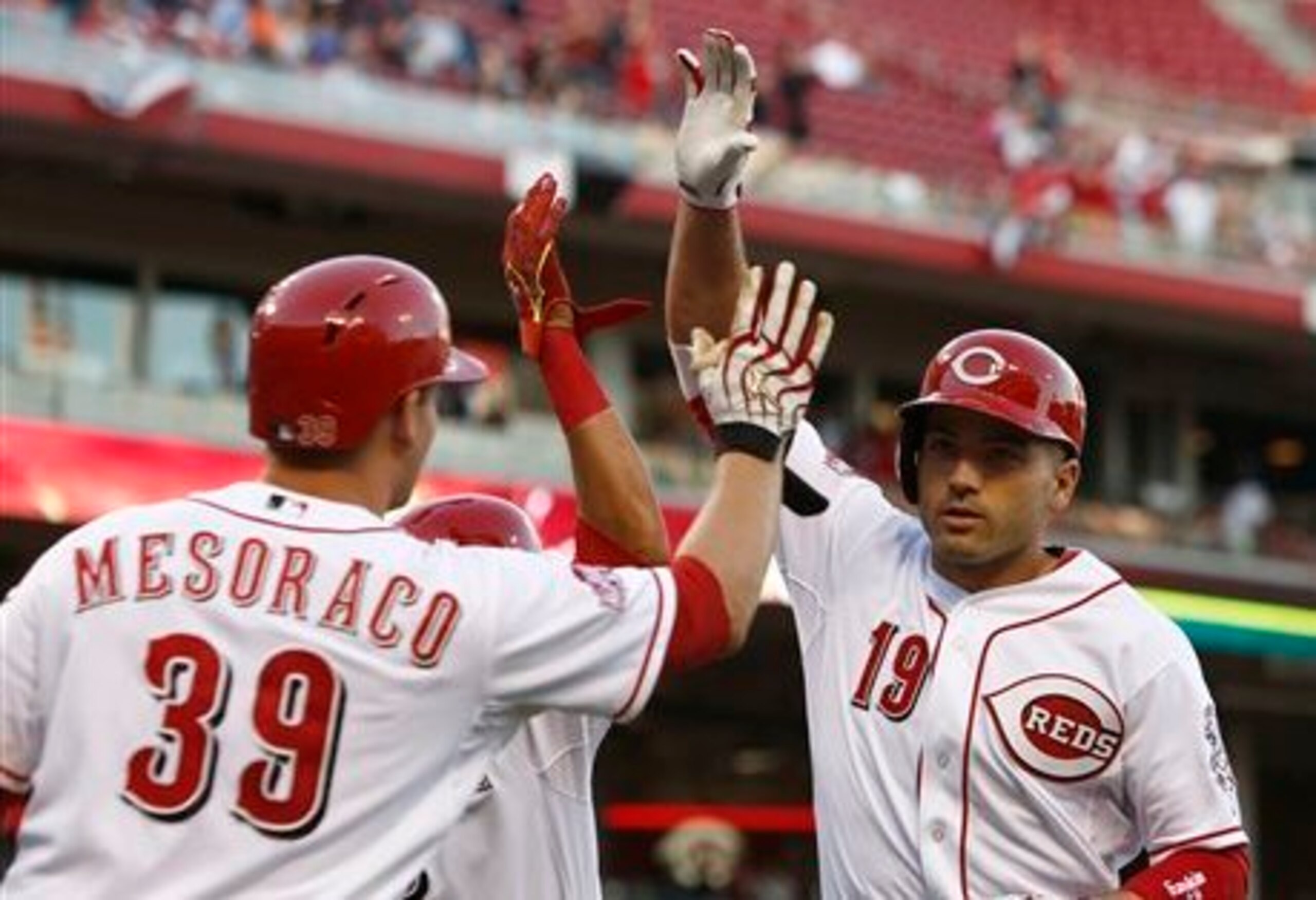
Projected by many to finish near or at the bottom of the NL Central, the Cincinnati Reds began 2015 with a four-game win streak that seemed to say, "Last place this, suckers!"
But that's starting to feel like history. The Reds have dropped four of their last five, and their 5-4 record comes with a minus-four run differential that says they're lucky to be over .500.
Cincinnati's offense is producing just a .218 average and .626 OPS, and in general has been too reliant on Joey Votto's hot hitting, timely dingers from Todd Frazier and timely stolen bases by Billy Hamilton. Meanwhile on the other side of the ball, defensive runs saved also sees a slow defensive start.
Fortunately, the club's starting pitching has been a lot better...to an extent. Though Reds starters boast a rock-solid 3.29 ERA, it's not because of depth. Johnny Cueto and Anthony DeSclafani have combined for a 1.00 ERA in 27 innings, and everyone else has pitched to a 5.63 ERA.
Cincinnati's bullpen has been even worse. It bears a 4.55 ERA and has struggled with walks (4.6 BB/9) and home runs (1.5 HR/9). Aroldis Chapman has been outstanding with a 0.00 ERA and 0.83 WHIP in his six innings, but the lack of a strong bridge to him is a developing problem.
All told, Cincinnati's slump is a better reflection of its quality than its hot start.
Grade: C-
Cleveland Indians
8 of 30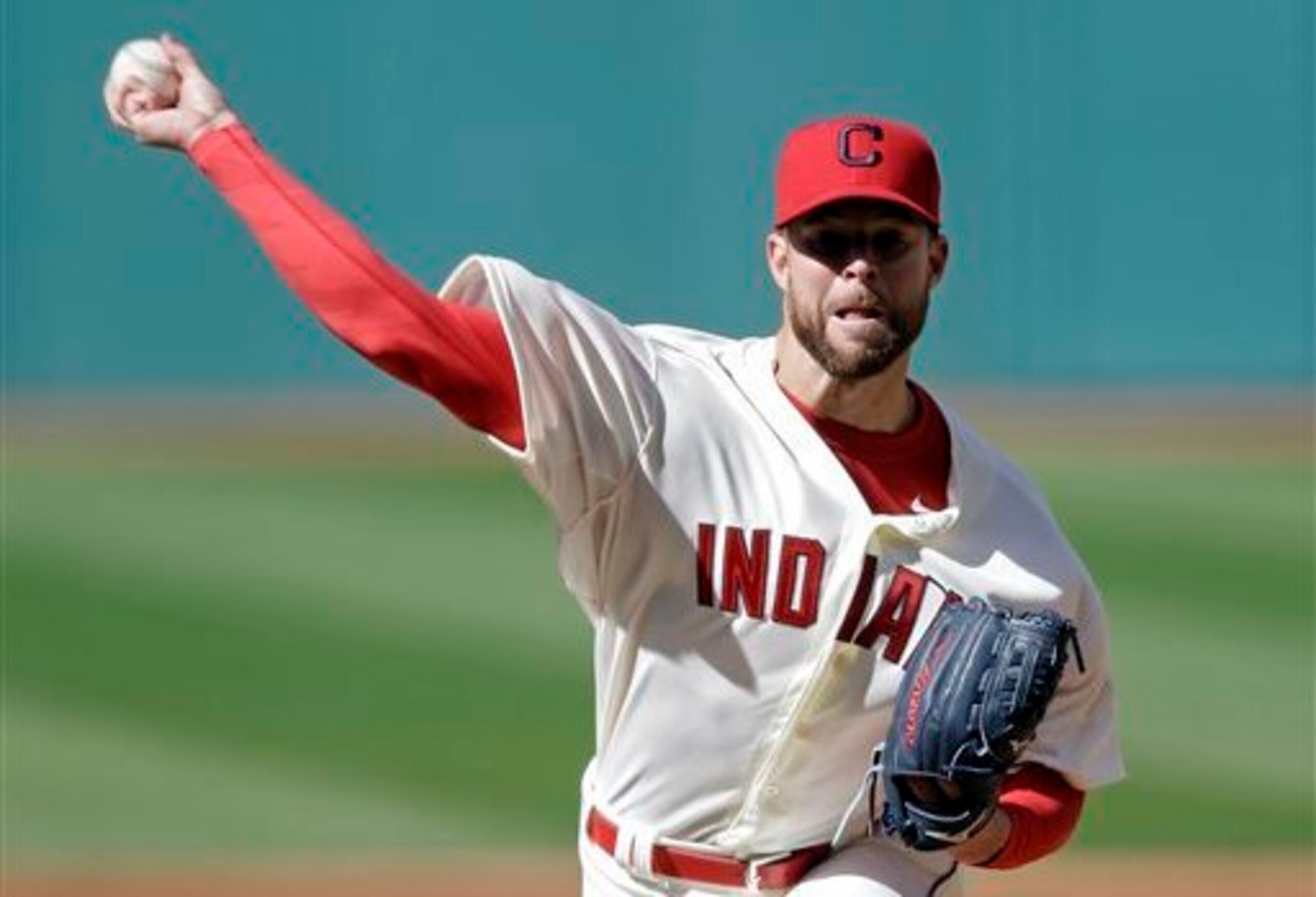
Thanks largely to what looked like an excellent starting pitching staff, the Cleveland Indians entered 2015 as a trendy pick to dethrone the Detroit Tigers in the AL Central.
Instead, it's the Tigers who are largely responsible for Cleveland's 3-5 record and minus-seven run differential, as they thoroughly outclassed the Tribe in a three-game sweep at Progressive Field.
Part of the problem was that the Indians just couldn't hang with the Tigers offensively, and that speaks to an early theme. Indians hitters are batting just .224 with a .611 OPS. They're striking out a lot with a 22.6 strikeout percentage, and not making up for it with power. The Tribe have hit only four homers and slugged just .327.
The guys in the lineup aren't getting it done in the field, either. The Indians are already double digits below zero in defensive runs saved. Factor in a bullpen that has an AL-high 4.8 BB/9 and a 1.1 HR/9 mark, and things have been a little too shaky late in games.
The one bright side has been Cleveland's starting pitching. It's been a lot better than its 4.58 ERA indicates, as Indians starters have a whopping 12.8 K/9 that easily overrules its mainly Trevor Bauer-induced 4.1 BB/9. It's early yet, but they've looked overpowering.
Now all the Indians have to do is get everything else figured out.
Grade: D+
Colorado Rockies
9 of 30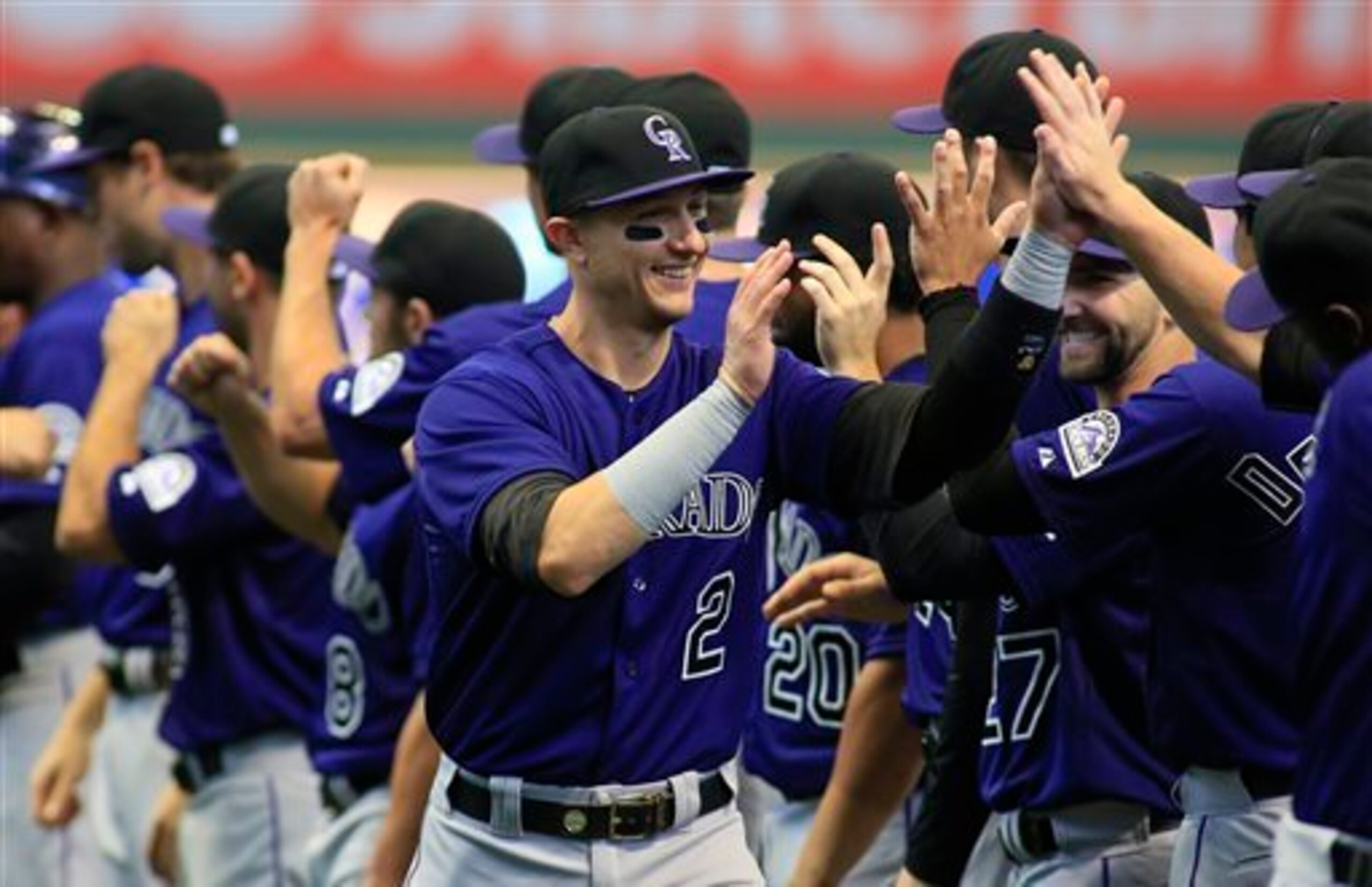
The Colorado Rockies didn't get the memo that they were supposed to suck this year. They've started the year with a 7-2 record, a plus-20 run differential and, most shockingly of all, a perfect 6-0 road record.
However, it is a stretch to say the Rockies have been playing against type.
Rockies teams can always hit, and that's how this one is getting the job done. They're hitting .301 with an .807 OPS, and that includes marks of .295 and .802 on the road. Ask adjusted OPS, and it'll say only Carlos Gonzalez and Justin Morneau are below-average hitters thus far.
The Rockies have also pitched well, as their 2.41 ERA is second behind only the St. Louis Cardinals in the National League. Their bullpen has a 1.91 ERA even despite LaTroy Hawkins' early struggles closing games, and their starters have pitched in a 2.76 ERA.
But let's stop right there. Rockies starters may have a low ERA, but they also have the second-lowest strikeout rate (5.7 K/9) and highest walk rate (4.6 BB/9) in the majors. Colorado's merely solid plus-one showing in the defensive runs saved column makes it hard to chalk up its success to great defense.
So no, the Rockies haven't been perfect. But that aside, they have been pretty darn good.
Grade: A-
Detroit Tigers
10 of 30
The Detroit Tigers seemed to downgrade over the winter, losing Max Scherzer to free agency and Rick Porcello in a trade and bringing in merely solid replacement parts for their needs.
But right now, they're sitting pretty with an 8-1 record and a whopping plus-33 run differential. Even more impressive is how they've played only three games at home, going 5-1 on the road.
Also impressive: How the Tigers have played truly excellent baseball across the board.
Led by a vintage-looking Miguel Cabrera and the powerful J.D. Martinez, the Tigers are hitting .312 with an .867 OPS and a strong combination of power and speed with 10 homers and 13 steals. The guys doing the hitting have also played superb defense, as defensive runs saved already puts them at plus-12.
Things are clicking on the mound, too, as Tigers starters have a 1.61 ERA and their relievers have a 2.95 ERA. Their starters have only a 6.13 K/9 rate, but they're making up for that with an elite walk rate (1.5 BB/9). Their relievers also have an elite BB/9 rate at 2.0, and they've yet to allow a home run.
So, it turns out all you have to do to get on a 144-win pace is play flawless baseball.
Grade: A+
Houston Astros
11 of 30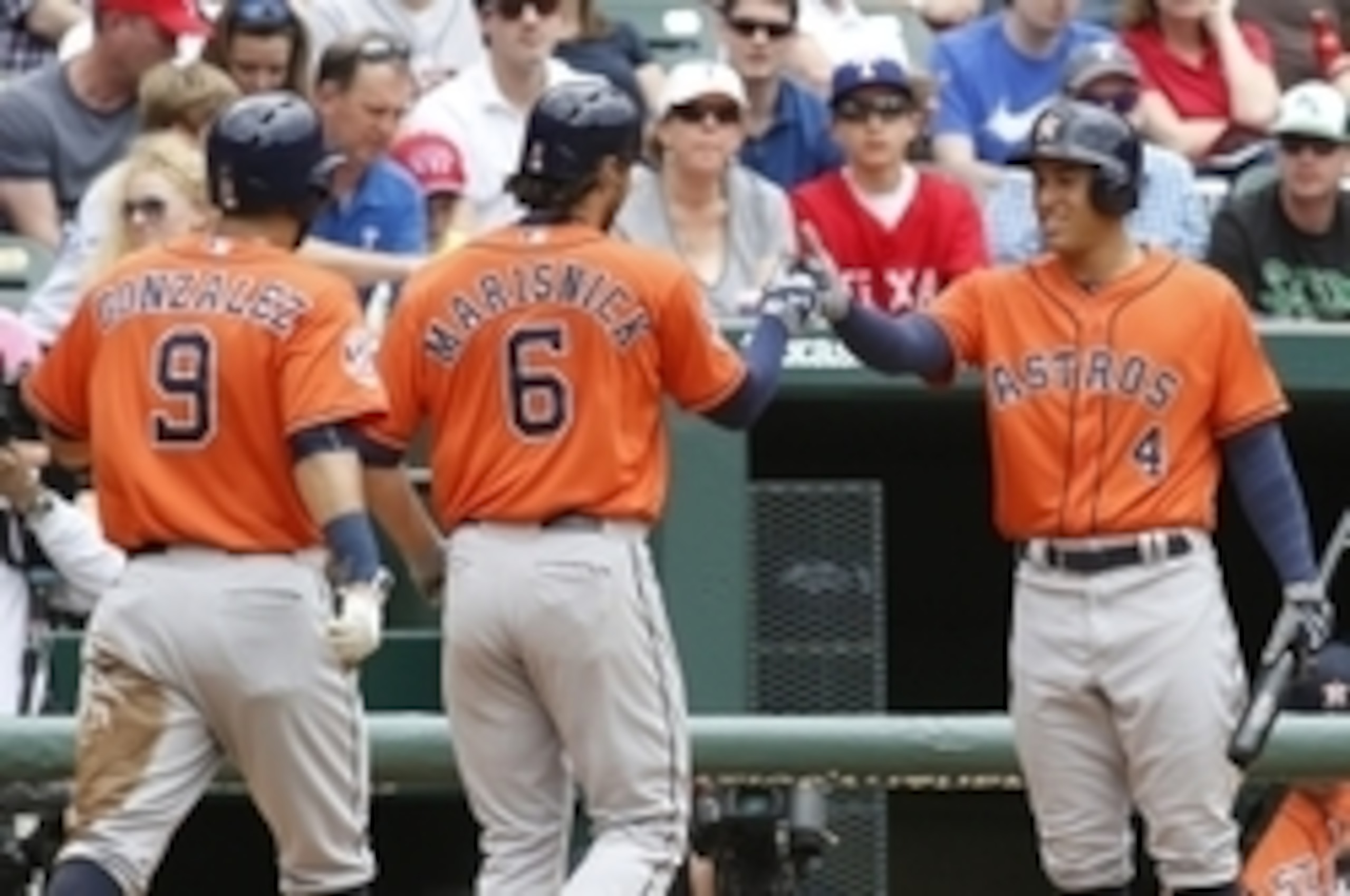
The Houston Astros have my vote as a potential surprise contender, but things could be off to a better start. They're 4-5 through nine games, with four of those five losses coming in their own backyard.
They also boast a minus-eight run differential, and a sluggish offense is mainly responsible for that. Their collective 27.0 strikeout percentage is the highest in MLB, and overall they're hitting just .204 with a .638 OPS. Overall, they've scored an AL-low 23 runs.
Houston's starting pitching, meanwhile, has been a bit lucky. Astros starters have a respectable 3.53 ERA, but the whole rotation hasn't been clicking. Dallas Keuchel and Collin McHugh have combined for a 2.86 ERA and 22-8 K/BB ratio in 25.2 innings. Everyone else has combined for a 5.74 ERA and 12-9 K/BB in 25.1 innings.
The Astros have been good in two areas, however. Their relievers own a 1.59 ERA, and that's bolstered by strong strikeout (8.7 K/9), walk (1.6 BB/9) and ground-ball (50.6 GB%) rates. And though hardly eye-popping, the club's plus-three rating in defensive runs saved is solid.
The Astros need to get their bats and most of their starting pitchers going, but overall things haven't been too bad.
Grade: C-
Kansas City Royals
12 of 30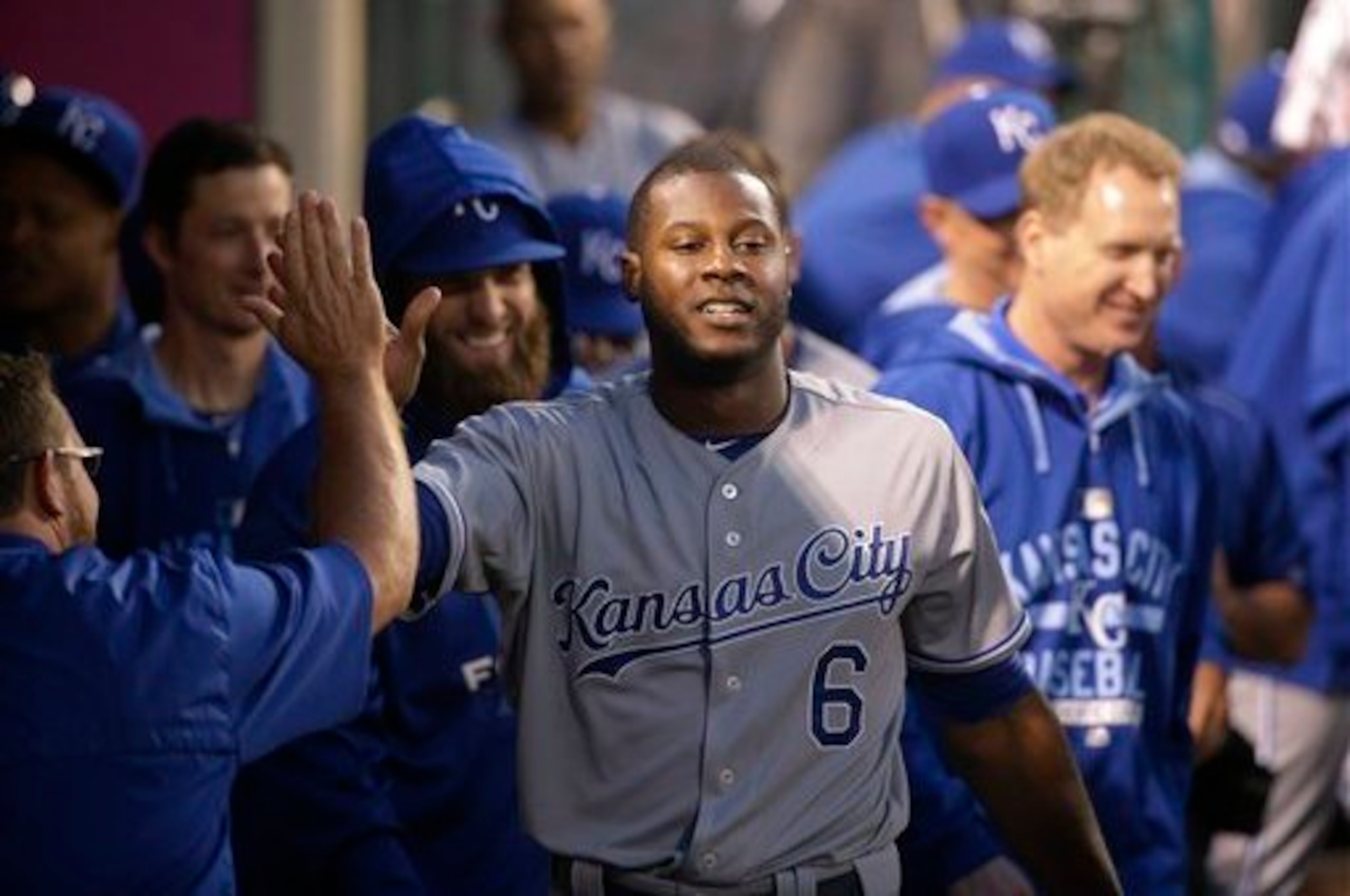
The Kansas City Royals didn't do much over the offseason to improve on last year's American League pennant-winning team. If anything, they seemed to downgrade.
But you'd never know it from looking at what they've done so far. The Royals are no longer undefeated after dropping their last two, but they still boast a 7-2 record and plus-29 run differential.
Royals hitters are batting .316 with an .875 OPS and have scored an MLB-high 58 runs on the strength of an ability to put the ball in play (MLB-low 12.4 K%), 11 home runs and eight stolen bases. Meanwhile on defense, the Royals began Friday with plus-13 defensive runs saved, the best in the majors.
This makes it easier to forgive how the club's rotation has been pitching to contact with a 5.8 K/9. That and its excellent 1.5 BB/9 rate suggest it deserves better than its 4.12 ERA.
Lastly, Royals relievers own a characteristically excellent 1.11 ERA. The trio of Kelvin Herrera, Wade Davis and Greg Holland has done its part with 11 strikeouts, one walk and no runs in 10 innings.
So, maybe the Royals are more than just a one-year wonder.
Grade: A
Los Angeles Angels
13 of 30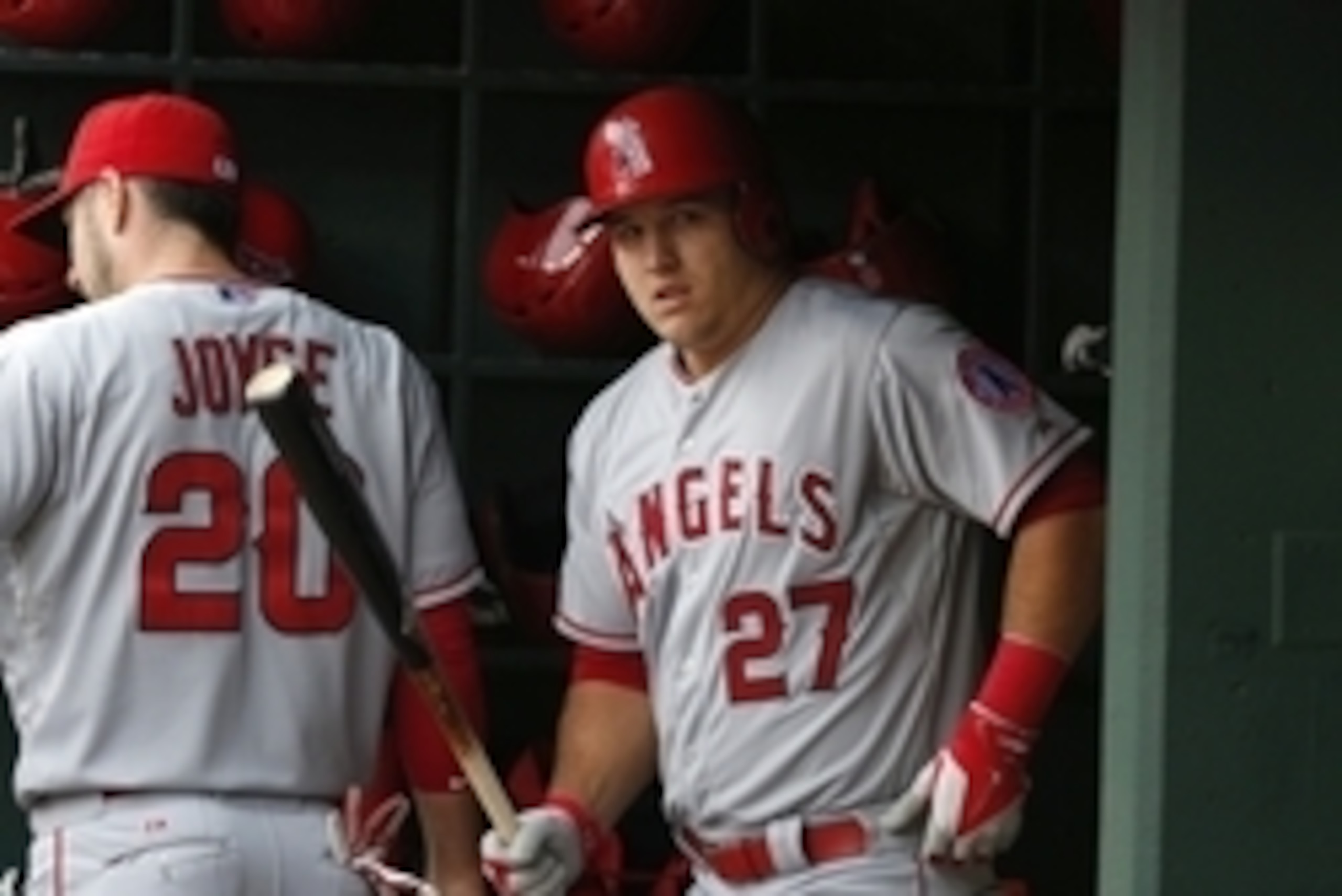
The Los Angeles Angels are trying to follow up a 2014 season that saw them win a league-best 98 games.
So far, that effort could be going better. Though the Angels have won two of the three series they've played, they're still 4-5 with a minus-five run differential.
The Angels are hitting only .231 with a .654 OPS as a team, and even that is probably giving them too much credit. Outside of reigning MVP Mike Trout, who's hitting .438 with a 1.094 OPS, nobody else in the Angels lineup is especially hot.
Run prevention has also been an issue. Defensive runs saved puts them among the worst defensive teams in the majors at minus-seven. Magnifying that issue is how Angels starters have a cringe-worthy 5.8 K/9 to go with their 5.26 ERA. Clearly, Garrett Richards' return can't come soon enough.
Thank goodness for the Angels bullpen. It owns a 2.60 ERA, and has earned that mainly via a 9.8 K/9 and 1.6 BB/9. Huston Street has been especially good with three perfect outings.
Aside from the bullpen, however, it just hasn't been pretty.
Grade: D
Los Angeles Dodgers
14 of 30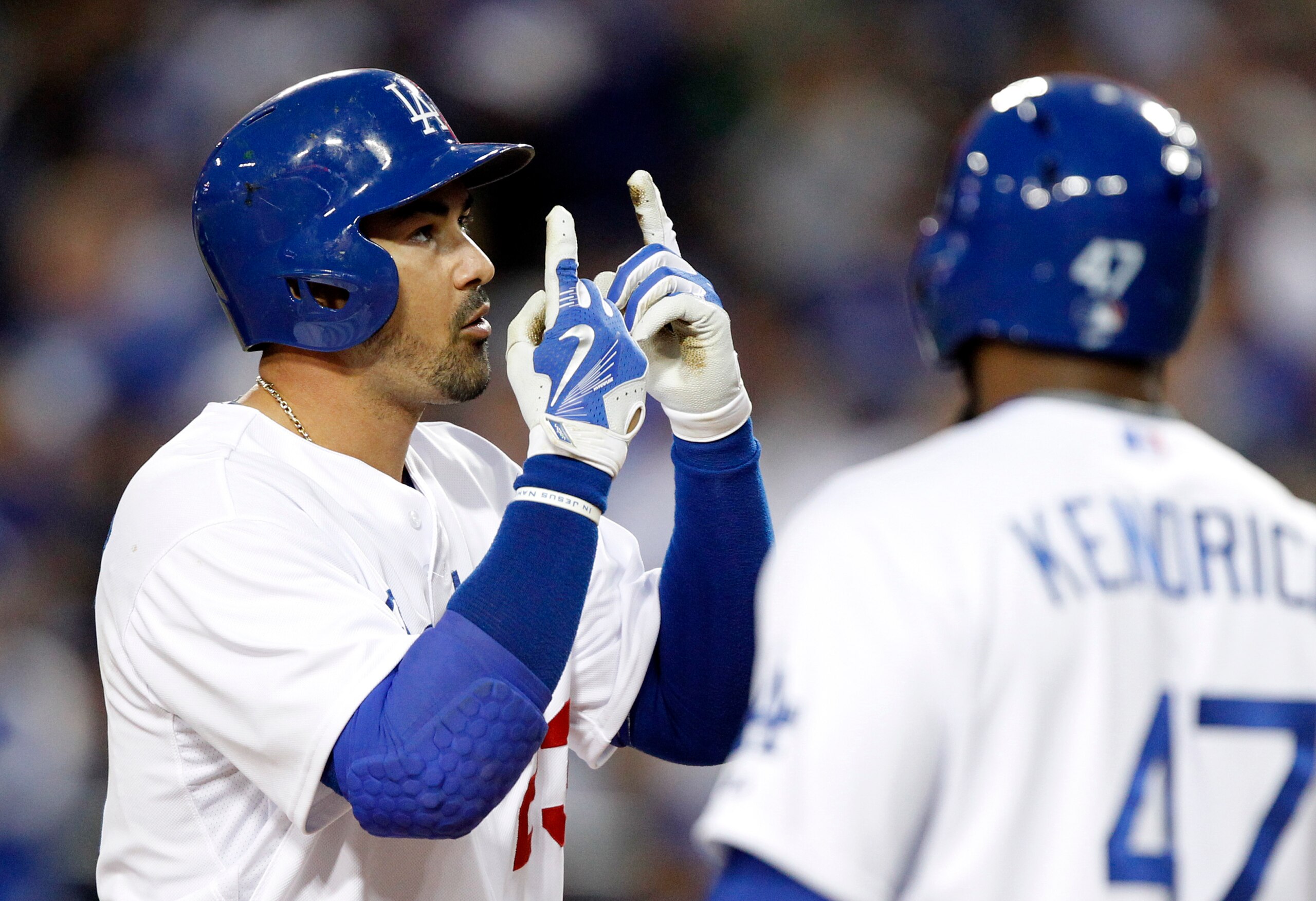
The Los Angeles Dodgers shook things up over the offseason, and the results so far are pretty good. The Dodgers are 6-3 through nine games, despite a modest plus-three run differential.
One thing that hasn't helped is that the club's vaunted starting rotation hasn't gotten on track yet. Clayton Kershaw has been hittable, and Brandon McCarthy's home run problems have overruled his early strikeout binge. It's largely because of their struggles that the rotation's 4.47 ERA fits despite stronger peripherals.
Defensive runs saved says the Dodgers defense hasn't helped the cause too much, but there's certainly no faulting the offense. Adrian Gonzalez has led the way in an offensive charge that's produced a .274 average, an .846 OPS and a National League-high 13 home runs.
What's also helped is that the Dodgers bullpen has been truly excellent, pitching to a 2.79 ERA that actually undersells how good it's been. Dodgers relievers have an NL-best 12.7 K/9, as well as a solid 2.8 BB/9. Also, the next home run they allow will be their first.
If the Dodgers can get their starting rotation going, watch out. They'll be dangerous.
Grade: B
Miami Marlins
15 of 30
The Miami Marlins were busy bees over the offseason, and they improved enough to have some people thinking that they would win the World Series in the end.
But so far, not so good for the Marlins. They're 3-7 with a minus-10 run differential through their first 10 games, and they've gotten there because very little has worked.
The Marlins can't hit, as they're batting just .228 with a .645 OPS. That's been a collective effort, as Dee Gordon has been their only consistent hitter and Giancarlo Stanton is just now starting to come around.
But their pitching has actually been worse. Both Miami's starters (4.82 ERA) and its relievers (4.91 ERA) have high ERAs, and weak peripherals to match. The starters have an MLB-low 5.2 K/9 rate and a 1.4 HR/9 rate to match it. The relievers have kept the ball in the park (0.3 HR/9) and missed bats (8.6 K/9) well enough, but they also have the league's second-worst walk rate with a 4.9 BB/9.
The only thing the Marlins have done well is play defense. Defensive runs saved put them at plus-two heading into Friday's action, largely thanks to quality work by Stanton in right field and Adeiny Hechavarria at shortstop.
If you want to do better than 3-7, however, you need to do better than that.
Grade: D-
Milwaukee Brewers
16 of 30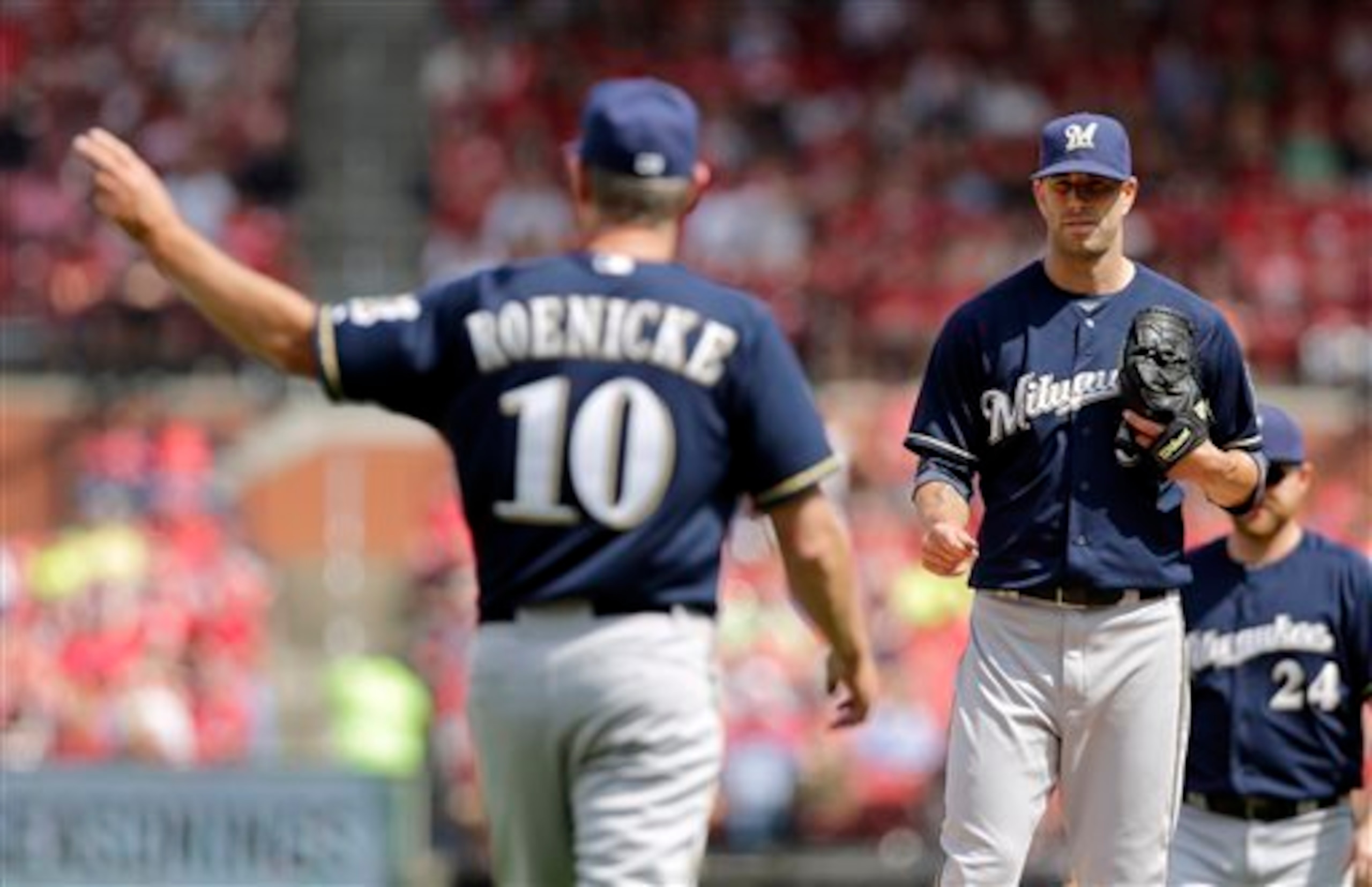
When we last saw the Milwaukee Brewers in 2014, they were mired in a funk that took them from atop the NL Central to the outside looking in on the postseason.
They're having trouble pulling out of that funk in 2015. They're just 2-7 through nine games, and with an ugly minus-25 run differential to match.
That's largely owed to their slumping offense. Beyond hitting just .223 with a .601 OPS, it's produced only three home runs, one stolen base and, of course, an MLB-low 23 runs. And with a modest plus-two in the defensive runs saved column entering Friday, Milwaukee's lineup isn't excelling at run prevention either.
The Brewers pitching staff has felt the effects, particularly the starters. They have an ugly 5.40 ERA that, granted, they've sort of asked for with just a 6.5 K/9, but their struggles have more to do with one of the highest BABIPs in the majors at .361. That ERA is as much a product of bad luck as it is bad pitching.
Fortunately, the pitching coming from the Brewers bullpen has been legitimately good. Brewers relievers have a 2.70 ERA, and a 9.0 K/9 and NL-low 1.5 BB/9 to go with it.
But that's pretty much it for Milwaukee's bright spots. It's been a sluggish start to the season.
Grade: D-
Minnesota Twins
17 of 30
It seemed nobody had high hopes for the Minnesota Twins to snap their four-year streak of 90-plus losses in 2015. And so far, it sure looks like not getting excited was the right idea.
Though the Twins are coming off consecutive wins against the previously red-hot Kansas City Royals, they're only 3-6 with a minus-24 run differential. That latter figure accurately reflects how pretty much nothing has gone right for them.
Minnesota's lineup is batting just .221 with a .584 OPS, and that's been a collective effort. They began Friday's action with not a single player above the average mark in adjusted OPS. Things have also been bad in the field, as the Twins entered Friday with a minus-12 defensive runs saved.
That's part of the explanation for why their pitching has an MLB-worst 5.57 ERA, but not all of it. Twins starters have racked up too few strikeouts (5.7 K/9) and allowed too many home runs (1.5 HR/9). Their relievers haven't allowed that many dingers but have left too much to chance with an MLB-worst 4.0 K/9.
Though they don't have the worst record in the majors, an argument can be made that nobody has played worse baseball than the Twins so far.
Grade: F
New York Mets
18 of 30
The New York Mets didn't come into 2015 as the presumed favorite in the NL East, but they did come in as something of a trendy sleeper pick.
They've looked more than capable of living up to that so far, as they're 7-3 through 10 games. That they have only a plus-11 run differential does reflect how they haven't had many comfortable wins, but the driving force in their close victories has been awfully impressive.
That would be their pitching. Mets starters have a 3.03 ERA, and their relievers have a 2.28 ERA. Both marks are backed up by strong peripherals, most notably an elite 4.9 K/BB ratio for the starters and a 9.1 K/9 for the relievers. It's the Matt Harvey, Jacob deGrom and Bartolo Colon trio that's really stood out, as they've combined for a 2.18 ERA and 39-5 K/BB ratio in six starts.
With pitching that good, the Mets haven't needed a lot of offense or defense. But they've gotten just enough of both. They're hitting .245 with a .679 OPS, and defensive runs saved put them at minus-two heading into Friday's action. Not ideal, but acceptable, considering their pitching.
Those who liked the Mets before the season saw a team that was going to pitch a lot and hit just enough. So far, that's exactly what they've been doing.
Grade: B
New York Yankees
19 of 30
After missing the postseason in 2013 and 2014, the New York Yankees didn't look committed to getting back there in 2015 during the offseason.
They certainly don't look headed in that direction, as they're just 3-6 through nine games. The bright side is that they have just a minus-four run differential, which reflects how they've at least been competitive.
Though the common perception seems to suggest otherwise, this is mainly thanks to their offense. They're hitting only .227, but they have a .707 OPS that mainly comes courtesy of their power. They've hit 13 home runs, and entered Friday as the only team with five players with at least two homers.
It's too bad that defense has been a problem. The Yankees have made 10 errors and are deeply in the red in defensive runs saved. These struggles have the attention of Yankees GM Brian Cashman, who told Wallace Matthews of ESPNNewYork.com that the club's defensive mistakes have been "shocking."
Bearing the brunt of this has been the Yankees' pitching, which owns a pedestrian 4.04 ERA. The staff's strong strikeout (8.7 K/9) and ground-ball (50.0 GB%) rates suggest it deserves better, but maybe not. No Yankee starter outside of Michael Pineda has looked good, and Dellin Betances has been a major sore spot in a bullpen that's walked 4.1 batters per nine innings.
So though it really hasn't been downright ugly for the Yankees, it hasn't been pretty, either.
Grade: D
Oakland Athletics
20 of 30
The 2015 Oakland A's couldn't look more different from the 2014 Oakland A's in terms of personnel. But in terms of performance, there really hasn't been as much of a drop-off as some expected.
The A's are only 5-5, but they have one of the majors' best run differentials at plus-23. That's mainly the product of a refurbished lineup that's come together remarkably quick.
The A's are hitting .292 with a .785 OPS, and adjusted OPS reveals only two subpar hitters among their regulars. And though they've hit only six long balls and stolen two bases, they're hitting a superb .349 in an MLB-high 125 plate appearances with runners in scoring position.
Oakland's defense has also been good with a plus-five mark in defensive runs saved, but its pitching has probably benefited a bit too much from that. A's starters have a 2.52 ERA despite a modest 6.7 K/9 and 45.9 ground-ball percentage, and Oakland relievers have a 2.87 ERA despite an MLB-high 2.0 HR/9 rate.
As such, Oakland's 5-5 record is both totally indicative and not at all indicative of how well they've played. They've hit and fielded very well, but their pitching has been shaky.
Grade: B-
Philadelphia Phillies
21 of 30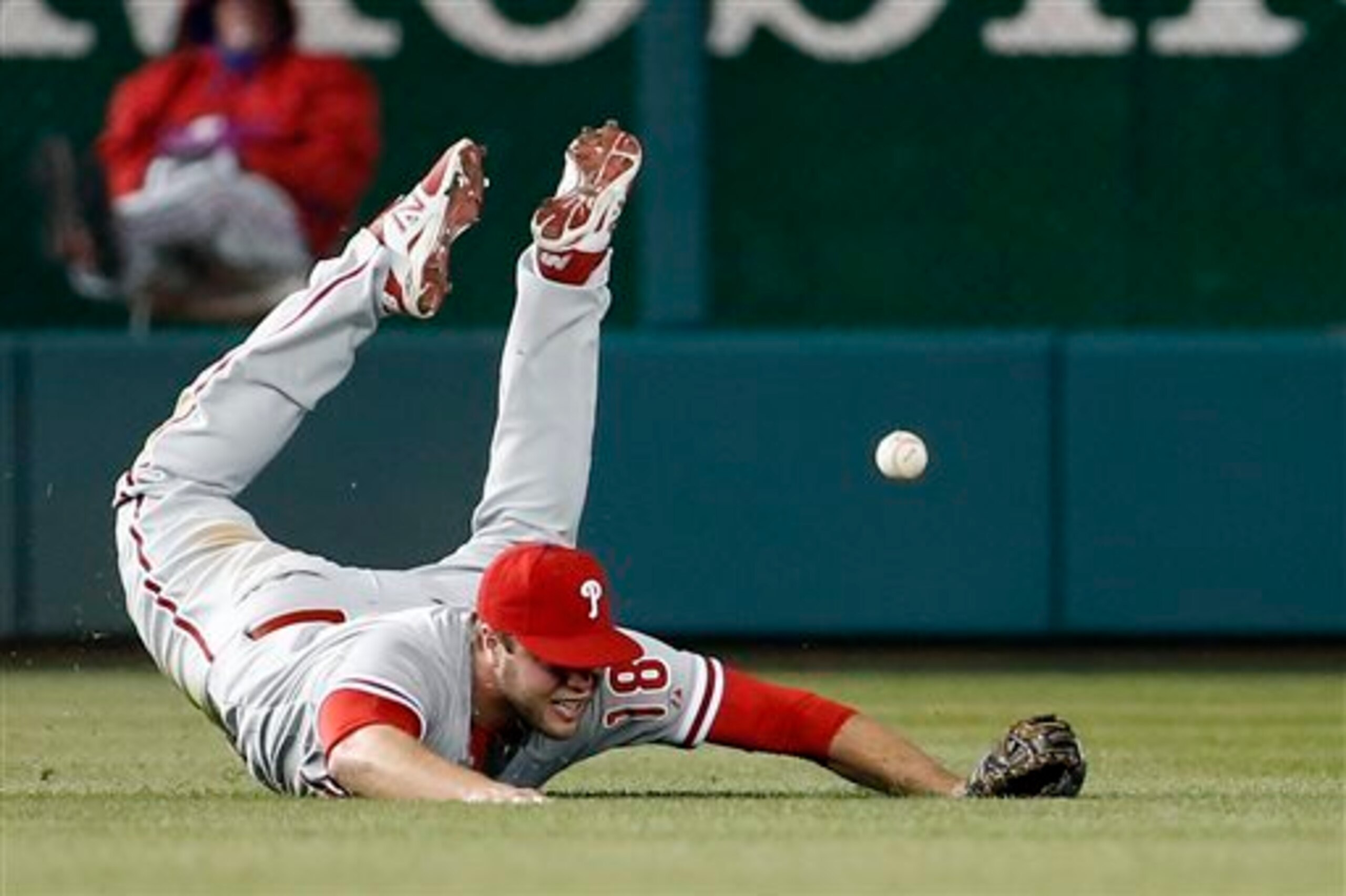
Well, none of us expected the Philadelphia Phillies to be any good. I guess we shouldn't be surprised that they aren't any good.
The Phillies are 3-7 so far, and with a minus-18 run differential. They've gotten where they are because the list of things they've been good at is pretty much empty.
The Phillies have neither hit nor defended well. They're batting .215 with a .602 OPS, and defensive runs saved put them at minus-four heading into Friday's action. So there's that.
Elsewhere, Phillies starters have a 4.66 ERA that oversells how good they've been. With a 6.9 K/9 rate, a 3.4 BB/9 rate and a 1.8 HR/9 rate, they deserve worse. And though Phillies relievers have a solid 2.53 ERA, their 8.4 K/9 rate isn't nearly good enough to balance out their 6.5 BB/9 rate. They also deserve worse.
So yeah. Let's stop talking about the Phillies now.
Grade: F
Pittsburgh Pirates
22 of 30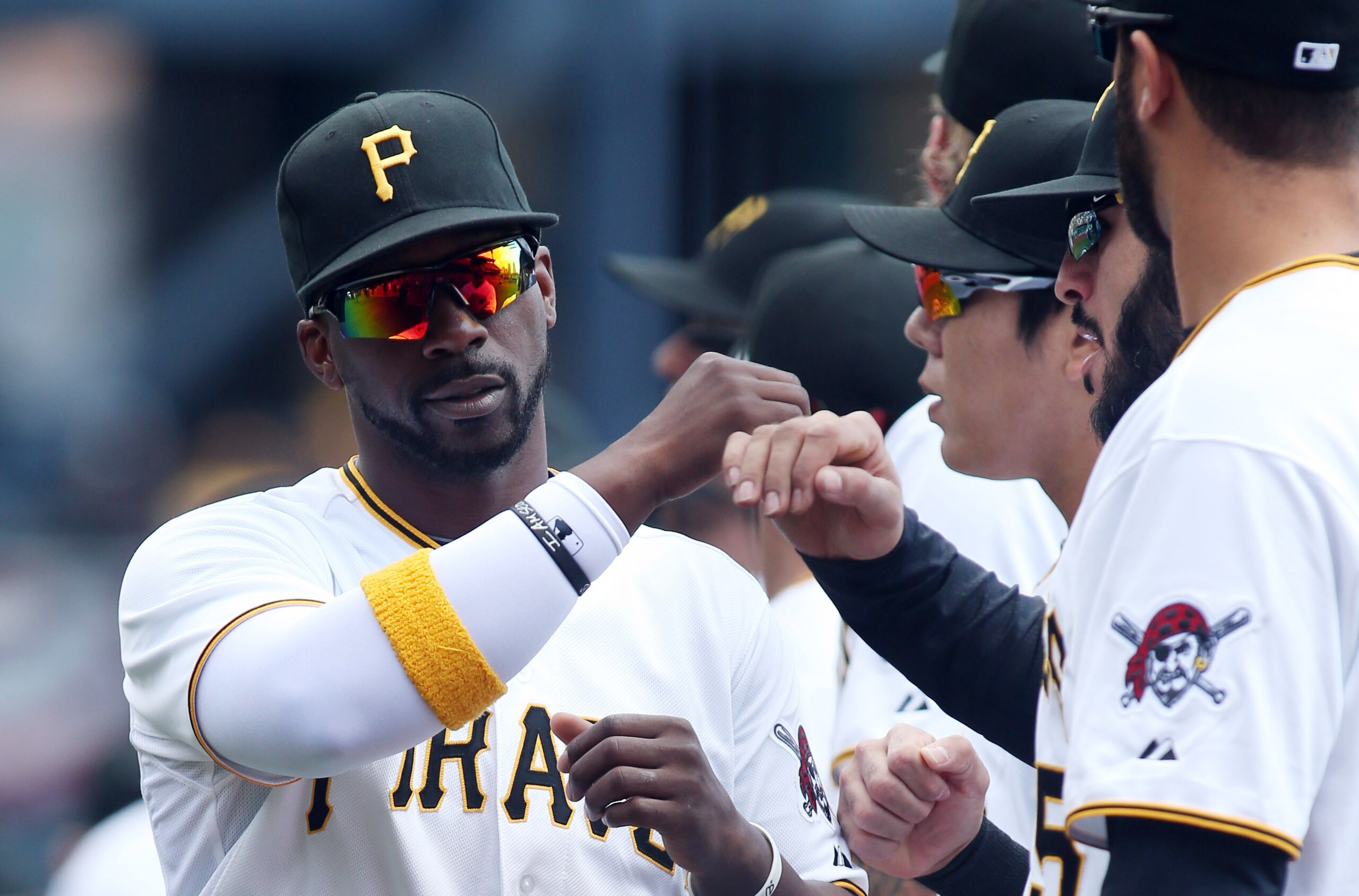
Fresh off their second postseason in as many years in 2014, the Pittsburgh Pirates laid low over the offseason.
Their faith in what they had sadly hasn't been rewarded yet, as the Pirates are only 3-6. But what can be said in their defense is that they've played only three games at home, and their minus-one run differential is hardly embarrassing.
That's mainly thanks to a pitching staff that's been quite good. Pirates starters and relievers both have ERAs in the low 3.00s, as well as K/9 rates in the 9.0s and ground-ball percentage rates over 50. Add in BB/9 rates in the 2.5-3.0 range, and they're clearly doing their job.
Pittsburgh's lineup needs to catch up. Pirates hitters are hitting just .207 with a .593 OPS, and are giving pitchers too many easy outs with a 25.3 strikeout percentage. Defense also hasn't been a strength. Defensive runs saved puts the Pirates at zero, and we know poor defense has directly cost them at least one win.
Thanks to their pitching, the Pirates have been competitive. Now they just need their lineup to wake up.
Grade: C-
San Diego Padres
23 of 30
We learned over the offseason that new San Diego Padres GM A.J. Preller doesn't actually sleep, as nobody made more headline-grabbing moves than he did.
Now he's watching along with the rest of us, and he has to like what he's seen. The Padres are a solid 6-4 with a plus-nine run differential, and so far things are going according to plan.
The Padres offense does indeed look like a huge improvement over last year's historically bad unit. Power has been scarce outside of Justin Upton's three home runs, but overall the Padres offense is hitting .278 with a .755 OPS; this despite playing seven of their games at Petco Park.
The Padres' starting pitching has also done well. They haven't been as good as their 2.43 ERA indicates, but a 9.0 K/9 and 48.4 ground-ball percentage look good on any rotation. It's been a true group effort, too, as only Andrew Cashner and Ian Kennedy (for all of 2.1 innings) have really looked bad.
There are cracks, though, namely in the bullpen and on defense. San Diego relievers have modest strikeout (7.1 K/9), walk (3.4 BB/9) and ground-ball (41.9 GB%) rates to go with their 3.13 ERA. And it's notable that Matt Kemp and Wil Myers are already (and predictably) rating as liabilities in the outfield.
But while the Padres haven't been the total package, things are indeed going quite well.
Grade: B
San Francisco Giants
24 of 30
The San Francisco Giants won the World Series in 2014, their third in five seasons. But that was in an even year. This is an odd year, and you can already tell.
The Giants are not off to a good start with a 3-8 record through 11 games, and they have a minus-15 run differential to boot. To get there, they've had to be sluggish in all aspects of the game.
The Giants lineup has struggled the most, hitting just .231 with a .650 OPS. It's also produced what defensive runs saved sees as subpar defense. Specifically, Casey McGehee isn't doing a very good job of erasing memories of Pablo Sandoval's defense at third base.
San Francisco's pitching, meanwhile, has been hit or miss. Giants starters have a mediocre 3.94 ERA, with subpar strikeout (6.3 K/9) and walk (3.1 BB/9) rates playing a role in that. Giants relievers have also been nothing special, posting a 3.41 ERA and struggling to miss bats with a 7.6 K/9 rate.
Of course, last year's Giants didn't really excel at any one thing, either. But they were at least good at certain things, and this year's Giants can't even say that much just yet.
Grade: D-
Seattle Mariners
25 of 30
The Seattle Mariners just barely missed qualifying for the postseason in 2014 and entered 2015 as a media darling after an offseason highlighted by the signing of the Nelson Cruz.
However, all this hype has given way to a decidedly "pluh" start. The Mariners are just 3-6, and with a minus-16 run differential.
Seattle's offense, which was supposed to be a strength, has instead been a major weakness. Mariners hitters own just a .210 average and .639 OPS, and adjusted OPS can show just how barren the landscape is outside of Cruz and Dustin Ackley. The Mariners have also been "meh" on defense, posting a minus-two in defensive runs saved.
In times like these, you need good pitching. Unfortunately for the Mariners, they're not getting any.
Mariners starters have a 6.43 ERA and modest peripherals—namely a 6.8 K/9 and 1.3 HR/9. The relievers have actually been solid to the tune of a 3.27 ERA, but that's misleading. They own just a 7.4 K/9 and a 4.4 BB/9. Fernando Rodney hasn't helped with four walks and one strikeout in 3.1 innings.
You have to hit and pitch if you want to win. The Mariners need to start doing both.
Grade: F
St. Louis Cardinals
26 of 30
When the St. Louis Cardinals acquired Jason Heyward early in the winter, they seemed to have everything they needed to pursue yet another NL Central title and NL Championship Series appearance.
So far, they're on their way. The Cardinals are tied atop the NL Central at 5-3, and they have a strong plus-10 run differential to boot.
Not surprisingly, the early key for them has been their arms. The Cardinals have the NL's best ERA at 2.13, and their starters (2.19 ERA) and relievers (1.99 ERA) are about evenly responsible for that. The only real blemish on either unit is the 4.4 BB/9 that belongs to the bullpen. But that's countered an excellent 11.5 K/9, so noting it is more of a gripe than a complaint.
While the Cardinals offense hasn't been nearly as good as the club's pitching, it's been good enough with a .258 average and .690 OPS. And though the Cardinals haven't been great defensively, their zero in the defensive runs saved category at the start of Friday means their D hasn't been a liability, either.
The Cardinals haven't been dominating. But all around, there have been few weaknesses in their game.
Grade: B+
Tampa Bay Rays
27 of 30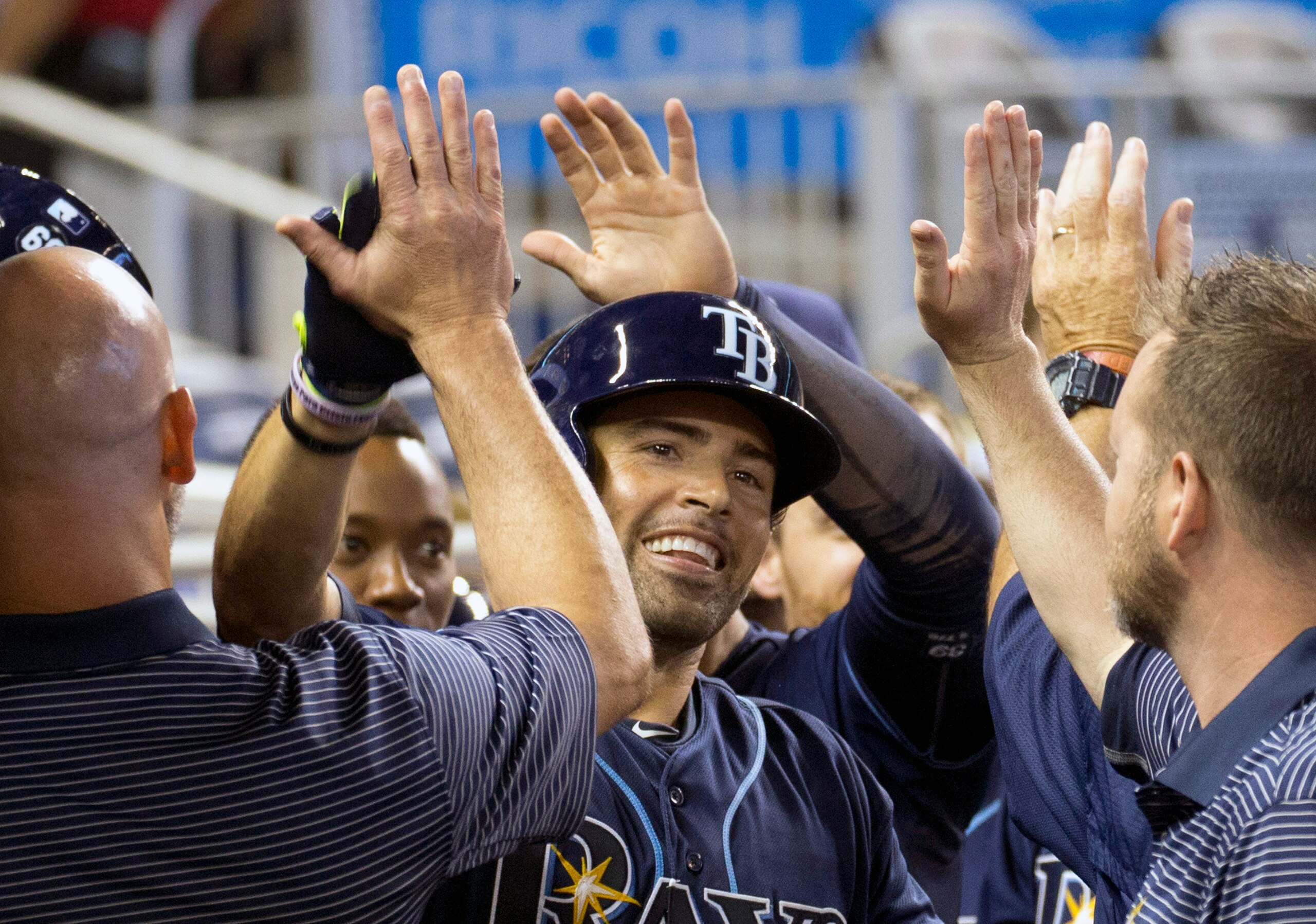
You get the feeling that many left the Tampa Bay Rays for dead after they watched Andrew Friedman, Joe Maddon and others walk out the door over the winter.
But the Rays are showing signs of life with a 6-4 start in their first 10 games. And though that record comes with a run differential of zero, the Rays have actually played better baseball than that lets on.
For starters, you have to dig the Rays offense. They may be hitting only .233, but they have a .734 OPS and have generally been getting it done with a balanced offense. Their 11.8 walk percentage leads baseball, and they're in double digits in home runs (10) and stolen bases (11).
The Rays have also played good defense, carrying a plus-three defensive runs saved rating into Friday's action. Their starting pitching has also been solid, to the tune of a 3.38 ERA that's backed by strong strikeout (7.7 K/9), walk (2.9 BB/9) and ground-ball (57.3 GB%) rates.
The one thing that hasn't worked is the Rays bullpen. It owns an ugly 5.13 ERA, which can happen when you have only a 7.8 K/9 and 4.1 BB/9 with a 1.1 HR/9 on the side.
Even still, the Rays have been better than their run differential suggests and are very much worthy of their 6-4 record.
Grade: B
Texas Rangers
28 of 30
The Texas Rangers didn't do much over the winter to get people excited, and whatever chances they had of contending in 2015 seemed to go out the window when Yu Darvish went in for Tommy John surgery.
So far, the Rangers haven't done much to silence the doubters. They're 4-6 through 10 games, and with a minus-14 run differential that says they do indeed deserve to be under .500.
The individual parts don't look much better. The Rangers are hitting .210 with a .625 OPS, with only Prince Fielder really lighting it up on offense. And with a 6.2 K/9, 3.1 BB/9 and 1.3 HR/9, Rangers starting pitchers might be lucky that their collective 5.07 ERA isn't worse.
The Rangers bullpen has also been an adventure. It has a 3.95 ERA, and iffy strikeout (6.2 K/9) and walk (3.7 BB/9) rates. Texas' defense has also struggled, as it's already in the red in defensive runs saved. Elvis Andrus, whose defensive decline seems to be headed from bad to worse, is largely to blame for that.
So all told, it's actually something of a wonder that the Rangers have even won as many as four games.
Grade: D-
Toronto Blue Jays
29 of 30
The Toronto Blue Jays loaded up on bats over the winter, setting themselves up to end their postseason drought by bludgeoning opponents into submission.
The early returns are mixed. The Blue Jays have a 5-5 record that suggests they're mediocre, and a plus-12 run differential that suggests they're actually pretty good. But when examining the individual parts of the whole, it's the mediocre suggestion that holds more water.
The Blue Jays should hit eventually, but they haven't yet. They're batting just .234 with a .677 OPS. Heavy hitters Josh Donaldson, Jose Bautista, Edwin Encarnacion and Russell Martin just haven't gotten going yet.
They'll certainly need to if Toronto's pitchers can't get their stuff in order. With an ugly 6.2 K/9, 4.0 BB/9 and 1.8 HR/9 arrangement, Blue Jays starters actually deserve worse than their 4.50 ERA. The bullpen has been better with a 3.97 ERA bolstered by a 10.1 K/9, but that comes with a 4.0 BB/9 rate.
As Kevin Pillar can vouch, one thing the Blue Jays have been good at is defense. Defensive runs saved put them at plus-10 at the start of Friday, good for third in MLB.
Take that away, though, and there's not much there. The Blue Jays haven't come together yet.
Grade: C-
Washington Nationals
30 of 30
Hey, remember when the Washington Nationals signed Max Scherzer and clearly made themselves the favorites to win the World Series in 2015?
Well, that quest isn't going so well. Even after winning their last two, the Nationals are still just 4-6 through 10 games, and with a minus-five run differential.
Nationals hitters are hitting just .211 with a .661 OPS, easily below average by the season's early standards. This would be OK if they were playing good defense, but that's far from the case.
The Nationals have made 11 errors, and were at an MLB-worst minus-15 in defensive runs saved heading into Friday. Anyone who's watched will know this is no fluke, as Washington's defense has all too often resembled a Three Stooges sketch.
This helps explain why the Nationals' starting rotation has a good but not great 3.88 ERA. But they also have modest peripherals—namely a 7.0 K/9—that suggest they haven't been great. Flip that around, and you have an explanation for why Nationals relievers haven't actually been as good as their 2.08 ERA.
In short, a team that was supposed to do everything well hasn't done anything well. It's been ugly.
Grade: F

.jpg?w=2560 "Mahomes Told Teammate to Leave Meeting")

.jpg?w=2560 "5 Teams Eyeing Jonathan Taylor")


.jpg?w=2560 "NFL investigating Eagles")


.jpg?w=2560 "Jonathan Taylor Landing Spots 📍")