

NBA Draft Notebook: Biggest Surprises of the Early 2015 Declarations So Far
Assuming the goal is to get selected as high as possible, knowing whether to declare for the NBA draft or return to school is crucial. The difference between the right decision and the wrong one could be costly, both from a financial and a development standpoint.
Prospects selected in the second round aren't guaranteed NBA contracts. Most of them end up making five-figure annual salaries in the NBA Development League to start. Others take their talents overseas.
And to some, those alternative options are okay. But for those looking to make an NBA roster right away, it's important to understand when to go and when to stay.
TOP NEWS

Pic of LeBron's Helicopter Commute 🚁

Surprise Dubs Trade Idea 💡

Duren Calls Out 'False' Rumors
So far, we've seen a handful of prospects who still have room to improve declare as early entrants. On the other hand, given the possibility of regression after already peaking, there are a couple who could be taking a risk by coming back.
Though the driving force behind each of the following players' decisions is unclear (some prospects may need money; some may dislike college), these are the more questionable ones made midway through April.
Declaring for 2015 NBA Draft
Dakari Johnson, Kentucky, 7'0", C, Sophomore (Link)
2015 Draft Projection: Second round
Potential 2016 Draft Ceiling/Basement: Late first to second round

After Johnson played just 14.1 minutes a game as a freshman, his role didn't expand much his sophomore year. In 16.3 minutes this past season, he averaged 6.4 points and finished with fewer made total field goals.
Though he got in better shape, Johnson's offensive game remains limited to simple over-the-shoulder hook shots on the low block. He hasn't developed counter moves in the post or a jumper outside the paint. His 2.3 blocks per 40 minutes aren't overly impressive, either.
At 7'0", 255 pounds, Johnson's physical presence alone will be enough to draw NBA interest this June. But I don't see how he cracks the top 30. And I certainly don't see him offering teams anything as a rookie next year.
With Karl-Anthony Towns, Willie Cauley-Stein and Trey Lyles each leaving, Johnson would have been looking at a lot more touches and scoring opportunities in Kentucky's offense next season. The first round would have been easier for him to sneak into in 2016.
Terry Rozier, Louisville, 6'1", PG, Sophomore (Link, via Jeff Greer of The Courier-Journal)
2015 Draft Projection: Late first to second round
Potential 2016 Draft Ceiling/Basement: Mid-first to late first round

Early in March, Louisville coach Rick Pitino gave some insight, via Jeff Greer of The Courier-Journal, on Terry Rozier's draft-decision approach.
"If (Rozier's) going to be a first-round draft choice and it's guaranteed, he'll go. If there's some question, he won't."
If that were true, then Rozier must have received some positive feedback from the NBA's advisory committee. But I'm not buying it.
Though Rozier had a productive sophomore year, the production didn't necessarily come in all the right places. His 14.5 field-goal attempts per game and three-to-two assist-to-turnover ratio highlight Rozier's scoring mentality and limited playmaking instincts. And it's just tough to picture general managers willing to reach on a 6'1" scorer with a 50.9 percent true shooting percentage, per Sports-Reference.com.
He'll have a shot at going late in the first round, but Rozier's chances would have been a lot better in 2016 if he returned and improved as a facilitator.
Chris McCullough, Syracuse, 6'10", PF, Freshman (Link)
2015 NBA Draft Projection: Late first to second round
Potential 2016 Draft Ceiling/Basement: Lottery to second round
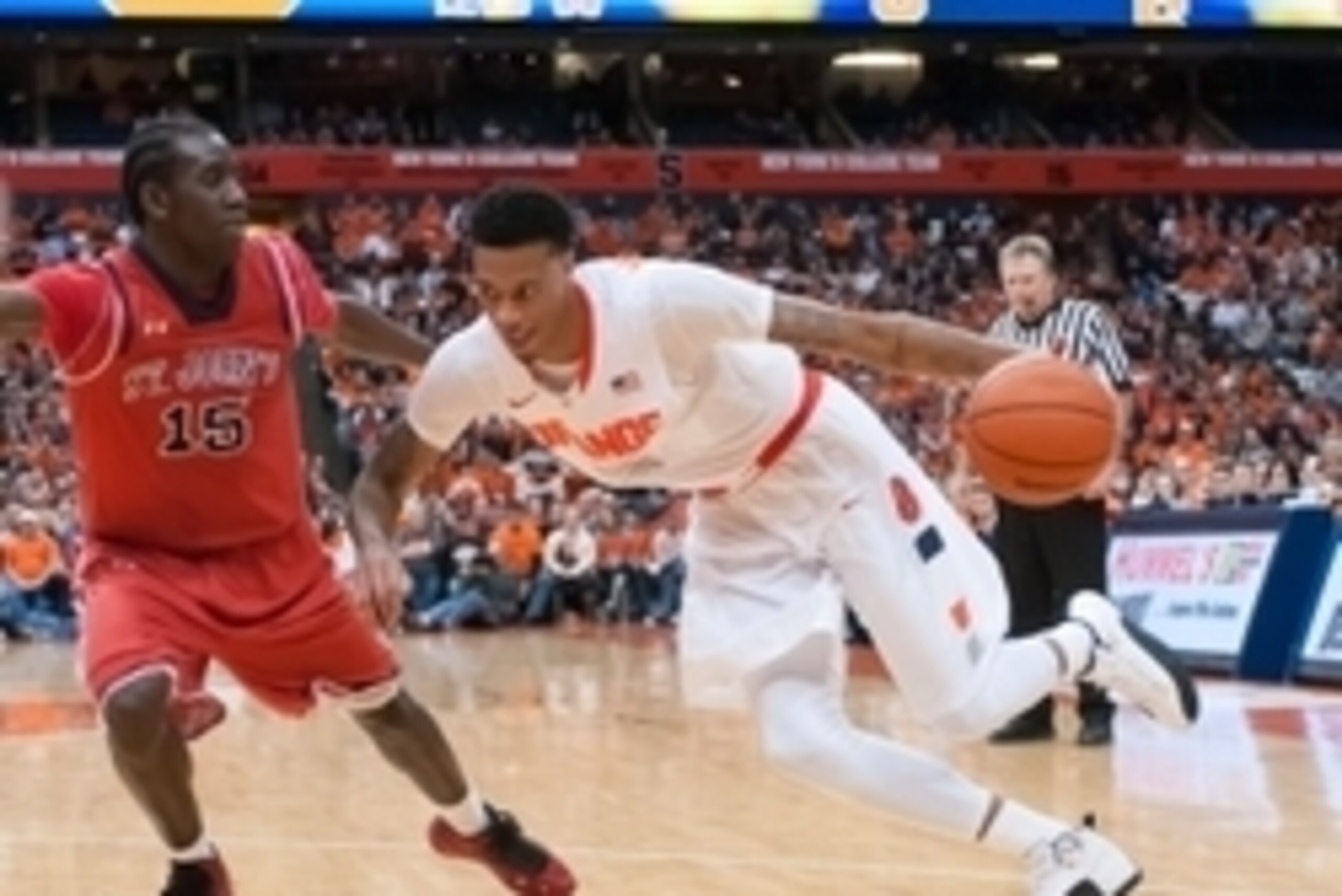
McCullough's decision to declare just might be the most interesting of them all. He played 16 total games before tearing his ACL in January. And McCullough turned heads through his first eight, having averaged 14.3 points, 8.7 rebounds and 2.3 blocks.
But he only put up 4.3 points per game over his final eight. And now that's all scouts have to go on: a mixed bag of results against mostly subpar competition. Throw in the ACL tear and its traditional one-year recovery timetable, and there is all sorts of risk tied to the upside McCullough offers.
“This is the kind of injury that players come back strong from all the time in basketball now, and the process has gone good so far,” McCullough told Yahoo Sports' Adrian Wojnarowski. “I’m working hard at the rehab, trying to eat the right foods. ... I’ll be back on the court later this year.”
There was no real right decision or answer for McCullough, who would have also been taking a gamble by returning. Already 20 years old, it wouldn't have been a good look if he came back and struggled to shake off the rust.
At 6'10", McCullough is a terrific athlete, promising mid-range shooter and crafty scorer around the rim. There is a lot to like and plenty to question. He just might be the biggest boom-or-bust prospect in this year's field.
J.P. Tokoto, North Carolina, 6'6", SG, Junior (Link)
2015 Draft Projection: Second round
Potential 2016 Draft Ceiling/Basement: Mid-first to second round

Tokoto's decision to enter the draft is a bit baffling. You can argue he regressed his junior year. His scoring average fell to 8.3 points per game (from 9.3 points), and his field-goal percentage plummeted to 42.8 percent.
Though he's an excellent athlete, defender and passer, as a 6'6" 2-guard, his 48.4 percent true shooting percentage, via Sports-Reference.com, isn't likely to fly. Tokoto made just 21 threes combined in three years at North Carolina without finishing above 62 percent from the line in any of them.
He's a unique talent, but at 21 years old, Tokoto's scoring limitations are disconcerting. The chances of him getting drafted in this year's first round seem awfully slim. Had he returned and sharpened his ball skills and jumper, Tokoto would have had a better shot at earning first-round money.
Vince Hunter, UTEP, 6'8", SF/PF, Sophomore (Link, via ESPN's Jeff Goodman)
2015 Draft Projection: Second round to undrafted
Potential 2016 Draft Ceiling/Basement: Late first to second round

Hopefully, Hunter has no problem with the idea of playing in the D-League or heading overseas because he won't be a first-round pick in June. Hunter has the body of an NBA wing—6'8", 200 pounds—only he's made just four threes combined in two years as a Miner.
Another year in school would have allowed him to work on and expand his perimeter game, which is what's holding him back in the draft conversation. Instead, he'll declare as a tweener. Maybe he goes second round, but I wouldn't bet on seeing Hunter on an NBA roster next year.
Rashad Vaughn, UNLV, 6'6", SG, Freshman (Link)
2015 Draft Projection: Second round
Potential 2016 Draft Ceiling/Basement: Late first to second round

A torn meniscus cost Vaughn the final nine games of his freshman year. He was productive before going down, having averaged 17.8 points. But he wasn't overly convincing.
Vaughn isn't an explosive athlete, which not only limited his ability to get to the basket but also limited his ability to finish. Despite 6'6" size, Vaughn shot a poor 47.1 percent at the rim in the half court, according to Hoop-Math.com.
Vaughn's shot selection in general was questionable. He took a whole lot of jumpers, played lots of one-on-one and rarely created for teammates (11.8 percent assist percentage). Returning would have given him the chance to round out the rest of his game and improve his efficiency. I wouldn't bank on him going in the first round this June.
Michael Frazier II, Florida, 6'4", SG, Junior (Link)
2015 Draft Projection: Undrafted
Potential 2016 Draft Ceiling/Basement: Second round

Frazier was a 2015 breakout candidate for Florida, but it just didn't happen. He returned as a junior the same one-dimensional shooter he was as a freshman and sophomore, only his three-point percentage took a hit (from 44.7 percent to 38.0 percent).
At 6'4" without the ability to create (1.4 assists per game) or score inside the arc (1.6 two-pointers made per game at a 48.2 percent clip), Frazier's margin for error is tiny. He'll need to convince teams he's an elite three-point sniper if he wants to hear his name called in June.
Returning to School
Malik Pope, San Diego State, 6'10", SF, Freshman (Link)
2015 Pre-decision Draft Projection: Mid-to-late first to second round
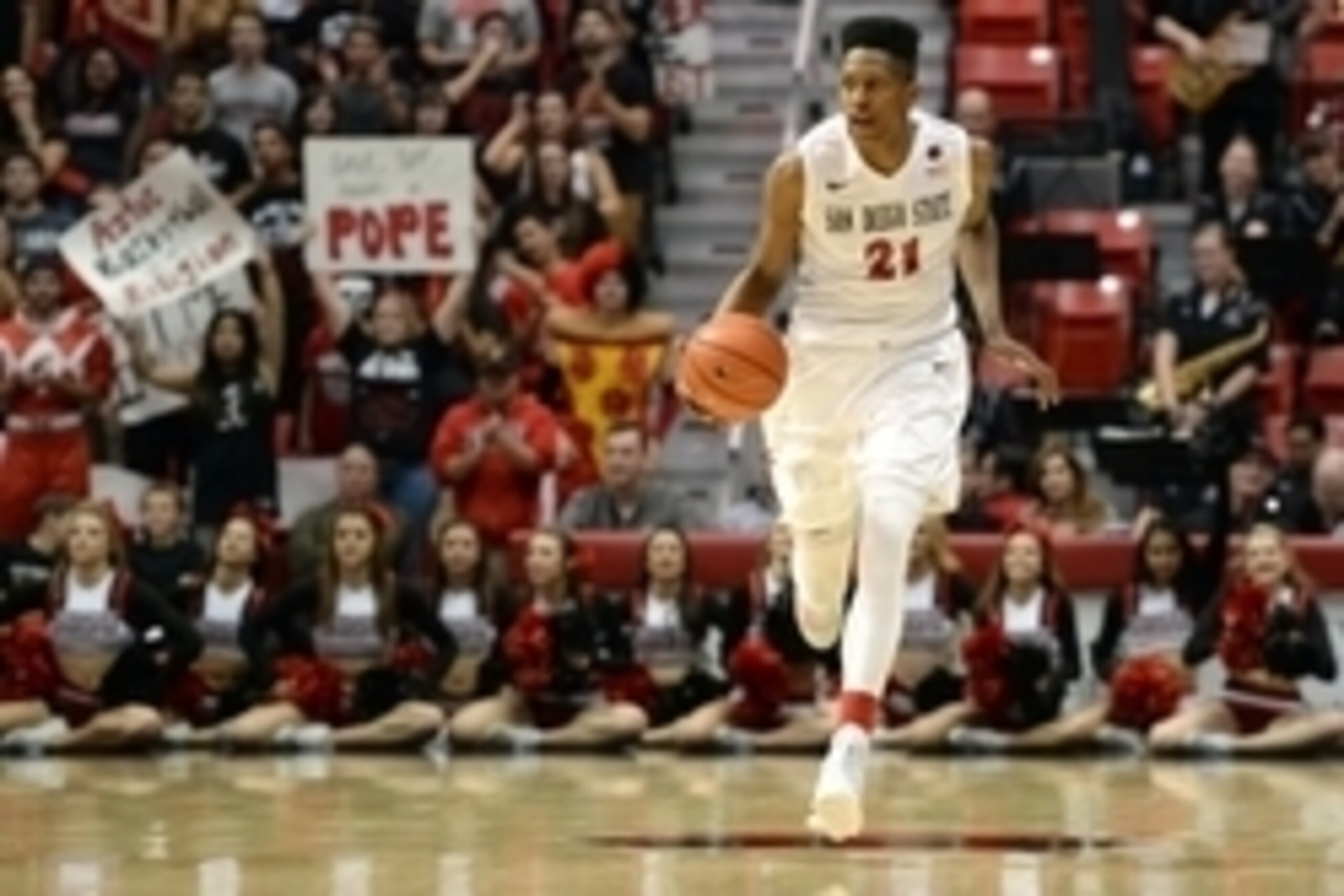
Though it only came in spurts (played 14.8 minutes per game), Pope flashed some eye-opening potential fueled by size, athleticism and face-up ball skills. It seemed possible that he could declare and ultimately sell himself based on long-term upside. He averaged just 5.1 points, but he was 20-of-49 shooting from three, showcased a developing mid-range game and displayed some explosive above-the-rim burst.
Given his role should increase, returning to San Diego State was probably the smart move, and that towering ceiling will remain intact.
Domantas Sabonis, Gonzaga, 6'10", PF/C, Freshman (Link, via ESPN's Jeff Goodman)
2015 Pre-decision Draft Projection: Mid-to-late first to second round
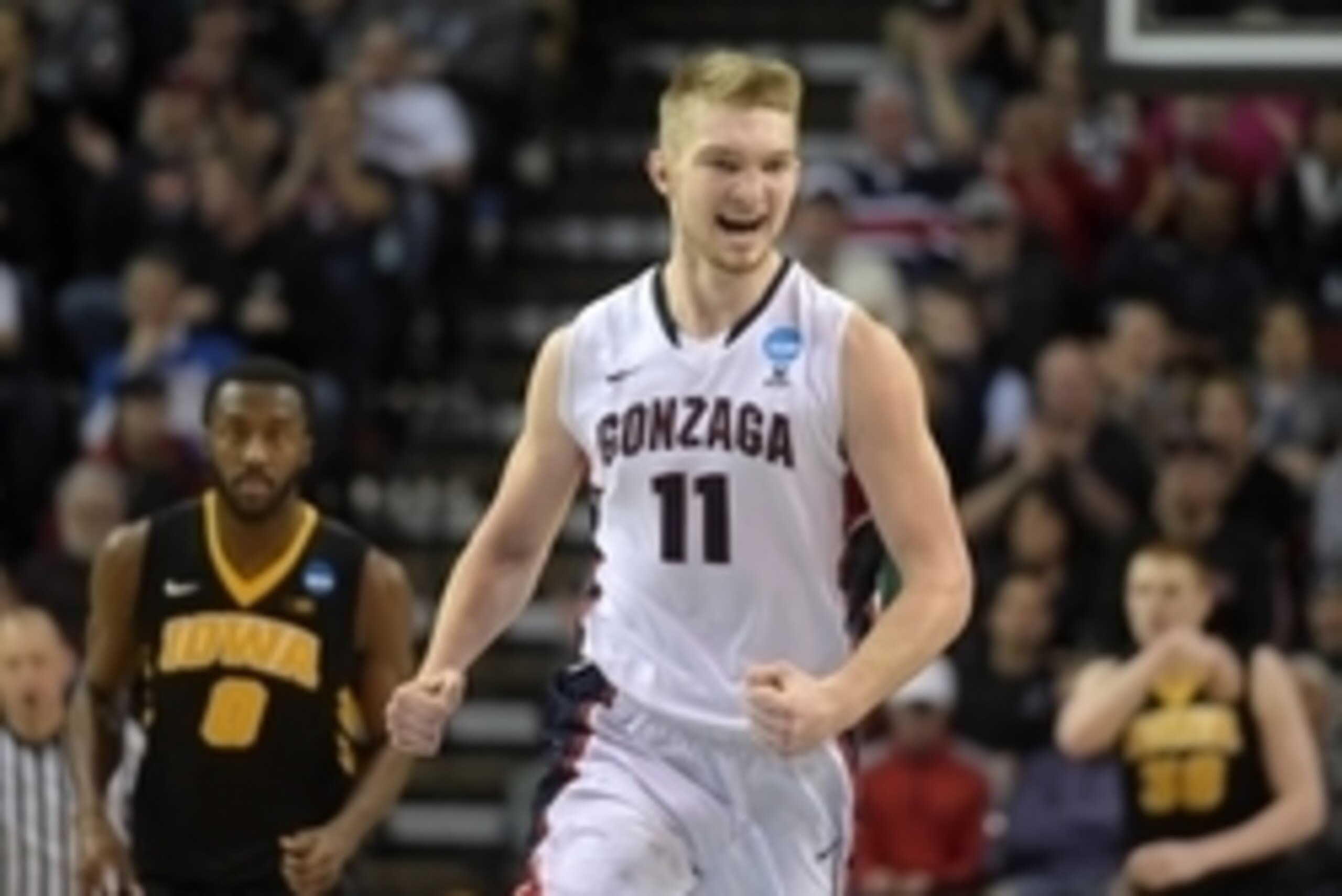
Sabonis didn't make many mistakes his freshman season. Per 40 minutes, he averaged 18 points and 13 rebounds while shooting 66.8 percent from the floor. He was efficient and productive in a role that allowed him to play to his strengths.
And with 6'10" size, above-the-rim athleticism and a terrific motor, Sabonis showed tools and qualities that could have held 2015 first-round value.
But Sabonis will return to Gonzaga, where he'll once again be competing for minutes and touches with upperclass big men Kyle Wiltjer and Przemek Karnowski. Even with a season under his belt, it's tough to imagine Sabonis doing much more as a sophomore than he did this past season.
Jake Layman, Maryland, 6'9", SF/PF, Junior (Link)
2015 Pre-decision Draft Projection: Late first to second round

Layman will return to Maryland—a wise decision—after there was some speculation (via Josh Stirn of InsideMDSports.com) he could declare for the 2015 draft.
He had a strong year, having raised his field-goal percentage from 40.1 percent to 47.0 percent. And he hit a respectable 37.8 percent of his threes.
With 6'9" size, above-average athleticism, a promising stroke and slashing ability, Layman fits the mold of an NBA stretch forward. He would have had a shot at going in the first round this upcoming June, but he'll have a better one in 2016 if he can expand his one-on-one ball skills. He averaged just 12.5 points as a junior.
Ron Baker, Wichita State, 6'4", SG, Junior (Link)
2015 Pre-decision Draft Projection: Second round
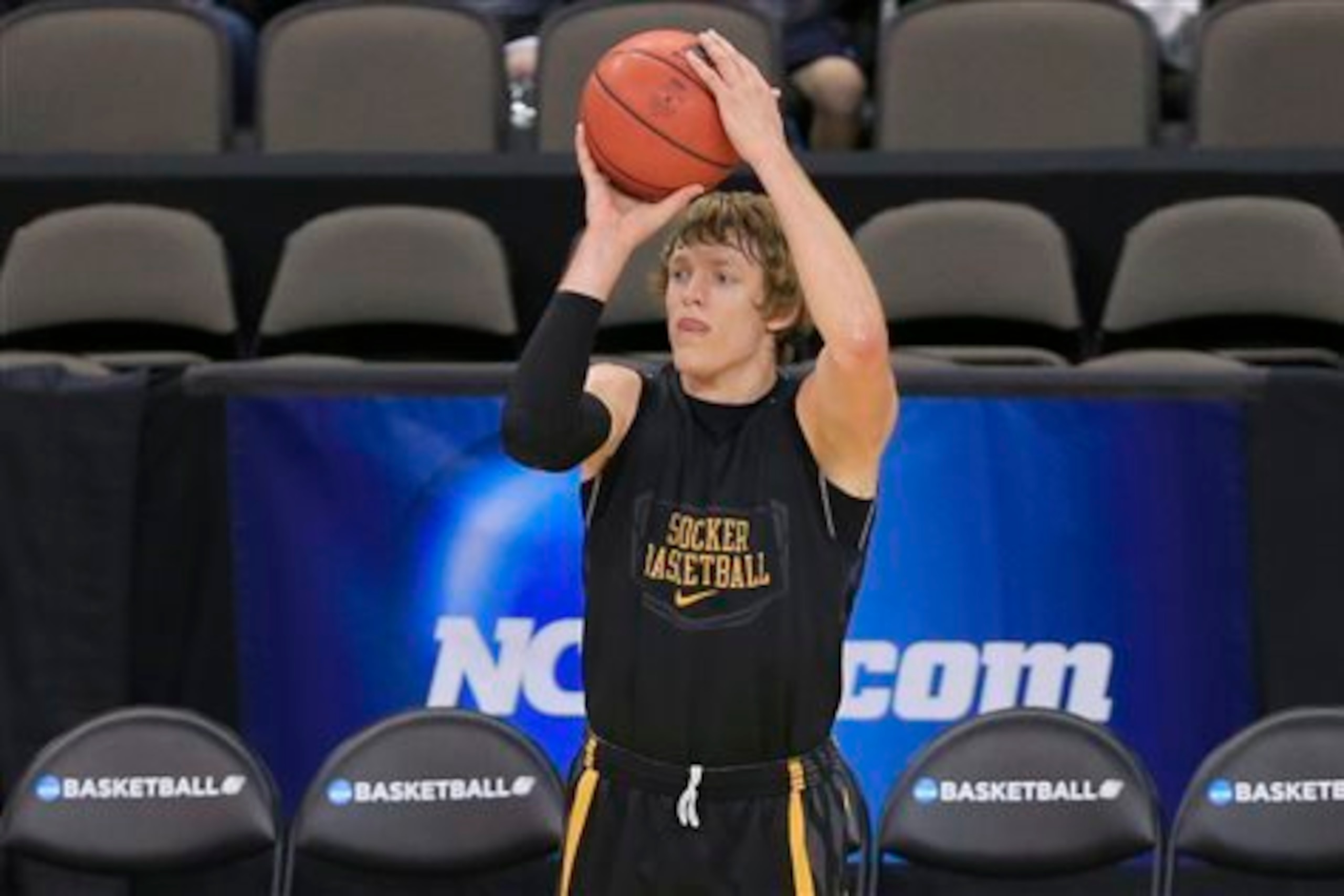
At this stage of his college career, Baker's strengths and weakness are well defined. Quite frankly, I'm not sure if there is anything he'll be able to do as a senior to improve his stock.
Baker averaged 14.7 points, made 80 threes and shot 38.3 percent from downtown this past season. He only averaged 2.5 assists, but Baker isn't a point guard. He's an undersized 2-guard who can handle the ball in a secondary role and knock down the shots that find him within his team's offense.
He's probably a second-round pick whether he leaves in 2015 or 2016. Leaving now would have just given him the chance to make an extra year of salary, whether it's in the NBA, D-League or overseas.
All advanced stats courtesy of Sports-Reference.com unless otherwise noted.


.jpg?w=2560 "NFL investigating 2 referees for separate viral exchanges")

.jpg?w=2560 "OBJ Calls Out Giants 😳")

.jpg?w=2560 "Love's Body Already 'Tired'")
.jpg?w=2560 "Ward Nearly Walks Out of Presser ▶️")
.jpg?w=2560 "Buzz: Tyreek Eyeing November Return")