
What to Expect from 2015 NFL Draft's Top Offensive Linemen
One of the largest misconceptions of the draft process is that if players don't have the feet to play left tackle, they can easily transition to the right bookend or bump inside to guard. It's not always as easy as that thinking, as each position demands different attributes for success, though some overlap.
When looking at the top seven offensive linemen in the draft, there are specific positions they can project to in the NFL, some better and with more conviction than others. Going player-by-player, we'll explain what to expect from the top of this coming offensive line class.
Brandon Scherff, Iowa
1 of 7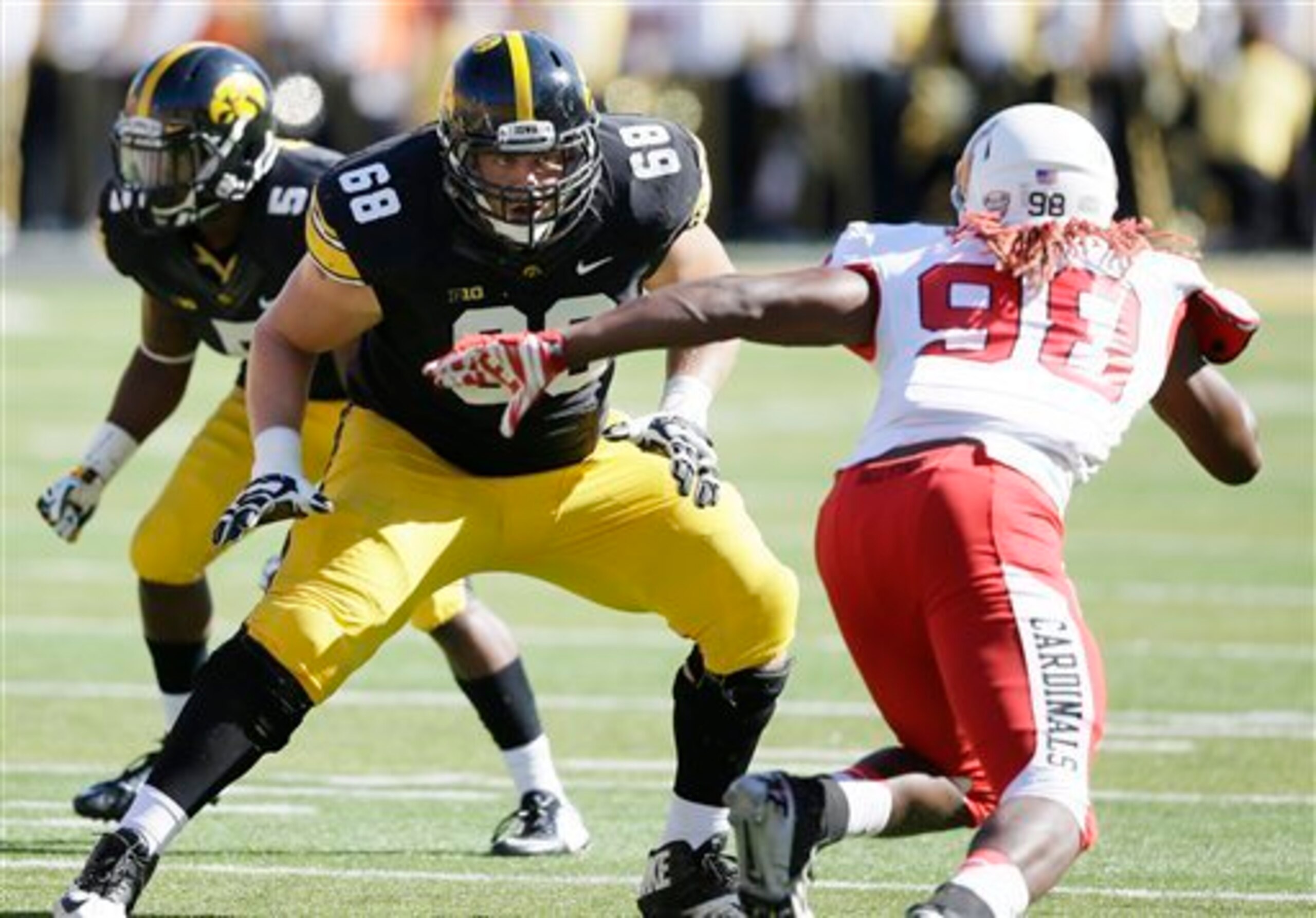
Brandon Scherff looks like a lot of Iowa tackles as of late. He played left tackle for the Hawkeyes, but he projects best on the inside as a guard. Now, the tackle position has more value, so there's a shot a team keeps him outside until they "have" to move him to guard but on paper he should start there.
He's a very good run defender who likes to punish players by road-grading them. In pass protection, he's not a limited athlete but a lineman limited by frame. He can move with the best of them, but because of his short 33" arms, he can't match length with edge-rushers, who are usually the freak athletes on the defensive side of the ball.
As a guard, he'd be matched up against shorter players at defensive tackle. With the theory that length correlates to height, their reaches would also be smaller, putting Scherff on a more neutral field. There, he can show his athleticism and run-game potential without being "exposed" to long pass-rushers on an island.
Overall, he's the best lineman in the draft, but his position isn't valued equal to the tackles in the class, which is why he may not be the first off the board. As I wrote last month, though, there's also a solid chance that he's the highest drafted interior offensive lineman since 1986.
La'el Collins, LSU
2 of 7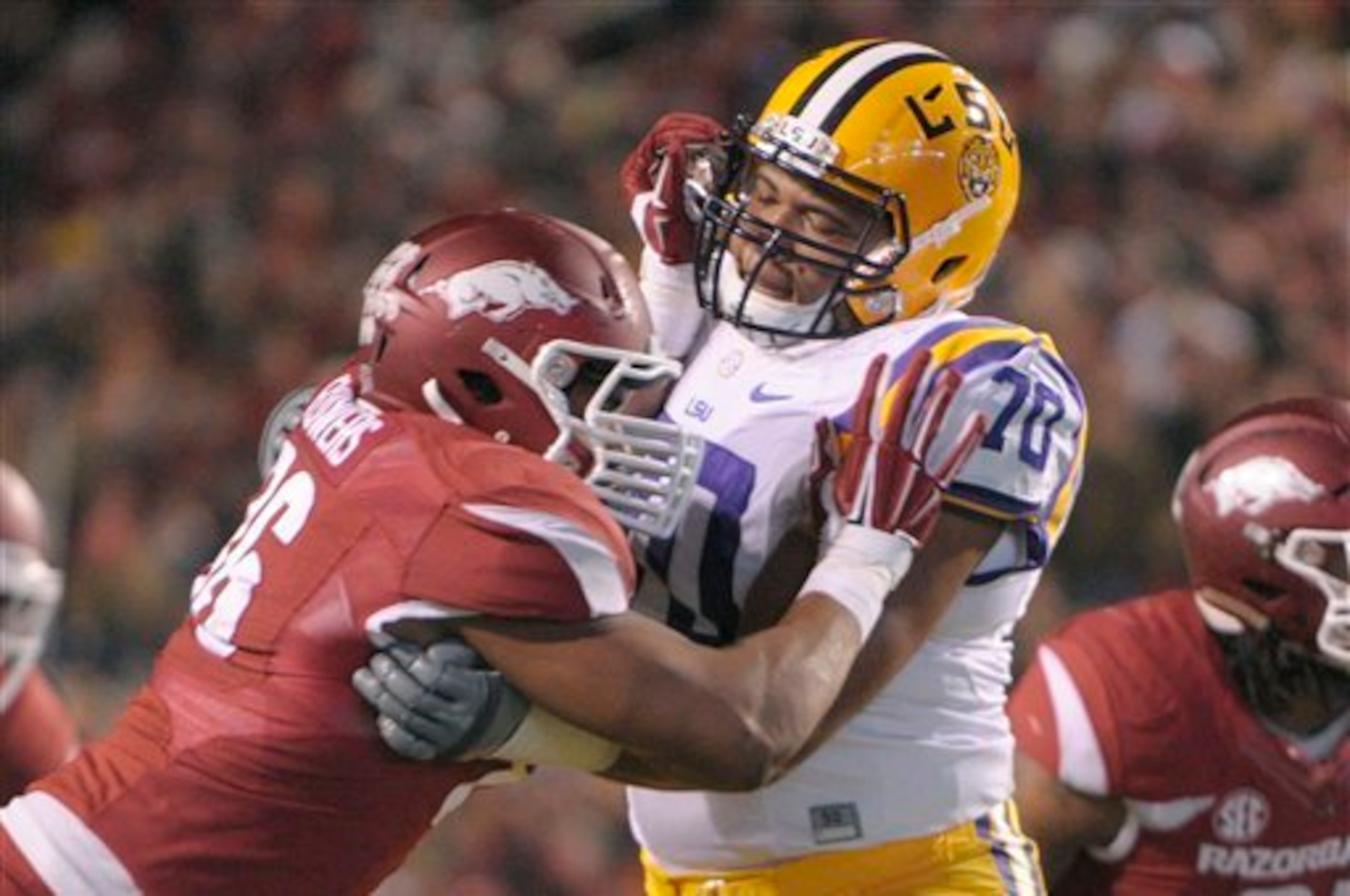
La'el Collins of LSU did well enough his junior season that some thought he should have declared for the NFL draft then. With Greg Robinson and Jake Matthews being projected high draft selections, though, he bet on himself in 2014, hoping he'd raise his draft stock.
His 2014 season was largely a repeat of what his 2013 year looked like, which is a positive. He struggles a bit against athleticism, and that may force him to right tackle, but he has all the length you'd ask for of a tackle prospect.
At times, there's film where he pancakes three players on a single play, and that goes for both this and last year. Some may want him as a blue chip guard prospect, but at his size, it's hard to say he won't get a look outside first.
He's not a zone-blocking type of tackle, but if your team runs a man or gap scheme, I bet he's near the top of their list. His two best attributes are "long" and "strong," and time and time again we see those translating to the NFL level.
Andrus Peat, Stanford
3 of 7
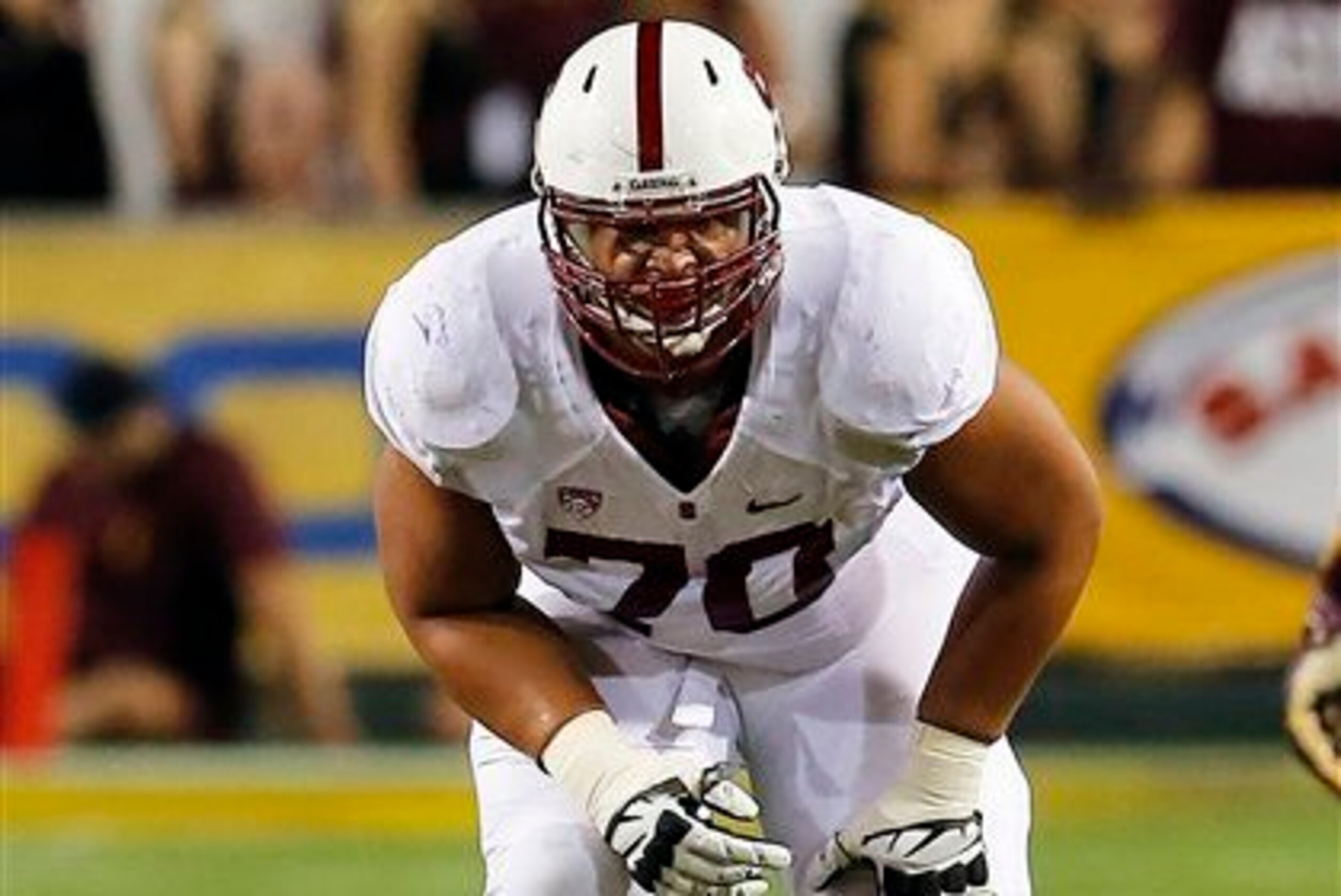
As far as pure tackles are concerned, Andrus Peat of Stanford is probably the best in the class. Since he was a high school recruit in Arizona, Peat has been talked about as a future NFL left tackle.
His body shape isn't one of a dancing bear but strong lineman. Instead, he's got a thick lower body, and sort of looks like a pear. Thought he's not the elite prototype, basically the opposite mold of a player like Tyron Smith, he's still a very good prospect.
He's strong enough and moves his feet well enough to project him as a left tackle, but he could also play on the right side if asked. If he can somehow strengthen his anchor while losing a bit of weight, he could be a special player on a quarterback's blind side.
Peat is so big that he makes himself a hard object for pressure players to go around and get to the quarterback just based on his size. When you include his thick legs into the equation, eliminating a player's shot at running straight through him, he's an even tougher task. Don't be surprised if Peat, the oddly shaped best pure tackle in the class, is the top offensive lineman off the board on draft day.

.jpg?w=2560 "Cardinals Giants Football")
D.J. Humphries, Florida
4 of 7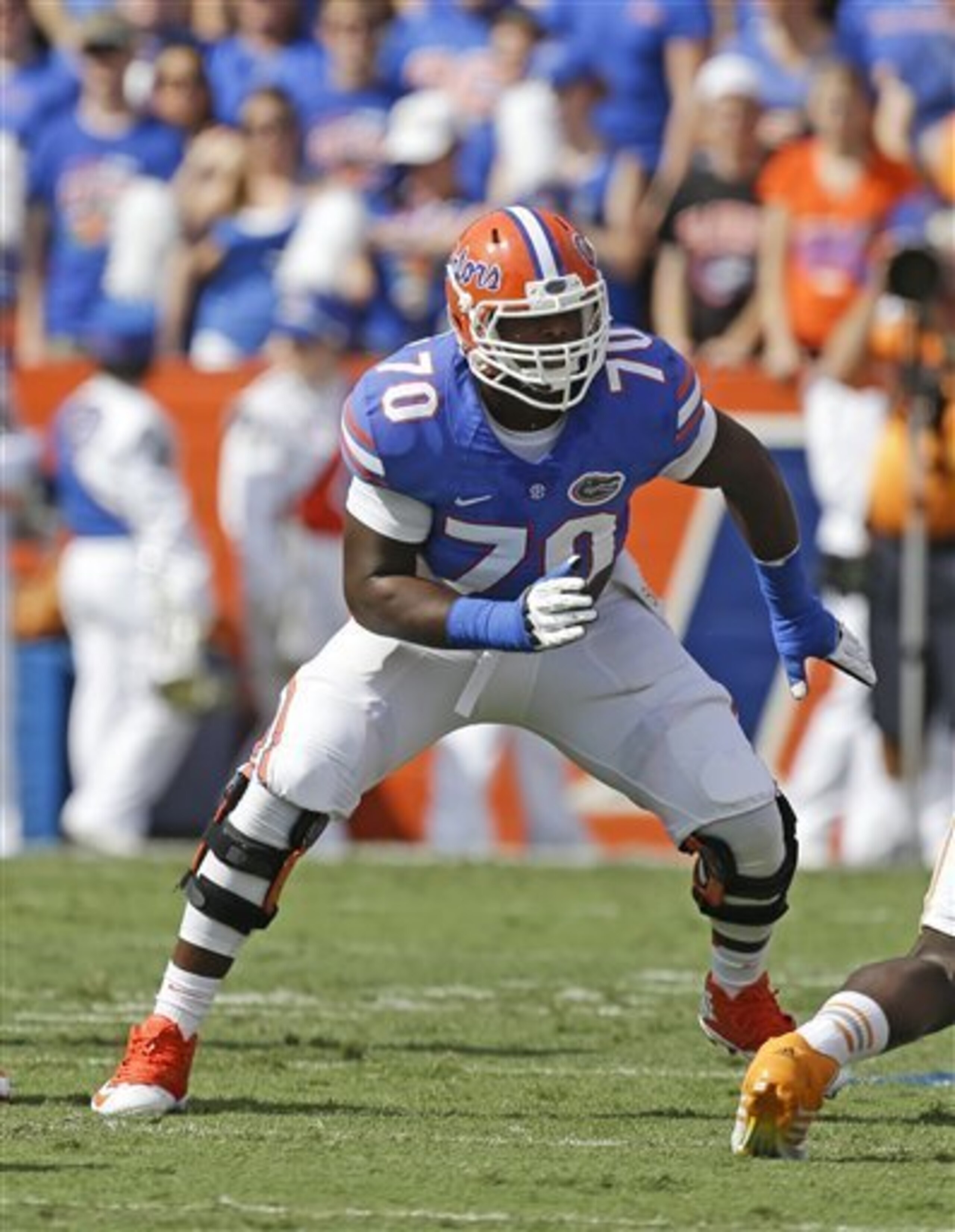
D.J. Humphries was a slightly surprising early declaration. A junior who looked to have the frame of a tight end, he didn't make much sense on tape, until you popped in footage of him facing perceived top athletes of SEC.
For example, he shut down Shane Ray of Missouri, who is considered to be a first-round edge-rusher. The draft process has been good to Humphries, who got up to 307 pounds at the combine. At that improved size, he was still able to hit above average numbers at the position in the 40-yard dash, vertical jump, broad jump and the 20-yard shuttle, per Mock Draftable.
If he can still translate his amazing movement skills at his new size, he can be special, though he's still somewhat of a project. If there's any tackle in the class who has the potential to be a Tyron Smith-type of dancing bear, it's Humphries. He's one of the few prospects who can be a premier left tackle down the line.
Cameron Erving, Florida State
5 of 7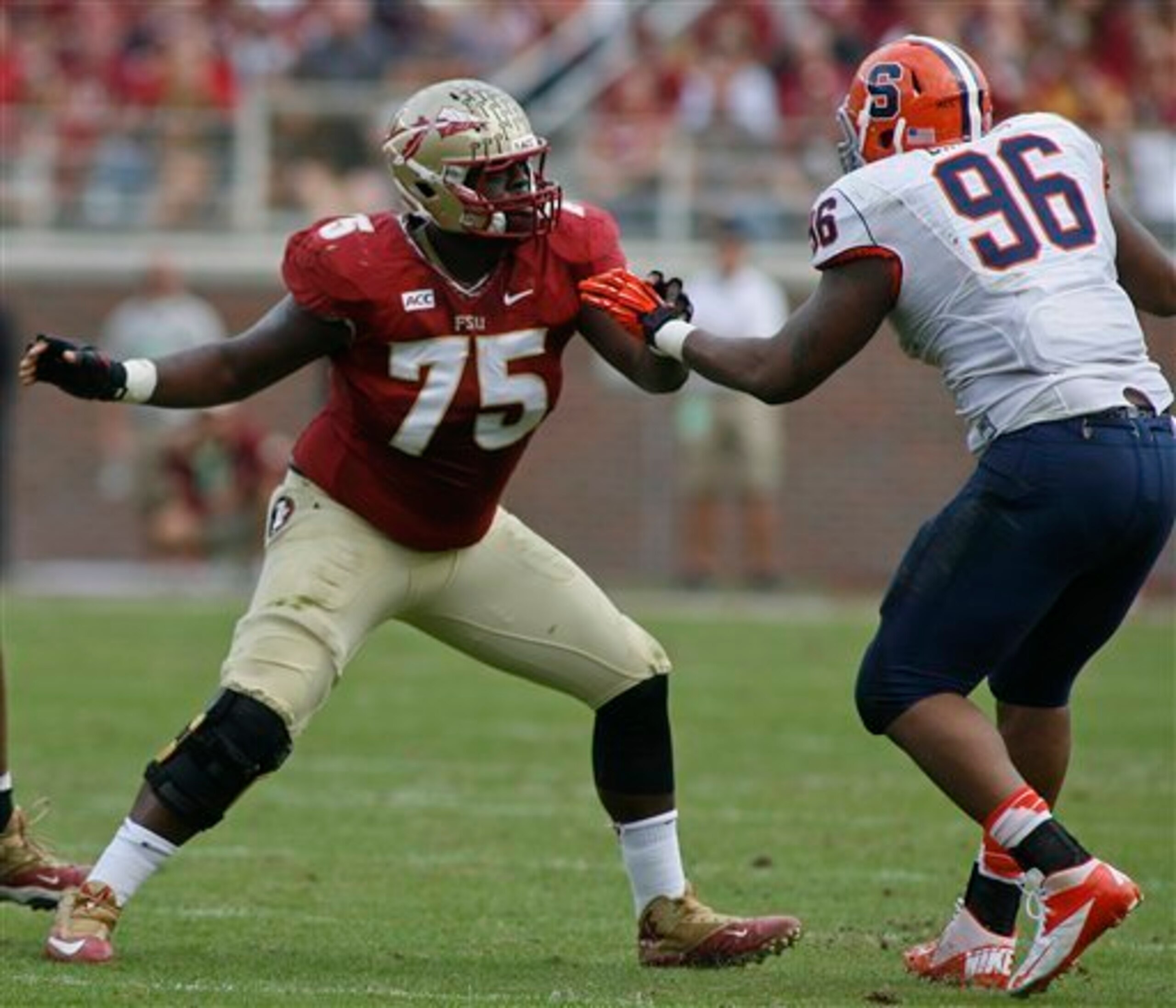
Cameron Erving was a player who was thought of as being good enough to have declared early for last season's class, but as 2014 went on, his flaws became clear. Against twitchy edge-rushers, like Clemson's Vic Beasley, he struggled mightily.
The best thing that ever happened to his draft stock might have been his midseason move to center. There, he wasn't tested athletically as much, as he played in a phone booth. On the interior offensive line, he was able to show his best trait: his very strong anchor.
As a pro prospect, some might still think of him as a tackle, but to me, that's ill-advised. He's best as an interior offensive lineman, and an "in case of emergency" option outside on the bookend. As a guard or center, he's a more than solid player.
It's hard to say that there was a better player in college football at the center position than when Erving finally made the flip. For a team like Kansas City or San Diego, who both have a glaring need at center, he could be a first-round pick.
T.J. Clemmings, Pittsburgh
6 of 7
T.J. Clemmings is an unlikely offensive lineman. In high school, he had college scholarships to play basketball, but he accepted a football scholarship to the University of Pittsburgh. There, he was a defensive tackle for significant time before a late-career flip to the offensive side of the ball.
Because of his inexperience, Pittsburgh didn't trust him as a blindside protector, so it's hard to think NFL teams will. This makes him a rare premier tackle prospect who both played and is projected to play on the right side at the next level.
Some think that he can play inside, but with his sloppy footwork, his game doesn't really translate well in the "quick game" in a phone booth. To me, he's a right tackle who needs reps early and often in his career, but he can be a Jermey Parnell type.
Parnell also played basketball and on defense while at Ole Miss, but he recently signed a five-year $32 million contact with the Jacksonville Jaguars. Few right tackles are going to have the long and strong game that Clemmings already flashes the tools of.
Ereck Flowers, Miami
7 of 7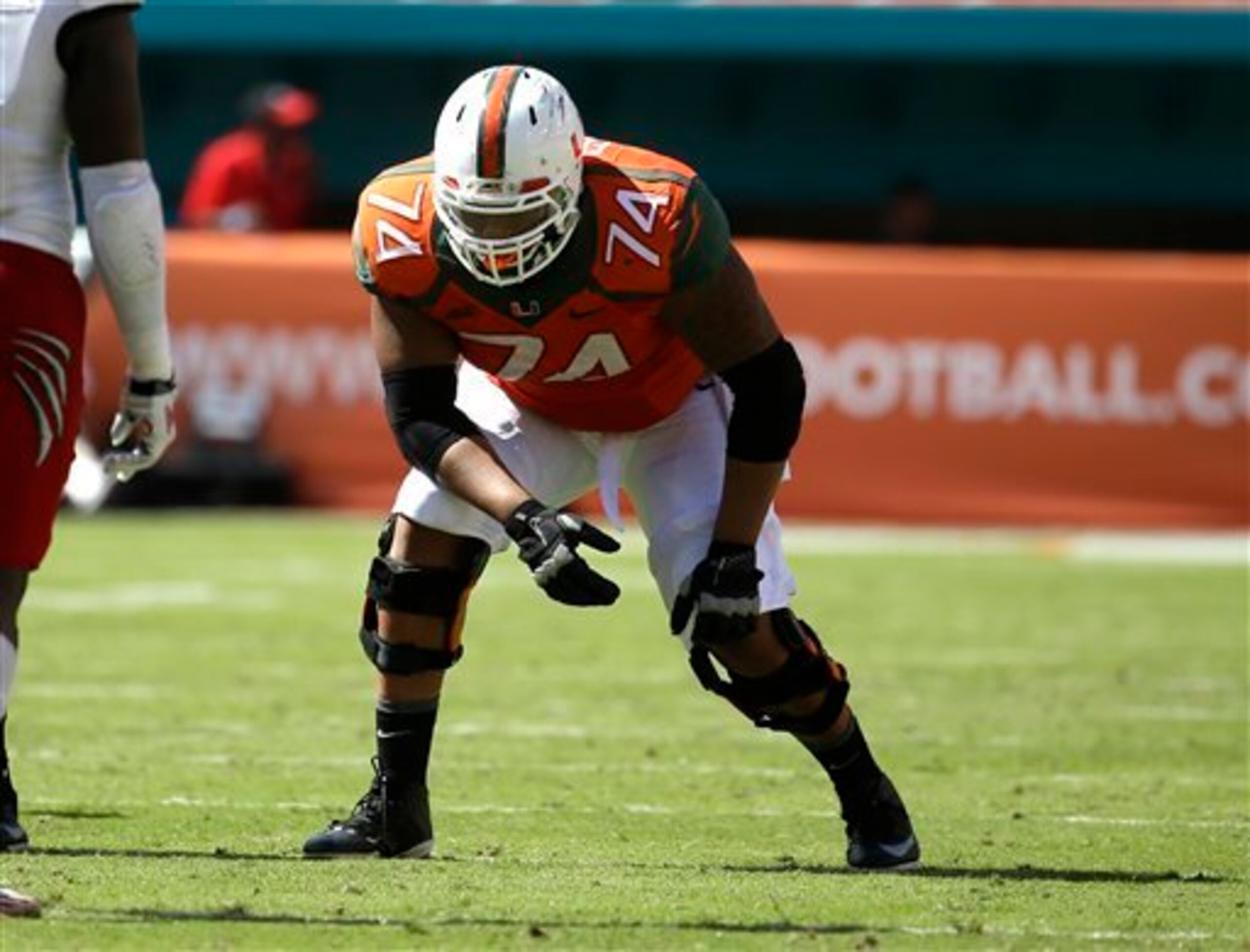
Of the top tackle prospects in the class, Ereck Flowers might be the most "boom or bust" name. At Miami, he generally did well, but when he faced top talents like Randy Gregory, he was absolutely rag-dolled for stretches. He's the type of player who makes you dig through an entire season's tape once over and think to yourself "who is he really?"
His athleticism is in question enough where you don't think he can be a left tackle at the next level, but he might be able to hang on the right side. He's also a possible convert to the interior, where he might do better in a booth.
His upside might be an Orlando Franklin, who made the move to guard in the NFL. His low bar is very low, though. It could be one which matches Marshall Newhouse, a swing tackle and guard, who is now bouncing from club to club as a reserve lineman because of his lack of strength at the point of attack and athleticism.
.jpg?w=2560 "Titans Giants Football")
.jpg?w=2560 "Dolphins Bills Football")




.jpg?w=2560 "Ward Nearly Walks Out of Presser 😳")