

Are Footballers Reaching Their Peak Later and Lasting at the Top Longer?
It’s widely believed footballers are now reaching their peak and maintaining it for longer compared to days of old.
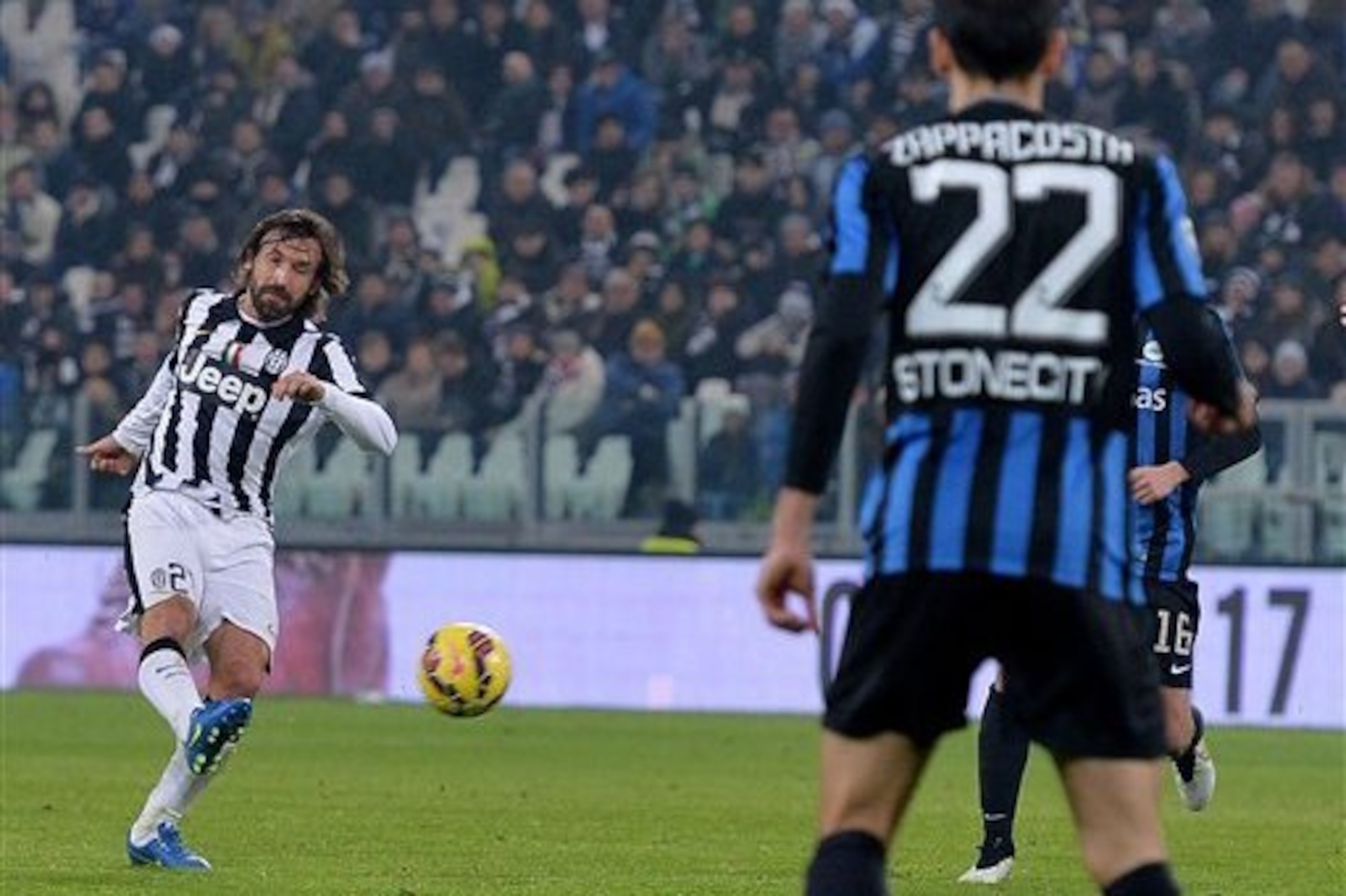
The unbelievable career of the Italian midfield maestro they call Andrea Pirlo is a pretty good case study. Former Italy international Mauro Camoranesi was even quoted by Eurosport as saying: "I was convinced that Pirlo could play until he’s 40, but given the current level of Italian football he can play until he’s 50 or 53. I don’t see anyone around with his quality or intelligence."
Of course, many would argue that’s just attributable to Pirlo’s unparalleled football genius.
TOP NEWS

Final Men's Ballon d'Or Rankings 📊

Live Highlights and Viral Moments 🍿
Most to Blame at Man Utd? 😡
Ahead of Ryan Giggs' 600th league appearance way back in 2011, The Independent covered the release of his fitness DVD, Giggs Fitness, and discussed how longevity within football can be physical too.
After sustaining a hamstring injury while training for a Champions League clash with Bayern Munich in 2001, Giggs decided he had to change his training, diet and entire lifestyle if he was to stand any chance of lengthening his already historic career:
"It was that day I just thought: 'I need to do something, I need to not drink as much alcohol, I need to look at my diet, I need to do everything I can, my bed, cars—everything to stop this happening.' The hamstring injuries were stopping me probably playing 10 or 15 games a season and I was coming up to 30.
"
It's worth noting that since the article was published, and he implemented the necessary lifestyle changes, he went on to make over 1,000 career appearances for Manchester United, as illustrated and celebrated by an infographic on the club’s website.
But for every footballer winning the fight against father time, there is equally as many child prodigies who peaked too early. Each one not quite able to live up to the mountain of expectation.
In February this year, the Daily Mail documented the fall from grace of Freddy Adu, writing: “[He was] once hailed as U.S. soccer's greatest hope, but after falling on hard times in his playing career, the former teenage prodigy has turned to nightclub promoting.”
Who remembers Kerlon Moura Souza? Best known as the inventor of the “seal dribble,” the website WorldSoccer.com reports that at the South American under-17 Championships, “He was handed the Golden Boot and Best Player awards, with eight goals, a handful of assists and some man of the match performances to throw in.”
But ever since, the injury-plagued attacking midfielder has hopped from club to club and country to country like a footballing nomad, unable to find a home or forge a concrete career for himself.
Therefore, is it really true that footballers are now reaching their peak and maintaining it for longer? Is this due to a "mental" and tactical evolution like that possessed by Pirlo, or perhaps through a physical one that’s been showcased by Giggs for well over a decade?
Or are Kerlon and Adu stark reminders that, due to the complexity of the human body, your physical and biological peak can occur at any time, regardless of whether it’s best for your career or not?
Looking at both the scientific and anecdotal evidence, here we take examine both mainstream sports science and the forgotten training principles of the old Soviet Union to find out.
First things first, when plotting the career of most athletes, it’s typically believed it follows a parabolic arc. Put more simply, what this means is that as the body matures and skills are acquired, there is a peak, but as ability and skills decline, the graph flattens.
Of course, there are exceptions, and in cognitively demanding, skill-based sports, this decline may be less rapid. Snooker, darts and even curling are all good examples of this extended parabolic arc.
But within every major sport that places an emphasis on speed, strength and other fitness components, the world of sports science teaches us the age of peak performance is between 22-30 years of age. For example:
- The Journal of Sports Sciences suggests the peak age of a baseball player is 27-29.
- The Journal of Gerontology reveals track and field athletes' sprinting age has been found to be in the low 20s, while endurance athletes have a slightly older peak age.
- The Journal of Aging and Physical Activity suggests golfers peak between 25 and 35 but then have a very slow decline.
But what exactly causes the decline? Surely finding and addressing this is the secret to lengthening any athlete’s career? Well, that's exactly where the problem lies, since the human body is not like a car engine where you can identify, fix and replace specific issues.
The reality is, right now, as you read this article, a billion biochemical reactions are going on inside of it. Your body is continually firing on a microscopic and nanoscopic scale, therefore it is—and may always be—impossible for us to predict, quantify or control it completely.
Why? One plus one doesn’t always equal two, and the careers of Ryan Giggs and Andrea Pirlo almost defy science and can’t be put into an equation.
Instead, sports scientists must understand that, at best, they can only influence the longevity of a player's career, but they cannot so strictly control and predict it. This is something that was understood by the great strength and conditioning coaches of the former Soviet Union, but has since been forgotten in the world of football.
It was an idea known as the Process of Achieving Sports Mastery—or PASM for short. This concept was designed to create a lifelong means of training and conditioning for an athlete to care for their physical abilities and carefully develop and nurture them over time—something the Soviet Union arguably did better than anyone else to produce a nation of sporting specimens.
Of course, many people are quick to point out the "pharmaceutical aid" they may have had during this time—and in no way am I trying to overlook that—but the methodology and approach to training that was applied was so advanced it is still used to this day.
Known as a multi-lateral skill developmental approach, it was found through schools of the old Eastern Bloc countries and has more recently been applied in China. Simplified, this approach consists of the utilisation of many different methods by many different means in order to foster and develop the young athlete’s adaptation level.
The theory underlying this system was if a pre-adolescent athlete developed a well-rounded athletic base, rooted in general physical preparation, his overall motor potential would correspondingly rise. Over time, this stimulus would trigger a response of adaptation so the demanding training loads that eventually occur during specialised physical preparation would not distress the body.
This is because they believed the direct relationship between the central nervous system (CNS) and physical training played a paramount role in an athlete’s adaptation to training. If they were neurologically efficient at a young age, they'd be able to mature and develop through the different stages of the Process of Achieving Sports Mastery framework. All from a solid foundation of "general physical preparation" that they'd formed from comprehensive, wide-ranging exercise and training protocol.
Putting sport science taxonomy to one side, all this means is if coaches firstly concentrate on creating a well-rounded athlete, they would then be better able to implement specialised skills later.
Perhaps the best example of this is Kerlon, who should have spent less time developing the specialised skill that is the "seal dribble" and more time building a solid foundation of fitness. Or, as it’s known in the Process of Achieving Sports Mastery and in the days of the old Soviet Union, “general physical preparation.”
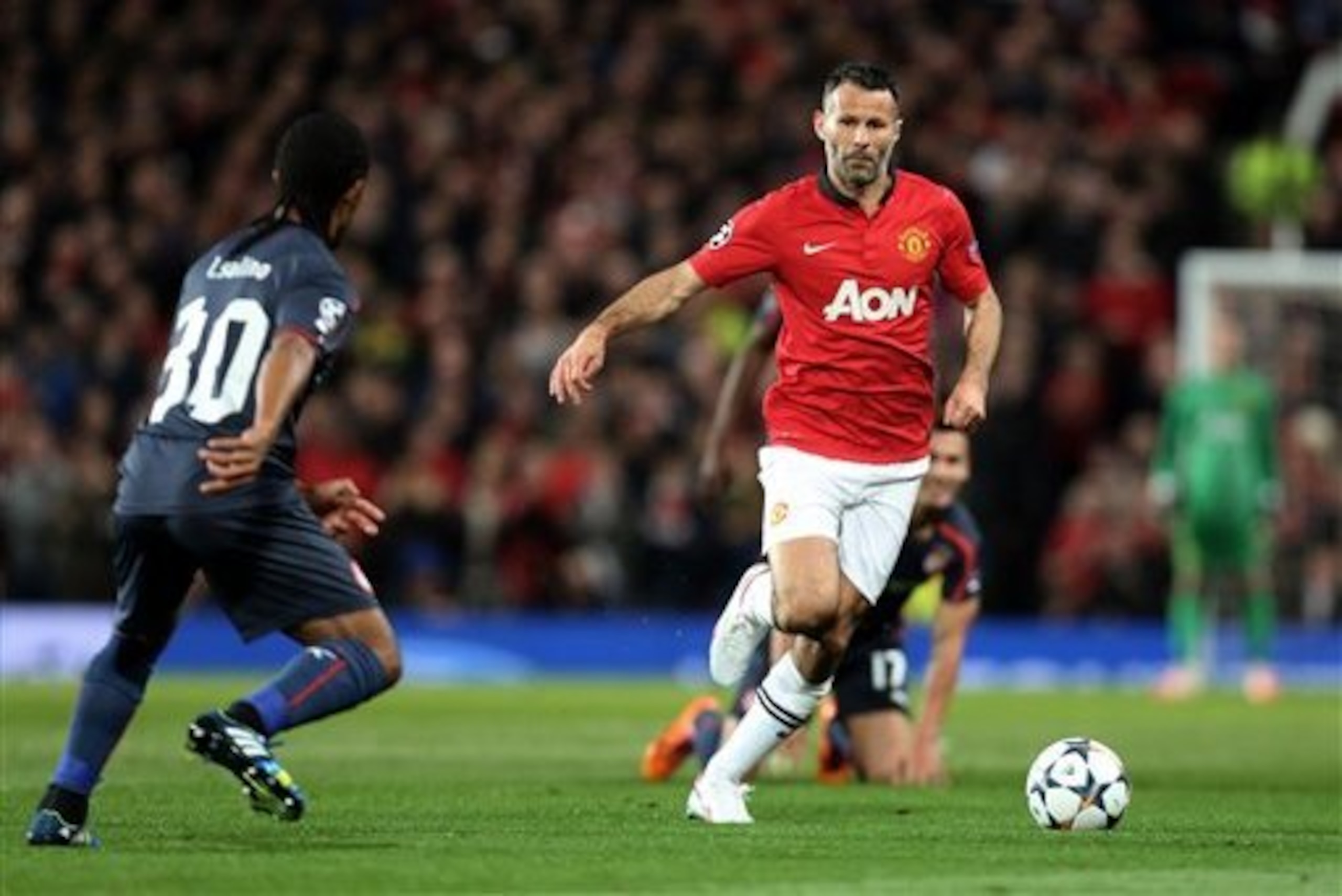
This is something it seems Ryan Giggs implemented later in life with his lifestyle changes, but the concept and age-old teachings of the Soviet Union are still the same.
In summary, are footballers now reaching their peak and maintaining it for longer? That depends entirely on their biology, intelligence and conditioning methods.


.jpg?w=2560 "5 Teams Eyeing Jonathan Taylor")
.jpg?w=2560 "Mahomes Told Teammate to Leave Meeting")



.jpg?w=2560 "NFL investigating Eagles")
.jpg?w=2560 "Jonathan Taylor Landing Spots 📍")
