
Biggest Questions Needing Answers After MLB's Opening Week
One week of baseball is typically far too small a sample size to provide definitive answers to most of the questions that many baseball fans had heading into the regular season, though we have gotten an answer to at least one.
Will the black cloud of injuries that hung over the Texas Rangers remain in 2015? The answer, courtesy of starter Derek Holland's injured left shoulder, which is expected to keep him out of action for at least two months, is a resounding yes.
But the vast majority of our questions remain unanswered, and some new ones have popped up in the meantime.
Has a team found an unlikely internal option to plug a hole on its roster? Are injuries from last season that we expected to remain an issue no longer a problem? Is a team's early-season success a sign of things to come?
I don't pretend to have the answers for these questions—nobody does. But that doesn't mean we shouldn't keep asking the questions, and what follows are the five biggest queries as we head into the second week of the 2015 regular season.
Will Players Continue to Abide by the New Pace-of-Play Rules?
1 of 5
All things considered, players have done an excellent job of abiding by commissioner Rob Manfred's new pace-of-play rules intended to speed up the game, resulting in a 10-minute drop in game times across the board, per a report from USA Today's Scott Boeck.
Of course, those figures don't include the nearly seven-hour, 19-inning marathon between Boston and New York this past Friday, and not every player in the game has been entirely compliant, resulting in MLB sending out 10 warning letters, according to The Associated Press (via Yahoo Sports).
One of those warned was Red Sox starter Clay Buchholz, who was cited for not keeping one foot in the batter's box when he stepped to the plate in Boston's opening series against Philadelphia, something that David Ortiz, a vocal critic of the new rules, found laughable.
"Buchholz got a letter before me," Ortiz told the Boston Herald's Jason Mastrodonato. "You believe that? He's got a letter, 'Hey, buddy, you're walking out of the box. What's wrong with you?'"
As we get deeper into the regular season, it's fair to wonder whether players will still be making a conscious effort to abide by the new rules, or if old habits will come back into play. As Ortiz noted in his spring training rant to ESPN Boston's Gordon Edes, there's a reason why batters step out of the box:
"I saw one pitch, I come out, I'm thinking, 'What is this guy going to try to do to me next?' I'm not walking around just because there are cameras all over the place and I want my buddies back home to see me and this and that. It doesn't go that way.
When you force a hitter to do that (stay in the box), 70 percent (of the time) you're out, because you don't have time to think. And the only time you have to think about things is that time. So, I don't know how this baseball game is going to end up.
"
Starting May 1, the warning letters will go away and be replaced by fines of up to $500 per infraction. Is that really going to be a deterrent for a player like Ortiz, who jokingly told Edes that he "might run out of money" paying fines despite a $16 million salary in 2015—or for that matter, anyone, considering that the average MLB salary sits around $4.25 million?
It's not hard to envision a player in a funk like Ortiz is out of the gate (3-for-20 with nine strikeouts) pointing to the new rules as the reason for his ineffectiveness and reverting back to his old ways in an attempt to get going, $500 fine be damned.
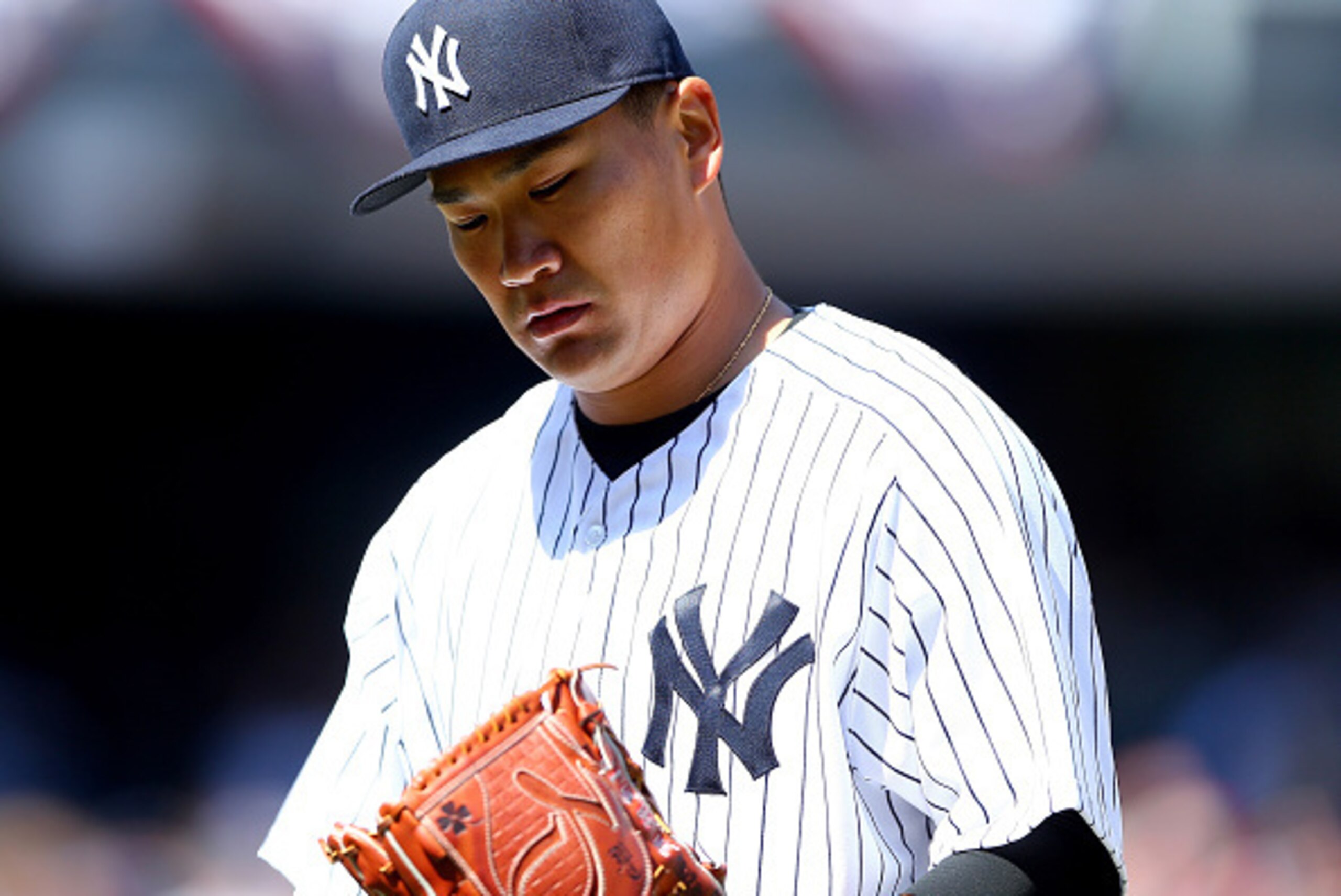
What's Going on with Masahiro Tanaka?
2 of 5
Remember the partially torn UCL in Masahiro Tanaka's right elbow that was a ticking time bomb waiting to explode, crushing any hope for a successful season in the Bronx?
Word out of New York is that it's been diffused.
Both Yankees manager Joe Giradi and pitching coach Larry Rothschild believe that the elbow is not an issue for their ace—even after Toronto put four earned runs and five hits on the board in what was a somewhat labored Opening Day start for Tanaka, who needed 82 pitches to get through four innings.
“I've seen the way he’s thrown his split. I've seen him throw his long-toss,” Girardi told the New York Post's Dan Martin. "I just don’t think if he was hurt he could do the things that he’s doing."
Rothschild also pointed to Tanaka's split-fingered fastball as proof of health: “His split-finger was as good, his slider was as good (as 2014). I think if he’s healthy, he’s going to pitch good and I believe he’s healthy.”
They might be right. While the arm mechanics involved with throwing a split-fingered fastball are nearly identical to that of a regular heater, the grip—which makes the pitch drop through the strike zone as hitters try to dig it out of the dirt—is different.
With a split-finger, a pitcher's middle and index fingers are split like a V and can lead to arm problems, as former Minnesota pitching coach Rick Anderson explained to The Associated Press, per The New York Times, in a 2011 story about the pitch and its disappearance from the game.
“You can just take your fingers and the more you put them apart, the more you put stress on the elbow," Anderson said. "It’s a pitch we really try to shy off of.” Clearly, the Yankees would refrain from having Tanaka—or any pitcher—use that pitch with a compromised elbow.
So if it's not his elbow that led to Tanaka looking like a mere mortal on Opening Day and not the Cy Young Award contender the Yankees expect, what did?
“Let’s not forget this is his second season in the league and teams are gonna adjust to him and he’s going to have to make some adjustments,” Girardi told Martin. “He’s been good at making adjustments so far. I would put my money on him making adjustments.”
Could the answer really be that simple?
Can Teams off to Hot Starts Keep It Up?
3 of 5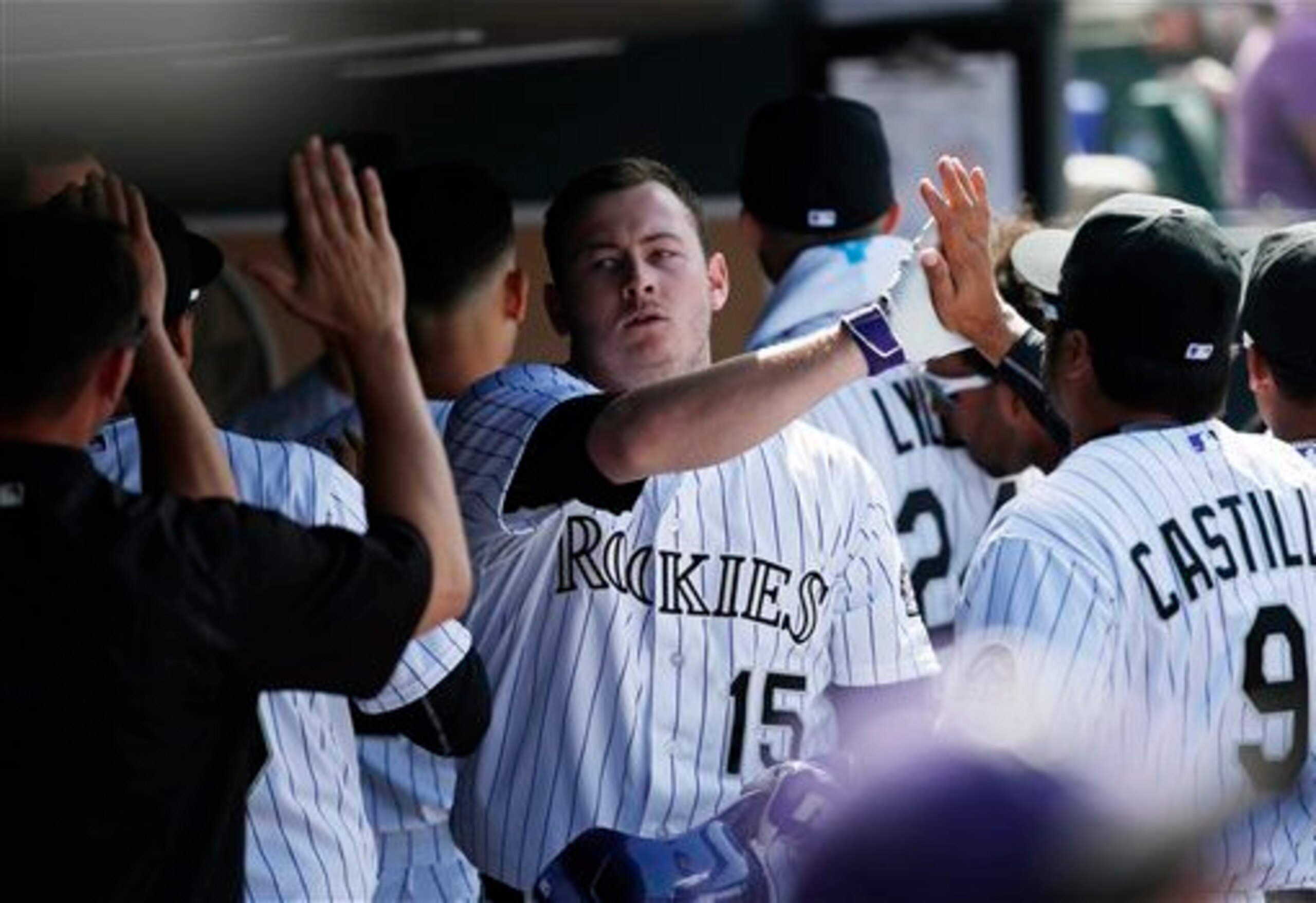
A quick look at the standings around baseball, particularly in the National League, shows a number of teams that weren't supposed to be relevant in 2015—Atlanta (5-0), Cincinnati (4-1) and Colorado (4-1)—sitting atop their divisions. Heck, even Philadelphia (3-2) has come out of the gate stronger than anticipated.
It's not like these clubs have been going up against inferior competition, either.
Atlanta swept Miami and has taken the first two games of its series against New York (NL), Cincinnati swept Pittsburgh and split its first two games against St. Louis, and Colorado swept Milwaukee and has split the first two games of its series against Chicago (NL).
While five games can't determine any wide-ranging conclusions, it's more than enough to get the juices flowing in each of those respective clubhouses.
“To come in here (St. Louis) and play against a team that people are expecting really big things out of, and to play the way we did, hopefully carries over,” veteran catcher A.J. Pierzynski, now with the Braves, told Atlanta reporters, via Rick Hummel of the St. Louis Post-Dispatch.
“It’s only three games. There’s a whole lot more games (to play). (But) if we pitch like this, we’ll be fine.”
We've seen clubs get off to hot starts before, only to fall flat as the season progressed, and that well may be the case here. But then again, it's possible that the experts and pundits were wrong. Could these clubs be far better than anyone believed?


Will St. Louis' Offensive Struggles Be Its Downfall?
4 of 5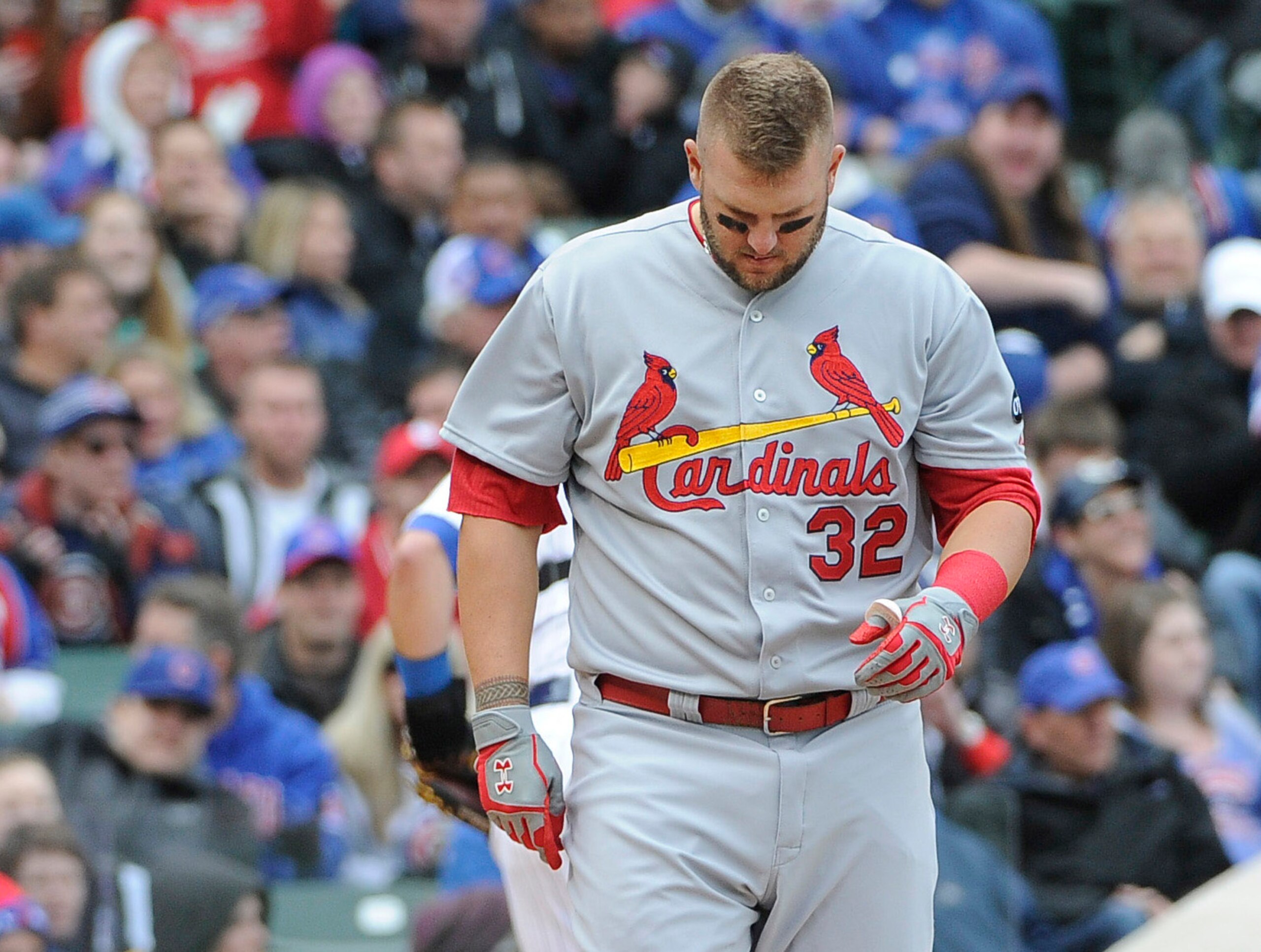
St. Louis was able to overcome a mediocre offense in 2014—one that scored only 619 runs, tied with the 89-loss Philadelphia Phillies for the seventh-lowest total in baseball—to win its second straight National League Central crown.
That might not sound like an outrageous result on the surface, but consider this, courtesy of the St. Louis Post-Dispatch's Joe Strauss:
"The 2014 Redbirds were a marvel that refuted statistics. Most teams that average 3.82 runs per game see a spike in double plays and a significant decrease in power while constructing a Fielding Independent ERA worse than league norm [and] can expect a struggle to reach .500, never mind reaching a fourth consecutive National League Championship Series. But that was who the Cardinals were last year—and what they can’t trust to repeat this year.
"
If you thought that St. Louis' struggles to produce with runners in scoring position were left in 2014 where they belong, think again.
Through five games, the Cardinals rank 23rd in OPS with runners in scoring position (.587) and, even more troubling, have stepped to the plate with runners in scoring position only 36 times. They are tied with Baltimore for the seventh-fewest plate appearances under those conditions.
The Cardinals simply aren't putting themselves in position to score, which is why they're tied with Minnesota—a team that didn't score its first run until the third game of the season—for the third-lowest run total in baseball (11).
Are the Cardinals' bats tough enough to pick up their level of production, or is St. Louis destined to embark on another nail-biting campaign where the division, and its postseason fate, aren't decided until late in the season?
Has Toronto Solved Its Ninth-Inning Problem?
5 of 5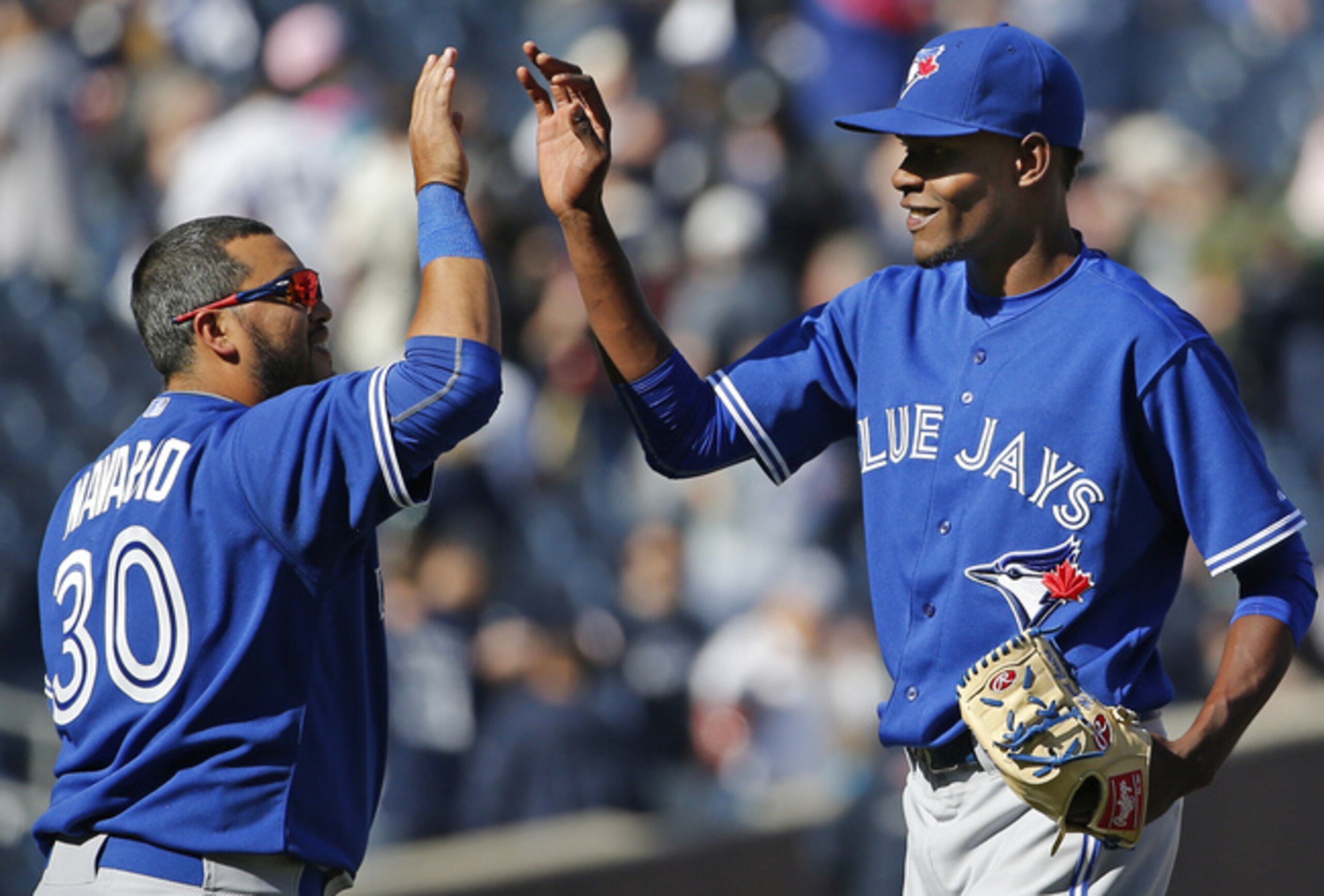
Asking a 20-year-old who had never pitched above Single-A to step onto the Yankee Stadium mound and pick up a save is what you'd call a risky move, but it paid off for Toronto manager John Gibbons.
Miguel Castro looked right at home closing things out for the Blue Jays, working a perfect frame to pick up the first save of his young career.
"I didn't feel any different, I was on the mound and all I had to do was locate my pitches," Castro told reporters after the game, including MLB.com's Gregor Chisholm, through interpreter Luis Rivera.
Castro, who was handed the job after one uninspired outing from veteran Brett Cecil, has thrown three perfect innings thus far, striking out two. Gibbons, for one, believes that Castro is capable of sticking in the ninth.
"He's a strike thrower," Gibbons told Chisholm. "Those guys who come in late, throw strikes, have great arms, they're going to be pretty good."
While it's not unheard of for a rookie to serve as a team's closer, rarely are they as young and inexperienced as Castro.
Since saves became an official statistic in 1969, only 12 rookies in their age-20 season have recorded at least one—and none finished the year with more than nine, a high watermark set by Toronto's own Victor Cruz back in 1978.
Could Castro stick in the role all year and thrive? Sure. But he could just as easily fall apart, leaving the Blue Jays where they were heading into the season—with a bullpen that desperately needs an established, experienced closer to lean on.
Unless otherwise linked/noted, all statistics courtesy of Baseball-Reference and are current through games of April 11. Standings and team records courtesy of MLB.com.
All contract information courtesy of Cot's Contracts.
Hit me up on Twitter to talk all things baseball: @RickWeinerBR

.jpg?w=2560 "Mahomes Told Teammate to Leave Meeting")

.jpg?w=2560 "5 Teams Eyeing Jonathan Taylor")


.jpg?w=2560 "NFL investigating Eagles")

.jpg?w=2560 "Jonathan Taylor Landing Spots 📍")