

High-Profile MLB Offseason Moves Poised to Blow Up in Teams' Faces
The blockbuster deal is always good for creating some goose bumps.
The excitement and optimism that come with a high-profile offseason signing or trade sell tickets and work the fanbase into a frenzy. Expectations soar because of the move, and watching the player introduced for the first time in a new uniform can be thrilling, chill-inducing even.
The problem is: What if that player flops? What if expectations are so high, and he is so bad, that the move completely blows up in the faces of the team and fanbase?
We’ve seen it happen plenty of times before. So there is nothing to stop us from wondering what big-ticket items from this past offseason might end up being defective, either because of performance or injury.
Here are the candidates.
Jon Lester, Chicago Cubs
1 of 8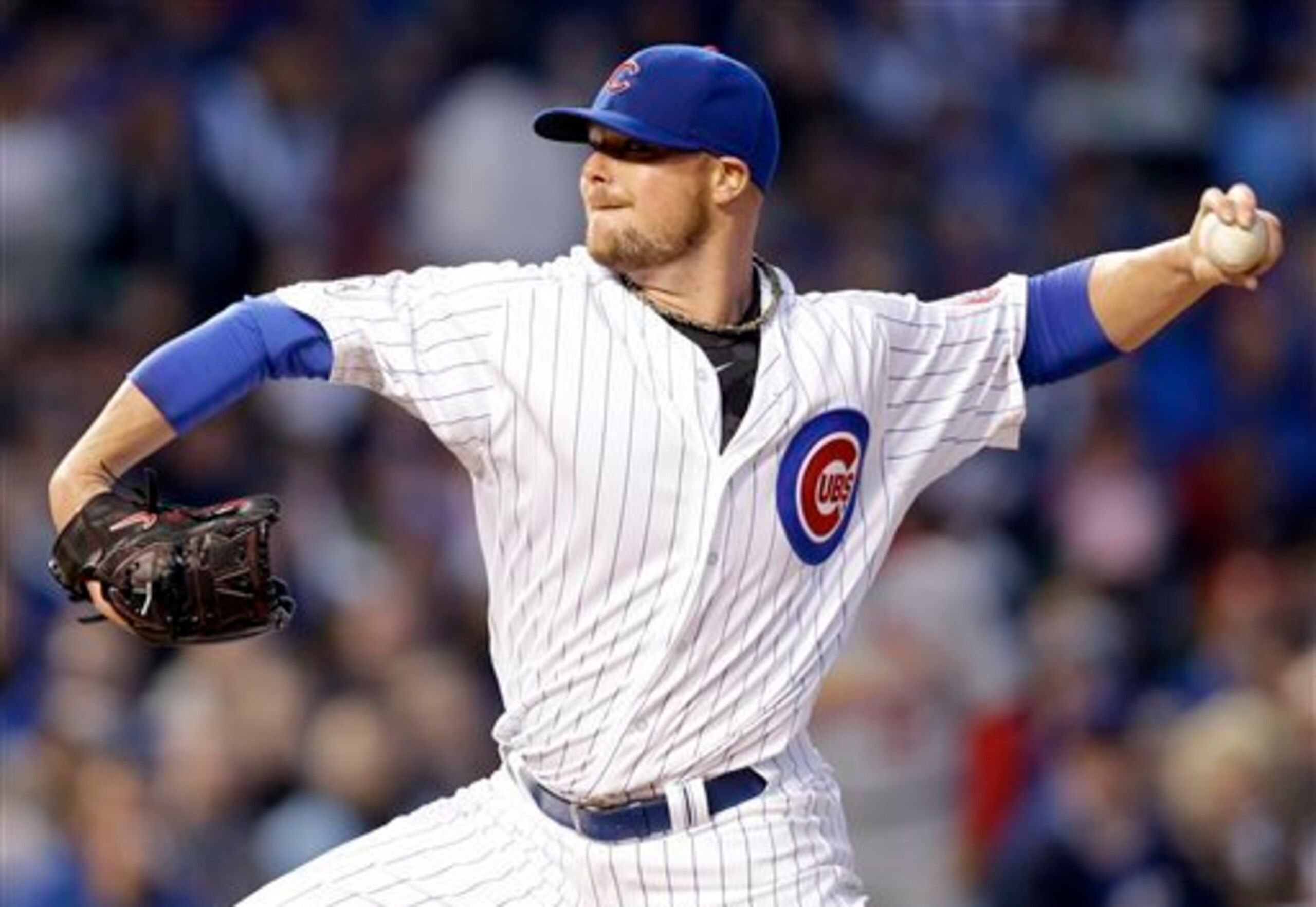
Jon Lester turned 31 years old in January and his injury history has been mostly good, meaning he has made at least 31 starts a season each of the last seven years.
However, in only a few of those seasons has Lester resembled a true ace. Last year, granted, was one of those, and probably the best of his career.
Then again, it’s not like this game has never seen a player perform at his peak the season before he hits the open market and makes himself available to the highest(ish) bidder. This is not to say Lester will start pitching like a below-average starter, but there is cause to think he will not be the season-changing ace the Cubs, or at least their fans, believe he will be.
Lester drastically dropped his home run-to-fly ball percentage from 13.9 in 2012 to 8.3 in 2013 to 7.2 last year. Part of that could be because he pitched some in Oakland after a deadline trade, but it is also worth noting that Lester saw his strikeouts per nine innings rise (7.47 in 2013 to 9.01 in 2014) and his walks drop (2.83 to 1.97).
These numbers show Lester was an ace last season, in every sense of the term.
It is arguable, though, that he had not been anything close to that since 2010. So, is last season’s Lester the one we should expect going forward, or is a regression/correction in order?
Lester had a bit of an odd spring training because of a “dead arm,” but more concerning was his Opening Day start against the rival St. Louis Cardinals in which he lasted just 4.1 innings, and allowed three runs on eight hits and two walks.
He also showed no ability to hold runners on as the Cardinals swiped three bases while he was in the game. They also routinely took gigantic leads against him. Lester never made a pickoff throw, and he hasn’t attempted one since 2013.
Sure, he will get sharper as he goes along, and the Cubs will address his pickoff tendencies. But Lester is a prime candidate to not live up to expectations this season, and he is already off to a rousing start in that category.
Pablo Sandoval, Boston Red Sox
2 of 8
This is one of the signings that got Red Sox Nation all giddy about a second consecutive worst-to-first run, but despite the contract itself not being terrible (five years, $95 million), Pablo Sandoval is not the kind of game-changer urban legend might lead one to believe.
Sandoval is still in the game’s good graces because he was superhuman during the last postseason and was the main offensive reason the San Francisco Giants won a third World Series in five years. But his regular season, a much larger sample size, was nearly the worst of his career, offensively at least. This should not be surprising, considering his slugging percentage, OPS, OPS+ and weighted on-base average, according to FanGraphs, have all dropped in each of his last three seasons.
The future looks grim as well.
Over the last two season, Sandoval ranks 10th in the majors at making contact with pitches outside the strike zone. For his career, this has been one of his weaknesses: plate discipline. But for whatever reasons—playoff performance, the panda hats—many viewed his lack of discipline at the dish as almost endearing during his time in San Francisco.
But as Bill Petti of FanGraphs illustrates, a player’s o-contact percentage—contact with pitches out of the zone—dramatically starts to drop at around his age-28 season, to the point where it becomes a serious liability into his 30s.
Sandoval is 28, and he will be 29 in August.
His 0-for-5, three-strikeout-Red Sox debut aside, the future for Sandoval is not glowing with promise.
Wil Myers, San Diego Padres
3 of 8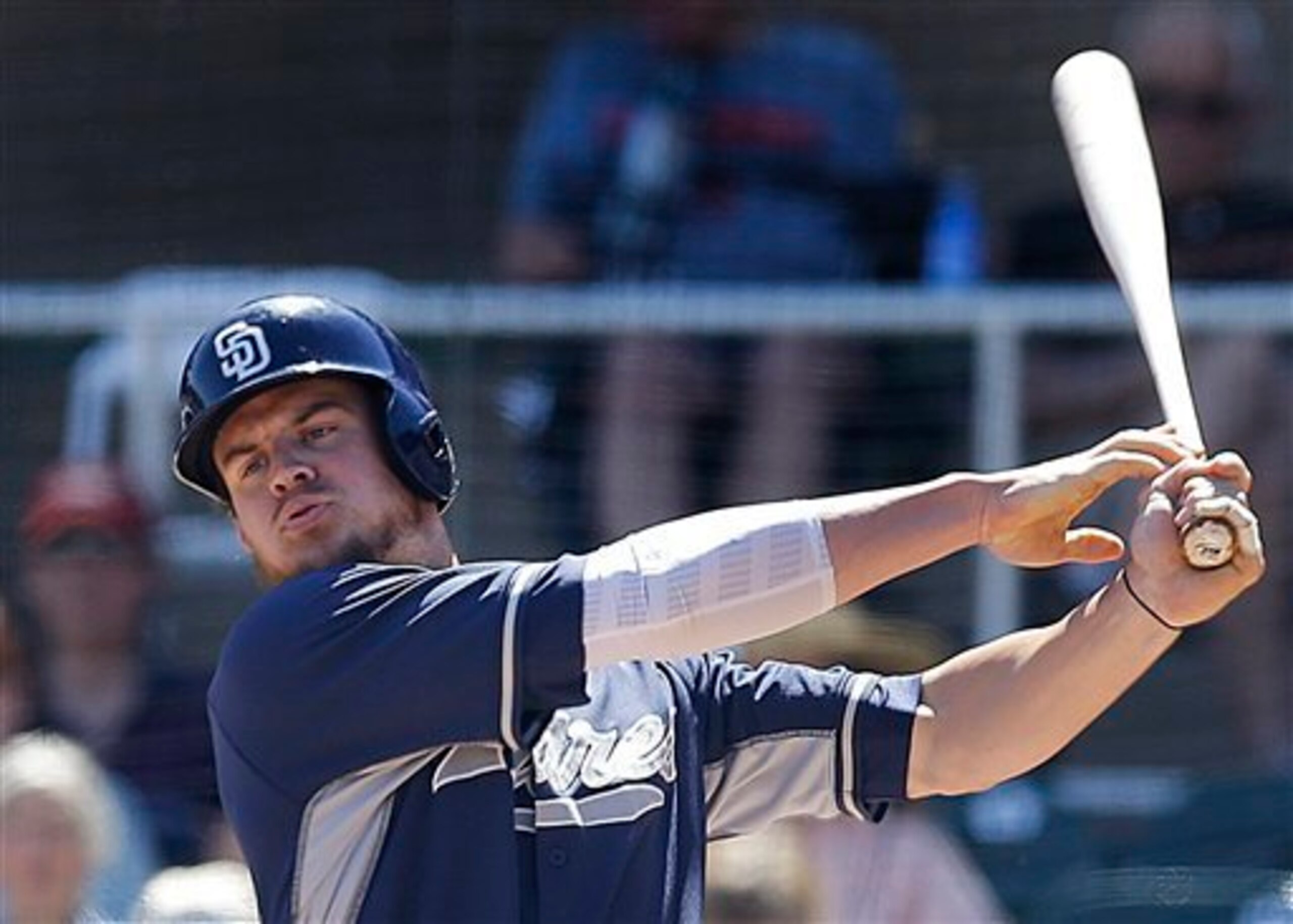
Wil Myers was once one of the top prospects in the game, Baseball America’s Minor League Player of the Year and an American League Rookie of the Year for the Tampa Bay Rays after they traded James Shields to Kansas City for him in 2012.
Now Myers is on his third organization before his 25th birthday, and 2014 was an abysmal season for him. Yes, Myers suffered a fractured wrist that caused him to miss 70 games and probably sapped a significant portion of his production upon his return, but he also had 224 plate appearances before the injury and his numbers were not very impressive then—.227/.313/.354 with 52 strikeouts.
As Dave Cameron points out at FoxSports.com, Myers posted a career .163 isolated slugging mark before the wrist injury, in about a full season of plate appearances (597). That production, Cameron notes, is similar to players like Will Venable, Kelly Johnson, Jedd Gyorko and Justin Smoak.
And now the Padres are asking Myers to produce in Petco Park while also patrolling its massive center field. This does not smell like homemade apple pie or freshly mowed grass. It’s more like boiling cabbage.
Myers is supposed to be a centerpiece for the Padres’ rebuild. If his trends continue, the trade for him that sent top prospect Joe Ross to the Washington Nationals—it was a three-team trade—will be a regrettable one in San Diego.


Ervin Santana, Minnesota Twins
4 of 8
This one has already become something of an exploding land mine under the feet of the Twins. Major League Baseball suspended Ervin Santana 80 games last Friday for testing positive for the steroid stanozolol. While the team won’t have to pay that portion of Santana’s $13.5 million salary, it is still a hit to whatever improvement they hoped to make on a 70-win season in 2014.
Santana was one of the worst pitchers in the last 50 years in 2012, as measured by FanGraphs WAR. But after the Angels traded him to the Kansas City Royals prior to the next season, Santana had a 1.27 ERA+ and a 3.24 ERA with the help of that stellar Kansas City defense in 2013.
He was decent last season in Atlanta, too. But considering he played behind a great defense in Kansas City and got the help of striking out pitchers in the National League, it is difficult to quantify exactly how much better Santana was from 2012 through 2014.
Granted, he was better, but how that plays out over the course of a four-year, $55 million contract is yet to be seen. With the Twins, Santana has neither the advantage of a world-class defense or the pitcher’s spot in the lineup, which he struck out 38 percent of the time last season—league average was 36.6.
These factors, which helped Santana’s numbers look better over the last two years, could lead to a decline in Minnesota after he returns.
Yovani Gallardo, Texas Rangers
5 of 8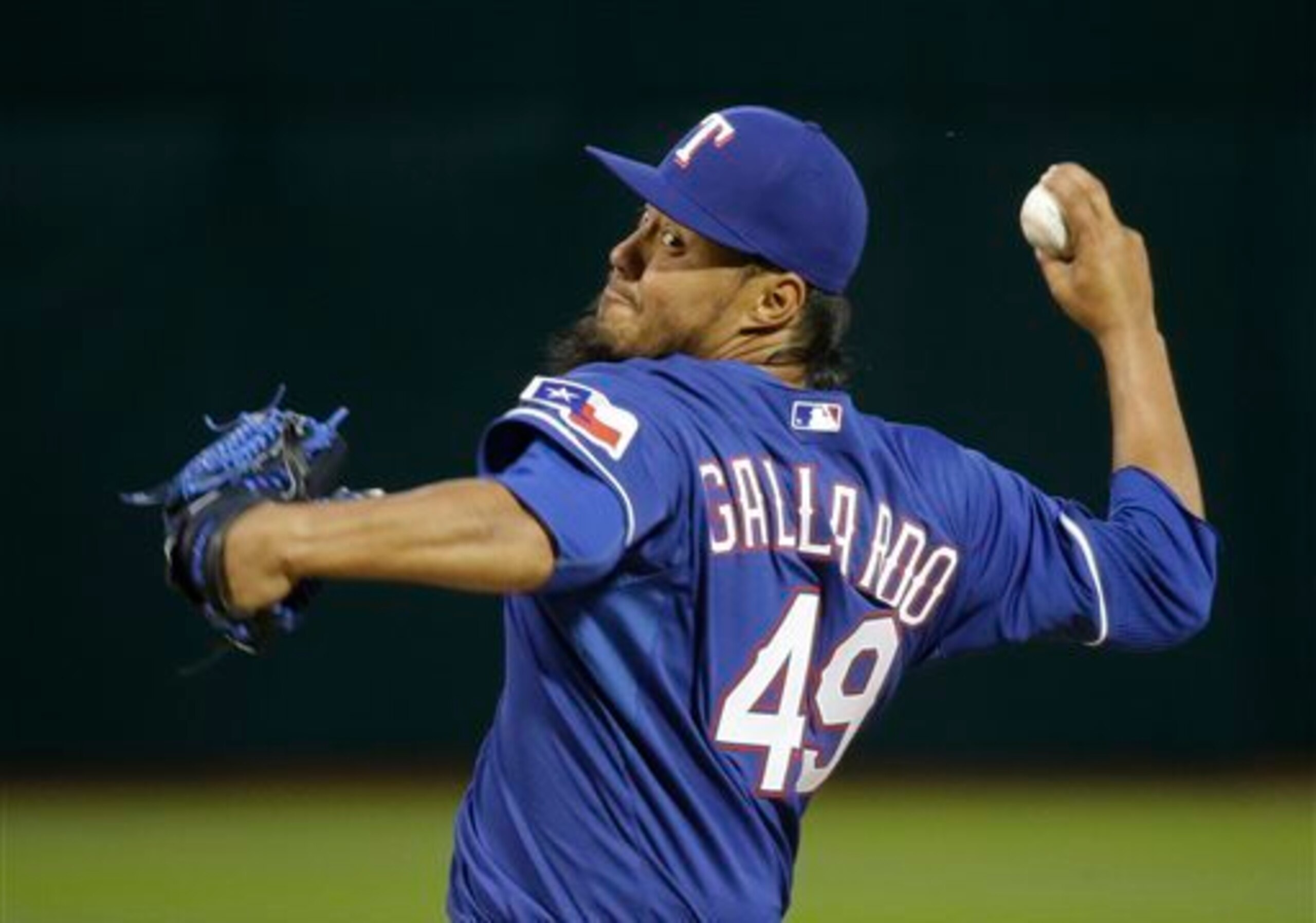
The Rangers did not sign a big-name free-agent pitcher, nor did they pull off a trade for David Price or Cole Hamels. Instead, they traded for Yovani Gallardo, a fairly productive right-hander, for their No. 7 prospect, Luis Sardinas, as rated by Baseball America.
While Gallardo is a recognizable name—he’s been an All-Star and finished seventh in National League Cy Young Award voting in 2011—his strikeout totals and rates, which made him valuable in the past, are drastically dropping.
After four consecutive seasons of at least 200 strikeouts, he’s dropped to 144 and 146 over the last two, respectively, despite him still making 63 starts in that time. His strikeouts per nine have also dropped from being in the nines to 7.2 in 2013 and 6.8 last year.
Also of significance is Gallardo leaving the Brewers, and more specifically, the men who catch for the Brewers. It is no secret Jonathan Lucroy is a solid defensive catcher with a good pitch-framing reputation, as Martin Maldonado, another Milwaukee catcher, has been. Gallardo has benefited greatly from them.
As Jeff Sullivan at FanGraphs points out, Gallardo has ranked in the top 10 in gaining extra strikes because of his catcher every year since 2010, and most of the time he’s been in the top five.
And like Ervin Santana, there is something to be said about changing leagues. Gallardo has struck out 39 percent of the pitchers he faced with the Brewers. Last season, pitchers struck out 36.6 percent of the time, so Gallardo definitely benefitted from pitching in the NL.
That won’t happen for him as much anymore, and while he might not be as bad as his Rangers debut—four innings, four runs allowed, one homer—he probably won’t be as good as he was in Milwaukee.
Nelson Cruz, Seattle Mariners
6 of 8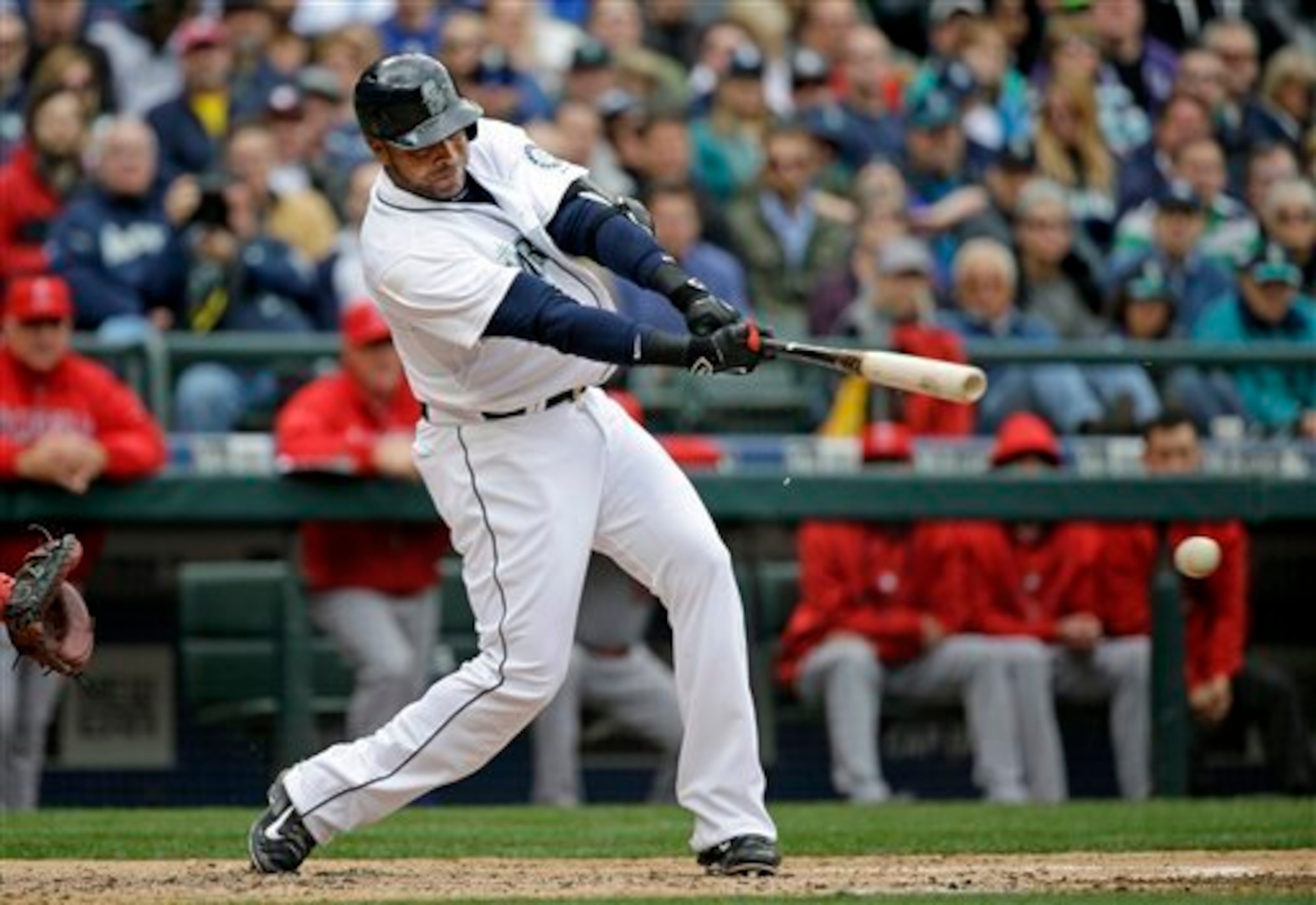
One of the big reasons the Mariners are being tabbed to end their 13-year playoff drought is because Nelson Cruz gives them a legitimate power threat in the middle of their once-anemic lineup. It cost them $57 million over four seasons.
Cruz finished last year with 40 home runs, getting most of his plate appearances in Baltimore. Now he moves to Safeco Field, an infamous (for hitters) pitcher’s park. While it is reasonable to expect his home run total to drop a bit—he also won’t hit as much in places like Toronto or New York, and replaces those with Oakland—ESPN’s Home Run Tracker suggests all but maybe one of Cruz’s home runs last season would have cleared the wall at Safeco.
There are other factors to consider as well. The American League West has far better pitching than the AL East, though some of that is on his own club. Still, last season, Cruz hit .173 against AL West teams, and that is with a .318 average over seven games against the Houston Astros. He hit five homers, two of those coming against Houston.
With the help of the Lookout Landing blog, we see Cruz can expect his home run-to-fly ball ratio to drop from the 20s to 16.7 percent. That will lower his overall home run output. And then when you consider the marine layer that really limits offense in parks like AT&T, Dodger Stadium and O.co Coliseum as well as Safeco, it might drop even more.
With a minimum of 30 games played for his career, Cruz’s worst numbers are at AL West parks, specifically Angel Stadium and O.co, both located in Pacific coastal areas. Cruz has hit .185 with a .571 OPS in 215 career plate appearances in Oakland, and he has hit .218 with a .654 OPS in 213 plate appearances at Angel Stadium. Those teams figure to be the Mariners’ chief competition within the division.
Michael Cuddyer, New York Mets
7 of 8
The Mets signed Michael Cuddyer for two years and $21 million, and no one really understood why. When you break down the numbers, it is even tougher to understand.
Over his career, Cuddyer has taken 568 plate appearances at Coors Field, where he spent the previous three seasons with the Colorado Rockies. In that time he hit .323/.387/.583 with a .970 OPS. In his three seasons with Colorado, his OPS on the road has been .744, .852 (when he won a batting title in 2013) and .734. We are likely to see those numbers continue to tumble at Citi Field, where in a small sample size (31 plate appearances), Cuddyer has hit .143/.226/.250 with a .476 OPS, one home run and no other extra-base hits.
When he is on the field, Cuddyer is a liability. FanGraphs tags him for minus-64 defensive runs saved in the outfield for his career. Injuries have kept him off the field the rest of the time as he’s averaged 93 games a season for the Rockies, and has missed 206 games with them.
At age 36, Cuddyer does not project to get healthier in his time with the Mets.
Cole Hamels, Philadelphia Phillies
8 of 8
This is the move that will blow up on the Phillies because it did not happen.
Hamels admitted to Bob Nightengale of USA Today he would prefer to be traded. The rest of the free world believes the Phillies should have already traded him. Other teams have tried to trade for him.
But Phillies general manager Ruben Amaro Jr. has refused. He wants to replenish his terrible roster and his bad farm system with this one deal, and he is holding out until some other GM’s brain falls out and he gives Amaro what he wants.
It’s not going to happen, and every day Hamels spends on Philadelphia’s roster, the more his demand drops because next offseason, teams do not have to give up prospects to find a front-line starter, as free agency will be loaded with them.




.jpg?w=2560 "Mahomes Asked OT to Leave Meeting")
.jpg?w=2560 "Jonathan Taylor Landing Spots 📍")

.jpg?w=2560 "5 Teams Eyeing Jonathan Taylor")

