

Burnley vs. Tottenham Hotspur: Tactical Review of Premier League Game
Tottenham Hotspur turned in a putrid performance against Burnley at Turf Moor on Sunday and were fortunate to return to the capital with a point. The 0-0 draw was a difficult watch, but did bring to light the contrasting tactical fortunes of managers Sean Dyche and Mauricio Pochettino.
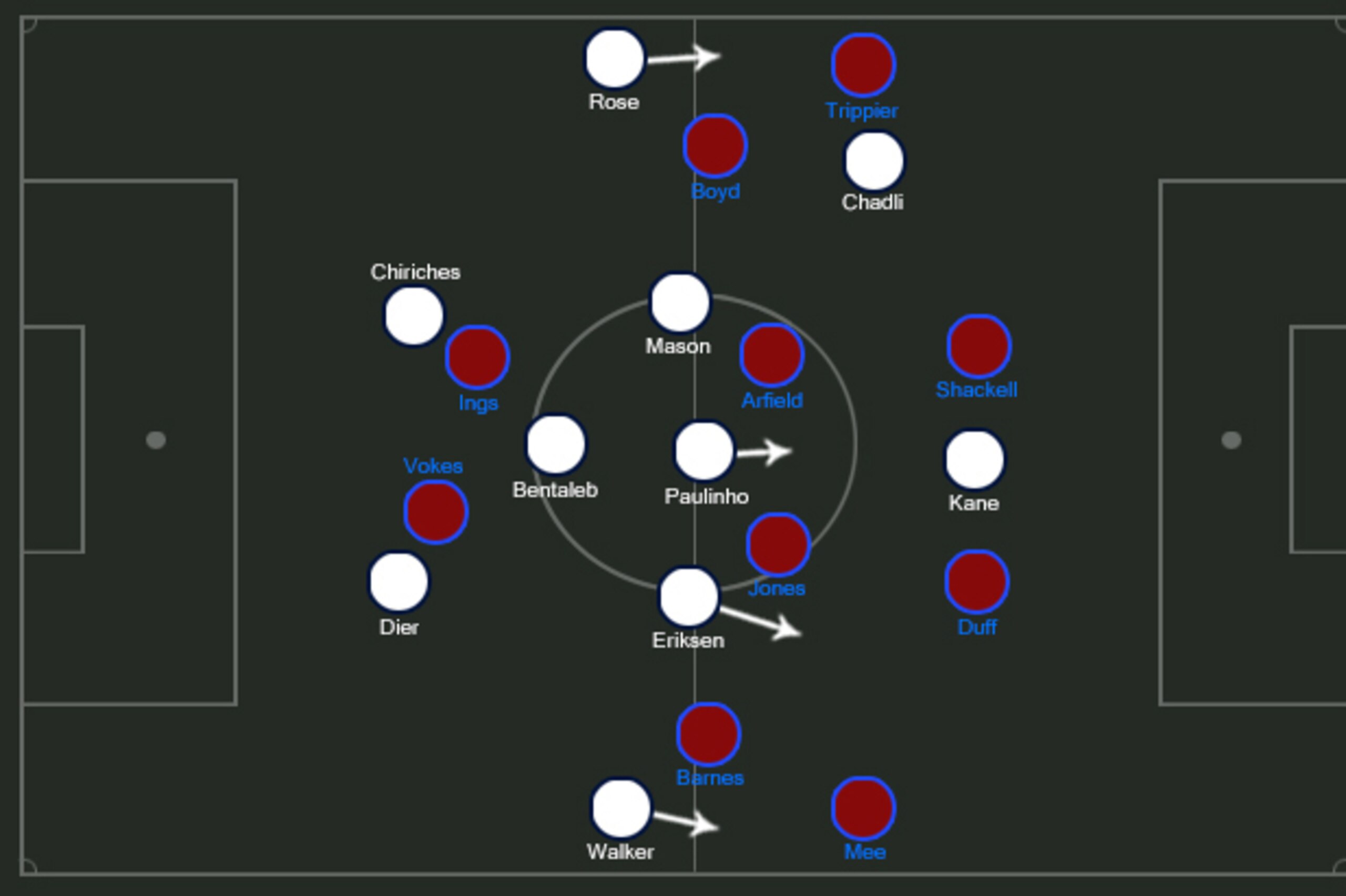
Formations and XIs
TOP NEWS

Final Men's Ballon d'Or Rankings 📊
Live Highlights and Viral Moments 🍿
Most to Blame at Man Utd? 😡
Burnley played in a well-organised 4-4-2 from start to finish, with Sam Vokes partnering Danny Ings up front and Jason Shackell paired with Michael Duff at the back.
Tottenham Hotspur started in a bizarre, diamond-like setup that didn't truly ever look like an actual formation.
1. Lopsided Spurs
Tottenham have had success with a pretty basic 4-2-3-1 this season under Pochettino, but the Argentine hugely over-complicated things for the trip to Turf Moor and blurred the roles and responsibilities of the players.
Nabil Bentaleb played at the base as the deepest midfielder, with Ryan Mason, Paulinho and Christian Eriksen in a flattish line just ahead. Harry Kane was up front alone, isolated, and Nacer Chadli played nominally from the left side but floated around.
Kyle Walker was the only player who was technically situated on the right in a starting position, as Eriksen would move laterally from central to right but never fix his position there. It created a very wonky look to the build-up play and allowed Kane zero service.

The setup technically placed Paulinho as a deep No. 10 and boasted four in the central zones, so playing against a rigid, flat 4-4-2, it should have dominated. But the passing was slow and safe, with no runs between the lines being made, and despite boasting a four vs. two numerical advantage, Spurs were never able to spring the middle.
Side to side, back again, a few inches forward, then back again. No one looked comfortable when constructing attacks, yet Pochettino watched on and changed nothing.
2. Organised Burnley
Part of that inability to make use of the man advantage centrally was Spurs' pre-season-esque performance, but a large dose of credit must go to Sean Dyche and his tactical setup.
Burnley's pressing caused Spurs plenty of headaches, and they struggled to work the ball through their options and into the final third. The Clarets mixed up high pressing with sitting deeper in a low block, choosing their moments carefully to burst forward.
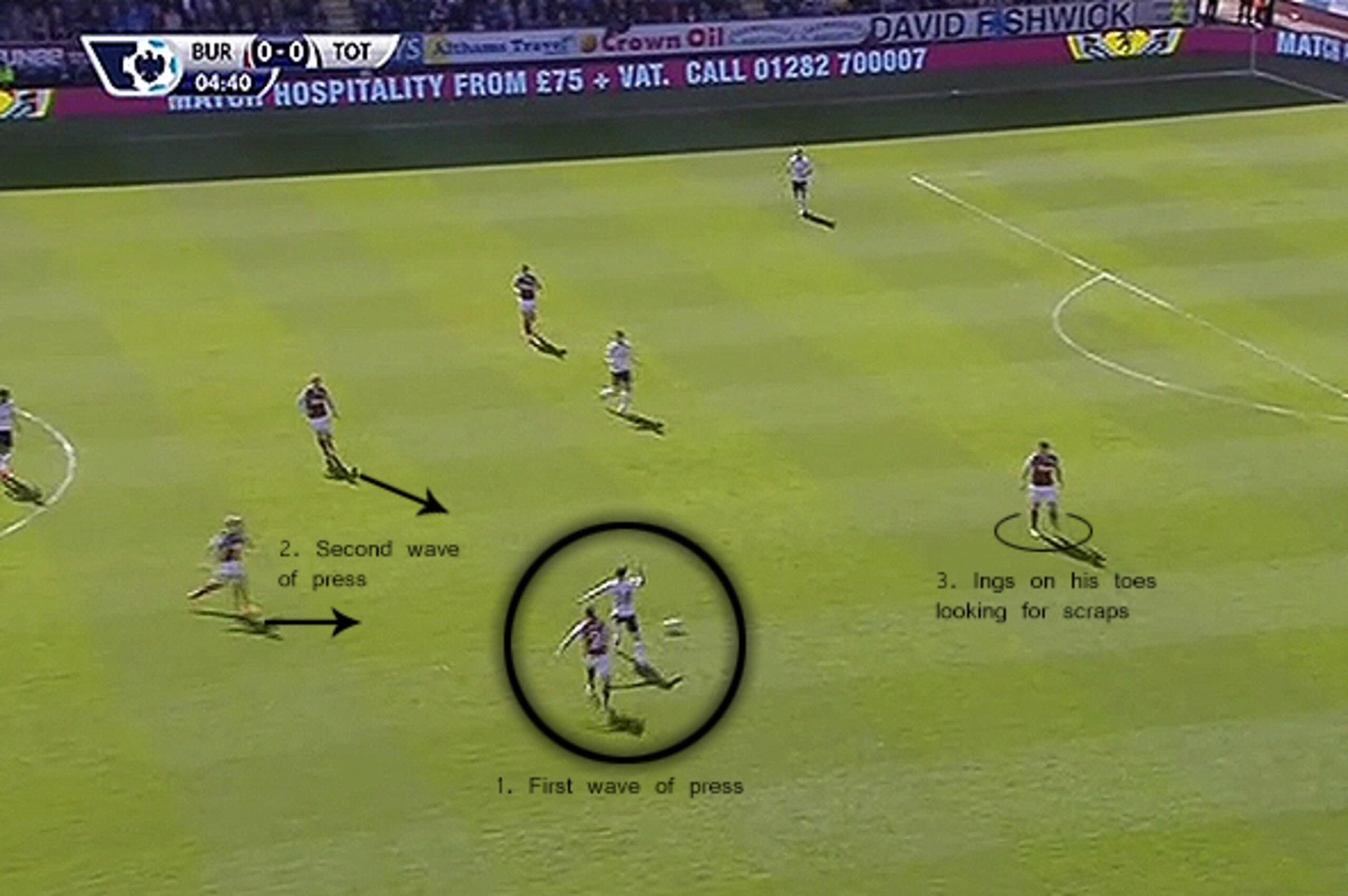
This nearly bore fruits very early on, as George Boyd robbed Mason of the ball 30 yards out and slid it to Ings, only for the striker to fire straight at Michel Vorm in goal. Tottenham were shaken by the pressure; Walker taking a rogue touch under no pressure and accidentally punting the ball out for a throw-in epitomised how poorly they settled early on.
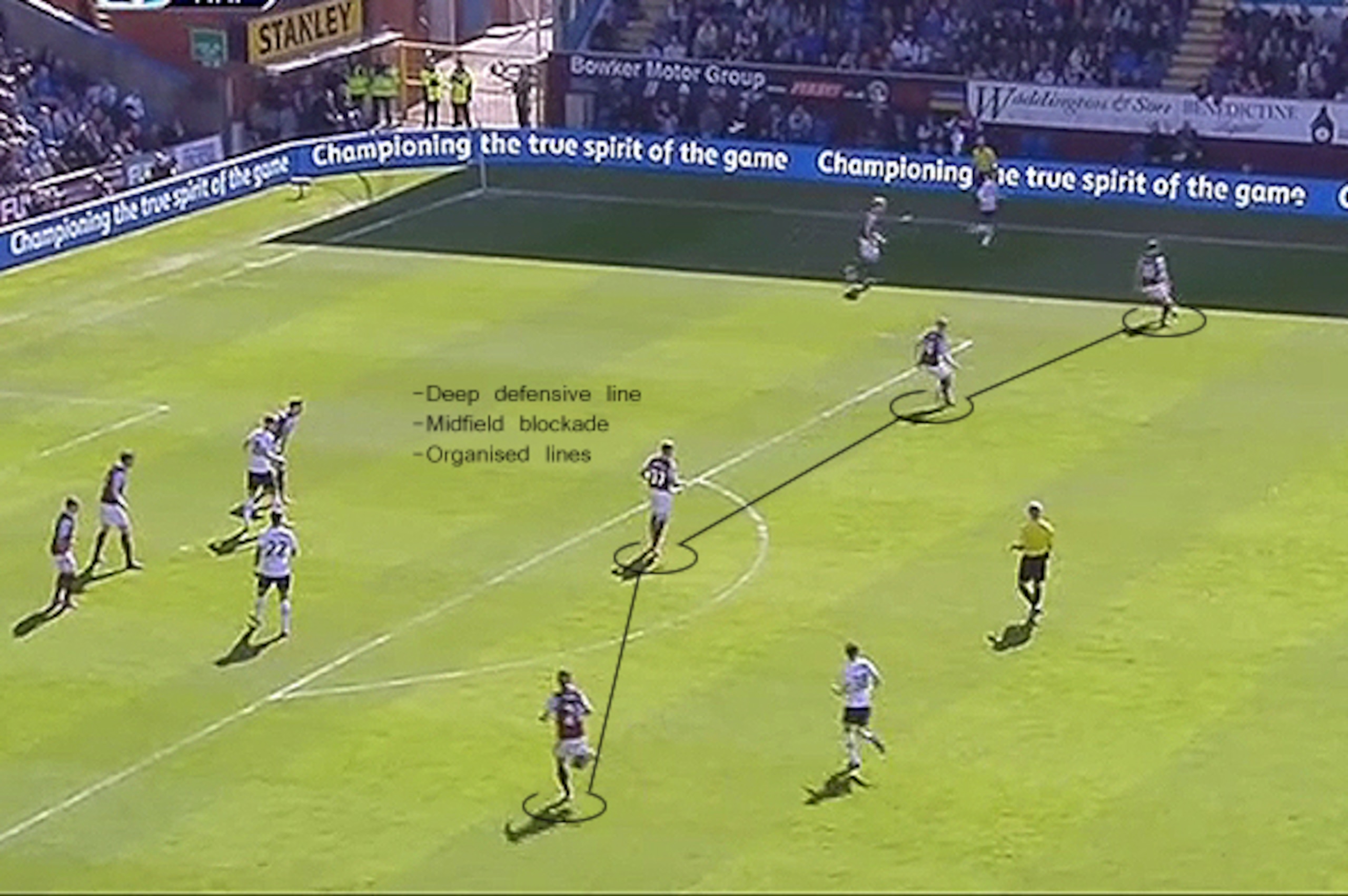
With just Kane to track up front, Shackell and Duff led a reasonably high defensive line and encouraged their midfield to push on and pressure Spurs on the ball. The two centre-backs weren't afraid to allow space in behind and did not worry about the in-form striker on their shoulder.
The service into Kane was borderline nonexistent; he rarely got on the ball in good areas and received very few passes—similar to when he was very quiet against Manchester United three weeks ago. In the first 23 minutes, he received just eight passes, per FourFourTwo.com—none were within 20 yards of the goal.
3. Set-Piece Advantage
At no point did Spurs look like winning this game, and after a bright start, Burnley's threat on goal faded too. But one way the Clarets did continue to offer a threat to Vorm was via set pieces, which Spurs, quizzically, consistently gave away.
If you know Kieran Trippier has a wicked right-footed delivery and Ashley Barnes can swing one in from the other side, why continually chop the opposition down outside the box to allow the Clarets to put another ball into the box?
A few well-worked routines produced genuine chances for Burnley—the first, with Barnes peeling outside and volleying a cross into the box low, being the best—but you have to look at the Spurs players and wonder why they didn't adopt a more cautious approach.
Odds and Ends
- Spurs were poor, introduced Andros Townsend off the bench far too late and never looked like winning the game.
- Paulinho's performance was predictably shocking; the few chances Spurs did carve out he did his best to squander.
- Dyche's setup was excellent and taking a point off Spurs, whatever iteration of them you play, is a real bonus when you're fighting relegation.
- Eriksen moved more permanently to the right late on and fashioned a strike on goal, but Spurs, tactically, never really recovered from an awful start.
- Referee Martin Atkinson missed four or five dives, elbows, yellow card offences and more. The frigidity he showed with his cards was remarkable.


.jpg?w=2560 "5 Teams Eyeing Jonathan Taylor")
.jpg?w=2560 "Mahomes Told Teammate to Leave Meeting")



.jpg?w=2560 "NFL investigating Eagles")
.jpg?w=2560 "Jonathan Taylor Landing Spots 📍")
