Chinese Grand Prix 2015: 5 Key Facts About Shanghai Circuit
The third round of the 2015 Formula One season, the Chinese Grand Prix, takes place at the Shanghai International Circuit.
The track, located on the outskirts of Shanghai, first joined the calendar in 2004 and has been a regular fixture on the schedule since. Initially a late-season event—the track even hosted the final race of the season in 2005—the Chinese GP has held a mid-April slot since '09.
Lewis Hamilton, the reigning world champion and an expert at Shanghai, enters the grand prix with a three-point lead over Sebastian Vettel, who claimed a first victory for Ferrari last time out in Malaysia.
With four of the top five in the drivers' standings—Hamilton, Vettel, Nico Rosberg and Kimi Raikkonen—previous winners in China, all signs point toward an exciting grand prix.
And ahead of the race weekend, here are five facts about the home of the Chinese GP.
Distance, Track Specification, Lap Record
1 of 5
The Shanghai International Circuit, according to the official Formula One website, has a track length of 5.451 kilometres, with the race distance of 305.066 kilometres taking 56 laps to complete.
The clockwise track features a total of 16 turns, nine of which are right handers, and is defined by a number of quirks, including "the two snails."
These are the long, winding bends found at Turns 1, 2 and 3 and the complex of Turns 11, 12 and 13 which provide a unique test of both driver and car.
While the first snail's closing radius presents a banana skin at the very start of a lap, inviting drivers to run wide under deceleration, the second snail unravels to propel the cars down the back straight, which at 1,175 metres, according to BBC Sport, is the longest in F1.
The lap record of one minute, 32.239 seconds was set by seven-time world champion Michael Schumacher, behind the wheel of the V10-powered Ferrari F2004, in 2004.
Schumacher's former Mercedes team-mate, Nico Rosberg, set the fastest lap of last year's event with an effort of 1:40.402, as per BBC Sport, but that time should be beaten quite comfortably in 2015.
Most Successful Drivers, Teams
2 of 5
With his win in 2014, Lewis Hamilton became the most successful driver in China, having previously triumphed in 2008 and 2011.
The Shanghai International Circuit, in fact, must be considered one of the British driver's favourite circuits, with Hamilton reaching the podium in all but two of his appearances at the track (2007, 2009) and securing pole position on four occasions (2007, 2008, 2013, 2014).
Fernando Alonso is the only other multiple winner at the track, taking the chequered flag in 2005 and 2013 for Renault and Ferrari, respectively.
Shanghai, for whatever reason, is favourable to world champions, with Michael Schumacher, Kimi Raikkonen, Jenson Button and Sebastian Vettel claiming one victory apiece.
Indeed, the only mere mortals to win at the venue are Rubens Barrichello (2004) and Nico Rosberg, who took the first victory of his career in the 2012 Chinese GP.
Given Hamilton's dominance at the circuit, it may come as a surprise to learn that Ferrari remain the most successful team in China with four wins. However, a third success in four years for Mercedes this weekend could see the Silver Arrows draw alongside McLaren on three wins.
Importance of Qualifying
3 of 5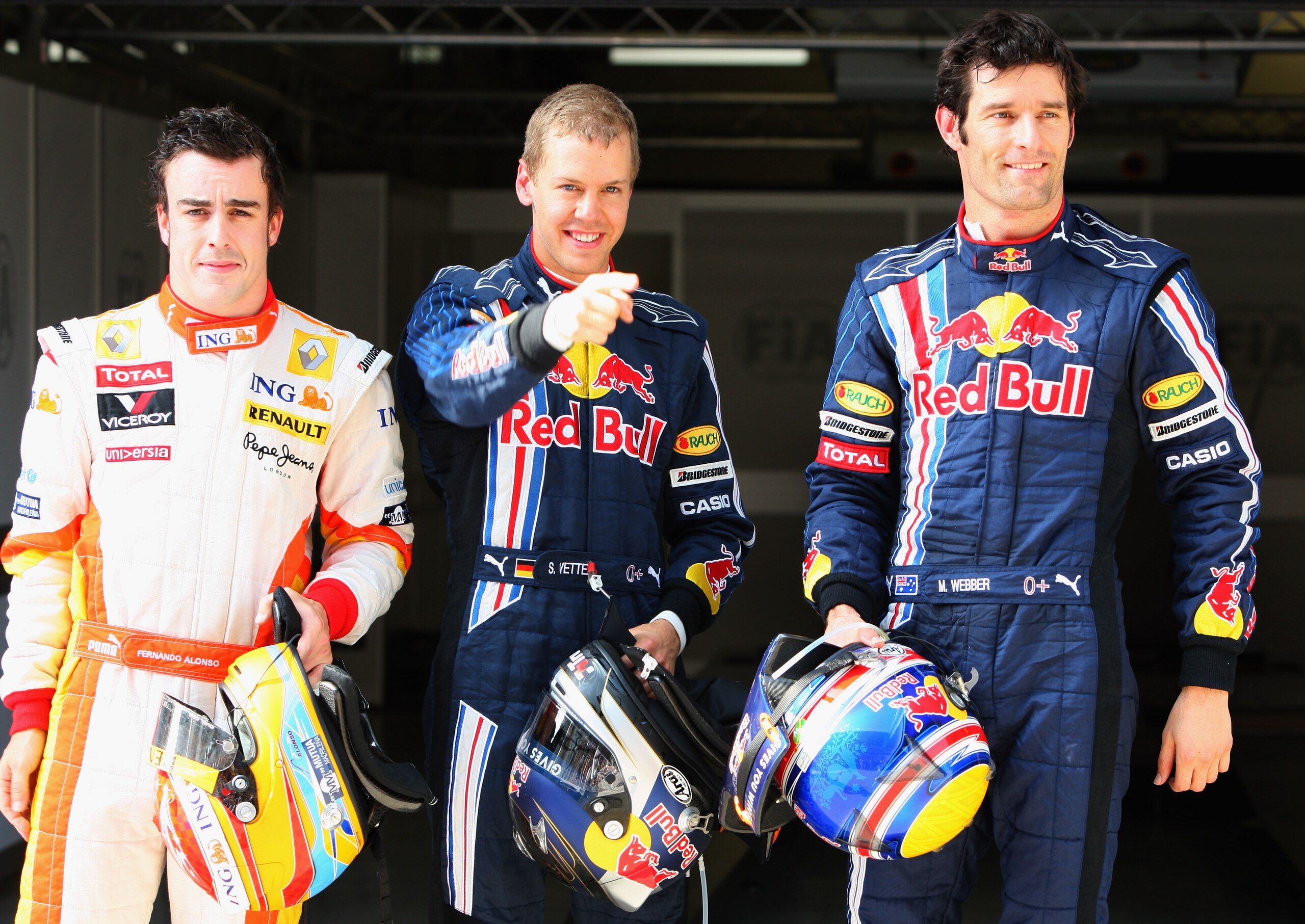
Of the 11 Chinese grands prix thus far, the pole-sitter has won the race six times.
That conversion rate should be even higher, but the four wet races at the Shanghai International Circuit have seen the pole-man miss out on victory on three occasions (2006, 2007, 2010), with only Sebastian Vettel resisting the rain to take a pole-to-flag victory for Red Bull in 2009.
Michael Schumacher is the lowest starter to win in China, taking the last of his 91 career victories in the wet '06 event from sixth on the grid.
The only other times when the driver on pole has failed to win, in 2011 and 2013, were in dry races dominated by tyre strategy.
The wide track surface encourages overtaking, yet there are only two genuine passing spots at Shanghai: the hairpins of Turns 6 and 14. Overtaking can also take place at Turns 1, 11 and 16, although any moves here contain an element of risk and require a degree of compliance from the driver in front.
Unless rain intervenes, or Pirelli become the centre of attention, the driver who claims pole position on Saturday can safely place one hand on the winner's trophy.
.jpg?w=2560 "Chiefs Giants Football")
.jpg?w=2560 "Titans Colts Football")

Nod to Chinese Culture
4 of 5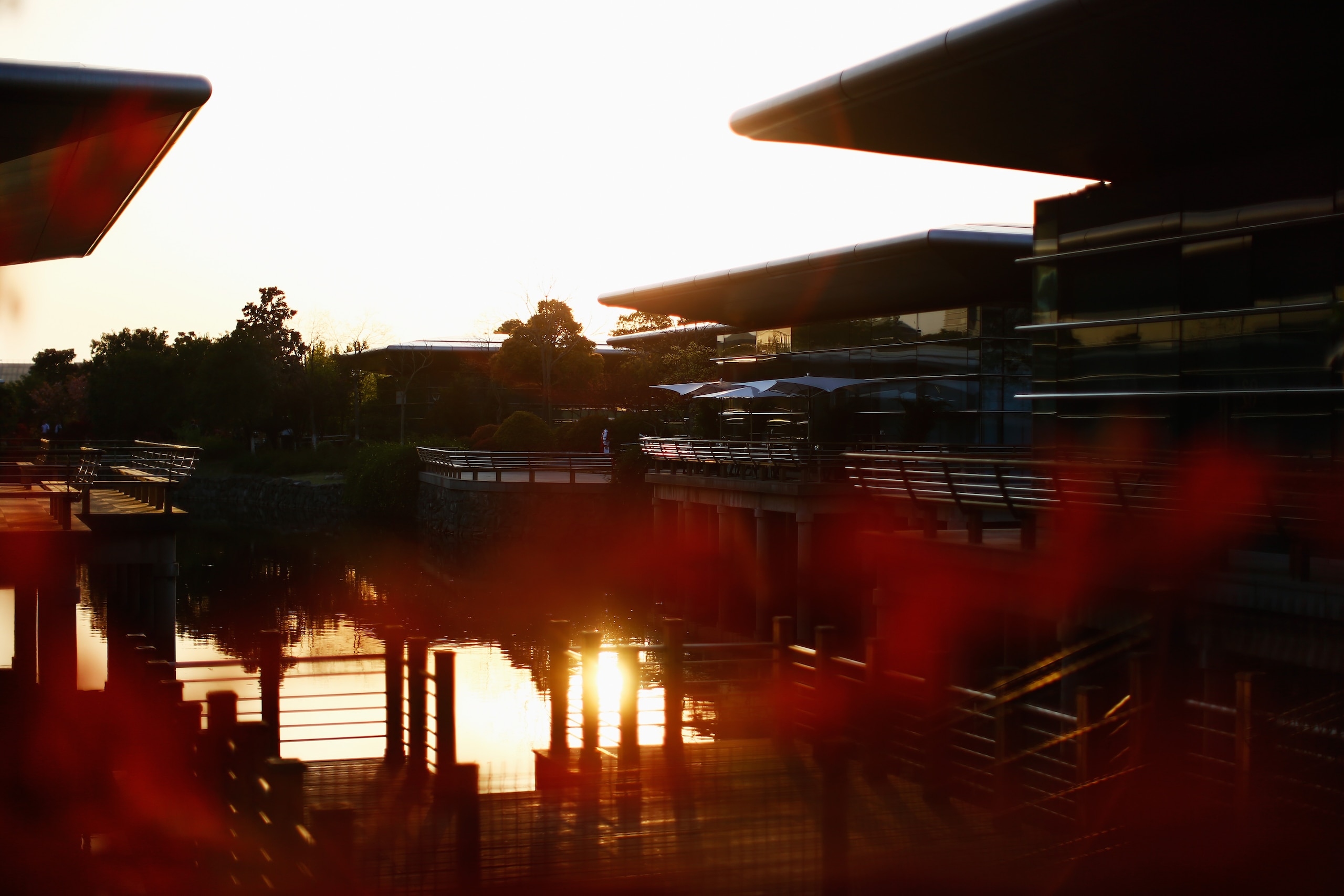
One criticism of Hermann Tilke, the circuit architect, is that each of the tracks produced by the German tend to look the same.
They all feature flowing, high-speed, left-right corners and huge run-off areas. They all contain mightily long straights—many of which have a kink—and slow, technical sections. And the state-of-the-art pit-and-paddock buildings are works of art.
As impressive as these facilities are, the vast majority of "Tilkedromes" lack character, individuality and charm.
That, however, cannot be be said of the Shanghai International Circuit, which is built very much in the image of China.
According to the official F1 website, the track layout is shaped to resemble the Chinese symbol "shang," which translates into English as "high" or "above," while the paddock huts occupied by the teams over a race weekend are "arranged like pavilions in a lake to resemble the ancient Yuyan-Garden in Shanghai."
As well as honouring China's past, the track also looks to the future, with the spectacular main grandstand and pit construction being arguably the most impressive on the calendar.
F1's Most Famous Pit-Entry
5 of 5Shanghai's 90-degree pit-entry is the most notorious on the calendar, the location of several clumsy incidents over the years.
The most memorable misstep came in the 2007 event when Lewis Hamilton, on severely worn tyres, slid into the gravel trap and was unable to escape, an error that ultimately prevented the British driver from becoming the first rookie-champion in F1 history.
Hamilton's replacement at McLaren, Sergio Perez, locked up and crashed head-on into the tyre wall in 2013, dislodging his front wing.
And last year, Pastor Maldonado raised the bar even higher by carrying way too much speed into the left-hander, knocking a wheel off his Lotus.
With no changes made to that particular area of the circuit over the years, the pit-entry almost invites drivers to make fools of themselves.
And even those who manage to get past the pit-entry unscathed are not immune from embarrassment, as Jenson Button proved in 2011 by stopping in Sebastian Vettel's pit-box.

.jpg?w=2560 "Eagles Jaguars Football")
.jpg?w=2560 "Jonathan Taylor Landing Spots 📍")