
Best Scheme Fits for Draft's Top Wide Receivers
As we draw ever closer to the 2015 NFL draft, matching talent with a scheme that will maximize said talent is critical. Projecting how college football players will translate to the NFL can seem daunting, but putting players into positions to succeed must take precedence. That even applies to the draft’s top wide receivers.
Similar to the 2014 class, teams looking to add impact playmakers at wide receiver shouldn’t have much trouble. Bleacher Report’s NFL Draft Lead Writer Matt Miller projected nine receivers to be selected in the first two rounds in his latest seven-round mock draft. There is serious talent available on the big board.
When the talent meshes with the scheme, great production is more likely to come. That’s why we’re going to determine which scheme fits Miller’s top-nine receivers in the class.
There are two major passing principles that offenses build around to some extent. The first is the Air Coryell offense, which was created by former San Diego Chargers coach Don Coryell. The other is the West Coast offense, made famous by San Francisco 49ers legend Bill Walsh.
Simply put, the Air Coryell offense is the more vertical attack. It uses a power running game to open up deep passing opportunities. Madden players are probably more used to this offense because it’s more explosive and fun to watch.
On the other hand, the West Coast attack is more horizontal. The short passing game emphasizes motion, quick passes and yards after the catch. The running game is somewhat replaced by these short passes.
Each scheme requires a varying skill set from receivers. Air Coryell generally wants more physically gifted receivers that can win with speed or great size. These players come at a premium in the draft. Examples of vertical receivers include Atlanta Falcons pass-catcher Julio Jones and Tampa Bay Buccaneers receiver Mike Evans.
West Coast receivers can have great size to help shield the ball away from defenders. But they’re more likely to be elite route-runners that can win with precision and quickness rather than deep speed. Examples include San Diego Chargers receiver Keenan Allen and New York Jets pass-catcher Brandon Marshall.
Being a great receiver within either scheme is highly valuable. There are some receivers able to excel in either offense, as well. It’s simply all about skill sets.
Let’s jump in and see where the top nine wide receiver prospects would fit best.
Kevin White: Vertical Attack
1 of 9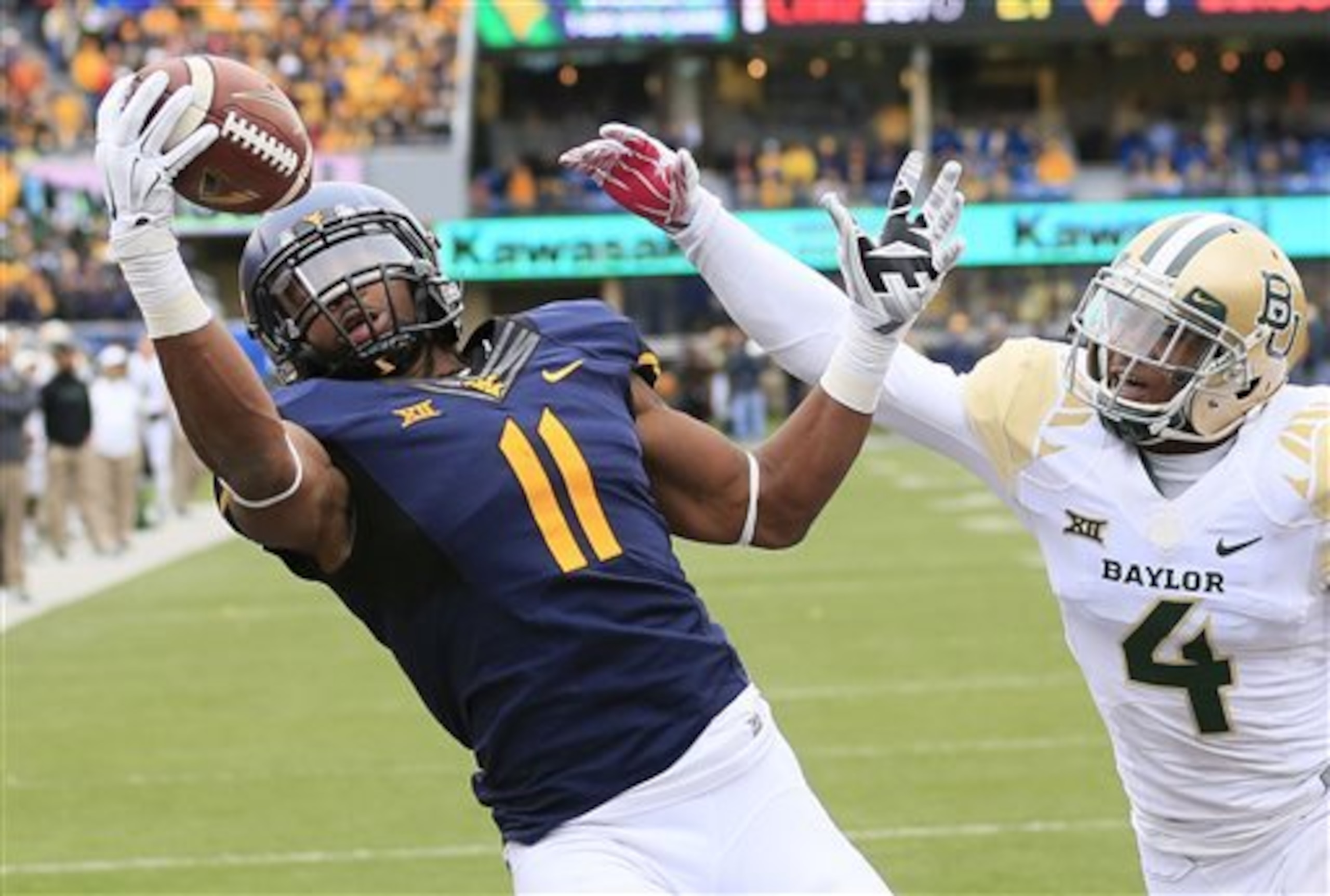
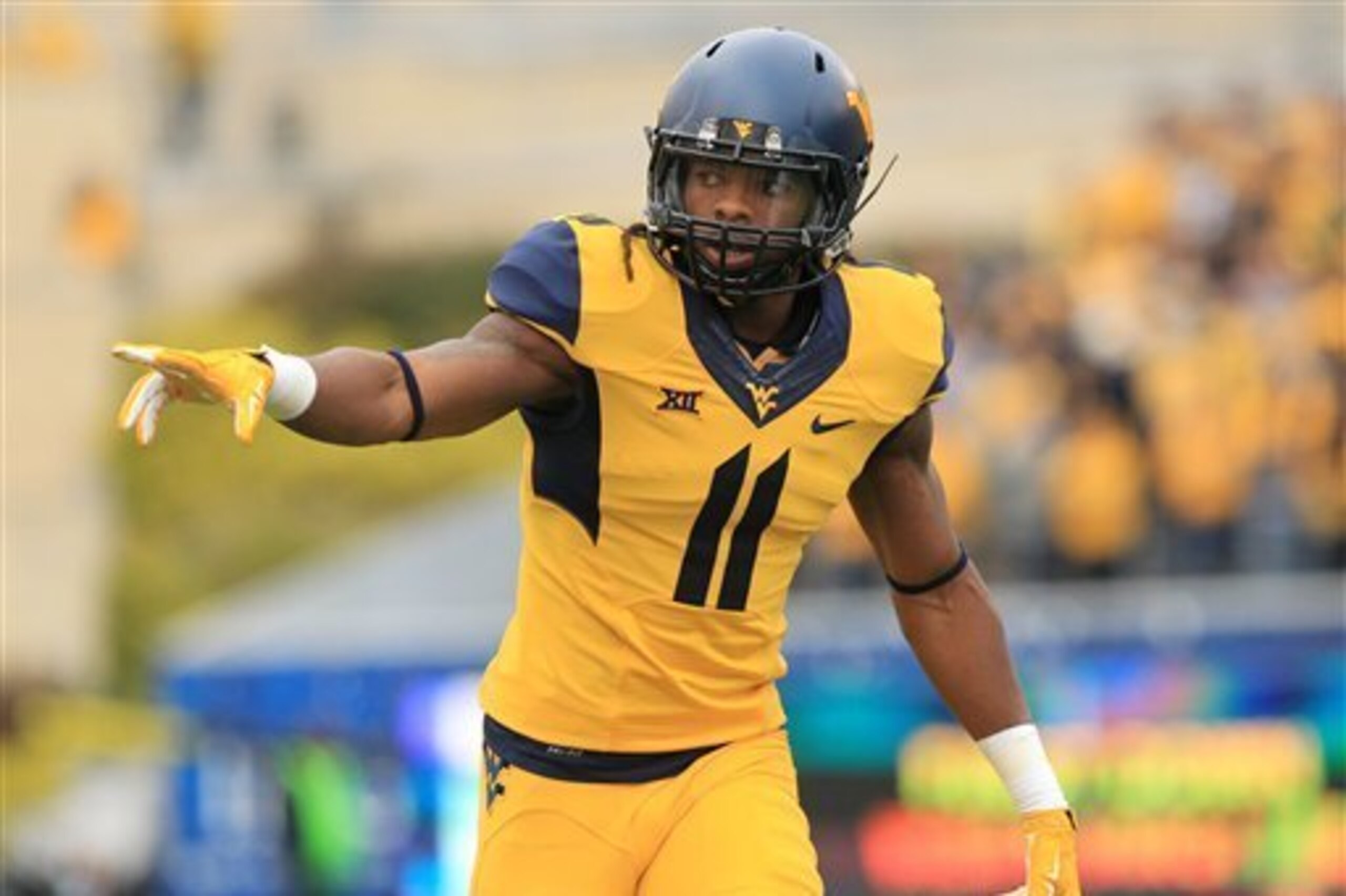
The former West Virginia receiver has had a meteoric rise to the top of the draft boards. He produced 1,447 yards and 10 touchdowns in his first full season as a starter in FBS football. To better his argument that he’s the draft’s top receiver, he blew the NFL combine out of the water.
Measuring 6’3” and 215 pounds, White ran a blazing 4.35 40-yard dash. His explosiveness scores were extremely impressive as well. Besides the 60-yard shuttle, all of White’s explosion drills ranked better than the 50th percentile.
White is a raw route-runner with little experience working precise routes. That’s not surprising considering his collegiate career arc. But it is partially why he’s not a West Coast fit.
Considering his size, physical profile and his ability to create big plays downfield, White is a potentially dominant vertical receiver. The comparisons to Julio Jones are fitting because of his ability to win at the catch point.
Team Fits: Oakland Raiders, Tennessee Titans, Atlanta Falcons
Amari Cooper: Balanced
2 of 9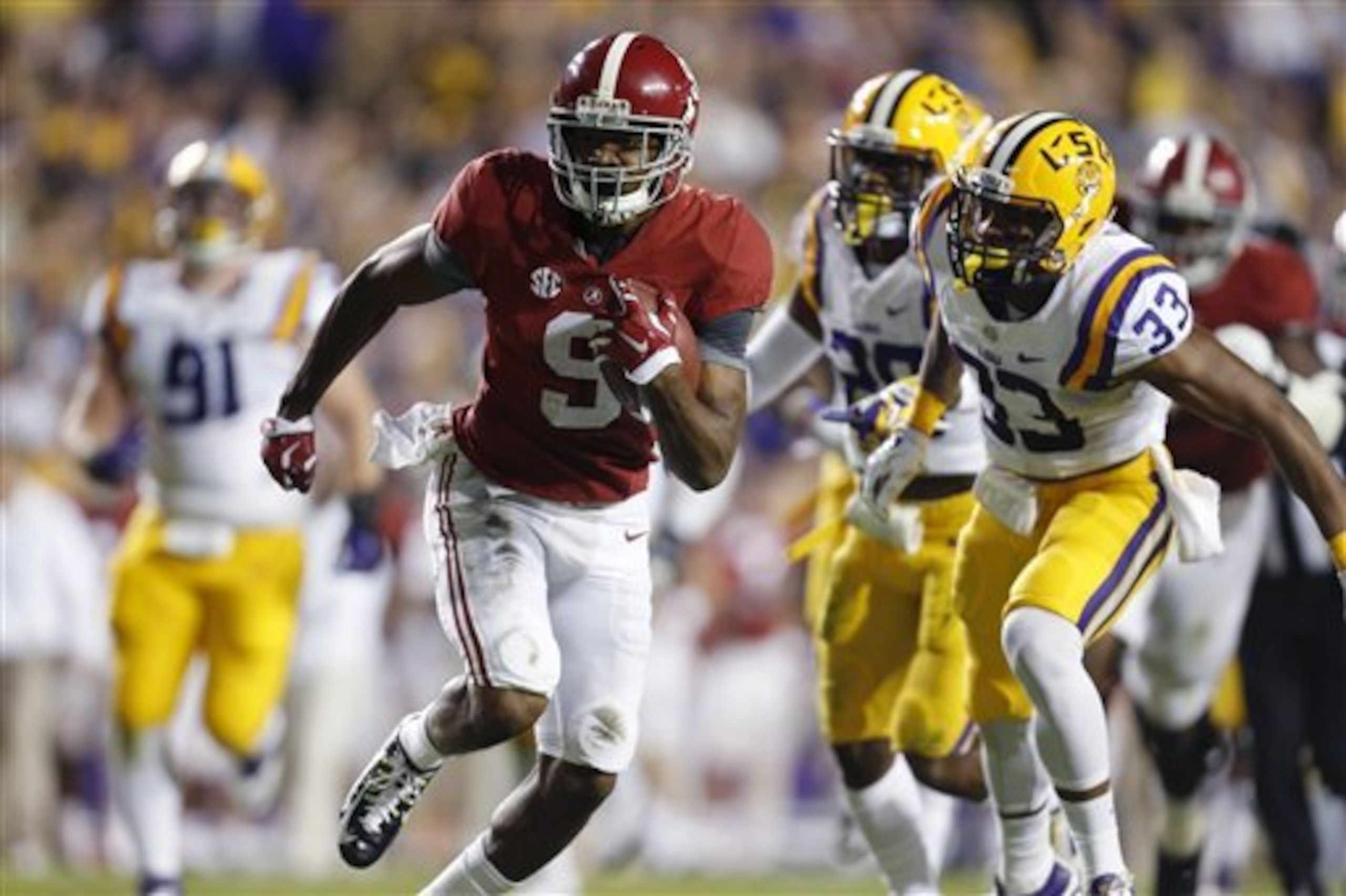
Another major star of the 2014 college football season was Alabama’s Amari Cooper. Cooper wasn’t really a surprise, though. He fought injuries his sophomore season, but his freshman campaign was filled with tremendous performances.
Although Matt Miller has Cooper second off the board in his full-length mock, Cooper is the much more NFL-ready player than White. Cooper is as fast as he is quick. He’s also a highly refined route-runner compared to his peers in the draft class.
Considering that Cooper can win with his precision but also his explosiveness, he will be able to perform in any offense. He’s not great when he’s fighting for contested passes, but he is able to create enough separation that he might not have to play jump balls a ton anyway.
Team Fits: New York Giants, Minnesota Vikings, Miami Dolphins
DeVante Parker: West Coast
3 of 9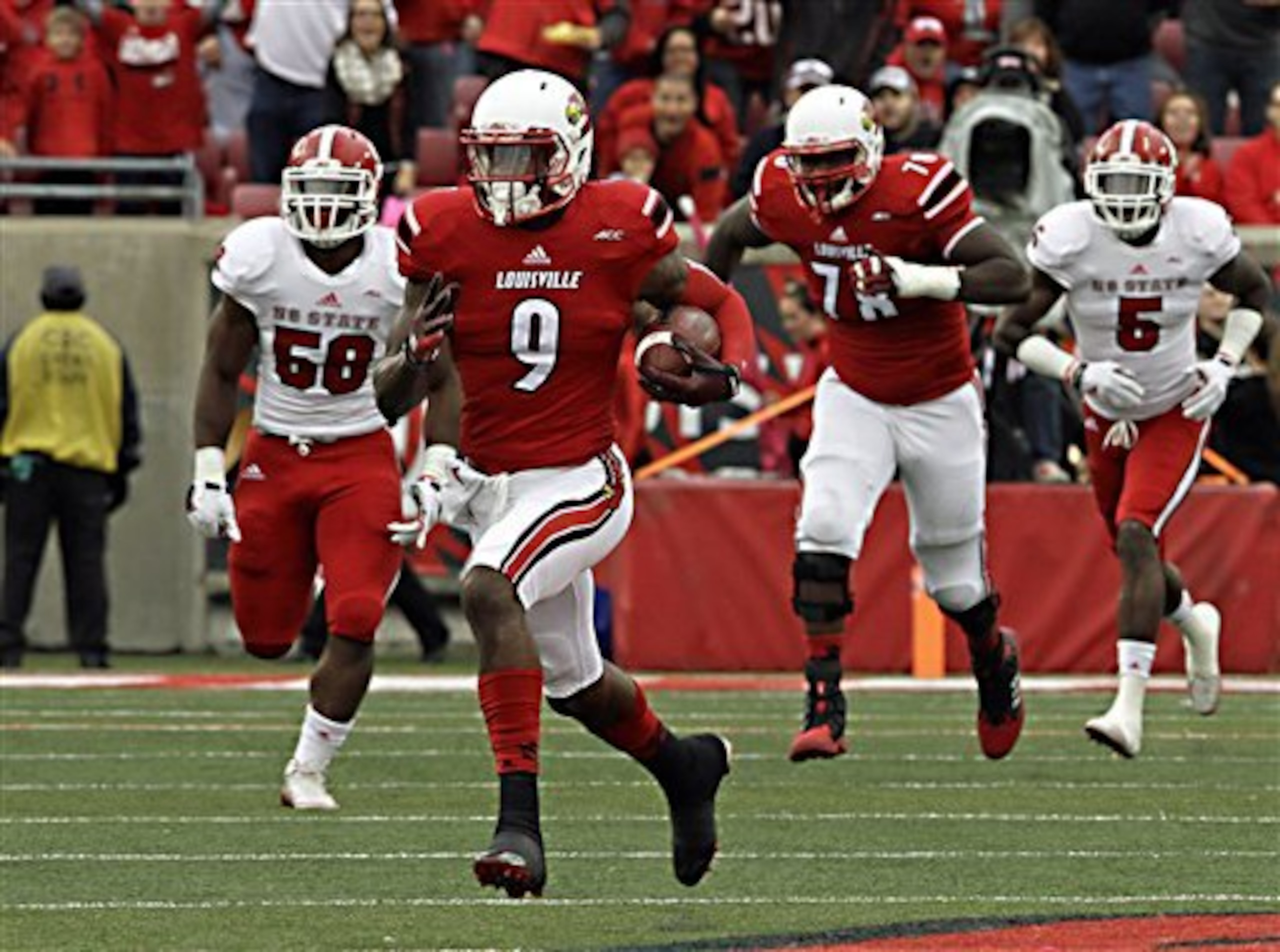
Louisville’s DeVante Parker missed half of 2014 with a foot injury, but he’s worked himself into the first round of Miller’s mock draft. His combination of size, speed and reliable hands should be very attractive to both vertical and horizontal schemes.
But Parker never seemed to play as fast as his 4.45 40-yard dash time indicates. His downfield separation was very limited, leaving him to fight for contested passes quite often. For someone having to compete so often at the catch point, I’d like to see more aggressiveness and physicality.
Putting Parker into a scheme that accentuates his run after catch ability makes the most sense. Parker produced excellent numbers despite missing half the season. Much of his production came from screens and slants, which allowed him to create more yards for himself.
Team Fits: Cleveland Browns, Miami Dolphins, San Francisco 49ers
.jpg?w=2560 "Titans Colts Football")
.jpg?w=2560 "Chiefs Giants Football")
.jpg?w=2560 "Colts Football")
Jaelen Strong: Vertical Attack
4 of 9
To me, Arizona State’s Jaelen Strong is one of the biggest risks at receiver in the 2015 NFL draft class. His combine numbers were excellent but did not accurately reflect his film. That’s a red flag to me.
Strong ran a 4.44 40-yard dash at the combine, yet he rarely created distance between he and his defenders. That forced him to make very difficult catches under duress. He excelled at the catch point in 2014, but cornerbacks are about to get a whole lot better than what he faced in college.
For Strong to succeed in the NFL, he will need to greatly improve his route running. He struggles selling his routes and running efficiently without wasting movement. NFL cornerbacks will love playing Strong unless he can clean that up.
A vertical scheme can help mask this limitation. He plays similar to New Orleans Saints’ receiver Marques Colston, so a role like Colston’s would be fitting. His vertical slot potential is much more promising than his outside talents right now.
Team Fits: New England Patriots, Seattle Seahawks, New Orleans Saints
Devin Funchess: Balanced Attack
5 of 9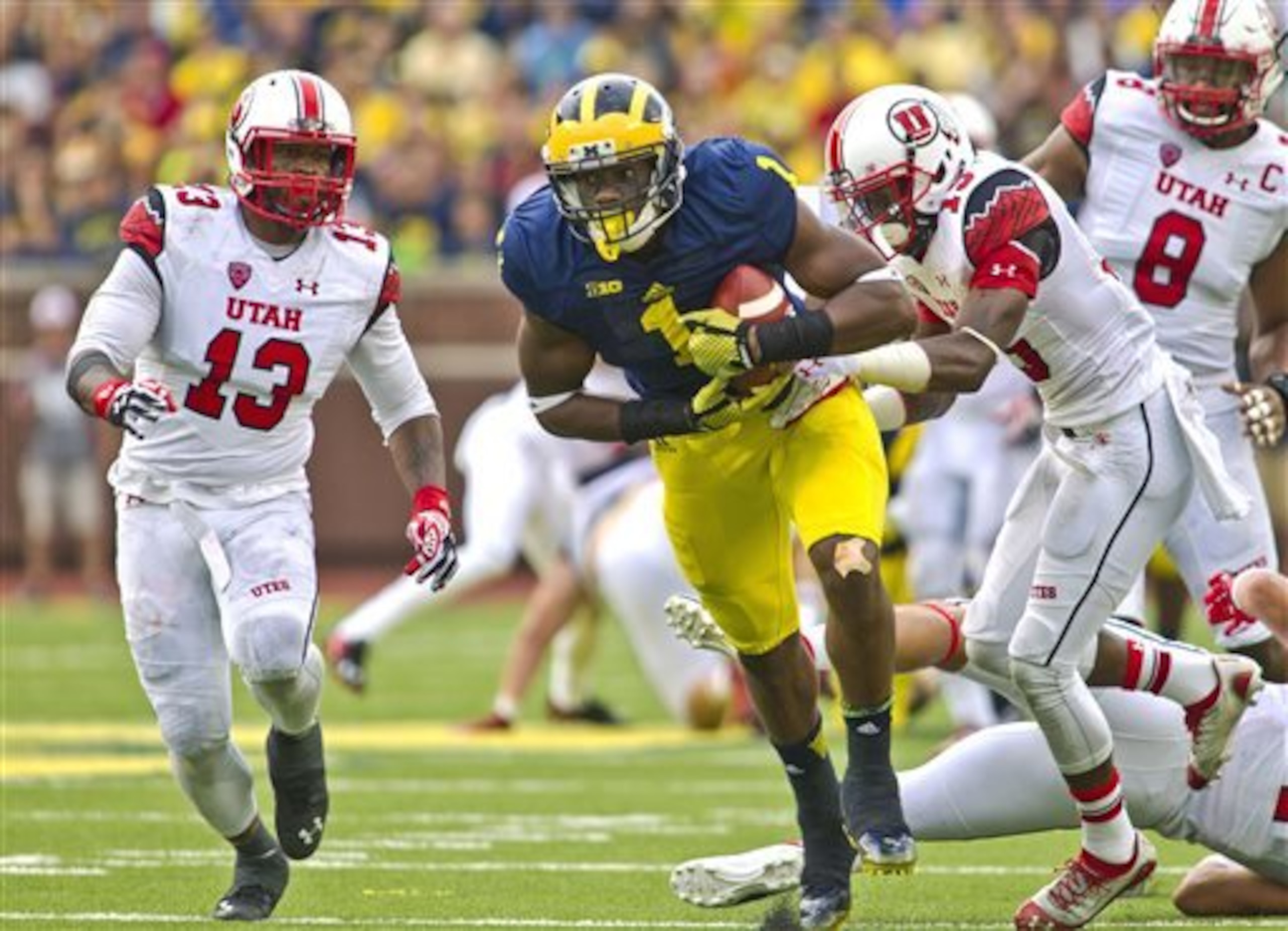
Matt Miller’s fifth receiver off the board is a Michigan man. The former Wolverine’s pass-catcher spent time at tight end and wide receiver while at Ann Arbor. But he should project as a receiver because he’s a very bad blocker that will only struggle more in the NFL.
At receiver, Devin Funchess won’t have to block defensive linemen. He’ll be able to worry about running routes and finishing at the catch point. The latter is something that Funchess is already excellent at.
At 6’4” and 232 pounds, Funchess will never be considered a sexy speed receiver. He plays much faster than his 4.7 40-yard dash time indicates and he has the playing speed to pull away from cornerbacks. As he continues to improve the nuances of route running, Funchess has the potential to become a very good starting receiver.
Team Fits: Indianapolis Colts, Dallas Cowboys, Cincinnati Bengals
Breshad Perriman: Vertical Attack
6 of 9
The media darling since he ran an incredible 4.27 40-yard dash at his pro day, Central Florida receiver Breshad Perriman has gone from nobody to major prospect as fast as his 40 time. It’s easy to see why considering his NFL-ready physique and tremendous physical gifts.
Perriman was a highlight machine at UCF. His ability to track and adjust to the deep ball could be the best in the class. He never seemed to play like a 4.2 runner, but it’s nice to see that he has that type of running ability.
"UCF WR Breshad Perriman had 7 drops on 54 catchable passes (12.96%). Ranked 81st of 91 qualifiers
— Steve Palazzolo (@PFF_Steve) February 12, 2015"
A vertical attack makes much more sense for Perriman than the West Coast scheme. Perriman struggled with drops in 2014, and that’s not acceptable in timing and rhythm-based offenses. Vertical offenses are more forgiving because when you average 20 or more yards a catch (like Perriman did), the occasional drop can be stomached.
Team Fits: Arizona Cardinals, Oakland Raiders, Baltimore Ravens
Nelson Agholor: West Coast
7 of 9
It’s amazing to me how far under the radar USC’s Nelson Agholor seems to be flying. Maybe it’s the whole USC-receiver stigma that he’s facing, but Agholor isn’t like the rest of recent USC receivers to struggle in the NFL. He’s well built at 6’0” and 198 pounds, plus explosive once he has the ball in his hands.
Agholor has experience running the entire route tree as an outside receiver, plus has spent time in the slot. He’s logged over 2,200 yards and 18 touchdowns in the last two seasons as a receiver. Oh, and he’s a tremendous return man to boot.
He’s the real deal as far as athleticism and explosiveness. His fluid movements would really stand out in a West Coast scheme that will move him all around the formation. He’s not going to be limited to the slot or outside.
Similar to DeVante Parker, Agholor stands out working in space. His creativity as a runner is superb to watch unfold.
Team Fits: Philadelphia Eagles, Miami Dolphins, San Diego Chargers
Devin Smith: Vertical Attack
8 of 9
How great of a deep threat was Ohio State receiver Devin Smith? He averaged an incredible 28.2 yards per catch as a senior. His dominance in his final six career games was a major reason why the Buckeyes won the National Championship trophy in January.
Smith offers one great trait. He’s extremely fast and he adjusts well to the ball downfield. He’s more than just a track guy with speed. His ability to play the ball and provide his quarterbacks with a big bucket to aim for is critical for deep ball success.
In an offense that uses the running game to set up downfield passes, Smith can be extremely effective. Similar to Minnesota Vikings’ receiver Mike Wallace, Smith will always have a role. Unlike Wallace, though, Smith shows much more willingness to fight for the ball.
Team Fits: Baltimore Ravens, Seattle Seahawks, Carolina Panthers
Phillip Dorsett: Balanced
9 of 9
One of the most underused offensive weapons in 2014 had to be Miami’s Phillip Dorsett. The speedster had only 871 yards in 13 games. Of his 36 catches, 10 went for touchdowns.
Dorsett simply wasn’t given the chance he needed to prove himself. He had a great Senior Bowl week. His route running, speed and quickness creates a huge mismatch for every cornerback.
In an offense that will vary their route depth, Dorsett can create like Indianapolis Colts’ receiver T.Y. Hilton does. He can take a crossing pattern for a major gain. Or he’ll just go deep on a nine-route and win with pure speed.
His versatility scheme-wise makes Dorsett a potential second-day steal.
Team Fits: Pittsburgh Steelers, Detroit Lions, Chicago Bears
All stats used are from sports-reference.com.
Ian Wharton is an NFL Draft Featured Columnist for Bleacher Report.
.jpg?w=2560 "Eagles Jaguars Football")
.jpg?w=2560)